Most Beautiful Water Symbolism in Literature: Meaning, Themes, and Books to Read

water symbolism
water symbolism

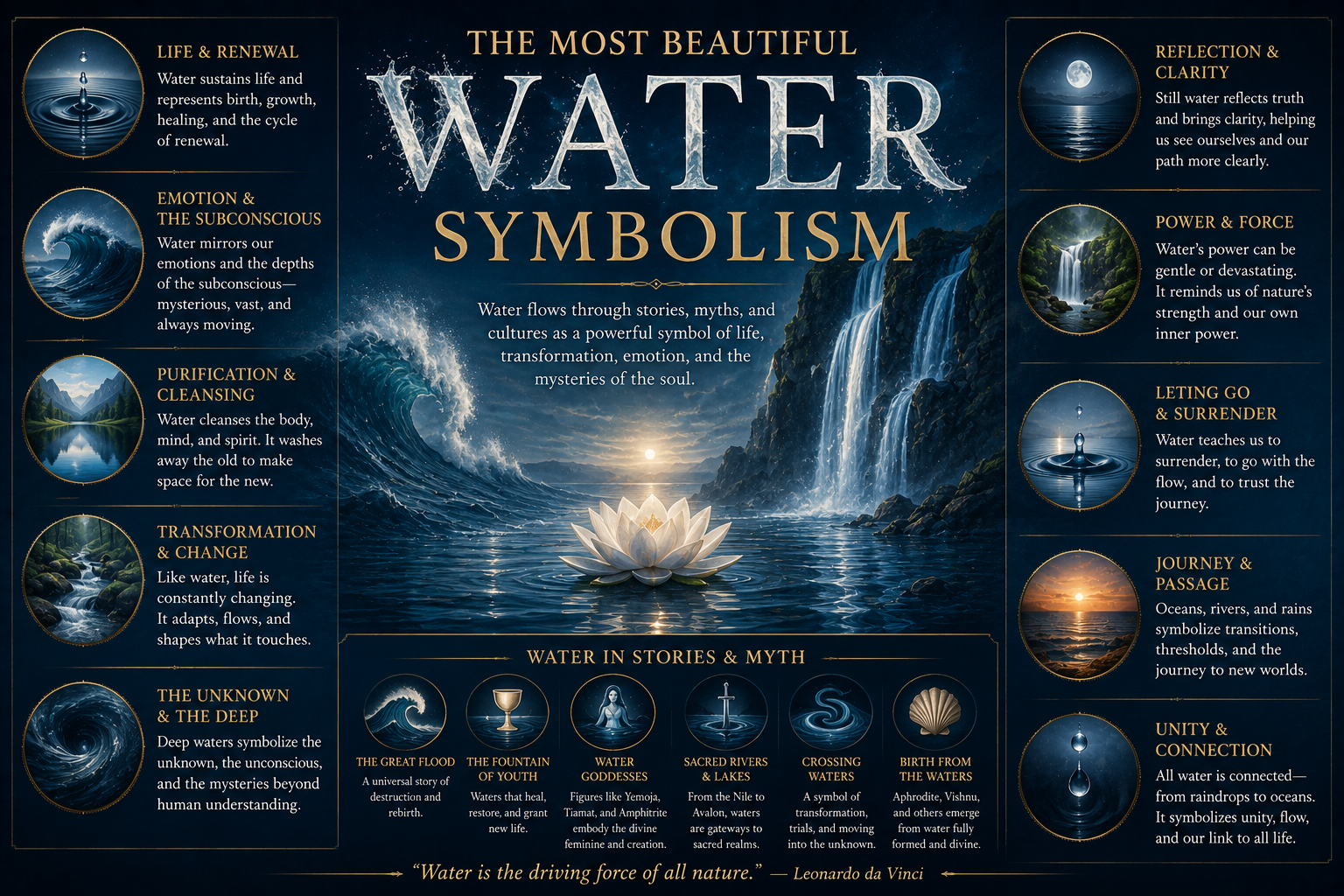
Most Beautiful Water Symbolism shows how rivers, rain, oceans, and lakes can carry deep meaning in a story. Water can stand for life, change, fear, memory, grief, or hope, often in the same scene.

For students, water is one of the easiest symbols to notice because it appears in so many famous books and poems. Once you learn what to look for, it can make a story feel richer and more alive.

In this Guide

  • What water symbolism means
  • Why Most Beautiful Water Symbolism matters
  • Common meanings of water in literature
  • Famous examples from books and poems
  • Recommended books to read
  • FAQs about water symbolism

What Does Water Symbolism Mean?

Water often points to emotions that characters cannot say out loud.

In literature, water is rarely just water. A river can show a journey. Rain can mark sorrow or renewal. An ocean can suggest freedom, danger, or the unknown.

Writers use water because readers already feel its power. We know water can heal, destroy, wash away, and return again. That makes it a strong symbol for human life.

If you want a simple method for spotting symbols, this guide on how to find symbolism in a story can help you build the skill step by step.

Why Most Beautiful Water Symbolism Feels So Powerful

The beauty of water symbolism comes from its many sides.

Most Beautiful Water Symbolism works because water is never only one thing. It can be calm in one scene and violent in the next. It can save a character or trap them.

This is why water feels so human. People also change. We can feel peaceful, afraid, hopeful, or lost, sometimes all in one day.

In many stories, water becomes a mirror. It reflects what a character hides inside. A quiet lake may show calm, but it may also hide pain below the surface.

Most Beautiful Water Symbolism and Common Meanings

Water symbols often connect to life, death, change, and truth.

One common meaning is rebirth. A character who enters water may come out changed. This can feel like a fresh start, even if the story stays painful.

Water can also mean danger. Storms, floods, and deep seas often show forces that people cannot control. This makes water a strong symbol for fate or fear.

Another meaning is memory. Rivers and oceans move, but they also seem ancient. In this way, Most Beautiful Water Symbolism can connect a character’s private life to a larger past.

Water can also suggest truth. A clear pool may show what is hidden. Muddy water may suggest confusion, lies, or moral doubt.

Famous Examples of Water Symbolism in Literature

Many classic works use water to shape mood and meaning.

In The Odyssey by Homer, the sea is both a road and an enemy. Odysseus wants to return home, but the ocean delays him again and again. The water stands for struggle, distance, and the test of human will.

In Moby-Dick by Herman Melville, the ocean feels endless and mysterious. It becomes a place where obsession grows. Captain Ahab’s search across the sea shows how the unknown can pull a person toward ruin.

In Shakespeare’s The Tempest, a storm at sea begins the action. The water helps create fear, magic, and change. It pushes characters into a strange world where old wrongs must face judgment.

In T. S. Eliot’s poem The Waste Land, water is tied to both need and fear. The poem’s dry land suggests spiritual emptiness, while water hints at renewal. You can read more about the poem through the Poetry Foundation.

Most Beautiful Water Symbolism in Modern Reading

Modern readers still connect with water because it feels close to daily life.

Most Beautiful Water Symbolism is not limited to old books. It appears in novels about family, identity, trauma, and survival. Water often helps writers show emotions that are hard to name.

For example, rain in a modern novel may mark grief after a death. A beach may show escape from stress. A river may stand for a choice that cannot be undone.

This is why water symbols work well in class essays. They let you connect setting, character, and theme in a clear way.

Recommended Books with Most Beautiful Water Symbolism

These books are strong choices for students who want to study water symbols.

  • The Odyssey by Homer: A classic journey story where the sea tests courage, pride, and longing for home.
  • Moby-Dick by Herman Melville: A deep study of obsession, mystery, and the danger of chasing one idea too far.

Both books show Most Beautiful Water Symbolism in very different ways. One treats water as a hard path home. The other turns the ocean into a vast space of fear and wonder.

For a wider look at how symbols work in literature, Britannica’s overview of symbolism gives useful background.

How to Write About Water Symbolism in an Essay

A strong essay links the water image to a clear idea.

Start with the scene. Ask what kind of water appears. Is it rain, ocean, river, lake, or flood?

Then ask what the character feels in that moment. Water symbolism is strongest when it connects to conflict, choice, or change.

Last, connect the symbol to a theme. If a character crosses a river, the theme may involve growth or loss. If a storm breaks, the theme may involve fear, guilt, or truth.

For more practice, use this helpful guide on finding symbolism in fiction before you draft your paragraph.

Most Beautiful Water Symbolism and Major Themes

Water often gives a story its emotional center.

Most Beautiful Water Symbolism often links to change. Water moves, shifts, and reshapes the world. Characters who meet water often face a turning point.

It also links to cleansing. A bath, rainfall, or river can suggest a wish to remove guilt or pain. Yet the story may ask whether a person can truly wash the past away.

Water also links to the unknown. Deep water can hide danger, secrets, or truth. This makes it useful in stories about fear and discovery.

FAQs About Most Beautiful Water Symbolism

What is Most Beautiful Water Symbolism in literature?

Most Beautiful Water Symbolism refers to powerful water images that carry deep meaning. These images may show life, change, danger, memory, or renewal.

Why do writers use water as a symbol?

Writers use water because it is familiar and emotional. Readers understand its power to comfort, harm, hide, and reveal.

What does rain usually symbolize?

Rain can symbolize sadness, cleansing, rebirth, or tension. The meaning depends on the scene and the character’s state of mind.

What does the ocean symbolize in books?

The ocean often symbolizes mystery, freedom, danger, or the unknown. In many stories, it also shows how small people feel against nature.

How can I find water symbolism in a story?

Look for repeated water images and ask what changes when they appear. If water appears during a key choice or crisis, it likely has symbolic meaning.

Key Takeaway

Most Beautiful Water Symbolism matters because water can hold many truths at once. It can show hope and fear, peace and danger, life and loss.

When you notice water in a story, slow down. Ask what it reveals about the character, the mood, and the theme. That simple question can open the whole text. 🌊

Important The Odyssey Quotes Explained: A Student Guide

Odyssey Quotes

A guide to memorable passages and how students can use them in essays.

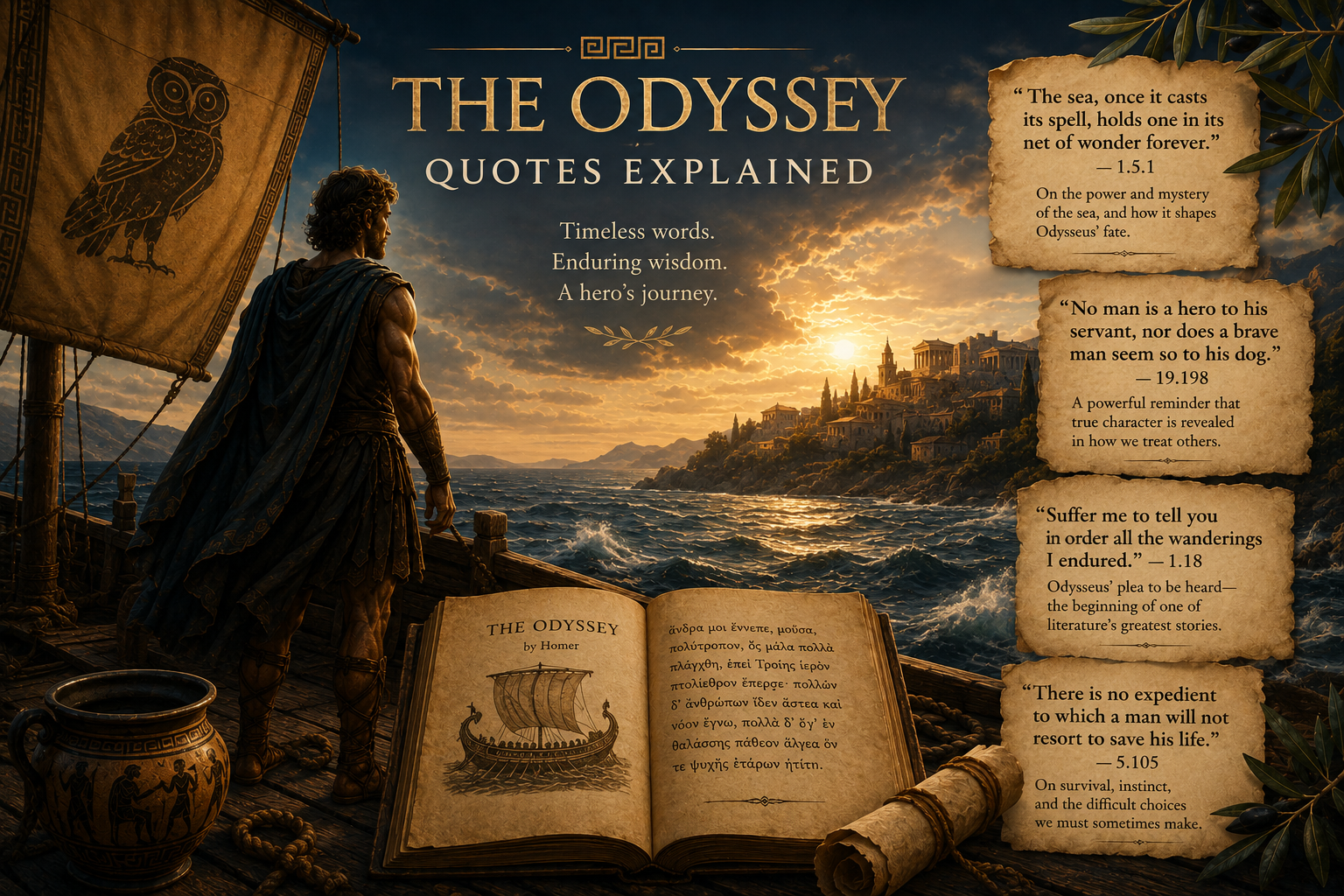
The Odyssey quotes explained can help students see how Homer builds a story about home, honor, loss, and wisdom. This guide uses short public-domain phrases when useful, then explains how each passage can support a strong essay claim.

In this Guide

Use this quick map to find the quote or skill you need.

  • Why the quotes matter
  • Identity and home
  • Pride and consequences
  • Loyalty and endurance
  • Essay tips for quote analysis
  • Books and resources
  • FAQ
Odyssey Quotes

Why The Odyssey quotes explained matter in essays

Great quotes do more than sound important. They reveal how a text thinks.

A useful set of The Odyssey quotes explained should connect each passage to a theme, a character choice, or a major conflict. In The Odyssey, those conflicts often come from temptation, pride, and the hard pull of home.

Homer also uses repeated ideas, such as storytelling and disguise. When you explain a quote, look for what changes in the character or what the line shows about the ancient Greek world.

The Odyssey quotes explained: identity and home

Odysseus spends much of the poem away from Ithaca, yet the idea of home shapes nearly every choice he makes.

“Tell me, O Muse…”

This short opening phrase comes from older public-domain translations of the poem. It shows that the epic begins with an invocation, which is a call for divine help in telling the story.

The line matters because it frames Odysseus as more than one man with a problem. His journey becomes a story about human weakness, clever thought, and survival.

When students search for The Odyssey quotes explained, this opening is one of the best places to start. You can use it to discuss the epic tradition and the role of fate.

“that ingenious hero”

Some public-domain translations describe Odysseus with this phrase. It points to his intelligence, which is often his greatest strength.

Odysseus wins many battles with words before he uses force. This is like Hamlet in Shakespeare’s Hamlet, where thought and speech shape action, even when the results turn painful.

In an essay, this quote can support a claim about Odysseus as a hero of the mind. He is not just brave. He survives because he studies people and adapts.

The Odyssey quotes explained: pride and consequences

Homer often shows that a hero’s strength can turn into a weakness.

“My name is Noman”

In the Cyclops episode, Odysseus uses a false name to escape danger. Older translations often give the name as “Noman,” while many modern classes use “Nobody.”

This moment shows his quick wit. He knows that language can become a weapon.

The quote also sets up a warning. Odysseus escapes through cleverness, but he later reveals too much and brings Poseidon’s anger on himself.

“I am Ulysses son of Laertes”

Older public-domain translations often use Ulysses for Odysseus. This line matters because he announces his true name after the Cyclops episode.

The moment feels heroic, but it also exposes his pride. Odysseus wants glory, and that desire costs him years of suffering.

This is a strong quote for an essay about heroic flaws. Like Achilles in The Iliad, Odysseus is great because of his passion, yet that same passion can harm him.

The Odyssey quotes explained: loyalty and endurance

The poem values cleverness, but it also honors patience and faithfulness.

Argus recognizes his master

Many students remember the scene with Argus, Odysseus’s old dog. The exact wording changes by translation, but the point is clear: Argus knows Odysseus when many people do not.

This scene is short, but it has deep emotional power. It shows that loyalty can outlast time, poverty, and disguise.

The Odyssey quotes explained often focus on Odysseus, but Argus can support a strong paragraph about recognition. Home is not only a place. It is also the bonds that still know you.

Penelope and the bed

Penelope tests Odysseus with the secret of their marriage bed. The scene proves that she is not passive or easily fooled.

Her test mirrors Odysseus’s own cleverness. Both of them use intelligence to protect what matters.

This moment works well in essays about marriage, trust, and identity. It also shows that the return home must be earned, not simply claimed.

How to use The Odyssey quotes explained in an essay

A quote should not sit in your paragraph like decoration. It should help prove your point.

The best The Odyssey quotes explained will follow a simple pattern: claim, quote, explanation, and link back to the thesis. If you need help with that structure, read our guide on how to write a literary analysis essay.

Here is a simple example:

Claim: Odysseus’s cleverness saves him, but his pride delays his return.

Quote: His false name, “Noman,” helps him escape the Cyclops.

Explanation: The name shows his gift for strategy. Yet after he escapes, he reveals his identity, which turns his success into a new danger.

Try to avoid a summary-only paragraph. Teachers want analysis, which means you explain why the words matter.

If you want a ready-to-use reference while you study, try our Odyssey quote study guide and pair it with your class notes.

The Odyssey quotes explained through major themes

The strongest quotes connect to themes that appear across the whole epic.

Home: Odysseus wants Ithaca, but he must learn restraint before he can fully return.

Pride: His desire for fame creates real danger, especially after the Cyclops episode.

Disguise: Odysseus’s hidden identity lets him test others before he acts.

Loyalty: Penelope, Telemachus, and Argus show that faithfulness has its own kind of courage.

Storytelling: Odysseus often survives by shaping how others see him. His words become part of his power.

Books and resources for The Odyssey quotes explained

Good background sources can help you understand the epic without replacing your own reading.

For a clear overview of the poem, visit Britannica’s article on The Odyssey. For the ancient Greek text and older translations, see the Perseus Digital Library.

Relevant books to search for

  • The Odyssey by Homer, translated by Emily Wilson
  • The Odyssey by Homer, translated by Robert Fagles
  • The World of Odysseus by M. I. Finley

Different translations use different wording, so always cite the version your class uses.

FAQ: The Odyssey quotes explained

Quick answers can help you choose the right passage for your essay.

What is the most important quote in The Odyssey?

The opening invocation is one of the most important because it sets up the epic style and introduces Odysseus as a complex hero.

Can I use a paraphrase instead of a quote?

Yes, but use direct quotes for key words or major moments. A short quote often gives stronger proof.

Why do translations of The Odyssey sound different?

Each translator makes choices about tone, rhythm, and word meaning. That is why your essay should name the translation you use.

What themes work best with Odysseus quotes?

Strong themes include home, pride, disguise, loyalty, and identity. Choose the one that fits your thesis.

Key takeaway

The best way to use The Odyssey quotes explained is to connect each phrase to a choice, a consequence, or a theme. A short quote with a clear explanation can make your essay sharper and more convincing.

Themes in The Odyssey: A Student-Friendly Guide

Odyssey Themes

Themes in The Odyssey: A Student-Friendly Guide

A clear guide to the major ideas, conflicts, and meanings students should notice in The Odyssey.

The themes in The Odyssey help explain why this ancient epic still feels alive in English class today. Homer’s story is not only about monsters and sea travel, but about home, pride, loyalty, and the hard work of becoming wise.

If you are writing an essay or preparing for class discussion, this guide will help you spot the ideas that matter most.

In this Guide

Odyssey Themes

Why Themes in The Odyssey Matter

Theme helps turn a plot summary into a deeper reading.

At first, The Odyssey may seem like a long adventure story. Odysseus fights danger, loses men, and tries to return to Ithaca after the Trojan War.

But the themes in The Odyssey show what the journey means. The poem asks what makes a person honorable, what a leader owes to others, and how much self-control matters.

That is why teachers often ask theme questions on essays and exams. They want you to move past “what happened” and explain “why it matters.”

Major Themes in The Odyssey

These are the core ideas students should know before writing about the poem.

The major themes in The Odyssey often overlap. Hospitality connects to justice. Pride connects to suffering. Loyalty connects to identity.

When you study them, do not treat each theme as a separate box. Homer builds meaning by letting the same event raise more than one question.

Hospitality and Respect for Strangers

Hospitality, also called xenia, is one of the most important ideas in the epic.

In Greek culture, hosts were expected to welcome guests, feed them, and treat them with honor. Guests also had duties. They had to respect the home and avoid abuse of kindness.

The Phaeacians show good hospitality when they help Odysseus. The suitors show the opposite. They invade Odysseus’s home, eat his food, and insult his family.

This theme gives the poem a moral system. Good hosts and guests help create order. Bad ones bring punishment.

Home and Belonging

Odysseus wants to return to Ithaca more than he wants comfort, pleasure, or fame.

Calypso offers him ease and even immortality, yet he still longs for home. This choice shows that home is not just a place. It is tied to memory, family, identity, and duty.

Many works of literature use a similar idea. In The Great Gatsby, Gatsby also longs for a lost home, but his dream is trapped in the past. Odysseus, by contrast, must restore a living home that still needs him.

Loyalty and Testing

Loyalty matters because almost every major character faces a test.

Penelope must decide how long to wait for Odysseus. Telemachus must grow into a son who can defend his house. Servants must choose between faithfulness and betrayal.

Even Odysseus is tested. He must stay loyal to his goal when comfort tempts him away from it.

This is one reason the themes in The Odyssey still connect to modern readers. The poem asks a simple but hard question: Who stays true when life gets difficult?

Pride, Self-Control, and Consequences

Odysseus is clever, brave, and skilled. He is also proud.

After he blinds Polyphemus, he reveals his name. That choice brings Poseidon’s anger and makes the journey home much harder.

His pride creates real cost. Homer does not show Odysseus as perfect. Instead, the poem presents a hero who must learn when to speak, when to hide, and when to control himself.

This theme appears in many classic works. In Macbeth, ambition pushes Macbeth toward ruin. In The Odyssey, pride works in a similar way, though Odysseus still has a chance to grow.

Cleverness and Survival

Odysseus wins because he thinks under pressure.

He uses the name “Nobody” to trick the Cyclops. He plans the escape from the cave. He enters his own home in disguise so he can judge the suitors before he acts.

The poem values strength, but it values intelligence even more. Odysseus survives because he can adapt.

This is one of the clearest themes in The Odyssey for students to track. Each challenge asks whether force or thought will lead to success.

Justice and Revenge

The ending of the poem raises a tough question: Is Odysseus’s revenge fair?

The suitors have broken the rules of hospitality. They plot against Telemachus, disrespect Penelope, and damage the household.

Odysseus punishes them with violence. To the Greek world of the poem, this restores order. To modern readers, the scene can feel harsh.

That tension makes the theme more interesting. The poem does not just show justice. It asks readers to think about what justice costs.

Identity and Recognition

Odysseus often hides who he is. He lies, wears a disguise, and waits before he reveals himself.

Yet the story keeps moving toward recognition. Telemachus, Penelope, Laertes, and others must come to know him again.

Identity in the poem is not only about a name. It is proven through memory, skill, loyalty, and shared history.

The bed that Odysseus built for Penelope becomes a key sign of this. Only the real Odysseus knows its secret.

Key Conflicts Behind the Themes in The Odyssey

Conflict helps reveal theme because pressure shows what characters value.

The themes in The Odyssey become clear when the characters face hard choices. Odysseus must choose between comfort and home. Penelope must choose between pressure and patience. Telemachus must choose between fear and action.

There is also a larger conflict between human desire and divine power. The gods shape events, but people still make choices. That mix makes the poem feel complex.

Odysseus cannot control the sea, Poseidon, or fate. He can control his courage, patience, and plans.

Symbols That Support Themes in The Odyssey

Symbols make the poem’s ideas easier to see.

The sea is a symbol of danger and uncertainty. It keeps Odysseus away from home and forces him to face limits.

The bow shows rightful power. When Odysseus strings it, he proves that he is still the true master of the house.

The marriage bed stands for shared truth. It connects love, memory, and identity in one powerful moment.

These symbols help students explain the themes in The Odyssey with strong evidence instead of vague claims.

How to Write About Themes in The Odyssey

A strong theme paragraph needs a clear claim and a specific example.

Start by naming the theme, then explain what Homer seems to say about it. Do not write, “The theme is loyalty.” That is only a topic.

Try a sharper claim: “Homer shows that loyalty requires patience, not just love.” Then use Penelope’s actions to prove the point.

If you need help shaping a thesis and using quotes, read our guide on how to write a literary analysis essay.

You can also use our student study guide resources to review major ideas before you draft.

Helpful Background Sources

For reliable context, the Encyclopaedia Britannica overview of The Odyssey gives a clear summary of the epic and its background.

The Poetry Foundation page on Homer offers useful details about the poet and the tradition behind the work.

Suggested Books for Students

These books can help you understand the poem and its world:

  • The Odyssey by Homer, translated by Emily Wilson
  • The Odyssey by Homer, translated by Robert Fagles
  • The World of Odysseus by M. I. Finley

FAQ About Themes in The Odyssey

What are the most important themes in The Odyssey?

The most important themes in The Odyssey include hospitality, loyalty, home, pride, justice, and identity.

What is the main message of The Odyssey?

One main message is that true heroism requires more than courage. Odysseus must learn patience, self-control, and respect for home.

How does hospitality work as a theme?

Hospitality shows whether people respect moral order. Good hosts help strangers, while bad guests like the suitors bring chaos.

Why is Odysseus not a perfect hero?

Odysseus is clever and brave, but his pride causes harm. His flaws make him more human and give the poem deeper meaning.

How can I use theme in an essay?

Make a claim about what the poem says, then support it with a scene, quote, or character choice. For more help, use this literary analysis essay guide.

Key Takeaway

The themes in The Odyssey show that the journey home is also a journey toward wisdom. Homer’s epic lasts because it links adventure with choices that still matter today. 📚