

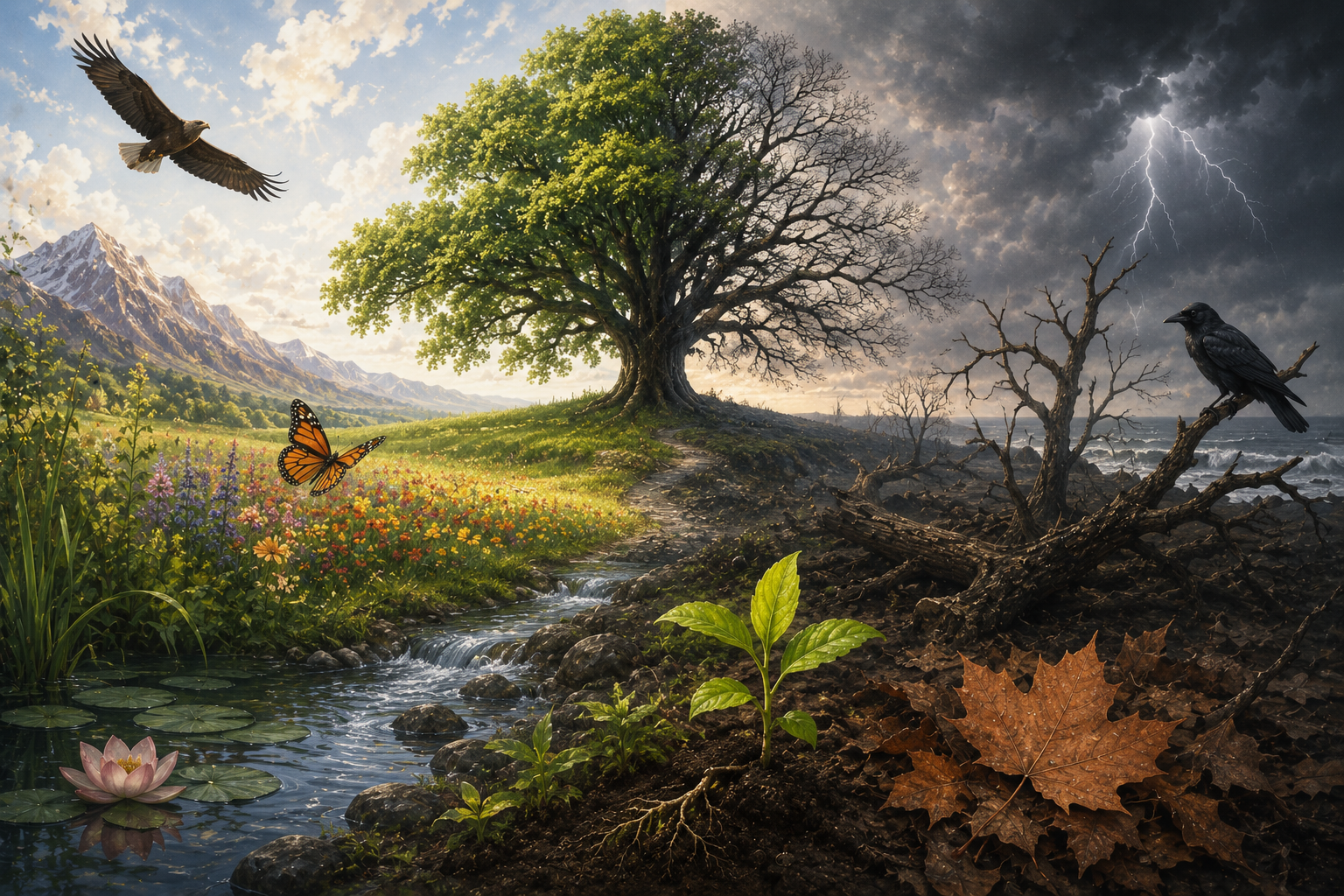
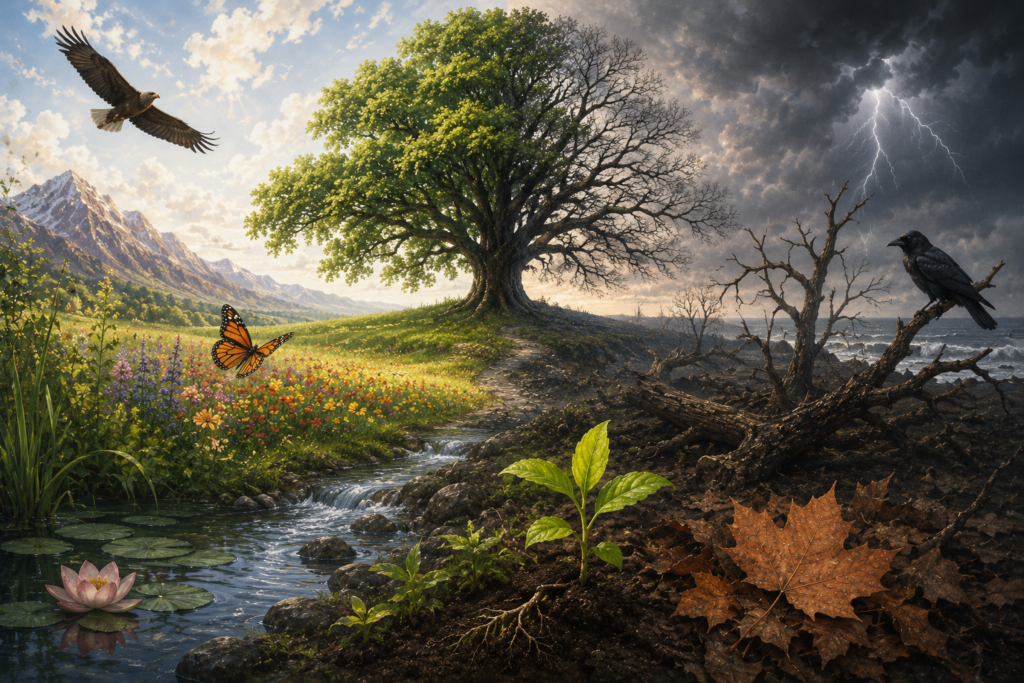
Most Influential Nature Symbolism helps readers see how writers use the natural world to express deep ideas. A forest, storm, garden, or bird can reveal fear, hope, freedom, or change.
This guide explains key nature symbols in famous literature and shows how to read them with confidence.
In this Guide
- Why nature symbolism matters
- Famous examples in literature
- Common nature symbols and meanings
- Recommended books to read
- Major themes linked to nature
- FAQs about nature symbolism
Why Most Influential Nature Symbolism Still Matters
Nature symbols help writers turn simple details into powerful meaning.
Readers remember natural images because they feel close to real life. We all know what storms, seasons, rivers, and sunlight can suggest.
Most Influential Nature Symbolism still matters because it connects human feelings to the world around us. It can show a character’s inner life without a long explanation.
For help with basic symbol spotting, see this guide on how to find symbolism in a story.
Most Influential Nature Symbolism in Classic Literature
Many famous works use nature to shape mood, theme, and character.
In William Shakespeare’s Macbeth, storms and dark skies often reflect disorder. Nature seems broken because Macbeth’s actions break the moral order.
In Emily Brontë’s Wuthering Heights, the wild moors mirror strong emotion. The open land feels harsh, lonely, and free, much like Catherine and Heathcliff.
In Robert Frost’s poetry, paths, woods, and snow often suggest choice and reflection. His poem “The Road Not Taken” is a common classroom example. You can read more Frost poems at the Poetry Foundation.
These works show why Most Influential Nature Symbolism appears so often in literature. Nature gives abstract ideas a clear shape.
Common Patterns in Most Influential Nature Symbolism
Some nature symbols appear again and again because they are easy to recognize.
A forest often stands for mystery, danger, or self-discovery. In many stories, a character enters the woods and comes out changed.
Water can suggest birth, cleansing, or the unknown. A river may show time passing, while the sea may suggest power beyond human control.
Seasons often mark change. Spring can suggest renewal, while winter may suggest death, rest, or emotional coldness.
Light and darkness also carry strong symbolic weight. Light may suggest truth or hope, while darkness may show fear, guilt, or confusion.
Recommended Books for Studying Nature Symbolism
These books offer strong examples for students who want to study nature symbols in action.
- Walden by Henry David Thoreau: A key work about nature, simple living, and self-reflection.
- Wuthering Heights by Emily Brontë: A novel where landscape reflects passion, conflict, and isolation.
- The Grapes of Wrath by John Steinbeck: A novel where dust, land, and weather shape human struggle.
Each book shows Most Influential Nature Symbolism in a different way. One focuses on peace, another on wild emotion, and another on survival.
How to Read Most Influential Nature Symbolism in a Text
Good symbol reading starts with careful attention to repeated details.
Ask what natural image appears more than once. Then ask what happens when it appears. Does the mood shift? Does a character change?
Also notice contrast. A garden in one scene and a storm in the next may show a move from safety to danger.
Do not assume every tree or cloud is a symbol. Strong symbols usually connect to character, conflict, or theme.
If you need a simple method, this article on finding symbolism in fiction can help you build the skill step by step.
Most Influential Nature Symbolism and Major Themes
Nature symbols often point to the biggest ideas in a story.
One major theme is freedom. Birds, open fields, and wide skies often suggest a desire to escape limits.
Another major theme is human weakness. Storms, drought, and harsh land can show how small people are beside nature’s power.
Nature can also reveal moral conflict. In some works, a dying garden may suggest decay in a family or society.
This is why Most Influential Nature Symbolism works so well for essays. It gives students a clear way to connect evidence to theme.
Nature Symbolism in Poetry and Culture
Poets often use nature because a single image can hold many feelings.
Romantic poets such as William Wordsworth saw nature as a source of wisdom and comfort. You can learn more about the Romantic movement from Britannica’s overview of Romanticism.
In many cultures, natural symbols also carry shared meanings. The rose may suggest love, while the oak may suggest strength.
Still, context matters. A flower in one poem may show beauty, but in another it may suggest loss.
FAQ: Most Influential Nature Symbolism
What is Most Influential Nature Symbolism?
Most Influential Nature Symbolism refers to major natural images that have shaped how readers understand literature. Common examples include storms, forests, rivers, seasons, and birds.
Why do authors use nature as a symbol?
Authors use nature because it is familiar and emotional. A natural image can show fear, hope, change, or conflict in a simple way.
How can I tell if something in nature is a symbol?
Look for repetition, strong placement, and links to theme. If a natural detail appears at key moments, it may carry deeper meaning.
What is a strong example of nature symbolism?
The moors in Wuthering Heights are a strong example. They reflect wild feeling, loneliness, and freedom.
Can nature symbolism have more than one meaning?
Yes. A river might suggest life, time, danger, or change. The best meaning depends on the story’s context.
Key Takeaway
Most Influential Nature Symbolism shows how writers use the natural world to express human truth. When you notice patterns in nature images, you can better understand character, mood, and theme.
Nature in literature is rarely just background. It often speaks when characters cannot.


Get the Free Close Reading Worksheet Pack
Join my email list and receive the printable worksheet pack you can use with any novel or poem.
No spam. Just helpful guides for reading literature well.












