

A clear guide to the major ideas, conflicts, and meanings students should notice in The Grapes of Wrath.
Studying the themes in The Grapes of Wrath helps you see why Steinbeck’s novel still feels urgent. The book is not just about one family on the road; it is about poverty, power, hope, and what people owe one another.
In this Guide
Use these sections to review the novel before class, a quiz, or an essay.
- Why the themes in The Grapes of Wrath matter
- Major themes in The Grapes of Wrath
- Social justice and exploitation
- Family and shared survival
- The land and human dignity
- Faith and moral growth
- Writing about the novel
- FAQ
Why the Themes in The Grapes of Wrath Matter
Steinbeck uses the Joad family to show how large social forces shape private lives.
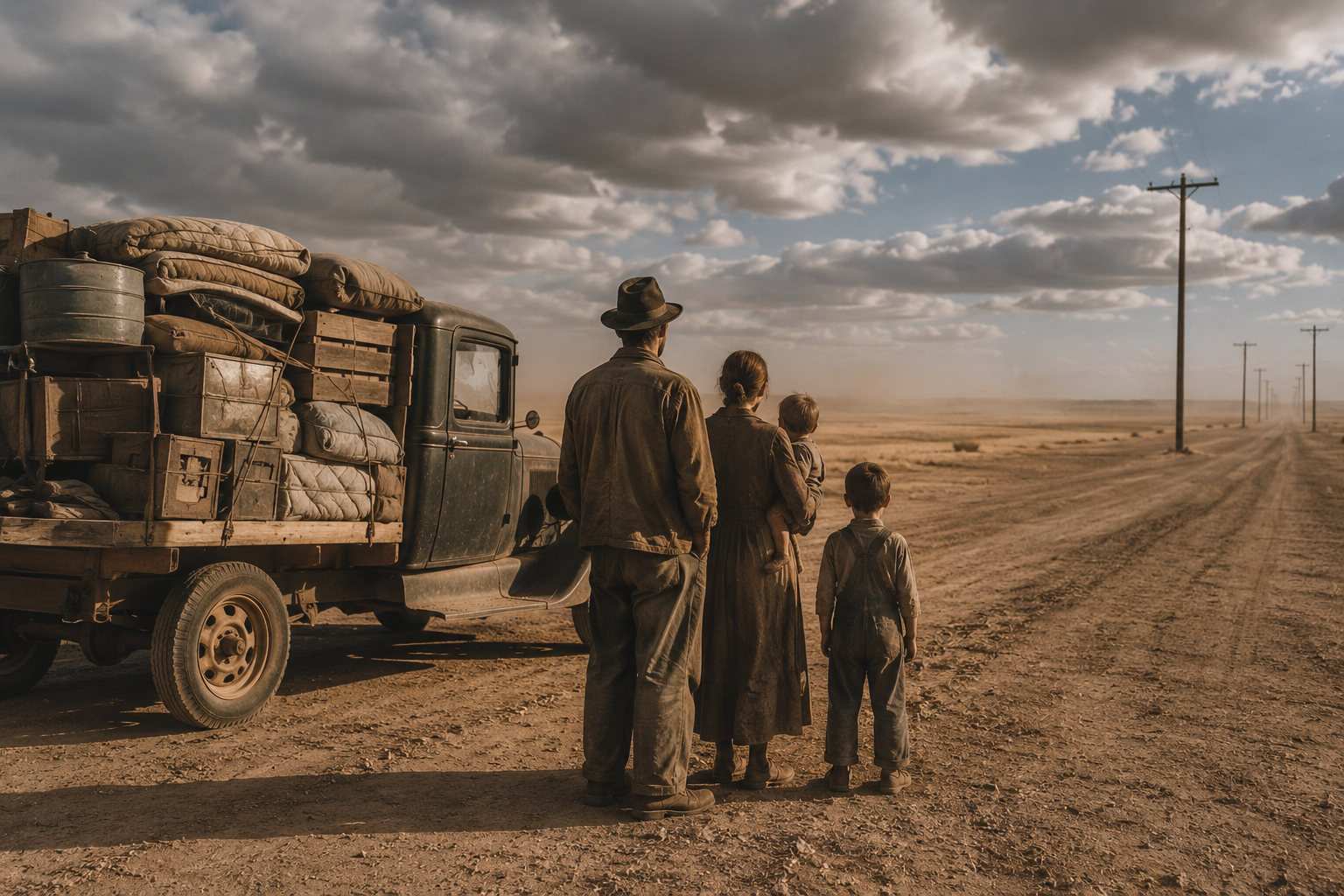
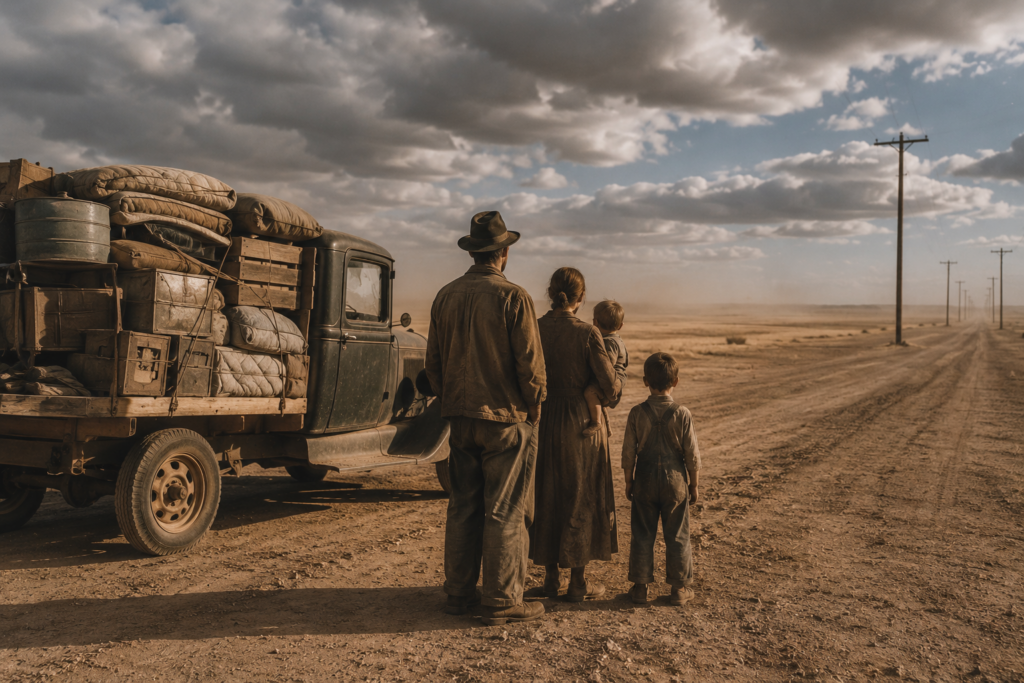
The novel takes place during the Great Depression and the Dust Bowl. Families lose farms, banks gain control, and workers head west because they believe California will offer a fresh start.
The themes in The Grapes of Wrath matter because they connect one family’s struggle to a wider American crisis. Steinbeck asks readers to notice who has power, who suffers, and who gets blamed.
That is why the novel works well in AP Literature and college classes. It gives you strong material for essays about conflict, symbolism, setting, and character change.
Major Themes in The Grapes of Wrath
The novel has many ideas, but a few carry most of the meaning.
The major themes in The Grapes of Wrath include social justice, family, migration, faith, and human dignity. These ideas overlap, so one scene often supports more than one theme.
For example, when the Joads leave Oklahoma, the scene is about poverty. It is also about identity, since the family must leave land that shaped who they are.
Steinbeck also uses short chapters between the Joad chapters. These wide-view chapters show that the Joads are not alone. Their pain belongs to thousands of families.
Social Justice and the Fight Against Exploitation
Steinbeck shows a world where poor workers face systems built to keep them weak.
One of the novel’s strongest ideas is that poverty is not just bad luck. The migrant families are trapped by banks, landowners, police, and unfair wages.
California is supposed to be a place of plenty. Yet workers arrive and find hunger, fear, and low pay. The more desperate the workers become, the easier they are to control.
This theme is similar to the social criticism in Charles Dickens’s Hard Times. Both writers show how money can turn people into tools instead of full human beings.
Jim Casy’s growth is central here. He begins as a former preacher, but he becomes a moral voice for workers. His belief shifts from private sin to public responsibility.
Family, Community, and Shared Survival
The Joads begin as one family, but the novel pushes them toward a larger sense of care.
At first, Ma Joad fights to keep the family together. She believes survival depends on unity. Her strength holds the group steady when fear and grief could break them apart.
As the journey continues, the idea of family changes. The Joads learn that blood ties are not the only bonds that matter. Hungry people share food, news, shelter, and risk.
This shift is one reason the final scene matters so much. Rose of Sharon’s act is shocking, but it shows mercy in its most basic form. A stranger’s life becomes worth saving.
Many students connect this theme to Les Misérables by Victor Hugo. In both works, compassion becomes a way to resist a cruel world.
The Land, Displacement, and Human Dignity
The land is more than a setting in Steinbeck’s novel.
For the tenant farmers, land is memory, work, pride, and family history. Losing it means more than losing income. It means losing the place that gave their lives shape.
Steinbeck often describes tractors as cold and inhuman. The machines tear through farms without care for the people who lived there. This makes the bank and business system feel faceless.
Once the Joads become migrants, they are treated as if they are less than human. People call them names, deny them fair wages, and push them from place to place.
The novel argues that dignity should not depend on money or property. Even when the Joads lose almost everything, their choices still reveal courage.
Faith, Anger, and Moral Growth
Steinbeck does not treat faith as simple belief; he connects it to action.
Jim Casy is the clearest example. He no longer believes in old sermons the same way, but he still searches for truth. His faith becomes less about rules and more about human connection.
Tom Joad also changes. At first, he mostly cares about his own family and his own survival. After Casy’s death, Tom sees that justice needs people who will act for others.
Tom’s famous idea that he will be wherever people fight for fairness shows his moral shift. He becomes part of something larger than himself.
Steinbeck’s view of faith is practical. Belief matters when it leads to courage, mercy, and shared responsibility.
How to Write About Themes in The Grapes of Wrath
A strong essay should connect a theme to specific choices Steinbeck makes.
When you write about the themes in The Grapes of Wrath, avoid a claim that is too broad. Do not just say the novel is about poverty. Say what Steinbeck argues about poverty.
For example, you might argue that Steinbeck presents poverty as a social problem, not a personal failure. Then use scenes with wages, camps, or police pressure as proof.
You can also track a character. Ma Joad shows the theme of family responsibility. Casy shows moral action. Tom shows the move from private anger to public justice.
If you need help with thesis statements and evidence, read this guide on how to write a literary analysis essay.
For a faster review before class, pair this post with our printable The Grapes of Wrath theme guide.
Common Mistakes to Avoid
Students often know the plot but miss how Steinbeck builds meaning.
Do not treat the novel as only a sad road story. The road matters, but it points to bigger questions about power and justice.
Do not ignore the interchapters. They may feel separate from the Joad plot, but they widen the story and prove that the crisis is national.
Do not reduce Ma Joad to a symbol of motherhood. She is also a leader, a realist, and one of the novel’s strongest moral centers.
Helpful Books and Resources
These resources can help you build background and deepen your reading.
- The Grapes of Wrath by John Steinbeck
- Working Days: The Journals of The Grapes of Wrath by John Steinbeck
For author background, see Britannica’s overview of John Steinbeck. It gives helpful context for his life, career, and major works.
FAQ: themes in The Grapes of Wrath
These quick answers can help you review important ideas before a discussion or essay.
What are the main themes in The Grapes of Wrath?
The major themes in The Grapes of Wrath include social justice, family, migration, faith, and human dignity. Steinbeck links these ideas through the Joad family’s journey.
Why are the themes in The Grapes of Wrath still relevant?
They still matter because the novel asks hard questions about poverty, labor, housing, and fairness. Those issues still shape real lives today.
What does the land symbolize in the novel?
The land symbolizes identity, memory, and dignity. When families lose their farms, they lose part of who they are.
How does Tom Joad change?
Tom shifts from personal survival to social responsibility. By the end, he wants to help people beyond his own family.
Key Takeaway
The themes in The Grapes of Wrath show that survival is never just personal. Steinbeck’s deepest point is that people endure best when they refuse to stop caring for one another.


Get the Free Close Reading Worksheet Pack
Join my email list and receive the printable worksheet pack you can use with any novel or poem.
No spam. Just helpful guides for reading literature well.












