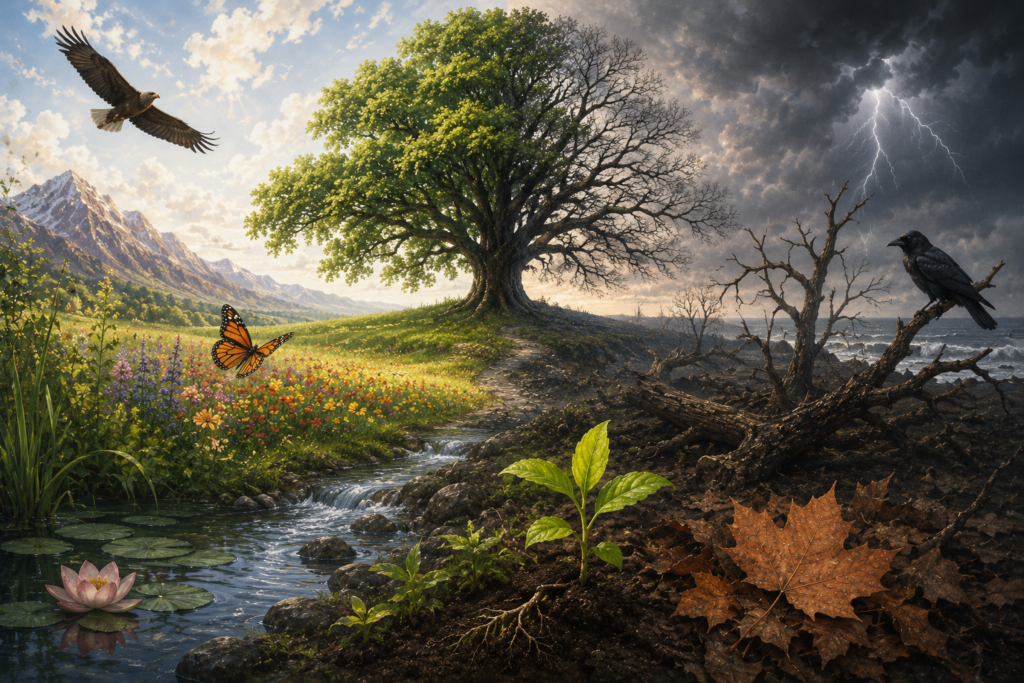
Most Influential Nature Symbolism in Literature

Nature Symbolism
Nature Symbolism

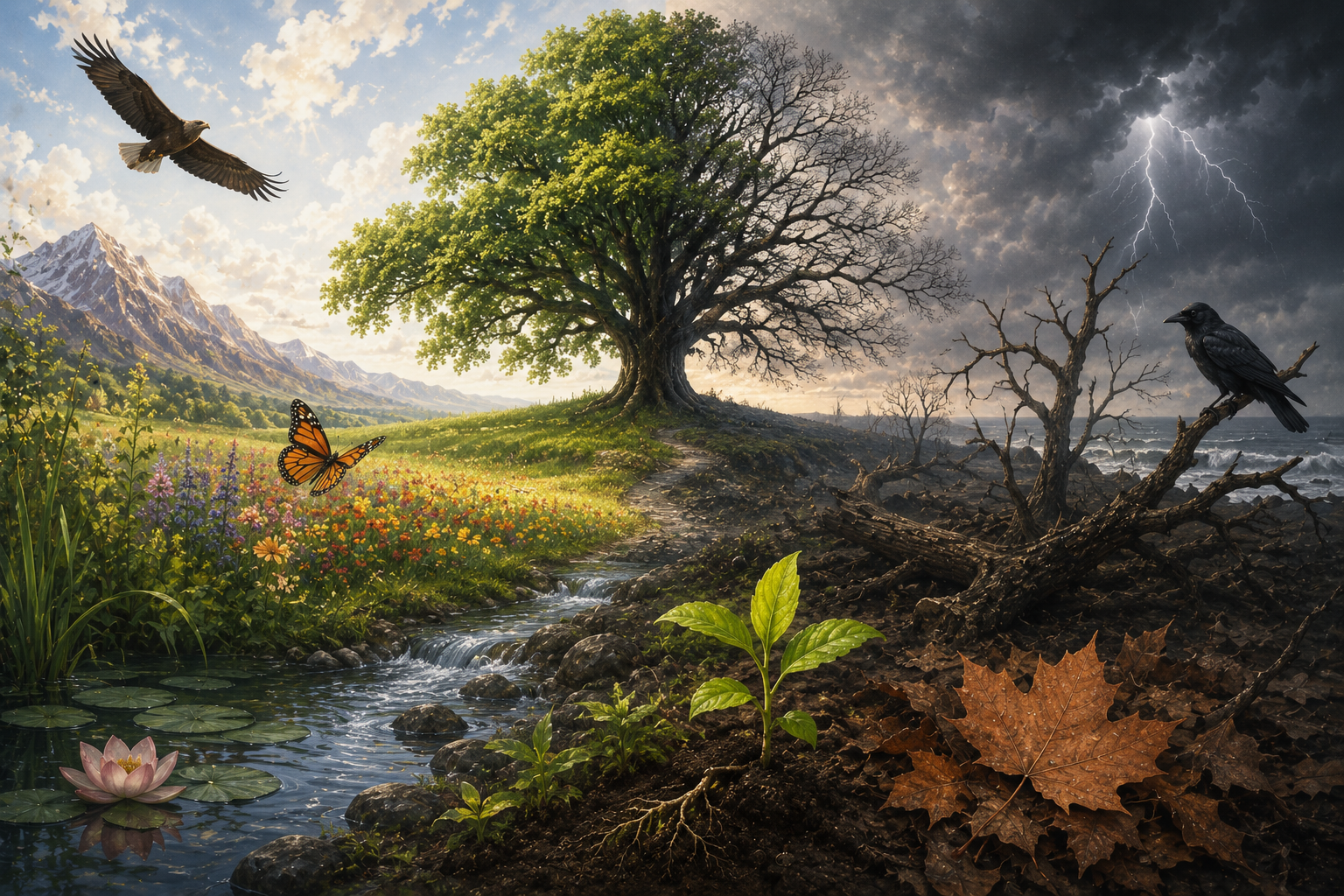
Most Influential Nature Symbolism helps readers see how writers use the natural world to express deep ideas. A forest, storm, garden, or bird can reveal fear, hope, freedom, or change.

This guide explains key nature symbols in famous literature and shows how to read them with confidence.

In this Guide

  • Why nature symbolism matters
  • Famous examples in literature
  • Common nature symbols and meanings
  • Recommended books to read
  • Major themes linked to nature
  • FAQs about nature symbolism

Why Most Influential Nature Symbolism Still Matters

Nature symbols help writers turn simple details into powerful meaning.

Readers remember natural images because they feel close to real life. We all know what storms, seasons, rivers, and sunlight can suggest.

Most Influential Nature Symbolism still matters because it connects human feelings to the world around us. It can show a character’s inner life without a long explanation.

For help with basic symbol spotting, see this guide on how to find symbolism in a story.

Most Influential Nature Symbolism in Classic Literature

Many famous works use nature to shape mood, theme, and character.

In William Shakespeare’s Macbeth, storms and dark skies often reflect disorder. Nature seems broken because Macbeth’s actions break the moral order.

In Emily Brontë’s Wuthering Heights, the wild moors mirror strong emotion. The open land feels harsh, lonely, and free, much like Catherine and Heathcliff.

In Robert Frost’s poetry, paths, woods, and snow often suggest choice and reflection. His poem “The Road Not Taken” is a common classroom example. You can read more Frost poems at the Poetry Foundation.

These works show why Most Influential Nature Symbolism appears so often in literature. Nature gives abstract ideas a clear shape.

Common Patterns in Most Influential Nature Symbolism

Some nature symbols appear again and again because they are easy to recognize.

A forest often stands for mystery, danger, or self-discovery. In many stories, a character enters the woods and comes out changed.

Water can suggest birth, cleansing, or the unknown. A river may show time passing, while the sea may suggest power beyond human control.

Seasons often mark change. Spring can suggest renewal, while winter may suggest death, rest, or emotional coldness.

Light and darkness also carry strong symbolic weight. Light may suggest truth or hope, while darkness may show fear, guilt, or confusion.

Recommended Books for Studying Nature Symbolism

These books offer strong examples for students who want to study nature symbols in action.

  • Walden by Henry David Thoreau: A key work about nature, simple living, and self-reflection.
  • Wuthering Heights by Emily Brontë: A novel where landscape reflects passion, conflict, and isolation.
  • The Grapes of Wrath by John Steinbeck: A novel where dust, land, and weather shape human struggle.

Each book shows Most Influential Nature Symbolism in a different way. One focuses on peace, another on wild emotion, and another on survival.

How to Read Most Influential Nature Symbolism in a Text

Good symbol reading starts with careful attention to repeated details.

Ask what natural image appears more than once. Then ask what happens when it appears. Does the mood shift? Does a character change?

Also notice contrast. A garden in one scene and a storm in the next may show a move from safety to danger.

Do not assume every tree or cloud is a symbol. Strong symbols usually connect to character, conflict, or theme.

If you need a simple method, this article on finding symbolism in fiction can help you build the skill step by step.

Most Influential Nature Symbolism and Major Themes

Nature symbols often point to the biggest ideas in a story.

One major theme is freedom. Birds, open fields, and wide skies often suggest a desire to escape limits.

Another major theme is human weakness. Storms, drought, and harsh land can show how small people are beside nature’s power.

Nature can also reveal moral conflict. In some works, a dying garden may suggest decay in a family or society.

This is why Most Influential Nature Symbolism works so well for essays. It gives students a clear way to connect evidence to theme.

Nature Symbolism in Poetry and Culture

Poets often use nature because a single image can hold many feelings.

Romantic poets such as William Wordsworth saw nature as a source of wisdom and comfort. You can learn more about the Romantic movement from Britannica’s overview of Romanticism.

In many cultures, natural symbols also carry shared meanings. The rose may suggest love, while the oak may suggest strength.

Still, context matters. A flower in one poem may show beauty, but in another it may suggest loss.

FAQ: Most Influential Nature Symbolism

What is Most Influential Nature Symbolism?

Most Influential Nature Symbolism refers to major natural images that have shaped how readers understand literature. Common examples include storms, forests, rivers, seasons, and birds.

Why do authors use nature as a symbol?

Authors use nature because it is familiar and emotional. A natural image can show fear, hope, change, or conflict in a simple way.

How can I tell if something in nature is a symbol?

Look for repetition, strong placement, and links to theme. If a natural detail appears at key moments, it may carry deeper meaning.

What is a strong example of nature symbolism?

The moors in Wuthering Heights are a strong example. They reflect wild feeling, loneliness, and freedom.

Can nature symbolism have more than one meaning?

Yes. A river might suggest life, time, danger, or change. The best meaning depends on the story’s context.

Key Takeaway

Most Influential Nature Symbolism shows how writers use the natural world to express human truth. When you notice patterns in nature images, you can better understand character, mood, and theme.

Nature in literature is rarely just background. It often speaks when characters cannot.
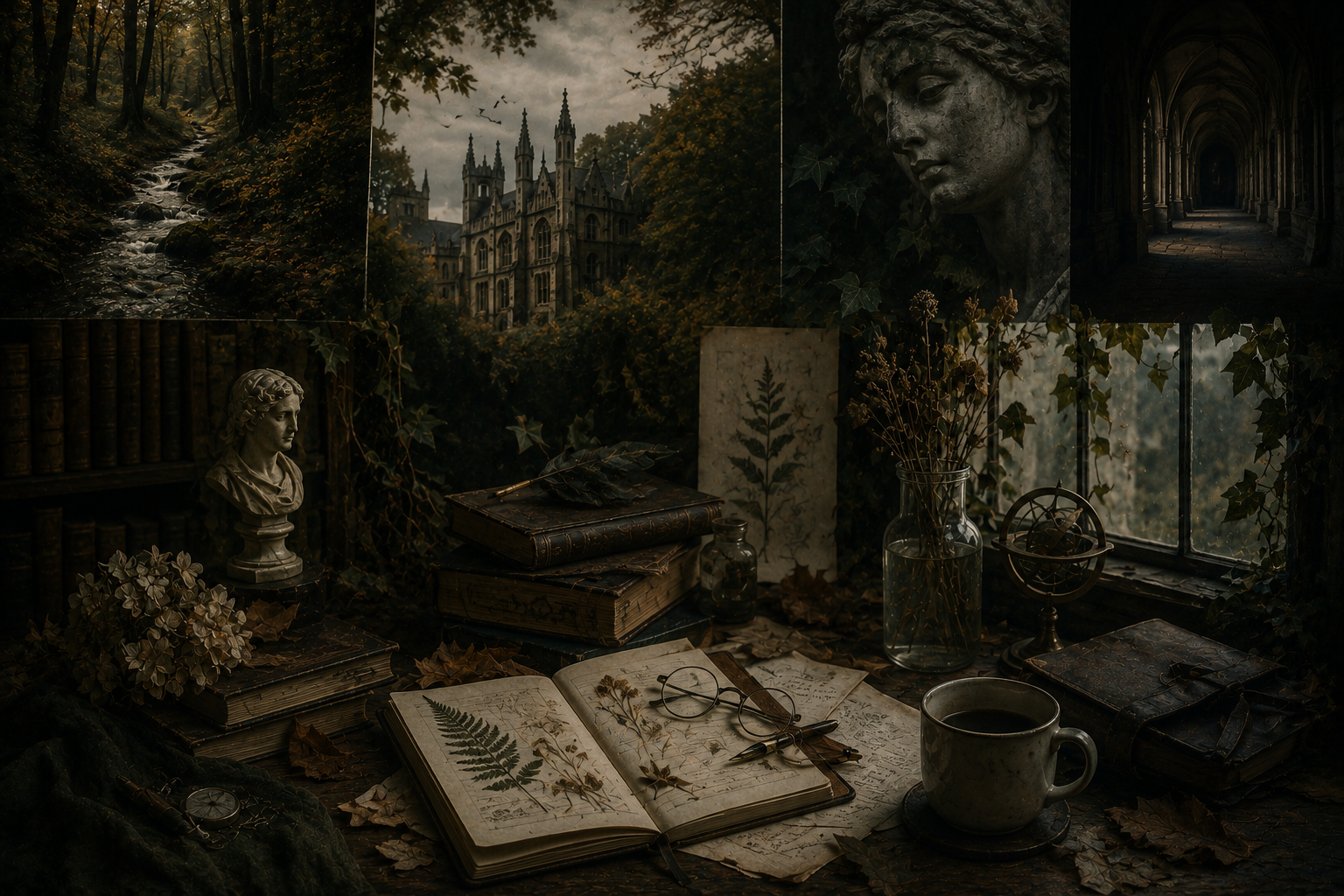
Best Dark Academia Nature Symbolism: Books, Themes, and Meanings

Nature Symbolism

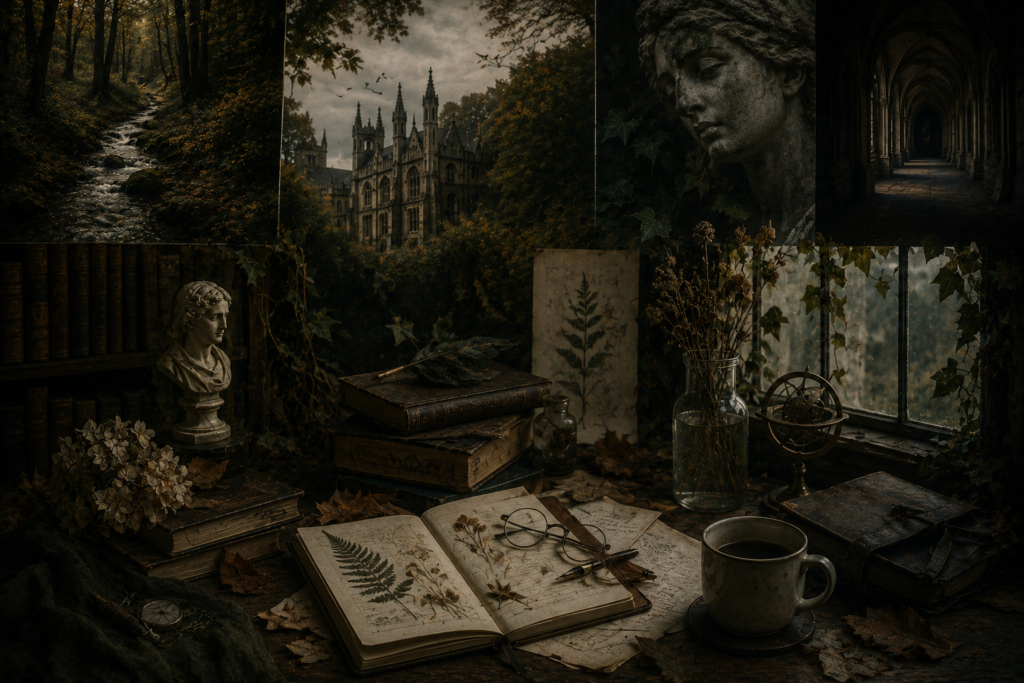
Best Dark Academia Nature Symbolism blends old libraries, secret knowledge, wild gardens, storms, and decay. It helps readers see how nature can reflect ambition, fear, beauty, and moral trouble in literature.

For students, this kind of symbolism is useful because it turns setting into meaning. A forest, flower, or cold season can say as much as a character’s speech.

In this Guide

  • Why nature matters in dark academia
  • Common symbols and what they mean
  • Best examples from literature
  • Recommended books to read
  • How to analyze nature symbolism
  • FAQs and key takeaway
Nature Symbolism

Why Best Dark Academia Nature Symbolism Feels So Powerful

Nature in dark academia often looks beautiful, but it rarely feels safe.

Best Dark Academia Nature Symbolism works because it connects the mind with the natural world. A quiet campus garden can hide guilt. A storm can show panic. A dying flower can point to lost innocence.

Dark academia often focuses on elite schools, ancient texts, and intellectual pride. Nature adds pressure to that world. It reminds readers that knowledge does not protect anyone from death, desire, or consequence.

This is why rain, fog, ivy, winter, and forests appear so often in the genre. They create mood, but they also carry meaning.

Common Symbols in Best Dark Academia Nature Symbolism

Many dark academia stories use the same natural images, but each writer gives them a fresh purpose.

Ivy often suggests age, tradition, and hidden control. It climbs over old buildings like history itself. In a school setting, ivy can make knowledge look noble, but it can also make the past feel trapped and overgrown.

Fog suggests confusion and secrecy. When characters walk through fog, they may not understand what is true. It can also show moral blindness.

Autumn leaves point to beauty and decay. Their color is rich, but their life is ending. This fits dark academia’s love of elegant ruin.

Rain can mean cleansing, sorrow, or dread. In many stories, rain appears near guilt or confession. It can wash the world, but it cannot always wash away a crime.

Best Dark Academia Nature Symbolism often turns these simple images into emotional clues. The setting tells readers what characters refuse to say.

Best Dark Academia Nature Symbolism in Classic Literature

Classic literature gives us some of the clearest examples of nature as a symbol.

In Mary Shelley’s Frankenstein, mountains, ice, and storms reflect Victor Frankenstein’s fear and pride. Nature is powerful, vast, and beyond human control. Victor tries to master life, but the natural world keeps showing how small he is.

In Emily Brontë’s Wuthering Heights, the moors are wild and harsh. They mirror the force of Catherine and Heathcliff’s emotions. The landscape feels untamed, just like their love and anger.

In Oscar Wilde’s The Picture of Dorian Gray, flowers, gardens, and beauty often connect to temptation and decay. Dorian’s world looks lovely, but moral rot grows beneath the surface.

These works are not always called dark academia, but they shape its mood. Their use of nature helps explain why Best Dark Academia Nature Symbolism feels old, serious, and haunted.

For more help with close reading, see this guide on how to find symbolism in a story.

Nature, Knowledge, and Moral Decay

In dark academia, nature often shows what learning cannot fix.

Students and scholars may chase truth, beauty, or power. Yet nature keeps reminding them that every choice has a cost. Dead leaves, cold rooms, and rotting gardens can show inner damage.

This is a key part of Best Dark Academia Nature Symbolism. The natural world becomes a mirror. It reflects ambition, guilt, and fear.

A character may study Greek tragedy in a grand library, but the storm outside may reveal the real tragedy. The weather becomes part of the story’s moral voice.

These books are strong choices for students who want to see how dark settings and natural symbols work together.

  • Frankenstein by Mary Shelley
  • Wuthering Heights by Emily Brontë
  • The Secret History by Donna Tartt

Frankenstein is one of the best books for studying nature as power. Its icy landscapes and violent weather show the danger of human pride.

Wuthering Heights uses the moors as more than a setting. They become a symbol of passion, grief, and wild freedom.

The Secret History is a modern dark academia classic. Its campus, seasons, and remote landscapes help create a sense of beauty mixed with dread.

To explore Mary Shelley’s life and influence, you can visit Britannica’s biography of Mary Shelley. For poetry and nature imagery, the Poetry Foundation is also a useful resource.

How to Read Best Dark Academia Nature Symbolism

Good symbolism starts with careful attention to patterns.

When you read, notice when nature appears. Ask what happens before and after a storm, garden scene, forest walk, or change in season.

Then ask how the image connects to character emotion. If a student walks through dead leaves after a betrayal, the leaves may point to loss or moral decline.

Best Dark Academia Nature Symbolism is rarely random. Writers choose natural details to build mood and deepen theme.

If you want a simple method, use this breakdown on finding symbolism in fiction.

Best Dark Academia Nature Symbolism and Major Themes

The strongest symbols connect to the story’s biggest ideas.

One major theme is the danger of ambition. Mountains, storms, and deep forests can make human plans seem fragile. This is clear in Frankenstein.

Another theme is the beauty of decay. Autumn leaves, old gardens, and ivy-covered walls look lovely, but they also suggest death and decline.

A third theme is hidden truth. Fog, darkness, and enclosed gardens can show secrets that characters try to bury.

In this way, Best Dark Academia Nature Symbolism turns nature into a quiet warning. Beauty may be real, but it is never simple.

FAQs About Best Dark Academia Nature Symbolism

What is Best Dark Academia Nature Symbolism?

Best Dark Academia Nature Symbolism means the use of natural images, like storms, ivy, forests, and seasons, to express dark academia themes. These themes often include ambition, guilt, beauty, and decay.

Why does dark academia use so much autumn imagery?

Autumn fits the mood because it is beautiful and sad at the same time. It suggests change, age, and the slow approach of death.

Is nature symbolism only about mood?

No. Mood matters, but symbolism also points to theme and character. A storm may create fear, but it can also reveal guilt or conflict.

What book is best for studying this topic?

Frankenstein is a strong choice. Its use of ice, mountains, and storms makes nature a major part of the story’s meaning.

Key Takeaway

Best Dark Academia Nature Symbolism shows that nature in literature is never just background. Ivy, fog, storms, and fading leaves can reveal the hidden fears, desires, and moral choices at the heart of a story.

When you notice these symbols, dark academia becomes richer. The campus, the weather, and the wild places all begin to speak.

Symbols in King Lear: What They Mean and Why They Matter

King Lear symbols

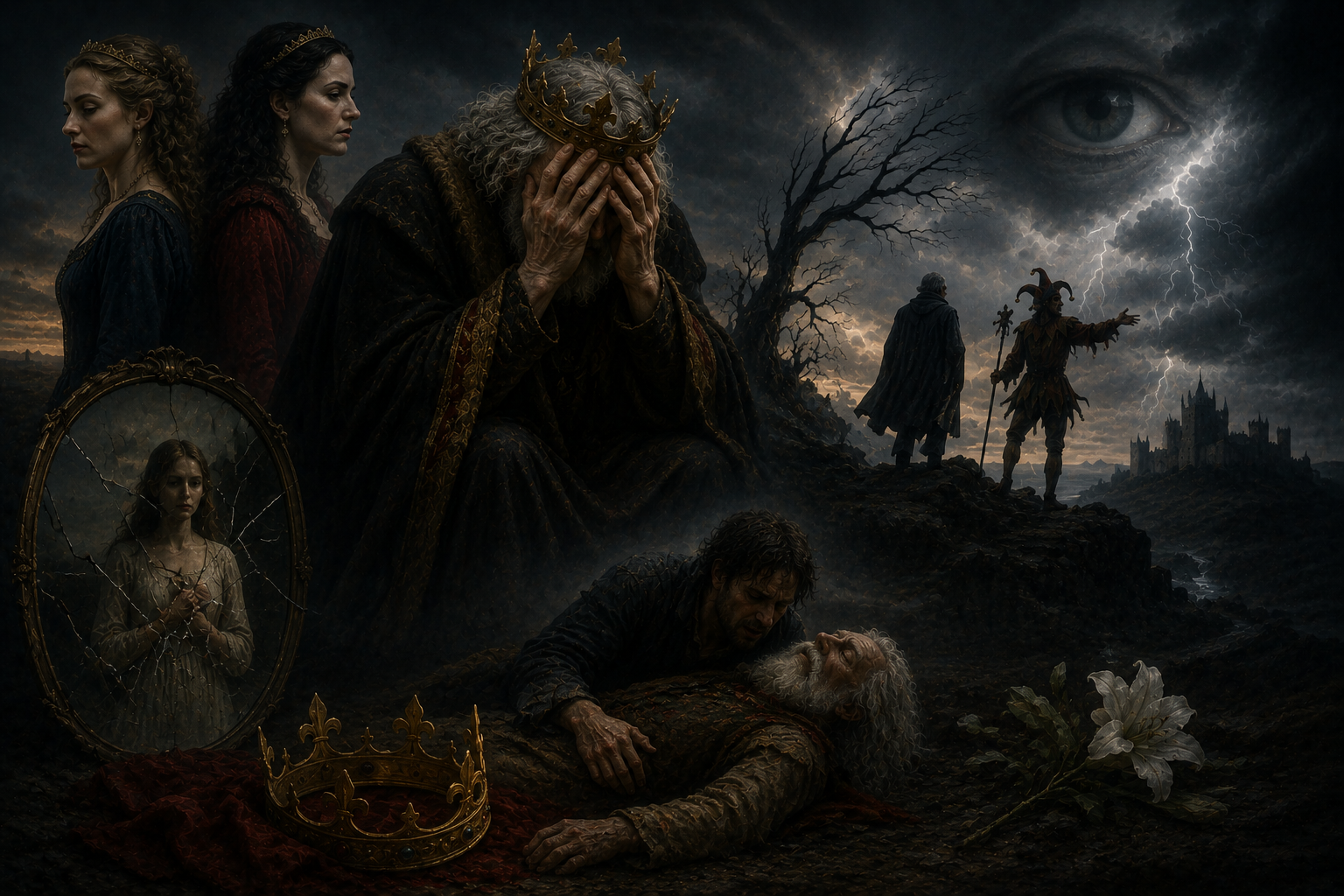
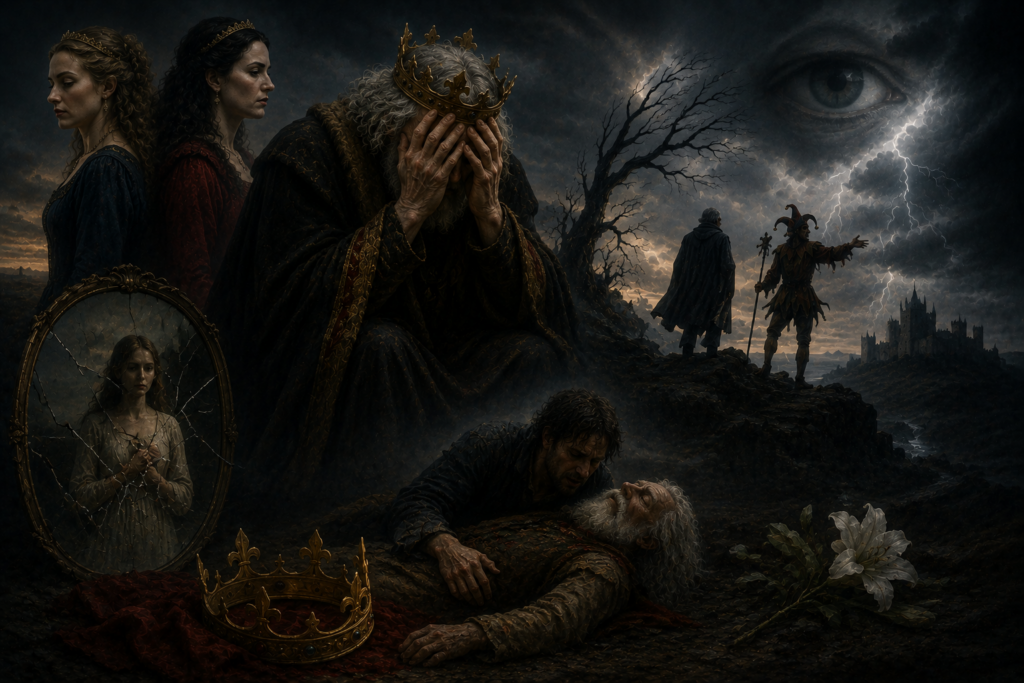
Shakespeare fills King Lear with repeated images that do more than decorate the play. The symbols in King Lear help show how power fails and how pain can lead to insight.

This guide explains the major symbols in simple terms, with examples you can use in class or in an essay.

In this Guide

Use this quick map to jump to the symbol you need.

  • Why symbols in King Lear matter
  • Crowns and power
  • Clothes and nakedness
  • The storm
  • Eyes and blindness
  • Animal images
  • The word nothing
  • How to write about the symbols
King Lear symbols

Why symbols in King Lear matter

Shakespeare uses symbols to make the play feel larger than one family fight.

When you track symbols in King Lear, you see that the plot is not only about an old king and his daughters. It is about weak judgment, false love, pride, and the search for truth.

A symbol is an object, image, word, or action that points to a deeper idea. If you want a broader method, read our guide on how to find symbolism in a story.

Crowns, power, and the empty title

The crown shows how power can lose its meaning when wisdom is gone.

At the start, Lear gives away his kingdom but wants to keep the respect of a king. This split matters. He gives up real power but still expects royal treatment.

The crown becomes a symbol of empty authority. Lear wants the name of king without the duty that comes with it.

This connects to a key theme: power is dangerous when it rests on pride instead of judgment. Lear learns too late that a title cannot protect him from betrayal.

You can compare this to the throne in many history plays. In Shakespeare, a crown often stands for order, but it can also expose greed and weakness.

Clothes and nakedness

Clothing shows how thin the line is between social rank and human need.

Lear begins the play surrounded by robes, knights, and formal speech. These outward signs tell others that he is important.

Later, on the heath, he meets Poor Tom, who seems almost naked. Lear looks at him and asks what humans are without the extra layers of wealth and status.

This is where clothing becomes a symbol of social masks. Fine clothes hide the body, but they also hide fear, guilt, and selfishness.

The theme is clear: class does not make a person more human. Suffering strips Lear down until he can feel pity for people he once ignored.

The storm as one of the major symbols in King Lear

The storm turns Lear’s inner pain into something we can see and hear.

In Act 3, Lear stands outside in violent weather. The storm reflects his broken mind, but it also shows a kingdom in chaos.

Among the symbols in King Lear, the storm may be the most dramatic. Thunder and wind make the stage feel wild, as if nature itself reacts to human cruelty.

The storm also tests Lear. Away from the court, he starts to see the disadvantaged with new compassion. His suffering opens a moral door.

This symbol works a bit like the green light in The Great Gatsby. It is concrete, but it points beyond itself to longing and loss.

Eyes and blindness as symbols in King Lear

Sight in the play often has less to do with eyes than with understanding.

Lear has working eyes, but he cannot see Cordelia’s honesty. He trusts Goneril and Regan because they flatter him with big speeches.

Gloucester makes a similar mistake. He trusts Edmund and rejects Edgar. His literal blinding later makes the symbol painful and clear.

This is one of the easiest symbols in King Lear to use in an essay because it ties directly to theme. The play suggests that people often gain insight only after deep suffering.

A similar pattern appears in Oedipus Rex. Oedipus can see the world, but he is blind to the truth about himself until it is too late.

Animal images and human cruelty

Animal language shows what happens when family love turns fierce.

Characters in the play often describe others as beasts. Lear speaks of sharp teeth, cruel daughters, and unnatural behavior.

These animal images do not mean that nature is evil. They show that humans can act below their own moral level.

The theme here is betrayal. Goneril and Regan break the basic bond between parent and child, so Lear sees them as creatures without pity.

Shakespeare uses animal imagery in other plays too. In Macbeth, such images often point to violence and moral disorder.

Nothing, silence, and broken language

The word nothing becomes a symbol of truth that proud people cannot accept.

When Lear asks his daughters to prove their love, Cordelia says, Nothing, my lord. She refuses to turn love into a show.

Lear answers, Nothing will come of nothing. He thinks silence means lack of love, but the audience can see that Cordelia’s silence is more honest than her sisters’ speeches.

As the play goes on, language breaks down. The Fool uses riddles, Lear speaks in bursts of pain, and polite court language begins to fail.

The theme is truth. In this world, smooth words may hide lies, while silence may hold real love.

How to study symbols in King Lear

A strong symbol becomes easier to explain when you connect it to a theme.

The best way to read symbols in King Lear is to ask two questions. What repeats? What larger idea does it reveal?

For example, do not just say the storm symbolizes anger. Say it shows Lear’s inner chaos and the collapse of order in the kingdom.

Do not just say Gloucester is blind. Explain how physical blindness matches the play’s concern with moral sight.

For extra practice, pair the play with a printable symbolism practice page and mark each symbol beside the theme it supports.

Helpful sources for context

These sources can help you check background details and deepen your reading.

Suggested books

These titles are useful for students who want more support with Shakespeare.

  • King Lear by William Shakespeare, Folger Shakespeare Library edition
  • Shakespeare After All by Marjorie Garber

FAQ about symbols in King Lear

Here are quick answers to common student questions.

What are the main symbols in King Lear?

The main symbols in King Lear include the storm, blindness, clothing, crowns, and animal imagery. Each one connects to a major theme.

What does the storm symbolize?

The storm symbolizes Lear’s mental pain and the disorder in the kingdom. It also helps Lear see human suffering more clearly.

Why is blindness important in the play?

Blindness shows the gap between seeing with the eyes and seeing the truth. Lear and Gloucester both misjudge the people closest to them.

What does clothing symbolize?

Clothing symbolizes rank and social disguise. When Lear loses comfort and status, he begins to understand what all humans share.

Key Takeaway

The symbols in King Lear matter because they turn big themes into vivid stage images. Storms, blind eyes, torn status, and plain words all show Lear’s painful path toward truth.

Most Beautiful Water Symbolism in Literature: Meaning, Themes, and Books to Read

water symbolism
water symbolism

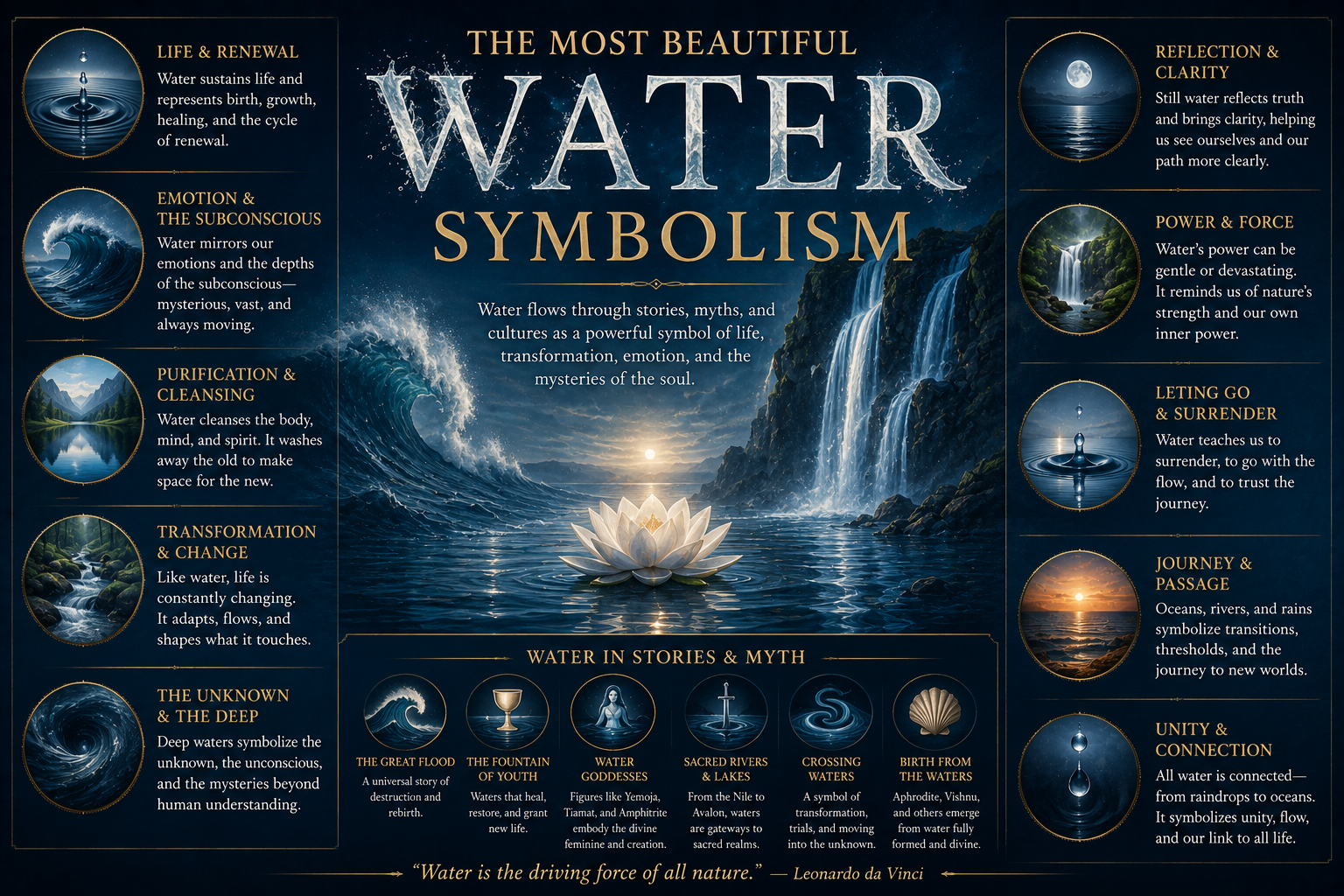
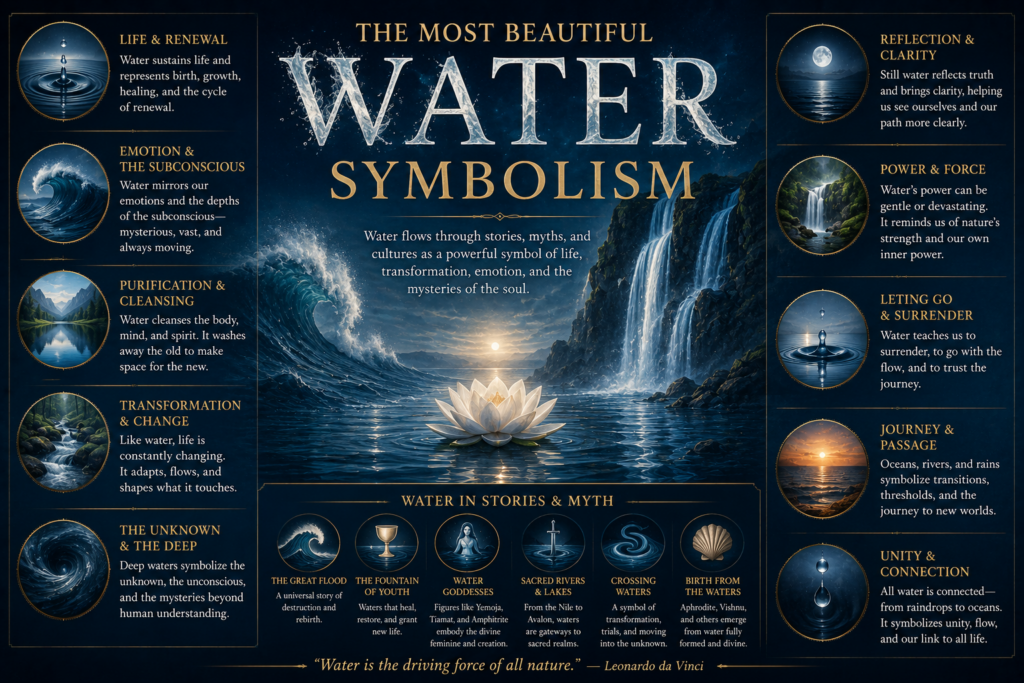
Most Beautiful Water Symbolism shows how rivers, rain, oceans, and lakes can carry deep meaning in a story. Water can stand for life, change, fear, memory, grief, or hope, often in the same scene.

For students, water is one of the easiest symbols to notice because it appears in so many famous books and poems. Once you learn what to look for, it can make a story feel richer and more alive.

In this Guide

  • What water symbolism means
  • Why Most Beautiful Water Symbolism matters
  • Common meanings of water in literature
  • Famous examples from books and poems
  • Recommended books to read
  • FAQs about water symbolism

What Does Water Symbolism Mean?

Water often points to emotions that characters cannot say out loud.

In literature, water is rarely just water. A river can show a journey. Rain can mark sorrow or renewal. An ocean can suggest freedom, danger, or the unknown.

Writers use water because readers already feel its power. We know water can heal, destroy, wash away, and return again. That makes it a strong symbol for human life.

If you want a simple method for spotting symbols, this guide on how to find symbolism in a story can help you build the skill step by step.

Why Most Beautiful Water Symbolism Feels So Powerful

The beauty of water symbolism comes from its many sides.

Most Beautiful Water Symbolism works because water is never only one thing. It can be calm in one scene and violent in the next. It can save a character or trap them.

This is why water feels so human. People also change. We can feel peaceful, afraid, hopeful, or lost, sometimes all in one day.

In many stories, water becomes a mirror. It reflects what a character hides inside. A quiet lake may show calm, but it may also hide pain below the surface.

Most Beautiful Water Symbolism and Common Meanings

Water symbols often connect to life, death, change, and truth.

One common meaning is rebirth. A character who enters water may come out changed. This can feel like a fresh start, even if the story stays painful.

Water can also mean danger. Storms, floods, and deep seas often show forces that people cannot control. This makes water a strong symbol for fate or fear.

Another meaning is memory. Rivers and oceans move, but they also seem ancient. In this way, Most Beautiful Water Symbolism can connect a character’s private life to a larger past.

Water can also suggest truth. A clear pool may show what is hidden. Muddy water may suggest confusion, lies, or moral doubt.

Famous Examples of Water Symbolism in Literature

Many classic works use water to shape mood and meaning.

In The Odyssey by Homer, the sea is both a road and an enemy. Odysseus wants to return home, but the ocean delays him again and again. The water stands for struggle, distance, and the test of human will.

In Moby-Dick by Herman Melville, the ocean feels endless and mysterious. It becomes a place where obsession grows. Captain Ahab’s search across the sea shows how the unknown can pull a person toward ruin.

In Shakespeare’s The Tempest, a storm at sea begins the action. The water helps create fear, magic, and change. It pushes characters into a strange world where old wrongs must face judgment.

In T. S. Eliot’s poem The Waste Land, water is tied to both need and fear. The poem’s dry land suggests spiritual emptiness, while water hints at renewal. You can read more about the poem through the Poetry Foundation.

Most Beautiful Water Symbolism in Modern Reading

Modern readers still connect with water because it feels close to daily life.

Most Beautiful Water Symbolism is not limited to old books. It appears in novels about family, identity, trauma, and survival. Water often helps writers show emotions that are hard to name.

For example, rain in a modern novel may mark grief after a death. A beach may show escape from stress. A river may stand for a choice that cannot be undone.

This is why water symbols work well in class essays. They let you connect setting, character, and theme in a clear way.

Recommended Books with Most Beautiful Water Symbolism

These books are strong choices for students who want to study water symbols.

  • The Odyssey by Homer: A classic journey story where the sea tests courage, pride, and longing for home.
  • Moby-Dick by Herman Melville: A deep study of obsession, mystery, and the danger of chasing one idea too far.

Both books show Most Beautiful Water Symbolism in very different ways. One treats water as a hard path home. The other turns the ocean into a vast space of fear and wonder.

For a wider look at how symbols work in literature, Britannica’s overview of symbolism gives useful background.

How to Write About Water Symbolism in an Essay

A strong essay links the water image to a clear idea.

Start with the scene. Ask what kind of water appears. Is it rain, ocean, river, lake, or flood?

Then ask what the character feels in that moment. Water symbolism is strongest when it connects to conflict, choice, or change.

Last, connect the symbol to a theme. If a character crosses a river, the theme may involve growth or loss. If a storm breaks, the theme may involve fear, guilt, or truth.

For more practice, use this helpful guide on finding symbolism in fiction before you draft your paragraph.

Most Beautiful Water Symbolism and Major Themes

Water often gives a story its emotional center.

Most Beautiful Water Symbolism often links to change. Water moves, shifts, and reshapes the world. Characters who meet water often face a turning point.

It also links to cleansing. A bath, rainfall, or river can suggest a wish to remove guilt or pain. Yet the story may ask whether a person can truly wash the past away.

Water also links to the unknown. Deep water can hide danger, secrets, or truth. This makes it useful in stories about fear and discovery.

FAQs About Most Beautiful Water Symbolism

What is Most Beautiful Water Symbolism in literature?

Most Beautiful Water Symbolism refers to powerful water images that carry deep meaning. These images may show life, change, danger, memory, or renewal.

Why do writers use water as a symbol?

Writers use water because it is familiar and emotional. Readers understand its power to comfort, harm, hide, and reveal.

What does rain usually symbolize?

Rain can symbolize sadness, cleansing, rebirth, or tension. The meaning depends on the scene and the character’s state of mind.

What does the ocean symbolize in books?

The ocean often symbolizes mystery, freedom, danger, or the unknown. In many stories, it also shows how small people feel against nature.

How can I find water symbolism in a story?

Look for repeated water images and ask what changes when they appear. If water appears during a key choice or crisis, it likely has symbolic meaning.

Key Takeaway

Most Beautiful Water Symbolism matters because water can hold many truths at once. It can show hope and fear, peace and danger, life and loss.

When you notice water in a story, slow down. Ask what it reveals about the character, the mood, and the theme. That simple question can open the whole text. 🌊

Themes in Their Eyes Were Watching God: A Student-Friendly Guide

Their Eyes Were Watching God Themes

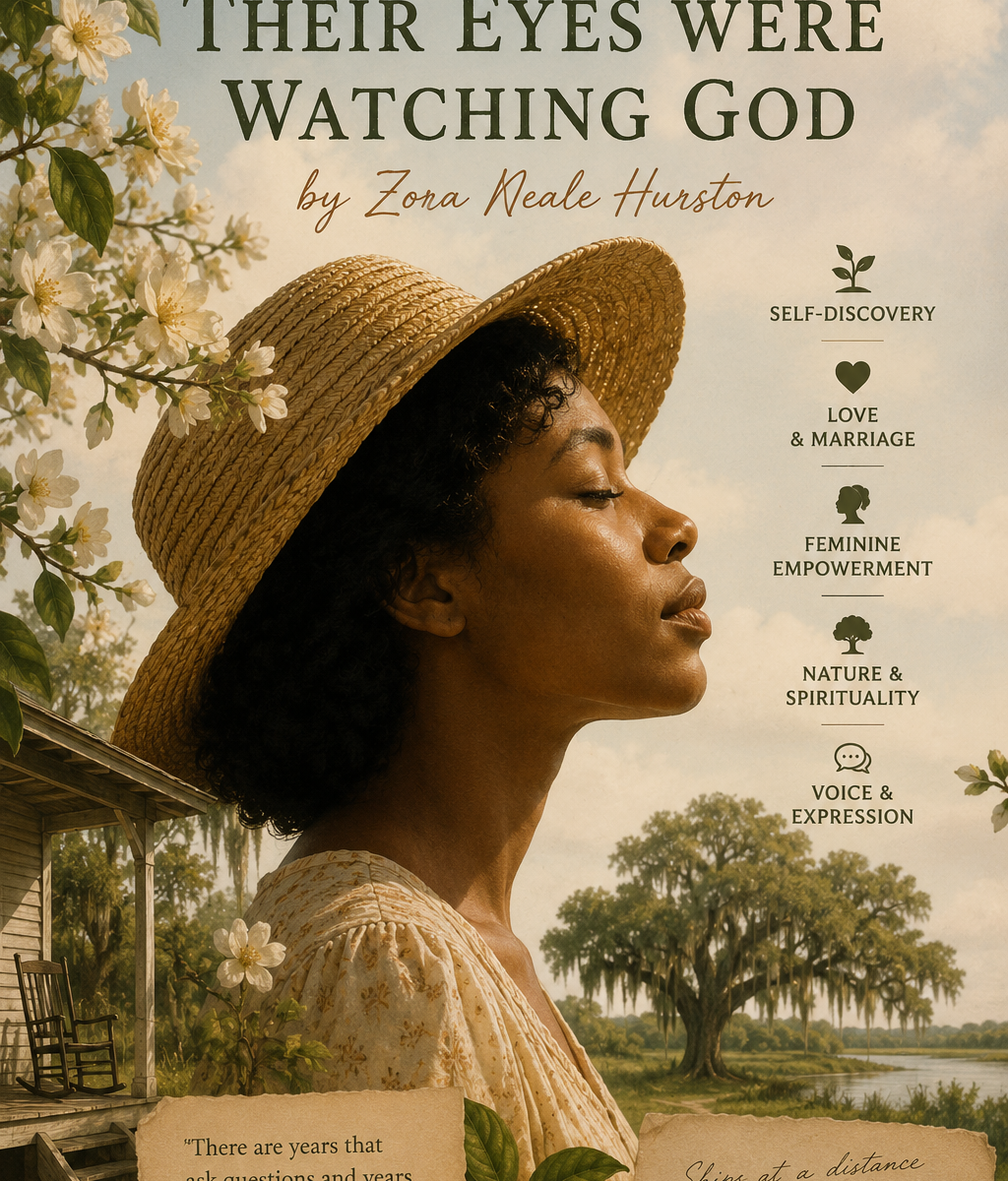
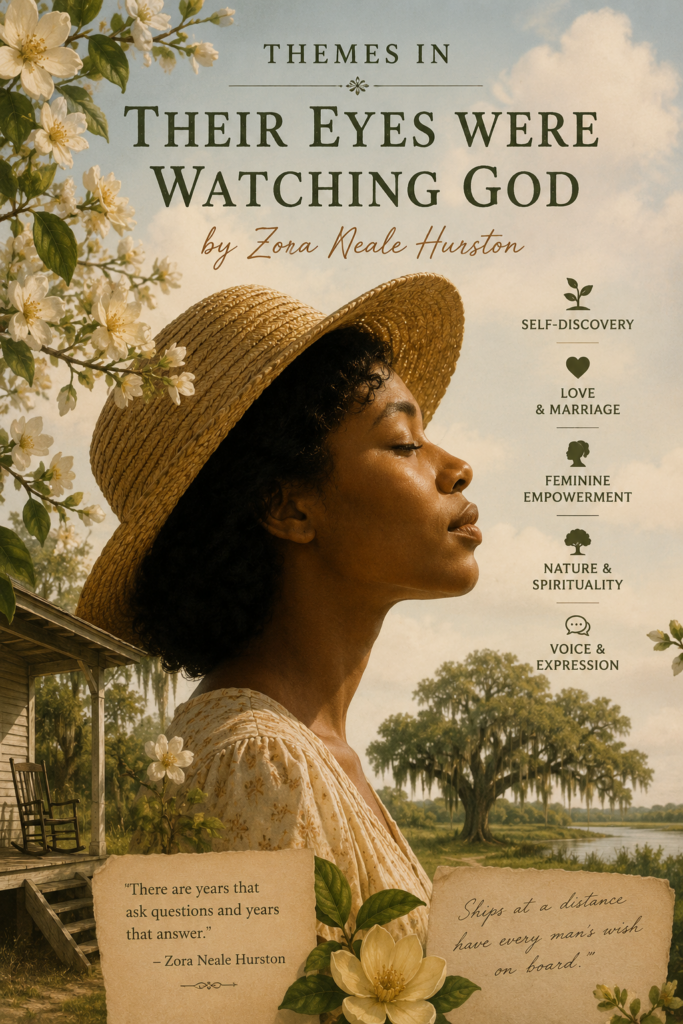
Zora Neale Hurston’s novel follows Janie Crawford as she searches for love, voice, and a life that feels like her own. The themes in Their Eyes Were Watching God help students see why Janie’s story still matters in classrooms today.

In this Guide

Use this guide to focus your reading and prepare for class discussion.

Their Eyes Were Watching God Themes

Why the themes in Their Eyes Were Watching God Matter

The novel is not just about what happens to Janie. It is about what she learns as she moves through love, pain, and freedom.

The themes in Their Eyes Were Watching God show how hard it can be to find yourself when others keep trying to define you. Janie’s life is shaped by family pressure, marriage, gossip, race, and gender roles.

Hurston also writes with deep respect for Black Southern speech and culture. You can learn more about her life and work through Britannica’s profile of Zora Neale Hurston.

Major themes in Their Eyes Were Watching God

These are the main ideas students should track as they read the novel.

Self-discovery and voice

Janie’s biggest journey is the search for her own voice. At first, other people speak for her or decide what her life should mean.

Logan Killicks sees her as labor. Jody Starks sees her as a symbol of his power. Tea Cake gives her more space to speak, but Janie still must learn to stand on her own.

This theme is clear at the end when Janie tells her story to Pheoby. Her voice becomes proof that she survived and grew.

Love and control

Love and power are often tied together in the novel. Hurston asks whether love can be real if one person tries to control the other.

Janie’s first marriage gives her safety but no joy. Her second marriage gives her status but takes away freedom. With Tea Cake, love feels more alive, but it is not perfect.

A useful comparison is Jane Eyre by Charlotte Brontë. Like Janie, Jane wants love, but she also wants respect and self-rule.

Gender roles and power

Janie lives in a world where men often expect women to stay quiet. Jody makes this clear when he keeps Janie off the porch and away from public talk.

The porch becomes more than a place. It shows who has a voice and who gets pushed aside.

Janie’s growth comes when she stops living only by other people’s rules. She does not reject love, but she refuses to disappear inside it.

Race, community, and judgment

The novel shows Black community life with humor, beauty, conflict, and pressure. Eatonville is a place of pride, but it is also full of gossip and judgment.

People watch Janie closely because she does not always fit what they expect. Her return in overalls shocks the town because they judge her before they hear her story.

This is one reason the frame story matters. Janie’s own account pushes back against the town’s narrow view of her life.

Nature, God, and fate

Nature is powerful in the novel. The pear tree, the mule, the horizon, and the hurricane all point to forces larger than daily life.

The hurricane is one of the clearest examples. It reminds readers that human plans can be broken by forces no one can control.

The title itself points to this idea. During the storm, the characters look toward God because they know human power has limits.

Symbols That Support the themes in Their Eyes Were Watching God

Hurston’s symbols help turn ideas into images students can remember.

The pear tree represents Janie’s early dream of love. She sees beauty, union, and desire in the natural world.

The horizon stands for possibility. Janie keeps reaching toward a life that feels wider than the one others choose for her.

The mule shows burden and mistreatment. It connects to the way people, especially women, can be used by others.

These symbols make the themes in Their Eyes Were Watching God easier to trace. If you want more help with this skill, read our guide on how to find symbolism in a story.

How Hurston’s Style Builds Meaning

The way Hurston tells the story is just as important as the plot.

Hurston uses a frame story, which means Janie tells her past from a later point in her life. This gives Janie control over her own story.

The novel also shifts between poetic narration and spoken dialogue. This mix helps readers hear both Janie’s inner life and the life of her community.

For context on the wider literary movement around Hurston’s era, see Poetry Foundation’s introduction to the Harlem Renaissance.

How to Write About themes in Their Eyes Were Watching God

A strong essay should connect a theme to Janie’s growth, not just name the theme.

When you write about themes in Their Eyes Were Watching God, start with a clear claim. For example, you might argue that Janie’s voice becomes stronger each time she leaves a life that limits her.

Then use key scenes. Good choices include Janie under the pear tree, Jody silencing her in the store, the hurricane, and Janie’s final talk with Pheoby.

You can also connect theme and symbol. The horizon works well because it follows Janie’s desire for freedom across the novel. For extra practice, use this symbolism reading strategy as you gather evidence.

Related Books Students May Find Helpful

These books can help you compare voice, identity, and freedom across different works.

  • Their Eyes Were Watching God by Zora Neale Hurston
  • Jane Eyre by Charlotte Brontë
  • The Color Purple by Alice Walker

FAQ About themes in Their Eyes Were Watching God

These quick answers can help with review before a quiz or essay.

What are the main themes in Their Eyes Were Watching God?

The main themes include self-discovery, voice, love, power, gender roles, race, community, nature, and fate.

Why is Janie’s voice important?

Janie’s voice shows her growth. By telling her own story, she claims the meaning of her life.

What does the pear tree symbolize?

The pear tree symbolizes Janie’s dream of love, beauty, and emotional connection.

How does the hurricane connect to the title?

The hurricane shows that people are not fully in control. In that moment, the characters look toward God and face the power of nature.

Is Tea Cake the answer to Janie’s search?

Not fully. Tea Cake helps Janie experience a freer kind of love, but Janie’s final strength comes from within herself.

Key Takeaway

Janie’s story is about more than romance. The deepest themes in Their Eyes Were Watching God show a woman learning to speak, choose, and live as herself.

error

Enjoy this article? Please spread the word :)

Follow by Email
BLUESKY
fb-share-icon
Reddit
LinkedIn
Share
RSS