How to Write an Othello Literary Analysis Essay

Othello Analysis

Writing an Othello literary analysis essay can feel hard because the play moves fast and the emotions run deep. The key is to study how Shakespeare builds meaning through language and conflict instead of just retelling the plot. If you need the basic process first, review our guide to literary analysis essays.

In this Guide

Use this quick map to find the part of the essay process you need most.

  • What a literary analysis of Othello should do
  • How to choose a strong thesis
  • Thesis statement examples
  • Topic ideas that lead to real analysis
  • Evidence suggestions by scene
  • How to structure body paragraphs
  • Helpful books and outside sources
  • FAQ
  • Key takeaway
Othello Analysis

What an Othello Literary Analysis Essay Should Do

A strong essay does more than explain what happens in the play.

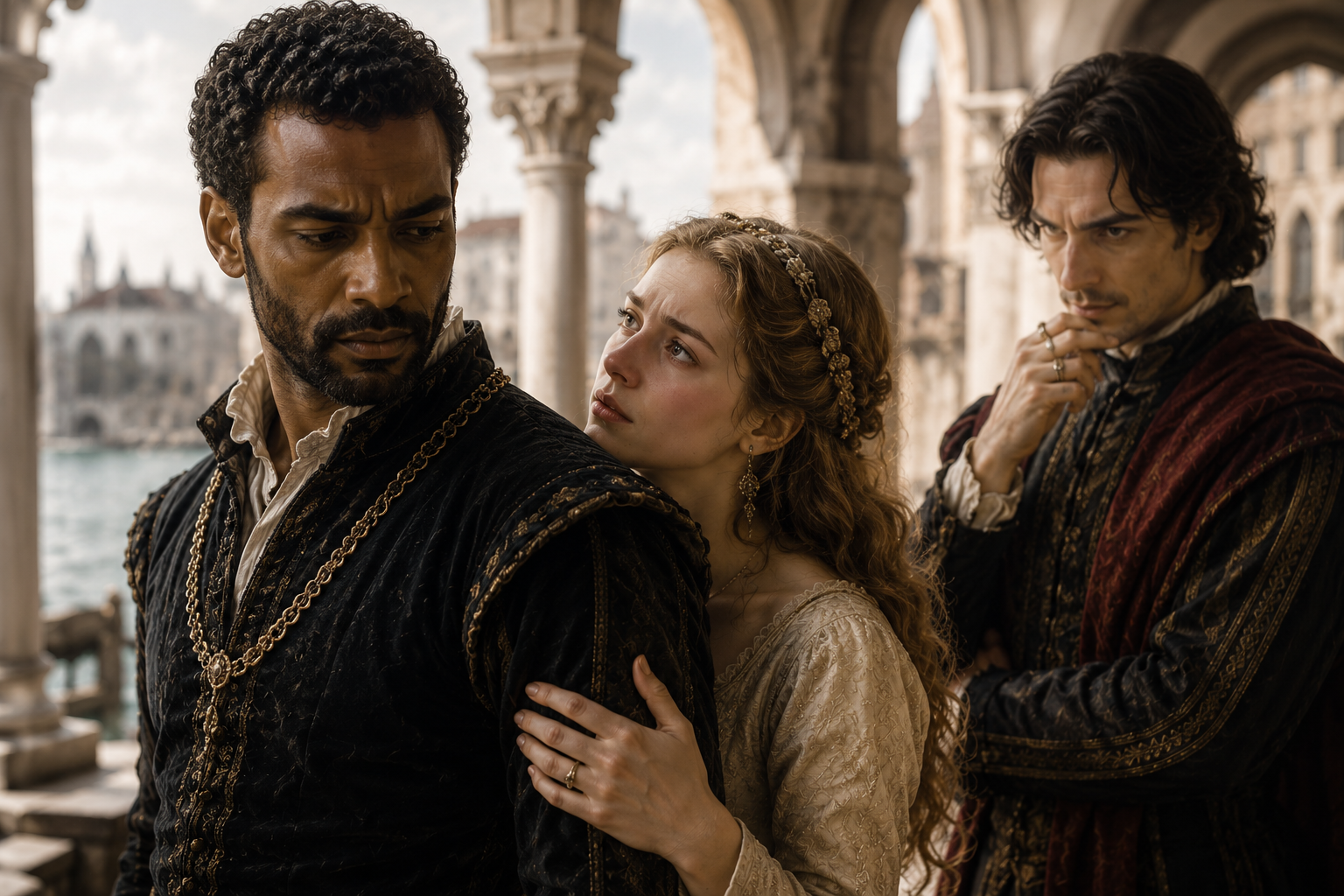
Your Othello literary analysis essay should answer a clear question about Shakespeare’s choices. You might ask how Iago gains power, why Othello trusts him, or how Desdemona is trapped by the rules of her world.

Do not write a plot summary. Your teacher already knows that Iago lies, Othello becomes jealous, and Desdemona dies. Your job is to explain why those events matter.

Think of the essay as an argument about meaning. In Macbeth, students often study ambition because it shapes the hero’s choices. In Othello, jealousy and trust play a similar role, but Shakespeare ties them to honor, race, gender, and social fear.

Build an Othello Literary Analysis Essay Around a Strong Thesis

Your thesis is the backbone of the whole essay.

A strong Othello literary analysis essay needs a thesis that makes a claim someone could debate. Weak theses often sound like facts. Strong theses explain how Shakespeare creates meaning.

Weak thesis: Iago is evil and makes Othello jealous.

Stronger thesis: In Othello, Shakespeare presents jealousy as a force that grows when a person trusts public image more than private truth.

The stronger version gives you something to prove. It points to jealousy, trust, and reputation without trying to cover the whole play.

If you want a ready-made system for turning notes into strong claims, the Literary Analysis Essay Toolkit can help you plan your thesis, evidence, and body paragraphs with less stress.

Thesis Statement Examples for Othello

Use these as models, not as lines to copy.

  • Jealousy thesis: In Othello, Shakespeare shows that jealousy becomes deadly when a person values suspicion more than direct proof.
  • Iago thesis: Iago’s power comes from his skill at reading others, which lets him turn their fears into choices that serve him.
  • Reputation thesis: Shakespeare presents reputation as a fragile social mask, since characters protect their public names while ignoring moral truth.
  • Gender thesis: Through Desdemona and Emilia, Shakespeare shows how women suffer under rules that demand obedience but offer little protection.

Notice that each thesis names a main idea and explains how the play treats it. That is the main difference between a topic and an argument.

Othello Literary Analysis Essay Topics That Lead to Strong Claims

The best topics are narrow enough to prove with close reading.

The best Othello literary analysis essay topics focus on a pattern in the text. A pattern might be a repeated image, a type of language, or a shift in how one character speaks.

  • Jealousy as a learned response: How does Iago teach Othello to see Desdemona as guilty?
  • Language as control: How does Iago use careful wording to guide Othello’s thoughts?
  • Race and insecurity: How does Othello’s outsider status shape how he responds to doubt?
  • Love and possession: How does the play show the danger of treating love like ownership?
  • Emilia’s moral growth: How does Emilia move from silence to truth?

Good topics lead to evidence. If you cannot find several moments in the play that support your idea, the topic may be too broad or too thin.

Evidence to Use in an Othello Literary Analysis Essay

Your evidence should prove your idea, not decorate your paragraph.

When your Othello literary analysis essay uses quotes, explain how the words work. Do not drop a quote into the paragraph and move on. Say what the language reveals about character, power, or theme.

Here are useful moments to study:

  • Act 1: Othello explains his marriage to Desdemona and says she loved him for the dangers he had passed. This can support essays about storytelling, identity, or love.
  • Act 1: Brabantio warns Othello that Desdemona may deceive him. This line helps show how suspicion enters the marriage early.
  • Act 3, Scene 3: Iago warns Othello to beware of jealousy. The warning sounds helpful, but it plants the fear it claims to fight.
  • Act 3, Scene 3: The handkerchief becomes false proof. This can support essays about symbols, trust, or the gap between truth and appearance.
  • Act 5: Emilia exposes Iago. Her speech helps reveal the cost of silence and the courage needed to tell the truth.

For background on the play, see Britannica’s overview of Othello. For more on Shakespeare’s life and works, the Poetry Foundation profile of William Shakespeare is also useful.

How to Structure Body Paragraphs

A clear paragraph makes one main move in your argument.

Start with a topic sentence that connects to your thesis. Then give context for the quote so the reader knows where the moment occurs. After the quote, explain the words closely.

Here is a simple pattern:

  1. Make a claim about the scene.
  2. Give brief context.
  3. Use a short quote.
  4. Analyze the language.
  5. Connect back to the thesis.

For example, if your paragraph focuses on Iago, do not just say he lies. Look at how he sounds honest while he lies. His calm tone and careful pauses make Othello feel as if he has discovered the truth on his own.

This is where close reading matters. A strong paragraph might study one word, one image, or one repeated phrase. For a full walkthrough of this process, you can use our step-by-step literary analysis essay guide.

Common Mistakes to Avoid

Small essay mistakes can weaken a strong idea.

One common mistake is to make Iago the whole essay. Iago matters, but your essay should still explain what Shakespeare reveals through him.

Another mistake is to treat Othello as only jealous. His jealousy matters because it connects to trust, shame, honor, and the fear that others see him as less worthy.

Do not assume every quote explains itself. Shakespeare’s language is dense. Your analysis should slow down and show how the words create meaning.

Last, avoid a thesis that tries to cover the entire play. A focused Othello literary analysis essay often earns a stronger grade than a broad one.

Sample Mini Outline

This outline shows how a focused argument can develop across the essay.

Thesis: In Othello, Shakespeare shows that Iago destroys Othello by turning uncertainty into false certainty.

  1. Body paragraph 1: Iago first creates doubt by posing as a loyal friend.
  2. Body paragraph 2: Othello begins to treat hints as proof because Iago controls the language of the scene.
  3. Body paragraph 3: The handkerchief gives Othello a false object to trust, which makes his error feel certain.
  4. Body paragraph 4: The final act reveals the tragic cost of mistaking suspicion for truth.

This kind of outline keeps the essay organized. Each paragraph adds a new step to the argument instead of repeating the same point.

These books can help you understand the play and write with more confidence.

  • Othello by William Shakespeare, Folger Shakespeare Library edition
  • Shakespeare: The World as Stage by Bill Bryson

Use outside sources to support your thinking, not to replace it. Your teacher wants to see your own close reading of the play.

FAQ About Writing an Othello Literary Analysis Essay

Here are quick answers to common student questions.

What is the best topic for an Othello literary analysis essay?

The best topic is one you can prove with several scenes. Jealousy, reputation, Iago’s language, and the handkerchief are all strong choices.

How long should my thesis be?

Most strong thesis statements are one sentence. It should name your main idea and explain what Shakespeare shows about it.

Can I write about Iago as the main focus?

Yes, but do not only call him evil. Analyze how he uses language, trust, and social roles to gain power.

How many quotes should I use?

Use enough evidence to prove each body paragraph. Short quotes often work better than long ones because they leave more room for analysis.

Key Takeaway

A strong Othello literary analysis essay makes a focused claim, supports it with close reading, and explains how Shakespeare’s choices shape the tragedy. Start small, study the language, and let your evidence guide the argument.

Most Disturbing Love and Obsession in Literature

love and obsession

Some love stories feel warm and hopeful, but others leave readers uneasy. The Most Disturbing Love and Obsession stories show what happens when desire turns into control, fear, or cruelty.

These works matter because they help us see the line between love and possession. They also show how literature can turn romance into a warning.

In this Guide

  • What makes love and obsession so disturbing in literature
  • Classic examples of the Most Disturbing Love and Obsession
  • Modern books that explore toxic desire
  • Symbols and themes to watch for
  • Recommended books
  • FAQs
love and obsession

What Makes the Most Disturbing Love and Obsession So Powerful?

Dark love stories grip us because they twist something familiar into something unsafe.

Love should bring trust, care, and respect. Obsession often does the opposite. It turns another person into a prize, a mirror, or a thing to control.

In the Most Disturbing Love and Obsession stories, the lover may claim to be devoted. Yet their actions often show fear, pride, or selfish need.

This is why these stories work so well in literature. They make readers ask hard questions. Is this love, or is it control? Is the character caring, or do they only want power?

If you want to study these characters more closely, this guide on how to analyze characters in literature can help you look at motives, choices, and change over time.

Most Disturbing Love and Obsession in Classic Literature

Classic literature often shows obsession through jealousy, secrecy, and social pressure.

One of the strongest examples is Wuthering Heights by Emily Brontë. Heathcliff’s love for Catherine is intense, but it also becomes cruel. His pain turns into revenge, and he harms people who had no part in his loss.

This is one reason Most Disturbing Love and Obsession remains such a strong search topic for students. It points to stories where romance and damage become hard to separate.

Another example is Jane Eyre by Charlotte Brontë. Rochester’s love for Jane has moments of deep feeling, but his hidden past creates danger. The novel asks whether love can survive without honesty.

In Shakespeare’s Othello, obsession takes the form of jealousy. Othello loves Desdemona, but fear poisons his mind. His trust breaks down, and love turns tragic.

These works are not simple romance tales. They show how love can lose its moral center when fear takes over.

Modern Examples of the Most Disturbing Love and Obsession

Modern books often place obsession inside everyday life, which can make it feel even more unsettling.

Rebecca by Daphne du Maurier is a key example. The dead Rebecca controls the house long after she is gone. The narrator feels trapped by another woman’s memory, and love becomes tied to fear and comparison.

In The Collector by John Fowles, obsession becomes literal captivity. The main character believes he loves Miranda, but he removes her freedom. The novel makes clear that obsession is not love when it denies another person’s humanity.

In Gone Girl by Gillian Flynn, marriage becomes a battle of image, lies, and revenge. The book shows how obsession can hide behind charm and public performance.

These modern works help explain why the Most Disturbing Love and Obsession theme still feels fresh. It fits stories about privacy, power, fame, and identity.

Symbols in the Most Disturbing Love and Obsession Stories

Symbols help writers show desire without spelling everything out.

Houses often matter in these stories. In Wuthering Heights, the home feels wild, cold, and haunted by old pain. In Rebecca, Manderley feels beautiful but trapped by memory.

Portraits, letters, and locked rooms also appear often. They suggest secrets, control, or the wish to freeze someone in time.

Weather is another common symbol. Storms can reflect rage, fear, or emotional chaos. A calm setting may feel false if a character hides dark motives.

In many Most Disturbing Love and Obsession stories, the symbol is not just decoration. It shows what the character cannot say out loud.

Major Themes Behind Disturbing Love and Obsession

These stories often explore power more than romance.

One major theme is possession. The obsessed character may say “I love you,” but their real message is “you belong to me.” Literature uses this gap to create tension.

Another theme is identity. Some characters love an idea of a person more than the real person. They build a fantasy, then punish reality for not matching it.

Jealousy also plays a major role. In Othello, jealousy does not need proof to grow. Once it takes root, it changes how Othello sees everything.

For more background on Gothic settings and dark emotional tension, see Britannica’s overview of the Gothic novel.

These books are strong choices for students, book clubs, or anyone who wants a deeper look at dark romance in literature.

  • Wuthering Heights by Emily Brontë
  • Rebecca by Daphne du Maurier

Both novels show that love can become dangerous when it mixes with pride, secrecy, or control.

If you want a shorter text, try Robert Browning’s poem My Last Duchess. It is a chilling study of power and possession. You can read more about Browning at the Poetry Foundation.

How to Analyze the Most Disturbing Love and Obsession in a Text

Look at what the character does, not only what they say.

A character may speak in romantic language, but their actions may show control. Ask whether they respect the other person’s freedom.

Pay close attention to patterns. Do they lie? Do they isolate someone? Do they treat love as a right instead of a choice?

You can also study the setting. Dark homes, locked spaces, and harsh weather often reflect the emotional world of the story.

For a deeper approach, use this guide to analyze characters in literature. It can help you build stronger essays and class discussions.

Why the Most Disturbing Love and Obsession Still Matters

These stories remain popular because they reveal truths about human desire.

The Most Disturbing Love and Obsession theme shows that passion is not always noble. It can become selfish when it ignores consent, honesty, or care.

That does not mean these books reject love. Many of them defend real love by showing what it is not.

For students, this topic can lead to strong essays. It connects character, symbol, conflict, and theme in a clear way.

FAQs About the Most Disturbing Love and Obsession in Literature

What is the Most Disturbing Love and Obsession theme in literature?

It is a theme where love becomes unhealthy, controlling, or harmful. The story often shows the difference between care and possession.

Why do authors write about disturbing obsession?

Authors use obsession to explore fear, power, jealousy, and identity. It creates conflict and reveals hidden parts of a character.

Is Wuthering Heights a love story or an obsession story?

It is both, but its love is deeply destructive. Heathcliff and Catherine share a powerful bond, yet that bond causes pain for many people.

What symbols often appear in these stories?

Common symbols include houses, portraits, letters, storms, and locked rooms. These images often point to secrets or control.

Key Takeaway

The Most Disturbing Love and Obsession stories remind us that love without respect can become dangerous. Great literature uses these dark relationships to test what love really means.

When you read these works, look past the romance. The real lesson often sits in the fear, silence, and choices that reveal the truth.

Themes in Othello: A Student-Friendly Guide

Themes in Othello

Shakespeare’s tragedy is full of conflict, fear, and painful choices. This guide explains the themes in Othello so you can understand the play and write about it with more confidence.

Whether you need a class answer or an essay idea, the play gives you a lot to work with. Its biggest ideas still connect to real life today.

In this Guide

Use this quick menu to find the idea you need.

  • Why the play’s themes still matter
  • Jealousy and insecurity
  • Race and outsider identity
  • Appearance versus reality
  • Trust and manipulation
  • Gender and power
  • Reputation and honor
  • Tragedy and responsibility
  • Essay tips, books, and FAQ
Themes in Othello

Why the Themes in Othello Still Matter

Othello is old, but its problems still feel close.

The plot is about a respected soldier, a new marriage, and a lie that grows out of control. The deeper meaning comes from the way people react to fear, status, love, and doubt.

The themes in Othello help us see why the play is more than a story about one jealous man. Shakespeare shows how private feelings can become dangerous when others know how to use them.

That is why students still study this play. It asks hard questions about trust, identity, and the damage people cause when they refuse to seek the truth.

Themes in Othello: Jealousy as a Destructive Force

Iago turns a private fear into public ruin.

Jealousy is one of the central themes in Othello. It begins as a small doubt, then grows until Othello can no longer see clearly.

Iago warns Othello, “O, beware, my lord, of jealousy.” The warning sounds wise, but it is part of the trap. Iago knows that naming the danger will make Othello think about it even more.

Othello does not see Desdemona betray him. He hears suggestions, watches small moments, and fills in the rest with fear. That is what makes the jealousy so painful. It is not built on real proof.

This theme also appears in other famous works. In The Great Gatsby, jealousy and status push characters toward reckless choices. In Othello, jealousy becomes even darker because it destroys love from within.

For an essay, do not just say, “Othello is jealous.” Ask what causes the jealousy and why he accepts it so quickly. That question leads to a stronger claim.

Themes in Othello: Race and Outsider Identity

Othello has power, but Venice never fully accepts him.

Othello is a skilled general. He has earned respect through service and courage. Yet he is also treated as an outsider because he is a Moor in Venetian society.

Some characters speak about him with racist language. Brabantio cannot accept that Desdemona chose Othello freely, so he imagines magic or trickery. His reaction shows how prejudice can twist the truth.

The themes in Othello ask us to look at the pressure Othello faces. He must prove himself in a world that respects his talent but questions his place.

This matters because Iago attacks Othello’s weak spots. He knows Othello fears not being loved, trusted, or seen as equal. Iago does not create every fear, but he gives those fears a voice.

A strong reading of this play should not ignore race. Othello’s fall is personal, but it also happens inside a society that makes him feel unsafe in his own marriage.

Themes in Othello: Appearance Versus Reality

Nearly everyone in the play judges by what seems true.

Iago is called “honest Iago” again and again. The name is bitter because the audience knows he is lying. This gap between what people believe and what is real drives the whole tragedy.

Othello thinks he is seeing signs of betrayal. In truth, he is seeing a story that Iago has built for him. That story feels real because Iago controls the details.

The handkerchief is the clearest object tied to this theme. It is a small gift, but Iago turns it into false evidence. If you want to practice reading objects like this, this guide on how to find symbolism in a story can help.

Many themes in Othello connect through this gap between image and truth. Love looks like betrayal. Honesty looks like deceit. Proof looks solid, even when it is false.

This theme is useful for essays because it lets you discuss dramatic irony. The audience knows more than Othello, so we watch him move toward a terrible mistake.

Trust and Manipulation in Othello

The play shows how language can reshape a person’s mind.

Iago does not need to shout or force Othello to act. He uses hints, pauses, and careful questions. He lets Othello think the worst idea came from his own mind.

This makes Iago one of Shakespeare’s most dangerous villains. He understands people well, but he uses that knowledge to harm them.

Othello asks for “ocular proof,” meaning proof he can see. Yet he accepts weak signs because Iago has already changed the way he reads the world.

This theme pairs well with jealousy. Othello’s jealousy grows because he trusts the wrong person. He doubts Desdemona, who loves him, and believes Iago, who hates him.

Gender and Power in Othello

Desdemona is strong, but her world gives men more control.

Desdemona chooses Othello and speaks for that choice in public. She is not weak or silent at the start of the play. Still, she lives in a society where men often decide what women are allowed to be.

Once Othello doubts her, Desdemona has little power to defend herself. Her words do not count as proof. Her honesty is treated as another act.

Emilia helps us see this theme more clearly. She understands that men can be unfair and cruel. Near the end, she tells the truth even when it costs her life.

The female characters are often judged by male fear. Desdemona is accused of sin she did not commit. Emilia is used by Iago. Both show how dangerous a male-controlled world can be.

Reputation and Honor in Othello

Public image matters so much that it can crush private truth.

Cassio loses his position after a fight, and he feels ruined. He says reputation is a huge part of who he is. Without it, he feels empty.

Othello also cares deeply about honor. He wants to be seen as noble, loyal, and controlled. When he believes Desdemona has betrayed him, he thinks his name has been stained.

This is where the tragedy becomes even more painful. Othello begins to care more about restoring honor than protecting the person he loves.

Reputation also helps Iago hide. Because others think he is honest, his good name becomes a mask. Shakespeare shows that reputation can protect the guilty and harm the innocent.

Tragedy and Moral Responsibility in Othello

The ending feels both shocking and avoidable.

Othello is a tragedy because noble people suffer, but the suffering does not come from fate alone. Human choices cause the disaster.

Iago chooses evil again and again. Othello chooses to trust him. Emilia chooses truth too late, though her final courage still matters.

This theme is common in Shakespeare. In Macbeth, ambition opens the door to violence. In Othello, jealousy and false trust lead to the same kind of collapse.

The play does not let us blame only one cause. That is part of its power. The tragedy grows from lies, prejudice, fear, and the failure to pause before action.

How to Write About the Themes in Othello

Strong essays move from theme to claim.

Students often name a theme but stop too soon. A better essay explains what Shakespeare says about that theme.

For example, do not write only, “Jealousy is a theme.” Try a claim like this: Shakespeare presents jealousy as a force that makes false stories feel stronger than truth.

When you write about the themes in Othello, connect your idea to a pattern. Look at repeated words, repeated doubts, and repeated mistakes.

You can also build a paragraph around an object, such as the handkerchief. For more help with that skill, use this student guide to spotting symbolism.

If you want a quick study support, you can also check our Othello theme notes for students.

Helpful Books and Resources

These resources can help you understand the play more deeply.

For background, the Britannica overview of Othello gives a clear summary of the play and its history.

You can also read the full text through the Folger Shakespeare Library’s online edition of Othello.

Relevant books to consider:

  • Othello by William Shakespeare, Folger Shakespeare Library edition
  • Shakespeare: The World as Stage by Bill Bryson

FAQ: Themes in Othello

Here are quick answers to common student questions.

What are the main themes in Othello?

The main themes include jealousy, race, appearance versus reality, trust, gender, reputation, and tragedy.

What is the most important theme in Othello?

Jealousy is often seen as the most important theme because it drives Othello’s downfall and shapes the main conflict.

How does Iago connect to the play’s themes?

Iago connects to many themes because he uses language, reputation, and doubt to control others.

Why is the handkerchief important?

The handkerchief becomes false proof. It shows how a simple object can gain dangerous meaning.

Key Takeaway

The themes in Othello show how trust can break when fear takes control.

Shakespeare’s play warns that lies become powerful when people already feel insecure. That is why the tragedy still matters in class, in essays, and in real life. 📚

Themes in King Lear: A Student-Friendly Guide

King Lear Themes

Shakespeare’s tragedy can feel huge at first, but the themes in King Lear make the play easier to understand. This guide breaks down the major ideas students should notice, with clear examples and study tips.

In this Guide

  • Why themes matter in the play
  • Power and authority
  • Family loyalty and betrayal
  • Madness and insight
  • Justice and suffering
  • Nature and order
  • Helpful books and FAQ
King Lear Themes

Why themes in King Lear Matter

The play is not only about one old king. It is about what happens when love, power, and truth fall apart.

The themes in King Lear help students see the deeper meaning behind the plot. Lear gives away his kingdom, trusts the wrong people, and loses almost everything.

That story may seem distant, but its questions still feel real. Who deserves power? Can family love survive pride? Does the world punish evil fairly?

If you need help connecting theme to character choices, this guide on how to analyze characters in literature can make your reading stronger.

Power and Authority: One of the Central Themes in King Lear

King Lear shows that power without wisdom can destroy a family and a nation.

Among the themes in King Lear, power is one of the most important. Lear begins the play as a king, but he wants to keep the honor of power while giving away the work of rule.

This choice creates chaos. Once Lear loses real control, Goneril and Regan no longer treat him with respect. His title means little without authority behind it.

Shakespeare asks students to think about what makes a good ruler. Is it age, rank, kindness, or judgment? Lear has the crown at first, but he lacks self-knowledge.

This theme also appears in Macbeth, where desire for power leads to fear and violence. In both plays, rule becomes dangerous when it serves pride instead of duty.

Family Loyalty and Betrayal in the Themes in King Lear

The play turns family love into a test, and almost everyone fails in some way.

This part of the themes in King Lear begins with Lear’s love test. He asks his daughters to prove their love with words before he divides the kingdom.

Goneril and Regan flatter him, but their love is false. Cordelia speaks honestly, yet Lear rejects her because her answer wounds his pride.

The Gloucester plot mirrors this conflict. Edmund betrays his father and brother, while Edgar stays loyal even after he is forced into exile.

These family conflicts make the play painful. Shakespeare shows that love based on performance is weak. Real loyalty may look quiet, but it lasts longer than praise.

Madness, Insight, and the Themes in King Lear

Lear loses his social power, but he starts to see the truth more clearly.

The themes in King Lear often work through opposites. Lear seems mad on the heath, yet his suffering helps him understand poverty, weakness, and human need.

Before his fall, Lear cares most about honor and obedience. After the storm, he sees that many people live without comfort or protection.

The Fool also matters here. He speaks in jokes, but his words reveal truth. In Shakespeare, the person who seems foolish often sees more than the powerful people around him.

This idea also appears in Hamlet. Hamlet’s strange behavior makes others doubt him, but it also helps him expose hidden corruption.

Justice and Suffering in the Themes in King Lear

The play asks a hard question: does the world make moral sense?

Justice is one of the darkest themes in King Lear. Good people suffer, cruel people gain power, and punishment does not always feel fair.

Gloucester is blinded after he helps Lear. Cordelia dies even though she is honest and kind. Lear suffers deeply before he learns the truth.

Students often expect tragedy to reward virtue in the end. King Lear refuses that comfort. It presents a world where goodness matters, even when it does not save a person from pain.

This is why the ending feels so powerful. The play does not give easy answers. It forces readers to sit with grief and moral shock.

Nature, Order, and Disorder

The storm outside reflects the broken order inside Lear’s world.

Nature appears in many forms throughout the play. Characters speak of storms, animals, age, and human weakness.

When Lear stands on the heath, the weather feels like more than background. The storm mirrors his mind and the disorder in the kingdom.

The play also questions what is natural in family life. Should children obey parents forever? Should parents earn respect through care? Shakespeare does not make these questions simple.

For a helpful overview of the play’s background, see Britannica’s entry on King Lear.

Blindness and Self-Knowledge

Many characters must lose something before they understand the truth.

Blindness is both literal and symbolic in the play. Gloucester cannot see Edmund’s lies until it is too late. After he is blinded, he understands who truly loves him.

Lear has the same kind of inner blindness. He cannot see Cordelia’s honesty at first. He mistakes loud praise for love.

This theme is common in tragedy. In Oedipus Rex, Oedipus also seeks truth but cannot see the truth about himself until the damage is done.

In King Lear, self-knowledge comes at a terrible cost. That cost is part of what makes the play so haunting.

How to Write About Themes in King Lear

A strong essay connects a theme to character choices, key scenes, and the ending.

When you write about themes in King Lear, do not just name the theme. Explain how Shakespeare builds it through conflict and change.

For example, if you write about power, start with Lear’s decision to divide the kingdom. Then show how that decision changes his family and weakens the state.

If you write about justice, focus on the ending. Ask why Cordelia’s death matters and what it suggests about suffering.

You can also use student-friendly literature study guides to review key scenes before you write.

Books That Pair Well with King Lear

These books can help if you want more context or a stronger essay.

  • King Lear by William Shakespeare, especially a student edition with notes
  • Shakespearean Tragedy by A. C. Bradley

You can look for these through Amazon, your school library, or a public library.

FAQ: themes in King Lear

What is the main theme of King Lear?

The main theme is the danger of pride and poor judgment. Lear’s need for praise causes his fall and harms the whole kingdom.

Why is family betrayal important in the play?

Family betrayal drives the plot. Goneril, Regan, and Edmund use trust for personal gain, while Cordelia and Edgar show quiet loyalty.

How does madness connect to wisdom?

Lear seems mad after he loses power, but his suffering helps him see truth. He becomes more human after he loses his pride.

Is there justice at the end of King Lear?

The ending gives only partial justice. Some evil characters are punished, but innocent people still suffer, which makes the tragedy feel harsh.

Key Takeaway

The themes in King Lear show a world where power can fail, love can be tested, and truth often arrives too late. That is why the play still feels urgent for students today.

Themes in Lord of the Flies: A Student-Friendly Guide

themes in Lord of the Flies

William Golding’s novel may look like a survival story, but it is really about human nature under pressure. This guide explains the major themes in Lord of the Flies so students can read the novel with more confidence.

You will see how power, fear, violence, and social order shape the boys’ choices on the island.

In this Guide

  • Why the themes matter
  • Civilization and savagery
  • Power and leadership
  • Fear and imagination
  • Loss of innocence
  • Symbols, essay ideas, and FAQs
themes in Lord of the Flies

Why the Themes in Lord of the Flies Matter

The novel asks a sharp question: what happens when rules disappear?

The main themes in Lord of the Flies help readers see that the island is more than a setting. It becomes a test of society, morality, and fear.

At first, the boys try to copy the adult world. They hold meetings, choose a leader, and use the conch to give each person a turn to speak. Yet that order starts to break down when fear grows and Jack gains power.

This is why the book often appears in high school and AP Literature classes. It gives students a clear way to study conflict, symbols, and character change.

Major Themes in Lord of the Flies: Civilization vs. Savagery

This is the central conflict of the novel.

One of the most important themes in Lord of the Flies is the struggle between order and violence. Ralph stands for rules, rescue, and shared responsibility. Jack stands for force, hunting, and control.

The conch shows civilization at first. When the boys respect it, they listen to each other. When they ignore it, the group loses its moral center.

Golding does not suggest that savagery comes from the island itself. The boys bring it with them. This makes the novel darker because the danger is not only outside them. It is inside them too.

A similar idea appears in Shakespeare’s Macbeth. Macbeth does not begin as a monster, but ambition and fear pull him toward violence. In both works, pressure reveals what a person may become.

The Theme of Power and Leadership

The boys’ leaders show two very different ways to gain control.

Ralph becomes leader because other boys trust him. He wants shelters, a signal fire, and a plan for rescue. His power depends on cooperation.

Jack uses fear, excitement, and punishment. He offers meat and the thrill of the hunt. His leadership feels easier because it gives the boys quick rewards.

This theme matters because Golding shows how fragile fair leadership can be. A group may choose safety and rules, but fear can make a harsh leader seem strong.

When you write about the themes in Lord of the Flies, it helps to compare Ralph and Jack. Their conflict is not just personal. It shows two models of society.

Fear, Imagination, and the Beast

The beast is powerful because the boys believe in it.

Fear is one of the most useful themes in Lord of the Flies for essays because it affects nearly every major event. The littluns fear a beast. The older boys try to explain it, but they cannot fully control the panic.

The beast also becomes a tool. Jack uses fear of the beast to gain loyalty. If the boys feel unsafe, they look to him for protection.

Simon understands the truth before the others do. The beast is not a real monster hiding in the jungle. It is the darkness within people.

This idea connects to Arthur Miller’s The Crucible. In that play, fear spreads through a community and makes people act against reason. Golding shows a similar pattern on the island.

Loss of Innocence in Lord of the Flies

The island changes the boys, but it also reveals them.

At the start, the boys act like schoolchildren on an adventure. They swim, explore, and treat the island like a game. That innocent mood does not last.

The deaths of Simon and Piggy mark a painful shift. After these moments, the reader can no longer see the island as a simple place of play.

Ralph’s final tears matter because he now understands what people can do. He cries for Piggy, for Simon, and for the end of his own innocence.

Among the major themes in Lord of the Flies, this one often feels the most personal. Students can trace how childhood trust gives way to guilt and grief.

The Theme of Human Nature

Golding presents a dark view of what people may become without moral limits.

The novel does not claim that every person is evil all the time. Ralph, Piggy, and Simon all show care or reason. Yet the book suggests that goodness needs support from rules, empathy, and courage.

Simon is the clearest moral figure. He helps the littluns, seeks truth, and sees beyond the group’s fear. His death shows how a crowd can destroy a person who stands apart.

This is one reason the themes in Lord of the Flies still matter. The novel asks readers to think about school groups, politics, teams, and any place where people follow a crowd.

Symbols That Support the Themes in Lord of the Flies

Golding uses simple objects to carry big ideas.

The conch stands for order and shared speech. When it breaks, the boys have lost more than a shell. They have lost the system that kept them human.

Piggy’s glasses stand for reason and practical knowledge. They help start the fire, which means they also connect to rescue and hope. When the glasses are stolen, reason is pushed aside.

The signal fire stands for connection to the outside world. When the boys care for it, they still want rescue. When they forget it, they drift further from civilized life.

The Lord of the Flies, the pig’s head on a stick, stands for corruption and inner evil. It gives shape to the fear that has haunted the group.

For a reliable background on the author and novel, students can visit Britannica’s page on William Golding.

How to Write About Themes in Lord of the Flies

A strong theme essay should make a claim, not just name a topic.

Do not write only that the novel is about power. Instead, explain what Golding says about power. For example: Golding shows that fear can make violent leadership seem attractive.

Then support your claim with scenes. You might use the election, Jack’s tribe, the killing of Simon, or the breaking of the conch.

If you need help shaping a thesis and using evidence, see our guide on how to write a literary analysis essay.

You can also build a paragraph around a symbol. For example, Piggy’s glasses show how reason can be useful, but also easy to steal when violence takes over.

For extra practice, you can use our student literature study resources to plan theme notes and essay ideas.

Helpful Books to Read Next

These books can help you understand the novel and its larger literary context.

  • Lord of the Flies by William Golding
  • How to Read Literature Like a Professor by Thomas C. Foster

For more context on major literary terms, the Poetry Foundation glossary is a helpful reference.

FAQ: Themes in Lord of the Flies

What is the main theme of Lord of the Flies?

The main theme is the conflict between civilization and savagery. Golding shows how quickly order can break down when fear and violence take control.

What does the beast symbolize?

The beast symbolizes the darkness within human beings. It is not just a creature the boys fear. It reflects their own capacity for violence.

How does Golding show loss of innocence?

Golding shows it through the boys’ shift from play to cruelty. Simon’s and Piggy’s deaths make the loss clear.

Why is the conch important?

The conch stands for rules, speech, and democracy. When it is destroyed, civilized order has fully collapsed.

How can I write a thesis about this novel?

Choose one theme, make a clear claim about Golding’s message, and connect it to key scenes. For more help, use this literary analysis essay guide.

Key Takeaway

The major themes in Lord of the Flies show that civilization is fragile. Golding’s novel warns that fear, power, and group pressure can reveal the darkest parts of human nature.

Lord of the Flies Summary and Analysis for Students

Lord of the Flies Summary

A clear overview of the plot, structure, conflicts, and literary meaning.

This Lord of the Flies summary and analysis gives students a clear path through William Golding’s famous novel. It covers the plot, main conflicts, key symbols, and deeper meaning without making the book feel harder than it is.

If you need a guided entry point for class, exams, or essay prep, this guide will help you see both what happens and why it matters.

In this Guide

  • Quick overview of the novel
  • Plot summary
  • Structure and conflict
  • Symbols and themes
  • Literary meaning
  • Study tips, book suggestions, and FAQ
Lord of the Flies Summary

Lord of the Flies Summary and Analysis: Quick Overview

Golding turns a survival story into a dark study of human nature.

Lord of the Flies follows a group of British schoolboys who crash on an empty island during a war. At first, the island seems like a place of freedom, but fear and power soon break their fragile order.

Ralph becomes the elected leader, with Piggy as his smart but ignored adviser. Jack, who leads the choirboys, wants control and becomes more focused on hunting than rescue.

A clear Lord of the Flies summary and analysis must notice this shift: the boys do not just lose rules. They lose trust, empathy, and a shared sense of right and wrong.

For basic background on Golding’s life and career, see Britannica’s William Golding biography.

Lord of the Flies Summary and Analysis: Plot by Chapters

The plot moves from hope to fear, then from fear to violence.

The novel opens after a plane crash leaves the boys without adults. Ralph and Piggy find a conch shell, which becomes a tool for calling meetings and giving people the right to speak.

The boys vote Ralph as chief. Jack accepts this at first, but he feels wounded because he wants power. Ralph wants shelters and a signal fire, while Jack wants meat and status.

Soon, the younger boys fear a beast on the island. Ralph tries to keep the group focused on rescue, but the fear spreads. A fire set by the boys burns out of control, and one small child may die.

Jack becomes skilled at hunting pigs. The hunters paint their faces, which lets them act with less shame. The paint works like a mask, much as costumes in plays can free characters from normal rules.

A ship passes the island, but the signal fire is out because Jack and his hunters left their post. Ralph is furious. This moment shows the main split between rescue and power.

Simon, the quiet and thoughtful boy, later finds the pig’s head that Jack’s group has placed on a stick. This head is called the Lord of the Flies. It seems to speak to Simon and tells him that the real beast is inside the boys.

Simon then discovers that the supposed beast on the mountain is only a dead parachutist. When he tries to tell the others, the boys mistake him for the beast during a wild dance and kill him.

After Simon’s death, Jack’s tribe grows stronger. They steal Piggy’s glasses, which are needed to make fire. Ralph and Piggy go to ask for them back, but Roger rolls a rock that kills Piggy and breaks the conch.

In the final chase, Jack’s tribe hunts Ralph across the island. They set the forest on fire to force him out. A naval officer arrives because of the smoke, and the boys are rescued, but their innocence is gone.

The best Lord of the Flies summary and analysis sees the ending as bitter, not simply happy. Rescue comes, but only after the island has shown what fear and violence can do.

Structure of the Novel

The structure works like a slow collapse.

Golding begins with an island that feels open and bright. The boys form meetings, choose a chief, and speak about rules. The conch gives the early chapters a sense of order.

As the story moves forward, the structure becomes darker. Meetings fail. The signal fire goes out. Jack’s tribe replaces speech with chants and force.

By the end, the island looks almost like a war zone. The fire that should have signaled rescue becomes a weapon. That reversal is one reason the structure feels so sharp.

Like Macbeth, the novel shows how the hunger for power can damage judgment. Like Animal Farm, it asks how a community can fall apart when fear and control replace fairness.

Lord of the Flies Summary and Analysis: Major Conflicts

The conflicts are simple on the surface, but they carry deep meaning.

The main conflict is between Ralph and Jack. Ralph stands for rescue, shared rules, and speech. Jack stands for force, hunting, and control.

There is also a conflict inside the group. The boys want safety, but they are drawn to the thrill of violence. Golding shows how a crowd can make people do things they might fear doing alone.

The beast creates another conflict. At first, the boys think it is an outside monster. Simon understands that the real danger comes from within their own hearts.

This part of the Lord of the Flies summary and analysis matters for essays because conflict in the novel is not just action. It reveals what Golding thinks about human nature.

Symbols in Lord of the Flies

Golding’s symbols turn ordinary objects into moral tests.

The conch shell stands for order and civil speech. When the conch breaks, the boys no longer respect shared rules.

Piggy’s glasses stand for reason and practical knowledge. They help the boys make fire, but Jack wants them for power, not wisdom.

The signal fire stands for hope and a link to the adult world. When the boys care about the fire, they care about rescue. When they abandon it, they drift toward the island’s violence.

The beast stands for fear. It also shows how people can invent enemies when they do not understand themselves.

The Lord of the Flies, the pig’s head on a stick, is the most disturbing symbol. It suggests decay, evil, and the cruel truth Simon sees before his death.

Key Themes for Students

The novel asks what happens when social rules lose power.

One major theme is civilization versus savagery. Golding does not show this as a simple split between good and bad people. He shows how quickly order can weaken.

Fear is another key theme. The boys fear the beast, but that fear makes them easier to control. Jack uses fear to gain loyalty.

The novel also explores the loss of innocence. The boys begin with games and meetings, but they end with murder and a hunt. Their childhood does not protect them from moral failure.

If you want to move from summary to evidence, try this guide to close reading in literature. It can help you connect symbols, word choice, and theme in your own notes.

Lord of the Flies Summary and Analysis: Literary Meaning

The novel’s meaning is harsh, but it is not hopeless.

Golding suggests that people need more than rules. They need moral courage and respect for others. Without those, rules can become empty sounds.

The boys are not evil because they are children. They are human, and that is the troubling point. Golding asks readers to face the darker parts of human behavior.

A good Lord of the Flies summary and analysis should not stop at the plot. The novel matters because it studies how fear, pride, and group pressure can break a community.

Golding later received the Nobel Prize in Literature. You can read more about his award at The Nobel Prize official site.

How to Study Lord of the Flies

Focus on patterns, not just events.

Track how the conch, fire, and glasses change in meaning. Each object starts with a useful role, then becomes part of a larger moral struggle.

Pay close attention to scenes with crowds. Golding often shows how chants, fear, and shared excitement pull the boys away from reason.

When you write about the novel, use short quotes and explain them closely. For help with that skill, see how close reading works in literature.

Relevant Books to Read Next

These books connect well with Golding’s ideas about power and society.

  • Animal Farm by George Orwell
  • The Coral Island by R. M. Ballantyne
  • Fahrenheit 451 by Ray Bradbury

The Coral Island is especially useful because Golding partly responds to its more hopeful view of boys stranded on an island.

FAQ: Lord of the Flies Summary and Analysis

What is the main idea of Lord of the Flies?

The main idea is that human beings can turn violent when fear, pride, and power replace moral responsibility.

What should a Lord of the Flies summary and analysis include?

It should include the crash, Ralph and Jack’s conflict, Simon’s discovery, Piggy’s death, the final hunt, and the novel’s themes.

Why is the conch important?

The conch stands for order, speech, and shared rules. When it breaks, the boys’ society fully falls apart.

Is Jack the villain of the novel?

Jack acts as the main antagonist, but Golding’s point is larger. Jack shows a violent desire for power that can exist in many people.

Why does Simon matter so much?

Simon understands that the beast is not a monster outside the group. It is the darkness inside human nature.

Key Takeaway

A strong Lord of the Flies summary and analysis shows that the novel is not only about boys on an island. It is about how quickly fear can weaken order, and why moral courage matters.

Best Literary Human Nature: Books That Show Who We Really Are

Best human nature books

Great stories help us see the truth about people, even when that truth feels hard to face. Best Literary Human Nature looks at books that explore fear, pride, love, guilt, and moral choice.

These works matter because they ask a simple question: what do people do when life tests them?

In this Guide

  • What Best Literary Human Nature means
  • Why human nature matters in literature
  • Best Literary Human Nature books to read
  • Symbols and themes that reveal character
  • How students can write about human nature
  • FAQs
  • Key takeaway

What Best Literary Human Nature Means

Stories about human nature show what people want, fear, hide, and choose.

The phrase Best Literary Human Nature may sound broad, but the idea is clear. It points to books that reveal how people act under pressure.

Some characters try to do the right thing. Others choose power, comfort, or revenge. Literature lets us watch those choices from a safe distance.

That is why these books stay with us. They do not just tell us what happened. They show us why people behave the way they do.

Why Best Literary Human Nature Stories Still Matter

The best books feel alive because their characters feel real.

Best Literary Human Nature stories matter because readers can see parts of themselves in the characters. A reader may not rule a kingdom like Macbeth, but they may know what ambition feels like.

In William Shakespeare’s Macbeth, ambition grows into violence. Macbeth wants power so badly that he loses his peace, his honor, and his sense of self.

In Mary Shelley’s Frankenstein, Victor wants glory through science. His mistake is not just that he creates life. His deeper failure is that he refuses to care for what he has made.

These stories ask us to think about responsibility. They also ask if people are born flawed or shaped by the choices around them.

Best Literary Human Nature Books to Read

These books are strong choices for students because they are rich, readable, and full of moral conflict.

The Best Literary Human Nature books often focus on a character who faces a hard test. That test may come from society, family, power, or guilt.

To Kill a Mockingbird by Harper Lee

This novel explores justice, fear, and moral courage. Atticus Finch shows that doing the right thing can cost a person comfort and safety.

Scout learns that people are more complex than they first appear. The book asks readers to look past rumor and prejudice.

Lord of the Flies by William Golding

This novel places schoolboys on an island without adult rules. At first, they try to build order. Soon, fear and power begin to take over.

Golding suggests that cruelty can grow when people lose limits. The story is often used in classrooms because it raises sharp questions about civilization and human nature.

Other strong examples

Students may also study The Great Gatsby by F. Scott Fitzgerald or Hamlet by William Shakespeare. Both works show how desire can twist a person’s view of truth.

For helpful background on the idea of human nature, readers can explore Britannica’s overview of human nature.

Best Literary Human Nature Themes Students Should Know

Themes help readers move from “what happened” to “what the story means.”

When students study Best Literary Human Nature, they often notice the same big ideas across different books. These ideas repeat because people face the same inner battles in many times and places.

Ambition and its cost

Ambition can help a character grow. It can also lead to ruin.

Macbeth is the classic example. His desire for power destroys his loyalty and peace of mind.

Goodness under pressure

Many novels ask if a person can stay good when the world is unfair. To Kill a Mockingbird explores this through Atticus, Scout, and the trial of Tom Robinson.

The book does not pretend goodness is easy. It shows that moral courage often feels lonely.

Fear and group behavior

Lord of the Flies shows how fear can spread through a group. The boys begin to follow the loudest voices, not the wisest ones.

This theme matters because people often act differently in a crowd. Literature helps us question that shift.

Symbols That Reveal Human Nature

Symbols give stories deeper meaning without heavy explanation.

In Best Literary Human Nature works, symbols often show what characters cannot say out loud. A symbol may reveal guilt, innocence, power, or loss.

In Lord of the Flies, the conch shell stands for order and shared rules. When the shell loses power, the boys lose their grip on peace.

In Frankenstein, light often connects to knowledge. Yet Shelley shows that knowledge without care can become dangerous.

In The Great Gatsby, the green light stands for Gatsby’s dream. It also shows how desire can trap a person in the past.

Poetry can do this too. The Poetry Foundation’s page on Robert Frost is useful for readers who want to see how poems explore choice and regret.

How to Write About Best Literary Human Nature in an Essay

A strong essay does not just name a theme. It explains how the author builds that theme through character, conflict, and symbol.

If you write about Best Literary Human Nature, start with a clear claim. Do not say, “This book shows human nature.” Say what the book argues about human nature.

For example, an essay on Macbeth could argue that unchecked ambition destroys moral judgment. An essay on Lord of the Flies could argue that fear weakens social order.

Your thesis should be specific, arguable, and tied to the text. If you need help, use this guide on how to write a thesis statement for a literary analysis essay.

After that, choose scenes that prove your point. Focus on what characters say, what they hide, and how they change.

Recommended Books for Best Literary Human Nature Readers

These books are often easy to find and useful for class discussions.

To Kill a Mockingbird by Harper Lee is a strong choice for readers who want a story about justice and moral growth.

Lord of the Flies by William Golding is ideal for readers who want a darker look at fear, power, and group behavior.

Both books work well for essays because they offer clear conflicts and strong symbols. They also give students many ways to discuss Best Literary Human Nature without forcing one simple answer.

Common Mistakes When Reading Human Nature in Literature

It is easy to make human nature sound too simple.

One common mistake is to call a character “good” or “bad” and stop there. Most great books avoid simple labels.

Another mistake is to ignore the setting. A character’s world shapes their choices. Social pressure, fear, and unfair rules often push characters toward action.

A better approach is to ask why a character makes a choice. Then ask what the author wants readers to learn from that choice.

FAQs About Best Literary Human Nature

What does Best Literary Human Nature mean?

Best Literary Human Nature refers to books and stories that reveal how people think, choose, and change. These works often focus on moral conflict.

What is a good book about human nature for students?

To Kill a Mockingbird is a strong choice. It deals with justice, courage, and the way people judge others.

Why do teachers assign books about human nature?

Teachers assign these books because they help students think deeply about character and theme. They also connect literature to real life.

Is human nature a theme?

Human nature is a broad idea, not a theme by itself. A stronger theme would say something specific, such as “fear can make people give up their values.”

How can I find symbols related to human nature?

Look for objects, images, or repeated details that connect to a character’s inner life. Then ask how the symbol changes as the story moves forward.

Key Takeaway

Best Literary Human Nature stories matter because they show people at their most honest moments. They help readers see how fear, desire, guilt, and hope shape human choice.

The strongest literature does not give easy answers. It gives us characters who feel real, choices that matter, and questions we keep asking long after the final page. 📚