Best Gothic Hero’s Journey Stories to Read and Study

Gothic Hero's Journey

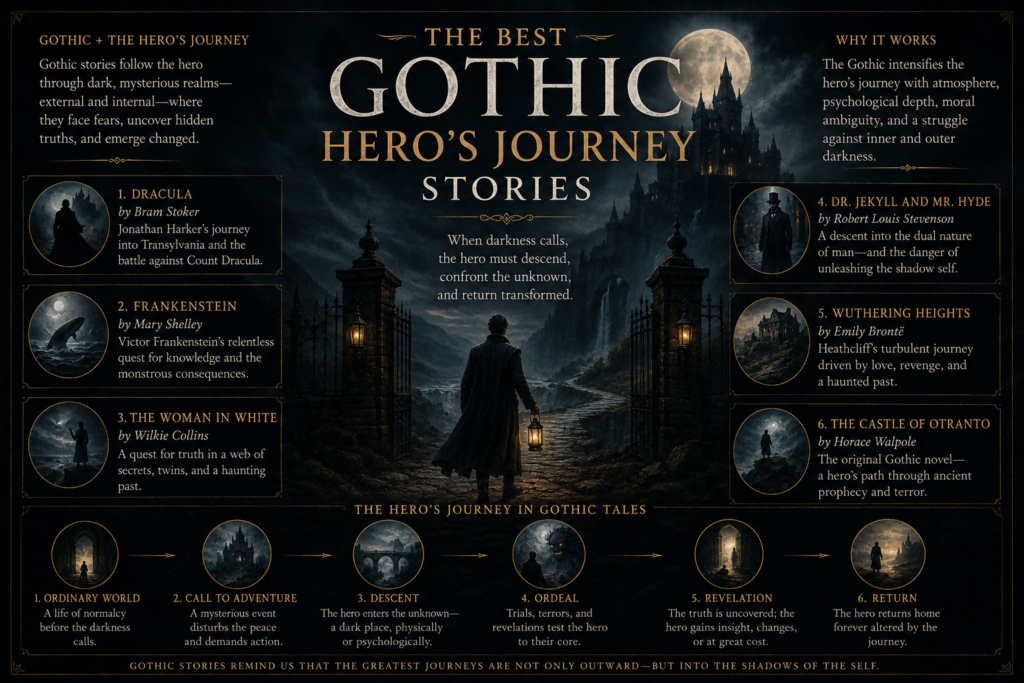
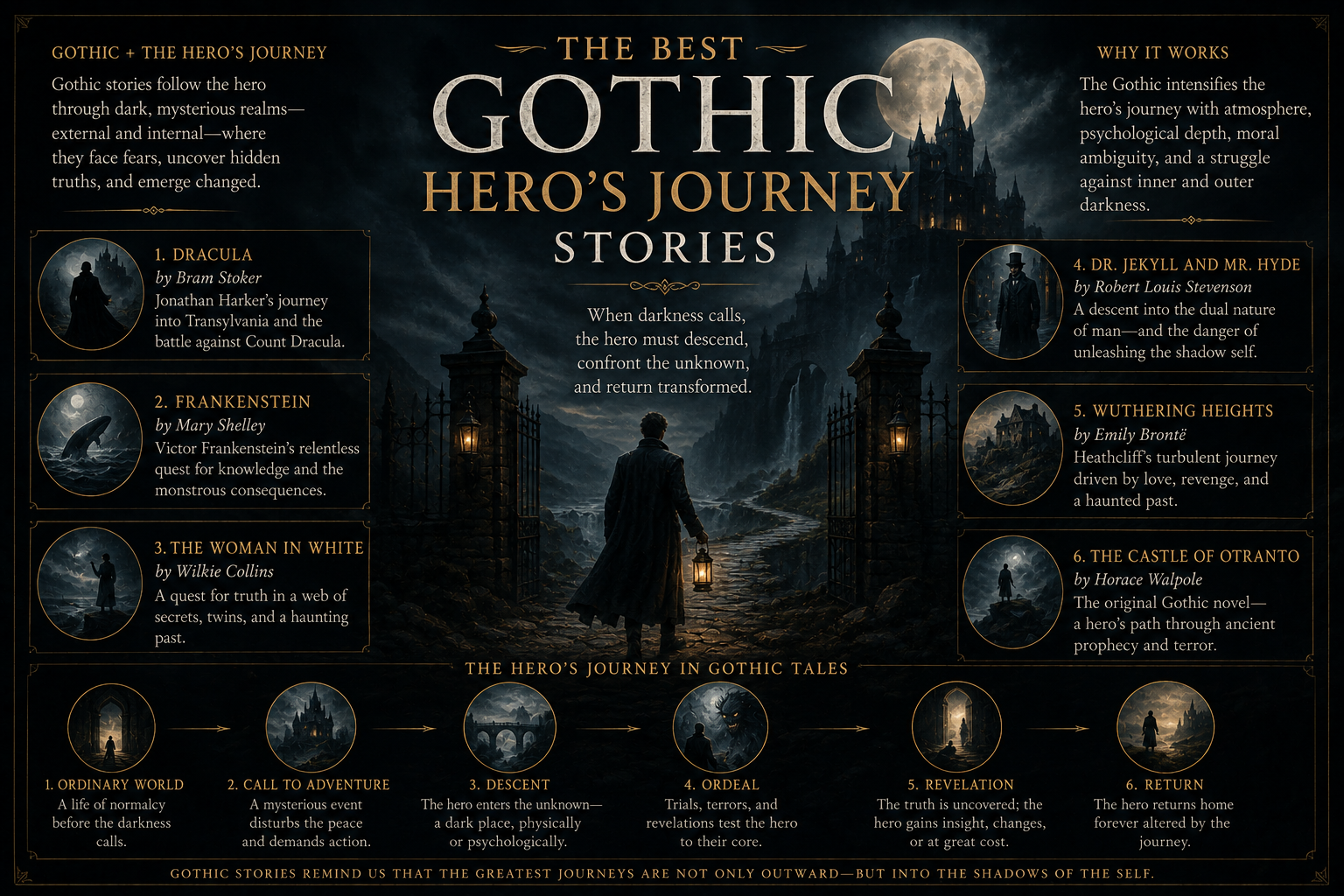
The Best Gothic Hero’s Journey Stories mix dark settings with deep inner change. These stories send characters into fear, mystery, and danger, but the real battle often happens inside the hero.

For students, this blend is powerful because it makes classic literature feel tense and personal. A haunted house or ruined castle can reveal more about a character than a speech ever could.

In this Guide

  • What makes Gothic hero journeys different
  • Key books and examples to read
  • Major symbols and themes
  • How to study these stories for class
  • FAQs about Gothic hero journeys
Gothic Hero's Journey

What Makes the Best Gothic Hero’s Journey Stories Different?

Gothic hero journeys turn the usual adventure story into a darker test of the soul.

In a classic hero’s journey, a character leaves home, faces danger, gains wisdom, and returns changed. In Gothic fiction, that path is less clear. The hero may enter a castle, a mansion, a lab, or a ruined family estate.

The danger is not only outside. It may be guilt, desire, family secrets, or fear of the unknown.

The Best Gothic Hero’s Journey Stories often ask one key question: What happens when a person faces the truth they tried to hide?

This is why Gothic stories work so well in literature classes. They connect plot with character growth. If you want help with that skill, read this guide on how to analyze characters in literature.

Best Gothic Hero’s Journey Stories to Read First

These classic works show how fear can shape a hero’s path.

Frankenstein by Mary Shelley is one of the most important Gothic hero journey stories. Victor Frankenstein seeks knowledge, but his quest leads to horror. His creation also takes a painful journey as he searches for love and meaning.

What makes the novel so rich is its double journey. Victor wants power. The Creature wants belonging. Both are changed by rejection and loss.

Jane Eyre by Charlotte Brontë may not seem like a Gothic quest at first, but it fits the pattern well. Jane moves from Gateshead to Lowood to Thornfield, and each place tests her courage.

Thornfield Hall is the Gothic center of the novel. Its locked rooms and strange sounds reflect secrets in the house. Jane’s real journey is toward self-respect.

Dracula by Bram Stoker turns the hero’s journey into a group struggle. Jonathan Harker travels into danger, but the fight against Dracula becomes shared. The novel uses letters and journals to build fear and suspense.

When students search for the Best Gothic Hero’s Journey Stories, these titles are strong starting points because they balance action with inner conflict.

More Gothic Examples Worth Knowing

Not every Gothic hero wins in a simple way.

Wuthering Heights by Emily Brontë gives readers a darker form of the journey. Heathcliff rises from outsider to powerful figure, but his path is ruled by pain. His story shows how revenge can trap a person instead of free them.

Rebecca by Daphne du Maurier follows a young narrator into the shadow of another woman’s memory. Manderley feels beautiful and unsafe at the same time. The heroine must learn how much of her fear comes from the house and how much comes from her own doubt.

The Strange Case of Dr. Jekyll and Mr. Hyde by Robert Louis Stevenson uses the hero’s journey in a twisted way. Dr. Jekyll crosses a moral line and meets the darkest part of himself. His story warns that hidden desires can grow stronger when denied.

These Best Gothic Hero’s Journey Stories remind readers that a journey does not always lead to peace. Sometimes it leads to truth, and truth can be hard to face.

Symbols and Themes in the Best Gothic Hero’s Journey Stories

Gothic stories use objects and places to show what characters fear most.

One common symbol is the house. A mansion, castle, or locked room often stands for the mind. Hidden rooms suggest hidden truths. Broken walls suggest broken families.

Dark weather is another key symbol. Storms, fog, and cold landscapes make the world feel unsafe. They also reflect the hero’s confusion.

Mirrors and doubles matter too. In Frankenstein, Victor and the Creature reflect each other. In Dr. Jekyll and Mr. Hyde, the double becomes literal.

The Best Gothic Hero’s Journey Stories often explore guilt, identity, and the fear of change. These themes make the genre more than scary. They make it human.

Why Gothic Hero Journeys Still Matter

Modern readers still connect with Gothic stories because fear has not gone away.

Students may not live in castles, but they know what it means to feel trapped. They know what it means to face pressure, secrets, and hard choices.

The Best Gothic Hero’s Journey Stories give shape to those feelings. They turn anxiety into plot. They turn inner conflict into setting.

This is why Gothic fiction keeps returning in books, film, and television. The genre gives us dark spaces where difficult emotions can be seen.

For more background on the genre, see Britannica’s overview of the Gothic novel. For a key Gothic writer, visit the Poetry Foundation page on Edgar Allan Poe.

How to Read the Best Gothic Hero’s Journey Stories for Class

To study these stories well, focus on how the setting shapes the hero.

Ask what place the hero enters. Is it a house, a lab, a school, or a foreign land? Then ask what fear that place brings out.

Track the hero’s choices. Gothic heroes often fail because they ignore warnings or hide the truth. Those choices matter more than the scares.

Watch for moments of self-knowledge. A Gothic hero may not defeat a monster, but they may learn what the monster means.

If you are writing an essay, connect the setting to the character’s change. This is a strong way to build a clear literary argument.

These books are easy to find and useful for class study.

  • Frankenstein by Mary Shelley
  • Jane Eyre by Charlotte Brontë
  • Dracula by Bram Stoker

Each one offers a different kind of Gothic journey. Together, they show why the Best Gothic Hero’s Journey Stories remain important in literary culture.

FAQs About the Best Gothic Hero’s Journey Stories

What is a Gothic hero’s journey?

It is a story where a character enters a dark or mysterious world and faces both danger and inner conflict. The journey often reveals hidden fear, guilt, or truth.

Are the Best Gothic Hero’s Journey Stories always horror stories?

No. Some are scary, but many focus more on suspense, secrets, and emotion. Jane Eyre is a good example.

Why do Gothic stories use old houses so often?

Old houses suggest history, memory, and hidden pain. They often reflect the mind of the hero or the secrets of a family.

Which Gothic hero journey is best for students?

Frankenstein is a strong choice because it is short enough for class study and rich in themes. It also raises big questions about science and responsibility.

Key Takeaway

The Best Gothic Hero’s Journey Stories show that the hardest quest is often the one inside the self. These stories use haunted places, dark symbols, and troubled heroes to explore fear, truth, and change.

That is why they still matter. They make readers ask what we hide, what we seek, and what we become when we face the dark. 🕯️
Important The Odyssey Quotes Explained: A Student Guide

Odyssey Quotes

A guide to memorable passages and how students can use them in essays.

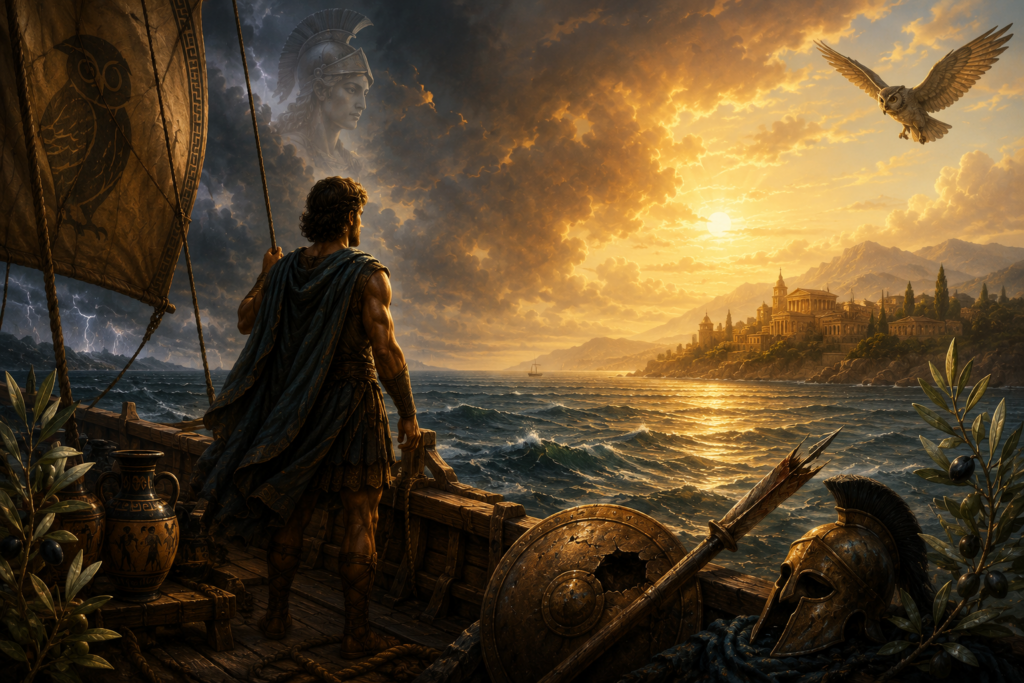
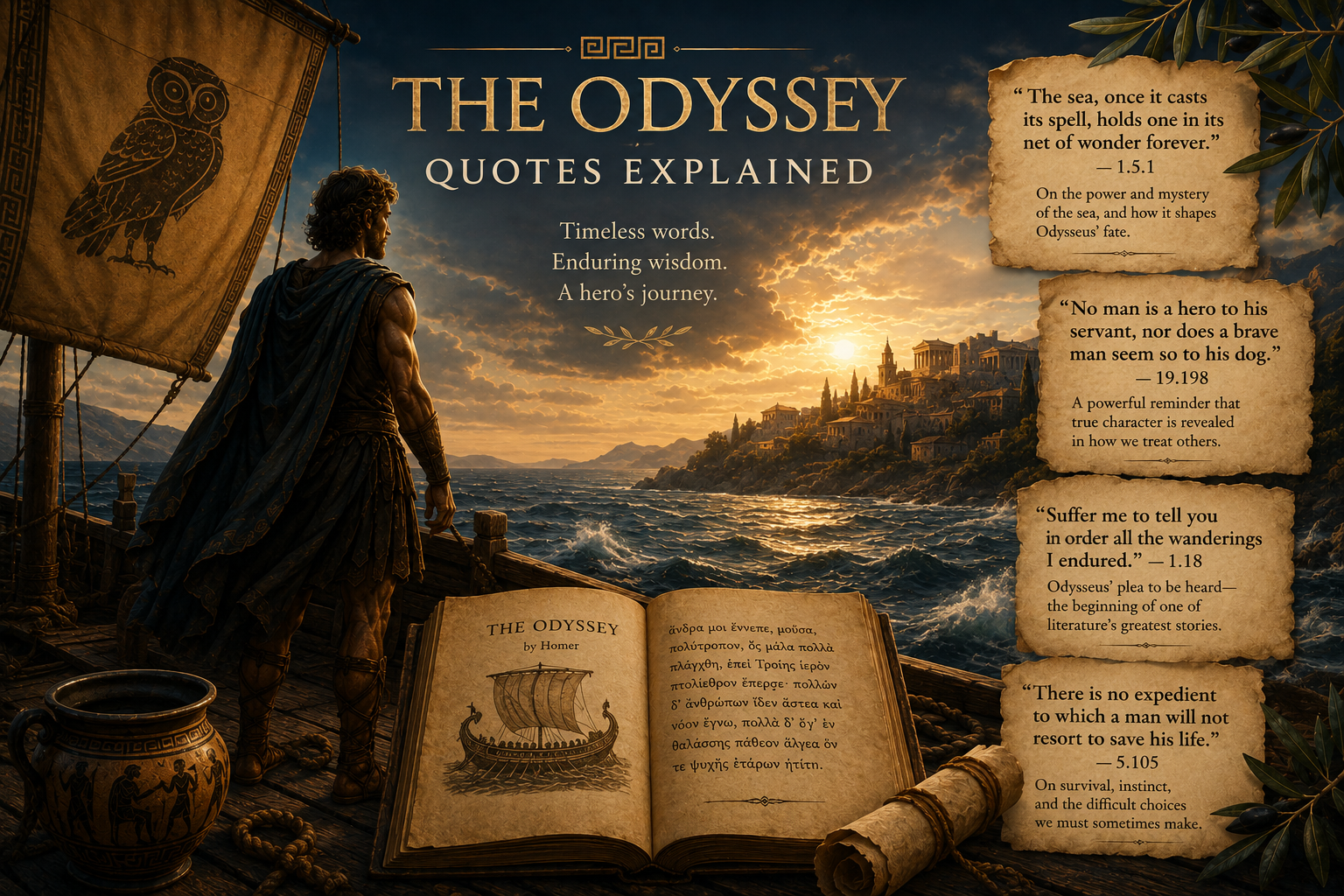
The Odyssey quotes explained can help students see how Homer builds a story about home, honor, loss, and wisdom. This guide uses short public-domain phrases when useful, then explains how each passage can support a strong essay claim.

In this Guide

Use this quick map to find the quote or skill you need.

  • Why the quotes matter
  • Identity and home
  • Pride and consequences
  • Loyalty and endurance
  • Essay tips for quote analysis
  • Books and resources
  • FAQ
Odyssey Quotes

Why The Odyssey quotes explained matter in essays

Great quotes do more than sound important. They reveal how a text thinks.

A useful set of The Odyssey quotes explained should connect each passage to a theme, a character choice, or a major conflict. In The Odyssey, those conflicts often come from temptation, pride, and the hard pull of home.

Homer also uses repeated ideas, such as storytelling and disguise. When you explain a quote, look for what changes in the character or what the line shows about the ancient Greek world.

The Odyssey quotes explained: identity and home

Odysseus spends much of the poem away from Ithaca, yet the idea of home shapes nearly every choice he makes.

“Tell me, O Muse…”

This short opening phrase comes from older public-domain translations of the poem. It shows that the epic begins with an invocation, which is a call for divine help in telling the story.

The line matters because it frames Odysseus as more than one man with a problem. His journey becomes a story about human weakness, clever thought, and survival.

When students search for The Odyssey quotes explained, this opening is one of the best places to start. You can use it to discuss the epic tradition and the role of fate.

“that ingenious hero”

Some public-domain translations describe Odysseus with this phrase. It points to his intelligence, which is often his greatest strength.

Odysseus wins many battles with words before he uses force. This is like Hamlet in Shakespeare’s Hamlet, where thought and speech shape action, even when the results turn painful.

In an essay, this quote can support a claim about Odysseus as a hero of the mind. He is not just brave. He survives because he studies people and adapts.

The Odyssey quotes explained: pride and consequences

Homer often shows that a hero’s strength can turn into a weakness.

“My name is Noman”

In the Cyclops episode, Odysseus uses a false name to escape danger. Older translations often give the name as “Noman,” while many modern classes use “Nobody.”

This moment shows his quick wit. He knows that language can become a weapon.

The quote also sets up a warning. Odysseus escapes through cleverness, but he later reveals too much and brings Poseidon’s anger on himself.

“I am Ulysses son of Laertes”

Older public-domain translations often use Ulysses for Odysseus. This line matters because he announces his true name after the Cyclops episode.

The moment feels heroic, but it also exposes his pride. Odysseus wants glory, and that desire costs him years of suffering.

This is a strong quote for an essay about heroic flaws. Like Achilles in The Iliad, Odysseus is great because of his passion, yet that same passion can harm him.

The Odyssey quotes explained: loyalty and endurance

The poem values cleverness, but it also honors patience and faithfulness.

Argus recognizes his master

Many students remember the scene with Argus, Odysseus’s old dog. The exact wording changes by translation, but the point is clear: Argus knows Odysseus when many people do not.

This scene is short, but it has deep emotional power. It shows that loyalty can outlast time, poverty, and disguise.

The Odyssey quotes explained often focus on Odysseus, but Argus can support a strong paragraph about recognition. Home is not only a place. It is also the bonds that still know you.

Penelope and the bed

Penelope tests Odysseus with the secret of their marriage bed. The scene proves that she is not passive or easily fooled.

Her test mirrors Odysseus’s own cleverness. Both of them use intelligence to protect what matters.

This moment works well in essays about marriage, trust, and identity. It also shows that the return home must be earned, not simply claimed.

How to use The Odyssey quotes explained in an essay

A quote should not sit in your paragraph like decoration. It should help prove your point.

The best The Odyssey quotes explained will follow a simple pattern: claim, quote, explanation, and link back to the thesis. If you need help with that structure, read our guide on how to write a literary analysis essay.

Here is a simple example:

Claim: Odysseus’s cleverness saves him, but his pride delays his return.

Quote: His false name, “Noman,” helps him escape the Cyclops.

Explanation: The name shows his gift for strategy. Yet after he escapes, he reveals his identity, which turns his success into a new danger.

Try to avoid a summary-only paragraph. Teachers want analysis, which means you explain why the words matter.

If you want a ready-to-use reference while you study, try our Odyssey quote study guide and pair it with your class notes.

The Odyssey quotes explained through major themes

The strongest quotes connect to themes that appear across the whole epic.

Home: Odysseus wants Ithaca, but he must learn restraint before he can fully return.

Pride: His desire for fame creates real danger, especially after the Cyclops episode.

Disguise: Odysseus’s hidden identity lets him test others before he acts.

Loyalty: Penelope, Telemachus, and Argus show that faithfulness has its own kind of courage.

Storytelling: Odysseus often survives by shaping how others see him. His words become part of his power.

Books and resources for The Odyssey quotes explained

Good background sources can help you understand the epic without replacing your own reading.

For a clear overview of the poem, visit Britannica’s article on The Odyssey. For the ancient Greek text and older translations, see the Perseus Digital Library.

Relevant books to search for

  • The Odyssey by Homer, translated by Emily Wilson
  • The Odyssey by Homer, translated by Robert Fagles
  • The World of Odysseus by M. I. Finley

Different translations use different wording, so always cite the version your class uses.

FAQ: The Odyssey quotes explained

Quick answers can help you choose the right passage for your essay.

What is the most important quote in The Odyssey?

The opening invocation is one of the most important because it sets up the epic style and introduces Odysseus as a complex hero.

Can I use a paraphrase instead of a quote?

Yes, but use direct quotes for key words or major moments. A short quote often gives stronger proof.

Why do translations of The Odyssey sound different?

Each translator makes choices about tone, rhythm, and word meaning. That is why your essay should name the translation you use.

What themes work best with Odysseus quotes?

Strong themes include home, pride, disguise, loyalty, and identity. Choose the one that fits your thesis.

Key takeaway

The best way to use The Odyssey quotes explained is to connect each phrase to a choice, a consequence, or a theme. A short quote with a clear explanation can make your essay sharper and more convincing.

Most Influential Forbidden Knowledge in Literature: Books, Symbols, and Themes

forbidden knowledge

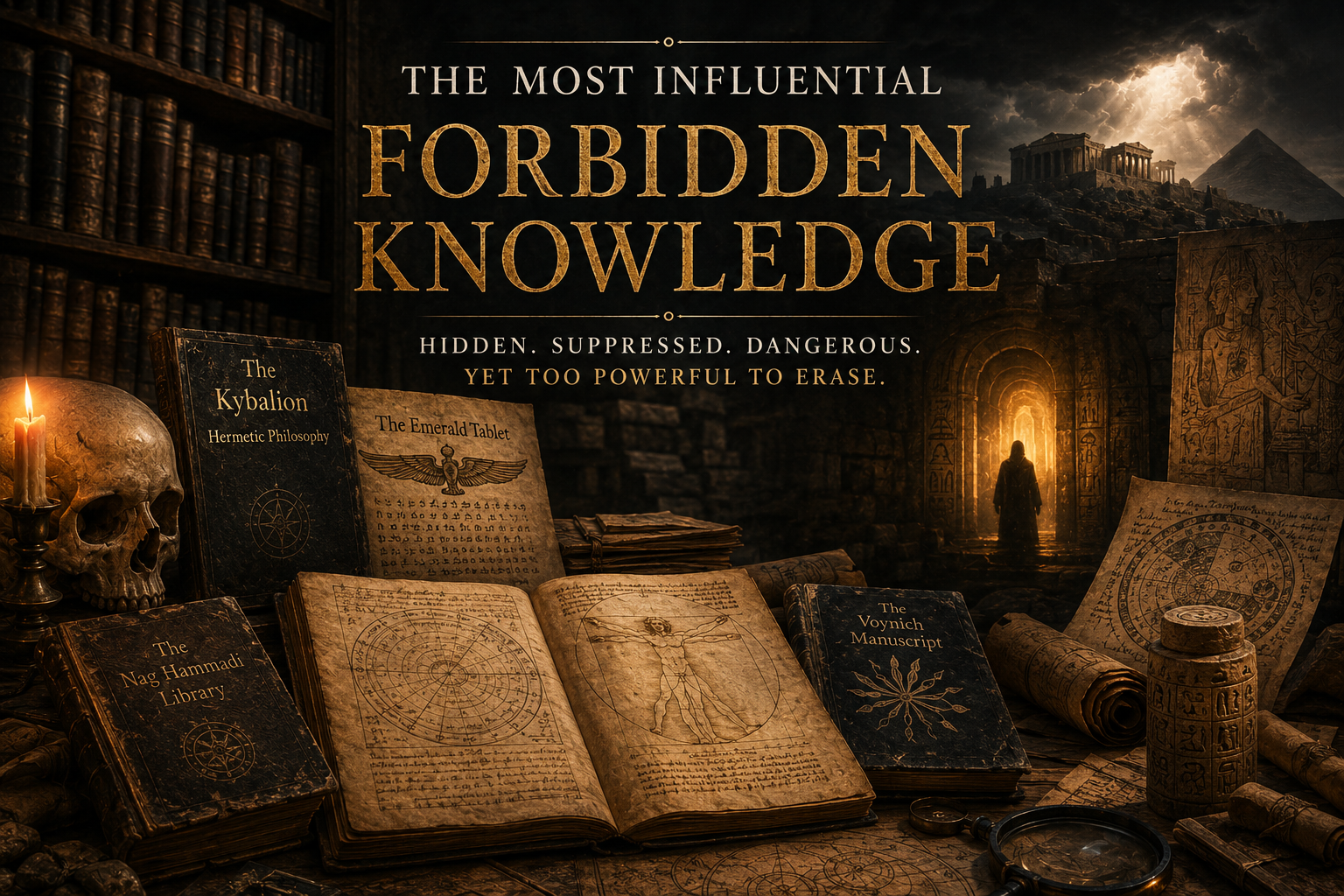
Stories about the Most Influential Forbidden Knowledge ask a sharp question: what happens when people learn what they were never meant to know? From ancient myths to modern novels, these works show how truth can free people, tempt them, or destroy them.

In this Guide

forbidden knowledge

What Does Forbidden Knowledge Mean?

Forbidden knowledge is truth that a person, group, or system tries to hide.

In literature, this can mean a secret book, a banned idea, a hidden history, or a dangerous scientific discovery. The knowledge is “forbidden” because someone in power fears what it might do.

The Most Influential Forbidden Knowledge often changes the hero’s life. Once the truth is known, the character cannot return to innocence.

This idea appears in myths, religious stories, Gothic novels, dystopian fiction, and campus novels. It stays popular because readers understand the pull of secrets.

Most Influential Forbidden Knowledge in Classic Literature

Classic literature uses forbidden knowledge to test human desire, pride, and fear.

One of the oldest examples is the Tree of Knowledge in the Book of Genesis. Adam and Eve gain knowledge, but that knowledge brings loss. The story shapes much of Western literature because it links knowledge with choice and consequence.

Greek myth gives us Prometheus, who steals fire for humans. Fire stands for power, craft, and progress. Yet Prometheus suffers because he gives humans a gift the gods wanted to control.

In Paradise Lost, John Milton turns the fall of humanity into a grand poem about rebellion, pride, and desire. The poem asks why people choose danger when they know the cost. You can learn more about Milton through the Poetry Foundation’s John Milton page.

Mary Shelley’s Frankenstein is another key work. Victor Frankenstein learns how to create life, but he lacks wisdom. His discovery becomes a warning about science without care.

These works help explain why the Most Influential Forbidden Knowledge is never just about facts. It is about what people do after they gain those facts.

Why Most Influential Forbidden Knowledge Still Matters Today

Forbidden knowledge feels modern because we still argue over who controls truth.

Books are banned. Data is hidden. Governments shape history. Schools debate what students should read. These real issues make older stories feel fresh.

In George Orwell’s 1984, the Party controls language, memory, and truth. Winston wants to know what life was like before the Party. That desire becomes an act of rebellion.

In Ray Bradbury’s Fahrenheit 451, books are illegal because they make people think and question. Firefighters burn books instead of saving homes. The novel turns censorship into a warning about comfort, fear, and silence.

The Most Influential Forbidden Knowledge in these novels matters because it shows how truth can threaten power.

Modern Books That Explore Forbidden Knowledge

Modern authors often connect forbidden knowledge to identity, memory, and social control.

In Margaret Atwood’s The Handmaid’s Tale, women are denied reading, writing, and public power. Knowledge becomes a way to resist a cruel system. Even small memories of the past matter.

In Umberto Eco’s The Name of the Rose, a hidden book causes fear inside a medieval monastery. The mystery asks whether laughter, thought, and free debate can weaken authority.

Philip Pullman’s His Dark Materials also uses forbidden knowledge in a bold way. Lyra’s world is full of rules that adults refuse to explain. Her search for truth becomes a fight for freedom.

These stories show that the Most Influential Forbidden Knowledge can appear in many forms, from banned books to hidden memories.

Symbols and Themes in Most Influential Forbidden Knowledge

Writers often use symbols to show why hidden truth feels powerful.

Books are one of the clearest symbols. A book can stand for memory, freedom, or danger. In Fahrenheit 451, books become a sign of human thought itself.

Fire is another strong symbol. It can mean light, learning, and destruction. Prometheus gives fire to humans, while Bradbury’s firefighters use fire to erase ideas.

Doors, locked rooms, and secret libraries also appear often. They show the border between safety and truth. Once a character crosses that border, the story changes.

The main themes are power, curiosity, guilt, and responsibility. These themes are useful for essays because they connect character choices to larger ideas. If you want help naming these tools, see this guide to literary devices.

The Most Influential Forbidden Knowledge often asks one hard question: should every truth be known?

These books are strong choices for students who want to study forbidden knowledge in literature.

  • Frankenstein by Mary Shelley: A major Gothic novel about science, ambition, and moral duty.
  • Fahrenheit 451 by Ray Bradbury: A short, powerful dystopian novel about censorship and the value of books.

Both works are often taught in high school and college. They also pair well with essays about symbolism, conflict, and theme.

For background on Shelley’s novel, visit Britannica’s page on Frankenstein.

How to Write About Most Influential Forbidden Knowledge in an Essay

A strong essay should focus on the cost of knowledge.

Start by asking who hides the truth. Then ask who seeks it and why. This helps you move beyond plot summary.

You can also look at symbols. A secret book, a flame, or a locked room can reveal the story’s deeper meaning.

For example, an essay on Frankenstein might argue that Victor does not fail because he learns too much. He fails because he refuses care, honesty, and responsibility.

That point makes the Most Influential Forbidden Knowledge more complex. The problem is not always knowledge itself. The problem is how people use it.

FAQs About Most Influential Forbidden Knowledge

What is the Most Influential Forbidden Knowledge in literature?

The Most Influential Forbidden Knowledge often includes hidden truth, banned books, secret science, or knowledge of good and evil. Famous examples appear in Genesis, Frankenstein, and Fahrenheit 451.

Why do writers use forbidden knowledge?

Writers use it to create conflict and raise moral questions. It helps show what characters want and what they fear.

Is forbidden knowledge always bad?

No. Many stories show that knowledge can free people. The danger often comes from pride, control, or fear.

What theme connects most forbidden knowledge stories?

The main theme is responsibility. A character must decide what to do with the truth once they have it.

Key Takeaway

The Most Influential Forbidden Knowledge in literature is powerful because it links truth with risk. These stories remind us that knowledge can open minds, but it also demands courage and care.

For students, this topic is a rich path into theme, symbolism, and character analysis. It turns a simple question into a lasting one: what truths are worth the cost?

Themes in The Odyssey: A Student-Friendly Guide

Odyssey Themes

Themes in The Odyssey: A Student-Friendly Guide

A clear guide to the major ideas, conflicts, and meanings students should notice in The Odyssey.

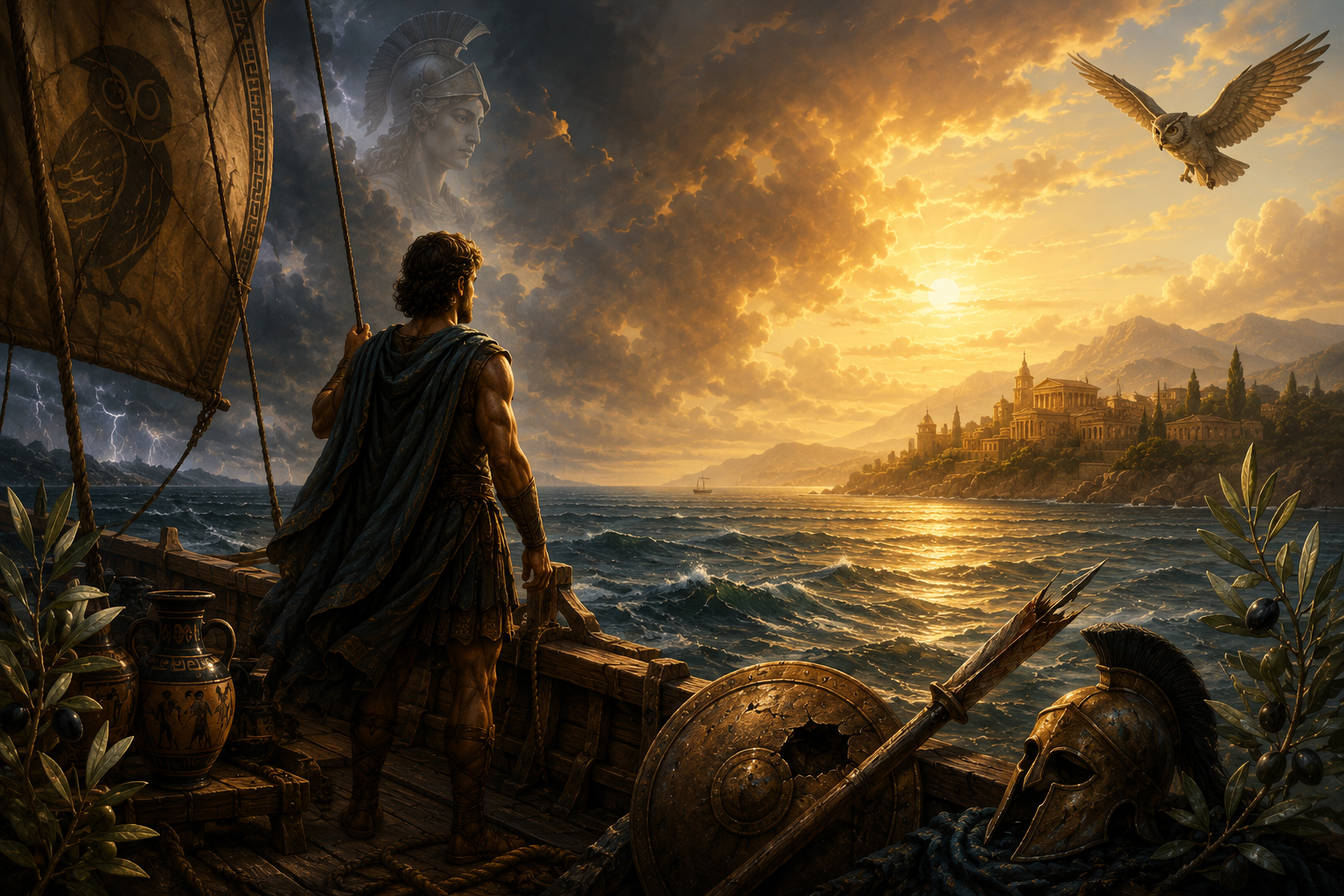
The themes in The Odyssey help explain why this ancient epic still feels alive in English class today. Homer’s story is not only about monsters and sea travel, but about home, pride, loyalty, and the hard work of becoming wise.

If you are writing an essay or preparing for class discussion, this guide will help you spot the ideas that matter most.

In this Guide

Odyssey Themes

Why Themes in The Odyssey Matter

Theme helps turn a plot summary into a deeper reading.

At first, The Odyssey may seem like a long adventure story. Odysseus fights danger, loses men, and tries to return to Ithaca after the Trojan War.

But the themes in The Odyssey show what the journey means. The poem asks what makes a person honorable, what a leader owes to others, and how much self-control matters.

That is why teachers often ask theme questions on essays and exams. They want you to move past “what happened” and explain “why it matters.”

Major Themes in The Odyssey

These are the core ideas students should know before writing about the poem.

The major themes in The Odyssey often overlap. Hospitality connects to justice. Pride connects to suffering. Loyalty connects to identity.

When you study them, do not treat each theme as a separate box. Homer builds meaning by letting the same event raise more than one question.

Hospitality and Respect for Strangers

Hospitality, also called xenia, is one of the most important ideas in the epic.

In Greek culture, hosts were expected to welcome guests, feed them, and treat them with honor. Guests also had duties. They had to respect the home and avoid abuse of kindness.

The Phaeacians show good hospitality when they help Odysseus. The suitors show the opposite. They invade Odysseus’s home, eat his food, and insult his family.

This theme gives the poem a moral system. Good hosts and guests help create order. Bad ones bring punishment.

Home and Belonging

Odysseus wants to return to Ithaca more than he wants comfort, pleasure, or fame.

Calypso offers him ease and even immortality, yet he still longs for home. This choice shows that home is not just a place. It is tied to memory, family, identity, and duty.

Many works of literature use a similar idea. In The Great Gatsby, Gatsby also longs for a lost home, but his dream is trapped in the past. Odysseus, by contrast, must restore a living home that still needs him.

Loyalty and Testing

Loyalty matters because almost every major character faces a test.

Penelope must decide how long to wait for Odysseus. Telemachus must grow into a son who can defend his house. Servants must choose between faithfulness and betrayal.

Even Odysseus is tested. He must stay loyal to his goal when comfort tempts him away from it.

This is one reason the themes in The Odyssey still connect to modern readers. The poem asks a simple but hard question: Who stays true when life gets difficult?

Pride, Self-Control, and Consequences

Odysseus is clever, brave, and skilled. He is also proud.

After he blinds Polyphemus, he reveals his name. That choice brings Poseidon’s anger and makes the journey home much harder.

His pride creates real cost. Homer does not show Odysseus as perfect. Instead, the poem presents a hero who must learn when to speak, when to hide, and when to control himself.

This theme appears in many classic works. In Macbeth, ambition pushes Macbeth toward ruin. In The Odyssey, pride works in a similar way, though Odysseus still has a chance to grow.

Cleverness and Survival

Odysseus wins because he thinks under pressure.

He uses the name “Nobody” to trick the Cyclops. He plans the escape from the cave. He enters his own home in disguise so he can judge the suitors before he acts.

The poem values strength, but it values intelligence even more. Odysseus survives because he can adapt.

This is one of the clearest themes in The Odyssey for students to track. Each challenge asks whether force or thought will lead to success.

Justice and Revenge

The ending of the poem raises a tough question: Is Odysseus’s revenge fair?

The suitors have broken the rules of hospitality. They plot against Telemachus, disrespect Penelope, and damage the household.

Odysseus punishes them with violence. To the Greek world of the poem, this restores order. To modern readers, the scene can feel harsh.

That tension makes the theme more interesting. The poem does not just show justice. It asks readers to think about what justice costs.

Identity and Recognition

Odysseus often hides who he is. He lies, wears a disguise, and waits before he reveals himself.

Yet the story keeps moving toward recognition. Telemachus, Penelope, Laertes, and others must come to know him again.

Identity in the poem is not only about a name. It is proven through memory, skill, loyalty, and shared history.

The bed that Odysseus built for Penelope becomes a key sign of this. Only the real Odysseus knows its secret.

Key Conflicts Behind the Themes in The Odyssey

Conflict helps reveal theme because pressure shows what characters value.

The themes in The Odyssey become clear when the characters face hard choices. Odysseus must choose between comfort and home. Penelope must choose between pressure and patience. Telemachus must choose between fear and action.

There is also a larger conflict between human desire and divine power. The gods shape events, but people still make choices. That mix makes the poem feel complex.

Odysseus cannot control the sea, Poseidon, or fate. He can control his courage, patience, and plans.

Symbols That Support Themes in The Odyssey

Symbols make the poem’s ideas easier to see.

The sea is a symbol of danger and uncertainty. It keeps Odysseus away from home and forces him to face limits.

The bow shows rightful power. When Odysseus strings it, he proves that he is still the true master of the house.

The marriage bed stands for shared truth. It connects love, memory, and identity in one powerful moment.

These symbols help students explain the themes in The Odyssey with strong evidence instead of vague claims.

How to Write About Themes in The Odyssey

A strong theme paragraph needs a clear claim and a specific example.

Start by naming the theme, then explain what Homer seems to say about it. Do not write, “The theme is loyalty.” That is only a topic.

Try a sharper claim: “Homer shows that loyalty requires patience, not just love.” Then use Penelope’s actions to prove the point.

If you need help shaping a thesis and using quotes, read our guide on how to write a literary analysis essay.

You can also use our student study guide resources to review major ideas before you draft.

Helpful Background Sources

For reliable context, the Encyclopaedia Britannica overview of The Odyssey gives a clear summary of the epic and its background.

The Poetry Foundation page on Homer offers useful details about the poet and the tradition behind the work.

Suggested Books for Students

These books can help you understand the poem and its world:

  • The Odyssey by Homer, translated by Emily Wilson
  • The Odyssey by Homer, translated by Robert Fagles
  • The World of Odysseus by M. I. Finley

FAQ About Themes in The Odyssey

What are the most important themes in The Odyssey?

The most important themes in The Odyssey include hospitality, loyalty, home, pride, justice, and identity.

What is the main message of The Odyssey?

One main message is that true heroism requires more than courage. Odysseus must learn patience, self-control, and respect for home.

How does hospitality work as a theme?

Hospitality shows whether people respect moral order. Good hosts help strangers, while bad guests like the suitors bring chaos.

Why is Odysseus not a perfect hero?

Odysseus is clever and brave, but his pride causes harm. His flaws make him more human and give the poem deeper meaning.

How can I use theme in an essay?

Make a claim about what the poem says, then support it with a scene, quote, or character choice. For more help, use this literary analysis essay guide.

Key Takeaway

The themes in The Odyssey show that the journey home is also a journey toward wisdom. Homer’s epic lasts because it links adventure with choices that still matter today. 📚

Jane Eyre Summary and Analysis for Students

Jane Eyre Summary

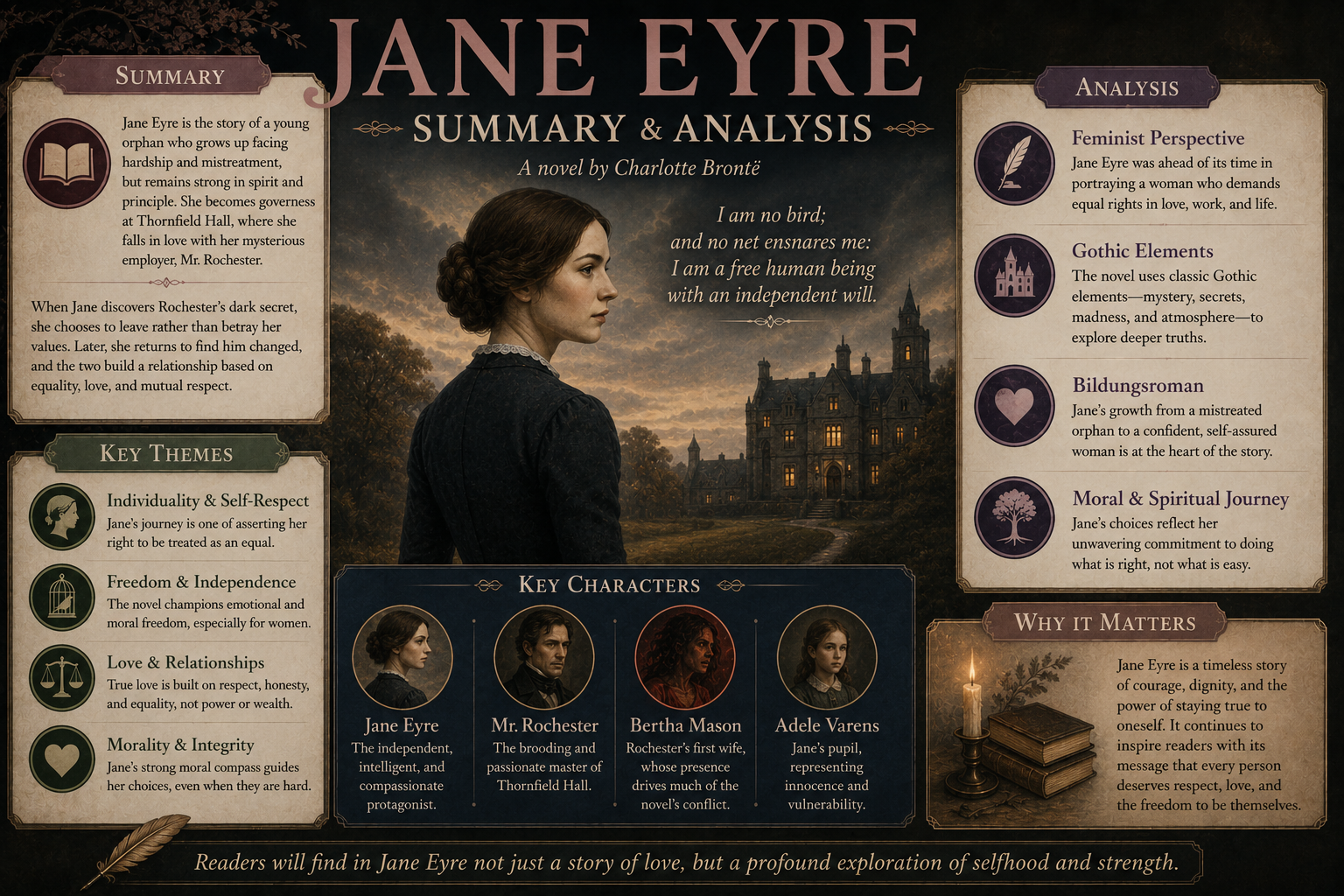
Jane Eyre is one of the most important novels of the Victorian age. This Jane Eyre summary and analysis gives students a clear path through the plot, structure, conflicts, and deeper meaning.

Charlotte Brontë tells a story about a young woman who wants love, faith, and freedom without losing herself.

In this Guide

Use this guide as a map before class, essays, or exams.

  • Quick overview
  • Plot summary by major stage
  • Structure and point of view
  • Main conflicts
  • Themes, symbols, and meaning
  • Helpful books and FAQ
Jane Eyre Summary

Jane Eyre summary and analysis: quick overview

The novel follows Jane from a harsh childhood to a hard-won adult life.

Jane is an orphan raised by cruel relatives at Gateshead. She later goes to Lowood School, becomes a governess at Thornfield Hall, and falls in love with Mr. Rochester.

This Jane Eyre summary and analysis matters because the novel is not just a romance. It is also a story about self-respect, moral choice, and the right to speak.

For a short reference overview, see Britannica on Jane Eyre.

Jane Eyre summary and analysis: plot by major stages

Brontë builds Jane’s life in clear stages, and each place tests her in a new way.

Gateshead: Jane learns she is unwanted

Jane lives with her aunt, Mrs. Reed, and her cousins. They treat her as a burden, not a child with feelings.

The red-room scene is one of the novel’s key moments. Jane is locked in the room where her uncle died, and her fear shows how trapped she feels.

Lowood: Jane learns discipline and loss

At Lowood School, Jane meets Helen Burns, a gentle girl with deep faith. Helen teaches Jane patience, but her death also shows the cruelty of neglect.

Mr. Brocklehurst uses religion to control the girls. Brontë criticizes this false form of faith.

Thornfield: Jane finds love and danger

Jane becomes a governess at Thornfield Hall. She meets Mr. Rochester, who treats her as an equal in conversation.

They fall in love, but the wedding stops when Jane learns Rochester already has a wife, Bertha Mason, hidden in the attic. Jane leaves because she will not become his mistress.

Moor House: Jane faces a different kind of trap

Jane is rescued by the Rivers family, who later turn out to be her cousins. St. John Rivers asks Jane to marry him and serve as a missionary wife.

His offer is respectable, but it has no love. Jane refuses because it would crush her spirit.

Ferndean: Jane returns by choice

Jane later returns to Rochester after a fire destroys Thornfield. Bertha dies in the fire, and Rochester loses his sight and one hand.

Jane marries him only after they can meet on more equal ground. Use this Jane Eyre summary and analysis to notice that Jane’s happy ending depends on freedom, not surrender.

How Jane Eyre is structured

The novel has a life-story shape that helps readers track Jane’s growth.

Jane Eyre is a first-person novel. Jane tells her own story as an adult, so we see both her childhood feelings and her mature judgment.

A Jane Eyre summary and analysis should also note that the book is a Bildungsroman, or coming-of-age novel. Like Great Expectations by Charles Dickens, it follows a young person through pain, mistakes, and self-knowledge.

The setting changes as Jane changes. Gateshead shows rejection, Lowood shows discipline, Thornfield shows desire, and Ferndean shows chosen love.

If you want to study Brontë’s word choices more closely, this guide to close reading in literature can help.

Main conflicts in Jane Eyre

The novel’s conflicts are personal, social, and moral.

Jane versus society is one major conflict. Jane is poor, female, and often powerless, but she refuses to accept shame as her proper place.

Jane versus herself is just as important. She wants love, but she also knows that love without respect can destroy her.

Jane versus Rochester creates the central romantic tension. Rochester loves Jane, but he tries to hide the truth about Bertha, which makes their first union morally wrong.

Jane versus St. John tests her in another way. St. John offers duty without passion, while Rochester offers passion that must be purified by honesty.

Themes in Jane Eyre summary and analysis

Brontë uses Jane’s story to ask what a person needs in order to live with dignity.

Independence and self-respect

Jane’s strongest trait is her sense of inner worth. She has little money or status, but she believes her soul is equal to anyone else’s.

For students, Jane Eyre summary and analysis often begins with this point. Jane does not reject love. She rejects love that demands the loss of self.

Love and equality

Jane and Rochester’s best moments come when they speak honestly. Their worst moments come when power is uneven.

Like Elizabeth Bennet in Pride and Prejudice, Jane must judge whether a man’s love respects her mind as well as her heart.

Religion and moral choice

The novel offers different forms of faith. Helen Burns shows patient faith, Mr. Brocklehurst shows cruel hypocrisy, and St. John shows duty without warmth.

Jane’s faith is tied to conscience. She leaves Rochester because she believes love must answer to moral truth.

Class and gender

Jane lives in a world where class shapes every chance she has. As a governess, she is educated but not rich, so she stands between social groups.

Brontë also shows how women had narrow choices. Jane wants work, love, and respect, not a life chosen for her by others.

Symbols and Gothic elements

The novel uses dark, strange, and intense images to reveal hidden fears.

The red-room stands for childhood trauma and social punishment. Jane is treated as if her anger is a crime.

Thornfield Hall stands for mystery and buried truth. The house looks grand, but it hides pain in its upper rooms.

Fire often marks passion, danger, and change. It destroys Thornfield, but it also clears the way for a more honest life.

These Gothic touches connect Jane Eyre to novels like Wuthering Heights, where setting and emotion feel closely linked.

Literary meaning and why Jane Eyre still matters

Jane’s story still feels modern because she fights for a voice.

This Jane Eyre summary and analysis also shows why the novel is more than a love story. Jane’s final happiness comes because she chooses it from a place of strength.

The famous line about Jane being no bird captures the heart of the book. She refuses to be caged by gender, class, fear, or romance.

To learn more about Charlotte Brontë as a writer, see the Poetry Foundation biography of Charlotte Brontë.

For more study support, our student literature guides can help you review major novels with clearer notes.

Helpful books for Jane Eyre study

These books are useful for students who want more context or a reliable edition.

  • Jane Eyre by Charlotte Brontë, Penguin Classics edition
  • The Madwoman in the Attic by Sandra M. Gilbert and Susan Gubar

You can look for these through a school library, local bookstore, or Amazon Books.

FAQ: Jane Eyre summary and analysis

Here are quick answers to common student questions.

What should a Jane Eyre summary and analysis include?

It should cover Jane’s life stages, her conflicts, major themes, key symbols, and the meaning of her final choice.

What is the main message of Jane Eyre?

The novel argues that love must include equality, honesty, and self-respect.

Why does Jane leave Rochester?

Jane leaves because Rochester is already married. She loves him, but she will not betray her conscience.

Is Jane Eyre a feminist novel?

Many readers see it that way because Jane demands dignity, work, and moral freedom in a world that limits women.

Key Takeaway

A strong Jane Eyre summary and analysis should show how Jane moves from isolation to self-command. The novel’s power comes from one clear idea: Jane wants love, but never at the cost of her soul.

Most Beautiful Fear and Anxiety in Literature: Why Dark Feelings Can Move Us

Beautiful Fear and Anxiety

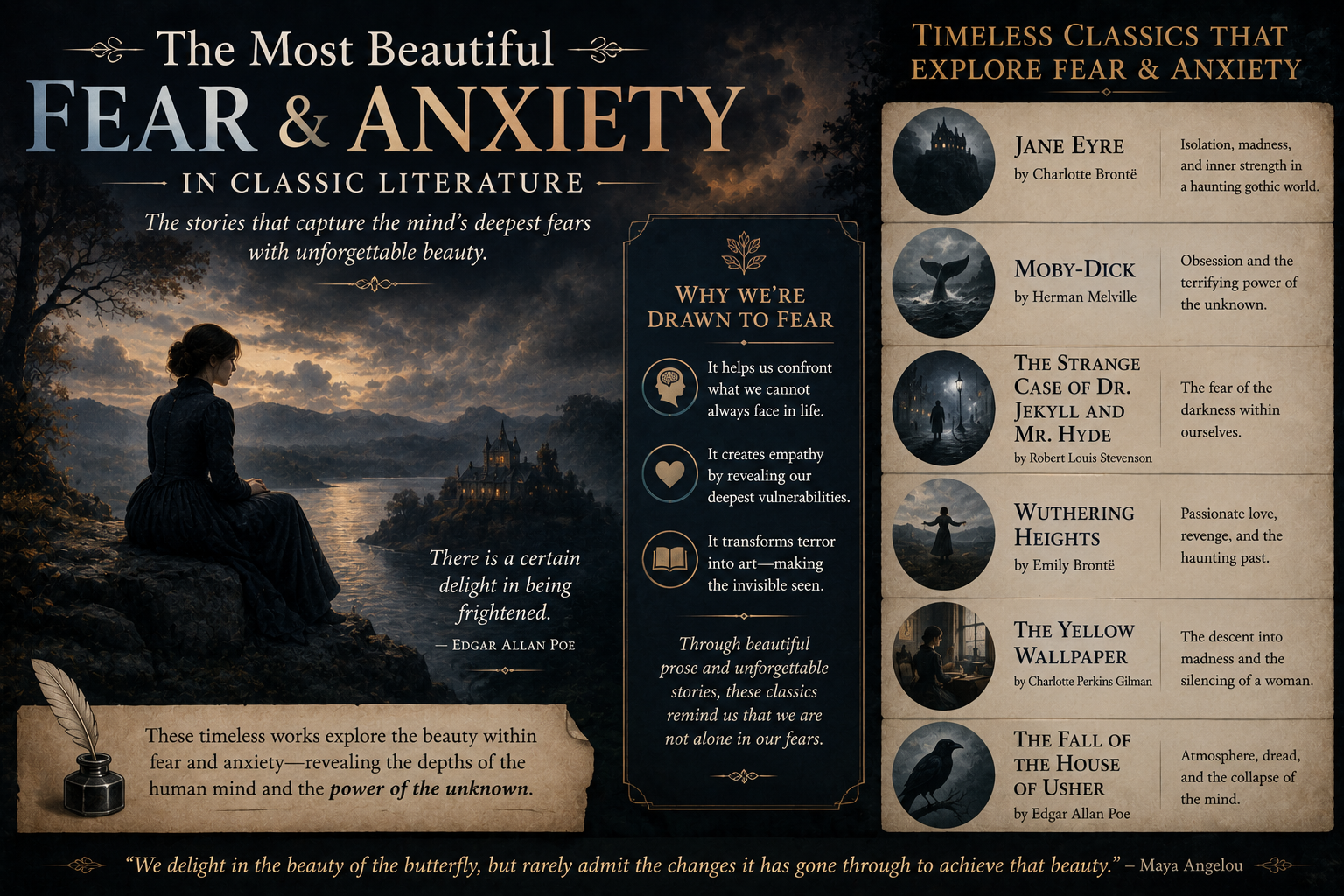
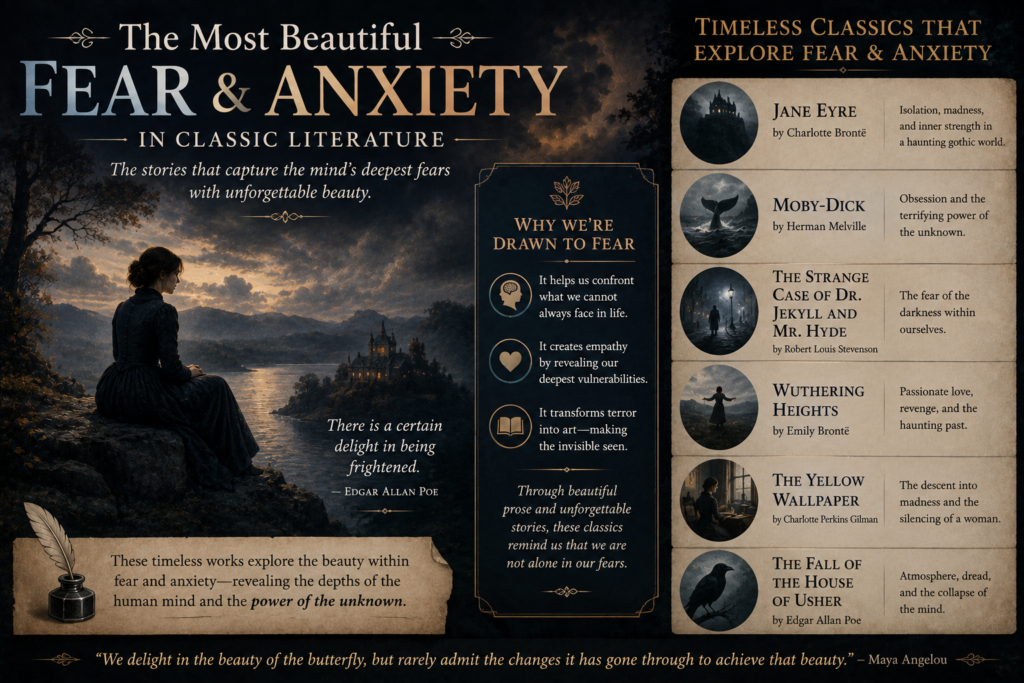
Some stories frighten us, yet they also feel strangely lovely. Most Beautiful Fear and Anxiety explores how literature turns dread into art, meaning, and deep emotion.

From Gothic novels to modern poetry, writers often use fear to show what humans hide, want, and lose. These works remind us that beauty can live inside unease.

In this Guide

Beautiful Fear and Anxiety

What Does Most Beautiful Fear and Anxiety Mean in Literature?

Fear in literature is not always just about terror.

Most Beautiful Fear and Anxiety describes moments when fear becomes meaningful, poetic, or even moving. A scene may feel dark, but it can also reveal truth.

Think of a lonely house, a storm at night, or a speaker who cannot calm their mind. These images may scare us, but they also create mood and mystery.

Writers use this feeling to show how fragile people can be. The fear matters because it points to love, loss, guilt, or change.

Why Most Beautiful Fear and Anxiety Pulls Readers In

Readers often enjoy safe fear because it lets them face hard feelings from a distance.

Most Beautiful Fear and Anxiety gives readers a way to explore dread without real danger. A book can hold fear in a shaped, careful form.

This is why Gothic fiction, tragic poetry, and strange short stories still matter. They help us sit with emotions that daily life may push away.

In class, this topic can also lead to strong literary analysis. Students can ask why a writer makes fear sound musical, why a setting feels alive, or why silence feels so heavy.

Famous Examples of Most Beautiful Fear and Anxiety

Many well-known works turn dread into art.

Edgar Allan Poe often creates beauty from unstable minds. In “The Tell-Tale Heart,” the narrator’s fear grows through sound, rhythm, and repetition.

Mary Shelley’s Frankenstein uses fear to ask what people owe to what they create. The novel feels haunted, but its sadness is just as strong as its horror.

Emily Dickinson also turns inner fear into sharp, strange beauty. Her poems about death, doubt, and the mind can feel quiet yet intense. For a close look at how form shapes meaning, read our guide to New Criticism and Emily Dickinson.

Charlotte Brontë’s Jane Eyre uses hidden rooms, strange laughter, and moral fear. The suspense matters because Jane must decide who she is and what she deserves.

Symbols and Themes Behind Most Beautiful Fear and Anxiety

Symbols help fear feel larger than one scary event.

In literature, darkness often suggests the unknown. It may point to death, secrecy, or a truth the character does not want to face.

Storms can show inner conflict. When a character feels torn inside, the weather may reflect that struggle.

Houses are also powerful symbols. A locked room, a cracked wall, or an empty hallway can show memory, guilt, or fear of the self.

Most Beautiful Fear and Anxiety often appears through these themes:

  • Isolation: A character feels cut off from others.
  • The unknown: A mystery grows because answers stay hidden.
  • Inner conflict: A person fears their own thoughts or desires.
  • Mortality: Death shapes the mood, even when it stays offstage.

These themes make fear more than a plot device. They connect fear to human life.

Recommended Books for Most Beautiful Fear and Anxiety

These books are strong choices for students, book clubs, or anyone who likes beautiful dark literature.

  • Frankenstein by Mary Shelley
  • The Haunting of Hill House by Shirley Jackson

Frankenstein works well for questions about creation, loneliness, and responsibility. Its fear comes from science, but its pain comes from rejection.

The Haunting of Hill House is a masterclass in mood. Shirley Jackson makes the house feel like a mind under pressure.

For more background on Gothic literature, Britannica’s overview of the Gothic novel is a helpful place to start.

How to Read Most Beautiful Fear and Anxiety in a Text

Slow down when a scene feels tense or strange.

Ask what makes the fear beautiful. Is it the language? The image? The rhythm of a sentence?

Watch for repeated words and patterns. Repetition can make anxiety feel trapped, like a thought that will not stop.

Notice the setting. A room, road, or landscape may reflect a character’s mind.

Pay attention to sound. Poe, Dickinson, and many other writers use rhythm to make fear feel alive. The Poetry Foundation’s Emily Dickinson page is useful for exploring how short poems can carry deep unease.

If you study poetry, our article on reading Emily Dickinson through New Criticism can help you focus on word choice, form, and structure.

Why Most Beautiful Fear and Anxiety Matters in Literary Culture

Dark literature gives readers language for feelings that are hard to name.

Most Beautiful Fear and Anxiety matters because it shows that fear is not only ugly or weak. It can be honest. It can be human.

Students often meet this idea in Gothic fiction, Romantic poetry, and modern novels. These works invite readers to think about the self, the unknown, and the limits of reason.

That is why this topic stays popular. It speaks to readers who know that life can feel both frightening and beautiful at once.

FAQs About Most Beautiful Fear and Anxiety

What is Most Beautiful Fear and Anxiety in literature?

It is the way literature turns fear or unease into something meaningful, artistic, or emotionally powerful.

Why do writers make fear seem beautiful?

Writers do this to show hidden truths about the mind, death, love, or guilt. Beauty can make fear feel deeper.

What books show this idea well?

Frankenstein by Mary Shelley and The Haunting of Hill House by Shirley Jackson are strong examples.

Is this idea only found in horror?

No. You can find it in poetry, tragedy, Gothic fiction, and many literary novels.

How can students write about it in an essay?

Focus on symbols, tone, setting, and word choice. Then explain how those details turn fear into meaning.

Key Takeaway

Most Beautiful Fear and Anxiety shows how literature can turn dread into insight. The best dark writing does more than scare us. It helps us understand what it means to be human.

Themes in Jane Eyre: A Student-Friendly Guide

Jane Eyre Themes

A clear guide to the major ideas, conflicts, and meanings students should notice in Jane Eyre.

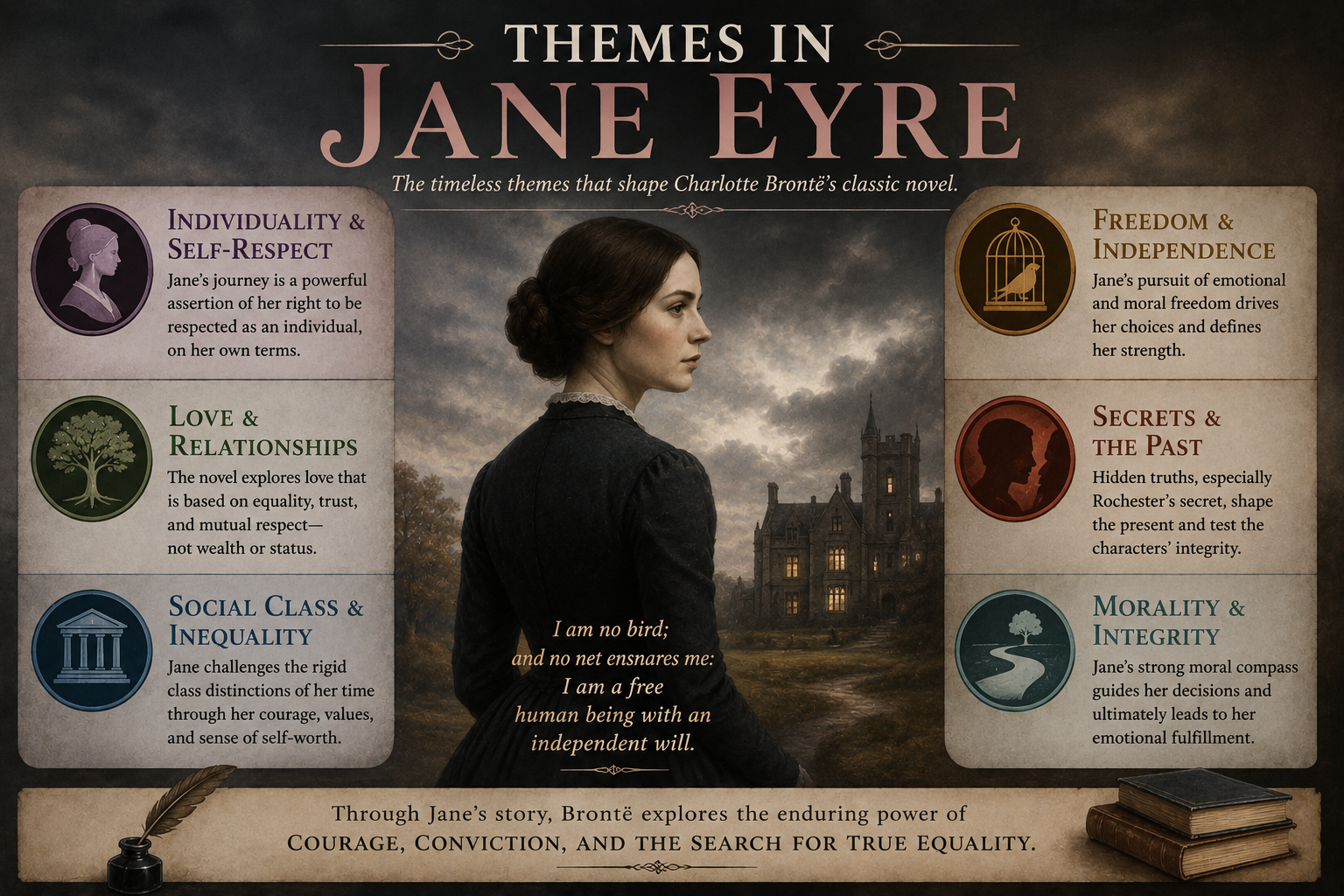
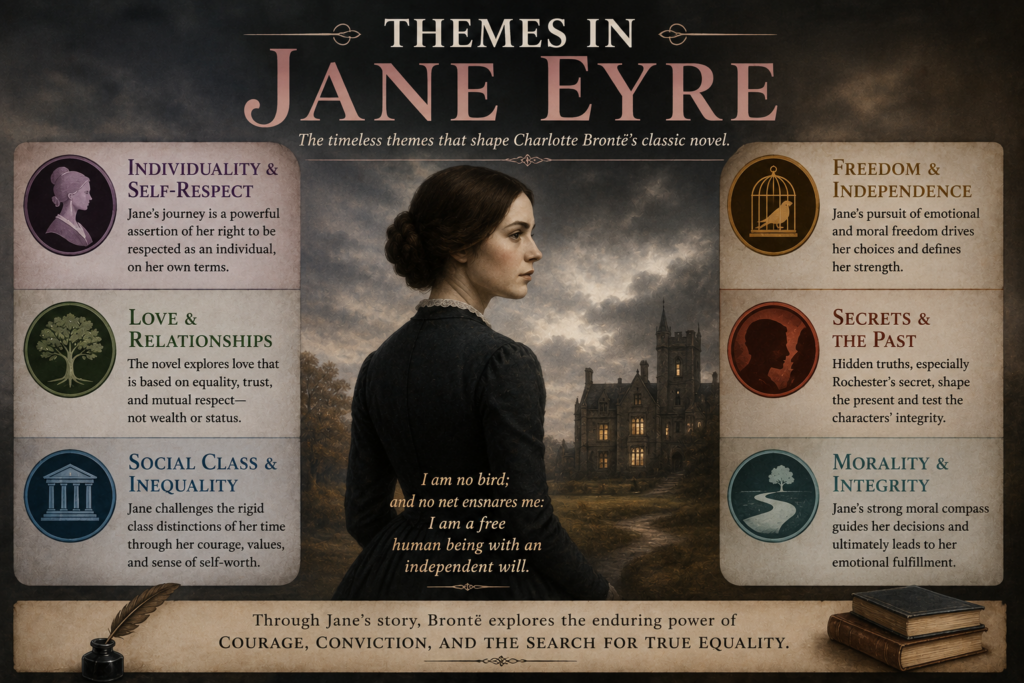
The themes in Jane Eyre help explain why Charlotte Brontë’s novel still matters in English classes today. The book is not just a love story. It is also about self-respect, power, faith, and the search for a true home.

In this Guide

Jane Eyre Themes

Why the themes in Jane Eyre matter

Brontë uses Jane’s life to ask what a person needs in order to live with dignity.

The main themes in Jane Eyre grow from Jane’s biggest conflicts. She wants love, but she will not give up her values to get it. She wants safety, but she also wants freedom.

That balance makes the novel useful for high school, AP Literature, and college essays. You can connect almost every major scene to one question: How does Jane protect her inner self in a world that tries to control her?

One reason students remember the themes in Jane Eyre is that Jane changes without losing her core beliefs. Like Elizabeth Bennet in Pride and Prejudice, she learns about love while also learning what she will not accept.

Themes in Jane Eyre: Independence and Self-Respect

Jane’s strongest desire is not wealth or romance. It is the right to live as her own person.

From the start, Jane knows what it feels like to have no power. At Gateshead, Mrs. Reed and John Reed treat her as less than family. At Lowood, harsh rules and public shame teach Jane how cruel authority can be.

Yet Jane does not become passive. She speaks the truth when she can, even when the cost is high. Her famous moral strength starts in childhood.

This is one of the most important themes in Jane Eyre because Jane’s independence shapes every major choice. She leaves Thornfield after Rochester asks her to live against her conscience. She refuses St. John Rivers because his plan would make her useful but unhappy.

Jane’s self-respect is not loud pride. It is moral independence. She would rather be alone than live as someone else’s possession.

Love and Equality

Brontë presents love as powerful, but never enough by itself.

Jane loves Rochester, and their bond is one of the novel’s central forces. Still, the novel tests that love through secrets, power, and social rank.

Among the major themes in Jane Eyre, love and equality are closely linked. Jane cannot accept a relationship where Rochester has all the control. His wealth, age, and social position place him above her at first.

Jane’s choice to leave Thornfield proves that she values equal love over emotional comfort. She does not stop loving Rochester. She chooses to protect her soul.

By the end, their relationship changes. Jane has family, money, and freedom. Rochester has lost some of his power and must depend on her. This shift matters because Brontë suggests that true love needs mutual respect.

Social Class and Gender Limits

Jane lives in a world where birth and money decide how people are treated.

As a poor orphan, Jane has few options. She becomes a governess, which places her in a strange middle position. She is educated, but not wealthy. She works in a rich home, but she is not fully part of its class.

This makes Thornfield tense. Jane can speak with Rochester as an intellectual equal, but society sees her as beneath him. Blanche Ingram shows the opposite problem. She has status, but little real feeling.

Gender also limits Jane. Victorian women were often expected to depend on men. Jane resists that role. She wants work, thought, movement, and choice.

For more background on Charlotte Brontë and the world that shaped the novel, see Britannica’s overview of Charlotte Brontë.

Religion and Moral Choice

Religion in the novel is not simple. Brontë shows both harmful faith and healing faith.

Mr. Brocklehurst uses religion to control children and shame the poor. His faith looks holy, but his actions are cruel and selfish.

Helen Burns offers a different model. She teaches patience, forgiveness, and spiritual peace. Jane admires Helen, but she does not fully copy her. Jane still believes injustice should be named.

St. John Rivers gives another version of faith. He is disciplined and brave, but he is cold. He wants Jane to marry him for duty, not love.

These themes in Jane Eyre show that Brontë values spiritual integrity over empty rule-following. Jane’s faith helps her choose what is right, but it does not erase her need for human love.

Appearance, Identity, and Inner Worth

Many characters judge by appearance, but the novel asks readers to look deeper.

Jane is often described as plain. Rochester is not shown as a perfect romantic hero either. Brontë avoids the idea that beauty equals goodness.

Blanche Ingram looks like the ideal match for Rochester, but her values are shallow. Jane has less social shine, yet she has honesty, intelligence, and courage.

This theme works well in essays because it connects to point of view. Since Jane tells her own story, readers see her inner world. We learn that identity is not just what others see. It is what a person knows to be true inside.

Home, Belonging, and Freedom

Jane spends much of the novel searching for a place where she can belong without losing herself.

Gateshead is a house, but it is not a home. Lowood gives Jane education and friendship, but it also brings suffering. Thornfield offers love, but it hides a secret that makes it unsafe.

Moor House gives Jane family and stability. Still, St. John’s control threatens her freedom. Ferndean, near the end, becomes the closest thing to a true home because Jane can love Rochester as an equal.

This theme matters because home in the novel is not just a building. It is a place where Jane’s body, mind, and conscience can rest.

Symbols that support themes in Jane Eyre

Brontë uses setting, weather, and repeated images to deepen the novel’s meaning.

Symbols make the themes in Jane Eyre easier to see. The red-room at Gateshead shows fear, punishment, and isolation. Fire often connects to passion, anger, or life. Ice and cold often mark emotional distance.

Thornfield itself becomes a symbol of hidden truth. Its beauty covers a locked secret, much like Rochester’s charm covers his past.

If you want help spotting patterns like these, read our guide on how to find symbolism in a story. It can help you turn symbols into stronger essay points.

You can also use the British Library’s article on Jane Eyre and 19th-century women for context on gender and society.

How to write about the themes in Jane Eyre

A strong essay should not just name a theme. It should explain how Brontë builds that idea through conflict and character choice.

For example, do not only say that independence is important. Show how Jane’s choices at Gateshead, Thornfield, and Moor House prove that she values self-respect over comfort.

Try this sentence frame:

Brontë develops the theme of [idea] by showing how Jane [choice or conflict], which reveals [larger meaning].

You can also connect theme to symbol. The red-room shows Jane’s early powerlessness, while Ferndean shows a quieter form of freedom. This kind of pattern helps an essay feel focused.

For more support, you can explore our Jane Eyre study resources as you plan your notes.

Helpful books for students

If you want a print copy or a study-friendly edition, look for these titles through Amazon, a local bookstore, or your school library:

  • Jane Eyre by Charlotte Brontë
  • The Madwoman in the Attic by Sandra M. Gilbert and Susan Gubar

The first gives you the full novel. The second is more advanced, but it is useful for college-level study of gender and power.

FAQ: Themes in Jane Eyre

What are the main themes in Jane Eyre?

The main themes in Jane Eyre include independence, love, class, gender, religion, identity, and belonging.

What is the most important theme in the novel?

Independence may be the most important theme because nearly every major choice Jane makes protects her self-respect.

How does Jane Eyre show feminism?

The novel shows feminism through Jane’s demand for equality, work, thought, and moral choice in a society that limits women.

Why does Jane leave Rochester?

Jane leaves because staying would break her conscience. She loves Rochester, but she will not give up her moral freedom.

How do symbols connect to theme?

Symbols like the red-room, fire, and Thornfield turn abstract ideas into concrete images. They help readers see fear, passion, and hidden truth.

Key Takeaway

The themes in Jane Eyre all point to one clear idea: real love and real faith must respect the self. Jane’s journey matters because she gains belonging without surrendering her freedom.

Best Classic Obsession and Madness: Books, Themes, and Symbols That Still Haunt Readers

Best Classic Obsession and Madness

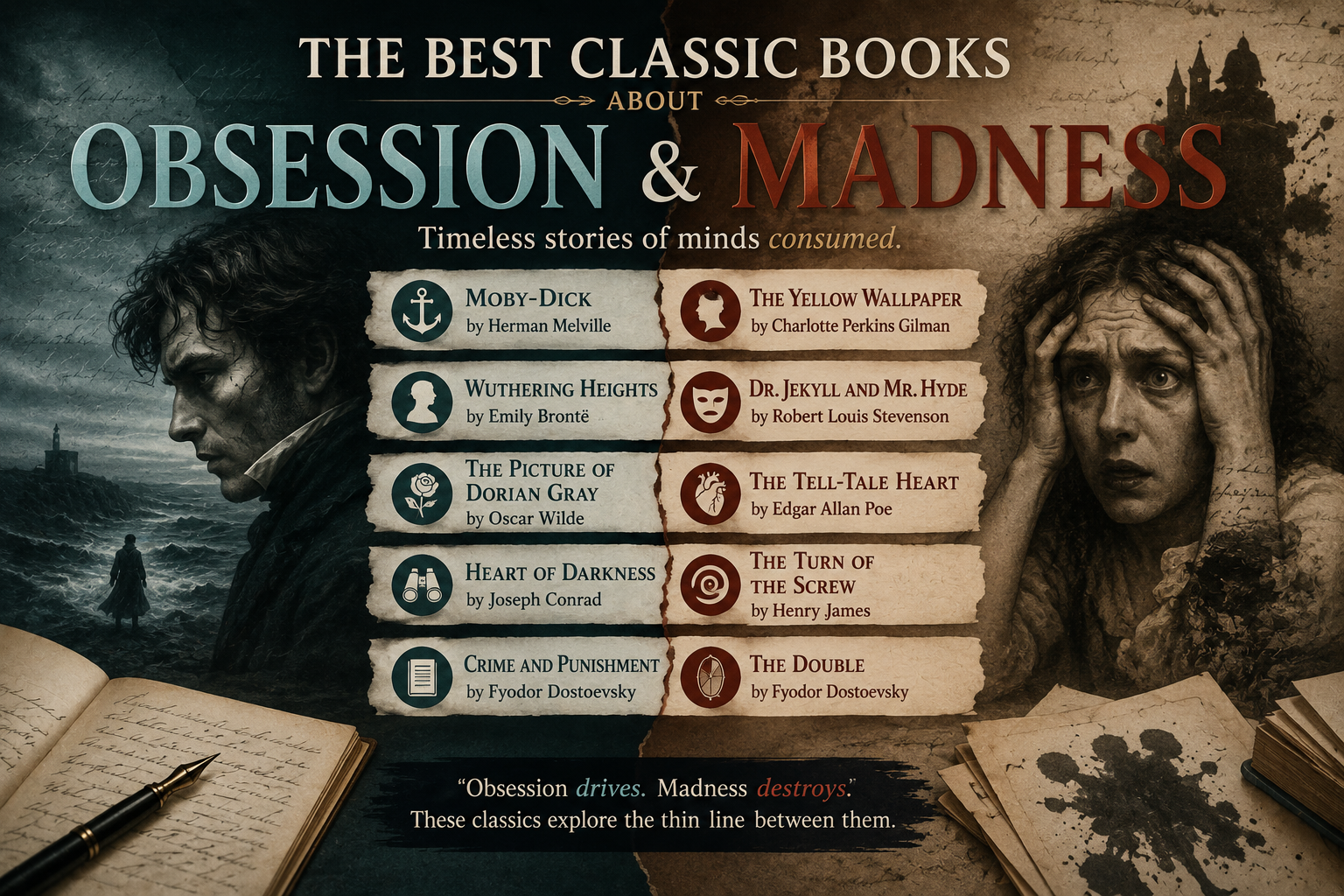
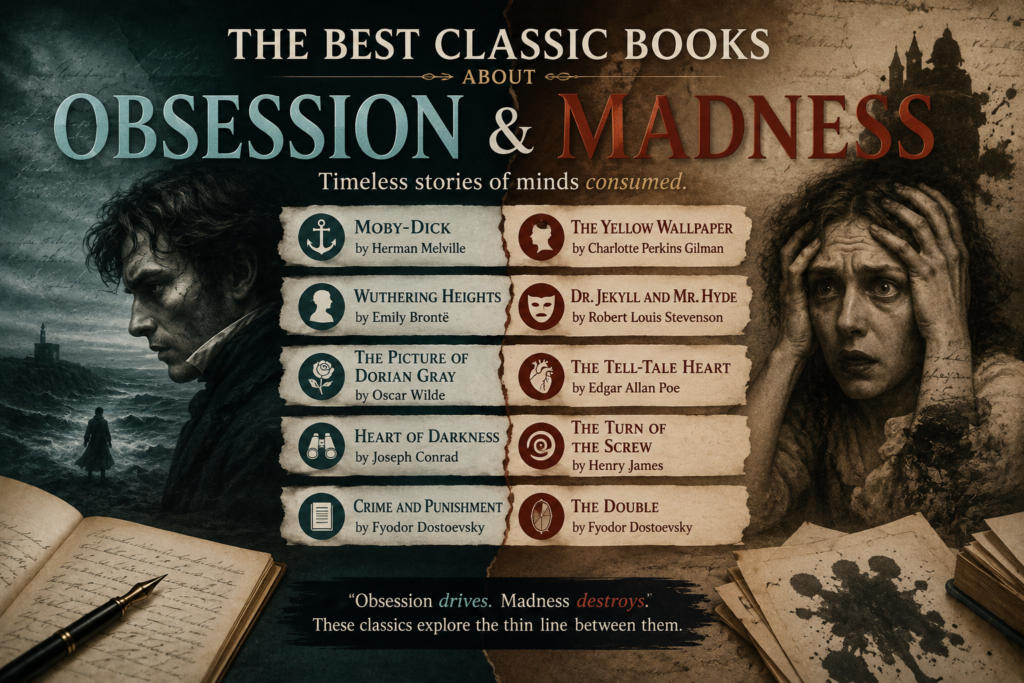
The Best Classic Obsession and Madness stories show what happens when a person cannot let go of an idea, a fear, or a desire. These books are powerful because they turn the mind into a battlefield.

For students, these works also offer rich material for essays about character, symbolism, guilt, and control.

In this Guide

  • Why obsession and madness matter in classic literature
  • Best Classic Obsession and Madness books to read
  • Symbols and themes to watch for
  • How these stories connect to literary culture
  • Recommended books
  • FAQs

Why Best Classic Obsession and Madness Stories Still Matter

These stories remain popular because they ask scary but human questions.

The Best Classic Obsession and Madness works often begin with a character who wants one thing too much. That desire may be love, revenge, power, truth, or control.

As the story moves on, the character loses balance. The reader watches a mind turn against itself.

This makes the conflict feel personal. Monsters may appear, but the deeper danger often lives inside the character.

Best Classic Obsession and Madness Books Students Should Know

These works are often taught because they mix strong plots with deep themes.

The Best Classic Obsession and Madness texts do not all treat mental distress in the same way. Some use it as horror. Others use it to show pressure from society, guilt, or isolation.

Frankenstein by Mary Shelley

Victor Frankenstein becomes obsessed with creating life. His dream sounds noble at first, but it grows into pride and fear.

The novel shows how obsession can turn knowledge into danger. Victor wants power over nature, yet he cannot face the results of his own work.

Macbeth by William Shakespeare

Macbeth’s hunger for power pushes him toward murder. After that, guilt begins to break him down.

Lady Macbeth also shows how a strong mind can crack under shame. Her sleepwalking scene is one of the clearest images of guilt in classic drama.

Moby-Dick by Herman Melville

Captain Ahab’s obsession with the white whale controls his whole life. He sees the whale as more than an animal.

For Ahab, the whale becomes a symbol of pain and fate. His madness spreads through the ship and pulls others into danger.

The Tell-Tale Heart by Edgar Allan Poe

Poe’s narrator insists he is sane, but his words prove the opposite. The story turns guilt into sound through the beating heart.

This is one reason Poe remains central to the Best Classic Obsession and Madness tradition. You can learn more about his work at the Poetry Foundation’s Edgar Allan Poe page.

Symbols in Best Classic Obsession and Madness Literature

Symbols help readers see what a character cannot say out loud.

In the Best Classic Obsession and Madness stories, objects often carry emotional weight. A spot of blood, a locked room, or a strange sound may reveal fear better than a speech.

In Macbeth, blood stands for guilt. Macbeth and Lady Macbeth cannot wash away what they have done.

In Moby-Dick, the white whale becomes a symbol of mystery and suffering. Ahab turns it into the center of his life.

In The Tell-Tale Heart, the heartbeat becomes guilt made physical. The sound may be real, or it may come from the narrator’s mind.

These symbols matter because they make inner conflict visible. They let readers track a character’s fall without needing direct explanation.

Major Themes in Best Classic Obsession and Madness Stories

These themes help students build strong literary analysis.

The Best Classic Obsession and Madness works often explore the cost of crossing limits. A character wants to break a rule set by nature, society, or morality.

Another key theme is guilt. Many characters try to hide what they have done, but the mind keeps returning to it.

Isolation is also important. Victor Frankenstein cuts himself off from others. Ahab separates himself through pride. Poe’s narrators often sound trapped inside their own thoughts.

These themes connect well with other major works taught in school. For example, questions about justice, fear, and moral pressure also shape the major themes in To Kill a Mockingbird.

How Obsession and Madness Shape Literary Culture

These stories changed how later writers imagined fear and the self.

The Best Classic Obsession and Madness tradition helped shape Gothic fiction, mystery, horror, and modern psychological novels. Many later works borrow the idea that the mind can be the darkest setting.

Gothic literature often uses old houses, shadows, secrets, and fear. Yet the true horror usually comes from what people hide or refuse to face.

For more background, Britannica offers a helpful overview of the Gothic novel and its major features.

These works also invite careful reading. Students should avoid treating madness as a simple “plot twist.” In strong literature, it often reflects pressure, grief, shame, or a broken social world.

Recommended Books for Obsession and Madness in Classic Literature

These books are strong choices for students who want powerful characters and essay-friendly themes.

  • Frankenstein by Mary Shelley
  • Crime and Punishment by Fyodor Dostoevsky

Both books fit the Best Classic Obsession and Madness theme because they focus on guilt, fear, and the mind under pressure.

How to Write About Best Classic Obsession and Madness in an Essay

A strong essay should focus on cause and effect.

Do not just say a character is obsessed or mad. Explain what causes the change and how the author shows it.

Look for repeated images, strange speech, private thoughts, and moments of denial. These details often reveal the character’s mental state.

You can also compare obsession to moral conflict. Many classic characters do not fall apart at random. They fall apart because they refuse to face truth.

If you want to connect this kind of analysis to other works, review how themes work in To Kill a Mockingbird and apply the same method to Gothic or tragic texts.

FAQs About Best Classic Obsession and Madness

What does Best Classic Obsession and Madness mean in literature?

It refers to classic works where a character’s fixed desire or mental collapse drives the story. These texts often explore guilt, fear, power, and isolation.

What is the best classic book about obsession?

Moby-Dick is one of the clearest examples. Captain Ahab’s obsession shapes the whole novel and leads to disaster.

Is Frankenstein about madness or ambition?

It is about both. Victor’s ambition becomes obsessive, and that obsession damages his judgment.

Why do teachers assign these stories?

They offer rich symbols, complex characters, and strong themes. They also help students practice close reading.

Key Takeaway

The Best Classic Obsession and Madness stories last because they show how a single desire can take over a life. They remind us that the most haunting conflicts often begin inside the mind.

For students, these works are more than dark tales. They are sharp studies of guilt, pressure, and the danger of losing balance.