

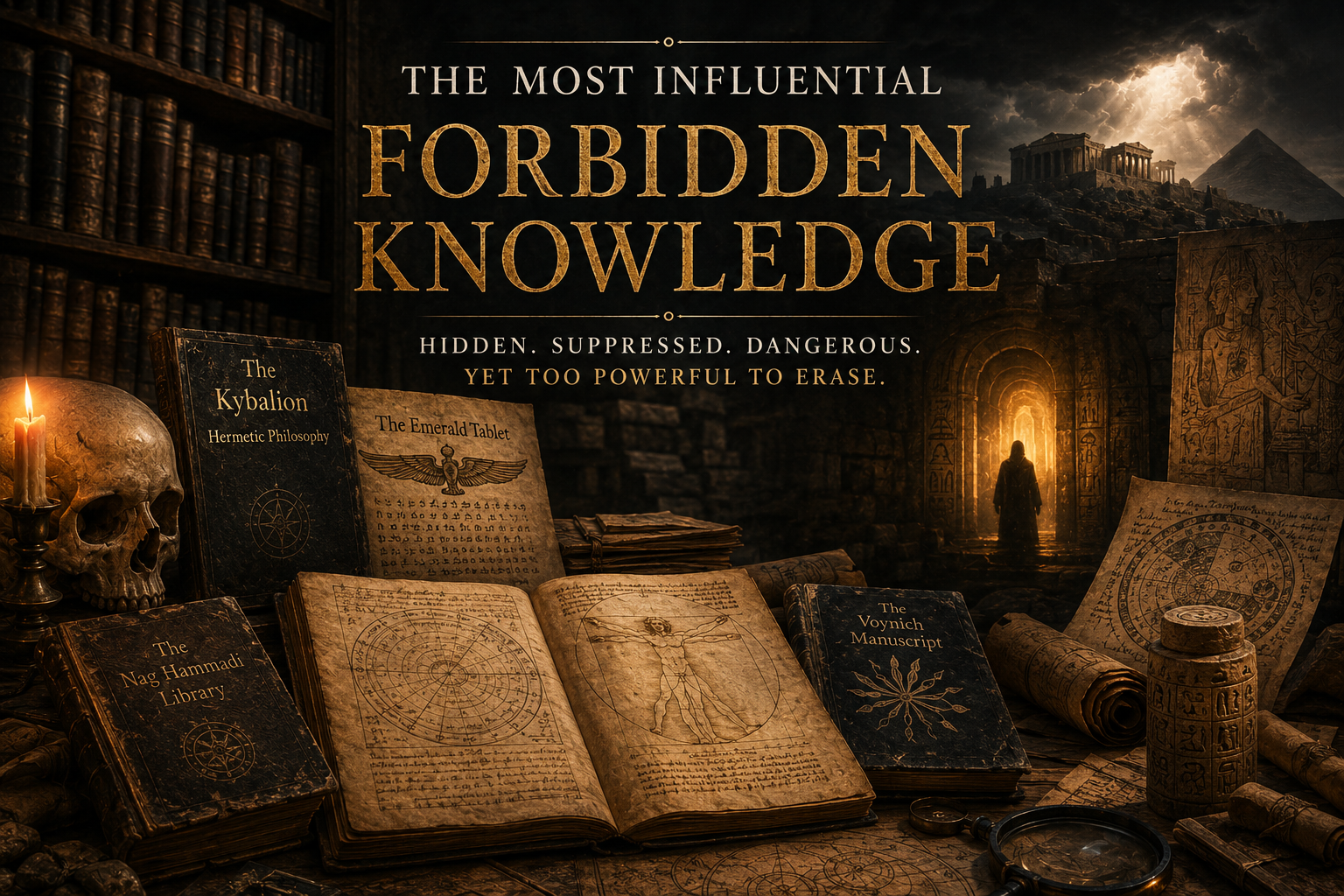
Stories about the Most Influential Forbidden Knowledge ask a sharp question: what happens when people learn what they were never meant to know? From ancient myths to modern novels, these works show how truth can free people, tempt them, or destroy them.
In this Guide
- What forbidden knowledge means
- Most Influential Forbidden Knowledge in classic literature
- Modern books about forbidden knowledge
- Symbols and themes to watch
- Recommended books
- FAQs
- Key takeaway
What Does Forbidden Knowledge Mean?
Forbidden knowledge is truth that a person, group, or system tries to hide.
In literature, this can mean a secret book, a banned idea, a hidden history, or a dangerous scientific discovery. The knowledge is “forbidden” because someone in power fears what it might do.
The Most Influential Forbidden Knowledge often changes the hero’s life. Once the truth is known, the character cannot return to innocence.
This idea appears in myths, religious stories, Gothic novels, dystopian fiction, and campus novels. It stays popular because readers understand the pull of secrets.
Most Influential Forbidden Knowledge in Classic Literature
Classic literature uses forbidden knowledge to test human desire, pride, and fear.
One of the oldest examples is the Tree of Knowledge in the Book of Genesis. Adam and Eve gain knowledge, but that knowledge brings loss. The story shapes much of Western literature because it links knowledge with choice and consequence.
Greek myth gives us Prometheus, who steals fire for humans. Fire stands for power, craft, and progress. Yet Prometheus suffers because he gives humans a gift the gods wanted to control.
In Paradise Lost, John Milton turns the fall of humanity into a grand poem about rebellion, pride, and desire. The poem asks why people choose danger when they know the cost. You can learn more about Milton through the Poetry Foundation’s John Milton page.
Mary Shelley’s Frankenstein is another key work. Victor Frankenstein learns how to create life, but he lacks wisdom. His discovery becomes a warning about science without care.
These works help explain why the Most Influential Forbidden Knowledge is never just about facts. It is about what people do after they gain those facts.
Why Most Influential Forbidden Knowledge Still Matters Today
Forbidden knowledge feels modern because we still argue over who controls truth.
Books are banned. Data is hidden. Governments shape history. Schools debate what students should read. These real issues make older stories feel fresh.
In George Orwell’s 1984, the Party controls language, memory, and truth. Winston wants to know what life was like before the Party. That desire becomes an act of rebellion.
In Ray Bradbury’s Fahrenheit 451, books are illegal because they make people think and question. Firefighters burn books instead of saving homes. The novel turns censorship into a warning about comfort, fear, and silence.
The Most Influential Forbidden Knowledge in these novels matters because it shows how truth can threaten power.
Modern Books That Explore Forbidden Knowledge
Modern authors often connect forbidden knowledge to identity, memory, and social control.
In Margaret Atwood’s The Handmaid’s Tale, women are denied reading, writing, and public power. Knowledge becomes a way to resist a cruel system. Even small memories of the past matter.
In Umberto Eco’s The Name of the Rose, a hidden book causes fear inside a medieval monastery. The mystery asks whether laughter, thought, and free debate can weaken authority.
Philip Pullman’s His Dark Materials also uses forbidden knowledge in a bold way. Lyra’s world is full of rules that adults refuse to explain. Her search for truth becomes a fight for freedom.
These stories show that the Most Influential Forbidden Knowledge can appear in many forms, from banned books to hidden memories.
Symbols and Themes in Most Influential Forbidden Knowledge
Writers often use symbols to show why hidden truth feels powerful.
Books are one of the clearest symbols. A book can stand for memory, freedom, or danger. In Fahrenheit 451, books become a sign of human thought itself.
Fire is another strong symbol. It can mean light, learning, and destruction. Prometheus gives fire to humans, while Bradbury’s firefighters use fire to erase ideas.
Doors, locked rooms, and secret libraries also appear often. They show the border between safety and truth. Once a character crosses that border, the story changes.
The main themes are power, curiosity, guilt, and responsibility. These themes are useful for essays because they connect character choices to larger ideas. If you want help naming these tools, see this guide to literary devices.
The Most Influential Forbidden Knowledge often asks one hard question: should every truth be known?
Recommended Books About Most Influential Forbidden Knowledge
These books are strong choices for students who want to study forbidden knowledge in literature.
- Frankenstein by Mary Shelley: A major Gothic novel about science, ambition, and moral duty.
- Fahrenheit 451 by Ray Bradbury: A short, powerful dystopian novel about censorship and the value of books.
Both works are often taught in high school and college. They also pair well with essays about symbolism, conflict, and theme.
For background on Shelley’s novel, visit Britannica’s page on Frankenstein.
How to Write About Most Influential Forbidden Knowledge in an Essay
A strong essay should focus on the cost of knowledge.
Start by asking who hides the truth. Then ask who seeks it and why. This helps you move beyond plot summary.
You can also look at symbols. A secret book, a flame, or a locked room can reveal the story’s deeper meaning.
For example, an essay on Frankenstein might argue that Victor does not fail because he learns too much. He fails because he refuses care, honesty, and responsibility.
That point makes the Most Influential Forbidden Knowledge more complex. The problem is not always knowledge itself. The problem is how people use it.
FAQs About Most Influential Forbidden Knowledge
What is the Most Influential Forbidden Knowledge in literature?
The Most Influential Forbidden Knowledge often includes hidden truth, banned books, secret science, or knowledge of good and evil. Famous examples appear in Genesis, Frankenstein, and Fahrenheit 451.
Why do writers use forbidden knowledge?
Writers use it to create conflict and raise moral questions. It helps show what characters want and what they fear.
Is forbidden knowledge always bad?
No. Many stories show that knowledge can free people. The danger often comes from pride, control, or fear.
What theme connects most forbidden knowledge stories?
The main theme is responsibility. A character must decide what to do with the truth once they have it.
Key Takeaway
The Most Influential Forbidden Knowledge in literature is powerful because it links truth with risk. These stories remind us that knowledge can open minds, but it also demands courage and care.
For students, this topic is a rich path into theme, symbolism, and character analysis. It turns a simple question into a lasting one: what truths are worth the cost?


Get the Free Close Reading Worksheet Pack
Join my email list and receive the printable worksheet pack you can use with any novel or poem.
No spam. Just helpful guides for reading literature well.












