

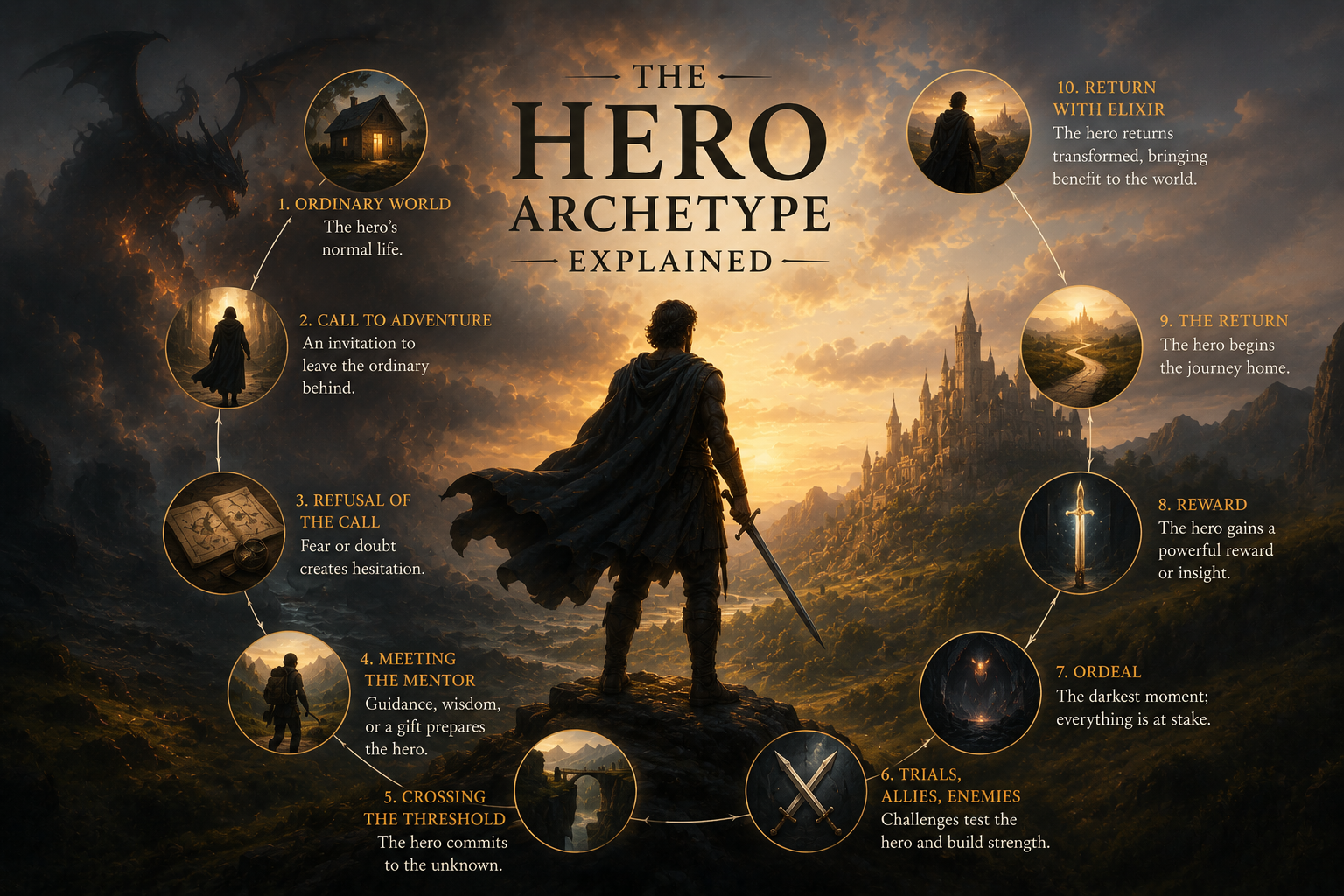
The Hero Archetype Explained means looking at one of the most common character patterns in literature. A hero is not just someone brave. A hero often faces a major test, changes through struggle, and shows what a story values.
In this Guide
- What the hero archetype means
- Why it matters in literature
- Common parts of the hero’s journey
- Famous literary examples
- How to use the idea in essays
- Book suggestions
- FAQ
The Hero Archetype Explained in Simple Terms
A hero archetype is a familiar character pattern that appears across many stories.
At its core, The Hero Archetype Explained is about a character who must face a serious challenge. The hero may fight a monster, solve a problem, protect others, or learn a hard truth.
This type of character appears in myths, novels, plays, and poems. The hero may be strong, smart, kind, flawed, or even unsure at first.
What matters most is growth. A hero often starts in one place, faces pressure, and comes out changed.
Why The Hero Archetype Explained Helps Readers
The hero archetype helps readers see patterns that shape a story.
When you understand The Hero Archetype Explained, you can read with more purpose. You start to notice why a character’s choices matter.
A hero’s journey often reveals the story’s central message. If a hero learns courage, the story may value bravery. If a hero learns mercy, the story may question revenge.
This is useful for class discussion and essay writing. Instead of saying “the character changes,” you can explain how the hero’s change builds the theme.
Common Parts of the Hero Archetype
Most hero stories share a few familiar steps, though not every story uses all of them.
The hero often begins in an ordinary world. Then a problem appears and pulls the hero into conflict.
The hero may meet a guide or mentor. This figure can offer advice, tools, or wisdom.
The hero then faces tests. These tests show fear, weakness, loyalty, or strength.
Near the end, the hero usually faces the biggest challenge. This moment often proves what the hero has learned.
Joseph Campbell helped make the idea of the “hero’s journey” well known. You can read more about the larger idea of an archetype through Britannica’s overview of archetype.
The Hero Archetype Explained Through Famous Literature
Literary examples make the hero archetype easier to understand.
This is where The Hero Archetype Explained becomes clear. In The Odyssey, Odysseus faces monsters, temptation, loss, and pride. His journey is not only about getting home. It is also about learning what it means to survive and lead.
In Beowulf, the hero fights Grendel, Grendel’s mother, and a dragon. Beowulf shows courage, but the poem also asks hard questions about fame, age, and sacrifice.
In Harry Potter and the Sorcerer’s Stone, Harry begins as an ordinary boy who does not know his own past. He enters a strange world, gains allies, faces danger, and learns that love and choice matter.
In The Hunger Games, Katniss Everdeen becomes a hero because she protects her sister and challenges a cruel system. She does not seek glory. Her heroism grows from loyalty and survival.
How the Hero Archetype Builds Theme
The hero’s choices often point to the story’s deeper meaning.
A hero does not exist only to make a plot exciting. The hero’s journey helps the author explore ideas like justice, identity, power, fear, and sacrifice.
For example, Odysseus’s long trip home explores loyalty and self-control. Beowulf’s battles explore honor and mortality.
Symbols often appear around heroes too. A sword, scar, road, crown, or home can carry deeper meaning. If you want help with that skill, read this guide on how to find symbolism in a story.
Using The Hero Archetype Explained in Essay Analysis
The hero archetype can help you write stronger literary essays.
When you use The Hero Archetype Explained in an essay, do not just identify the hero. Explain what the hero’s journey reveals.
A weak sentence might say, “Harry Potter is a hero because he is brave.”
A stronger sentence would say, “Harry Potter fits the hero archetype because his courage grows through loss, friendship, and moral choice, which shows the novel’s belief that love is stronger than fear.”
That second sentence does more. It connects character, conflict, and theme.
When you write, ask yourself:
- What challenge changes the hero?
- What weakness must the hero face?
- What theme does the hero’s journey reveal?
- How does the ending prove the hero has changed?
Books That Show the Hero Archetype
These books are strong choices if you want to study hero patterns in literature.
- The Odyssey by Homer
- Beowulf, translated by Seamus Heaney
- Harry Potter and the Sorcerer’s Stone by J.K. Rowling
Each book shows a different kind of hero. Some heroes seek home. Some seek honor. And some learn who they are.
FAQ About The Hero Archetype Explained
What does the hero archetype mean?
The hero archetype is a common character pattern. It describes a person who faces a major challenge and changes through that struggle.
Why is The Hero Archetype Explained important for students?
It helps students move beyond plot summary. They can explain how a character’s journey connects to theme, conflict, and symbolism.
Does every hero have to be brave?
No. Many heroes feel fear. What matters is that they act, learn, or grow despite that fear.
Can a hero be flawed?
Yes. Flaws often make heroes more interesting. A flawed hero gives the story room for growth and conflict.
Is the hero archetype only found in old myths?
No. It appears in ancient stories, modern novels, films, and plays. The pattern changes, but the core idea remains the same.
Key Takeaway
The Hero Archetype Explained is really about growth through conflict. When you spot this pattern, you can read more deeply, write stronger essays, and see how a story’s hero reveals its message.


Get the Free Close Reading Worksheet Pack
Join my email list and receive the printable worksheet pack you can use with any novel or poem.
No spam. Just helpful guides for reading literature well.












