From Story Spark to Strong Novel Blueprint

Novel Blueprint

Moving from a vague story spark to a strong novel blueprint is one of the most important shifts a writer can make. A novel does not begin only with “a good idea”; it begins with the right idea for you, shaped with enough clarity that you can build a whole book from it. This is the stage where you excavate your creative archive, generate possibilities, test them, and finally commit to the concept with the strongest energy, tension, and promise.

Novel Blueprint

Unearthing the Story Sparks You Already Carry

Many writers believe ideas arrive like lightning: rare, dramatic, and impossible to control. In reality, story ideas are often already scattered throughout your life. They live in memories you cannot stop revisiting, questions that bother you, images that return at odd moments, news stories that unsettle you, dreams that linger, and books you love so much you wish you had written them yourself.

A useful first step is the Obsession Inventory. List 20 topics, images, fears, relationships, places, or questions you return to again and again. Do not try to make them “novel-worthy” yet. Just notice what feels urgent, unresolved, emotionally charged, or strangely magnetic. The strongest story sparks often come from material that will not leave you alone.

You can also create an Idea Source Map to understand where your best material tends to come from. Divide your ideas into categories such as memory, research, emotion, observation, dreams, and existing fiction. This helps you see your dominant creative well. Some writers are driven by personal history; others by intellectual questions, visual images, or social issues. Knowing your source makes idea generation feel less mysterious and more repeatable.

Turning Obsessions Into Testable Novel Ideas

An obsession is not yet a novel, but it can become one when you turn it into a dramatic question. A topic like grief, ambition, betrayal, inheritance, or identity needs pressure. It needs a character, a situation, and a reason things cannot remain the same. This is where raw fascination becomes a testable story premise.

Try a “What If” Rapid Fire exercise. Set a timer for 10 minutes and write 15 sentences beginning with “What if…?” Do not edit, judge, or slow down. For example: “What if a woman inherited a house that remembered every lie ever told inside it?” or “What if a failed musician discovered his most famous song had been stolen from a dream?” Quantity matters because your first ideas are often predictable, while your tenth or fifteenth may surprise you.

Another powerful tool is the Influence Autopsy. Choose one novel you love and identify three specific things about it you wish you had written. Maybe it is the voice, the moral complexity, the slow-burn romance, the locked-room tension, or the way the ending redefines the beginning. These are not things to copy; they are aesthetic clues. They reveal the kind of reading experience you may want to create for someone else.

Pressure-Testing Concepts Before You Commit

Not every exciting spark can sustain a full novel. Some ideas are beautiful but too thin. Others have atmosphere but no engine. Before committing months or years to a concept, you need to pressure-test it. Ask whether the idea contains conflict, escalation, consequence, and enough emotional weight to carry a reader through hundreds of pages.

A strong test is to ask: Who wants what, why can’t they have it, and what happens if they fail? If you cannot answer those questions, the idea may need more development. You can also test whether the concept naturally produces scenes. If you can quickly imagine confrontations, reversals, secrets, choices, and moments of no return, the idea likely has narrative fuel.

Pressure-testing does not mean killing your excitement with over-analysis. It means protecting your future self. A concept that survives questioning will give you more confidence when drafting becomes difficult. The goal is to compare multiple story sparks and identify the one with the best combination of personal urgency, dramatic tension, originality, and reader appeal.
From Idea to Novel Blueprint

Choosing a Genre Lane and Target Reader

Once you have a promising concept, you need to understand what kind of book it wants to be. Genre is not a cage; it is a communication tool. It tells readers what sort of experience they can expect. A story about a missing sister could be a psychological thriller, a literary family drama, a police procedural, a gothic mystery, or even speculative fiction depending on the promises it makes.

Choosing a genre lane helps you make smarter creative decisions. It clarifies pacing, stakes, tone, structure, and reader expectations. A romance reader expects emotional intimacy and a satisfying central relationship arc. A thriller reader expects suspense, danger, and escalation. A fantasy reader expects worldbuilding that matters to the plot. When you know your lane, you can innovate with intention rather than confusion.

Defining your target reader is equally important. Ask yourself who will be most excited by this book. What do they already read? What emotional experience are they seeking? What themes, tropes, or conflicts will attract them? You do not need to please everyone. In fact, trying to write for everyone often weakens a novel. A clear target reader gives your blueprint focus.

Shaping Your Strongest Spark Into a Blueprint

After exploring, generating, and testing ideas, the final step is commitment. Choose the story spark that feels both emotionally alive and structurally promising. This does not mean you must know every scene yet. It means you have enough clarity to say: this is the novel I am building, this is the genre lane it belongs to, and this is the reader I want to reach.

Your early blueprint should include the core premise, protagonist, central conflict, stakes, genre, target reader, and the main question driving the story forward. For example: “A disgraced journalist investigates a series of impossible disappearances in her hometown, risking her last chance at credibility and the safety of the sister she once abandoned.” Even a simple blueprint like this gives future planning something solid to build on.

This foundation matters because every later stage of novel writing depends on it. Character arcs, plot structure, setting, theme, and scene design all grow from the strength of the original concept.

A strong novel blueprint does not begin with forcing one perfect idea to appear. It begins with learning how to notice, collect, question, and shape the sparks you already carry. By mining your obsessions, generating multiple possibilities, pressure-testing your concepts, and choosing a clear genre lane and target reader, you give your novel the creative foundation it needs to survive the long journey from first idea to finished book.
The Hero Archetype Explained: A Student-Friendly Guide

Hero archetype

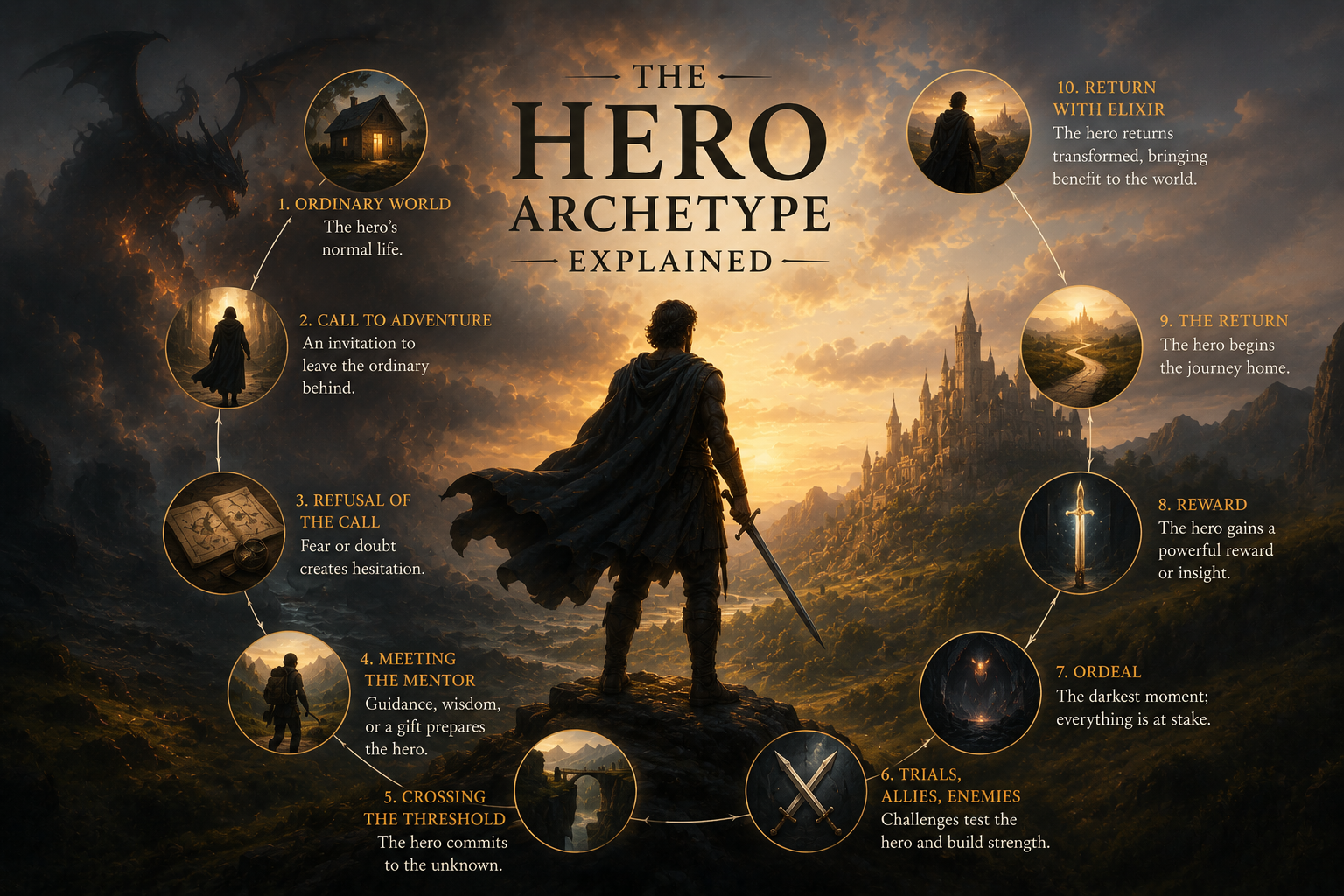
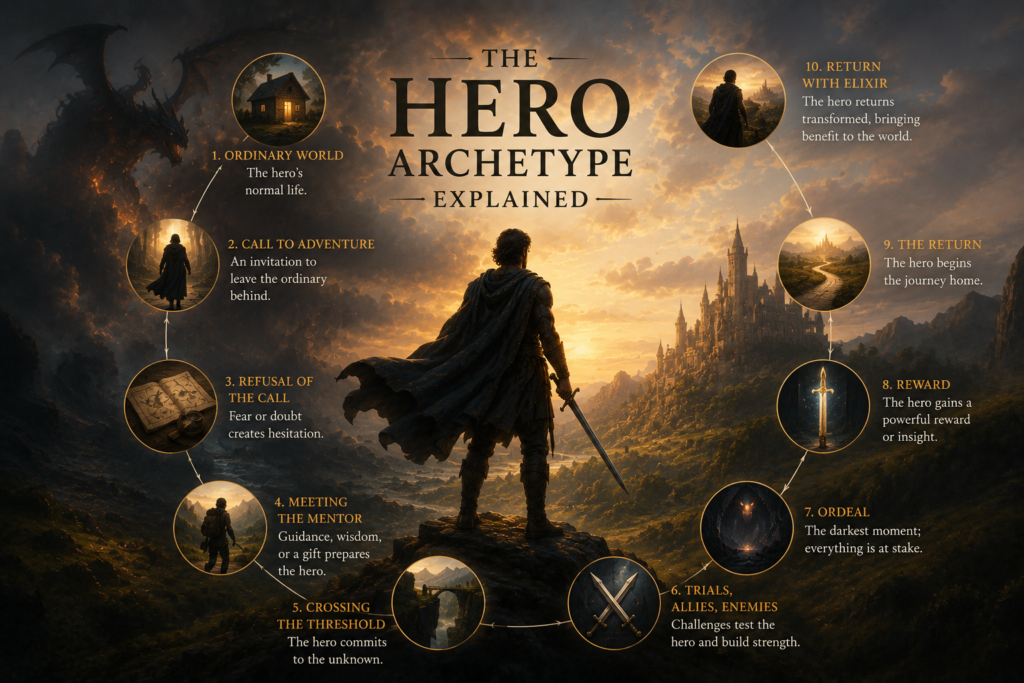
The Hero Archetype Explained means looking at one of the most common character patterns in literature. A hero is not just someone brave. A hero often faces a major test, changes through struggle, and shows what a story values.

In this Guide

  • What the hero archetype means
  • Why it matters in literature
  • Common parts of the hero’s journey
  • Famous literary examples
  • How to use the idea in essays
  • Book suggestions
  • FAQ
Hero archetype

The Hero Archetype Explained in Simple Terms

A hero archetype is a familiar character pattern that appears across many stories.

At its core, The Hero Archetype Explained is about a character who must face a serious challenge. The hero may fight a monster, solve a problem, protect others, or learn a hard truth.

This type of character appears in myths, novels, plays, and poems. The hero may be strong, smart, kind, flawed, or even unsure at first.

What matters most is growth. A hero often starts in one place, faces pressure, and comes out changed.

Why The Hero Archetype Explained Helps Readers

The hero archetype helps readers see patterns that shape a story.

When you understand The Hero Archetype Explained, you can read with more purpose. You start to notice why a character’s choices matter.

A hero’s journey often reveals the story’s central message. If a hero learns courage, the story may value bravery. If a hero learns mercy, the story may question revenge.

This is useful for class discussion and essay writing. Instead of saying “the character changes,” you can explain how the hero’s change builds the theme.

Common Parts of the Hero Archetype

Most hero stories share a few familiar steps, though not every story uses all of them.

The hero often begins in an ordinary world. Then a problem appears and pulls the hero into conflict.

The hero may meet a guide or mentor. This figure can offer advice, tools, or wisdom.

The hero then faces tests. These tests show fear, weakness, loyalty, or strength.

Near the end, the hero usually faces the biggest challenge. This moment often proves what the hero has learned.

Joseph Campbell helped make the idea of the “hero’s journey” well known. You can read more about the larger idea of an archetype through Britannica’s overview of archetype.

The Hero Archetype Explained Through Famous Literature

Literary examples make the hero archetype easier to understand.

This is where The Hero Archetype Explained becomes clear. In The Odyssey, Odysseus faces monsters, temptation, loss, and pride. His journey is not only about getting home. It is also about learning what it means to survive and lead.

In Beowulf, the hero fights Grendel, Grendel’s mother, and a dragon. Beowulf shows courage, but the poem also asks hard questions about fame, age, and sacrifice.

In Harry Potter and the Sorcerer’s Stone, Harry begins as an ordinary boy who does not know his own past. He enters a strange world, gains allies, faces danger, and learns that love and choice matter.

In The Hunger Games, Katniss Everdeen becomes a hero because she protects her sister and challenges a cruel system. She does not seek glory. Her heroism grows from loyalty and survival.

How the Hero Archetype Builds Theme

The hero’s choices often point to the story’s deeper meaning.

A hero does not exist only to make a plot exciting. The hero’s journey helps the author explore ideas like justice, identity, power, fear, and sacrifice.

For example, Odysseus’s long trip home explores loyalty and self-control. Beowulf’s battles explore honor and mortality.

Symbols often appear around heroes too. A sword, scar, road, crown, or home can carry deeper meaning. If you want help with that skill, read this guide on how to find symbolism in a story.

Using The Hero Archetype Explained in Essay Analysis

The hero archetype can help you write stronger literary essays.

When you use The Hero Archetype Explained in an essay, do not just identify the hero. Explain what the hero’s journey reveals.

A weak sentence might say, “Harry Potter is a hero because he is brave.”

A stronger sentence would say, “Harry Potter fits the hero archetype because his courage grows through loss, friendship, and moral choice, which shows the novel’s belief that love is stronger than fear.”

That second sentence does more. It connects character, conflict, and theme.

When you write, ask yourself:

  • What challenge changes the hero?
  • What weakness must the hero face?
  • What theme does the hero’s journey reveal?
  • How does the ending prove the hero has changed?

Books That Show the Hero Archetype

These books are strong choices if you want to study hero patterns in literature.

  • The Odyssey by Homer
  • Beowulf, translated by Seamus Heaney
  • Harry Potter and the Sorcerer’s Stone by J.K. Rowling

Each book shows a different kind of hero. Some heroes seek home. Some seek honor. And some learn who they are.

FAQ About The Hero Archetype Explained

What does the hero archetype mean?

The hero archetype is a common character pattern. It describes a person who faces a major challenge and changes through that struggle.

Why is The Hero Archetype Explained important for students?

It helps students move beyond plot summary. They can explain how a character’s journey connects to theme, conflict, and symbolism.

Does every hero have to be brave?

No. Many heroes feel fear. What matters is that they act, learn, or grow despite that fear.

Can a hero be flawed?

Yes. Flaws often make heroes more interesting. A flawed hero gives the story room for growth and conflict.

Is the hero archetype only found in old myths?

No. It appears in ancient stories, modern novels, films, and plays. The pattern changes, but the core idea remains the same.

Key Takeaway

The Hero Archetype Explained is really about growth through conflict. When you spot this pattern, you can read more deeply, write stronger essays, and see how a story’s hero reveals its message.

Common Character Archetypes in Fiction: A Student Guide

character archetypes

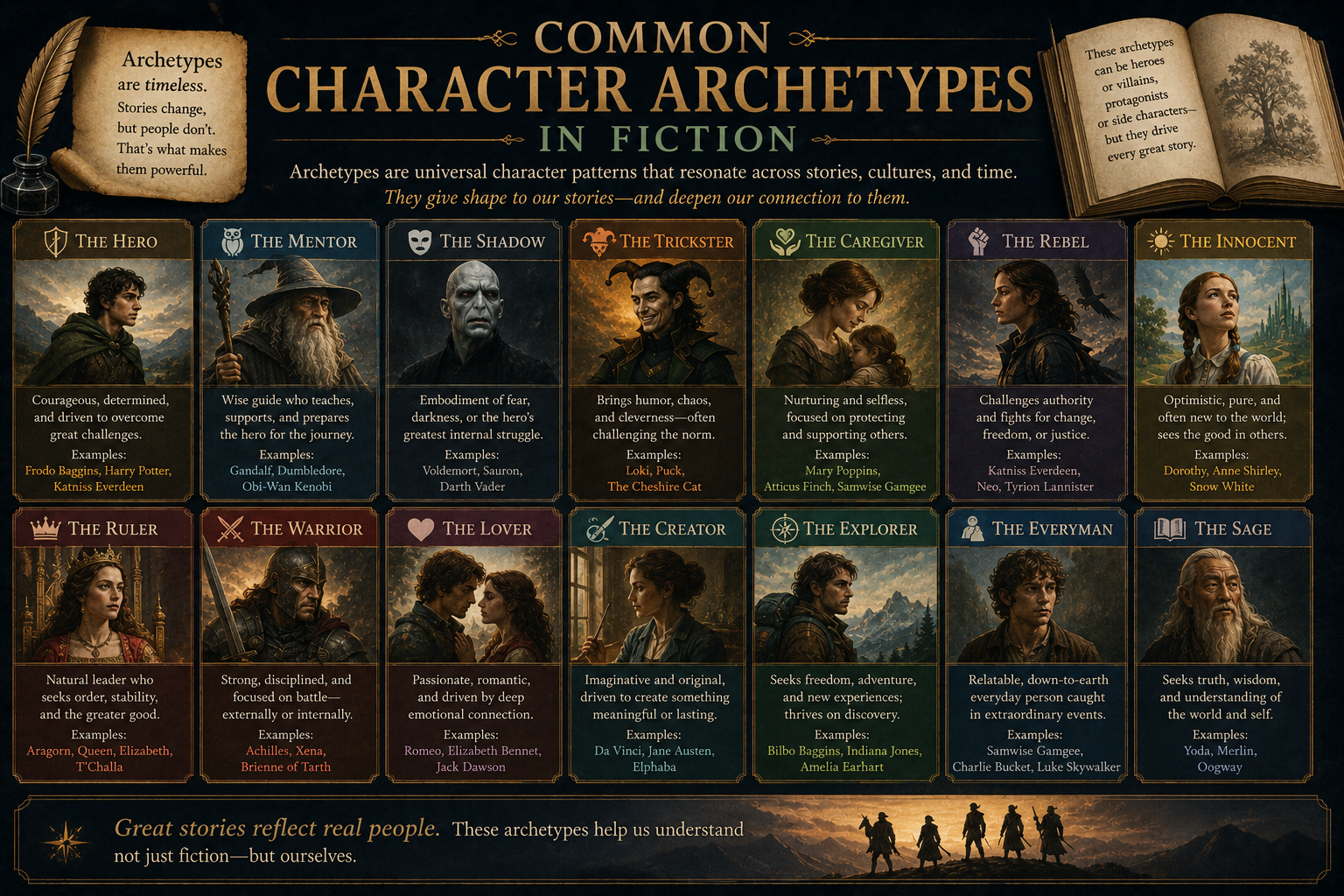
Characters often feel familiar because writers use patterns readers know. Common Character Archetypes in Fiction help us understand those patterns, from brave heroes to wise mentors.

For students, archetypes make reading easier and essays stronger. Once you spot the role a character plays, you can see more clearly how the story works.

In this Guide

  • Why character archetypes matter
  • The most common archetypes students should know
  • How archetypes differ from stereotypes
  • How to analyze archetypes in literature
  • Book suggestions with strong archetypes
  • FAQ and key takeaway
character archetypes

Why Common Character Archetypes in Fiction Matter

Archetypes help readers see the deeper shape of a story.

Common Character Archetypes in Fiction are repeated character types that appear across books, myths, plays, and films. They are not copies of the same person. They are familiar roles with new details in each story.

For example, many stories have a hero who faces danger and grows through hardship. Odysseus in The Odyssey, Harry Potter in Harry Potter and the Sorcerer’s Stone, and Katniss Everdeen in The Hunger Games all fit this pattern in different ways.

When you learn Common Character Archetypes in Fiction, you can ask better questions. What does this character want? What role do they play? How do they help reveal the theme?

Common Character Archetypes in Fiction Students Should Know

These archetypes appear often in classic and modern literature.

The Hero

The hero is the character who faces the main challenge. This person may be brave, scared, unsure, or flawed.

In The Hobbit, Bilbo Baggins starts as a quiet homebody. By the end, he has gained courage and wisdom. His heroism grows slowly, which makes his journey feel real.

The Mentor

The mentor guides the hero. This character often gives advice, training, or moral support.

Gandalf in The Lord of the Rings is a classic mentor. He helps others see what they must do, but he does not solve every problem for them.

The Shadow

The shadow is the dark force that opposes the hero. This may be a villain, a fear, or a hidden part of the hero’s own nature.

In Macbeth, Macbeth becomes his own shadow in many ways. His ambition turns against him, and the real enemy grows inside his mind.

The Innocent

The innocent sees the world with trust or hope. This character often shows what is pure, fragile, or worth protecting.

Scout Finch in To Kill a Mockingbird begins with a child’s view of justice. Her innocence helps readers see the cruelty and unfairness around her more clearly.

The Outsider

The outsider does not fit easily into society. This character may feel rejected, misunderstood, or trapped.

Victor Frankenstein’s creature in Frankenstein is a strong example. He is feared before he is understood, which turns his pain into anger.

Most Common Character Archetypes in Fiction are flexible. A character can fit more than one archetype, or they may change roles as the story develops.

How Common Character Archetypes in Fiction Differ from Stereotypes

Archetypes have depth, while stereotypes often feel flat.

A stereotype is a shallow idea about a type of person. It usually lacks real thought or growth.

An archetype is broader and more useful. It gives the writer a starting point, but the character still needs a clear voice, motive, and struggle.

Think of Jane Eyre from Jane Eyre. She can be seen as an outsider, but she is not simple. She is moral, angry, loyal, and independent. That complexity keeps her from feeling like a stereotype.

As you read, treat Common Character Archetypes in Fiction as clues, not final answers. The best characters often surprise us.

How to Analyze Common Character Archetypes in Fiction

A strong analysis connects the archetype to the story’s meaning.

Do not stop at “this character is a hero.” That is only the first step. Ask what kind of hero the character is and why that matters.

  1. Choose one important character.
  2. Name the archetype that fits best.
  3. Find a scene that proves your idea.
  4. Explain how the archetype connects to theme.

For example, Atticus Finch in To Kill a Mockingbird can be read as a mentor. He teaches Scout how to think about courage, justice, and empathy.

A strong essay about Common Character Archetypes in Fiction should use evidence. Quote or describe a key scene, then explain how that scene shows the character’s role.

Archetypes also connect with symbols. If a character carries an object, enters a special place, or repeats a key action, that detail may add meaning. For help with that skill, read this guide on how to find symbolism in a story.

Common Character Archetypes in Fiction and Theme

Archetypes often point readers toward the message of a story.

Theme is the deeper idea a work explores. It may deal with power, love, guilt, freedom, or growing up.

In The Great Gatsby, Jay Gatsby can be seen as a dreamer. His dream gives him purpose, but it also blinds him. Through Gatsby, the novel questions the American Dream and the cost of wanting too much.

In Romeo and Juliet, the lovers are not just young people in love. They fit the archetype of star-crossed lovers, which helps show how family hate can destroy innocent lives.

This is why Common Character Archetypes in Fiction are useful in AP Literature and college essays. They help you move from plot summary to deeper meaning.

Common Character Archetypes in Fiction in Classic and Modern Books

Old and new stories often share the same character patterns.

Myths, fairy tales, novels, and plays all use archetypes. The details change with time, but the basic roles still speak to readers.

The study of archetypes is often linked to psychologist Carl Jung. You can read more about him at Britannica’s Carl Jung biography.

Poetry also uses archetypal figures, such as the speaker as wanderer, lover, witness, or prophet. The Poetry Foundation is a helpful place to explore literary terms and examples.

When you notice Common Character Archetypes in Fiction, you start to see how stories talk to each other across time.

Books with Strong Character Archetypes

These books are useful for students who want clear examples of archetypes.

  • The Odyssey by Homer
  • The Hobbit by J.R.R. Tolkien

Both books are often available through libraries, school reading lists, and major booksellers such as Amazon. They give readers strong examples of heroes, mentors, monsters, and tests of character.

Practical Takeaways for Students

Archetypes can help you read with more confidence.

If you feel stuck during a reading assignment, look at the character roles. Ask who guides, who tempts, who changes, and who resists change.

When you write about Common Character Archetypes in Fiction, avoid vague claims. Use a scene, explain the character’s role, and connect that role to theme.

You can also pair archetype analysis with symbols, setting, and conflict. This gives your essay more depth without making it harder to understand.

FAQ About Common Character Archetypes in Fiction

These quick answers can help with class discussion and essays.

What are character archetypes?

Character archetypes are familiar character roles that appear across many stories. Examples include the hero, mentor, outsider, and shadow.

Why do writers use archetypes?

Writers use archetypes because they help readers understand a character’s role quickly. A good writer still adds fresh details and inner conflict.

Can one character fit more than one archetype?

Yes. A character can be a hero and an outsider, or a mentor and a flawed guide. Complex characters often shift roles as the story changes.

Are archetypes the same as symbols?

No. An archetype is usually a repeated character role or pattern. A symbol is an object, place, or detail that carries deeper meaning.

How can archetypes improve my literature essay?

They help you move beyond plot summary. You can explain how a character’s role supports the theme, conflict, or message of the work.

Key Takeaway

Common Character Archetypes in Fiction are tools for deeper reading. When you spot a familiar role and connect it to theme, you understand the story with more clarity.

Round vs Flat Characters in Fiction: A Clear Guide

Round vs Flat Characters

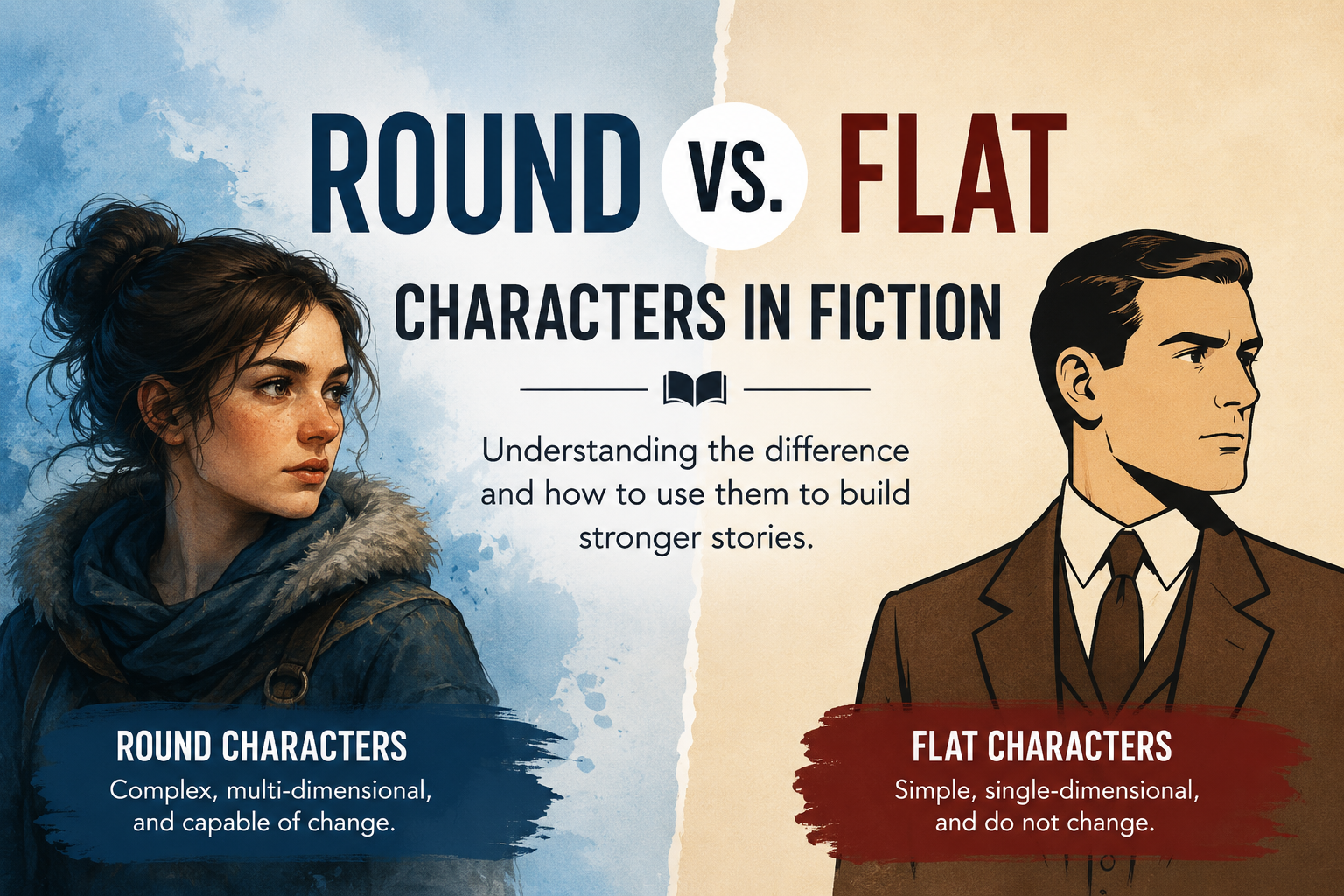
Round vs Flat Characters in Fiction is a key idea in literary analysis. Once you know the difference, you can explain why some characters feel real and complex while others serve a clear, simple role.

This guide breaks the idea down in plain language, with examples from famous books and tips you can use in essays.

In this Guide

  • What round characters are
  • What flat characters are
  • Round vs Flat Characters in Fiction examples
  • How to use the idea in literary analysis
  • Common mistakes to avoid
  • Book suggestions
  • FAQ
Round vs Flat Characters

What Are Round Characters?

Round characters feel complex, layered, and close to real people.

A round character has more than one side. They may have mixed feelings, personal flaws, hidden fears, or changing beliefs.

Round characters often surprise us, but their actions still make sense. They are not random. Their choices grow out of who they are.

Elizabeth Bennet in Pride and Prejudice is a strong example. She is smart and funny, but she also misjudges Darcy. Her pride affects how she sees others.

By the end of the novel, Elizabeth learns more about herself. That growth makes her feel human.

You can read more background on the novel through Britannica’s overview of Pride and Prejudice.

What Are Flat Characters?

Flat characters are simple, clear, and easy to understand.

A flat character usually has one main trait. They do not have deep inner conflict, and they may not change much.

This does not mean they are badly written. Flat characters can be useful. They can add humor, reveal a theme, or push the plot forward.

Mr. Collins in Pride and Prejudice is a good example. He is proud, awkward, and eager to please Lady Catherine. He does not have much depth, but he plays an important role.

Flat characters often help readers see the main characters more clearly.

Round vs Flat Characters in Fiction: The Main Difference

Round vs Flat Characters in Fiction comes down to depth and complexity.

A round character has an inner life. A flat character has a simpler role. One is built with layers, while the other is shaped around a clear purpose.

Think of Scrooge in A Christmas Carol. At first, he may seem flat because he is greedy and cold. But as the story moves forward, we see his fear, regret, and pain.

Scrooge becomes round because the story reveals why he acts the way he does. His change also matters to the whole meaning of the book.

In contrast, some minor characters in the same story stay simple. They may show kindness, poverty, or social pressure without much personal depth.

That contrast helps the story work.

Round vs Flat Characters in Fiction Examples from Literature

Examples make Round vs Flat Characters in Fiction much easier to understand.

In To Kill a Mockingbird, Scout Finch is round. She grows as she learns about justice, fear, and unfair treatment. Her view of the world changes.

Atticus Finch also has depth. He is calm and moral, but he faces pressure from his town. His choices show courage without making him perfect.

In Animal Farm, many characters are flatter on purpose. Napoleon often stands for power and control. Boxer stands for loyalty and hard work.

George Orwell uses flat characters to support satire. The point is not deep psychology. The point is political meaning.

In Harry Potter, Harry is round because he has fear, anger, love, and doubt. Some side characters are flatter, but they still help build the world.

Why Writers Use Both Round and Flat Characters

Good fiction does not need every character to be round.

If every character had a deep backstory, many stories would feel crowded. Flat characters help keep the focus on the main conflict.

A round character often carries the emotional weight of the story. A flat character may create pressure, offer comic relief, or show a social idea.

In Romeo and Juliet, Romeo and Juliet feel more complex than many side characters. Their feelings change quickly, and their choices shape the tragedy.

Characters like the Nurse have strong traits that are easy to spot. She is lively and practical, which makes her memorable even if she is less complex.

Round vs Flat Characters in Fiction and Character Change

Round vs Flat Characters in Fiction is related to change, but it is not the same thing.

A round character does not always change. Some round characters stay the same, but readers still see many sides of them.

A flat character can change in a small way, but still remain simple. The key question is depth, not just change.

For example, a villain may become nicer at the end of a story. If we do not learn much about their mind, fears, or motives, they may still feel flat.

On the other hand, Hamlet is round even before he makes final choices. He thinks deeply, doubts himself, and struggles with grief.

How to Analyze Round vs Flat Characters in Fiction

Round vs Flat Characters in Fiction can help you write stronger literary analysis.

Start by asking what the character wants. Then look at what makes the character hard to define. A round character often has tension inside them.

Ask these questions:

  • Does the character have more than one clear trait?
  • Does the character face inner conflict?
  • Does the character change how readers understand the theme?
  • Does the character mostly serve one purpose?

If you want a fuller method, see our guide on how to analyze characters in literature.

When you write about the distinction, do not just label the character. Explain why the label matters.

For example, do not only say, “Scrooge is round.” Say, “Scrooge is round because Dickens reveals his fear of loneliness, which helps the story argue that people can change.”

Common Mistakes with Round vs Flat Characters in Fiction

Many students think “round” means good and “flat” means bad. That is not true.

A flat character can be well written if the role is clear. A round character can still fail if the author does not make the person believable.

Another mistake is to confuse flat characters with minor characters. A minor character can be round if the story gives them depth.

Readers also mix up flat characters with static characters. A static character does not change much. A flat character lacks deep complexity.

The terms overlap sometimes, but they do not mean the same thing.

How to Use Round vs Flat Characters in Fiction in an Essay

Round vs Flat Characters in Fiction gives you a useful tool for claims about theme.

Your essay should connect character type to meaning. Ask why the author made a character simple or complex.

Here is a strong sentence frame:

“The author presents [character] as a [round/flat] character in order to show [theme or idea].”

Example:

“Orwell presents Boxer as a mostly flat character in order to show how loyalty can be used by those in power.”

This kind of sentence does more than name a term. It links the character to the author’s message.

Books to Look Up on Amazon

These books are useful if you want more practice with Round vs Flat Characters in Fiction.

  • Pride and Prejudice by Jane Austen
  • A Christmas Carol by Charles Dickens
  • Animal Farm by George Orwell

Each book gives clear chances to compare deep characters with simpler ones.

Quick Reference: Round vs Flat Characters in Fiction

Round vs Flat Characters in Fiction is easiest to remember this way:

  • Round characters have depth, conflict, and layers.
  • Flat characters have a simple role or main trait.
  • Both types can be useful in a strong story.

For more general background on fiction as a literary form, see Britannica’s article on the novel.

FAQ: Round vs Flat Characters in Fiction

What is the difference between round and flat characters?

A round character has depth and complexity. A flat character is simpler and usually has one main role or trait.

Can a flat character be important?

Yes. Flat characters can support the plot, reveal a theme, or make the main character stand out.

Is a round character always a main character?

No. Main characters are often round, but some minor characters can also have depth.

Is a flat character the same as a static character?

No. A static character does not change much. A flat character lacks depth. A character can be both, but the terms are different.

How do I write about round and flat characters in an essay?

Explain how the character type helps show a theme. Do not stop at the label.

Key Takeaway

Round vs Flat Characters in Fiction is not about good versus bad writing. It is about how much depth a character has and how that character helps the story make meaning.

error

Enjoy this article? Please spread the word :)

Follow by Email
BLUESKY
fb-share-icon
Reddit
LinkedIn
Share
RSS