What Is Tone in Writing? A Beginner-Friendly Guide

What is tone in writing

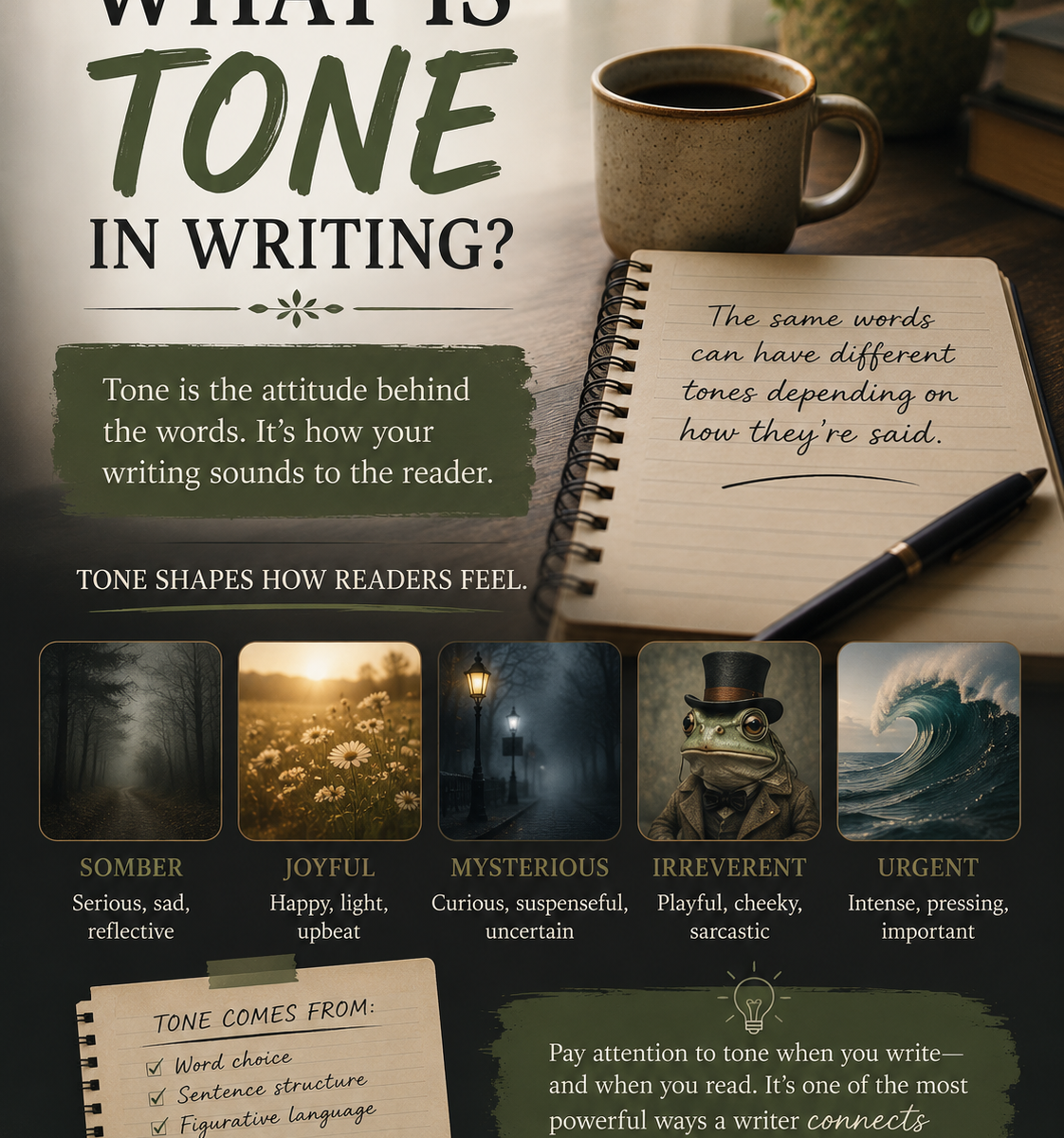
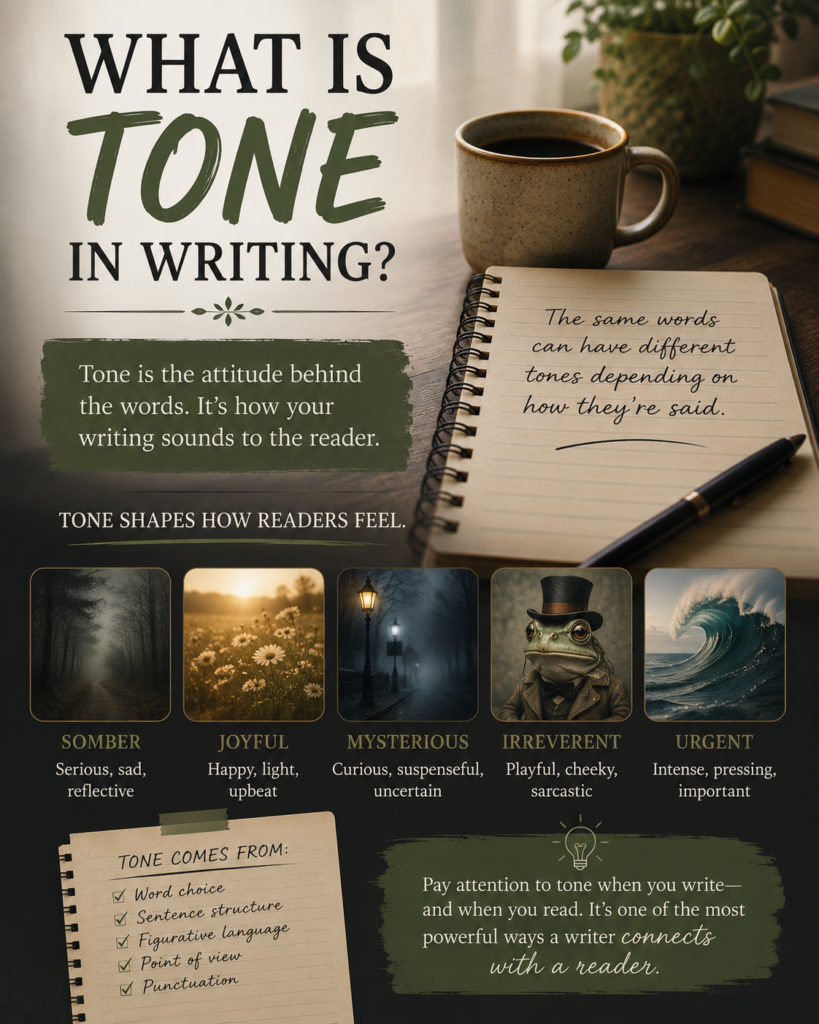
What Is Tone in Writing? It is the attitude a writer shows toward a subject, character, or audience.

Tone helps readers hear the “voice” behind the words. It can make a story feel serious, playful, angry, hopeful, or cold.

In this Guide

What is tone in writing

What Is Tone in Writing?

Tone is the writer’s attitude.

A simple answer to What Is Tone in Writing? is this: tone shows how the author feels about what is happening. That feeling comes through word choice, sentence style, details, and dialogue.

For example, a narrator might describe a storm as “wild and beautiful.” That sounds excited or impressed. Another narrator might call the same storm “cruel and endless.” That sounds fearful or bitter.

Tone is not always direct. A writer may never say, “I feel angry.” Instead, the anger appears in sharp words, short sentences, or harsh images.

What Is Tone in Writing? Why It Matters in Literature

Tone changes how readers understand a scene.

When students ask What Is Tone in Writing?, they are really asking how a writer guides our reaction. Tone can make a character seem foolish, brave, selfish, or kind.

In literature, tone also helps reveal theme. A sad tone may show loss. A mocking tone may point out pride or weakness. A hopeful tone may suggest that change is possible.

On an essay or AP Literature exam, tone is often the key to a strong analysis. If you can explain the tone, you can explain how the author creates meaning.

What Is Tone in Writing? Examples from Famous Literature

Examples make tone easier to hear.

In Edgar Allan Poe’s “The Tell-Tale Heart,” the tone is tense and nervous. The narrator keeps trying to prove he is sane, but his words make him sound more unstable.

In Jane Austen’s Pride and Prejudice, the tone is often witty and ironic. Austen gently mocks pride, social rules, and quick judgments.

In George Orwell’s 1984, the tone is bleak and serious. The cold language helps readers feel the danger of a world where the government controls truth.

The best way to answer What Is Tone in Writing? is to look at how the author’s attitude shapes each passage. Tone is not just what happens. It is how the writing feels about what happens.

What Is Tone in Writing? Tone vs. Mood

Mood and tone are related, but they are not the same.

Tone is the author’s attitude. Mood is the feeling created in the reader.

For example, a story might have a fearful tone because the narrator describes danger with panic. That tone can create a scary mood for the reader.

If you want a deeper breakdown, read our guide on tone vs. mood in literature.

What Is Tone in Writing? How to Spot It While Reading

You can find tone by paying close attention to small choices.

Start with word choice. Ask if the words sound warm, cold, respectful, bitter, excited, or calm.

Then look at sentence style. Short sentences can sound tense or blunt. Longer sentences can feel thoughtful or emotional, depending on the words around them.

Dialogue also gives clues. A character who says, “How wonderful,” may sound sincere in one scene and sarcastic in another.

When you ask What Is Tone in Writing?, do not stop at naming a tone word. Always connect that word to proof from the text.

Common Tone Words Students Can Use

Tone words help you describe the author’s attitude with more care.

  • Serious
  • Playful
  • Angry
  • Hopeful
  • Mocking
  • Sad
  • Respectful
  • Suspicious

Try to avoid vague words like “good” or “bad.” A stronger tone word makes your analysis clearer.

A Practical Tip for Reading Tone

Use this quick method when you read a passage.

Circle two or three words that show attitude. Then write one tone word in the margin.

After that, ask: “How does this tone affect the meaning of the passage?” This turns a simple observation into real literary analysis.

For more help with poetry terms, the Poetry Foundation’s glossary entry on tone is a useful resource. You can also explore broad literary background through Britannica’s overview of literature.

Helpful Books to Read for Tone

These books are useful for seeing tone in action.

  • Pride and Prejudice by Jane Austen
  • 1984 by George Orwell

As you read, pause after key scenes and ask how the author’s attitude comes through.

FAQ: What Is Tone in Writing?

What Is Tone in Writing?

Tone is the author’s attitude toward the subject, characters, or audience. It shows through words, details, and style.

How is tone different from mood?

Tone is the writer’s attitude. Mood is the feeling the reader gets from the text. For a full explanation, see this guide to the difference between tone and mood.

Can a story have more than one tone?

Yes. A story may start with a playful tone and later become serious. Tone can shift as events change.

Why does tone matter in an essay?

Tone helps you explain how the author creates meaning. It gives you a clear path from evidence to interpretation.

Key Takeaway

What Is Tone in Writing? It is the attitude behind the words. To analyze it well, name the tone, prove it with text, and explain why it matters.

What Is Foreshadowing in Literature?

Foreshadowing in Literature

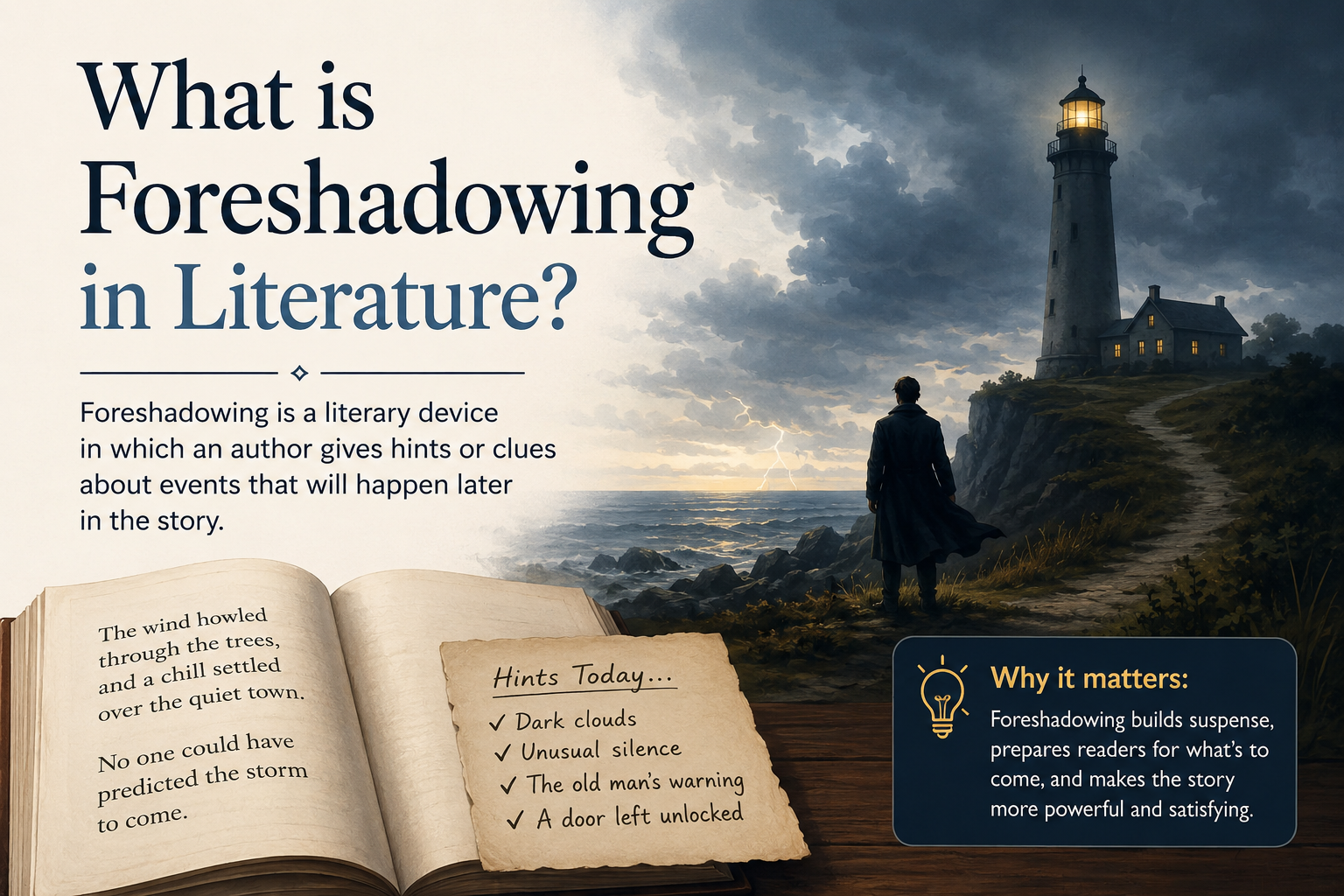
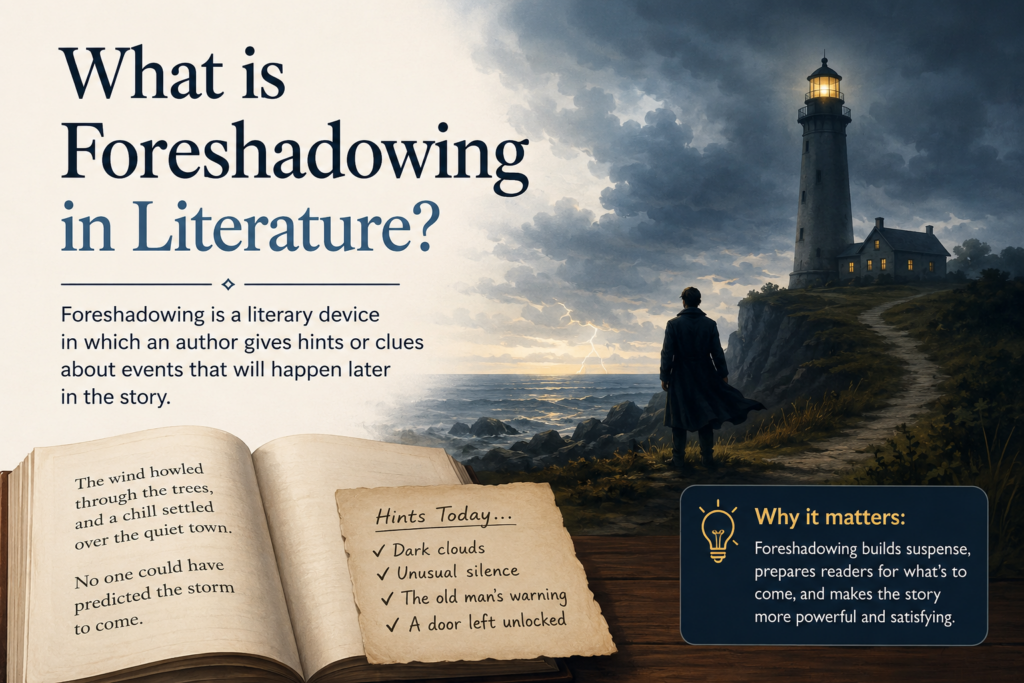
What Is Foreshadowing in Literature? It is a clue that hints at what may happen later in a story. Writers use it to build suspense, shape mood, and help readers notice that every detail can matter.

In this Guide

  • What foreshadowing means
  • Why writers use it
  • Common types of foreshadowing
  • Famous examples from literature
  • How to spot it as you read
  • Book suggestions
  • FAQ
Foreshadowing in Literature

What Is Foreshadowing in Literature? A Simple Definition

Foreshadowing is a hint that points toward a future event in a story.

So, What Is Foreshadowing in Literature? In simple terms, it is when an author plants a clue early so something later feels planned, not random.

Foreshadowing can be clear or subtle. A character may make a warning, a storm may signal danger, or an object may appear before it becomes important.

This device helps readers feel curious. It also rewards close reading because small details may gain meaning later.

If you want to study more tools like this, visit our literary devices list.

What Is Foreshadowing in Literature? Why It Matters

Foreshadowing gives a story shape and purpose.

What Is Foreshadowing in Literature? It is not just a “hint.” It is a way for writers to guide our expectations.

When used well, foreshadowing makes an ending feel earned. Readers may think, “I should have seen that coming,” which can make the story more powerful.

It also creates suspense. If a novel opens with a strange noise in the dark, we expect that noise to matter later.

Foreshadowing can also reveal theme. In many tragedies, early warnings show that fate, pride, or fear may lead to disaster.

What Is Foreshadowing in Literature? Common Types to Know

Foreshadowing can appear in more than one form.

Direct foreshadowing gives a clear warning. A character might say, “Nothing good will come from this.” That line tells readers to expect trouble.

Indirect foreshadowing is more hidden. A broken mirror, a dark dream, or a strange silence may hint at future conflict.

Symbolic foreshadowing uses images or objects. For example, a dying plant might suggest a failing relationship.

So, What Is Foreshadowing in Literature? It is any early clue that prepares readers for what comes next, even if they do not notice it right away.

Famous Examples of Foreshadowing

Well-known stories often use foreshadowing to build tension and meaning.

In Romeo and Juliet by William Shakespeare, Romeo has dark feelings about going to the Capulet party. His fear hints at the tragedy that follows.

In Of Mice and Men by John Steinbeck, the death of Candy’s dog foreshadows the later death of Lennie. Both scenes deal with mercy, weakness, and painful choices.

In Harry Potter and the Sorcerer’s Stone by J.K. Rowling, small details about Harry’s scar and Voldemort hint at a much larger conflict.

In The Lottery by Shirley Jackson, the nervous mood and strange village ritual foreshadow the shocking ending. The story shows how ordinary details can hide danger.

For more on literary terms and reading context, you can explore Britannica’s entry on foreshadowing.

How Foreshadowing Is Different from a Spoiler

A spoiler tells you what will happen. Foreshadowing only hints at it.

This difference matters. A spoiler removes surprise, but foreshadowing creates interest.

Good foreshadowing does not give away the whole plot. It gives just enough detail to make readers wonder.

When readers look back, the clue makes sense. That is why foreshadowing can make a story feel carefully built.

How to Spot Foreshadowing While You Read

Look for details that seem unusual, repeated, or too specific to ignore.

If a writer spends time on an object, warning, dream, or odd line of dialogue, mark it. Ask, “Why did the author include this?”

Pay close attention to first chapters. Many writers place key clues near the start of a story.

Also watch for changes in mood. A sudden shift from calm to tense may signal that something important is coming.

To connect foreshadowing with other story tools, review this guide to literary devices.

Books That Help You Study Foreshadowing

These books are useful if you want strong examples of foreshadowing in action:

  • Romeo and Juliet by William Shakespeare
  • Of Mice and Men by John Steinbeck
  • Harry Potter and the Sorcerer’s Stone by J.K. Rowling

FAQ: What Is Foreshadowing in Literature?

What Is Foreshadowing in Literature?

Foreshadowing is a clue that hints at a future event in a story. It helps readers expect that something important may happen later.

Why do authors use foreshadowing?

Authors use foreshadowing to build suspense, prepare readers, and make the ending feel connected to the rest of the story.

Is foreshadowing always obvious?

No. Some foreshadowing is clear, but some is hidden. Readers may only notice it after they finish the story.

What is an easy example of foreshadowing?

If a character says, “I have a bad feeling about this,” that line may foreshadow danger or conflict later.

Can foreshadowing be a symbol?

Yes. A symbol, such as a storm or broken object, can foreshadow a future event or emotional change.

Key Takeaway

What Is Foreshadowing in Literature? It is a clue that points ahead. When you read, circle strange details and ask how they might matter later. That simple habit can make your analysis much stronger.

Flash Memoir Prompt: First Time You Were Left Alone Somewhere

flash memoir prompt first time left alone somewhere

A warm, focused writing invitation about the first time you felt truly alone and had to meet the moment by yourself.

flash memoir prompt first time left alone somewhere

The door clicks shut. The car turns the corner. The house goes quiet in a way it never has before.

For a second, nothing has changed. The same couch is there. The same clock ticks. And the same cracked sidewalk stretches outside. Then your body understands before your mind does: no one is coming to handle this for you right now.

If you searched for a flash memoir prompt first time left alone somewhere, this one asks you to return to that sharp little moment when childhood, safety, independence, or fear shifted under your feet.

It might be a memory from a grocery store aisle, a school hallway after practice, a hospital waiting room, a train station, or your own kitchen. The place matters, but the feeling matters more.

The Prompt

Write about the first time you were left alone somewhere and realized you were completely on your own.

This prompt can unlock a powerful memory because it focuses on a clear emotional turn. At first, you may have felt fine. Maybe even proud. Then something changed. The silence grew too large. The adults took too long. The familiar place started to feel strange.

Flash memoir works well when you choose one small scene instead of trying to explain your whole life. This prompt gives you a built-in scene: a person alone in a place, waiting to see what happens next.

Why This Memory Matters

The first time you were left alone may have been scary, exciting, unfair, or strangely calm. You may have discovered you were braver than you thought. You may have learned that certain kinds of freedom come with a cold edge.

This kind of memory often holds a hidden before and after. Before, someone else knew the plan. After, you had to make one.

Maybe you were left at a bus stop and had to ask a stranger for help. Maybe your parent ran into a store and did not come back as fast as promised. And maybe you were old enough to be trusted at home, but young enough to jump at every creak in the walls.

The meaning does not have to be dramatic. A strong memoir moment can come from a small realization: I know where the flashlight is. I can call the neighbor. I can sit still. And I can wait.

That is why this flash memoir prompt first time left alone somewhere can lead to a story about fear, but it can also lead to a story about competence. Or loneliness. Or pride that you did not know how to name at the time.

If you want to explore what your memory is really about after drafting, you might find it helpful to read this guide on how to identify theme in literature. Memoir has themes too, even when the story begins with a simple locked door or an empty room.

How to Approach This Prompt

Start with a physical detail. Do not begin by explaining how old you were or what the memory means now. Begin with the thing your body remembers.

Was the carpet rough under your knees? Was there gum stuck to the bottom of a plastic chair? Did the air smell like floor cleaner, wet wool, popcorn, sunscreen, or dust?

Choose one scene and stay inside it. If you were left alone at a mall, do not write the full story of your family, your whole childhood, and every store in the building. Write the bench outside the shoe store. Write the escalator. And write the moment you stopped pretending you were fine.

Let the facts arrive slowly. Readers do not need every detail at once. They need to feel what you noticed first.

You might begin with a sentence like:

“The kitchen sounded bigger after my mother left.”

Or:

“I counted the red floor tiles because I did not know what else to do.”

Or:

“At first, being alone in the car felt like a prize.”

After that, follow the next small action. Did you check the clock? Lock the door? Walk in circles? Try to act older than you felt?

If you get stuck, write the scene as if you are annotating your own memory. Notice the objects, the sounds, and the moment the mood changes. For more practice with close observation, this guide on how to annotate literature can help you train your eye to notice what carries meaning.

A Quick Example

My father left me in the laundromat with two baskets and a warning not to touch the candy machine. I was nine, old enough, he said, to watch the dryers spin while he ran next door for quarters. The room smelled like hot cotton and soap powder. At first I liked the job. I sat straight in the orange chair and looked serious, like the women folding towels. Then the dryer with our sheets stopped. My father did not come back. The quiet between machine hums got wider. A man came in and nodded at me. I nodded back, too fast. I put one hand on the basket handle and one hand in my pocket around the house key. That was the first time I understood that waiting could feel like work.

Try It Yourself

Set a timer for ten minutes and write one scene from this prompt. Keep your focus tight. Where were you? What did you hear? What did you do with your hands?

Do not worry about making the memory sound important. Let it be ordinary if it was ordinary. A child alone in a quiet house can hold as much tension as a child lost in a crowd.

When you finish, underline the sentence where the realization happens. It may be small, but it is probably the heart of the piece.

This flash memoir prompt first time left alone somewhere is a chance to write about the moment you began to understand your own presence. You were there. You noticed. And you got through it, one choice at a time.

Want More Flash Memoir Prompts?

If you enjoy short writing invitations that help you capture real memories in a few focused paragraphs, the full collection offers a year of daily practice.

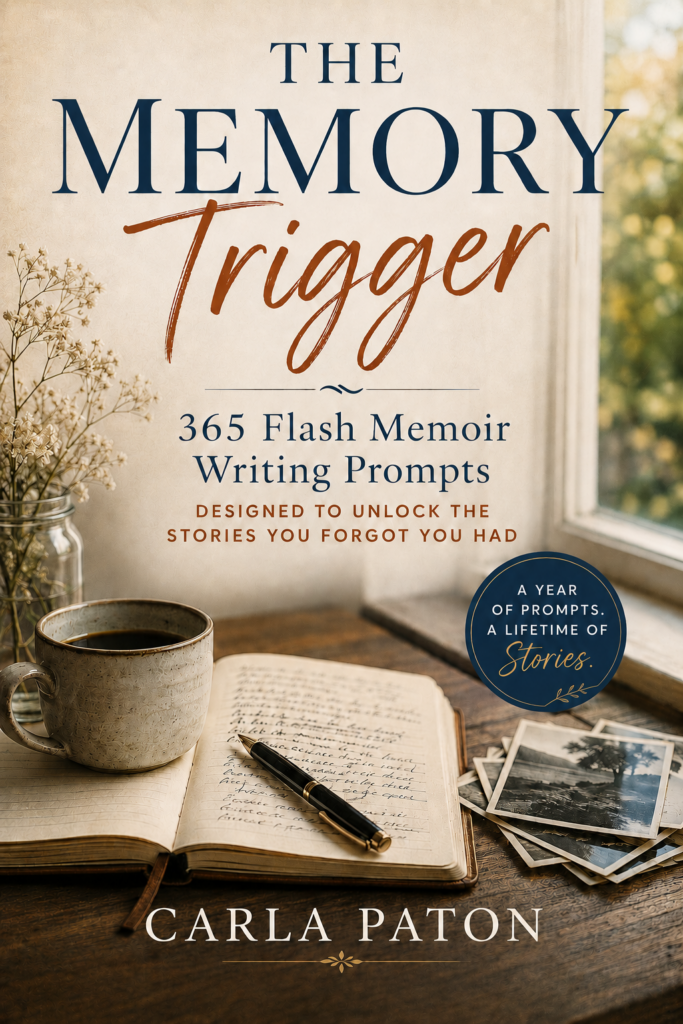
Explore all 365 prompts in The Memory Trigger: 365 Flash Memoir Writing Prompts.


flash memoir prompt

error

Enjoy this article? Please spread the word :)

Follow by Email
BLUESKY
fb-share-icon
Reddit
LinkedIn
Share
RSS