

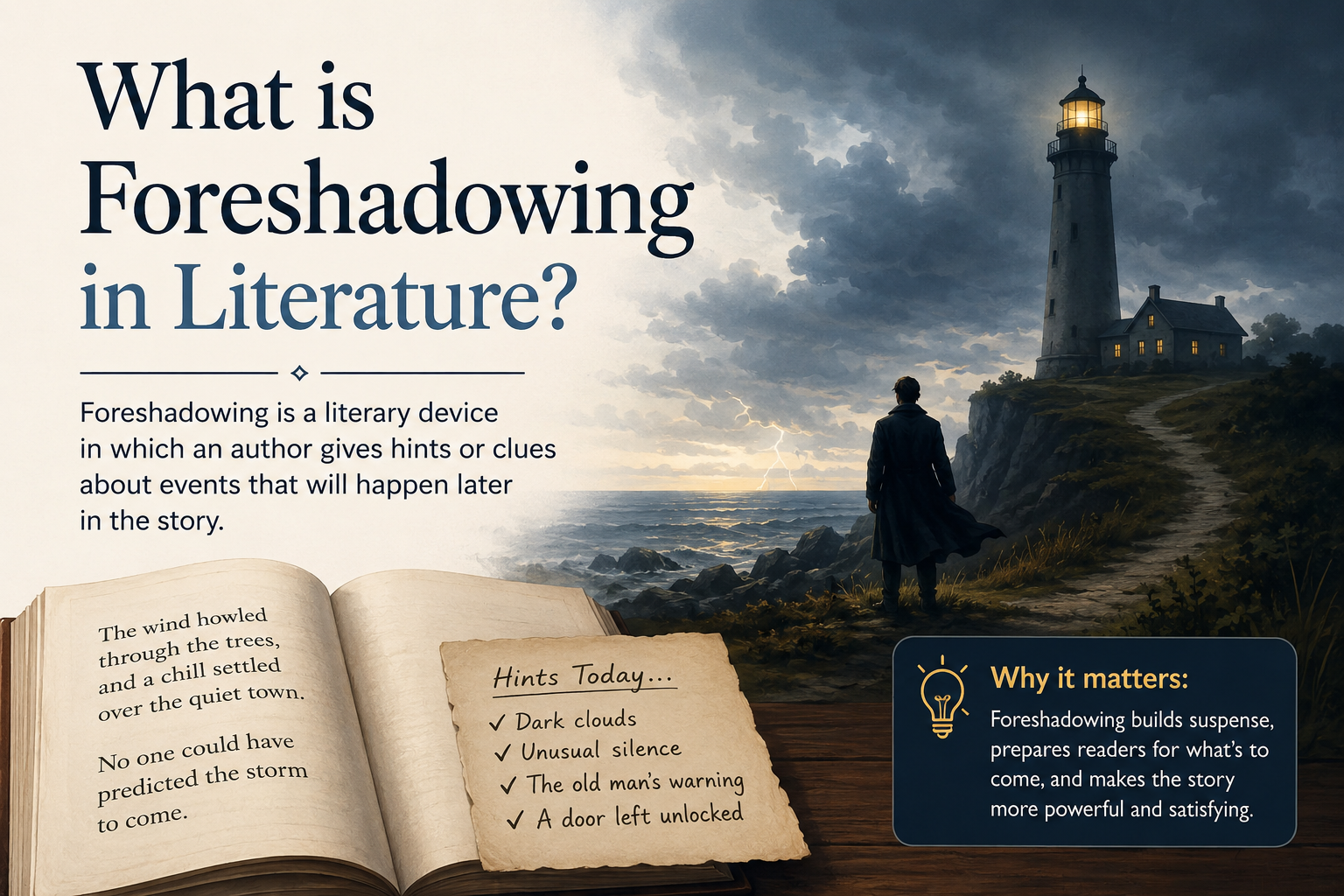
What Is Foreshadowing in Literature? It is a clue that hints at what may happen later in a story. Writers use it to build suspense, shape mood, and help readers notice that every detail can matter.
In this Guide
- What foreshadowing means
- Why writers use it
- Common types of foreshadowing
- Famous examples from literature
- How to spot it as you read
- Book suggestions
- FAQ
What Is Foreshadowing in Literature? A Simple Definition
Foreshadowing is a hint that points toward a future event in a story.
So, What Is Foreshadowing in Literature? In simple terms, it is when an author plants a clue early so something later feels planned, not random.
Foreshadowing can be clear or subtle. A character may make a warning, a storm may signal danger, or an object may appear before it becomes important.
This device helps readers feel curious. It also rewards close reading because small details may gain meaning later.
If you want to study more tools like this, visit our literary devices list.
What Is Foreshadowing in Literature? Why It Matters
Foreshadowing gives a story shape and purpose.
What Is Foreshadowing in Literature? It is not just a “hint.” It is a way for writers to guide our expectations.
When used well, foreshadowing makes an ending feel earned. Readers may think, “I should have seen that coming,” which can make the story more powerful.
It also creates suspense. If a novel opens with a strange noise in the dark, we expect that noise to matter later.
Foreshadowing can also reveal theme. In many tragedies, early warnings show that fate, pride, or fear may lead to disaster.
What Is Foreshadowing in Literature? Common Types to Know
Foreshadowing can appear in more than one form.
Direct foreshadowing gives a clear warning. A character might say, “Nothing good will come from this.” That line tells readers to expect trouble.
Indirect foreshadowing is more hidden. A broken mirror, a dark dream, or a strange silence may hint at future conflict.
Symbolic foreshadowing uses images or objects. For example, a dying plant might suggest a failing relationship.
So, What Is Foreshadowing in Literature? It is any early clue that prepares readers for what comes next, even if they do not notice it right away.
Famous Examples of Foreshadowing
Well-known stories often use foreshadowing to build tension and meaning.
In Romeo and Juliet by William Shakespeare, Romeo has dark feelings about going to the Capulet party. His fear hints at the tragedy that follows.
In Of Mice and Men by John Steinbeck, the death of Candy’s dog foreshadows the later death of Lennie. Both scenes deal with mercy, weakness, and painful choices.
In Harry Potter and the Sorcerer’s Stone by J.K. Rowling, small details about Harry’s scar and Voldemort hint at a much larger conflict.
In The Lottery by Shirley Jackson, the nervous mood and strange village ritual foreshadow the shocking ending. The story shows how ordinary details can hide danger.
For more on literary terms and reading context, you can explore Britannica’s entry on foreshadowing.
How Foreshadowing Is Different from a Spoiler
A spoiler tells you what will happen. Foreshadowing only hints at it.
This difference matters. A spoiler removes surprise, but foreshadowing creates interest.
Good foreshadowing does not give away the whole plot. It gives just enough detail to make readers wonder.
When readers look back, the clue makes sense. That is why foreshadowing can make a story feel carefully built.
How to Spot Foreshadowing While You Read
Look for details that seem unusual, repeated, or too specific to ignore.
If a writer spends time on an object, warning, dream, or odd line of dialogue, mark it. Ask, “Why did the author include this?”
Pay close attention to first chapters. Many writers place key clues near the start of a story.
Also watch for changes in mood. A sudden shift from calm to tense may signal that something important is coming.
To connect foreshadowing with other story tools, review this guide to literary devices.
Books That Help You Study Foreshadowing
These books are useful if you want strong examples of foreshadowing in action:
- Romeo and Juliet by William Shakespeare
- Of Mice and Men by John Steinbeck
- Harry Potter and the Sorcerer’s Stone by J.K. Rowling
FAQ: What Is Foreshadowing in Literature?
What Is Foreshadowing in Literature?
Foreshadowing is a clue that hints at a future event in a story. It helps readers expect that something important may happen later.
Why do authors use foreshadowing?
Authors use foreshadowing to build suspense, prepare readers, and make the ending feel connected to the rest of the story.
Is foreshadowing always obvious?
No. Some foreshadowing is clear, but some is hidden. Readers may only notice it after they finish the story.
What is an easy example of foreshadowing?
If a character says, “I have a bad feeling about this,” that line may foreshadow danger or conflict later.
Can foreshadowing be a symbol?
Yes. A symbol, such as a storm or broken object, can foreshadow a future event or emotional change.
Key Takeaway
What Is Foreshadowing in Literature? It is a clue that points ahead. When you read, circle strange details and ask how they might matter later. That simple habit can make your analysis much stronger.


Get the Free Close Reading Worksheet Pack
Join my email list and receive the printable worksheet pack you can use with any novel or poem.
No spam. Just helpful guides for reading literature well.












