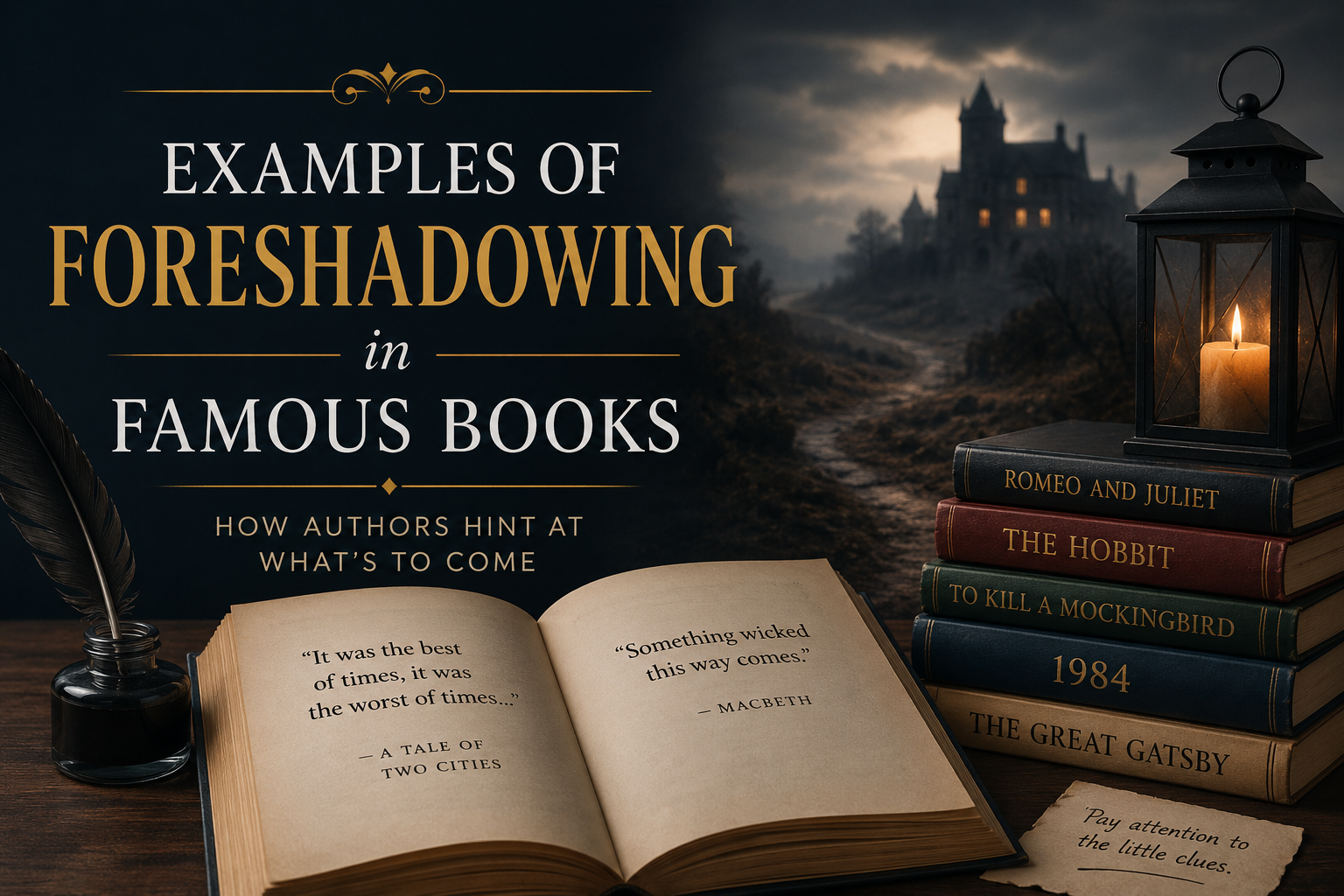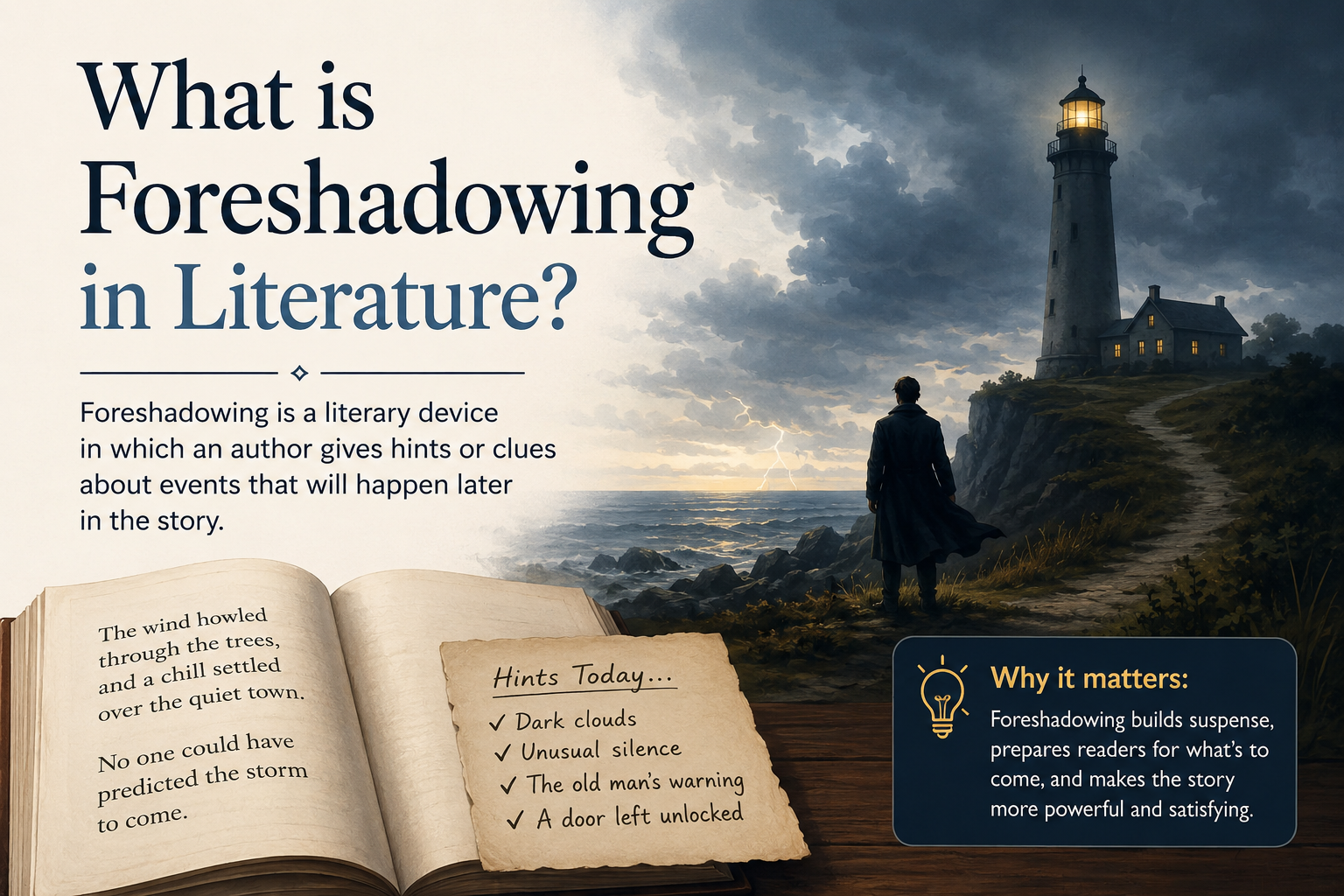

What Is Foreshadowing in Literature?

Foreshadowing in Literature

What Is Foreshadowing in Literature? It is a clue that hints at what may happen later in a story. Writers use it to build suspense, shape mood, and help readers notice that every detail can matter.

In this Guide

  • What foreshadowing means
  • Why writers use it
  • Common types of foreshadowing
  • Famous examples from literature
  • How to spot it as you read
  • Book suggestions
  • FAQ
Foreshadowing in Literature

What Is Foreshadowing in Literature? A Simple Definition

Foreshadowing is a hint that points toward a future event in a story.

So, What Is Foreshadowing in Literature? In simple terms, it is when an author plants a clue early so something later feels planned, not random.

Foreshadowing can be clear or subtle. A character may make a warning, a storm may signal danger, or an object may appear before it becomes important.

This device helps readers feel curious. It also rewards close reading because small details may gain meaning later.

If you want to study more tools like this, visit our literary devices list.

What Is Foreshadowing in Literature? Why It Matters

Foreshadowing gives a story shape and purpose.

What Is Foreshadowing in Literature? It is not just a “hint.” It is a way for writers to guide our expectations.

When used well, foreshadowing makes an ending feel earned. Readers may think, “I should have seen that coming,” which can make the story more powerful.

It also creates suspense. If a novel opens with a strange noise in the dark, we expect that noise to matter later.

Foreshadowing can also reveal theme. In many tragedies, early warnings show that fate, pride, or fear may lead to disaster.

What Is Foreshadowing in Literature? Common Types to Know

Foreshadowing can appear in more than one form.

Direct foreshadowing gives a clear warning. A character might say, “Nothing good will come from this.” That line tells readers to expect trouble.

Indirect foreshadowing is more hidden. A broken mirror, a dark dream, or a strange silence may hint at future conflict.

Symbolic foreshadowing uses images or objects. For example, a dying plant might suggest a failing relationship.

So, What Is Foreshadowing in Literature? It is any early clue that prepares readers for what comes next, even if they do not notice it right away.

Famous Examples of Foreshadowing

Well-known stories often use foreshadowing to build tension and meaning.

In Romeo and Juliet by William Shakespeare, Romeo has dark feelings about going to the Capulet party. His fear hints at the tragedy that follows.

In Of Mice and Men by John Steinbeck, the death of Candy’s dog foreshadows the later death of Lennie. Both scenes deal with mercy, weakness, and painful choices.

In Harry Potter and the Sorcerer’s Stone by J.K. Rowling, small details about Harry’s scar and Voldemort hint at a much larger conflict.

In The Lottery by Shirley Jackson, the nervous mood and strange village ritual foreshadow the shocking ending. The story shows how ordinary details can hide danger.

For more on literary terms and reading context, you can explore Britannica’s entry on foreshadowing.

How Foreshadowing Is Different from a Spoiler

A spoiler tells you what will happen. Foreshadowing only hints at it.

This difference matters. A spoiler removes surprise, but foreshadowing creates interest.

Good foreshadowing does not give away the whole plot. It gives just enough detail to make readers wonder.

When readers look back, the clue makes sense. That is why foreshadowing can make a story feel carefully built.

How to Spot Foreshadowing While You Read

Look for details that seem unusual, repeated, or too specific to ignore.

If a writer spends time on an object, warning, dream, or odd line of dialogue, mark it. Ask, “Why did the author include this?”

Pay close attention to first chapters. Many writers place key clues near the start of a story.

Also watch for changes in mood. A sudden shift from calm to tense may signal that something important is coming.

To connect foreshadowing with other story tools, review this guide to literary devices.

Books That Help You Study Foreshadowing

These books are useful if you want strong examples of foreshadowing in action:

  • Romeo and Juliet by William Shakespeare
  • Of Mice and Men by John Steinbeck
  • Harry Potter and the Sorcerer’s Stone by J.K. Rowling

FAQ: What Is Foreshadowing in Literature?

What Is Foreshadowing in Literature?

Foreshadowing is a clue that hints at a future event in a story. It helps readers expect that something important may happen later.

Why do authors use foreshadowing?

Authors use foreshadowing to build suspense, prepare readers, and make the ending feel connected to the rest of the story.

Is foreshadowing always obvious?

No. Some foreshadowing is clear, but some is hidden. Readers may only notice it after they finish the story.

What is an easy example of foreshadowing?

If a character says, “I have a bad feeling about this,” that line may foreshadow danger or conflict later.

Can foreshadowing be a symbol?

Yes. A symbol, such as a storm or broken object, can foreshadow a future event or emotional change.

Key Takeaway

What Is Foreshadowing in Literature? It is a clue that points ahead. When you read, circle strange details and ask how they might matter later. That simple habit can make your analysis much stronger.

Themes in The Adventures of Huckleberry Finn: A Student-Friendly Guide

Huckleberry Finn themes

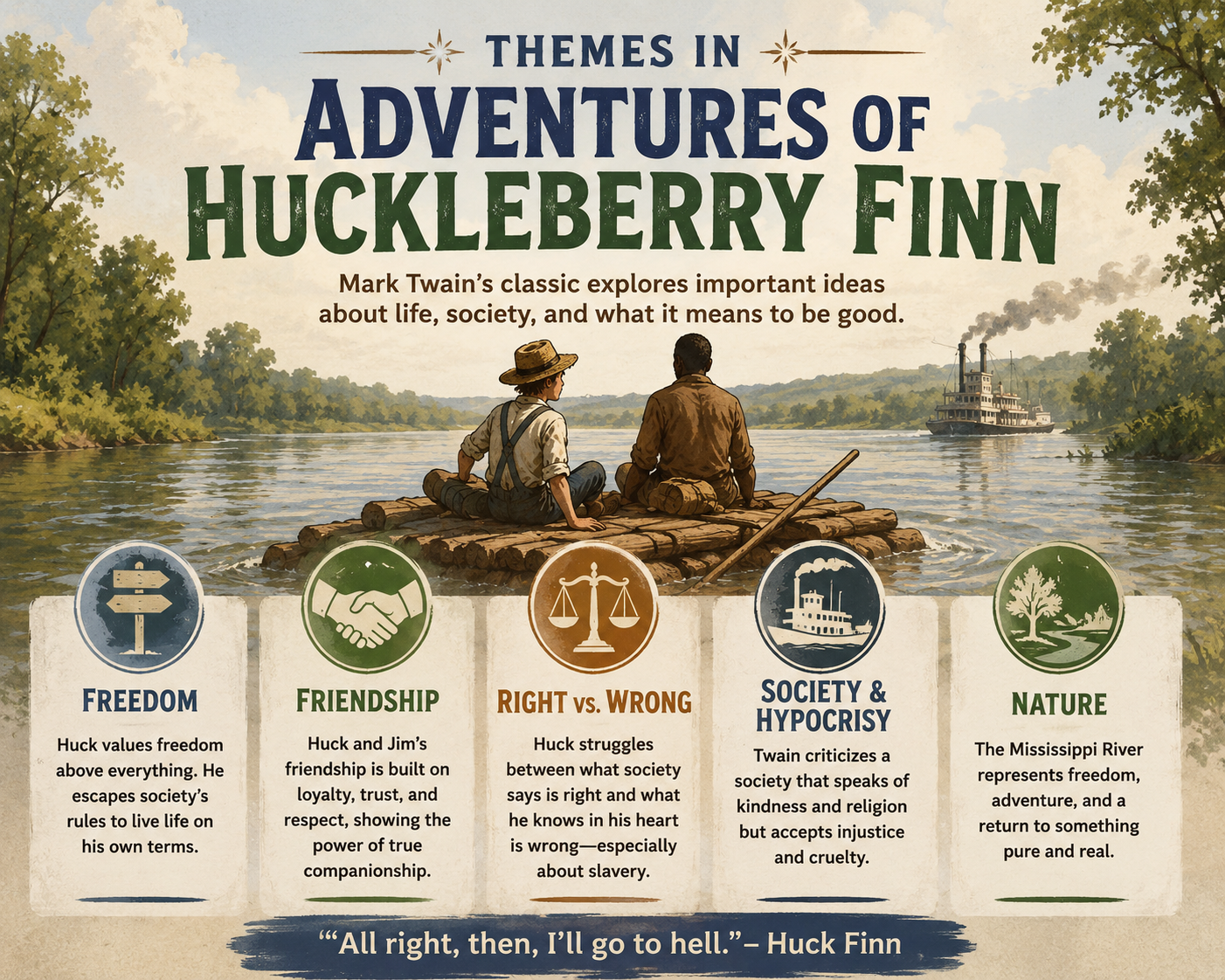
The Adventures of Huckleberry Finn can feel funny, strange, and painful all at once. The themes in The Adventures of Huckleberry Finn help students see how Mark Twain uses Huck’s journey to question slavery, racism, moral rules, and what it means to grow up.

This guide explains the major ideas in clear language, with examples you can use in class discussion or an essay.

In this Guide

Use these sections to review the novel’s key ideas and build stronger notes.

Huckleberry Finn themes

Why the themes in The Adventures of Huckleberry Finn matter

Twain’s novel is not just a river adventure. It is a sharp look at American life before the Civil War.

The themes in The Adventures of Huckleberry Finn matter because the book asks hard questions about right and wrong. Huck grows up in a world that teaches him slavery is normal, yet his own experience with Jim pushes him to doubt that belief.

This conflict makes the novel powerful, but also difficult. Twain uses satire, humor, and Huck’s plain voice to expose cruelty in society. The book also uses racist language that many readers find painful, so students should read it with care and context.

For background on Twain’s life and time period, the Britannica profile of Mark Twain is a useful starting point.

Major themes in The Adventures of Huckleberry Finn

The novel’s main themes work through Huck’s choices, Jim’s struggle, and the places they meet along the Mississippi River.

The themes in The Adventures of Huckleberry Finn often connect to one central question: should a person obey society or follow conscience? Huck’s answer changes as he learns to see Jim as a full human being, not as property.

Freedom and slavery

The most important theme is freedom. Jim seeks freedom from slavery. Huck seeks freedom from abuse, rules, and people who try to control him.

At first, Huck thinks of freedom as escape. He wants to avoid his father, school, and polite society. Jim’s freedom is far more serious because his life and family are at stake.

This difference matters. Twain shows that not all forms of escape are equal. Huck wants room to live his own way, while Jim fights a system that denies his humanity.

The river seems to offer freedom to both of them. On the raft, Huck and Jim form a bond that feels more honest than life on shore. Yet the river cannot fully protect them from slavery or racism.

Racism and dehumanization

The novel attacks a society built on racism, even though it also reflects racist language and ideas from its time. That tension makes the book hard to read and important to discuss.

Many white characters treat Jim as property. They talk about him as if he has no family, fear, or hope. Twain shows how ugly that mindset is by letting readers see Jim’s kindness and courage.

Jim cares for Huck, protects him from pain, and dreams of rejoining his family. These moments challenge the racist world around him.

Students should notice how Twain builds sympathy through action. Jim’s humanity is not shown through speeches. It is shown through care, loyalty, and sacrifice.

Conscience versus society

One of the strongest themes in The Adventures of Huckleberry Finn is the conflict between conscience and social rules. Huck has been taught that helping Jim escape is wrong.

His society tells him that the law supports slavery. His heart tells him that Jim is his friend. Huck must choose between what he has learned and what he knows from experience.

This theme appears most clearly when Huck decides not to betray Jim. He believes he may be doing something sinful, but he chooses loyalty over the values of his society.

Many works of literature use this same conflict. In Antigone by Sophocles, Antigone must choose between the king’s law and her duty to her brother. Like Huck, she faces a moral choice that society cannot solve for her.

Friendship and moral growth

Huck and Jim’s friendship changes Huck. At the start, Huck often repeats the racist ideas he has heard from others. Over time, he learns through shared danger and trust.

Jim becomes a father-like figure for Huck. He comforts him, watches over him, and treats him with more care than most adults in Huck’s life.

Huck’s moral growth does not happen in a neat way. He still has blind spots. Yet his bond with Jim teaches him to value human feeling over empty rules.

This makes the novel a coming-of-age story. Huck grows not because he becomes polite, but because he starts to reject cruelty.

Satire and social hypocrisy

Twain uses satire to mock people who appear civilized but act foolish or cruel. Many adults in the novel talk about religion, honor, and manners while they harm others.

The Grangerford and Shepherdson feud is a clear example. The families seem rich and refined, but they live by violence. Twain shows that social polish does not equal moral goodness.

The Duke and the King also reveal human weakness. They trick people for money and pretend to be noble. Their scams show how easily crowds can be fooled.

This theme still feels modern. Twain asks readers to look past nice words and judge people by their actions.

Childhood innocence and adult corruption

Huck sees the adult world from the outside. Because he is young, he notices lies that adults accept as normal.

He does not always understand the full meaning of events, but his plain voice helps readers see the truth. This gap between Huck’s view and the reader’s view creates irony.

Adults in the novel often fail to protect children. Pap is violent, judges make poor choices, and crowds act with little reason. Huck’s childhood is not safe, so the raft becomes a place of rare peace.

This theme connects to many coming-of-age novels. In To Kill a Mockingbird by Harper Lee, Scout also learns that adult society can be unfair and cruel.

Symbols that deepen the themes in The Adventures of Huckleberry Finn

Twain uses places and objects to make the novel’s ideas easier to feel.

The themes in The Adventures of Huckleberry Finn become clearer when you track the river, the raft, and the shore. These symbols help show the gap between freedom and social control.

The Mississippi River

The river often stands for freedom and movement. Huck and Jim can drift away from towns that judge or trap them.

Yet the river is not perfect freedom. It can be dangerous, and it leads them deeper into slave territory. Twain keeps the symbol complex so readers do not see escape as simple.

The raft

The raft is a small world where Huck and Jim can speak more honestly. It becomes a symbol of friendship and trust.

On the raft, Huck is not forced to play the role society gives him. Jim is not reduced to property in Huck’s eyes. Their life there is rough, but it is often more humane than life on shore.

The shore

The shore often represents society. Towns bring feuds, scams, mobs, and racist laws.

This pattern helps Twain criticize what people call civilization. The word sounds positive, but the shore often shows greed and violence.

How to write about themes in The Adventures of Huckleberry Finn

A strong essay should connect a theme to Huck’s choices and Twain’s larger criticism of society.

When you write about themes in The Adventures of Huckleberry Finn, avoid simple claims like the book is about freedom. Ask what Twain says about freedom. Is freedom possible in a racist society? Who gets freedom, and who is denied it?

A useful thesis might say: Twain uses Huck and Jim’s journey to show that true morality comes from sympathy, not from laws that support injustice.

Then prove the claim with scenes. You might discuss Huck’s decision not to betray Jim, the contrast between the raft and the shore, or the way Jim protects Huck.

If you need help turning notes into a full essay, read our guide on how to write a literary analysis essay.

For a quick review before class, you can also use our student theme review resource as a study companion.

Books to pair with your study of the novel

These books can help you understand Twain, the novel’s history, and the debate around the text.

  • The Adventures of Huckleberry Finn by Mark Twain
  • Mark Twain: A Life by Ron Powers
  • Was Huck Black? by Shelley Fisher Fishkin

Fishkin’s book is especially helpful for students who want to learn more about voice, race, and influence in Twain’s writing.

FAQ about themes in The Adventures of Huckleberry Finn

These quick answers can help you review before a quiz, seminar, or essay draft.

What are the main themes in The Adventures of Huckleberry Finn?

The main themes in The Adventures of Huckleberry Finn include freedom, racism, conscience, friendship, satire, and moral growth. The novel is most focused on how Huck learns to question the values of his society.

Why is conscience such an important theme?

Huck must choose between the law and his own sense of right and wrong. His choice to help Jim shows that moral feeling can be stronger than social pressure.

How does Twain use satire in the novel?

Twain mocks people who claim to be civilized but act cruelly. The feuding families and the con men both show how foolish and corrupt society can be.

Is the river a symbol of freedom?

Yes, but it is not simple. The river gives Huck and Jim space from society, yet it also carries them toward danger.

How can I pick a theme for an essay?

Choose one theme and connect it to a clear pattern in the novel. If you need structure, use this literary analysis essay guide to build your claim.

Key Takeaway

The best way to understand the novel is to watch Huck’s moral growth.

The themes in The Adventures of Huckleberry Finn show a young person learning that society can be wrong. Twain’s novel asks readers to question false morality and value human dignity over unjust rules.