
Flash Memoir Prompt: Last Time You Felt Completely Certain About Something You No Longer Believe

Flash Memoir prompt

A focused flash memoir prompt for tracing the moment when certainty cracked, using one memory, one scene, and one honest shift in belief.

You can probably remember the feeling: your voice a little too firm, your mind already made up, your body carrying the clean comfort of being right. Maybe you were sitting at a kitchen table, standing in a hallway, reading a message, or walking away from someone with total confidence in what you thought you knew.

Then time did what time does. It added facts. It softened you. It proved you wrong, or at least less right than you believed. This flash memoir prompt last time felt completely certain invites you to return to that exact edge, the final moment before your belief changed shape.

That can be a powerful place to write from. Certainty is rarely just an idea. It has a temperature, a sound, a posture. It lives in the raised eyebrow, the slammed car door, the underlined sentence, the friend you stopped listening to too soon.

Flash Memoir prompt

The Prompt

Write about the last time you felt completely certain about something you no longer believe.

This prompt works because it asks you to write about a change without forcing you to explain your whole life. You do not need to cover years of growth or every reason your thinking changed. You only need to return to one memory when your old belief still felt solid.

That old certainty might be about a person, a place, a dream, your family, your future, or yourself. You might have believed you would never leave your hometown. You might have believed a friendship would last forever. You might have believed success had one clear shape.

The strongest response will not rush to the lesson. It will let the reader stand beside you in the moment before the change became clear.

Why This Memory Matters

Certainty can be comforting. It can also be protective. When we are sure, we do not have to sit with doubt. We do not have to ask harder questions. We do not have to see the parts of a story that make us uncomfortable.

This kind of memory can reveal who you were trying to be at the time. Were you trying to be loyal? Safe? Impressive? Independent? Forgiving? Strong?

For example, a teenager who feels certain they will never become like their parents may be writing about fear. A college student who feels certain they chose the right major may be writing about pressure. A spouse who feels certain an argument does not matter may be writing about what they missed.

This flash memoir prompt last time felt completely certain is not about shaming your past self. It is about seeing that person clearly. You can write with tenderness toward the version of you who needed that belief to feel steady.

It may also help to think about the difference between what you felt and what the scene seemed to say. If you enjoy close reading, the same skill you use when you annotate literature can help here. Notice the evidence in the memory before you decide what it means.

How to Approach This Prompt

Begin with a physical detail. Do not start with, “I used to believe…” Start with the shoes you were wearing, the chipped mug in your hand, the blue glow of your phone, or the smell of rain on the sidewalk.

Then narrow the memory to one scene. Choose the last time you remember feeling fully sure. Maybe someone challenged you, and you brushed them off. Maybe you said the belief out loud. Maybe you made a choice because you trusted it so completely.

Write what you noticed before you explain what it meant. Let the reader see the room. Let them hear the sentence you said. Let them feel the confidence in your body.

You do not have to tell the whole backstory. In fact, the piece may be stronger if you resist that urge. Flash memoir often works best when it lets one small moment carry a larger truth.

If you get stuck, try this opening line: “The last time I believed that, I was…” Then finish the sentence with a place or act. “The last time I believed that, I was folding a black dress into a suitcase.” “The last time I believed that, I was laughing too loudly at dinner.”

You can also pay attention to the emotional atmosphere of the memory. Was the tone confident, bitter, hopeful, proud, or scared? If you want a simple refresher, this guide to tone vs. mood in literature can help you think about the feeling your scene gives off.

A Quick Example

The last time I felt certain I would never move back home, I was standing in my mother’s driveway with two laundry baskets in my trunk. I had driven three hours from my apartment just to wash clothes for free, but I still told myself I had escaped. The porch light flickered above us. My mother handed me a container of soup wrapped in a dish towel, and I rolled my eyes because I thought needing her meant failing. “I’m fine,” I said, too fast. She nodded like she believed me. Years later, after the breakup and the empty bank account and the quiet bedroom upstairs, I understood that home had never been the trap. My pride had been.

Try It Yourself

Set a timer for ten minutes and write from this flash memoir prompt last time felt completely certain. Pick one belief you no longer hold, then find the final scene where that belief still felt true.

Do not worry about making yourself look wise. Let your past self be human. Let the certainty be real on the page. The change will show itself if you stay close to the moment.

If the writing feels too big, shrink it. Write about one sentence you said. Write about one object in the room. Write about what your hands were doing while you believed you were right.

When you finish, read it once and underline the line that feels most alive. That line may be the real beginning of your piece.

Want More Flash Memoir Prompts?

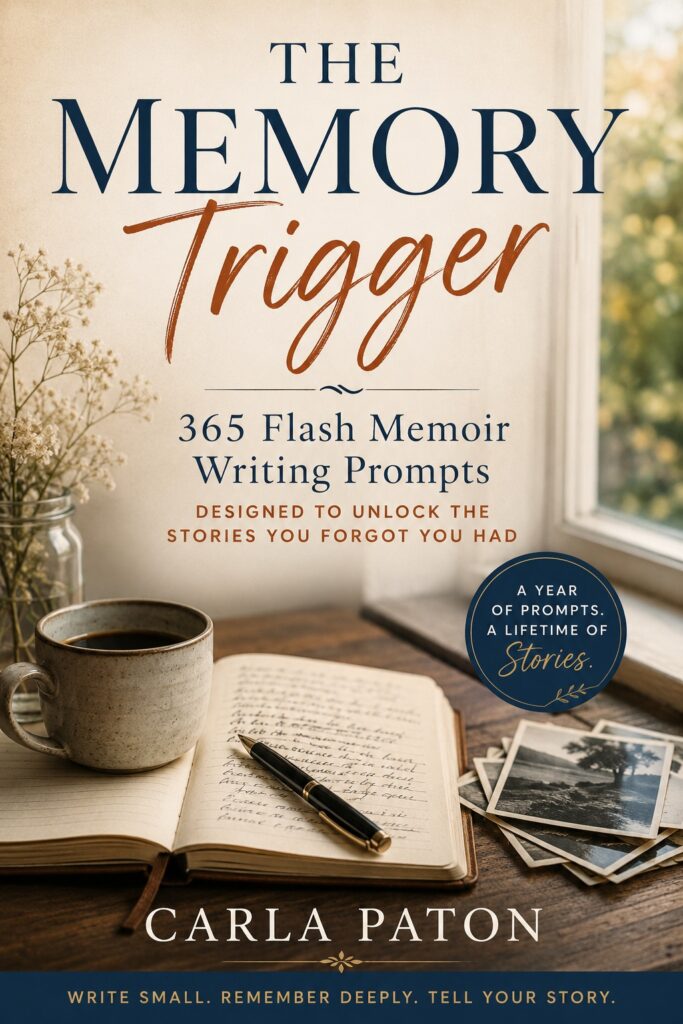
If this prompt opened a memory you did not expect, you may enjoy building a steady flash memoir habit. Explore all 365 prompts in The Memory Trigger: 365 Flash Memoir Writing Prompts.
The Memory Trigger

Most Influential Redemption Arcs in Literature

Redemption arc

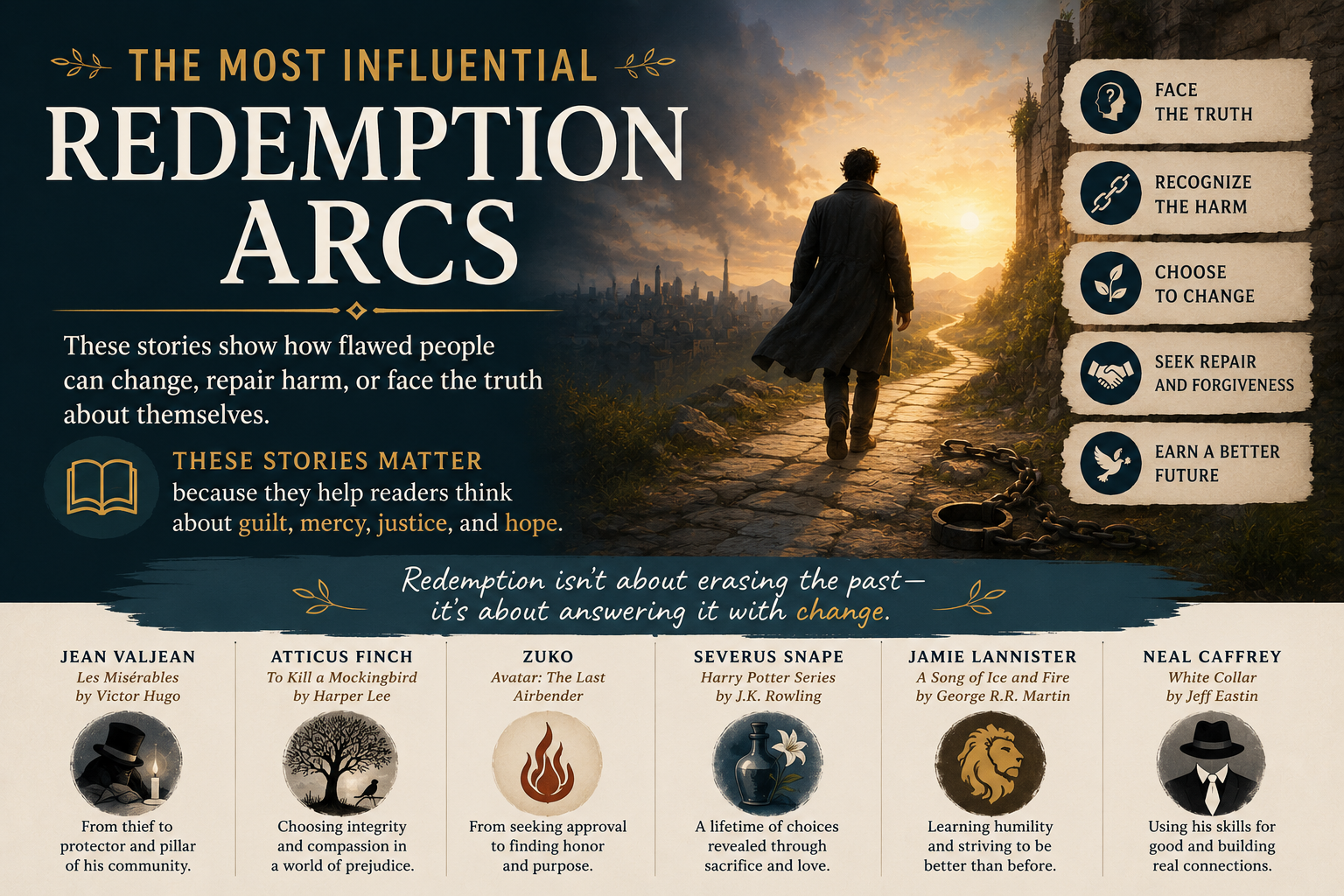
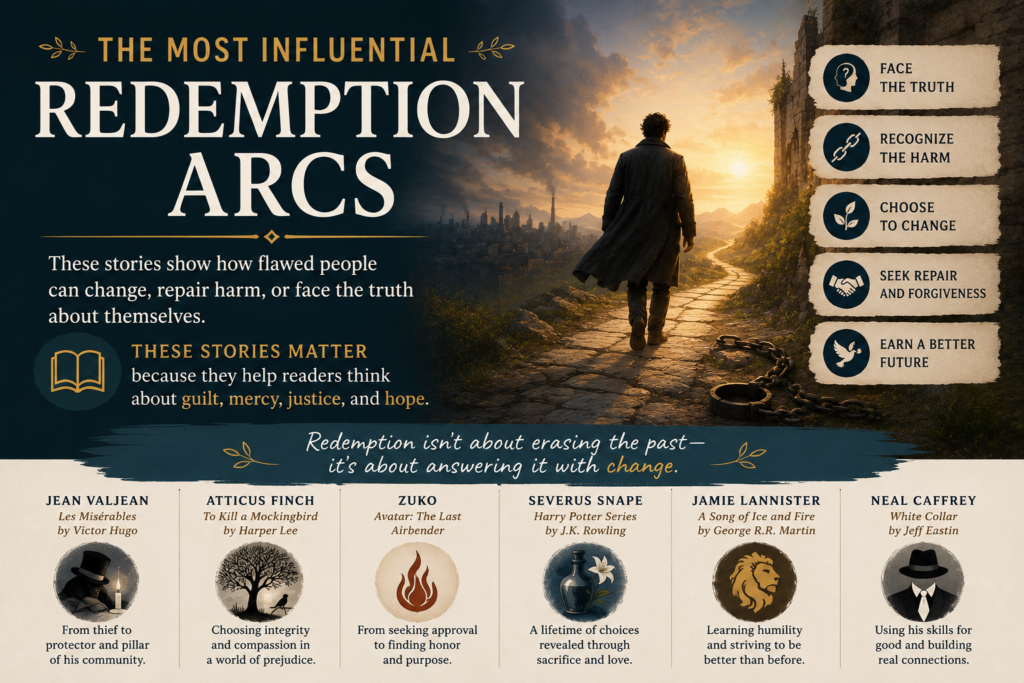
The Most Influential Redemption Arcs show how flawed people can change, repair harm, or face the truth about themselves. These stories matter because they help readers think about guilt, mercy, justice, and hope.

From old classics to modern novels, redemption arcs ask one hard question: can a person become better after doing wrong?

In this Guide

Redemption arc

Why the Most Influential Redemption Arcs Still Matter

Redemption arcs turn moral failure into a story of change.

The Most Influential Redemption Arcs do not excuse bad choices. They show what happens when a character sees the damage they caused and tries to change course.

This is why students often meet these arcs in English class. They give readers a clear way to study character growth, conflict, theme, and moral choice.

A strong redemption arc usually has a few key parts. The character causes harm, faces a crisis, feels the weight of guilt, and makes a choice that proves real change.

That final choice matters most. A character is not redeemed just because they feel sorry. They must act.

Most Influential Redemption Arcs in Classic Literature

Classic literature gives us some of the clearest examples of moral change.

These Most Influential Redemption Arcs have lasted because they feel honest. The characters do not become perfect overnight. Their change costs them something.

Ebenezer Scrooge in A Christmas Carol

Charles Dickens gives readers one of the most famous redemption stories ever written. Scrooge starts as cold, greedy, and cruel to the less fortunate.

After visits from the ghosts, he sees his past, present, and possible future. These visions force him to face the lonely life he has built.

Scrooge changes because he chooses kindness while he still has time. His redemption feels joyful, but it also comes from fear, shame, and self-knowledge.

For background on Dickens and his work, see Britannica’s overview of Charles Dickens.

Jean Valjean in Les Misérables

Victor Hugo’s Jean Valjean begins as a man marked by prison and poverty. After he steals silver from a bishop, the bishop protects him instead of turning him in.

That act of mercy changes Valjean’s life. He becomes a man who helps others, even when it puts him at risk.

Valjean’s arc shows that redemption is not one moment. It is a lifetime of hard choices.

Sydney Carton in A Tale of Two Cities

Sydney Carton starts as bitter and wasted. He sees himself as a failure with little purpose.

His final act changes how readers see him. By giving his life to save another man, he turns regret into sacrifice.

Carton’s redemption is tragic, but it is powerful. He cannot fix his whole past, yet he can give his life meaning.

Severus Snape in the Harry Potter Series

Snape is one of modern literature’s most debated redemption arcs. He is cruel, secretive, and often unfair.

Yet his hidden loyalty reveals a more complex person. His choices do not erase his harm, but they show a long struggle with guilt and love.

This is why Snape remains important in classroom and fan debates. His arc asks whether sacrifice can balance past cruelty.

Themes and Symbols in Redemption Arcs

Redemption stories often use symbols to show inner change.

Light and darkness appear often in redemption arcs. A character may move from shadow into light, which can show moral growth or new hope.

Journeys also matter. A road, a prison, or a return home can show that change takes effort. Jean Valjean’s movement through France reflects his search for grace and safety.

Names can carry meaning too. When a character takes a new name, it may show a new self. Valjean becomes Monsieur Madeleine, which points to his attempt to live beyond his prison past.

Time is another key symbol. In A Christmas Carol, the ghosts use time to teach Scrooge. The past brings regret, while the future offers warning.

If you want to sharpen your close reading of symbols, imagery, and word choice, try our guide on how to read Emily Dickinson. The same skills can help you study longer novels.

Modern Lessons from the Most Influential Redemption Arcs

Redemption arcs still shape how readers talk about justice and change.

The Most Influential Redemption Arcs are not simple “good guy” stories. They often ask if people deserve a second chance after real harm.

This question feels modern because people still debate it in schools, courts, families, and online spaces. Literature gives readers a safer place to think through the problem.

Some arcs stress forgiveness. Others focus on responsibility. The best ones do not make the answer too easy.

That is why redemption arcs work well in essays. You can ask what the character did wrong, what they learned, and whether their final choice truly repairs anything.

These books are strong choices for students who want deeper examples.

  • A Christmas Carol by Charles Dickens
  • Les Misérables by Victor Hugo

Both books show redemption in a clear but serious way. They also give students rich material for theme, character, and symbolism essays.

For shorter practice, pair a novel with poetry study. A poem can train you to notice small details that reveal change. Our post on reading Emily Dickinson is a useful place to start.

FAQs About the Most Influential Redemption Arcs

What are the Most Influential Redemption Arcs in literature?

The Most Influential Redemption Arcs often include Scrooge in A Christmas Carol, Jean Valjean in Les Misérables, and Sydney Carton in A Tale of Two Cities.

What makes a redemption arc believable?

A believable arc shows guilt, effort, and real change. The character must act in a way that proves they have learned from the past.

Is redemption the same as forgiveness?

No. A character may seek redemption without being fully forgiven. Forgiveness depends on others, while redemption depends on moral change.

Why do teachers assign books with redemption arcs?

These books help students study character growth, theme, and conflict. They also lead to strong essay topics about justice and mercy.

Key Takeaway

The Most Influential Redemption Arcs remind us that change is possible, but never cheap. Great literature shows that redemption requires truth, action, and the courage to become someone better.

Flash Memoir Prompt: First Time You Wore Something that Made You Feel Like a Different Version of Yourself

Flash memoir prompt clothes

A warm writing invitation about the first time clothing changed how you stood, moved, or saw yourself in the mirror.

You may still remember the weight of it: a borrowed jacket, a stiff uniform, a dress that felt too grown-up, a pair of shoes that made noise on the floor. Maybe you caught your reflection and paused. For one second, you were still yourself, but also someone new.

This flash memoir prompt first time wore something made you feel different is about more than fashion. It is about identity, courage, disguise, belonging, and the strange power of fabric to tell us who we are allowed to become.

Flash memoir prompt clothes

The Prompt

Write about the first time you wore something that made you feel like a different version of yourself.

This prompt can unlock a clear and powerful memory because clothing is physical. You can describe how it felt on your skin, how it fit, how others looked at you, and what changed inside you when you put it on.

You do not have to write about a dramatic outfit. The memory might be small: a hand-me-down coat, a sports jersey, a graduation robe, makeup for the first time, a tie for a funeral, or a uniform for your first job. The meaning often lives in the small details.

Why This Memory Matters

Clothes can make us feel visible, hidden, older, braver, awkward, proud, or trapped. A simple shirt can carry a whole story.

Maybe the outfit helped you act like the person you wanted to become. Maybe it made you feel like you were pretending. Maybe someone else chose it for you, and the memory still holds anger or shame. Maybe you wore it because you needed to fit in, even if it did not feel like you.

This flash memoir prompt first time wore something made you feel like a different person can reveal a turning point. It asks: Who were you before you put it on? Who did you become after? Even if the change lasted only one afternoon, that moment may still matter.

For student writers, this is also a useful way to practice finding a theme in a personal story. If you want help thinking about deeper meaning, you might enjoy this guide on how to identify theme in literature. The same skill can help when you read your own memories closely.

How to Approach This Prompt

Begin with one physical detail. Do not start by explaining your whole life or telling the reader what the outfit meant. Start with the zipper that stuck, the tag scratching your neck, the sleeves hanging past your wrists, or the click of heels on tile.

Then narrow the memory to one scene. Where were you? A bedroom, school hallway, church bathroom, locker room, store dressing room, or front porch? Keep the camera close.

Write what you noticed before you explain what it meant. If people stared, describe that. If no one noticed, describe that too. Sometimes the private change matters more than the public reaction.

You might ask yourself these questions before you draft:

  • Who chose the clothing?
  • Did you want to wear it?
  • What did you think when you saw yourself?
  • How did your body move differently?
  • What did the outfit make possible?

If you are using this as classroom writing practice, you can also annotate your own draft the way you would annotate a story. Mark the sensory details, emotional shift, and strongest sentence. This simple guide to how to annotate literature can help you practice noticing what a piece of writing is doing.

Avoid trying to tell every clothing memory you have. Choose the one moment where something changed. Flash memoir works best when it feels small on the outside and large on the inside.

A Quick Example

The first time I wore my dad’s old leather jacket, I was sixteen and trying to look like I had somewhere to go. The jacket smelled like cold air, motor oil, and the peppermint gum he kept in his truck. It was too wide in the shoulders, so I pulled my hands into the sleeves and pretended that was the style. When I walked into school, nobody said anything. That disappointed me more than I wanted to admit. But in the bathroom mirror, under the buzzing light, I saw a version of myself who looked less afraid. I stood up straighter. I fixed my hair. For the rest of the day, I kept one hand in the pocket, holding onto the torn lining like proof.

Try It Yourself

Set a timer for ten minutes. Write the scene as if you are back in the room where you first put the item on. Let the mirror, the fabric, and your body lead the memory.

Do not worry about making the piece perfect. Your first draft only needs to find the moment. You can shape the meaning later.

If you get stuck, write one sentence that begins with, “When I saw myself, I thought…” Then keep going. This flash memoir prompt first time wore something made you see yourself differently is really an invitation to explore change, even if that change began with a button, a hem, or a pair of shoes.

Want More Flash Memoir Prompts?

If this memory opened a door, keep writing. Explore all 365 prompts in The Memory Trigger: 365 Flash Memoir Writing Prompts.
error

Enjoy this article? Please spread the word :)

Follow by Email
BLUESKY
fb-share-icon
Reddit
LinkedIn
Share
RSS