A warm, specific writing invitation about the meal your family made for every occasion, good or bad, and what that familiar food reveals about memory, comfort, and survival.
The phone call had barely ended, but someone was already pulling a pot from the cabinet. Or maybe the good news had just been announced, and the same dish appeared on the table as if celebration had a recipe. Some families have a meal like that. It shows up for birthdays, funerals, report cards, snowstorms, new babies, hard weeks, and ordinary Sundays that needed a little help.
This flash memoir prompt meal family made every occasion is about more than food. It is about the way one dish can carry a whole family’s habits, worries, jokes, and quiet love.
The Prompt
Write about the meal that your family made for every occasion, good or bad.
This prompt works because food often keeps memories close to the surface. A smell can bring back a kitchen. A sound can bring back a person. A certain plate or pot can remind you of who stood where, who served first, and who always took the corner piece.
You do not need to write about a grand feast. The meal might be soup from a dented pot, spaghetti with too much sauce, fried rice made from leftovers, boxed macaroni with cut-up hot dogs, or a casserole that appeared at every family crisis. The meaning comes from the scene, not the price of the ingredients.
Why This Memory Matters
A family meal can become a kind of code. It may say, “We are fine,” even when no one feels fine. It may say, “You are home,” even if the house has changed. It may say, “We do not know what to do, so we will feed each other.”
When you write about the meal your family made for every occasion, you may uncover a story about comfort. You may also find a story about pressure. Maybe everyone loved the meal except you. Maybe the food was the one steady thing in a home that felt unpredictable. Maybe the meal tasted different depending on who was missing from the table.
That is what makes this flash memoir prompt meal family made every occasion so rich. It lets you write about family without trying to explain your whole family. You can stay with one bowl, one plate, one night, and let the larger truth rise slowly.
If you are a student or new writer, this is also a helpful way to practice noticing character. The way someone cooks, serves, eats, or refuses food can reveal a lot. If you want to build that skill, you might enjoy this guide on how to analyze characters in literature. The same close attention you use with fictional characters can help you understand real people in memoir.
How to Approach This Prompt
Begin with a physical detail. Do not start by explaining your family history. Start with the steam on a window, the scrape of a spoon, the smell of onions in oil, or the heavy casserole dish wrapped in a towel.
Choose one scene. Maybe it was the night after a funeral, the morning of a big exam, or the day someone came home from the hospital. The meal may have appeared many times, but your flash memoir will feel stronger if you focus on one moment.
Write what you noticed before you explain what it meant. For example, instead of saying, “This meal showed love,” show your aunt packing extra servings into plastic tubs. Show your father pretending the burnt edges were his favorite part. Show your grandmother watching everyone’s plate before she filled her own.
Try to keep the memory small enough to hold. You are not writing the complete story of your family and food. You are writing one bite-sized truth. If you tend to write a lot, choose a tight frame: from the moment the pot came to the table to the moment the first person stood up to clear plates.
You might also underline or mark the strongest sensory details after your first draft. For help with that kind of close reading of your own work, this simple guide on how to annotate literature can be useful. Annotation is not just for school texts. It can help you see what your own memory is trying to say.


A Quick Example
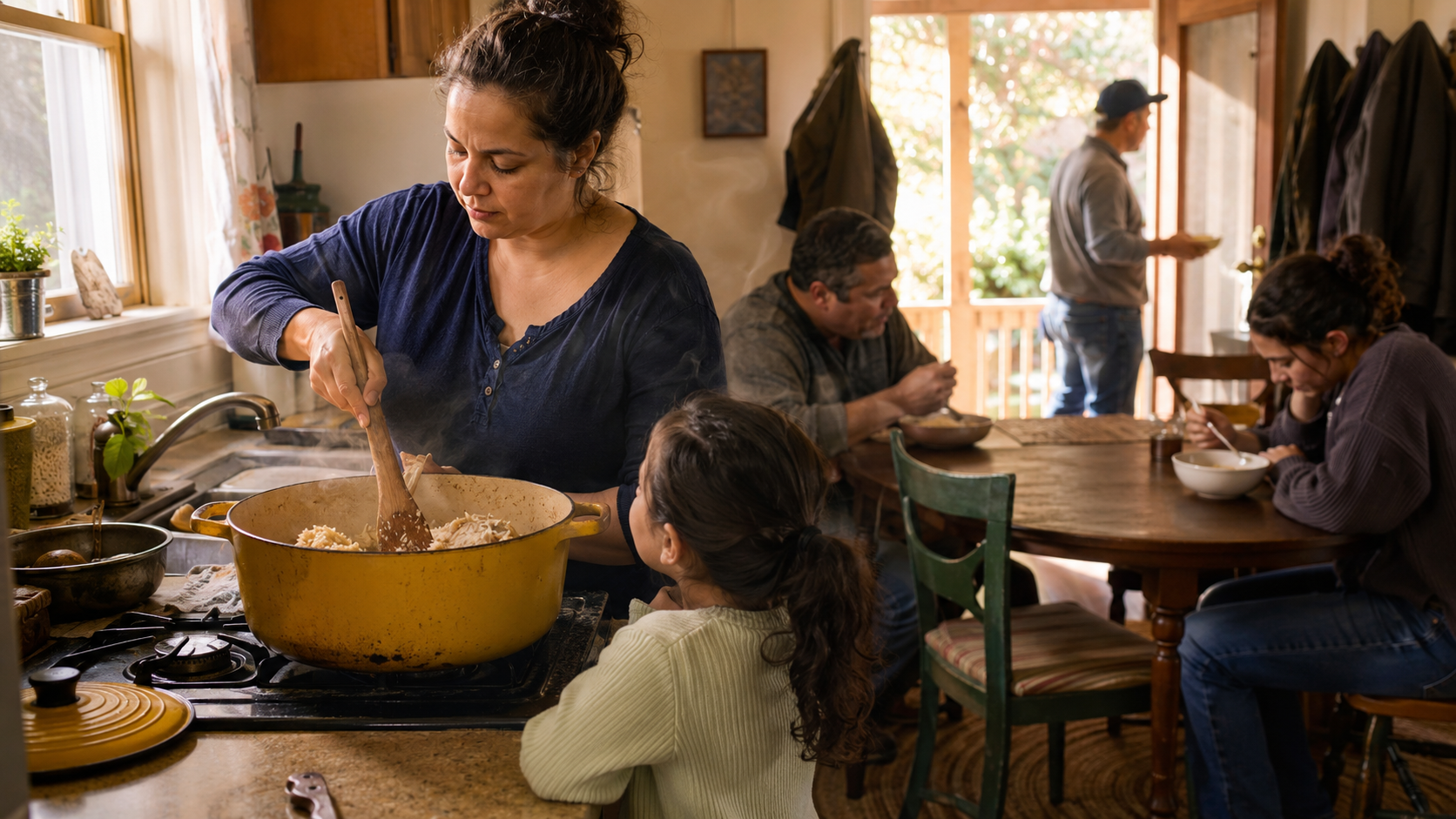
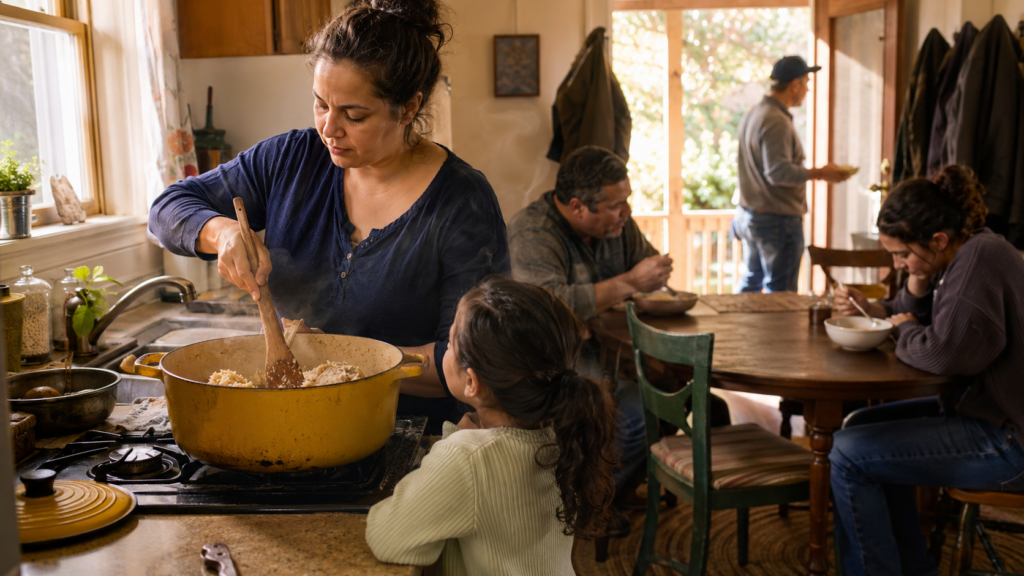
My mother made chicken and rice for everything. Good report card, chicken and rice. Flu season, chicken and rice. After my grandfather died, the house filled with people in dark coats, and still there was the yellow pot on the stove. I remember standing near the sink, too short to see into the pot, watching my mother stir with the wooden spoon that had a split down the handle. No one said they were hungry, but everyone ate. My uncle took his bowl to the porch. My cousin cried into hers and pretended it was the steam. The rice stuck to the bottom, the way it always did, and my mother scraped it loose like that was the one problem she could solve.
Try It Yourself
Set a timer for ten minutes and write from the prompt without trying to make it perfect. Start with the dish. Name it plainly. Then place it in one specific moment.
Ask yourself: Who made it? Who expected it? Who complained about it? Who needed it most? Let the answers lead you into the scene.
If the memory feels sweet, let it be sweet. If it feels complicated, do not smooth it out too quickly. A meal can be both comfort and duty. It can hold love, habit, grief, and humor in the same serving spoon.
Return to the focus keyphrase if it helps you stay centered: flash memoir prompt meal family made every occasion. The heart of the piece is the way one repeated meal became part of your family’s language.
Want More Flash Memoir Prompts?
If this prompt opened a memory you did not expect, keep going. Short prompts can help you build a steady writing practice without needing a huge plan. Explore all 365 prompts in The Memory Trigger: 365 Flash Memoir Writing Prompts.