Types of Conflict in Literature: A Student Guide with Clear Examples

Types of Conflict in Literature

Understanding the Types of Conflict in Literature makes stories easier to read and analyze. Conflict is the struggle that pushes a character to act, change, or fail.

When you know what kind of conflict drives a story, you can write stronger essays and choose books that fit your interests.

In this Guide

Use this guide to move from basic definitions to real literary examples.

  • Why conflict matters in literature
  • The main types of conflict
  • Internal conflict
  • External conflict
  • How to identify conflict in a text
  • Examples from popular books
  • Book suggestions
  • FAQ
Types of Conflict in Literature

Why Types of Conflict in Literature Matter

Conflict gives a story its energy.

Without conflict, a story can feel flat. A character may want something, but there must be a problem in the way.

When students study the Types of Conflict in Literature, they learn to ask better questions. What does the character want? Who or what blocks that goal? What changes because of the struggle?

Conflict also helps reveal theme. In Romeo and Juliet, the conflict between the lovers and their families shows how hate can destroy love. In To Kill a Mockingbird, the conflict between justice and racism helps readers see the cost of doing what is right.

The Main Types of Conflict in Literature

Most stories use more than one conflict, but one usually stands out.

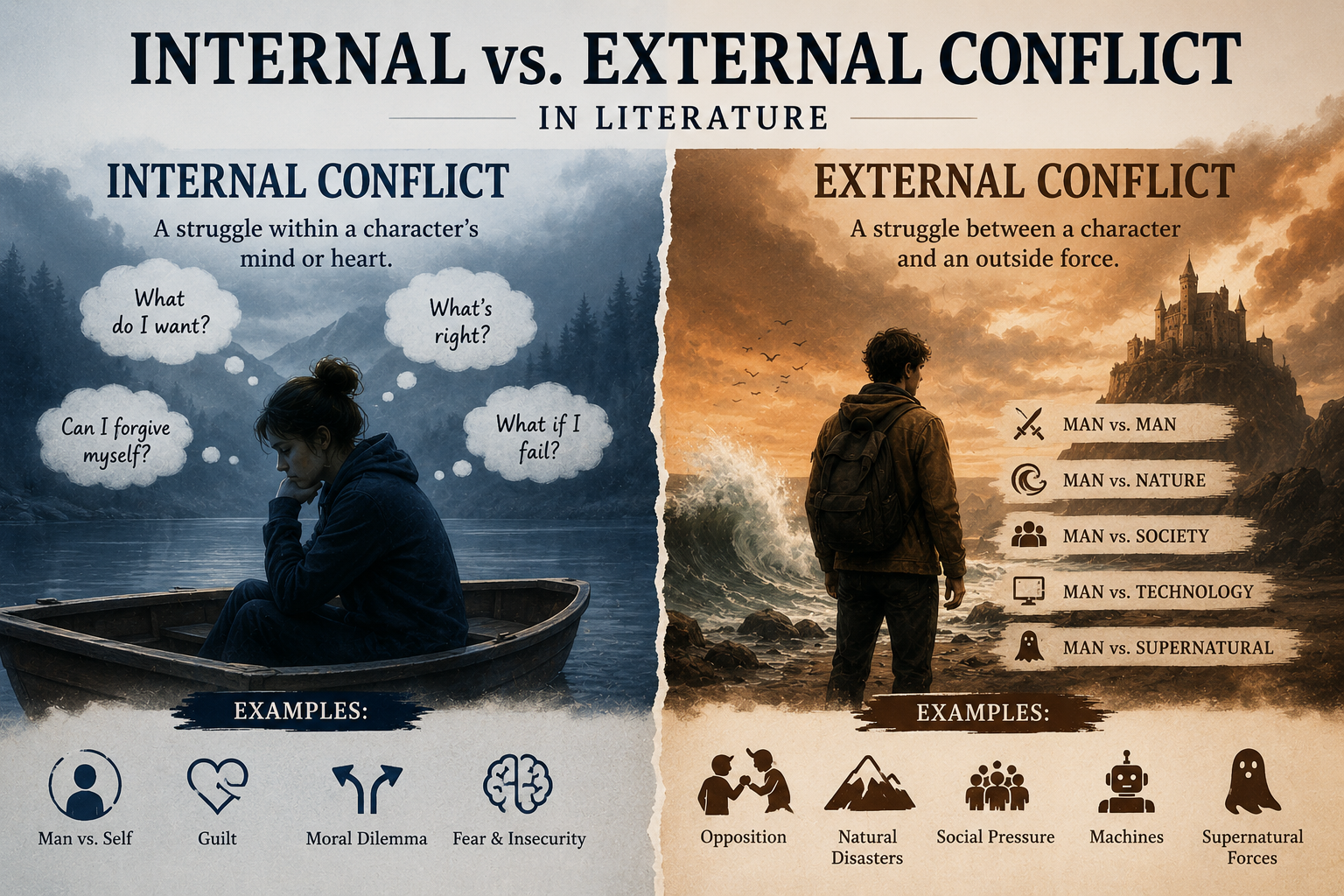
The Types of Conflict in Literature can be split into two broad groups: internal conflict and external conflict.

Internal conflict happens inside a character. The character may face fear, guilt, doubt, or a hard choice.

External conflict happens between a character and an outside force. That force may be another person, a group, nature, technology, fate, or something supernatural.

Many great books combine both. A character may fight an enemy while also fighting fear inside their own mind.

Internal Conflict: Character vs. Self

This type of conflict takes place inside the character’s mind or heart.

In a character vs. self conflict, the main struggle is personal. The character may not know what choice to make. They may feel torn between what they want and what they believe is right.

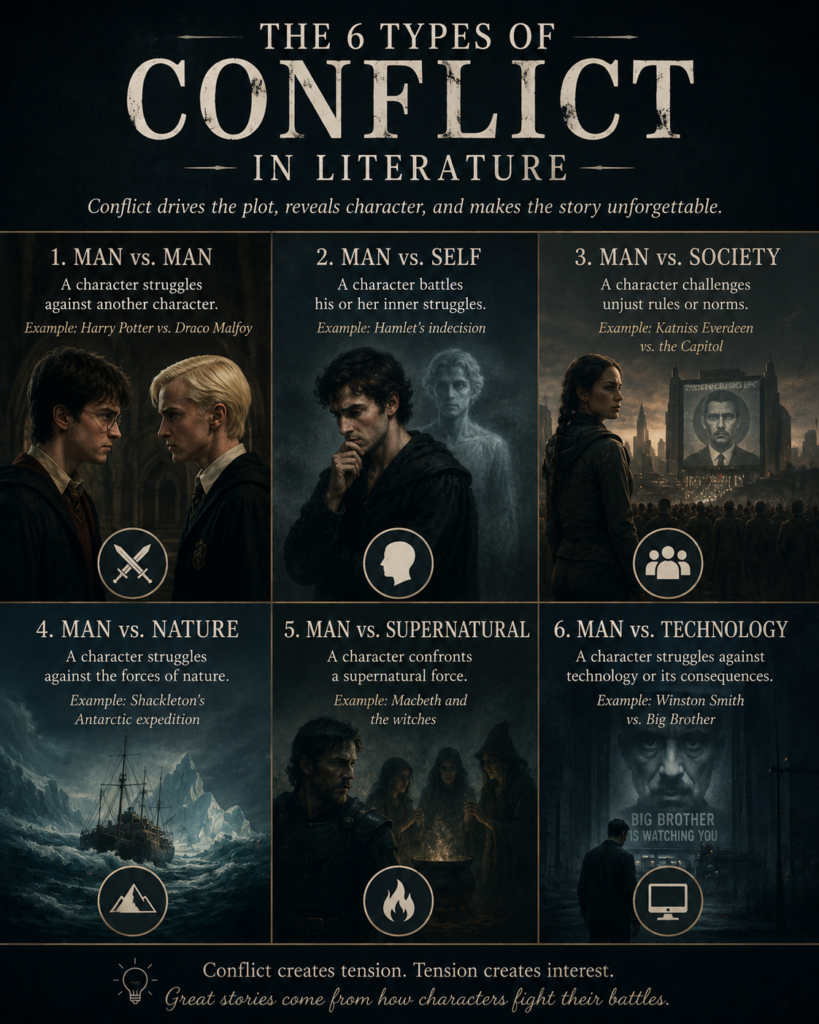
In Hamlet by William Shakespeare, Hamlet struggles with grief, revenge, and doubt. His enemy is not only Claudius. Hamlet also battles his own thoughts.

In The Catcher in the Rye by J.D. Salinger, Holden Caulfield struggles with sadness and fear of growing up. Much of the novel’s conflict comes from his inner pain.

This conflict is useful in essays because it often connects to character growth. Ask yourself: does the character learn from the struggle, or do they stay trapped?

External Conflict: Character vs. Character

This conflict happens when one character blocks another character’s goal.

Character vs. character conflict is common because people often disagree, compete, or hurt each other. The conflict can be physical, emotional, or moral.

In Harry Potter and the Sorcerer’s Stone by J.K. Rowling, Harry faces Voldemort as a major outside threat. Their conflict grows across the series as Harry learns more about courage and sacrifice.

In Othello by William Shakespeare, Iago works against Othello through lies and manipulation. The conflict is not just about power. It also shows how jealousy can break trust.

When you see this conflict, look at what each character wants. The clash between their goals often drives the plot.

External Conflict: Character vs. Society

This conflict places one person against the rules or beliefs of a group.

In character vs. society conflict, the problem is larger than one enemy. The character may face unfair laws, social pressure, prejudice, or strict traditions.

In The Hunger Games by Suzanne Collins, Katniss Everdeen fights against the Capitol’s cruel control. Her conflict is not only with individual villains. She faces a whole system built on fear.

In Fahrenheit 451 by Ray Bradbury, Guy Montag lives in a society that burns books. His conflict grows when he starts to question the world around him.

This is one of the most powerful Types of Conflict in Literature because it often asks moral questions. What should a person do when society is wrong?

External Conflict: Character vs. Nature

This conflict happens when a character struggles against the natural world.

Nature can include storms, hunger, cold, wild animals, or disease. The key point is that the character faces a force that cannot be reasoned with.

In The Old Man and the Sea by Ernest Hemingway, Santiago struggles with the sea and a great marlin. His battle shows patience, pride, and human endurance.

In Hatchet by Gary Paulsen, Brian must survive alone in the wilderness after a plane crash. The natural world tests his body and mind.

Character vs. nature stories often focus on survival. They may also show how small humans can feel when faced with forces beyond control.

External Conflict: Character vs. Technology

This conflict focuses on machines, science, or systems created by humans.

Character vs. technology is common in science fiction, but it can appear in other genres too. The conflict may involve artificial intelligence, surveillance, weapons, or a machine that changes human life.

In Frankenstein by Mary Shelley, Victor Frankenstein creates life through science and then loses control of what he has made. The novel asks if humans should create something just because they can.

In many dystopian stories, technology helps those in power control people. The danger is not only the machine. The danger is how people use it.

This type of conflict is useful for modern readers because it connects to real questions about privacy, power, and responsibility.

External Conflict: Character vs. Fate or the Supernatural

This conflict involves forces that feel beyond normal human power.

A character may face destiny, prophecy, ghosts, gods, curses, or unseen forces. The struggle often asks whether people control their lives or follow a path already set for them.

In Macbeth by William Shakespeare, the witches give Macbeth a prophecy. He chooses violent actions, but the supernatural pushes him toward ambition and fear.

In Greek tragedy, fate often plays a major role. You can learn more about the tradition of tragic drama through Britannica’s overview of tragedy.

This conflict works well in analysis because it blends choice and pressure. Ask whether the character causes the downfall or becomes trapped by forces outside human control.

How to Identify Types of Conflict in Literature

You can find conflict by tracking what the character wants and what stands in the way.

A quick way to spot the Types of Conflict in Literature is to focus on the main problem. If the problem comes from inside the character, it is internal. If the problem comes from outside, it is external.

Try asking these questions as you read:

  • What does the main character want?
  • What blocks that goal?
  • Is the struggle inside the character or outside the character?
  • Does the conflict change the character?
  • What larger idea does the conflict reveal?

If you want to build stronger reading habits, this guide on how to read literature like a scholar can help you notice deeper patterns in a text.

Types of Conflict in Popular Books

Well-known books often use several conflicts at once.

In Lord of the Flies by William Golding, the boys face nature on the island, but their deeper conflict is with each other and their own fear. The novel shows how quickly order can fall apart.

In Things Fall Apart by Chinua Achebe, Okonkwo faces personal pride, family pressure, and the arrival of colonial power. His conflicts help reveal the strain between tradition and change.

In The Great Gatsby by F. Scott Fitzgerald, Gatsby struggles against class barriers and his own dream of the past. The conflict shows how desire can turn into illusion.

These examples show why the Types of Conflict in Literature matter for essays. Conflict is rarely just a problem. It is often the key to the book’s meaning.

How Conflict Shapes Theme

Conflict and theme often work together.

Theme is the message or insight a story gives about life. Conflict helps create that message because characters reveal who they are under pressure.

In Animal Farm by George Orwell, the animals fight against human control, but they later face corruption inside their own new society. The conflict helps show how power can twist noble ideas.

In The Odyssey, Odysseus faces monsters, storms, and temptation. His long journey shows the value of loyalty and cleverness.

When you write about the Types of Conflict in Literature, do not stop at naming the conflict. Explain what it teaches the reader.

Common Mistakes Students Make with Types of Conflict in Literature

Many students can name conflict, but strong analysis goes one step deeper.

One common mistake is to choose the first conflict that appears. A story may start with one problem but focus on a deeper one later.

Another mistake is to ignore internal conflict. A character may seem to fight a person or society, but the real struggle may be fear, guilt, or pride.

Students also sometimes list the conflict without linking it to theme. A better answer explains how the conflict changes the character or reveals the author’s message.

For deeper reading practice, use scholar-style reading strategies to connect conflict with symbols, setting, and character choices.

Books That Help You Study Conflict

These books are strong choices for students who want clear examples of conflict.

  • Lord of the Flies by William Golding
  • Things Fall Apart by Chinua Achebe

Both novels are often available through school libraries, local bookstores, and Amazon. They also work well for essays because each book includes internal and external conflict.

Helpful Outside Resources

Use trusted literary sources when you need background or context.

The Poetry Foundation is useful for poems, poet biographies, and literary terms. Britannica also offers clear background on major forms, authors, and literary history.

FAQ About Types of Conflict in Literature

Here are quick answers to common student questions.

What are the main Types of Conflict in Literature?

The main types are internal conflict and external conflict. External conflict can include character vs. character, society, nature, technology, fate, or the supernatural.

Can a story have more than one conflict?

Yes. Most strong stories use more than one conflict. One conflict may drive the plot, while another shows the character’s inner struggle.

Why is conflict important in a story?

Conflict creates tension and gives characters a reason to act. It also helps reveal theme and character growth.

How do I write about conflict in an essay?

Name the conflict, give a clear example, and explain why it matters. Connect it to the character’s change or the story’s main idea.

Key Takeaway

The Types of Conflict in Literature help readers see what drives a story. Once you understand the main struggle, you can better explain character, theme, and meaning.

What Is Foreshadowing in Literature?

Foreshadowing in Literature

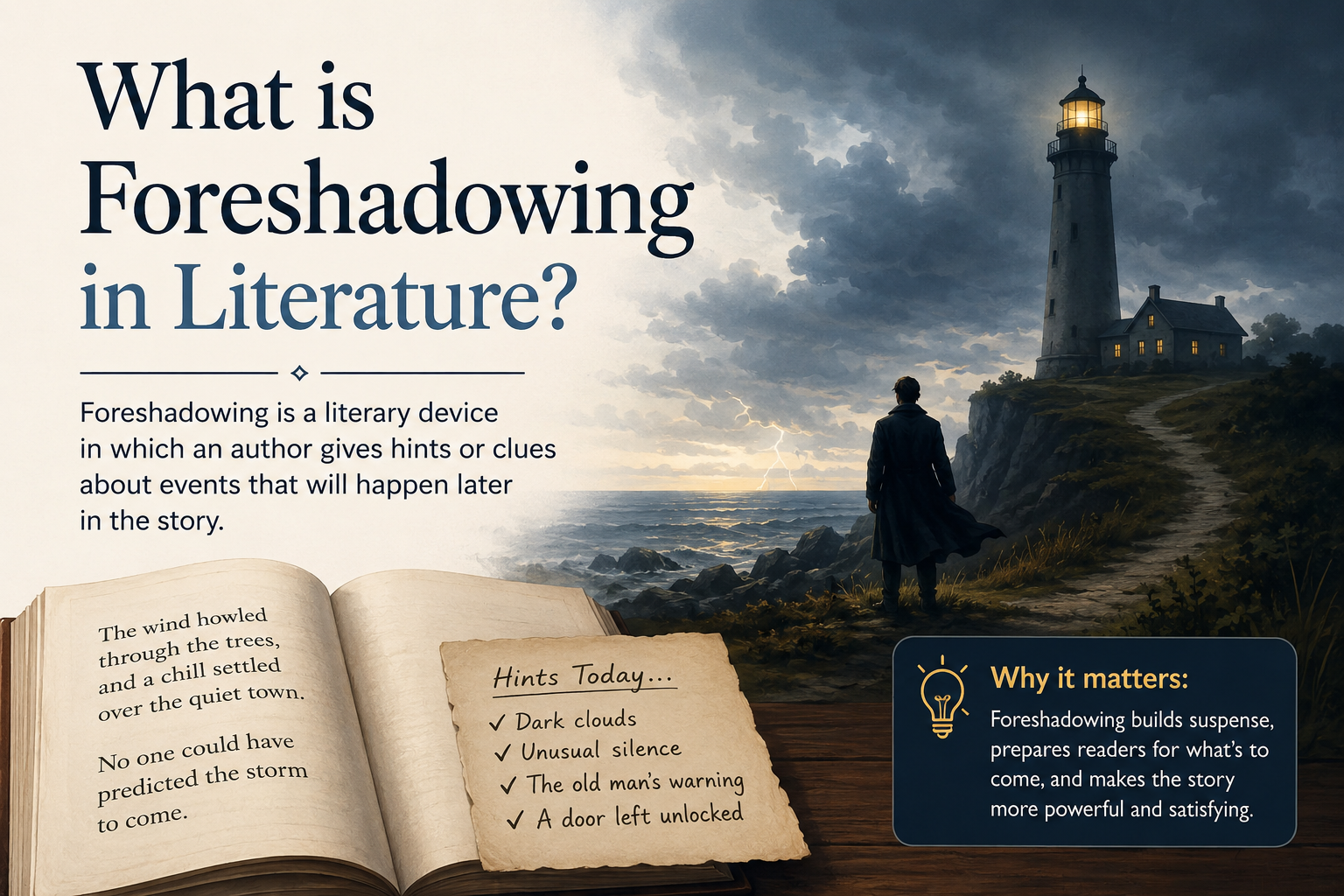
What Is Foreshadowing in Literature? It is a clue that hints at what may happen later in a story. Writers use it to build suspense, shape mood, and help readers notice that every detail can matter.

In this Guide

  • What foreshadowing means
  • Why writers use it
  • Common types of foreshadowing
  • Famous examples from literature
  • How to spot it as you read
  • Book suggestions
  • FAQ
Foreshadowing in Literature

What Is Foreshadowing in Literature? A Simple Definition

Foreshadowing is a hint that points toward a future event in a story.

So, What Is Foreshadowing in Literature? In simple terms, it is when an author plants a clue early so something later feels planned, not random.

Foreshadowing can be clear or subtle. A character may make a warning, a storm may signal danger, or an object may appear before it becomes important.

This device helps readers feel curious. It also rewards close reading because small details may gain meaning later.

If you want to study more tools like this, visit our literary devices list.

What Is Foreshadowing in Literature? Why It Matters

Foreshadowing gives a story shape and purpose.

What Is Foreshadowing in Literature? It is not just a “hint.” It is a way for writers to guide our expectations.

When used well, foreshadowing makes an ending feel earned. Readers may think, “I should have seen that coming,” which can make the story more powerful.

It also creates suspense. If a novel opens with a strange noise in the dark, we expect that noise to matter later.

Foreshadowing can also reveal theme. In many tragedies, early warnings show that fate, pride, or fear may lead to disaster.

What Is Foreshadowing in Literature? Common Types to Know

Foreshadowing can appear in more than one form.

Direct foreshadowing gives a clear warning. A character might say, “Nothing good will come from this.” That line tells readers to expect trouble.

Indirect foreshadowing is more hidden. A broken mirror, a dark dream, or a strange silence may hint at future conflict.

Symbolic foreshadowing uses images or objects. For example, a dying plant might suggest a failing relationship.

So, What Is Foreshadowing in Literature? It is any early clue that prepares readers for what comes next, even if they do not notice it right away.

Famous Examples of Foreshadowing

Well-known stories often use foreshadowing to build tension and meaning.

In Romeo and Juliet by William Shakespeare, Romeo has dark feelings about going to the Capulet party. His fear hints at the tragedy that follows.

In Of Mice and Men by John Steinbeck, the death of Candy’s dog foreshadows the later death of Lennie. Both scenes deal with mercy, weakness, and painful choices.

In Harry Potter and the Sorcerer’s Stone by J.K. Rowling, small details about Harry’s scar and Voldemort hint at a much larger conflict.

In The Lottery by Shirley Jackson, the nervous mood and strange village ritual foreshadow the shocking ending. The story shows how ordinary details can hide danger.

For more on literary terms and reading context, you can explore Britannica’s entry on foreshadowing.

How Foreshadowing Is Different from a Spoiler

A spoiler tells you what will happen. Foreshadowing only hints at it.

This difference matters. A spoiler removes surprise, but foreshadowing creates interest.

Good foreshadowing does not give away the whole plot. It gives just enough detail to make readers wonder.

When readers look back, the clue makes sense. That is why foreshadowing can make a story feel carefully built.

How to Spot Foreshadowing While You Read

Look for details that seem unusual, repeated, or too specific to ignore.

If a writer spends time on an object, warning, dream, or odd line of dialogue, mark it. Ask, “Why did the author include this?”

Pay close attention to first chapters. Many writers place key clues near the start of a story.

Also watch for changes in mood. A sudden shift from calm to tense may signal that something important is coming.

To connect foreshadowing with other story tools, review this guide to literary devices.

Books That Help You Study Foreshadowing

These books are useful if you want strong examples of foreshadowing in action:

  • Romeo and Juliet by William Shakespeare
  • Of Mice and Men by John Steinbeck
  • Harry Potter and the Sorcerer’s Stone by J.K. Rowling

FAQ: What Is Foreshadowing in Literature?

What Is Foreshadowing in Literature?

Foreshadowing is a clue that hints at a future event in a story. It helps readers expect that something important may happen later.

Why do authors use foreshadowing?

Authors use foreshadowing to build suspense, prepare readers, and make the ending feel connected to the rest of the story.

Is foreshadowing always obvious?

No. Some foreshadowing is clear, but some is hidden. Readers may only notice it after they finish the story.

What is an easy example of foreshadowing?

If a character says, “I have a bad feeling about this,” that line may foreshadow danger or conflict later.

Can foreshadowing be a symbol?

Yes. A symbol, such as a storm or broken object, can foreshadow a future event or emotional change.

Key Takeaway

What Is Foreshadowing in Literature? It is a clue that points ahead. When you read, circle strange details and ask how they might matter later. That simple habit can make your analysis much stronger.

Round vs Flat Characters in Fiction: A Clear Guide

Round vs Flat Characters

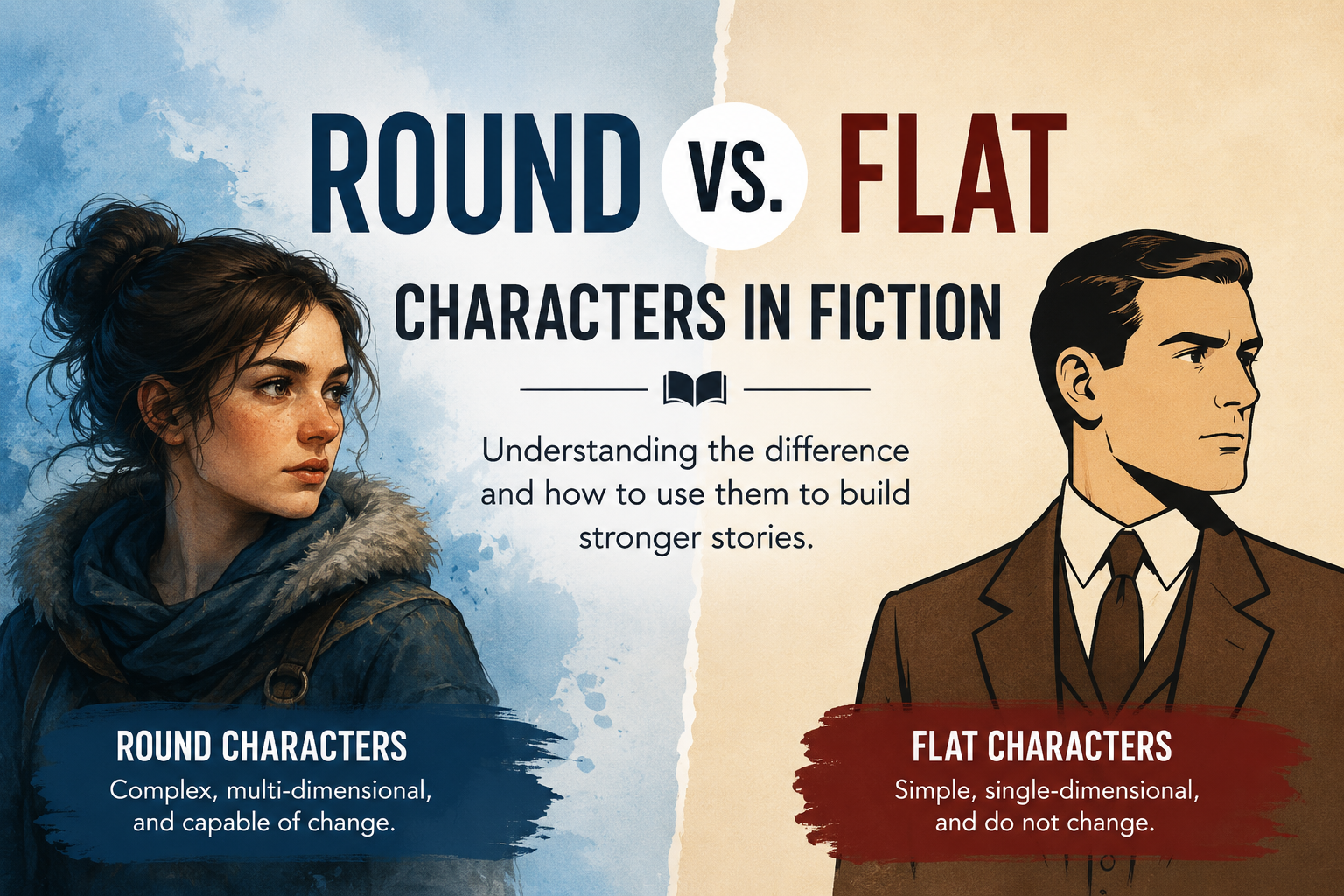
Round vs Flat Characters in Fiction is a key idea in literary analysis. Once you know the difference, you can explain why some characters feel real and complex while others serve a clear, simple role.

This guide breaks the idea down in plain language, with examples from famous books and tips you can use in essays.

In this Guide

  • What round characters are
  • What flat characters are
  • Round vs Flat Characters in Fiction examples
  • How to use the idea in literary analysis
  • Common mistakes to avoid
  • Book suggestions
  • FAQ
Round vs Flat Characters

What Are Round Characters?

Round characters feel complex, layered, and close to real people.

A round character has more than one side. They may have mixed feelings, personal flaws, hidden fears, or changing beliefs.

Round characters often surprise us, but their actions still make sense. They are not random. Their choices grow out of who they are.

Elizabeth Bennet in Pride and Prejudice is a strong example. She is smart and funny, but she also misjudges Darcy. Her pride affects how she sees others.

By the end of the novel, Elizabeth learns more about herself. That growth makes her feel human.

You can read more background on the novel through Britannica’s overview of Pride and Prejudice.

What Are Flat Characters?

Flat characters are simple, clear, and easy to understand.

A flat character usually has one main trait. They do not have deep inner conflict, and they may not change much.

This does not mean they are badly written. Flat characters can be useful. They can add humor, reveal a theme, or push the plot forward.

Mr. Collins in Pride and Prejudice is a good example. He is proud, awkward, and eager to please Lady Catherine. He does not have much depth, but he plays an important role.

Flat characters often help readers see the main characters more clearly.

Round vs Flat Characters in Fiction: The Main Difference

Round vs Flat Characters in Fiction comes down to depth and complexity.

A round character has an inner life. A flat character has a simpler role. One is built with layers, while the other is shaped around a clear purpose.

Think of Scrooge in A Christmas Carol. At first, he may seem flat because he is greedy and cold. But as the story moves forward, we see his fear, regret, and pain.

Scrooge becomes round because the story reveals why he acts the way he does. His change also matters to the whole meaning of the book.

In contrast, some minor characters in the same story stay simple. They may show kindness, poverty, or social pressure without much personal depth.

That contrast helps the story work.

Round vs Flat Characters in Fiction Examples from Literature

Examples make Round vs Flat Characters in Fiction much easier to understand.

In To Kill a Mockingbird, Scout Finch is round. She grows as she learns about justice, fear, and unfair treatment. Her view of the world changes.

Atticus Finch also has depth. He is calm and moral, but he faces pressure from his town. His choices show courage without making him perfect.

In Animal Farm, many characters are flatter on purpose. Napoleon often stands for power and control. Boxer stands for loyalty and hard work.

George Orwell uses flat characters to support satire. The point is not deep psychology. The point is political meaning.

In Harry Potter, Harry is round because he has fear, anger, love, and doubt. Some side characters are flatter, but they still help build the world.

Why Writers Use Both Round and Flat Characters

Good fiction does not need every character to be round.

If every character had a deep backstory, many stories would feel crowded. Flat characters help keep the focus on the main conflict.

A round character often carries the emotional weight of the story. A flat character may create pressure, offer comic relief, or show a social idea.

In Romeo and Juliet, Romeo and Juliet feel more complex than many side characters. Their feelings change quickly, and their choices shape the tragedy.

Characters like the Nurse have strong traits that are easy to spot. She is lively and practical, which makes her memorable even if she is less complex.

Round vs Flat Characters in Fiction and Character Change

Round vs Flat Characters in Fiction is related to change, but it is not the same thing.

A round character does not always change. Some round characters stay the same, but readers still see many sides of them.

A flat character can change in a small way, but still remain simple. The key question is depth, not just change.

For example, a villain may become nicer at the end of a story. If we do not learn much about their mind, fears, or motives, they may still feel flat.

On the other hand, Hamlet is round even before he makes final choices. He thinks deeply, doubts himself, and struggles with grief.

How to Analyze Round vs Flat Characters in Fiction

Round vs Flat Characters in Fiction can help you write stronger literary analysis.

Start by asking what the character wants. Then look at what makes the character hard to define. A round character often has tension inside them.

Ask these questions:

  • Does the character have more than one clear trait?
  • Does the character face inner conflict?
  • Does the character change how readers understand the theme?
  • Does the character mostly serve one purpose?

If you want a fuller method, see our guide on how to analyze characters in literature.

When you write about the distinction, do not just label the character. Explain why the label matters.

For example, do not only say, “Scrooge is round.” Say, “Scrooge is round because Dickens reveals his fear of loneliness, which helps the story argue that people can change.”

Common Mistakes with Round vs Flat Characters in Fiction

Many students think “round” means good and “flat” means bad. That is not true.

A flat character can be well written if the role is clear. A round character can still fail if the author does not make the person believable.

Another mistake is to confuse flat characters with minor characters. A minor character can be round if the story gives them depth.

Readers also mix up flat characters with static characters. A static character does not change much. A flat character lacks deep complexity.

The terms overlap sometimes, but they do not mean the same thing.

How to Use Round vs Flat Characters in Fiction in an Essay

Round vs Flat Characters in Fiction gives you a useful tool for claims about theme.

Your essay should connect character type to meaning. Ask why the author made a character simple or complex.

Here is a strong sentence frame:

“The author presents [character] as a [round/flat] character in order to show [theme or idea].”

Example:

“Orwell presents Boxer as a mostly flat character in order to show how loyalty can be used by those in power.”

This kind of sentence does more than name a term. It links the character to the author’s message.

Books to Look Up on Amazon

These books are useful if you want more practice with Round vs Flat Characters in Fiction.

  • Pride and Prejudice by Jane Austen
  • A Christmas Carol by Charles Dickens
  • Animal Farm by George Orwell

Each book gives clear chances to compare deep characters with simpler ones.

Quick Reference: Round vs Flat Characters in Fiction

Round vs Flat Characters in Fiction is easiest to remember this way:

  • Round characters have depth, conflict, and layers.
  • Flat characters have a simple role or main trait.
  • Both types can be useful in a strong story.

For more general background on fiction as a literary form, see Britannica’s article on the novel.

FAQ: Round vs Flat Characters in Fiction

What is the difference between round and flat characters?

A round character has depth and complexity. A flat character is simpler and usually has one main role or trait.

Can a flat character be important?

Yes. Flat characters can support the plot, reveal a theme, or make the main character stand out.

Is a round character always a main character?

No. Main characters are often round, but some minor characters can also have depth.

Is a flat character the same as a static character?

No. A static character does not change much. A flat character lacks depth. A character can be both, but the terms are different.

How do I write about round and flat characters in an essay?

Explain how the character type helps show a theme. Do not stop at the label.

Key Takeaway

Round vs Flat Characters in Fiction is not about good versus bad writing. It is about how much depth a character has and how that character helps the story make meaning.

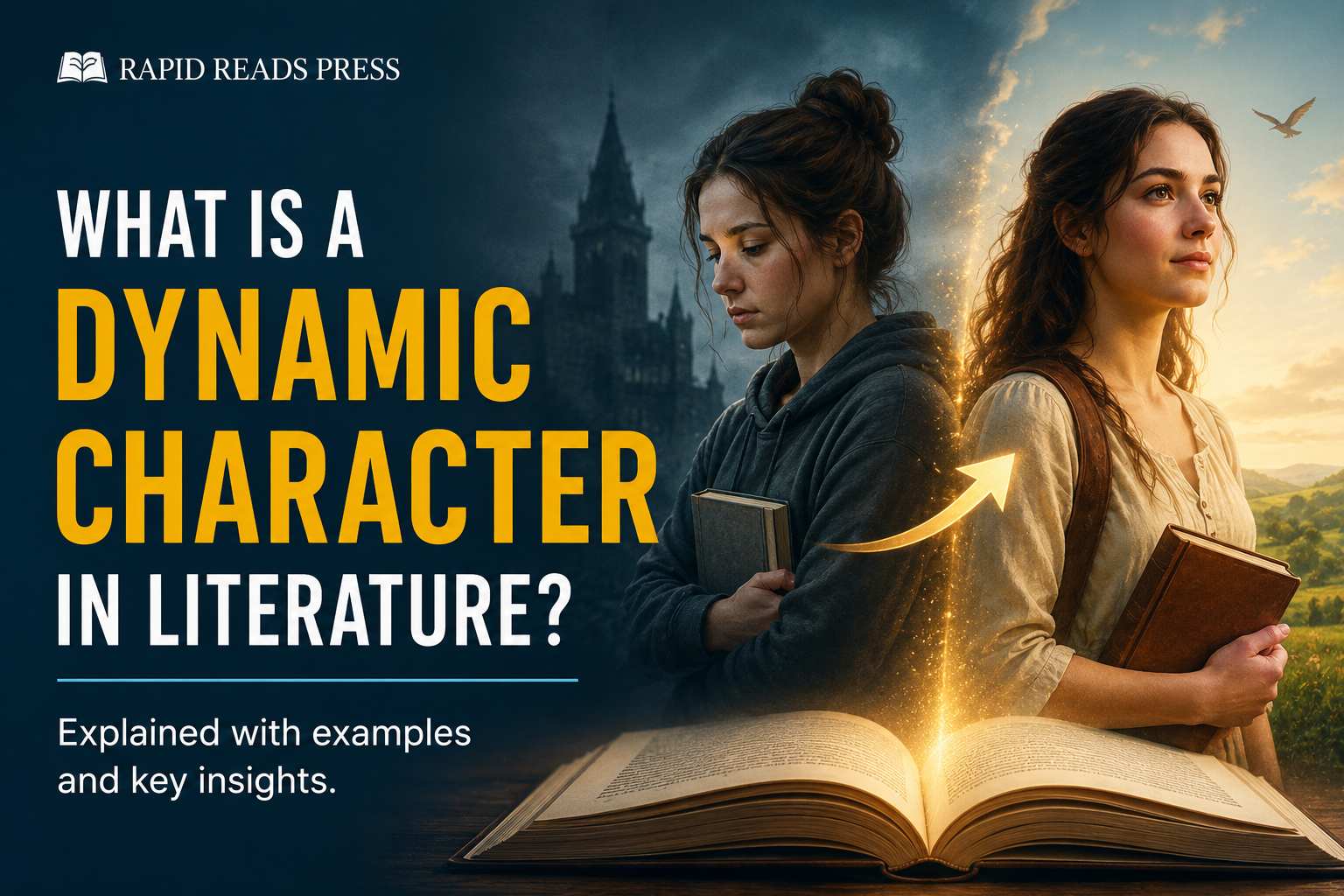
What Is a Dynamic Character in Literature?

dynamic character

It is a character who changes in an important way over the course of a story.

This guide explains the idea in simple terms, shows why it matters, and gives clear examples from books many students know.

In this Guide

  • What a dynamic character means
  • Why dynamic characters matter
  • Dynamic character examples
  • How to spot a dynamic character
  • Books to read for practice
  • FAQ
dynamic character

A Clear Definition

A dynamic character changes in a deep and meaningful way.

The change may involve beliefs, values, goals, or how the character sees the world. It is not just a new haircut, a new job, or a new location.

When students ask, What Is a Dynamic Character in Literature?, the simplest answer is this: a dynamic character learns, grows, falls apart, or becomes someone different because of the story’s events.

For example, Ebenezer Scrooge in A Christmas Carol begins as selfish and cold. By the end, he becomes generous and caring. His change is central to the story.

Why It Matters

Dynamic characters help readers see how conflict can shape a person.

A story feels more powerful when a character has to face hard choices. Those choices can reveal fear, pride, courage, guilt, or love.

What Is a Dynamic Character in Literature? It is often the answer to why a story feels meaningful. The plot may show what happens, but the character’s change shows why it matters.

In many novels, the main character’s growth connects to the theme. If a story is about forgiveness, the dynamic character may need to let go of anger. If a story is about identity, the character may need to understand who they truly are.

If you want a deeper method for studying characters, this guide on how to analyze characters in literature can help you build stronger notes.

Dynamic vs. Static Characters

A dynamic character changes. A static character stays mostly the same.

A static character is not always boring or unimportant. Some static characters help highlight the growth of another character.

In Pride and Prejudice, Elizabeth Bennet is a dynamic character because she changes how she judges Darcy. She learns that her first opinion was not fully fair.

Mr. Collins, on the other hand, stays mostly the same. His lack of growth makes him a useful contrast to Elizabeth’s self-awareness.

So, What Is a Dynamic Character in Literature? Think of a character whose inner life shifts in a clear way from the beginning to the end.

Recognizable Examples

Many famous books use dynamic characters to carry the emotional weight of the story.

Ebenezer Scrooge in A Christmas Carol changes from greedy to generous. His journey shows that moral change is possible.

Elizabeth Bennet in Pride and Prejudice learns to question her own pride and quick judgments. Her growth makes the love story feel earned.

Harry Potter in the Harry Potter series grows from a lonely boy into a braver and more self-aware young man. His change happens across many books, not all at once.

For more context on classic authors and works, you can visit Britannica’s page on Charles Dickens or explore author materials at the Poetry Foundation.

How to Spot a Dynamic Character

Look for a clear before-and-after pattern.

Ask what the character wants at the start. Then ask what the character understands by the end.

A dynamic character often faces a conflict that forces a choice. That choice may expose a flaw, teach a lesson, or push the character toward change.

When thinking about What Is a Dynamic Character in Literature?, focus on inner change. A character may travel far, lose money, or gain power, but those events only matter if they change the character in a real way.

Here are helpful questions:

  • What does the character believe at the beginning?
  • What conflict challenges that belief?
  • What does the character understand at the end?
  • Does the change connect to the theme?

Common Mistakes Students Make

One common mistake is calling every main character dynamic.

A character can be important and still remain static. The key is not how much page time the character gets. The key is whether the character changes in a meaningful way.

Another mistake is confusing mood with growth. A character who feels sad in one chapter and happy in the next has not necessarily changed. A dynamic character has a deeper shift in values, beliefs, or self-understanding.

If you need a full approach, use this character analysis guide to connect traits, conflict, and theme.

Books That Help You Study Dynamic Characters

These books are useful if you want to practice spotting character change:

  • A Christmas Carol by Charles Dickens
  • Pride and Prejudice by Jane Austen

Both books make character growth easy to see, which helps if you are new to literary analysis.

FAQ: What Is a Dynamic Character in Literature?

What Is a Dynamic Character in Literature?

A dynamic character is a character who changes in an important internal way during a story. The change may affect beliefs, values, choices, or self-knowledge.

Does a dynamic character have to become a better person?

No. A dynamic character can improve, but they can also become worse. The main point is that they change in a meaningful way.

Can a minor character be dynamic?

Yes. A minor character can be dynamic if the story shows a clear inner change. Main characters are just more likely to get that kind of attention.

Is a dynamic character the same as a round character?

No. A round character is complex and feels realistic. A dynamic character changes. A character can be both, but the terms do not mean the same thing.

Key Takeaway

What Is a Dynamic Character in Literature? It is a character who changes in a meaningful way because of the story’s conflict.

When you read, track what a character believes at the start and what they understand at the end. That simple habit can lead to stronger essays and better literary analysis. 📚

error

Enjoy this article? Please spread the word :)

Follow by Email
BLUESKY
fb-share-icon
Reddit
LinkedIn
Share
RSS