That odd pause when you can see an old teacher’s face but cannot quite grab the name can become a tender flash memoir about memory, attention, and what quietly stays with us. If you came looking for a flash memoir prompt face teacher whose name almost returned, this one asks you to trust the image first. Maybe you remember the slope of a smile, a pair of glasses, chalk dust on a sleeve, or the way that teacher looked at you when you finally understood something. The name may matter less than the face, because the face is where the memory begins.

The Prompt
Write about the face of a teacher whose name you almost forgot.
This prompt works because it starts with something half-remembered. You do not need a full school story. And you do not need the class period, the year, or the exact room number. You only need the face that appears before the name does.
A teacher’s face can hold a whole season of your life. It may bring back the smell of pencil shavings, the soft slap of a workbook on a desk, or the nervous feeling of being called on. This flash memoir prompt about the face of a teacher whose name almost slipped away gives you permission to write from a small doorway instead of a large life lesson.
Why This Memory Matters
Teachers often become part of our daily lives for a short time, then fade into the background as years pass. Still, some part of them remains. A raised eyebrow. A kind look. A tired frown after lunch. A face turned toward the window while the class copied notes in silence.
When you write about the face of a teacher whose name you almost forgot, you may uncover more than a school memory. You may find a story about being seen, misunderstood, encouraged, embarrassed, or challenged. The teacher may have said one sentence that stayed with you. Or maybe they never said anything dramatic at all. Maybe the memory matters because of the ordinary way they kept showing up.
This kind of prompt is useful because it keeps the focus narrow. You are not writing your entire education history. You are writing one face and the feeling that comes with it. That small focus can make the memory sharper.
It can also be quietly funny. Names disappear in strange ways. You may remember the haircut, the cardigan, the coffee mug, and the smell of wet wool in winter, yet the name hides from you. That tiny gap can make the writing feel honest.
How to Approach This Prompt
Begin with the physical detail that arrives first. Do not worry if it seems too small. A face is made of small things. Start with the glasses, the jaw, the tired eyes, the lipstick, the beard, the mole, or the way the teacher’s mouth moved around certain words.
Once you have one detail, place the face in one scene. Keep the memory inside a single classroom moment if you can. Maybe you are standing at the board. Maybe you are handing in a late paper. Or, maybe the teacher is leaning over your desk, pointing to a sentence you wrote.
Write what you noticed before you explain what it meant. This is close to the skill students use when they learn what close reading in literature means. You look carefully first. And you make meaning after.
You might write, “Her forehead wrinkled when she read my paragraph,” before you write, “She was the first person who took my writing seriously.” The first sentence lets the reader stand in the room. The second sentence tells us why it mattered.
If you get stuck, treat the memory like a page you can mark up. Circle the strongest image in your mind. Underline the emotion. Put a little star beside the line you do not want to forget. If that sounds helpful, you may enjoy this guide on how to annotate literature, because the same patient attention can help with memoir.
Try not to tell the whole story at once. This flash memoir prompt face teacher whose name almost returned is strongest when it stays close to one remembered look. Let the missing name create a soft edge around the scene.
The Flash Memoirist course gives you a disciplined, repeatable craft for turning a single vivid moment into a complete, publishable piece under 1,000 words — no sprawling outline, no years of drafts, no excuses left.


A Quick Example
I almost forgot Mrs. Bell’s name, but I remembered her face right away. She had pale eyebrows that nearly disappeared under the classroom lights, and when she listened, she pressed her lips together like she was holding a secret. In fifth grade, I stayed after school because I had written my book report on the wrong chapter. I expected her to look annoyed. Instead, she bent over the paper and smiled at one sentence about a storm. “This part has a real voice,” she said. I did not know what that meant, but I knew from her face that it was good. For years, I forgot the assignment. I forgot the book. But I kept that look.
Try It Yourself
Set a timer for ten minutes and write the face before you chase the name. If the name comes back, use it. If it does not, write around the blank space. The almost-forgotten part may be the most interesting part of the piece.
You can begin with a line like, “I cannot remember the name, but I remember the face.” Then follow the image into one scene. What was the teacher looking at? What were you afraid they would notice? Or, what did you hope they would say?
Keep the ending simple. You do not have to force a grand lesson. You might end with the face as you last saw it, or with the moment the name finally returns. A flash memoir prompt face teacher whose name almost faded works best when it feels like a quick, honest visit to the past.
Want More Flash Memoir Prompts?
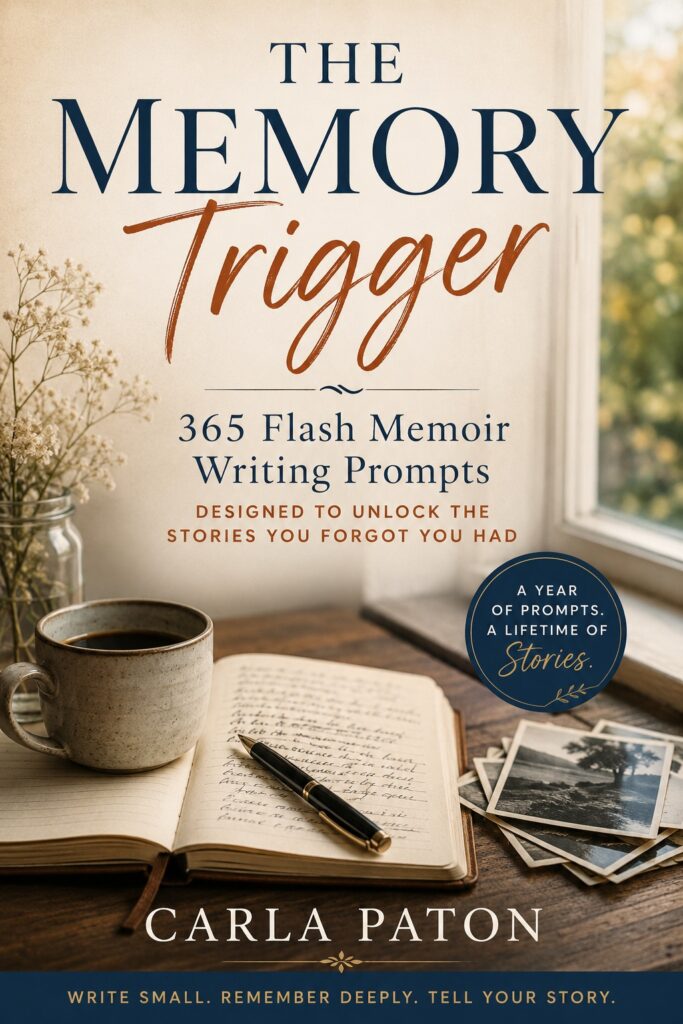
If this prompt brought back a classroom, a voice, or a face you had not thought about in years, keep going. Small memories often lead to the strongest pages. Explore all 365 prompts in The Memory Trigger: 365 Flash Memoir Writing Prompts.