Best Classic Ghosts and Grief: Haunted Books That Still Speak to Us

ghost and grief books

Some ghosts scare us, but the best ones make us think about love, loss, and memory. The Best Classic Ghosts and Grief stories show how the dead can shape the lives of the living.

In classic literature, a ghost is rarely just a ghost. It often stands for pain that has not healed, truth that has been hidden, or grief that will not stay quiet.

In this Guide


Why Best Classic Ghosts and Grief Stories Still Matter

These stories last because they deal with feelings people still face today.

The Best Classic Ghosts and Grief stories are not only about fear. They ask hard questions. What do we owe the dead? Can grief change how we see the world? What happens when a family hides pain?

Ghosts in literature often appear when something has gone wrong. A murder has been covered up. A loved one has died too soon. A memory refuses to fade.

That is why these stories feel powerful in classrooms. Students can study plot and symbols, but they can also connect to real human emotions.

Best Classic Ghosts and Grief in Shakespeare and Gothic Fiction

Many famous literary ghosts appear when grief has turned into doubt or fear.

In Shakespeare’s Hamlet, the ghost of Hamlet’s father changes the whole play. He tells Hamlet that he was murdered, and Hamlet is pulled into a world of revenge, fear, and deep sadness.

The ghost is scary, but Hamlet’s grief matters just as much. He has lost his father, does not trust his uncle, and feels trapped in a corrupt court. The ghost gives his sorrow a voice.

This is one reason Best Classic Ghosts and Grief is such a rich topic. A ghost can move the plot, but it can also reveal what a character cannot say out loud.

Gothic fiction also uses ghosts to show emotional damage. In many Gothic works, old houses, dark rooms, and family secrets all point to grief that has not been faced.

For helpful background on the Gothic tradition, you can read Britannica’s overview of the Gothic novel.

These books are strong choices for students who want haunting stories with real emotional depth.

Hamlet by William Shakespeare

Hamlet is one of the most famous ghost stories in English literature. The ghost of the dead king asks for revenge, but the play is also about grief, madness, and moral doubt.

Hamlet’s sorrow shapes nearly every choice he makes. His father’s ghost becomes a symbol of loss that will not stay buried.

A Christmas Carol by Charles Dickens

Dickens gives us ghosts with a clear purpose. The spirits visit Ebenezer Scrooge to force him to face his past, his present, and his possible future.

Grief appears in many forms here. Scrooge has lost love, kindness, and human connection. The ghosts help him see what his life has become.

The Turn of the Screw by Henry James

This novella is one of the most debated ghost stories ever written. Are the ghosts real, or are they shaped by fear and stress?

That question makes the book perfect for a discussion of Best Classic Ghosts and Grief. The story shows how fear, loss, and pressure can blur the line between truth and imagination.

For more literary context on classic authors, the Poetry Foundation’s page on Edgar Allan Poe is also useful for studying dark Romantic themes.

Symbols and Themes in Best Classic Ghosts and Grief

Ghost stories often use symbols to make grief feel visible.

One key symbol is the haunted house. A house can stand for the mind, the family, or the past. When a house feels cold or broken, it may reflect the pain inside the people who live there.

Another common symbol is darkness. Darkness can suggest fear, but it can also point to what characters do not understand. In grief stories, darkness often shows confusion after loss.

Silence also matters. Many classic ghost stories are built around things people refuse to say. A ghost may appear because silence has become too heavy.

The theme of memory is central to the Best Classic Ghosts and Grief. Ghosts return because the past still has power. The living may try to move on, but the dead keep asking to be remembered.

Guilt is another major theme. In Hamlet, guilt spreads through the royal family. In A Christmas Carol, Scrooge must face the harm caused by his choices.

These stories suggest that grief is not simple. It can lead to love, regret, anger, or change.

How to Read Best Classic Ghosts and Grief Stories Closely

A close reading can help you see how a ghost works beyond the scare factor.

Start by asking what the ghost wants. Does it want justice? Does it want memory? Does it want the living to change?

Then ask who sees the ghost. If only one character sees it, the story may be asking us to question that character’s mind, pain, or fear.

Pay attention to setting. Many classic ghost stories place grief in old homes, graveyards, castles, or empty streets. These places help create mood, but they also hold meaning.

If you want to track symbols, character reactions, and repeated images, use a simple note method. This guide on how to take notes while reading a novel can help you stay organized.

When you study the Best Classic Ghosts and Grief, look for emotional patterns. The ghost may be less important than the wound it reveals.

Why Ghosts Make Grief Easier to See

Literary ghosts turn inner pain into something readers can watch and study.

Grief is hard to show because it happens inside a person. A ghost gives that grief a shape. It can enter a room, speak a warning, or force a character to face the truth.

This is why ghost stories work so well in literature classes. They connect emotion to plot. They make abstract pain feel concrete.

In the Best Classic Ghosts and Grief stories, the dead are not only part of the past. They change the present.

Best Classic Ghosts and Grief for Student Essays

These works give students strong material for essays about theme, symbol, and character.

A strong essay could compare the ghost in Hamlet with the spirits in A Christmas Carol. Both stories use ghosts to push a living person toward action.

You could also write about whether a ghost is real or symbolic. In The Turn of the Screw, that question is part of the whole reading experience.

Another good essay topic is the link between grief and moral choice. Hamlet’s grief leads him toward revenge. Scrooge’s grief helps him change.

The Best Classic Ghosts and Grief topic works well because it lets you discuss both emotion and structure. You can write about mood, dialogue, setting, and symbols without losing focus.

FAQs About Best Classic Ghosts and Grief

Here are quick answers to common student questions.

What does a ghost usually symbolize in classic literature?

A ghost often symbolizes grief, guilt, memory, or unfinished business. It may also reveal a secret that living characters try to hide.

Why are ghosts linked to grief?

Ghosts represent people or events that will not fade away. They show how loss can stay active in a person’s mind and life.

Is Hamlet a ghost story?

Yes, but it is more than that. The ghost starts the revenge plot, while Hamlet’s grief shapes the play’s deeper meaning.

What is a good first classic ghost story to read?

A Christmas Carol is a strong first choice. It is clear, moving, and full of memorable ghost scenes.

How can I write about ghosts in an essay?

Focus on what the ghost reveals. Look at the character’s reaction, the setting, and the theme connected to the haunting.

Key Takeaway

The Best Classic Ghosts and Grief stories show that hauntings are not just about fear. They are about memory, loss, and the truths people try to avoid.

Classic ghosts stay with us because they make grief visible. They remind readers that the past is never fully gone, especially in literature.
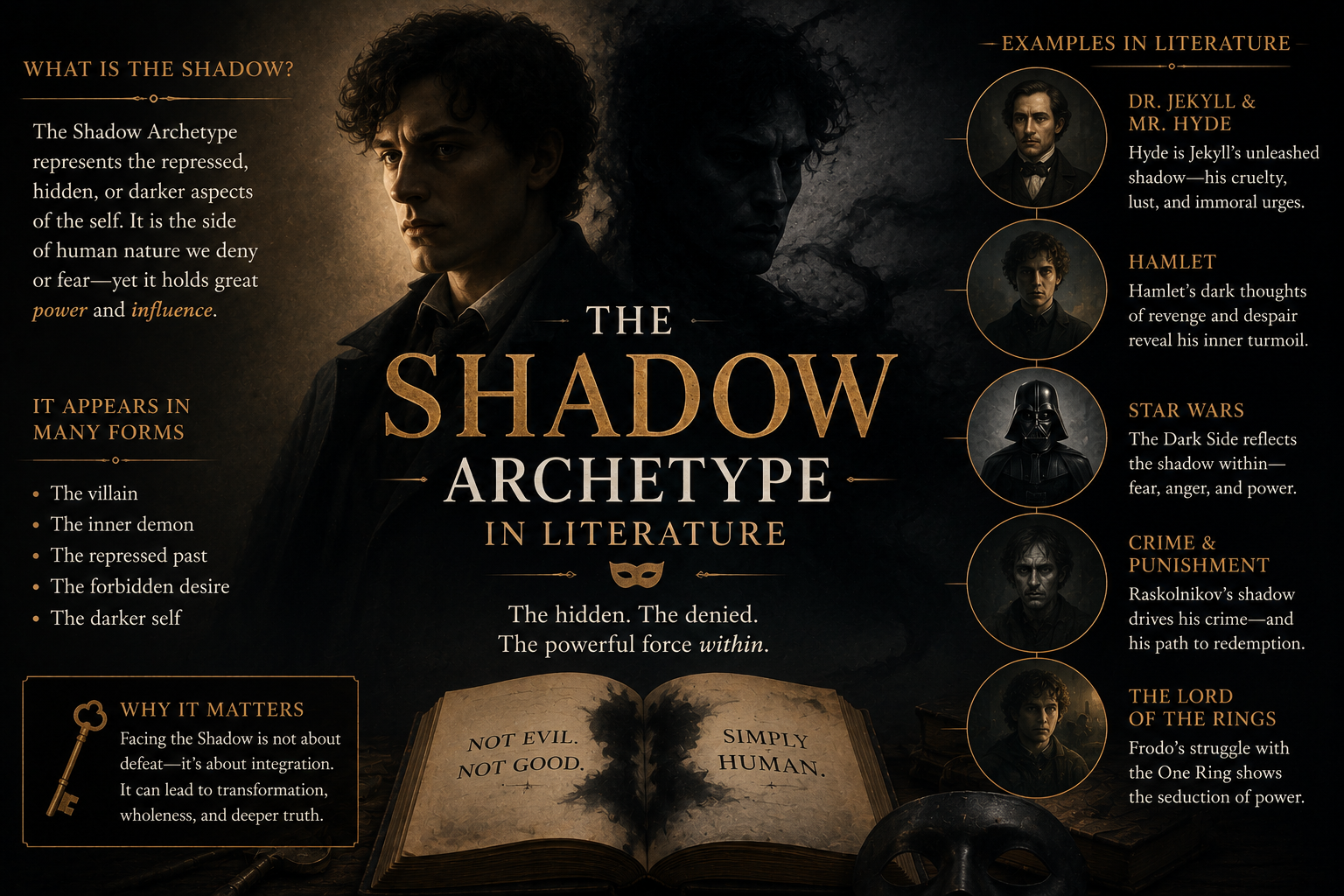
The Shadow Archetype in Literature: A Student-Friendly Guide

the shadow archetype

The Shadow Archetype in Literature helps readers understand the darker parts of a character’s mind. It shows fear, guilt, rage, pride, or hidden desire, often through a villain, double, monster, or secret self.

If you study novels, plays, or poems, this idea can help you spot deeper conflict and write stronger analysis.

In this Guide

What Is The Shadow Archetype in Literature?

The shadow is the hidden side of a person or character.

Psychologist Carl Jung used the word “shadow” to describe the parts of the self that people try to deny or hide. These parts are not always evil, but they can become dangerous when ignored. You can read more about Jung’s background at Britannica’s Carl Jung page.

In stories, the shadow may appear as a villain, a monster, a rival, or a secret part of the hero. The Shadow Archetype in Literature often forces a character to face the truth about themselves.

For example, a brave hero may fear failure. A kind person may feel anger. A wise leader may crave power. The shadow brings these hidden feelings into the open.

Why The Shadow Archetype in Literature Matters

The shadow makes stories feel more real because people are not simple.

Most strong characters have inner conflict. They want to be good, but they may feel envy, shame, or pride. This struggle gives a story emotional weight.

The Shadow Archetype in Literature also helps readers understand theme. A story may ask questions like: What happens when people deny guilt? Can someone accept their dark side and still choose good?

This is useful for essays because the shadow connects character, conflict, and symbolism. If you want help with that skill, read this guide on how to find symbolism in a story.

Examples of The Shadow Archetype in Literature

Many famous works use the shadow to reveal hidden fear or desire.

Dr. Jekyll and Mr. Hyde

Robert Louis Stevenson’s Strange Case of Dr. Jekyll and Mr. Hyde is one of the clearest examples. Dr. Jekyll wants to separate his good side from his darker urges.

Mr. Hyde becomes the living form of those urges. The story warns that hiding the shadow does not destroy it. It can make it stronger.

Frankenstein

In Mary Shelley’s Frankenstein, the Creature can be read as Victor Frankenstein’s shadow. Victor wants glory and control, but he refuses to face the cost of his ambition.

The Creature reflects Victor’s fear, guilt, and rejection of responsibility. This makes the novel more than a monster story. It becomes a story about what happens when someone abandons what they create.

Macbeth

In Shakespeare’s Macbeth, Macbeth’s shadow appears through his hunger for power. At first, he seems loyal and brave.

Once ambition takes control, he becomes violent and fearful. His shadow does not arrive from nowhere. It was already inside him.

Lord of the Flies

William Golding’s Lord of the Flies shows the shadow in a group, not just one person. The boys try to build order, but fear and cruelty rise to the surface.

The “beast” is not only outside them. It is also inside them. This makes The Shadow Archetype in Literature a key idea in the novel.

How to Analyze The Shadow Archetype in Literature

You can find the shadow by asking what a character hides.

Look for moments when a character acts against their public image. A noble person may lie. A peaceful person may enjoy power. Or a confident person may fear being weak.

Next, look for symbols tied to darkness, mirrors, masks, monsters, doubles, locked rooms, or night. These details often point to the shadow. For more practice, use this guide on finding symbolism in a story.

When you write about The Shadow Archetype in Literature, do not stop at “this character is dark.” Explain what the shadow reveals. Does it show guilt? Does it expose fear? Does it test the hero’s values?

Useful Questions for Students

  • What part of the character does the shadow reveal?
  • How does the shadow create conflict?
  • Does the character accept the shadow or deny it?
  • What theme does the shadow help show?

Choosing Books with The Shadow Archetype in Literature

Books with strong shadow themes often have deep conflict and strong essay topics.

If you need a book for class, choose a story where the main character changes or faces guilt. These texts often give you more to discuss than a simple good-versus-evil plot.

Look for stories with doubles, secret identities, forbidden desires, or moral failure. These signs often point to The Shadow Archetype in Literature.

This type of book can work well for AP Literature because it supports analysis of character, theme, and structure.

Books to Explore on Amazon

These books are strong choices if you want to study the shadow archetype more closely.

  • Strange Case of Dr. Jekyll and Mr. Hyde by Robert Louis Stevenson
  • Frankenstein by Mary Shelley
  • Lord of the Flies by William Golding

You can also explore poems with dark speakers or divided selves. The Poetry Foundation is a helpful place to read classic and modern poems.

FAQ About The Shadow Archetype in Literature

What is the shadow archetype in simple terms?

The shadow archetype is the hidden side of a character. It may include fear, anger, guilt, or desire that the character does not want to face.

Is the shadow always evil?

No. The shadow is not always evil. It can hold painful truths, buried feelings, or traits a person has denied.

Can a villain be a hero’s shadow?

Yes. A villain can reflect what the hero fears or rejects in themselves. This makes the conflict more personal.

Why is the shadow archetype useful for essays?

It helps you connect character choices to deeper themes. It also gives you a clear way to discuss inner conflict.

Key Takeaway

The Shadow Archetype in Literature shows that the hardest battle is often inside the character. When readers understand the shadow, they can see why stories about monsters, rivals, and secret selves still feel so human.

Best Books About Revenge and Justice: Powerful Stories of Payback, Law, and Moral Choice

Best Books about Revenge and Justice

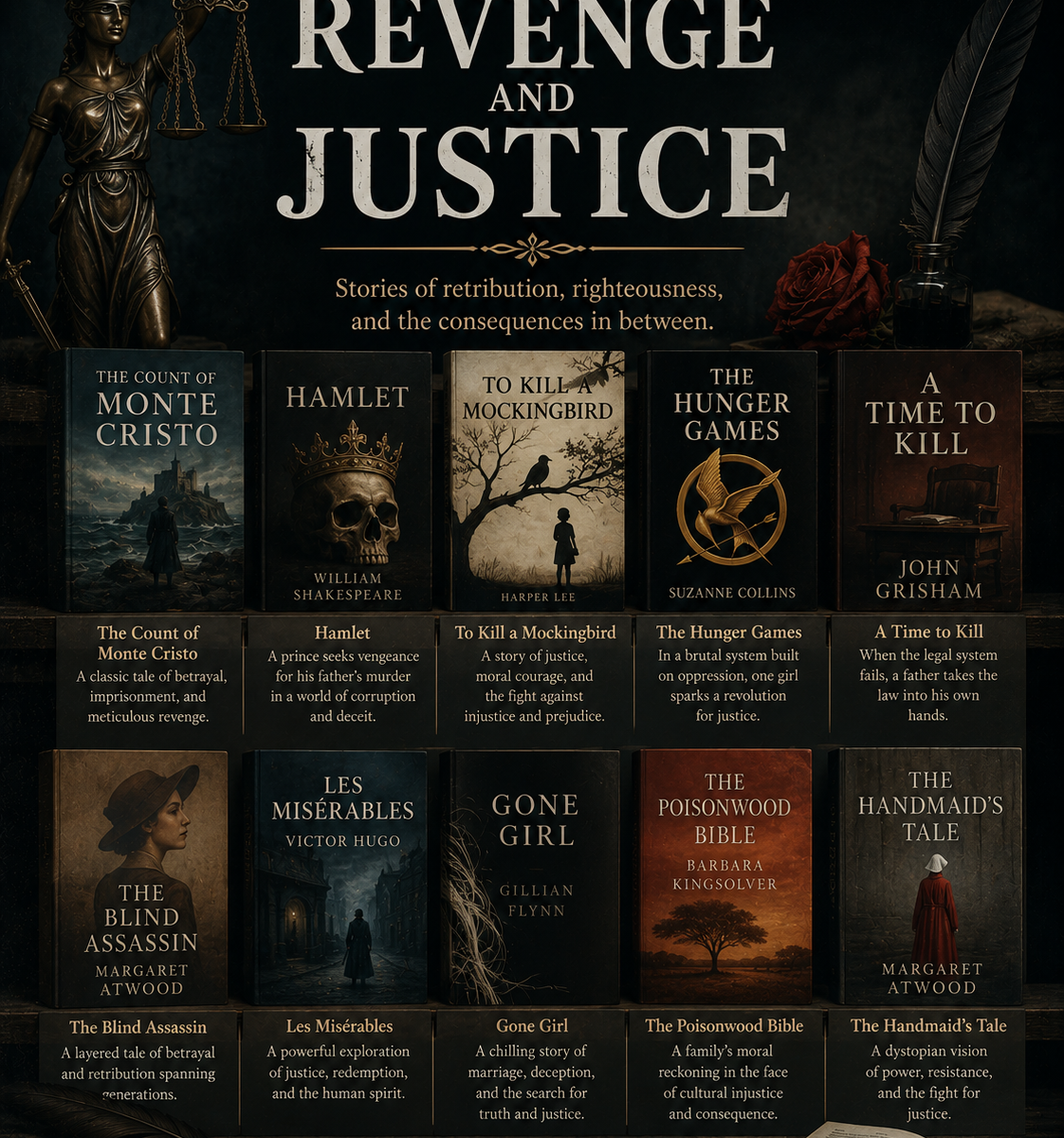
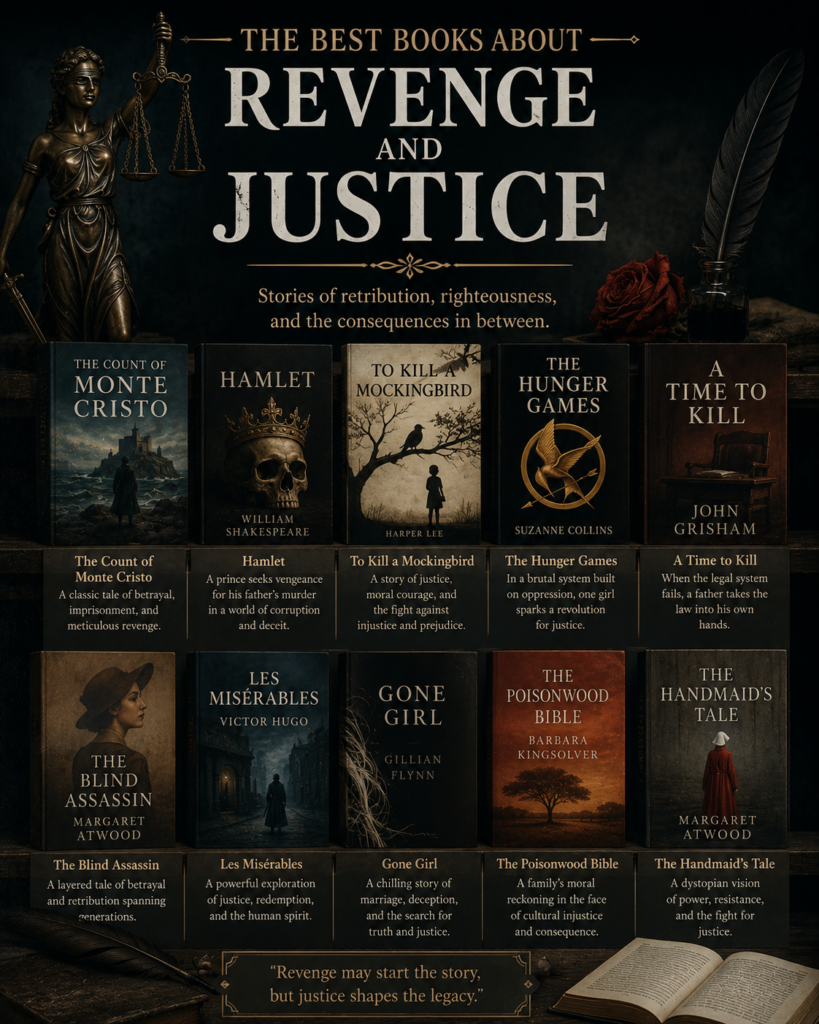
The Best Books About Revenge and Justice ask one hard question: what should happen after someone is wronged? These stories pull readers into pain, anger, punishment, and the search for fairness.

Some books show revenge as a trap. Others show justice as slow, painful, and worth the fight.

In this Guide

  • Why revenge and justice matter in literature
  • Best books to read first
  • Classic revenge and justice stories
  • Symbols and themes to watch for
  • Modern books about revenge and justice
  • FAQ

Why the Best Books About Revenge and Justice Still Matter

These stories stay popular because they deal with feelings almost everyone understands.

Revenge begins with a wound. A person is betrayed, hurt, or ignored by the law. The anger feels fair at first, but many books ask whether revenge can ever heal the damage.

Justice is different. It looks for truth, balance, and repair. In literature, justice often moves slowly, while revenge moves fast.

That tension makes the Best Books About Revenge and Justice so powerful. They do not give easy answers. They make readers ask what they would do in the same place.

Best Books About Revenge and Justice to Read First

Start with books that make the moral conflict clear and easy to follow.

The Count of Monte Cristo by Alexandre Dumas is one of the most famous revenge novels ever written. Edmond Dantès is betrayed, sent to prison, and stripped of his future. When he escapes, he builds a new life around revenge.

At first, his plan feels thrilling. His enemies deserve punishment. Yet the novel slowly asks whether revenge turns Edmond into the kind of person he hates.

Hamlet by William Shakespeare is another key text. Hamlet learns that his father was murdered, and he feels forced to act. But he doubts himself, delays, and studies the meaning of guilt.

This is why many teachers include Hamlet in lessons about revenge tragedy. The play is not only about payback. It is about thought, fear, grief, and the cost of violence.

If Shakespeare feels hard at first, try this helpful guide on how to read difficult classic literature. It can make older texts feel less stressful.

Classic Best Books About Revenge and Justice

Classic literature often treats revenge as both tempting and dangerous.

Medea by Euripides is one of the oldest and darkest revenge stories. Medea is betrayed by Jason, and her anger becomes deadly. The play shows how personal pain can grow into something beyond control.

Wuthering Heights by Emily Brontë also explores revenge across time. Heathcliff is hurt by class shame, rejection, and loss. Instead of finding peace, he spreads pain to the next generation.

Les Misérables by Victor Hugo offers a different view. Jean Valjean is punished by the law, but the law does not always equal justice. His story asks whether mercy can be more powerful than punishment.

The Best Books About Revenge and Justice often show that legal rules and moral truth are not always the same thing.

Symbols and Themes in the Best Books About Revenge and Justice

Revenge and justice stories often use strong symbols to show inner conflict.

In Hamlet, the skull reminds readers that death comes for everyone. It cuts through pride, revenge, and power. Hamlet must face the fact that all human plans end the same way.

In The Count of Monte Cristo, prison becomes a symbol of stolen life. Edmond loses his name, freedom, and trust. His escape feels like rebirth, but his new identity is shaped by anger.

Justice is often linked with light, truth, or confession. Revenge is often linked with masks, secrets, or poison. These symbols help readers see the difference between healing and harm.

A major theme in the Best Books About Revenge and Justice is moral change. The person seeking payback may become colder. The person seeking justice may need patience, courage, and self-control.

Modern Best Books About Revenge and Justice

Modern books often connect revenge and justice to race, gender, class, and history.

Beloved by Toni Morrison is not a simple revenge story. It is a novel about slavery, memory, trauma, and the deep need for justice. The past returns in a haunting form, and the characters must face what was done to them.

True Grit by Charles Portis follows Mattie Ross as she seeks justice for her father’s murder. Mattie is young, sharp, and determined. Her journey shows how revenge can look brave but still carry a heavy cost.

Gone Girl by Gillian Flynn uses revenge in a modern marriage plot. It shows how control, image, and public judgment can shape a person’s idea of justice.

These modern examples prove that the Best Books About Revenge and Justice are not stuck in the past. They still speak to today’s fears about truth, power, and fairness.

Recommended Books to Buy or Borrow

These books are strong choices for students, book clubs, or anyone who wants a deep story with moral conflict.

  • The Count of Monte Cristo by Alexandre Dumas
  • True Grit by Charles Portis

For background on Shakespeare’s revenge tragedy tradition, the Britannica entry on revenge tragedy is a useful place to start.

You can also explore author and poetry resources at the Poetry Foundation, especially if you want to connect themes of justice to poems.

How to Read the Best Books About Revenge and Justice for Class

Do not read these books only for plot. Pay attention to choices.

Ask what the wronged character wants. Is it truth, punishment, peace, or control? The answer often shows whether the story is moving toward justice or revenge.

Watch how the writer treats violence. If revenge seems exciting at first but empty later, that shift matters. Many authors want readers to feel the pull of revenge before they see its cost.

If a book feels slow or difficult, use notes, summaries, and rereading as tools. This guide to reading difficult classic literature can help you stay focused without losing the main ideas.

FAQ About the Best Books About Revenge and Justice

What are the Best Books About Revenge and Justice for beginners?

The Count of Monte Cristo and True Grit are great starting points. Both have clear plots, strong characters, and big moral questions.

Why do authors write so much about revenge?

Revenge creates instant conflict. It also lets authors explore grief, anger, pride, and the limits of human judgment.

Is revenge ever shown as good in literature?

Sometimes revenge feels justified at first. But many books show that it damages the person who seeks it.

What is the difference between revenge and justice?

Revenge is personal payback. Justice seeks truth, fairness, and a result that is larger than one person’s anger.

Key Takeaway

The Best Books About Revenge and Justice show that payback may feel powerful, but it rarely brings peace.

Great literature asks readers to look past anger and think about truth, mercy, guilt, and repair. That is why these stories still matter in classrooms and in everyday life.

In the end, the strongest revenge and justice books do more than punish villains. They ask what kind of person we become when we decide what others deserve.

error

Enjoy this article? Please spread the word :)

Follow by Email
BLUESKY
fb-share-icon
Reddit
LinkedIn
Share
RSS