Existential Themes in Fiction

Existential themes
Existential themes

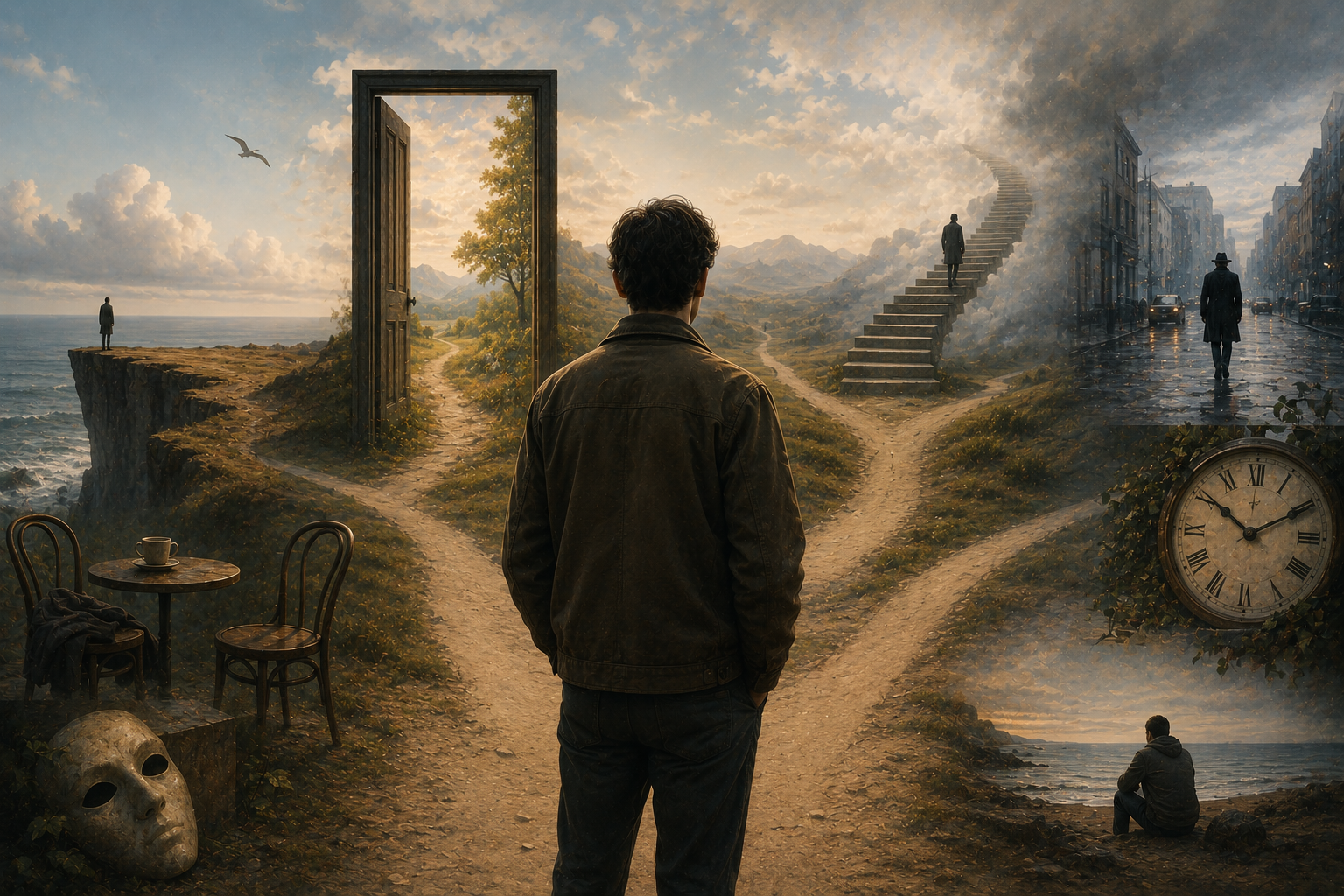
Existential Themes in Fiction help readers ask big questions about life, choice, freedom, fear, and meaning. These themes can feel heavy at first, but many famous novels and stories use them in clear, powerful ways.

If you are studying literature or choosing a book for class, this guide will help you spot existential ideas and explain them with confidence.

In this Guide

  • What existential themes mean
  • Why these themes matter in stories
  • Common signs to look for
  • Examples from well-known books
  • How to write about existential themes
  • Book suggestions
  • FAQ

What Are Existential Themes in Fiction?

Existential themes focus on how people face life when there are no easy answers.

At the center of these stories is a simple but deep question: What does life mean? Characters may feel lost, trapped, or unsure of who they are.

Existential Themes in Fiction often show people who must make hard choices. They cannot depend on society, religion, family, or tradition to give them a clear path.

This does not always mean the story is hopeless. Many works show that meaning can come from action, honesty, love, or personal courage.

For more background on the philosophy behind these ideas, you can read Britannica’s overview of existentialism.

Why Existential Themes in Fiction Matter

These themes matter because they connect literature to real human fears.

Students often meet existential ideas in books where characters feel alone or confused. That can sound dark, but it is also very real.

People ask hard questions at many points in life. Who am I? What should I do? Does my choice matter?

Existential Themes in Fiction help readers see those questions in action. Instead of giving a lecture, the story lets us watch a character struggle.

This makes the theme easier to understand. We see how fear, freedom, and choice shape a person’s life.

Common Signs of Existential Themes in Fiction

You can spot existential ideas by watching what a character fears and chooses.

One common sign is isolation. A character may feel cut off from friends, family, or the world.

Another sign is a crisis of meaning. The character may ask why life matters or why people follow certain rules.

A third sign is moral choice. The character may need to act without a clear guide.

If you need help separating theme from plot, this guide on how to identify theme in literature can help you build a stronger reading method.

Major Existential Themes in Fiction

Most existential stories return to a few core ideas about human life.

Freedom and Responsibility

Existential fiction often shows that freedom is not always easy. If a person is free to choose, that person must also face the results.

This can create fear. A character may want someone else to decide, but the story forces them to act.

Alienation and Loneliness

Many characters feel like outsiders. They may live in a crowded city or belong to a family, yet still feel alone.

This theme asks whether people can truly understand one another.

The Search for Meaning

Some stories show characters who no longer trust old answers. They may question work, faith, law, or social success.

The key point is not always to find one final answer. Often, the search itself reveals the character’s deepest values.

Absurdity

Absurdity appears when life seems strange, unfair, or without clear order. A character may try to make sense of events that do not make sense.

This theme is common in modern fiction, especially after war or social crisis.

Examples of Existential Themes in Fiction

Famous books often make existential ideas easier to see.

The Stranger by Albert Camus

Camus’s novel is one of the clearest examples of Existential Themes in Fiction. The main character, Meursault, seems emotionally distant from the world around him.

He does not react the way society expects. Because of this, readers must ask what makes a life moral or meaningful.

The novel also explores absurdity. The world does not explain itself, and Meursault does not pretend that it does.

The Metamorphosis by Franz Kafka

In Kafka’s story, Gregor Samsa wakes up transformed into a giant insect. The strange event is never explained.

This makes the story feel absurd, but its emotional truth is clear. Gregor feels useless, unwanted, and trapped by duty.

The story shows alienation in a sharp way. Gregor is near his family, but he becomes more alone with each scene.

Crime and Punishment by Fyodor Dostoevsky

Raskolnikov believes he can place himself above normal moral rules. His crime becomes a test of his ideas.

The novel explores guilt, freedom, and responsibility. It shows that ideas have real costs when people act on them.

This is a strong choice for students who want to study moral conflict in depth.

Hamlet by William Shakespeare

Hamlet is not usually called an existential novel, but the play has many existential questions. He wonders about death, action, truth, and the purpose of life.

His famous “To be, or not to be” speech asks whether life is worth the pain it brings. That question sits at the heart of many existential works.

You can explore Shakespeare’s works through the British Library’s Shakespeare resources.

How to Analyze Existential Themes in Fiction for Class

A strong analysis connects a character’s choices to the story’s larger message.

Start with the character’s conflict. Ask what the character wants, fears, or avoids.

Next, look for moments of choice. Existential stories often turn on a decision that reveals who the character is.

Then connect the choice to a theme. For example, if a character rejects social rules, the theme may focus on freedom or alienation.

Existential Themes in Fiction are not just “sad ideas.” They are about how people respond when life feels uncertain.

If you plan to write an essay, choose one main theme and prove it with short quotes. Do not try to cover every idea in the book.

Practical Takeaways for Students

Existential literature becomes easier when you know what to track.

Watch for questions about meaning. These may appear in dialogue, inner thoughts, or major plot choices.

Notice how the setting affects the mood. Empty rooms, courts, cities, and prisons can all show isolation.

Pay close attention to endings. Many existential works do not solve every problem, but the ending can show what the character has learned or refused to learn.

When studying Existential Themes in Fiction, do not panic if the book feels strange. That feeling may be part of the point.

Books to Search for on Amazon

These books are useful for students who want strong examples of existential ideas.

  • The Stranger by Albert Camus
  • The Metamorphosis by Franz Kafka
  • Crime and Punishment by Fyodor Dostoevsky

These works are common in high school, AP Literature, and college courses. They also give readers rich material for essays about choice, guilt, alienation, and meaning.

FAQ About Existential Themes in Fiction

What does existential mean in literature?

It means the story explores life’s biggest questions, such as freedom, death, choice, and meaning.

Are Existential Themes in Fiction always depressing?

No. Some stories are dark, but many show that people can create meaning through honest choices.

What is the easiest existential book to start with?

The Metamorphosis by Franz Kafka is a good start because it is short and clear in its main conflict.

How do I write a thesis about existential themes?

Focus on one idea. For example, you might argue that a character’s isolation reveals the story’s view of human freedom.

Key Takeaway

Existential Themes in Fiction help readers study how people face fear, freedom, and uncertainty. The best way to understand them is to track a character’s choices and ask what those choices say about life.


What Is Existentialism in Literature?

Existentialism in Literature

If you have ever asked, “What Is Existentialism in Literature?” you are really asking how stories handle freedom, fear, choice, and meaning.

Existentialist literature often shows characters who feel lost in a world that gives no easy answers. These works can seem dark, but they also push readers to think deeply about life.

In this Guide

  • What existentialism means in literature
  • Why it matters to readers
  • Common traits of existentialist stories
  • Famous examples from literature
  • Books to read next
  • FAQ and a key takeaway

What Is Existentialism in Literature?

Existentialism in literature is about characters who must create meaning in a world that may feel empty, unfair, or confusing.

The short answer to “What Is Existentialism in Literature?” is this: it is literature that asks what it means to be human when no one can give you a final answer.

These stories often focus on personal choice. A character may face guilt, isolation, fear, or moral pressure. Instead of finding a simple lesson, the character must decide how to live.

Existentialism is also a major idea in philosophy. For a clear background, you can read Britannica’s overview of existentialism.

Why What Is Existentialism in Literature? Matters for Readers

Existentialist literature matters because it takes human struggle seriously.

When students ask, “What Is Existentialism in Literature?” they are often trying to understand why a book feels so tense or unsettled. The answer usually comes from the character’s search for purpose.

Many literary works do not give comfort right away. They show people who must act without knowing if they are right. That can feel painful, but it also feels honest.

This is why existentialist texts work well in AP Literature and college classes. They invite close analysis of theme, tone, character, and conflict.

What Is Existentialism in Literature? Key Traits to Notice

You can often spot existentialism by the questions a story asks.

A common trait is alienation. The character feels cut off from society, family, faith, or even the self. This does not always mean the character is alone. It means the character feels separate from the world around them.

Another key trait is freedom. Existentialist characters often learn that freedom can be scary. If no one else can choose for them, they must accept the weight of their own actions.

Many works also focus on absurdity. This means life may seem strange or without clear order. The character wants meaning, but the world does not provide it in a neat way.

So, What Is Existentialism in Literature? It is not just sadness or confusion. It is a serious look at how people respond when life does not hand them a clear purpose.

What Is Existentialism in Literature? Examples from Famous Works

Some of the best examples are short, powerful, and easy to connect to major themes.

Albert Camus’s The Stranger is one of the most famous existentialist novels. Meursault, the main character, seems emotionally distant from the world. His actions force readers to ask whether society punishes him for his crime, his honesty, or his refusal to pretend.

Franz Kafka’s The Metamorphosis also fits many existentialist ideas. Gregor Samsa wakes up as an insect, and his life becomes strange and cruel. The story shows alienation, family pressure, and the fear that a person’s value can vanish.

Fyodor Dostoevsky’s Notes from Underground presents a bitter narrator who attacks reason, pride, and social progress. His voice is hard to like, but it reveals a mind trapped by freedom and self-hatred.

When readers ask, “What Is Existentialism in Literature?” these works give strong answers because they show the idea through character, not just theory.

Existentialism vs. Nihilism

These two ideas are easy to mix up, but they are not the same.

Nihilism often says life has no meaning. Existentialism starts with that fear, then asks what a person can do next.

In other words, existentialism does not always end in despair. Many existentialist works suggest that humans can build meaning through choice, love, honesty, or courage.

This matters because What Is Existentialism in Literature? is not the same as “Why is this book depressing?” A dark story can still leave room for human dignity.

How to Analyze Existentialism in a Text

Start with the character’s choices.

Ask what pressure the character faces. Does the character feel trapped by society, religion, family, law, or the body? Then ask what the character does with that pressure.

Pay close attention to tone. Existentialist works may feel cold, tense, absurd, or deeply personal. That tone often helps reveal the author’s view of human life.

If you want a stronger method for literary analysis, read our guide on how to read literature with a scholar’s eye.

Recommended Books for Existentialist Literature

These books are useful if you want to see existentialist ideas in action.

  • The Stranger by Albert Camus
  • The Metamorphosis by Franz Kafka

For poetry with modern anxiety and spiritual struggle, you might also explore T. S. Eliot. The Poetry Foundation’s page on T. S. Eliot is a helpful place to start.

Practical Reading Tip

When you read an existentialist work, track every moment when a character must choose.

Write down what the character wants, what blocks them, and what their choice reveals. This simple habit can help you answer “What Is Existentialism in Literature?” with evidence instead of a vague idea.

For deeper practice, pair this with close reading strategies for literature.

FAQ: What Is Existentialism in Literature?

What Is Existentialism in Literature? in simple terms?

It is literature about people who search for meaning in a world that does not give easy answers.

Is existentialist literature always sad?

No. It can be dark, but it can also show courage, freedom, and personal growth.

What is the main theme of existentialism?

The main theme is that people must make choices and create meaning for themselves.

Is Hamlet existentialist?

Hamlet came before existentialism as a movement, but it has existential questions about death, action, doubt, and identity.

Key Takeaway

What Is Existentialism in Literature? It is the study of characters who face freedom, fear, and uncertainty as they search for meaning. The best way to understand it is to watch what a character chooses when no answer feels safe.

Themes in Brave New World: A Student-Friendly Guide

Themes in Brave New World

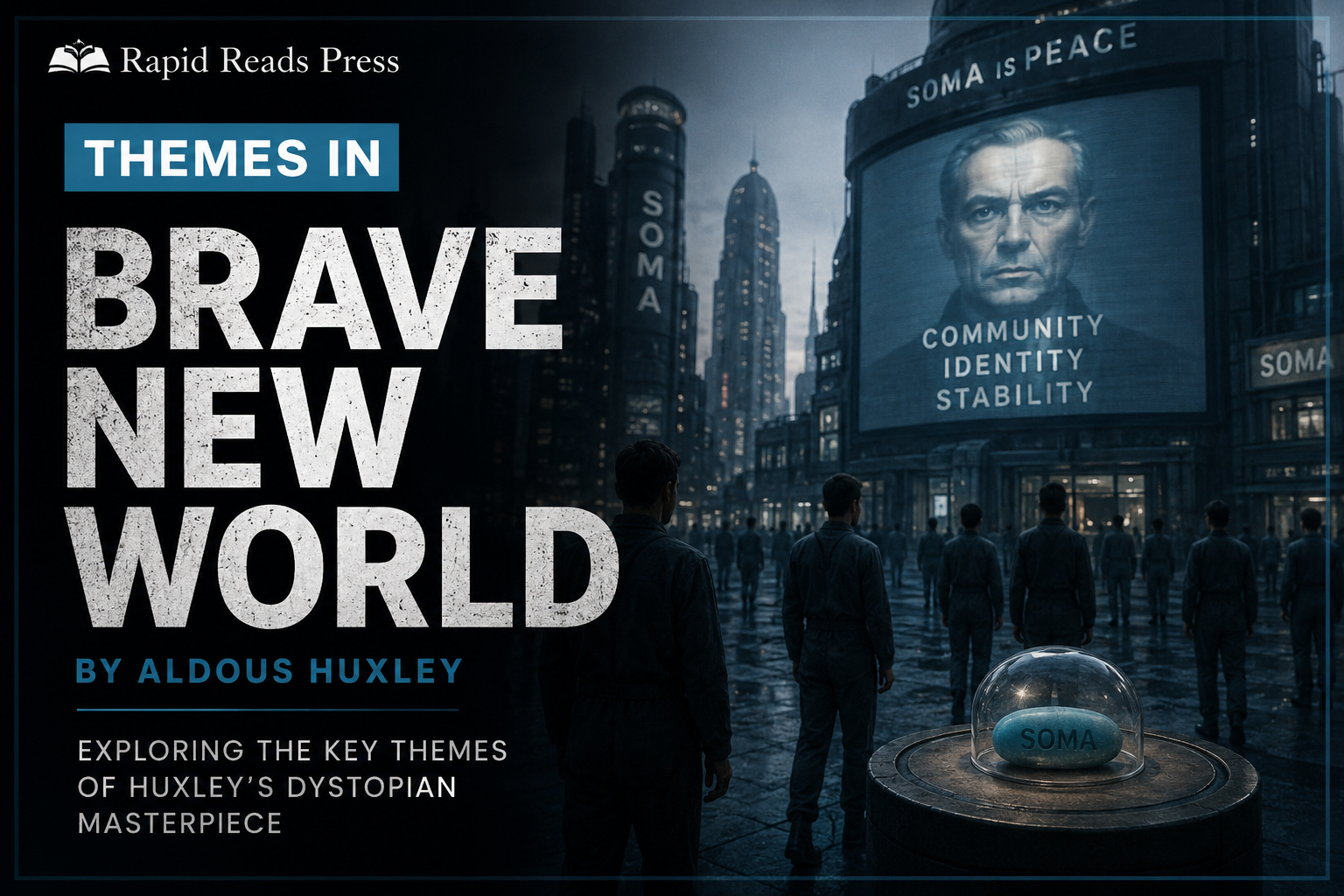
The themes in Brave New World help readers see why Aldous Huxley’s novel still feels sharp today. This guide breaks down the major ideas in the book so students can connect plot, character, and meaning without getting lost.

In this Guide

Use this as a quick map before you read or review.

  • Why the novel still matters
  • Social control and comfort
  • Pleasure and distraction
  • Identity and family
  • Science and technology
  • Freedom and truth
  • How to write about the novel
  • FAQ
Themes in Brave New World

Why themes in Brave New World Still Matter

Huxley’s world looks strange at first, but its fears are easy to recognize.

Brave New World was published in 1932, but many of its questions feel modern. What happens when comfort becomes more important than freedom? Can a society be peaceful and still deeply wrong?

Studying the themes in Brave New World helps students see that the novel is not only about the future. It is also about choices people make in any age.

For brief background on the novel and Huxley, Britannica offers a helpful overview of Brave New World.

Social Control and the themes in Brave New World

The World State controls people by making control feel normal.

In many dystopian stories, governments use fear. In Brave New World, the government often uses pleasure, routine, and comfort instead.

Citizens are trained from birth to accept their social class. They do not choose their work, values, or relationships in a free way. The state creates people to fit a system, then teaches them to love their place in it.

This is one of the key themes in Brave New World because it asks a hard question: if people do not know they are controlled, are they still trapped?

Students often compare this to George Orwell’s 1984. Orwell shows control through fear and punishment. Huxley shows control through comfort and desire.

Pleasure, Distraction, and the themes in Brave New World

In Huxley’s novel, happiness can become a tool of power.

The people in the World State are taught to avoid pain at all costs. They use soma, attend feelies, and repeat slogans that make deep thought seem useless.

Among the themes in Brave New World, this one is especially important for modern readers. Huxley suggests that nonstop pleasure can weaken the mind if it replaces thought, grief, love, and choice.

The novel does not say that happiness is bad. It warns that fake happiness can hide real loss.

Ray Bradbury’s Fahrenheit 451 explores a related fear. In that novel, entertainment keeps people from asking serious questions. Huxley’s world does the same, but in a smoother and more cheerful way.

Identity, Family, and the themes in Brave New World

The World State breaks identity down before people can build it for themselves.

In this society, family is treated as shameful. Words like “mother” and “father” make people uncomfortable. Children grow in bottles, not homes.

The themes in Brave New World become clearer when we notice what the society removes. It removes parents, privacy, lasting love, and personal history. Without these, people have little space to form a deep self.

Bernard Marx feels different from others, which makes him uneasy and proud. Helmholtz Watson wants language to mean more. John, raised outside the World State, believes in love, suffering, and moral choice.

Each character shows a different struggle with identity. None of them fits the system well.

Science, Technology, and the themes in Brave New World

The novel does not attack science itself. It attacks science without moral limits.

The World State uses technology to create people, shape behavior, and keep society stable. Babies are sorted before birth. Children are conditioned through repeated lessons. Adults are managed by drugs and pleasure.

One reason themes in Brave New World work so well is that Huxley does not make technology look evil by itself. The danger comes from how people use it.

This connects well to Mary Shelley’s Frankenstein. Both novels ask whether invention should move faster than responsibility.

In class essays, be careful not to say “technology is bad.” A stronger claim is this: Huxley warns that technology becomes dangerous when it serves control instead of human dignity.

Freedom, Truth, and the Cost of Happiness

Huxley asks whether comfort is worth the loss of truth.

Mustapha Mond, one of the World Controllers, understands the trade-off. He knows that art, religion, family, and deep truth have been sacrificed for social stability.

John cannot accept that bargain. He believes people need the freedom to suffer, choose, fail, and seek meaning. His famous demand for “the right to be unhappy” shows the deep conflict at the heart of the novel.

This conflict makes the themes in Brave New World more than simple warnings. The book asks readers to decide what makes life fully human.

Symbols That Support the Novel’s Themes

Many of Huxley’s symbols point back to control, identity, and lost freedom.

Soma is one of the clearest symbols in the novel. It stands for escape without growth. People take it when they feel upset, but it prevents them from facing pain in a real way.

Ford is another major symbol. The World State treats Henry Ford almost like a god because mass production shapes its values. People are made to be useful parts in a larger machine.

If you want a simple method for spotting symbols in this novel or any other text, see our guide on how to find symbolism in a story.

How to Write About themes in Brave New World

A strong essay connects a theme to specific choices Huxley makes.

Do not just name a theme. Show how it appears through setting, character, conflict, and symbol.

For example, instead of writing, “The book is about control,” try a sharper claim: “Huxley shows that control is most powerful when people mistake it for happiness.”

Then use evidence. You might discuss soma, conditioning, the caste system, or John’s conflict with Mustapha Mond.

If you want more help with literature essays, explore our RapidReads Press study resources for student-friendly tools.

Related Books to Read Next

These books pair well with Huxley’s novel for class discussion or essays.

  • 1984 by George Orwell
  • Fahrenheit 451 by Ray Bradbury

You can search these titles through your school library, local library, or major booksellers such as Amazon. No special edition is required for most student reading.

FAQ About themes in Brave New World

Here are quick answers to common student questions.

What are the main themes in Brave New World?

The main themes include social control, false happiness, identity, technology, and freedom. Each theme shows what people lose when stability becomes the highest goal.

What is the most important theme in the novel?

The most important theme is the conflict between happiness and freedom. Huxley asks whether a painless life is worth living if people cannot choose truth.

Is Brave New World against science?

No. The novel warns against science used without ethics. Huxley’s concern is not invention, but control.

How does soma connect to the novel’s meaning?

Soma represents escape, comfort, and control. It keeps people calm, but it also keeps them from facing real emotions.

Key Takeaway

Brave New World warns that comfort can become dangerous when it replaces freedom, truth, and human connection. That is why the novel still matters, especially for students learning how literature questions the world around them.

error

Enjoy this article? Please spread the word :)

Follow by Email
BLUESKY
fb-share-icon
Reddit
LinkedIn
Share
RSS