Flash Memoir Prompt: Last Time You Believed Something About the World that Turned Out Not to Be True

memoir prompt false belief

A brief flash memoir prompt for the last time you believed something about the world, then felt that belief crack open in one small, honest moment.

memoir prompt false belief

The Prompt

Write about the last time you believed something about the world that turned out not to be true.

This flash memoir prompt last time believed something world invites you to remember a moment when your understanding shifted. It might have been a big belief, like thinking adults always knew what they were doing. It might have been smaller, like believing a friendship would never change, a place would always stay the same, or hard work always led to a fair result.

The power of this prompt is in the turn. At first, you thought the world worked one way. Then something happened. A sentence, a silence, a closed door, a news story, a look on someone’s face. Suddenly, the old idea did not fit anymore.

Why This Memory Matters

Some memories stay with us because they changed what we knew. Others stay because they changed what we trusted.

This prompt may lead you to a story about innocence, disappointment, surprise, or even relief. Maybe you once believed everyone was watching you, then realized most people were busy worrying about themselves. Maybe you believed your parents were fearless, then saw one of them cry in the car. Maybe you believed success had a clear path, then watched someone kind and talented struggle anyway.

A memory like this does not need to end with a grand lesson. In fact, it may work better if it stays close to the scene. Memoir often becomes stronger when it lets the reader feel the moment before explaining it. If you want to practice seeing deeper meaning in a small moment, you might enjoy learning more about how to identify theme in literature, since memoir and literature both grow from patterns, choices, and change.

The belief you lost might have made life easier for a while. It might have protected you. It might have made a person or place seem simple. Writing about the moment that belief changed can help you explore the strange mix of grief and growth that comes with seeing the world more clearly.

The Flash Memoirist
previous arrow
next arrow

How to Approach This Prompt

Begin with the moment before you understood. Do not start by explaining the belief in a broad way. Start with what you saw, heard, touched, or smelled.

For example, instead of writing, “I used to think adults always had answers,” you might begin with the sound of your mother’s keys dropping into a glass bowl, or your teacher staring at the chalkboard for too long, or your father sitting at the kitchen table with a stack of bills.

Narrow the memory to one scene. This is especially important for a flash memoir prompt last time believed something world, because the subject can become huge very quickly. You are not writing the history of your entire worldview. You are writing one moment when the old belief stopped working.

Try this simple path:

First, show what you believed. Then show the scene that challenged it. Then end with the feeling that remained afterward.

You can also jot notes in the margin before you draft. What did you notice first? What confused you? What did you understand only later? If that kind of close attention helps you think, these tips on how to annotate literature may also help you mark up your own memories before you shape them into a short piece.

Keep your language plain. A sentence like “I watched the smile leave his face” may carry more weight than a long explanation about disillusionment. Let the reader stand beside you in the room.

A Quick Example

I was twelve when I learned that nice houses could be sad. My best friend lived in a blue two-story house with white shutters, the kind I thought meant everything inside was calm. That afternoon, we were making microwave popcorn when her parents started arguing upstairs. Not TV arguing. Real arguing, with one voice low and one voice sharp. She turned the microwave fan on high and kept her eyes on the spinning bag. I pretended to read the popcorn box. Butter smell filled the kitchen, thick and fake. When the timer beeped, neither of us moved. I had believed some homes were safe because they looked safe from the street. After that, every lit window looked more private to me.

Try It Yourself

Set a timer for ten minutes and write the scene as simply as you can. Use the prompt exactly: Write about the last time you believed something about the world that turned out not to be true.

If you get stuck, finish this sentence: “Before that day, I thought…” Then move straight into a physical detail. A hand on a doorknob. A phone face down on the table. A hallway that felt too quiet.

Do not worry about making the memory sound wise. The wisdom can stay hidden in the details. Your job is to notice the shift, then follow it honestly.

Want More Flash Memoir Prompts?

If this flash memoir prompt last time believed something world helped you uncover a charged memory, keep going. Small moments often open the largest doors. Explore all 365 prompts in The Memory Trigger: 365 Flash Memoir Writing Prompts.
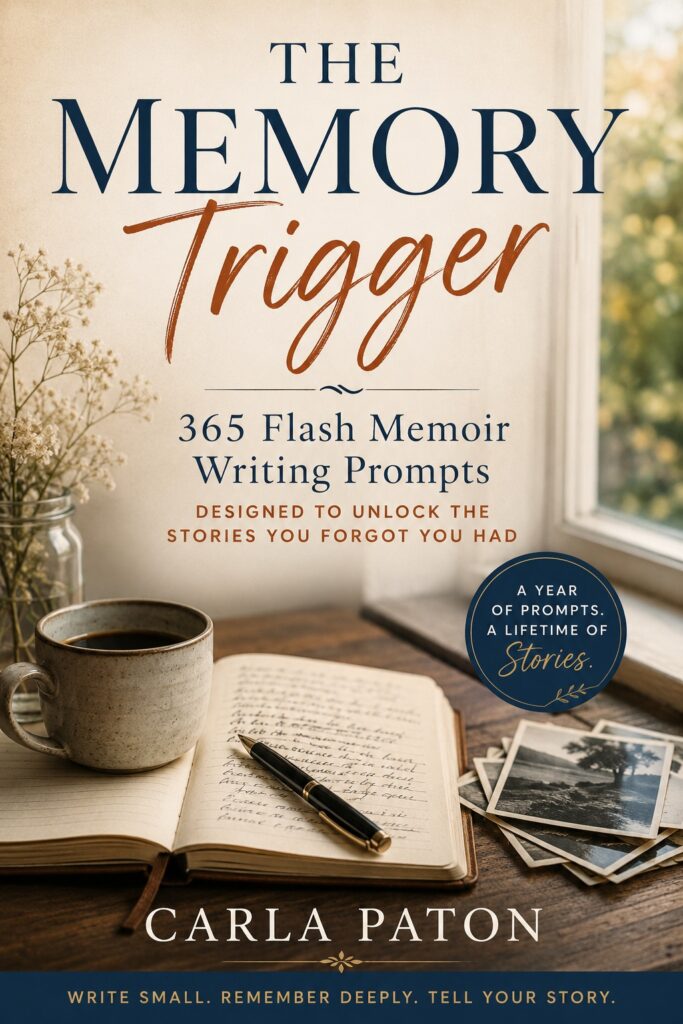

The Memory Trigger

Themes in A Separate Peace: A Student-Friendly Guide

A Separate Peace themes

The themes in A Separate Peace help students see why John Knowles’s novel still feels intense and personal. The book may seem quiet at first, but its ideas about envy, guilt, war, and growing up give it real emotional power.

This guide breaks those ideas into clear parts so you can discuss the novel with more confidence in class or in an essay.

In this Guide

  • Why the novel’s themes matter
  • Friendship and rivalry
  • Guilt and responsibility
  • War and peace
  • Loss of innocence
  • Identity and self-deception
  • Essay tips, book suggestions, and FAQ
A Separate Peace themes

Why the themes in A Separate Peace matter

Knowles uses a boarding school story to explore deep emotional conflict.

A Separate Peace takes place at Devon School during World War II. Yet much of the real battle happens inside Gene Forrester.

That is why the themes in A Separate Peace are so useful for literary analysis. The novel connects private feelings with larger historical fear.

Students should notice how Gene’s memory shapes the story. He does not just tell us what happened. He tries to understand what it meant.

For background on the author, you can read this short overview from Britannica’s John Knowles biography.

Themes in A Separate Peace: friendship and rivalry

The friendship between Gene and Finny is warm, painful, and unstable.

At first, Gene admires Finny. Finny is athletic, bold, and charming. He seems free in a way Gene is not.

But admiration starts to mix with envy. Gene begins to believe Finny wants to compete with him, even when Finny may not think that way at all.

This theme matters because the novel shows how friendship can turn dark when one person feels insecure. Gene’s jealousy says more about Gene than about Finny.

The tree scene shows this conflict most clearly. Gene’s action causes Finny’s fall, but the deeper cause is Gene’s confused fear of being less special.

Students often compare this to other stories about close friendship and rivalry, such as Shakespeare’s Othello, where envy twists how one character sees another. In both works, false ideas become dangerous.

Guilt and responsibility

Gene’s guilt drives much of the novel’s emotional force.

After Finny falls, Gene keeps trying to decide what kind of person he is. Did he mean to hurt Finny? Was it an accident? Can he ever tell the whole truth?

The novel does not give easy answers. That is one reason the themes in A Separate Peace work well for essays. Knowles leaves room for debate.

Gene’s guilt does not appear only in words. It appears in silence, avoidance, and fear. He wants forgiveness, but he also wants to protect himself.

This theme connects to a larger question: Can a person be responsible for harm even when the truth feels unclear? The novel pushes readers to sit with that question.

If you plan to write about guilt in the novel, this guide on how to write a literary analysis essay can help you turn ideas into a strong thesis.

Themes in A Separate Peace: war and inner conflict

World War II shapes the setting, but Gene’s inner war shapes the plot.

The boys at Devon live in the shadow of a global conflict. They know enlistment, danger, and adulthood wait for them.

Finny tries to create a private peace away from that fear. His games, jokes, and made-up rules help the boys escape the outside world for a while.

Yet the novel suggests that war is not only a public event. Gene carries conflict inside himself. His jealousy and fear become a private battlefield.

This is one of the central themes in A Separate Peace: the real enemy may come from within. Gene later says that wars can grow from something rooted in the human heart.

That idea makes the title more meaningful. A “separate peace” is not just a break from World War II. It is the peace Gene searches for within himself.

Loss of innocence

The novel shows how young people lose simple beliefs about themselves and others.

Before Finny’s fall, Devon can seem like a protected place. The summer session feels bright and almost dreamlike.

After the accident, that feeling changes. Gene can no longer pretend that life is simple or safe.

Finny also loses innocence. He must face pain, limits, and betrayal. His belief in friendship is shaken by what happened at the tree.

Loss of innocence is common in coming-of-age novels. In To Kill a Mockingbird, Scout learns that society can be cruel and unfair. In A Separate Peace, Gene learns that cruelty can also come from inside the self.

This makes the themes in A Separate Peace feel personal. The novel is not only about history. It is about the hard moment when a young person sees the truth more clearly.

From Idea to Novel Blueprint

Identity and self-deception

Gene struggles to know who he is because he lies to himself.

Gene wants to see himself as decent and loyal. Yet his actions make that image hard to keep.

Instead of facing his feelings, he often creates stories in his mind. He tells himself Finny is his rival. He tells himself certain truths are impossible to say.

Self-deception is one of the most important themes in A Separate Peace because it affects the whole narration. Gene tells the story years later, but he is still sorting through old pain.

Finny also has a form of self-deception. He refuses to accept the war at first. This denial may seem childish, but it also shows how badly he needs safety and trust.

Both boys protect themselves with false beliefs. The tragedy comes when those beliefs break.

Nature, setting, and symbols

Devon School becomes a symbol of memory, youth, and hidden danger.

The tree is the most famous symbol in the novel. It represents fear, testing, friendship, and the turning point in Gene’s life.

The rivers also matter. The Devon River feels calm and familiar, while the Naguamsett River feels muddy and unsettling. These settings reflect Gene’s movement from innocence toward moral confusion.

Knowles uses these places to support the themes in A Separate Peace without over-explaining them. The setting helps us feel what Gene cannot always say.

When you write about symbols, connect them to a bigger idea. Do not stop at “the tree is important.” Ask what the tree reveals about guilt, fear, or lost innocence.

How to write about themes in A Separate Peace

A strong theme essay should make an arguable claim, not just name a topic.

For example, “guilt is a theme” is too broad. A stronger claim might say, “Knowles presents guilt as a force that changes how Gene remembers friendship, even years later.”

Use short quotes and explain them closely. Focus on how Gene thinks, what he avoids, and how his view of Finny changes.

You can also compare a theme across the novel. Track Gene before the fall, after the fall, and years later as an adult narrator.

For more help with thesis statements and evidence, visit this step-by-step guide to writing a literary analysis essay.

If you want a ready study tool, you can also check out our student literature guide resources for extra support.

If you want more novels with similar ideas, these books pair well with A Separate Peace:

  • Lord of the Flies by William Golding
  • The Catcher in the Rye by J. D. Salinger
  • All Quiet on the Western Front by Erich Maria Remarque

For a wider look at World War II literature, the Poetry Foundation’s World War II poets collection offers helpful context.

FAQ about themes in A Separate Peace

What is the main theme of A Separate Peace?

The main theme is the struggle to find peace within the self. Gene’s greatest conflict comes from envy, guilt, and fear.

How does friendship work as a theme?

Friendship in the novel is both loving and painful. Gene cares for Finny, but his insecurity damages their bond.

Why is war important if most of the story happens at school?

World War II creates pressure outside Devon. It also mirrors Gene’s private conflict with himself.

What does Finny represent?

Finny often represents innocence, freedom, and trust. His fall marks a loss of those qualities for both boys.

What is a good essay topic for this novel?

You could argue that Gene’s memory reveals how guilt shapes identity long after the event itself has passed.

Key takeaway

The themes in A Separate Peace show that growing up often means facing uncomfortable truths. Gene’s story reminds us that peace is not just found in the world around us. It must also be won inside the self.

Themes in Lord of the Flies: A Student-Friendly Guide

themes in Lord of the Flies

William Golding’s novel may look like a survival story, but it is really about human nature under pressure. This guide explains the major themes in Lord of the Flies so students can read the novel with more confidence.

You will see how power, fear, violence, and social order shape the boys’ choices on the island.

In this Guide

  • Why the themes matter
  • Civilization and savagery
  • Power and leadership
  • Fear and imagination
  • Loss of innocence
  • Symbols, essay ideas, and FAQs
themes in Lord of the Flies

Why the Themes in Lord of the Flies Matter

The novel asks a sharp question: what happens when rules disappear?

The main themes in Lord of the Flies help readers see that the island is more than a setting. It becomes a test of society, morality, and fear.

At first, the boys try to copy the adult world. They hold meetings, choose a leader, and use the conch to give each person a turn to speak. Yet that order starts to break down when fear grows and Jack gains power.

This is why the book often appears in high school and AP Literature classes. It gives students a clear way to study conflict, symbols, and character change.

Major Themes in Lord of the Flies: Civilization vs. Savagery

This is the central conflict of the novel.

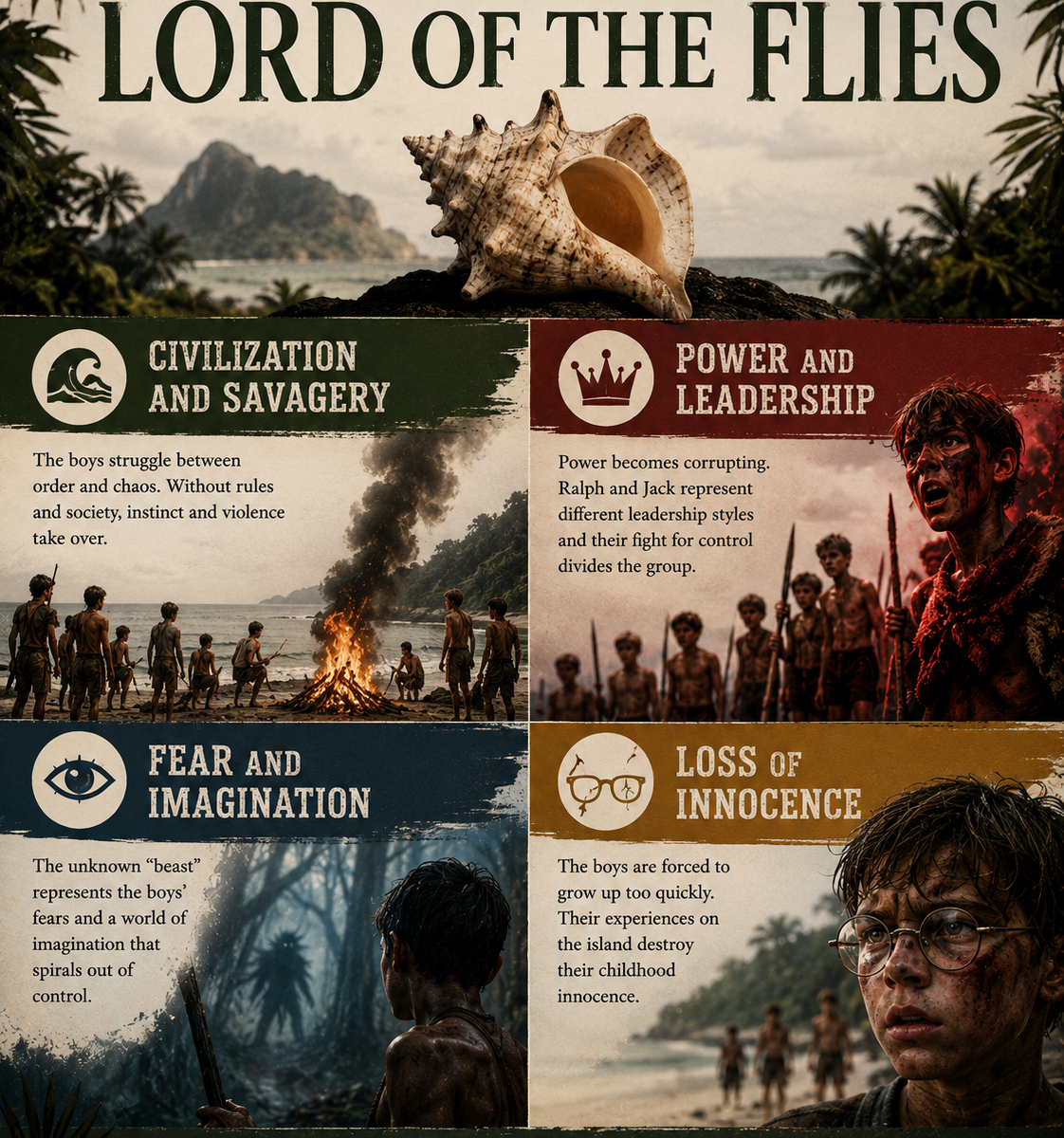
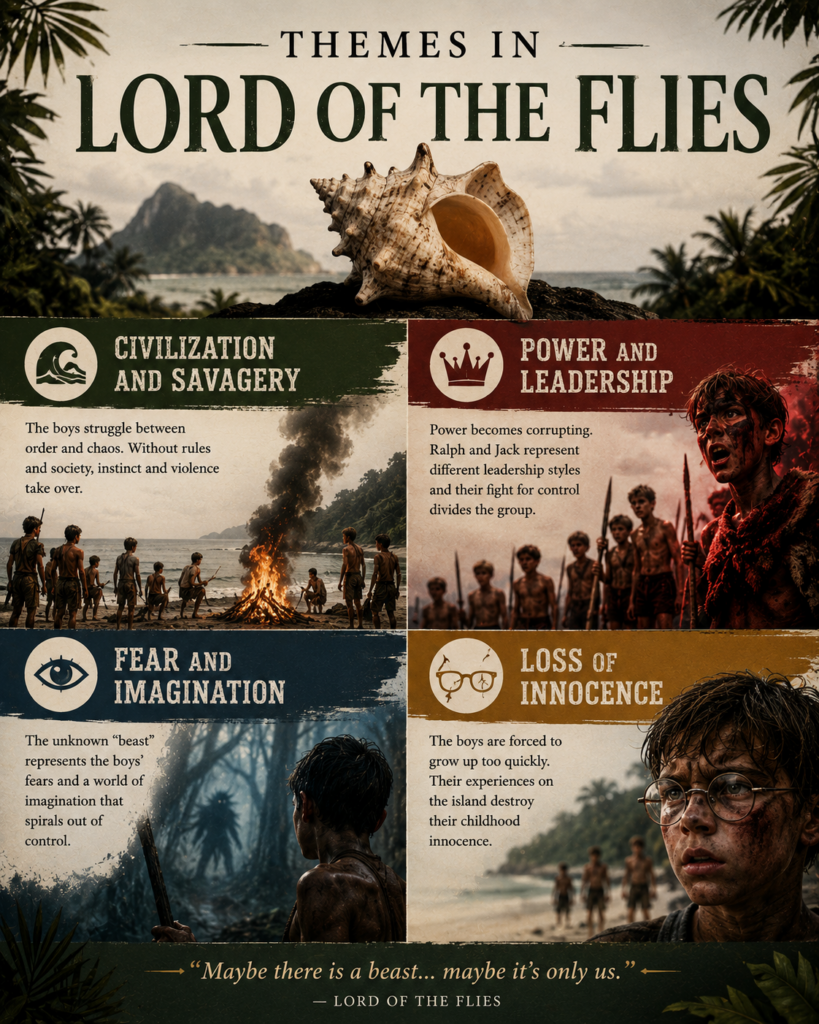
One of the most important themes in Lord of the Flies is the struggle between order and violence. Ralph stands for rules, rescue, and shared responsibility. Jack stands for force, hunting, and control.

The conch shows civilization at first. When the boys respect it, they listen to each other. When they ignore it, the group loses its moral center.

Golding does not suggest that savagery comes from the island itself. The boys bring it with them. This makes the novel darker because the danger is not only outside them. It is inside them too.

A similar idea appears in Shakespeare’s Macbeth. Macbeth does not begin as a monster, but ambition and fear pull him toward violence. In both works, pressure reveals what a person may become.

The Theme of Power and Leadership

The boys’ leaders show two very different ways to gain control.

Ralph becomes leader because other boys trust him. He wants shelters, a signal fire, and a plan for rescue. His power depends on cooperation.

Jack uses fear, excitement, and punishment. He offers meat and the thrill of the hunt. His leadership feels easier because it gives the boys quick rewards.

This theme matters because Golding shows how fragile fair leadership can be. A group may choose safety and rules, but fear can make a harsh leader seem strong.

When you write about the themes in Lord of the Flies, it helps to compare Ralph and Jack. Their conflict is not just personal. It shows two models of society.

Fear, Imagination, and the Beast

The beast is powerful because the boys believe in it.

Fear is one of the most useful themes in Lord of the Flies for essays because it affects nearly every major event. The littluns fear a beast. The older boys try to explain it, but they cannot fully control the panic.

The beast also becomes a tool. Jack uses fear of the beast to gain loyalty. If the boys feel unsafe, they look to him for protection.

Simon understands the truth before the others do. The beast is not a real monster hiding in the jungle. It is the darkness within people.

This idea connects to Arthur Miller’s The Crucible. In that play, fear spreads through a community and makes people act against reason. Golding shows a similar pattern on the island.

Loss of Innocence in Lord of the Flies

The island changes the boys, but it also reveals them.

At the start, the boys act like schoolchildren on an adventure. They swim, explore, and treat the island like a game. That innocent mood does not last.

The deaths of Simon and Piggy mark a painful shift. After these moments, the reader can no longer see the island as a simple place of play.

Ralph’s final tears matter because he now understands what people can do. He cries for Piggy, for Simon, and for the end of his own innocence.

Among the major themes in Lord of the Flies, this one often feels the most personal. Students can trace how childhood trust gives way to guilt and grief.

The Theme of Human Nature

Golding presents a dark view of what people may become without moral limits.

The novel does not claim that every person is evil all the time. Ralph, Piggy, and Simon all show care or reason. Yet the book suggests that goodness needs support from rules, empathy, and courage.

Simon is the clearest moral figure. He helps the littluns, seeks truth, and sees beyond the group’s fear. His death shows how a crowd can destroy a person who stands apart.

This is one reason the themes in Lord of the Flies still matter. The novel asks readers to think about school groups, politics, teams, and any place where people follow a crowd.

Symbols That Support the Themes in Lord of the Flies

Golding uses simple objects to carry big ideas.

The conch stands for order and shared speech. When it breaks, the boys have lost more than a shell. They have lost the system that kept them human.

Piggy’s glasses stand for reason and practical knowledge. They help start the fire, which means they also connect to rescue and hope. When the glasses are stolen, reason is pushed aside.

The signal fire stands for connection to the outside world. When the boys care for it, they still want rescue. When they forget it, they drift further from civilized life.

The Lord of the Flies, the pig’s head on a stick, stands for corruption and inner evil. It gives shape to the fear that has haunted the group.

For a reliable background on the author and novel, students can visit Britannica’s page on William Golding.

How to Write About Themes in Lord of the Flies

A strong theme essay should make a claim, not just name a topic.

Do not write only that the novel is about power. Instead, explain what Golding says about power. For example: Golding shows that fear can make violent leadership seem attractive.

Then support your claim with scenes. You might use the election, Jack’s tribe, the killing of Simon, or the breaking of the conch.

If you need help shaping a thesis and using evidence, see our guide on how to write a literary analysis essay.

You can also build a paragraph around a symbol. For example, Piggy’s glasses show how reason can be useful, but also easy to steal when violence takes over.

For extra practice, you can use our student literature study resources to plan theme notes and essay ideas.

Helpful Books to Read Next

These books can help you understand the novel and its larger literary context.

  • Lord of the Flies by William Golding
  • How to Read Literature Like a Professor by Thomas C. Foster

For more context on major literary terms, the Poetry Foundation glossary is a helpful reference.

FAQ: Themes in Lord of the Flies

What is the main theme of Lord of the Flies?

The main theme is the conflict between civilization and savagery. Golding shows how quickly order can break down when fear and violence take control.

What does the beast symbolize?

The beast symbolizes the darkness within human beings. It is not just a creature the boys fear. It reflects their own capacity for violence.

How does Golding show loss of innocence?

Golding shows it through the boys’ shift from play to cruelty. Simon’s and Piggy’s deaths make the loss clear.

Why is the conch important?

The conch stands for rules, speech, and democracy. When it is destroyed, civilized order has fully collapsed.

How can I write a thesis about this novel?

Choose one theme, make a clear claim about Golding’s message, and connect it to key scenes. For more help, use this literary analysis essay guide.

Key Takeaway

The major themes in Lord of the Flies show that civilization is fragile. Golding’s novel warns that fear, power, and group pressure can reveal the darkest parts of human nature.

Lord of the Flies Summary and Analysis for Students

Lord of the Flies Summary

A clear overview of the plot, structure, conflicts, and literary meaning.

This Lord of the Flies summary and analysis gives students a clear path through William Golding’s famous novel. It covers the plot, main conflicts, key symbols, and deeper meaning without making the book feel harder than it is.

If you need a guided entry point for class, exams, or essay prep, this guide will help you see both what happens and why it matters.

In this Guide

  • Quick overview of the novel
  • Plot summary
  • Structure and conflict
  • Symbols and themes
  • Literary meaning
  • Study tips, book suggestions, and FAQ
Lord of the Flies Summary

Lord of the Flies Summary and Analysis: Quick Overview

Golding turns a survival story into a dark study of human nature.

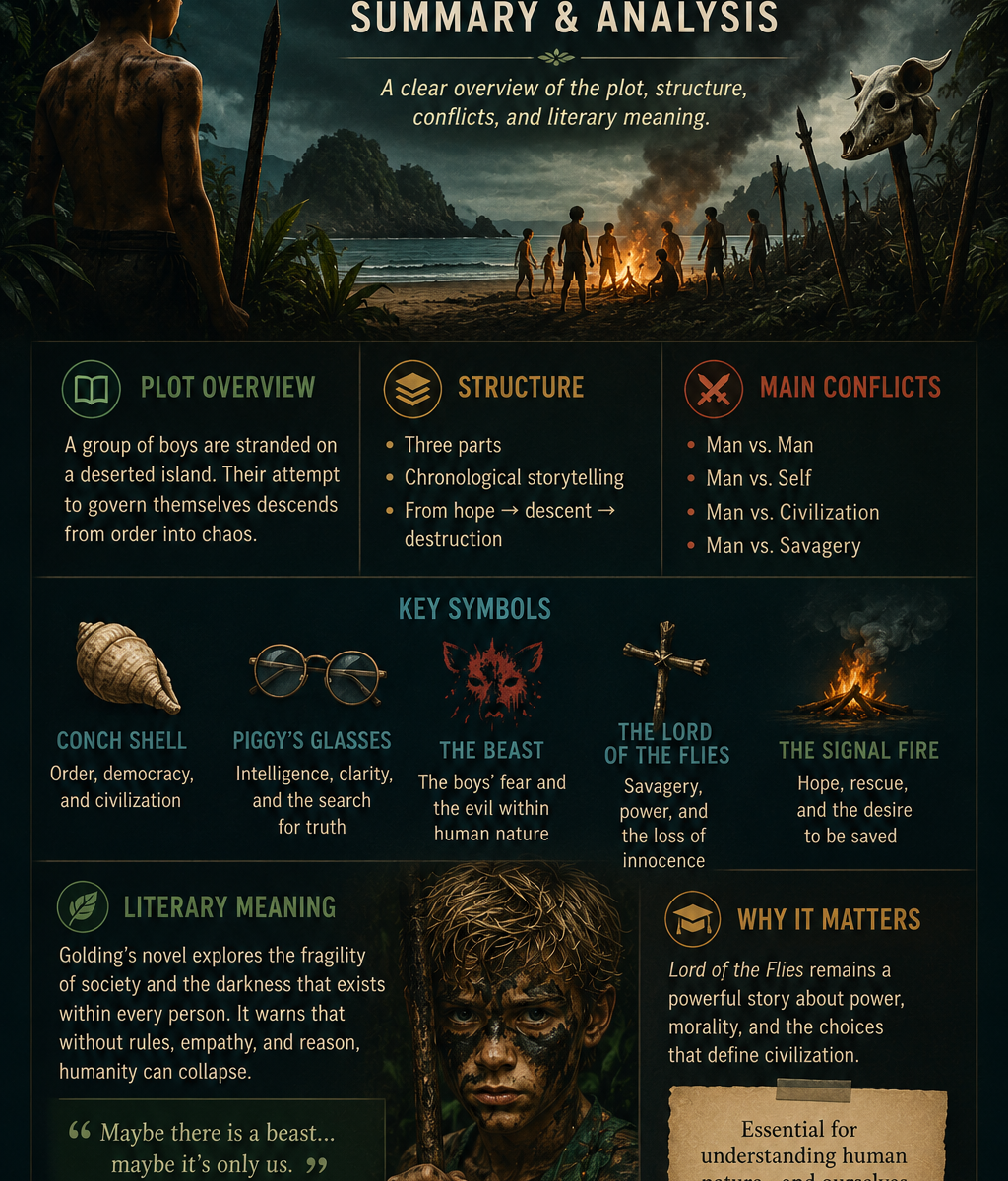
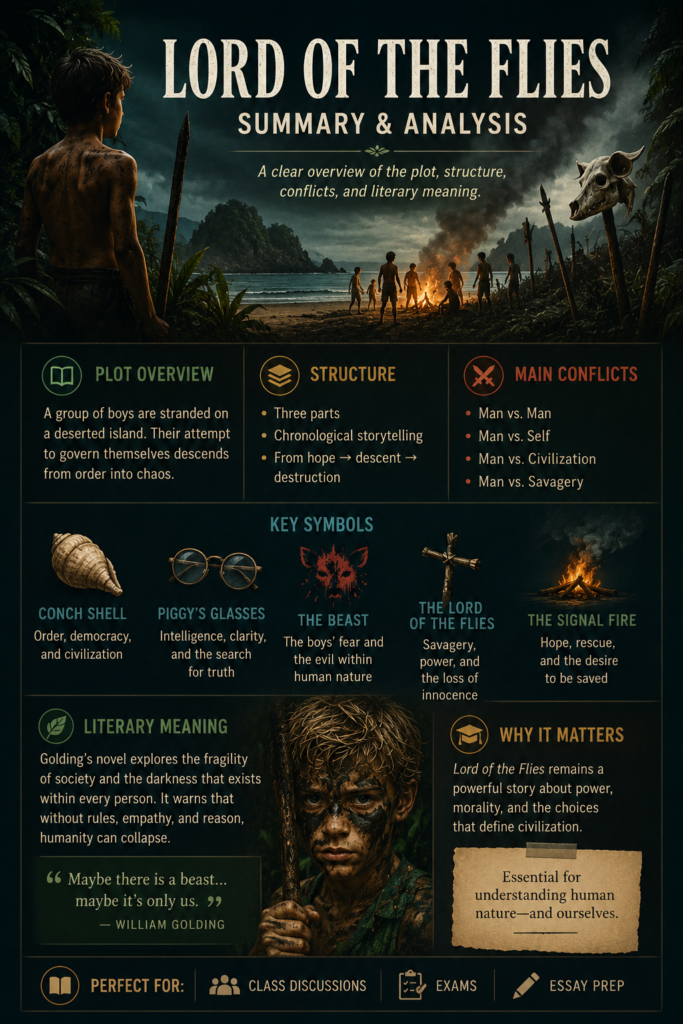
Lord of the Flies follows a group of British schoolboys who crash on an empty island during a war. At first, the island seems like a place of freedom, but fear and power soon break their fragile order.

Ralph becomes the elected leader, with Piggy as his smart but ignored adviser. Jack, who leads the choirboys, wants control and becomes more focused on hunting than rescue.

A clear Lord of the Flies summary and analysis must notice this shift: the boys do not just lose rules. They lose trust, empathy, and a shared sense of right and wrong.

For basic background on Golding’s life and career, see Britannica’s William Golding biography.

Lord of the Flies Summary and Analysis: Plot by Chapters

The plot moves from hope to fear, then from fear to violence.

The novel opens after a plane crash leaves the boys without adults. Ralph and Piggy find a conch shell, which becomes a tool for calling meetings and giving people the right to speak.

The boys vote Ralph as chief. Jack accepts this at first, but he feels wounded because he wants power. Ralph wants shelters and a signal fire, while Jack wants meat and status.

Soon, the younger boys fear a beast on the island. Ralph tries to keep the group focused on rescue, but the fear spreads. A fire set by the boys burns out of control, and one small child may die.

Jack becomes skilled at hunting pigs. The hunters paint their faces, which lets them act with less shame. The paint works like a mask, much as costumes in plays can free characters from normal rules.

A ship passes the island, but the signal fire is out because Jack and his hunters left their post. Ralph is furious. This moment shows the main split between rescue and power.

Simon, the quiet and thoughtful boy, later finds the pig’s head that Jack’s group has placed on a stick. This head is called the Lord of the Flies. It seems to speak to Simon and tells him that the real beast is inside the boys.

Simon then discovers that the supposed beast on the mountain is only a dead parachutist. When he tries to tell the others, the boys mistake him for the beast during a wild dance and kill him.

After Simon’s death, Jack’s tribe grows stronger. They steal Piggy’s glasses, which are needed to make fire. Ralph and Piggy go to ask for them back, but Roger rolls a rock that kills Piggy and breaks the conch.

In the final chase, Jack’s tribe hunts Ralph across the island. They set the forest on fire to force him out. A naval officer arrives because of the smoke, and the boys are rescued, but their innocence is gone.

The best Lord of the Flies summary and analysis sees the ending as bitter, not simply happy. Rescue comes, but only after the island has shown what fear and violence can do.

Structure of the Novel

The structure works like a slow collapse.

Golding begins with an island that feels open and bright. The boys form meetings, choose a chief, and speak about rules. The conch gives the early chapters a sense of order.

As the story moves forward, the structure becomes darker. Meetings fail. The signal fire goes out. Jack’s tribe replaces speech with chants and force.

By the end, the island looks almost like a war zone. The fire that should have signaled rescue becomes a weapon. That reversal is one reason the structure feels so sharp.

Like Macbeth, the novel shows how the hunger for power can damage judgment. Like Animal Farm, it asks how a community can fall apart when fear and control replace fairness.

Lord of the Flies Summary and Analysis: Major Conflicts

The conflicts are simple on the surface, but they carry deep meaning.

The main conflict is between Ralph and Jack. Ralph stands for rescue, shared rules, and speech. Jack stands for force, hunting, and control.

There is also a conflict inside the group. The boys want safety, but they are drawn to the thrill of violence. Golding shows how a crowd can make people do things they might fear doing alone.

The beast creates another conflict. At first, the boys think it is an outside monster. Simon understands that the real danger comes from within their own hearts.

This part of the Lord of the Flies summary and analysis matters for essays because conflict in the novel is not just action. It reveals what Golding thinks about human nature.

Symbols in Lord of the Flies

Golding’s symbols turn ordinary objects into moral tests.

The conch shell stands for order and civil speech. When the conch breaks, the boys no longer respect shared rules.

Piggy’s glasses stand for reason and practical knowledge. They help the boys make fire, but Jack wants them for power, not wisdom.

The signal fire stands for hope and a link to the adult world. When the boys care about the fire, they care about rescue. When they abandon it, they drift toward the island’s violence.

The beast stands for fear. It also shows how people can invent enemies when they do not understand themselves.

The Lord of the Flies, the pig’s head on a stick, is the most disturbing symbol. It suggests decay, evil, and the cruel truth Simon sees before his death.

Key Themes for Students

The novel asks what happens when social rules lose power.

One major theme is civilization versus savagery. Golding does not show this as a simple split between good and bad people. He shows how quickly order can weaken.

Fear is another key theme. The boys fear the beast, but that fear makes them easier to control. Jack uses fear to gain loyalty.

The novel also explores the loss of innocence. The boys begin with games and meetings, but they end with murder and a hunt. Their childhood does not protect them from moral failure.

If you want to move from summary to evidence, try this guide to close reading in literature. It can help you connect symbols, word choice, and theme in your own notes.

Lord of the Flies Summary and Analysis: Literary Meaning

The novel’s meaning is harsh, but it is not hopeless.

Golding suggests that people need more than rules. They need moral courage and respect for others. Without those, rules can become empty sounds.

The boys are not evil because they are children. They are human, and that is the troubling point. Golding asks readers to face the darker parts of human behavior.

A good Lord of the Flies summary and analysis should not stop at the plot. The novel matters because it studies how fear, pride, and group pressure can break a community.

Golding later received the Nobel Prize in Literature. You can read more about his award at The Nobel Prize official site.

How to Study Lord of the Flies

Focus on patterns, not just events.

Track how the conch, fire, and glasses change in meaning. Each object starts with a useful role, then becomes part of a larger moral struggle.

Pay close attention to scenes with crowds. Golding often shows how chants, fear, and shared excitement pull the boys away from reason.

When you write about the novel, use short quotes and explain them closely. For help with that skill, see how close reading works in literature.

Relevant Books to Read Next

These books connect well with Golding’s ideas about power and society.

  • Animal Farm by George Orwell
  • The Coral Island by R. M. Ballantyne
  • Fahrenheit 451 by Ray Bradbury

The Coral Island is especially useful because Golding partly responds to its more hopeful view of boys stranded on an island.

FAQ: Lord of the Flies Summary and Analysis

What is the main idea of Lord of the Flies?

The main idea is that human beings can turn violent when fear, pride, and power replace moral responsibility.

What should a Lord of the Flies summary and analysis include?

It should include the crash, Ralph and Jack’s conflict, Simon’s discovery, Piggy’s death, the final hunt, and the novel’s themes.

Why is the conch important?

The conch stands for order, speech, and shared rules. When it breaks, the boys’ society fully falls apart.

Is Jack the villain of the novel?

Jack acts as the main antagonist, but Golding’s point is larger. Jack shows a violent desire for power that can exist in many people.

Why does Simon matter so much?

Simon understands that the beast is not a monster outside the group. It is the darkness inside human nature.

Key Takeaway

A strong Lord of the Flies summary and analysis shows that the novel is not only about boys on an island. It is about how quickly fear can weaken order, and why moral courage matters.

error

Enjoy this article? Please spread the word :)

Follow by Email
BLUESKY
fb-share-icon
Reddit
LinkedIn
Share
RSS