Flash Memoir Prompt: Last Time You Visited a Place that No Longer Exists

memoir place

A brief writing invitation for returning to a vanished place through one sharp memory, a few sensory details, and the feeling you did not understand at the time.

You know the strange little shock of driving past a familiar corner and seeing something else there. The diner is now a pharmacy. The school has been torn down. The apartment building where your grandmother lived has become a parking lot with fresh white lines. For a second, your body remembers where the door should be before your mind catches up.

This flash memoir prompt last time visited place no longer exists invites you to pause in that strange gap. The place may be gone, but your memory of it still has walls, smells, sounds, and weather. That is enough to begin.

memoir place

The Prompt

Write about the last time you visited a place that no longer exists.

This prompt works because it gives you a clear frame. You are not writing the entire history of the place. You are writing about the last visit, even if you did not know it was the last. That detail gives the memory quiet power.

Maybe the place was a childhood home, a corner store, a church basement, a movie theater, a beach house, a factory, a playground, or a restaurant with sticky menus and too many laminated desserts. What matters is that the place once held part of your life, and now it is gone.

Why This Memory Matters

Places can disappear faster than we expect. A building gets sold. A neighborhood changes. A family moves away. A storm takes what seemed permanent. Then memory has to do the work that brick, carpet, wood, and paint used to do.

Writing about a place that no longer exists can uncover more than nostalgia. It may reveal who you were the last time you stood there. Were you rushing? Were you bored? Were you relieved to leave? Did you know something was ending, or did the moment feel completely ordinary?

That contrast is often where the memoir lives. The scene may look small on the surface. You bought a soda. You waited for your mother. You locked a door. You sat on the curb. But beneath it, there may be loss, change, guilt, freedom, or tenderness.

This is also a strong prompt for noticing symbols in real life. A cracked sign, an empty classroom, or a key that no longer opens anything can carry more meaning than a long explanation. If you want to think more about how objects and places gather meaning, you might enjoy this guide on how to find symbolism in a story.

How to Approach This Prompt

Begin with one physical detail. Do not start by explaining why the place mattered. Start with the chipped tile by the entrance, the smell of fried onions, the squeak of the screen door, or the way dust floated in the light.

Then narrow the memory to one scene. You do not need to cover every visit you ever made. Stay with the last time. Where were you standing? Who was with you? What did you touch? What sound do you still hear when you think of that place?

Try to write what you noticed before you write what it meant. For example, instead of opening with “I was sad because my childhood was ending,” show yourself packing books into a cardboard box while a neighbor’s dog barked outside. Let the reader feel the ending before you name it.

If the memory feels blurry, treat it like a page you are studying closely. Circle the details in your mind. Ask what seems important now that did not seem important then. Readers who use writing prompts for school or personal practice may also find it helpful to review how to annotate literature, because the same habit of close attention can help you read your own memories.

For this flash memoir prompt last time visited place no longer exists, resist the urge to write a full tribute. You can always write more later. For now, choose one doorway, one room, one goodbye you did not know was a goodbye.

A Quick Example

The last time I went to Allen’s Roller Rink, the carpet still had purple lightning bolts on it, though most of them had faded to gray. My brother and I were too old for the place by then, but our cousin begged to go for her birthday. I remember sitting on the bench with one skate half-laced, watching the disco ball throw tiny squares of light onto the snack counter. The nacho cheese machine made its tired cough. Nobody said the rink was closing the next month. We just skated in circles until our ankles hurt. When I heard later that it had become a storage warehouse, I thought of that disco ball, still turning in my mind, lighting up a room that was already leaving.

Try It Yourself

Set a timer for ten minutes and write the first version without stopping to fix it. Start with the sentence, “The last time I went there…” and let the place appear through detail.

If you get stuck, focus on the moment of arrival or the moment of leaving. Those edges often hold the strongest memories. You might remember the hand on the door, the last look over your shoulder, or the strange feeling of walking away without knowing you would never return.

You do not have to make the piece dramatic. A quiet memory can still matter. The goal is to catch one true scene before it fades further. This flash memoir prompt last time visited place no longer exists is really an invitation to give shape to something the world has erased.

Want More Flash Memoir Prompts?

If you want a year of short, focused writing invitations, explore all 365 prompts in The Memory Trigger: 365 Flash Memoir Writing Prompts.
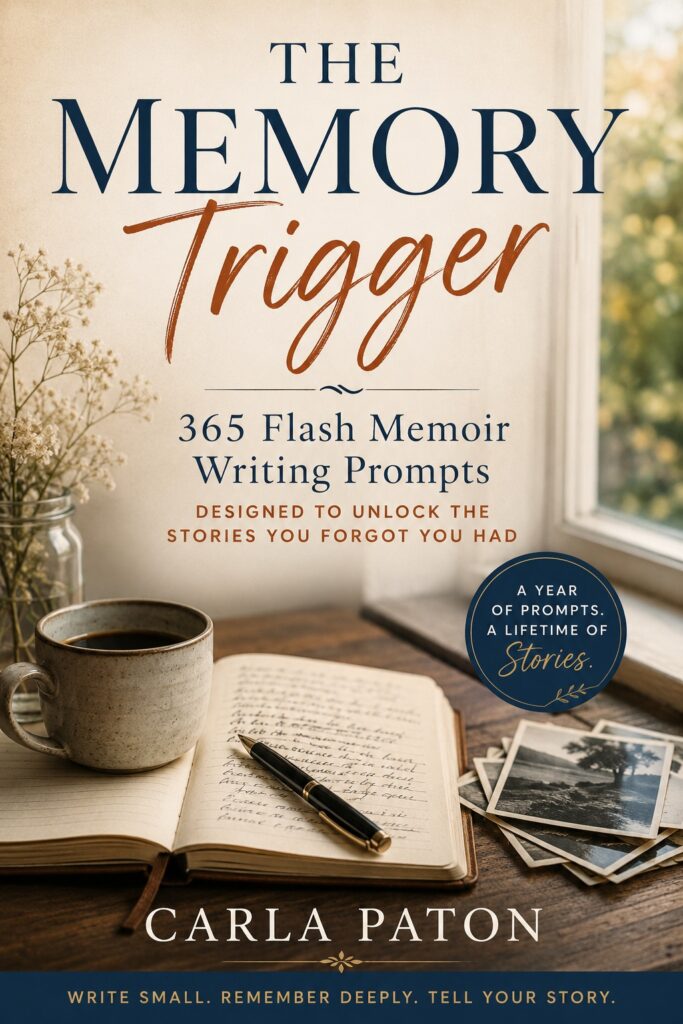
The Memory Trigger

Flash Memoir Prompt: Last Time You Felt Like a Child

Rapid Reads Press

A brief, tender writing invitation about the last time you felt small, safe, silly, scared, or suddenly young again.

Maybe it happened in a grocery store when you reached for the cereal you loved as a kid. Maybe it came over you during a storm, when thunder made you want to call someone older and wiser. Or maybe you felt it while laughing too hard over something completely ridiculous, the kind of laugh that makes you forget your age for a minute.

This flash memoir prompt last time felt like child asks you to notice one of those moments when adulthood loosened its grip. It does not have to be dramatic. In fact, the smaller the scene, the more honest it may become.

childhood prompt

The Prompt

Write about the last time you felt like a child.

This prompt can open a memory because feeling like a child is rarely about age alone. It may be about needing comfort. It may be about wonder. It may be about shame, joy, fear, play, or wanting someone else to take charge for a little while.

When you write from this prompt, try not to rush toward the meaning. Stay with the moment first. What room were you in? What did your hands do? What sound made you feel younger than you are?

Why This Memory Matters

Childhood does not fully disappear. It follows us in habits, cravings, jokes, fears, and soft spots we may not understand until they rise up again.

The last time you felt like a child might reveal a need you rarely admit. Maybe you wanted your mother’s soup when you were sick. Maybe you felt helpless while filling out a confusing form. Maybe you stood in front of a teacher, boss, doctor, or parent and felt your voice shrink.

It could also be a happy memory. You might have felt childlike while sledding, dancing in the kitchen, opening a gift, or walking into a library and smelling old paper. If you want to sharpen the way you notice small details, you might enjoy this guide on how to annotate literature, since close reading can also train you to read your own memories with care.

This kind of memory matters because it shows the meeting point between who you were and who you are now. A flash memoir prompt last time felt like child can help you write about that meeting point without turning it into a long life story.

How to Approach This Prompt

Begin with one physical detail. Choose something your body remembers before your mind explains it.

Maybe your knees were tucked under your chin. Maybe your face burned. Maybe you held a mug with both hands. Maybe you wanted to hide behind someone taller.

Once you find that detail, narrow the memory to one scene. Do not try to cover your whole childhood or explain your entire family history. Stay inside ten minutes, or even two.

Write what you noticed before you write what it meant. For example, instead of starting with “I felt vulnerable,” begin with the coat sleeve you pulled over your hand. Instead of “I was happy,” begin with the way you ran across wet grass in your socks.

You can also pay attention to tone. A memory like this might feel funny on the surface but sad underneath, or tender at first and then sharp. If you want help naming that difference, this simple explanation of tone vs. mood in literature may help you think about the feeling your scene creates.

One clear way to begin is with this sentence: “The last time I felt like a child, I was…” Then name the place. Keep going from there.

A Quick Example

The last time I felt like a child, I was sitting on the paper-covered table at urgent care with my shoes dangling above the floor. I am forty-one, but the crinkle of that paper made me feel eight. The nurse asked when the pain started, and I looked at my husband before I answered, as if he might know better than I did. My throat hurt more from trying not to cry than from being sick. When the doctor said it was only an infection, I nodded like a good student. In the car, I asked if we could stop for a milkshake. I meant it as a joke, but when he said yes, I felt such relief that I turned my face toward the window.

Try It Yourself

Set a timer for ten minutes and write from the prompt without planning the ending. Focus on the moment when you first noticed the feeling. Did it arrive as comfort, panic, delight, or embarrassment?

If the memory feels too big, choose one object from the scene. Write about the blanket, the cereal box, the hospital bracelet, the sidewalk chalk, or the phone in your hand. Let that object carry you into the truth of the moment.

You do not need to explain everything. A strong flash memoir often leaves a little space around the memory. Trust the scene. Trust the detail. Let the childlike feeling show itself through what you saw, said, wanted, or could not say.

This flash memoir prompt last time felt like child works best when you are honest about the exact kind of smallness you felt. Small can mean safe. Small can mean powerless. Small can mean full of wonder. Let your memory decide.

Want More Flash Memoir Prompts?

If this prompt helped you find a scene worth saving, keep going with short, focused memories. Explore all 365 prompts in The Memory Trigger: 365 Flash Memoir Writing Prompts.

The Memory Trigger

Flash Memoir Prompt: Last Meal You Shared with Someone before Things Changed Between You

flash memoir prompt meal

The table might have looked ordinary at the time, but this flash memoir prompt last meal shared someone before asks you to notice the small details that came before a relationship shifted.

Maybe the meal was quiet. Maybe it was too cheerful, full of jokes that now feel strange in hindsight. Maybe you remember the takeout containers, the chipped plate, the way someone kept checking their phone, or the sentence you almost said and then swallowed.

A last meal is rarely announced as a last meal. That is what makes it powerful. You only understand it later, after the friendship cools, the romance ends, the family changes, or someone leaves. When you write about it, you are not just writing about food. You are writing about the moment before the before became after.

flash memoir prompt meal

The Prompt

Write about the last meal you shared with someone before things changed between you.

This prompt works because it gives your memory a clear frame. You do not have to explain the whole relationship. You only have to return to one meal. A kitchen table, a diner booth, a school cafeteria tray, or a paper bag of drive-thru food can hold more emotional truth than a long explanation.

The flash memoir prompt last meal shared someone before invites you to focus on what you could see, hear, taste, and feel in that one scene. The meaning can come later. First, let the moment breathe.

Why This Memory Matters

Meals often carry more tension than we admit. People talk around hard news. They pass the salt instead of saying what they mean. They fill silence with comments about the food, the weather, or who paid last time.

That last meal may reveal a turning point you did not recognize yet. Maybe your best friend was already pulling away. Maybe your parent was trying to act normal. Maybe you and your partner both knew something had changed, but neither of you wanted to name it beside the bread basket.

This kind of memory can help you write about change without forcing a big lesson. The scene itself can do the work. A half-finished bowl of soup, a cold cup of coffee, or the way someone folded their napkin can show distance, care, regret, or confusion.

If you enjoy reading closely, this prompt feels a little like learning how to analyze characters in literature. You are watching a real person through gesture, dialogue, and choice. The difference is that one of the characters is you.

How to Approach This Prompt

Begin with one physical detail from the meal. Do not start by explaining the entire relationship or how it ended. Start with the plate, the booth, the smell of garlic, the waxy fast-food cup, or the sound of a chair scraping the floor.

Then narrow the memory to one scene. Keep yourself at the table. Let the reader sit there with you. What did the other person order? Did they eat fast or slowly? Did you look at them while they spoke, or did you study the rim of your glass?

Write what you noticed before you write what it meant. This is important. If you begin with “I knew we were falling apart,” the scene may become too neat. If you begin with “He tore his napkin into tiny squares,” the reader can feel the tension before you explain it.

You can also use this prompt as a form of self-annotation. Look back at the scene the way you might mark a passage in a book. If that appeals to you, this guide on how to annotate literature may give you ideas for noticing patterns, repeated images, and quiet clues.

Try writing for ten minutes without stopping. If you get stuck, describe the food. If that feels too simple, stay with it anyway. Food is often where memory hides.

A Quick Example

We ate pancakes at the diner near the bus station, the one with the blue vinyl seats split at the corners. My brother poured too much syrup and laughed like he had nowhere to be. I remember wanting to tell him I was scared he would disappear again, but the waitress came by with coffee, and the moment passed. He gave me the last strip of bacon from his plate, which was his way of being kind without having to say anything serious. Two days later, he called from another state. He said he needed a fresh start. For years, I thought our goodbye happened on the phone, but it didn’t. It happened in that booth, while the syrup bottle stuck to my hand.

Try It Yourself

Use this flash memoir prompt last meal shared someone before as a way to enter one exact moment. Do not worry about making the memory sound dramatic. The truth may be quiet.

Set a timer for ten or fifteen minutes. Write the meal as a scene. Include one line of dialogue if you remember it. If you do not, write the silence. Let the ending land gently, without trying to wrap up the whole relationship.

You may discover that the meal was not only sad. It might hold humor, tenderness, denial, anger, or love. Let the memory be mixed. Real memories usually are.

Want More Flash Memoir Prompts?

If this prompt opened a door, keep going. Short prompts can help you build a steady writing habit without needing a full life story planned in advance. Explore all 365 prompts in The Memory Trigger: 365 Flash Memoir Writing Prompts.

The Memory Trigger