Flash Memoir Prompt: Phrase or Expression One of Your Parents Used So Often It Became Part of Your Internal Vocabulary

memory prompt expression parents

That little saying may come back at the strangest time: while you are washing a cup, locking the door, or warning yourself to slow down in traffic. This flash memoir prompt phrase expression one parents used invites you to follow one familiar line back to the person, place, and feeling it came from.

Maybe your father always said, “Measure twice, cut once.” Maybe your mother sighed, “We’ll cross that bridge when we get there.” Maybe the phrase was funny, sharp, loving, worried, or so ordinary you never thought of it as important.

Then one day, you hear yourself say it.

memory prompt expression parents

The Prompt

Write about a phrase or expression one of your parents used so often it became part of your internal vocabulary.

This prompt works because family language can carry a whole childhood inside a few words. A repeated phrase is more than a sentence. It can hold a kitchen, a mood, a rule, a fear, a joke, or a kind of love that was easier to say sideways.

For this flash memoir prompt phrase expression one parents used, you do not need to explain your entire relationship with that parent. You only need one moment when the phrase appears clearly. Let the words lead you back to a scene.

Why This Memory Matters

Parents often leave their marks through habits. The way they fold towels. The way they check the stove. The way they answer bad news. Their repeated phrases become part of the weather in a home.

At first, you may have accepted the phrase without question. Later, you may have rolled your eyes at it. Years after that, you may have found it sitting in your own mouth, ready to use.

That shift can make a strong memoir moment. It shows how language travels. It shows how we resist parts of our parents, then discover those parts have been packed inside us all along.

This kind of memory may uncover tenderness, but it might also uncover tension. Some family phrases comfort us. Others still sting. Some were used to avoid hard conversations. Some were clumsy attempts at guidance.

If the phrase has mixed feelings attached to it, let those feelings stay mixed. Memoir does not require you to make the memory neat. In fact, the most honest pieces often leave room for love and irritation to stand side by side.

How to Approach This Prompt

Begin with the exact phrase. Write it down in quotation marks. Do not improve it. Do not make it sound smarter or smoother. Keep the original rhythm, even if the grammar is odd or the wording belongs to another time.

Next, choose one scene where you heard it. Narrow the memory as much as you can. Maybe you are in the back seat of the car. Maybe you are at the dinner table. Maybe you are standing in a doorway while your parent searches for keys.

Start with a physical detail. What did the room smell like? What was your parent holding? What were you doing with your hands? These small details help the memory feel real before you explain what it meant.

Try to write what you noticed first. Save the meaning for later. For example, instead of beginning with, “My mother was always anxious,” begin with her checking the lock three times and saying, “Better safe than sorry.” Let the reader feel the pattern before you name it.

You might also listen for tone. Was the phrase said with a laugh? A warning? A tired breath? The same words can mean different things depending on how they land.

If you enjoy close reading, this prompt can feel a little like character study. You are looking at how a person reveals themselves through repeated language. For more practice with that skill, you may find this guide on how to analyze characters in literature helpful, especially when you turn that same attention toward real people in your life.

As you draft, avoid trying to tell the whole story of your parent. One phrase cannot explain everything. Let it open one door. That is enough for a flash memoir piece.

The Flash Memoirist
previous arrow
next arrow

A Quick Example

My dad said, “Let’s not borrow trouble,” whenever my mother worried out loud. He said it in the garage, under the yellow pull-chain light, while sorting coffee cans full of nails. I was twelve, waiting for a call about whether I had made the school play. I kept asking what would happen if I didn’t. Dad lined up two screws on the workbench and said it again, calm as weather: “Let’s not borrow trouble.” I hated it then. It felt like he was closing a door on my fear. Years later, I said the same words to my son before his first driving test. I heard my father’s voice come out of my mouth, and for once, it sounded less like dismissal and more like mercy.

Try It Yourself

Set a timer for ten minutes and write the phrase at the top of the page. Then place yourself back in one scene where you heard it. Stay close to the moment. Let your parent speak. Let your younger self react.

You do not have to decide whether the phrase was good advice. You do not have to forgive, praise, judge, or explain everything. Just notice what the words carried then, and what they carry now.

If you get stuck, treat the phrase like a note in the margin of your life. Ask what it underlined. Was it caution? Humor? Pride? Faith? Fear? If you like marking up text to see what matters, the same idea applies to memory. This guide on how to annotate literature may help you think about which details deserve a second look.

This flash memoir prompt phrase expression one parents used can become a small but powerful piece because it begins with something real: words you have already carried for years.

Want More Flash Memoir Prompts?

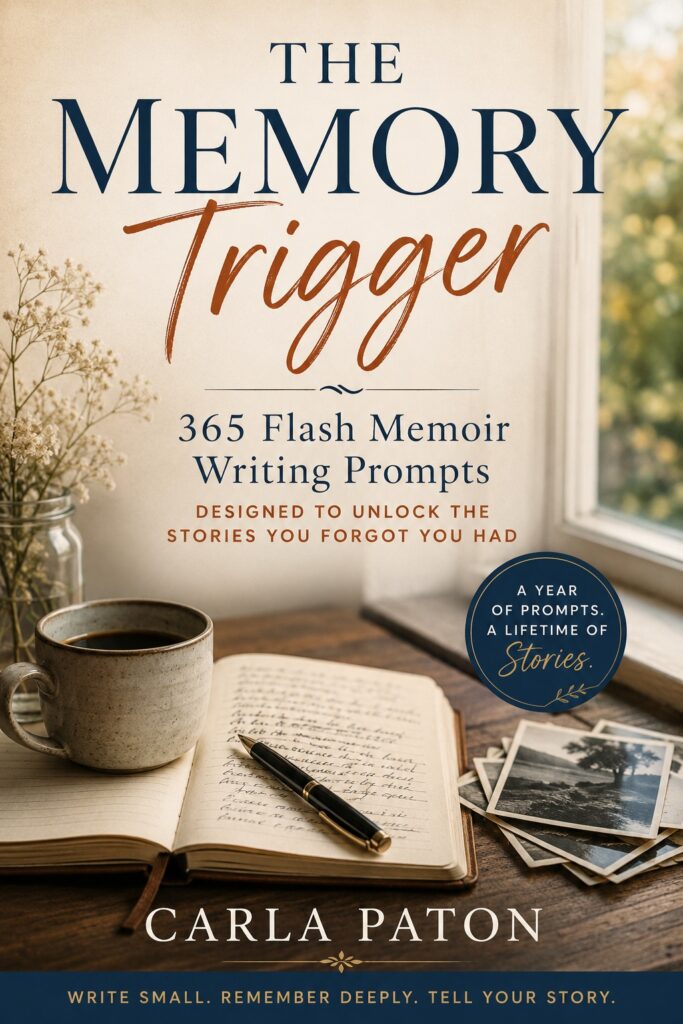
Explore all 365 prompts in The Memory Trigger: 365 Flash Memoir Writing Prompts.
The Memory Trigger

Flash Memoir Prompt: Way Your Childhood Bedroom Looked Right before You Fell Asleep

memoir prompt childhood bedroom

Right after the light clicked off, when the hallway glow slid under the door and the room felt suddenly honest, this flash memoir prompt way childhood bedroom looked right before sleep invites one small memory to come forward.

memoir prompt childhood bedroom

The Prompt

Write about the way your childhood bedroom looked right before you fell asleep.

This prompt works because bedtime is a border. You were still in the real world, but your mind was already drifting toward dreams, worries, wishes, or secret plans. The room may have looked different at night than it did in the morning. A toy could seem watchful. A poster could feel like company. A pile of clothes could turn into a monster until you learned what it was.

You do not have to remember every detail of your childhood bedroom. For this flash memoir prompt about the way your childhood bedroom looked right before sleep, one clear image is enough. Start with the glow, the shadow, the blanket, the door, or the one object your eyes always found before you closed them.

Why This Memory Matters

A childhood bedroom is rarely just a room. It can hold safety, loneliness, imagination, fear, comfort, or the strange mix of all of those at once. The way it looked right before sleep may reveal what you were carrying then, even if you did not have words for it yet.

Maybe your room was neat because someone in your house cared about order. Maybe it was crowded because you shared it with a sibling. Maybe it had hand-me-down furniture, glow-in-the-dark stars, sports trophies, library books, or a chair stacked with clothes. Each detail can tell the reader something about your younger self without a long explanation.

This is where a small object can become powerful. The night-light might stand for protection. A cracked ceiling might stand for worry. A stuffed animal might stand for the kind of love you could hold in your hands. If you want to think more about how ordinary objects can carry meaning, this guide on how to find symbolism in a story can help you notice that same skill in your own memories.

The value of a flash memoir prompt way childhood bedroom looked right before sleep is that it keeps the story close. You are not trying to explain your whole family history. You are watching light move across a wall. You are listening to the house settle. You are remembering what it felt like to be small in a room that knew you.

The Flash Memoirist
previous arrow
next arrow

How to Approach This Prompt

Choose one night, even if the memory is really made from many nights. Memoir often works this way. You gather the feeling of a repeated experience and place it into one scene so the reader can enter it with you.

Begin with a physical detail. Write the first thing your eyes would have seen from the bed. Was it the closet door? A window? A lamp shade? A shelf? The edge of a blanket pulled up under your chin?

Try to write what you noticed before you explain what it meant. Instead of starting with “I was scared,” show the reader the dark shape in the corner and the way you kept checking it. Instead of starting with “I felt safe,” show the reader the strip of light from the hallway or the sound of someone washing dishes nearby.

With a flash memoir prompt way childhood bedroom looked right before sleep, scale matters. Stay in the bed. Stay in the room. Let the memory unfold from that one point of view. If you try to tell the whole story of your childhood, the piece may become too broad. If you stay with one wall, one shadow, or one bedtime object, the emotion can grow on its own.

You might also mark up your draft after you write it. Circle the strongest image. Underline the sentence that feels most honest. Cross out any line that explains too much too soon. If you are a student or teacher, these same close-reading habits connect well with how to annotate literature, because both skills ask you to notice small details and ask why they matter.

A Quick Example

When I was ten, my bedroom looked blue right before sleep, even though the walls were yellow in the daytime. The streetlight came through the blinds and laid thin stripes across my blanket. My school shoes sat beside the closet, toes pointing at me like they expected an answer. On the dresser, my plastic horse collection made a jagged little skyline. I remember staring at the crack in the ceiling above my bed because it looked like a road on a map. My parents were arguing softly in the kitchen, trying to keep their voices polite. I decided that if I followed the crack from one end to the other without blinking, they would stop. I did it three times. The room did not change, but I felt less alone inside it.

Try It Yourself

Set a timer for ten minutes and return to the view from your bed. Do not worry about making the memory beautiful. Let it be plain first. The plain details often carry the most truth.

If you get stuck, finish this sentence: “Right before I fell asleep, my room looked like…” Then keep going. Describe the light. Describe the thing you always looked at. Describe what you hoped would happen before morning.

This flash memoir prompt about the way your childhood bedroom looked right before sleep is small by design. A small memory can still hold a whole younger version of you.

Want More Flash Memoir Prompts?

If this prompt opened a door, keep following the smaller memories. Explore all 365 prompts in The Memory Trigger: 365 Flash Memoir Writing Prompts.

The Memory Trigger

Flash Memoir Prompt: Game You Played as a Child that No One Else Seemed to Know

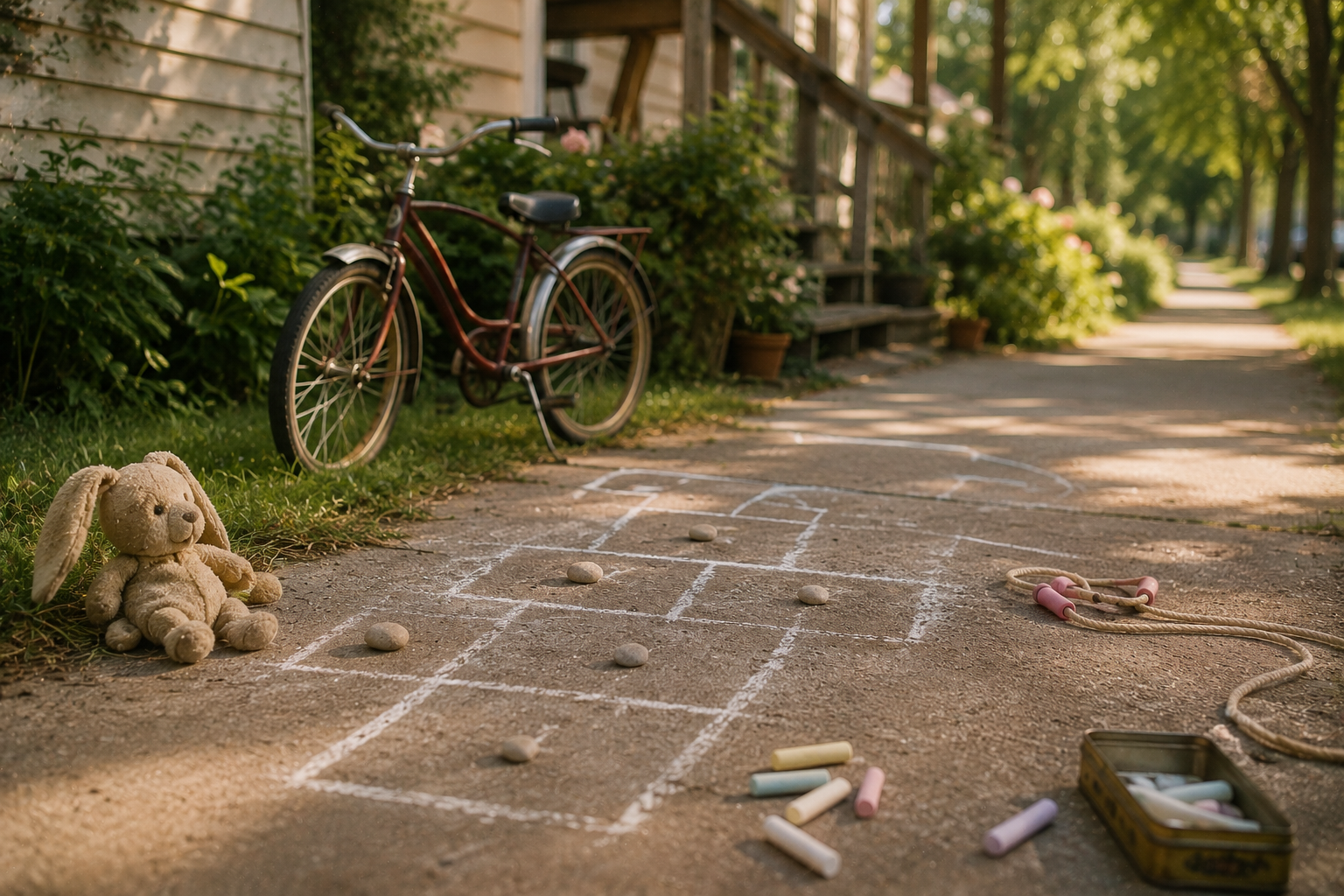
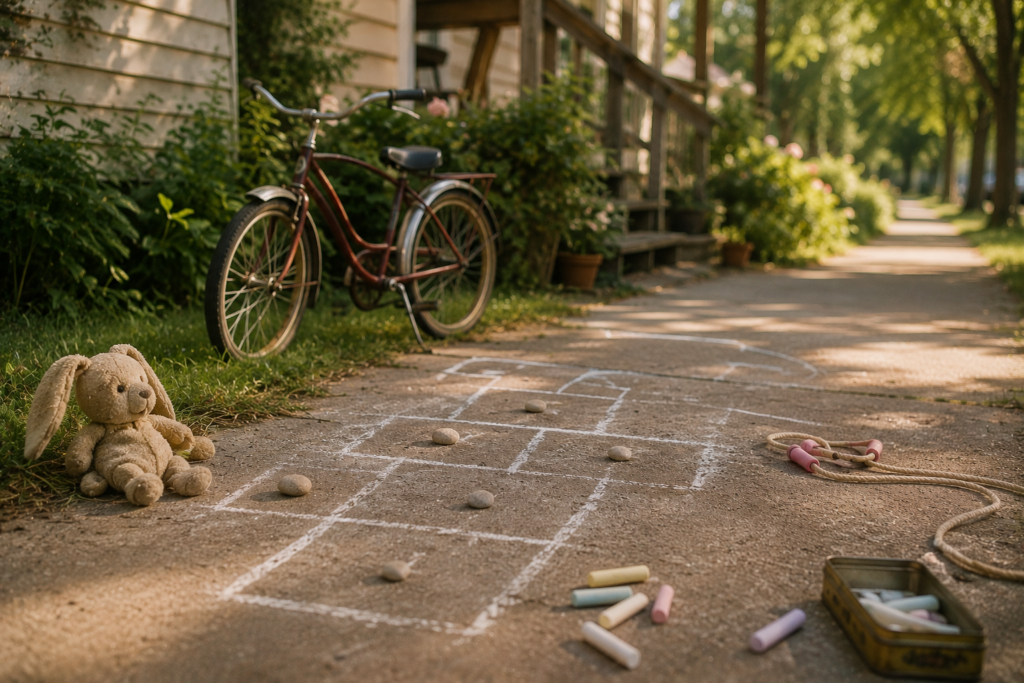
Game You Played as a Child

You can almost feel the embarrassment of trying to explain the rules to someone who does not understand why your strange little childhood game mattered so much. This flash memoir prompt game played child no one seemed to know invites you back to a private kind of play, the kind that may have made perfect sense only to you.

Game You Played as a Child

The Prompt

Write about a game you played as a child that no one else seemed to know.

This prompt works because childhood games often carry more meaning than they seem to at first. A made-up game, a neighborhood rule, a solo ritual, or a secret contest can reveal what you wanted, feared, imagined, or needed at that age.

You do not have to write about a famous board game or a sport everyone recognizes. In fact, the stranger and more specific the game is, the better. The memory may open when you recall the carpet pattern you used as a map, the crack in the sidewalk you treated as a finish line, or the way you kept score in your head.

Why This Memory Matters

A childhood game that no one else seemed to know can show the private world you built for yourself. Maybe you played because you were bored. Maybe you played because you were lonely. Maybe the game made you feel powerful in a house where adults made all the rules.

This kind of memory can also reveal how children make meaning out of ordinary places. A driveway becomes a kingdom. A staircase becomes a mountain. A pile of laundry becomes a dangerous cave. What looks silly from the outside may have felt serious when you were inside it.

The best flash memoirs often come from small memories with a hidden emotional center. You are not just writing about a game. You are writing about the version of you who needed that game.

If you enjoy looking closely at small details in books, you can use a similar habit here. This guide to close reading in literature can also help you notice how one detail can carry more weight than expected.

How to Approach This Prompt

Begin with one physical detail from the game. Do not start by explaining the whole history of your childhood. Start with the object, place, or motion that brings the scene back.

Maybe it is the cool metal of a lunchbox. Maybe it is the smell of dust under the bed. Maybe it is the sound of bottle caps clicking together in your fist. Let that detail lead you into the scene.

Then narrow the memory. Choose one afternoon, one room, one round of the game. Flash memoir works best when it stays close to one moment. If you try to tell every version of the game, the writing may become too wide and lose its spark.

Write what you noticed before you explain what it meant. Instead of saying, “I was a lonely child,” show yourself drawing a chalk circle on the driveway and waiting to see if anyone would ask to play. Let the reader feel the loneliness before you name it.

You can also think about rules. What were the rules of this game? Did you invent them? Did they change when someone else joined? Did you refuse to tell anyone the real rules because the game felt like yours?

If you want to deepen the memory after your first draft, try marking the strongest sensory details and emotional turns. This simple method used to annotate literature can work on your own writing too. Circle the places where the memory feels most alive.

image-slider-with-thumbnail1.jpeg
PlayPause
previous arrow
next arrow
image-slider-with-thumbnail1.jpeg
image-slider-with-thumbnail3.jpeg
image-slider-with-thumbnail4.jpeg
ChatGPT Image Jun 27, 2026, 06_33_13 PM
ChatGPT Image Jun 27, 2026, 06_36_37 PM
ChatGPT Image Jun 27, 2026, 06_38_39 PM
ChatGPT Image Jun 27, 2026, 06_31_22 PM
image-slider-with-thumbnail7.jpeg
ChatGPT Image Jun 27, 2026, 06_29_43 PM
ChatGPT Image Jun 27, 2026, 06_27_44 PM
image-slider-with-thumbnail6.jpeg
ChatGPT Image Jun 27, 2026, 06_15_07 PM
image-slider-with-thumbnail5.jpeg
ChatGPT Image Jun 27, 2026, 06_22_43 PM
ChatGPT Image Jun 27, 2026, 06_25_37 PM
ChatGPT Image Jun 27, 2026, 06_19_43 PM
ChatGPT Image Jun 27, 2026, 06_12_00 PM
ChatGPT Image Jun 27, 2026, 06_08_50 PM
ChatGPT Image Jun 26, 2026, 04_54_23 PM
ChatGPT Image Jun 27, 2026, 05_53_51 PM
ChatGPT Image Jun 28, 2026, 08_35_55 AM
previous arrow
next arrow

A Quick Example

I called the game “Corners,” though no one else did. I played it in my grandmother’s kitchen while she watched afternoon soap operas with the sound too low. The goal was to step from one square of linoleum to another without touching the yellow corners. If my sock landed wrong, I had to start again by the refrigerator. I remember the hum of it, and the smell of onions from lunch still hanging in the room. My grandmother never asked what I was doing. She just lifted her feet when I passed the chair. That felt like permission. Years later, I understood that the game was less about winning than making a place for myself in a quiet house where adults spoke in half-whispers.

Try It Yourself

Set a timer for ten minutes and write from this flash memoir prompt game played child no one seemed to know. Do not worry about making the game sound important. Let it be odd, messy, funny, or hard to explain.

Start with where you were. Then write the rules as your child-self understood them. If the rules made no sense to anyone else, that may be the most interesting part.

Before you finish, add one sentence about what the game gave you. Did it give you control, escape, attention, comfort, or a way to pass the time? Keep the answer honest and simple.

You may discover that the game was never really about the game. It may have been about a room, a person nearby, a feeling you did not have words for yet, or the small freedom of deciding how the world worked for a few minutes.

Want More Flash Memoir Prompts?

If this prompt helped you uncover a forgotten corner of childhood, keep going. Flash memoir is built from memories like this: brief, strange, personal, and full of texture. Explore all 365 prompts in The Memory Trigger: 365 Flash Memoir Writing Prompts.

The Memory Trigger

Flash Memoir Prompt: Last Time a Particular Season Felt the Way It Used to Feel

season prompt

A brief, sensory writing invitation for remembering the last time a season felt familiar, whole, and emotionally true in the way it once did.

Maybe it was the first cold night when the heat clicked on and the room smelled faintly dusty. Maybe it was a summer evening when the screen door slapped shut behind someone you loved. Or maybe it was autumn, and for one afternoon the light, the leaves, and the air all matched the version of the season you still carry from childhood.

This flash memoir prompt last time particular season felt familiar asks you to notice that strange moment when time folds. A season returns, but you know you are different. The weather may be the same. The feeling is what has changed.

season prompt

The Prompt

Write about the last time a particular season felt the way it used to feel.

This prompt works because seasons are more than weather. They hold routines, family patterns, school calendars, holidays, sports, chores, clothing, meals, and moods. A single season can store years of memory.

You do not have to explain your whole relationship with winter, spring, summer, or fall. Instead, choose one moment when a season briefly felt like its old self. The memory may be happy, lonely, ordinary, or mixed. What matters is that the feeling was sharp enough for you to remember it now.

Why This Memory Matters

Some seasons stop feeling the same after a move, a loss, a graduation, a divorce, a new job, or a change in health. Sometimes nothing dramatic happens. You just grow up, and one day December no longer feels like December used to feel.

This kind of memory can reveal a quiet before-and-after in your life. Maybe summer used to mean freedom, then became full-time work. Maybe spring used to mean softball games and wet grass, then became allergy medicine and bills. Maybe winter once meant everyone under one roof, until the roof changed.

A flash memoir prompt last time particular season felt old again can help you write about change without naming it too soon. You can begin with the smell of sunscreen, the sound of snow under boots, or the sight of your mother pulling a heavy coat from the hall closet. The meaning can arrive later.

Seasons can also act like symbols in memory. If you enjoy studying how ordinary details carry meaning, this guide on how to find symbolism in a story may help you see your own seasonal images with fresh eyes.

How to Approach This Prompt

Begin with a physical detail. Do not start by explaining the full history of the season. Start with what your body noticed first.

Was the air warm against your arms? Did the snow look blue at dusk? Did the house smell like cut grass, cinnamon, rain, lake water, or furnace dust? Let one detail open the door.

Next, narrow the memory to one scene. A scene has a place, a moment, and someone doing something. You might be sitting on a porch, walking home from school, standing in a grocery store aisle, or driving past a field at sunset.

Try writing the first few lines without explaining what the moment meant. Stay close to the action. Let the reader see what you saw before you tell them why it mattered.

For example, instead of starting with “Christmas never felt the same after my parents split up,” you might start with “My dad plugged in the colored lights, and half the strand went dark.” That small image can carry the larger truth.

If you are a student, you can treat your own memory the way you would treat a passage in class. Circle the strongest detail. Underline the line where the mood changes. This simple habit is close to the skills in how to annotate literature, except this time the text is your own life.

Keep the piece short. Flash memoir is not about saying everything. It is about choosing one bright piece of the truth and holding it still for a moment.

A Quick Example

The last summer that felt like summer was the year I was sixteen and my brother still lived at home. Every night after dinner, we rode our bikes to the corner store with quarters in our pockets. The air smelled like hot pavement and someone’s grill. He always bought grape soda, and I always said it was disgusting, even though I asked for a sip before we got back on our bikes. One night, we stayed out until the streetlights came on, then longer. No one called us. No one needed us. The whole neighborhood seemed to be breathing slowly. By the next summer, he had a job, a car, and a girlfriend. I still rode to the store once or twice, but grape soda just tasted purple.

Try It Yourself

Choose one season and one specific time it felt the way it used to feel. Do not worry if the memory seems small. A small scene can hold a large shift.

Set a timer for ten minutes. Begin with the detail that returns first. Write about where you were, what the air felt like, and what made the moment feel familiar. Then add the small truth underneath it: what had changed, what had ended, or what you wished could stay.

If the writing turns sad, let it. If it turns funny, follow that too. The season may have felt familiar for only five minutes, but five honest minutes can be enough for a strong flash memoir.

Return to the focus of this flash memoir prompt last time particular season felt like itself, and ask one final question: what did that season give me back, even briefly?

Want More Flash Memoir Prompts?

Explore all 365 prompts in The Memory Trigger: 365 Flash Memoir Writing Prompts. Use them one at a time whenever you want a short, focused way to turn real memories into meaningful writing.

The Memory Trigger

Flash Memoir Prompt: Last Time You Felt Like a Child

Rapid Reads Press

A brief, tender writing invitation about the last time you felt small, safe, silly, scared, or suddenly young again.

Maybe it happened in a grocery store when you reached for the cereal you loved as a kid. Maybe it came over you during a storm, when thunder made you want to call someone older and wiser. Or maybe you felt it while laughing too hard over something completely ridiculous, the kind of laugh that makes you forget your age for a minute.

This flash memoir prompt last time felt like child asks you to notice one of those moments when adulthood loosened its grip. It does not have to be dramatic. In fact, the smaller the scene, the more honest it may become.

childhood prompt

The Prompt

Write about the last time you felt like a child.

This prompt can open a memory because feeling like a child is rarely about age alone. It may be about needing comfort. It may be about wonder. It may be about shame, joy, fear, play, or wanting someone else to take charge for a little while.

When you write from this prompt, try not to rush toward the meaning. Stay with the moment first. What room were you in? What did your hands do? What sound made you feel younger than you are?

Why This Memory Matters

Childhood does not fully disappear. It follows us in habits, cravings, jokes, fears, and soft spots we may not understand until they rise up again.

The last time you felt like a child might reveal a need you rarely admit. Maybe you wanted your mother’s soup when you were sick. Maybe you felt helpless while filling out a confusing form. Maybe you stood in front of a teacher, boss, doctor, or parent and felt your voice shrink.

It could also be a happy memory. You might have felt childlike while sledding, dancing in the kitchen, opening a gift, or walking into a library and smelling old paper. If you want to sharpen the way you notice small details, you might enjoy this guide on how to annotate literature, since close reading can also train you to read your own memories with care.

This kind of memory matters because it shows the meeting point between who you were and who you are now. A flash memoir prompt last time felt like child can help you write about that meeting point without turning it into a long life story.

How to Approach This Prompt

Begin with one physical detail. Choose something your body remembers before your mind explains it.

Maybe your knees were tucked under your chin. Maybe your face burned. Maybe you held a mug with both hands. Maybe you wanted to hide behind someone taller.

Once you find that detail, narrow the memory to one scene. Do not try to cover your whole childhood or explain your entire family history. Stay inside ten minutes, or even two.

Write what you noticed before you write what it meant. For example, instead of starting with “I felt vulnerable,” begin with the coat sleeve you pulled over your hand. Instead of “I was happy,” begin with the way you ran across wet grass in your socks.

You can also pay attention to tone. A memory like this might feel funny on the surface but sad underneath, or tender at first and then sharp. If you want help naming that difference, this simple explanation of tone vs. mood in literature may help you think about the feeling your scene creates.

One clear way to begin is with this sentence: “The last time I felt like a child, I was…” Then name the place. Keep going from there.

A Quick Example

The last time I felt like a child, I was sitting on the paper-covered table at urgent care with my shoes dangling above the floor. I am forty-one, but the crinkle of that paper made me feel eight. The nurse asked when the pain started, and I looked at my husband before I answered, as if he might know better than I did. My throat hurt more from trying not to cry than from being sick. When the doctor said it was only an infection, I nodded like a good student. In the car, I asked if we could stop for a milkshake. I meant it as a joke, but when he said yes, I felt such relief that I turned my face toward the window.

Try It Yourself

Set a timer for ten minutes and write from the prompt without planning the ending. Focus on the moment when you first noticed the feeling. Did it arrive as comfort, panic, delight, or embarrassment?

If the memory feels too big, choose one object from the scene. Write about the blanket, the cereal box, the hospital bracelet, the sidewalk chalk, or the phone in your hand. Let that object carry you into the truth of the moment.

You do not need to explain everything. A strong flash memoir often leaves a little space around the memory. Trust the scene. Trust the detail. Let the childlike feeling show itself through what you saw, said, wanted, or could not say.

This flash memoir prompt last time felt like child works best when you are honest about the exact kind of smallness you felt. Small can mean safe. Small can mean powerless. Small can mean full of wonder. Let your memory decide.

Want More Flash Memoir Prompts?

If this prompt helped you find a scene worth saving, keep going with short, focused memories. Explore all 365 prompts in The Memory Trigger: 365 Flash Memoir Writing Prompts.

The Memory Trigger
error

Enjoy this article? Please spread the word :)

Follow by Email
BLUESKY
fb-share-icon
Reddit
LinkedIn
Share
RSS