


That little saying may come back at the strangest time: while you are washing a cup, locking the door, or warning yourself to slow down in traffic. This flash memoir prompt phrase expression one parents used invites you to follow one familiar line back to the person, place, and feeling it came from.
Maybe your father always said, “Measure twice, cut once.” Maybe your mother sighed, “We’ll cross that bridge when we get there.” Maybe the phrase was funny, sharp, loving, worried, or so ordinary you never thought of it as important.
Then one day, you hear yourself say it.

The Prompt
Write about a phrase or expression one of your parents used so often it became part of your internal vocabulary.
This prompt works because family language can carry a whole childhood inside a few words. A repeated phrase is more than a sentence. It can hold a kitchen, a mood, a rule, a fear, a joke, or a kind of love that was easier to say sideways.
For this flash memoir prompt phrase expression one parents used, you do not need to explain your entire relationship with that parent. You only need one moment when the phrase appears clearly. Let the words lead you back to a scene.
Why This Memory Matters
Parents often leave their marks through habits. The way they fold towels. The way they check the stove. The way they answer bad news. Their repeated phrases become part of the weather in a home.
At first, you may have accepted the phrase without question. Later, you may have rolled your eyes at it. Years after that, you may have found it sitting in your own mouth, ready to use.
That shift can make a strong memoir moment. It shows how language travels. It shows how we resist parts of our parents, then discover those parts have been packed inside us all along.
This kind of memory may uncover tenderness, but it might also uncover tension. Some family phrases comfort us. Others still sting. Some were used to avoid hard conversations. Some were clumsy attempts at guidance.
If the phrase has mixed feelings attached to it, let those feelings stay mixed. Memoir does not require you to make the memory neat. In fact, the most honest pieces often leave room for love and irritation to stand side by side.
How to Approach This Prompt
Begin with the exact phrase. Write it down in quotation marks. Do not improve it. Do not make it sound smarter or smoother. Keep the original rhythm, even if the grammar is odd or the wording belongs to another time.
Next, choose one scene where you heard it. Narrow the memory as much as you can. Maybe you are in the back seat of the car. Maybe you are at the dinner table. Maybe you are standing in a doorway while your parent searches for keys.
Start with a physical detail. What did the room smell like? What was your parent holding? What were you doing with your hands? These small details help the memory feel real before you explain what it meant.
Try to write what you noticed first. Save the meaning for later. For example, instead of beginning with, “My mother was always anxious,” begin with her checking the lock three times and saying, “Better safe than sorry.” Let the reader feel the pattern before you name it.
You might also listen for tone. Was the phrase said with a laugh? A warning? A tired breath? The same words can mean different things depending on how they land.
If you enjoy close reading, this prompt can feel a little like character study. You are looking at how a person reveals themselves through repeated language. For more practice with that skill, you may find this guide on how to analyze characters in literature helpful, especially when you turn that same attention toward real people in your life.
As you draft, avoid trying to tell the whole story of your parent. One phrase cannot explain everything. Let it open one door. That is enough for a flash memoir piece.


A Quick Example
My dad said, “Let’s not borrow trouble,” whenever my mother worried out loud. He said it in the garage, under the yellow pull-chain light, while sorting coffee cans full of nails. I was twelve, waiting for a call about whether I had made the school play. I kept asking what would happen if I didn’t. Dad lined up two screws on the workbench and said it again, calm as weather: “Let’s not borrow trouble.” I hated it then. It felt like he was closing a door on my fear. Years later, I said the same words to my son before his first driving test. I heard my father’s voice come out of my mouth, and for once, it sounded less like dismissal and more like mercy.
Try It Yourself
Set a timer for ten minutes and write the phrase at the top of the page. Then place yourself back in one scene where you heard it. Stay close to the moment. Let your parent speak. Let your younger self react.
You do not have to decide whether the phrase was good advice. You do not have to forgive, praise, judge, or explain everything. Just notice what the words carried then, and what they carry now.
If you get stuck, treat the phrase like a note in the margin of your life. Ask what it underlined. Was it caution? Humor? Pride? Faith? Fear? If you like marking up text to see what matters, the same idea applies to memory. This guide on how to annotate literature may help you think about which details deserve a second look.
This flash memoir prompt phrase expression one parents used can become a small but powerful piece because it begins with something real: words you have already carried for years.
Want More Flash Memoir Prompts?
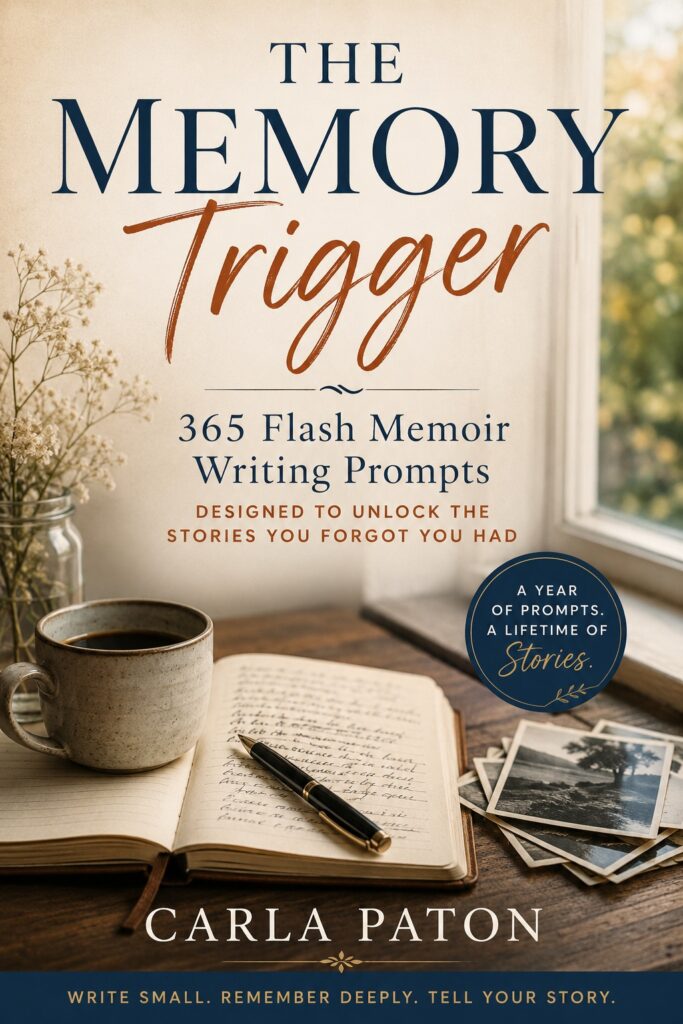
Explore all 365 prompts in The Memory Trigger: 365 Flash Memoir Writing Prompts.


Get the Free Close Reading Worksheet Pack
Join my email list and receive the printable worksheet pack you can use with any novel or poem.
No spam. Just helpful guides for reading literature well.












