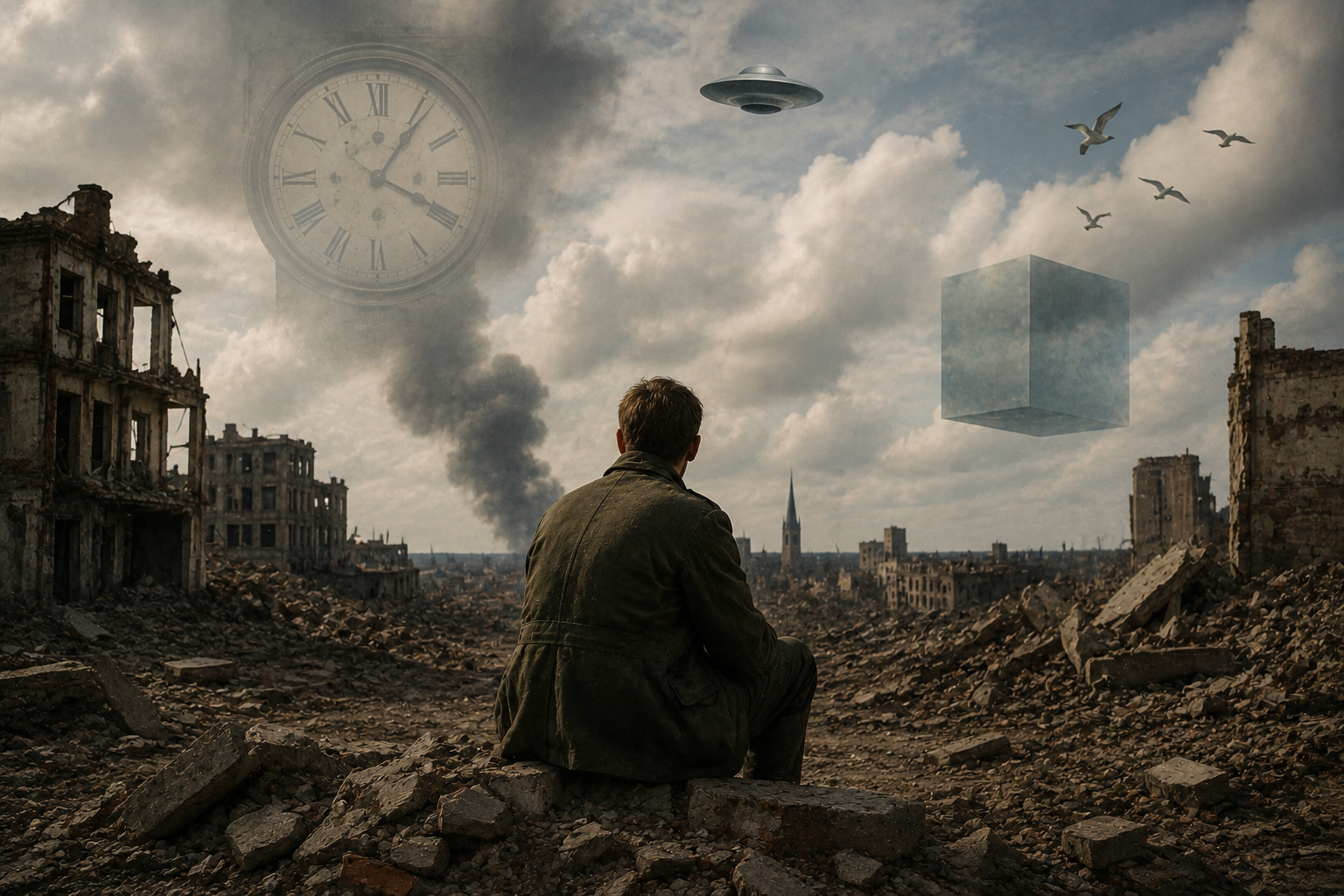
Slaughterhouse-Five can feel strange at first because it moves through war, memory, and time in a loose way. This guide explains the themes in Slaughterhouse-Five so students can see how Kurt Vonnegut turns chaos into meaning.
In this Guide
- Why the major themes matter
- War and trauma
- Time, fate, and free will
- Death and the phrase “so it goes”
- Dark humor and absurdity
- Storytelling and memory
- Books to read next
- FAQ
Why the themes in Slaughterhouse-Five matter
Vonnegut does not write a simple war story.
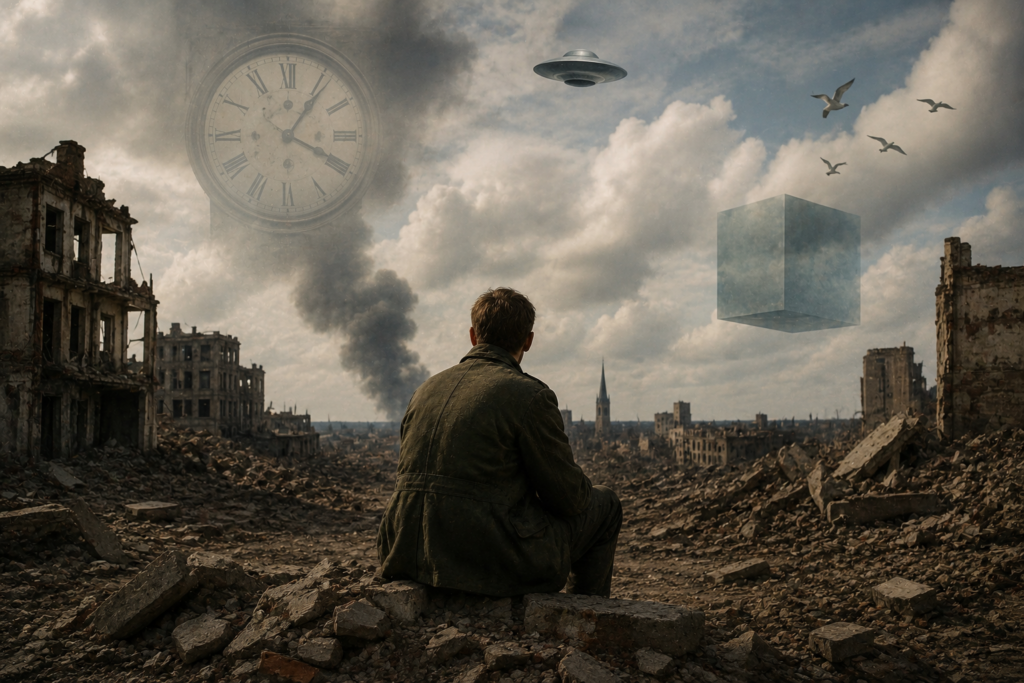
The novel follows Billy Pilgrim, a man who survives the firebombing of Dresden during World War II. Yet the plot jumps across his life, which makes the book feel broken on purpose.
That broken form helps reveal the themes in Slaughterhouse-Five. The style shows how trauma can damage a person’s sense of time, truth, and self.
If you want help linking theme to character choices, see this guide on how to analyze characters in literature.
War and trauma: one of the central themes in Slaughterhouse-Five
The novel presents war as cruel, random, and deeply harmful.
Vonnegut does not make combat look noble. Soldiers are scared, confused, and often powerless. Billy is not a bold hero. He is weak, passive, and lost.
This matters because the book attacks the idea that war is glorious. The subtitle calls the novel a “children’s crusade,” which points to how young and unprepared many soldiers are.
The bombing of Dresden becomes the core wound of the novel. Billy survives, but survival does not mean he is whole.
These themes in Slaughterhouse-Five connect well with books like The Things They Carried by Tim O’Brien. Both works show that war can follow a person long after the battle ends.
Time, fate, and free will in the themes in Slaughterhouse-Five
Billy’s life does not move in a straight line.
He becomes “unstuck in time,” shifting from childhood to war to old age without warning. This strange structure makes readers ask whether Billy has control over his life.
The Tralfamadorians, the alien beings Billy describes, believe all moments exist at once. To them, death is just one moment, not the end of everything.
This idea can sound peaceful, but it can also feel cold. If everything has already happened, then choice may not matter.
Among the themes in Slaughterhouse-Five, free will is one of the hardest to pin down. Vonnegut leaves room for doubt. Billy may have found comfort in this belief, or he may use it to avoid pain.
Death and “so it goes”
The phrase “so it goes” appears again and again after death.
At first, it can seem funny or casual. Over time, it becomes disturbing because it follows deaths that are small, tragic, and huge.
Vonnegut uses repetition to show how often death appears in human life. The phrase can sound like acceptance, but it can also suggest numbness.
This is one reason the novel is so powerful. It does not ask readers to feel one simple emotion. It asks them to notice how people protect themselves when grief becomes too much.
For more context on Vonnegut’s life and career, you can read Britannica’s overview of Kurt Vonnegut.
How dark humor shapes the themes in Slaughterhouse-Five
Vonnegut uses humor to make horror easier to face, not to make it less serious.
The book is full of strange jokes, odd details, and absurd scenes. These moments may seem silly, but they help reveal how nonsensical war can be.
Dark humor also keeps the book from becoming a speech. Vonnegut does not simply tell readers that war is wrong. He creates a world where war looks foolish, broken, and cruel.
These themes in Slaughterhouse-Five fit the style of anti-war satire. A good comparison is Catch-22 by Joseph Heller, where comedy also exposes the madness of war.
Storytelling and memory in the themes in Slaughterhouse-Five
The novel asks how stories can speak about pain.
Vonnegut begins the book by telling readers he struggled to write about Dresden. This opening makes the act of writing part of the story.
That choice is important. It shows that trauma is not easy to explain in a clean plot. A neat story might make war seem too simple.
Billy’s time travel can be read as science fiction, but it can also be read as a picture of memory. Pain does not always stay in the past. It returns without warning.
If you are writing an essay, focus on how form supports meaning. The mixed-up timeline is not just a trick. It helps express the themes in Slaughterhouse-Five.













Innocence, helplessness, and moral confusion
Many characters in the novel do not understand the forces around them.
Billy often seems childlike. He drifts through events rather than acts with clear purpose. This makes him different from the usual war hero.
The soldiers around him also seem unready for what they face. They are part of a massive war, but they rarely understand its full meaning.
This helps Vonnegut show moral confusion. In war, people may cause harm, suffer harm, or witness harm without clear answers.
Students can use this idea in essays about innocence. The novel suggests that war destroys not only bodies, but also the simple belief that the world makes sense.
How to write about themes in Slaughterhouse-Five
A strong theme paragraph should connect an idea to a pattern in the text.
Do not just say, “The theme is war is bad.” That is too broad. Try a sharper claim like this: Vonnegut shows war as a force that breaks time, memory, and moral order.
Then use evidence. You might discuss Billy’s time shifts, the bombing of Dresden, or the repeated phrase “so it goes.”
For more essay help, review character analysis strategies. Billy’s passivity, fear, and confusion all connect to theme.
You can also use a student literature study guide bundle to organize quotes, claims, and notes before you draft.
Books to read next
These books pair well with Slaughterhouse-Five because they also explore war, memory, and moral pressure.
- The Things They Carried by Tim O’Brien
- Catch-22 by Joseph Heller
FAQ about themes in Slaughterhouse-Five
Use these quick answers to review before class or an essay.
What are the main themes in Slaughterhouse-Five?
The main themes include war trauma, free will, death, dark humor, and the limits of storytelling.
Why is time so important in the novel?
Time shows Billy’s trauma. His life feels scattered because his mind cannot leave the past behind.
Is Slaughterhouse-Five an anti-war novel?
Yes. Vonnegut shows war as absurd and cruel, not heroic or noble.
What does “so it goes” mean?
The phrase follows death throughout the book. It suggests acceptance, numbness, and the limits of human response.
How can I write a strong essay about the novel?
Choose one theme, connect it to a repeated pattern, and explain how Vonnegut’s style supports the meaning.
Key takeaway
The themes in Slaughterhouse-Five show a world where war breaks time, language, and belief. Vonnegut’s strange style helps readers feel that damage instead of just hear about it.