One Flew Over the Cuckoo’s Nest Character Analysis: Key People, Motivations, and Conflicts

one flew cuckoos nest character analysis

A practical breakdown of the main characters and how their choices shape the story.

This One Flew Over the Cuckoo’s Nest character analysis helps you see how power, fear, rebellion, and silence drive the novel. It is built for students who need clear ideas for essays, discussion posts, and quote-based analysis.

In this Guide

  • Why character choices matter
  • Chief Bromden as narrator
  • McMurphy and Nurse Ratched
  • Supporting patients and staff
  • Major conflicts
  • Essay tips and useful resources
  • FAQ
one flew cuckoos nest character analysis

One Flew Over the Cuckoo’s Nest Character Analysis: Why Character Choices Matter

The novel uses character choices to show how control works inside the ward.

A strong One Flew Over the Cuckoo’s Nest character analysis starts with one core idea: this hospital is not just a setting. It is a system that teaches men to doubt themselves.

Ken Kesey gives each major character a different response to that system. Some obey. Some hide. And some fight back, even when the cost is high.

If you need a quick method for breaking down motives, conflicts, and change, this guide to analyzing characters in literature can help you build stronger notes before you write.

One Flew Over the Cuckoo’s Nest Character Analysis of Chief Bromden

Chief Bromden is the quiet witness who slowly becomes the emotional center of the novel.

Chief Bromden begins the story as a man who pretends to be deaf and unable to speak. This choice protects him, but it also traps him.

He sees the ward as part of a huge machine called the Combine. Through his eyes, Nurse Ratched seems almost mechanical, and the hospital feels cold and unreal.

In this One Flew Over the Cuckoo’s Nest character analysis, Chief matters because he changes the most. He moves from fear to action. By the end, he can speak, make a choice, and leave.

His arc is a lot like other famous quiet narrators in literature. Like Nick Carraway in The Great Gatsby, Chief watches others closely. But unlike Nick, Chief must also recover his own voice.

One Flew Over the Cuckoo’s Nest Character Analysis: McMurphy vs. Nurse Ratched

McMurphy and Nurse Ratched create the novel’s main clash between freedom and control.

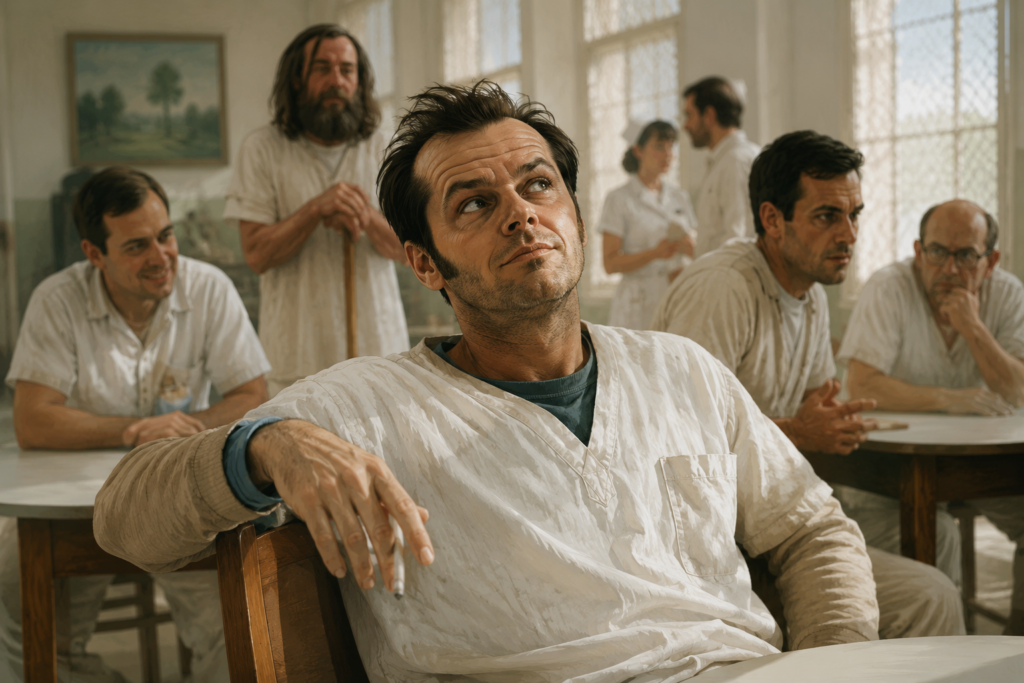
Randle McMurphy enters the ward loud, bold, and full of risk. At first, he seems selfish. He wants comfort, money, and a break from prison labor.

That changes as he sees how much power Nurse Ratched has over the patients. He starts to act less like a trickster and more like a rebel.

Nurse Ratched rules through routine, shame, and silence. She rarely needs to shout. Her power comes from making the men feel weak before they can even resist.

This One Flew Over the Cuckoo’s Nest character analysis should not treat McMurphy as perfect or Ratched as simple. McMurphy can be reckless, and Ratched believes order is necessary. The conflict becomes tragic because both understand power in very different ways.

Ratched is similar to Big Brother in 1984. She controls people not only through rules, but through the fear of being watched and judged.

image-slider-with-thumbnail1.jpeg
PlayPause
previous arrow
next arrow
image-slider-with-thumbnail1.jpeg
image-slider-with-thumbnail3.jpeg
image-slider-with-thumbnail4.jpeg
ChatGPT Image Jun 27, 2026, 06_33_13 PM
ChatGPT Image Jun 27, 2026, 06_36_37 PM
ChatGPT Image Jun 27, 2026, 06_38_39 PM
ChatGPT Image Jun 27, 2026, 06_31_22 PM
image-slider-with-thumbnail7.jpeg
ChatGPT Image Jun 27, 2026, 06_29_43 PM
ChatGPT Image Jun 27, 2026, 06_27_44 PM
image-slider-with-thumbnail6.jpeg
ChatGPT Image Jun 27, 2026, 06_15_07 PM
image-slider-with-thumbnail5.jpeg
ChatGPT Image Jun 27, 2026, 06_22_43 PM
ChatGPT Image Jun 27, 2026, 06_25_37 PM
ChatGPT Image Jun 27, 2026, 06_19_43 PM
ChatGPT Image Jun 27, 2026, 06_12_00 PM
ChatGPT Image Jun 27, 2026, 06_08_50 PM
ChatGPT Image Jun 26, 2026, 04_54_23 PM
ChatGPT Image Jun 27, 2026, 05_53_51 PM
ChatGPT Image Jun 28, 2026, 08_35_55 AM
previous arrow
next arrow

Supporting Roles in One Flew Over the Cuckoo’s Nest Character Analysis

The side characters show how the ward affects different kinds of pain and fear.

Billy Bibbit is shy, nervous, and controlled by his fear of his mother. He wants love and respect, but he has been taught to feel ashamed of wanting anything for himself.

Dale Harding is smart and sharp, yet he hides behind polished words. His wit protects him, but it also keeps him from facing his own insecurity.

Cheswick shows what happens when someone wants change but lacks support. He cheers for McMurphy, then feels crushed when McMurphy pulls back.

Dr. Spivey is weak at first, but McMurphy gives him a little courage. This matters because the ward’s power depends on people staying passive.

Candy Starr and Sandy are not deeply developed, but they affect the plot. They bring a brief sense of pleasure and outside life into a place built on control.

Major Conflicts in One Flew Over the Cuckoo’s Nest Character Analysis

The novel’s conflicts are personal, social, and deeply moral.

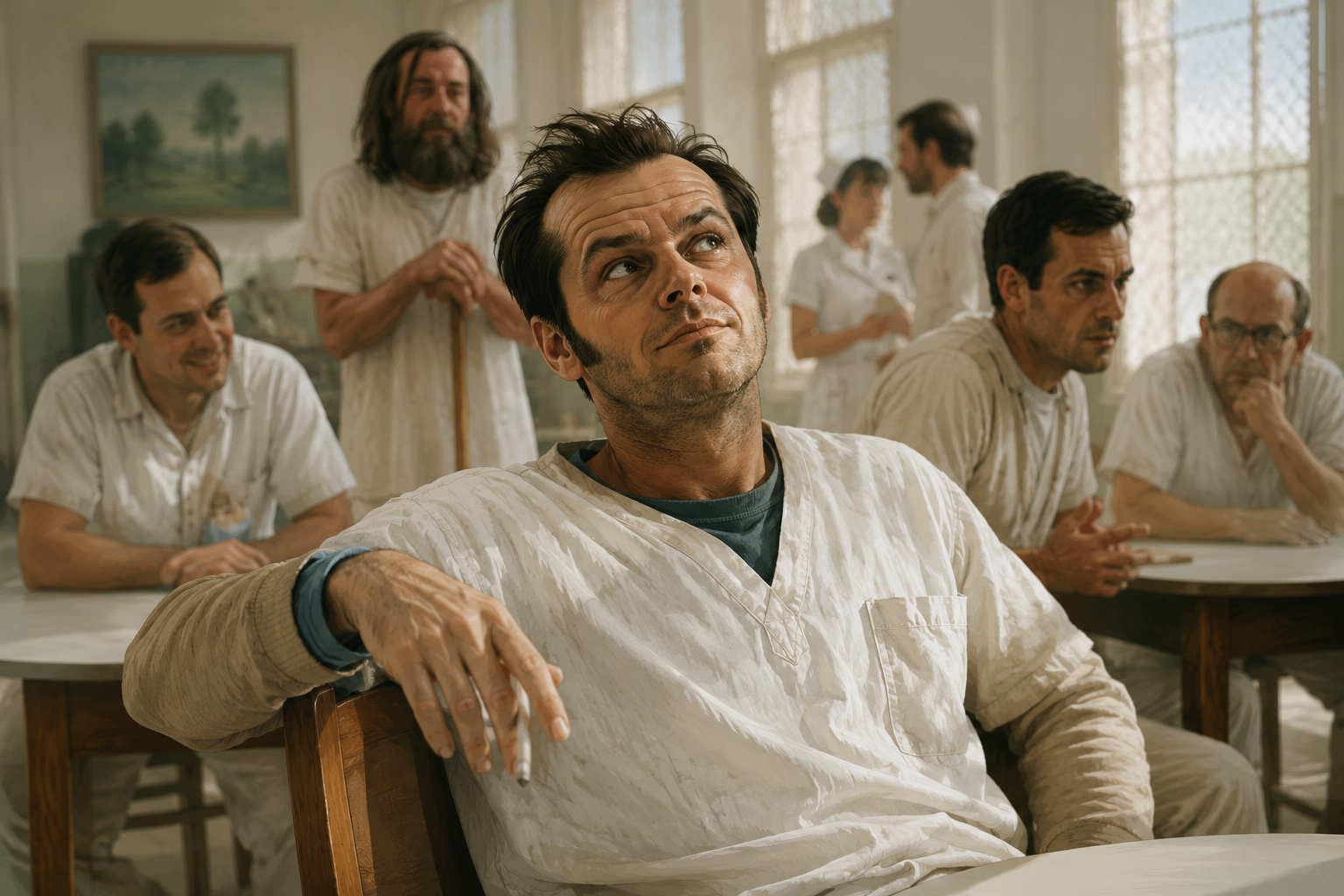
The biggest conflict is McMurphy against Nurse Ratched. He pushes for laughter, games, fishing, and choice. She pushes for schedule, rules, and obedience.

Chief’s conflict is mostly internal. He must decide whether he is truly powerless or whether fear has trained him to act that way.

The patients also face a conflict with shame. Many are not forced to stay on the ward. They remain because the outside world feels even more frightening.

This is why the novel still works for class debate. It asks whether safety without freedom is worth the cost.

How to Use One Flew Over the Cuckoo’s Nest Character Analysis in Essays

Good essays focus on one clear claim about a character’s motive or change.

Do not just write that McMurphy is rebellious. Ask what his rebellion reveals about the ward. Does he fight for himself, for the patients, or for an idea of freedom?

Do not just say Chief is silent. Ask why silence protects him, and why speech becomes a sign of healing.

For a strong paragraph, connect a character choice to a larger theme. For example, Billy’s fear can support an essay about shame. Harding’s sarcasm can support an essay about identity.

If you want a simple planning tool, you can grab our student character analysis resource and use it with your notes.

You can also review how to study character motivation before you draft your thesis.

Historical and Author Background

A little context can make the characters easier to understand.

Kesey wrote during a time when many Americans questioned authority, mental health care, social rules, and government power. The ward reflects those fears in a focused way.

For reliable background on the author, see Britannica’s overview of Ken Kesey.

Suggested Books for Deeper Reading

These books pair well with a One Flew Over the Cuckoo’s Nest character analysis because they also explore identity, pressure, and rebellion.

  • One Flew Over the Cuckoo’s Nest by Ken Kesey
  • The Bell Jar by Sylvia Plath
  • The Catcher in the Rye by J.D. Salinger

FAQ

Who is the most important character in One Flew Over the Cuckoo’s Nest?

Chief Bromden is the narrator and the character with the clearest growth. McMurphy drives much of the plot, but Chief’s change gives the story its final meaning.

What is the main conflict in the novel?

The main conflict is between McMurphy’s desire for freedom and Nurse Ratched’s need for control. This conflict affects every patient on the ward.

Why is Nurse Ratched such a powerful character?

She controls the ward through routine, shame, and emotional pressure. Her calm manner makes her power feel even colder.

How can I write a One Flew Over the Cuckoo’s Nest character analysis essay?

Choose one character, make a claim about that person’s motive or change, then connect key moments to a larger theme like power, fear, or freedom.

Key Takeaway

A clear One Flew Over the Cuckoo’s Nest character analysis shows that the novel is not only about rebellion. It is about how people lose their voices, and what it costs to get them back.
Themes in One Flew Over the Cuckoo’s Nest

Cuckoo's Nest Themes

Understanding the themes in One Flew Over the Cuckoo’s Nest helps you see why Ken Kesey’s novel still matters in English classes today.

The book is not only about a hospital ward. It is about power, fear, freedom, and the fight to keep a human self alive.

In this Guide

Use this guide to track the novel’s biggest ideas and build stronger class notes.

  • Major themes at a glance
  • Control and institutional power
  • Freedom and conformity
  • Sanity and identity
  • Rebellion and sacrifice
  • Gender, power, and dated ideas
  • How to write about the novel
  • FAQ
Cuckoo's Nest Themes

Themes in One Flew Over the Cuckoo’s Nest at a Glance

The novel’s themes grow from the conflict between the individual and a system built to control him.

A strong reading of the themes in One Flew Over the Cuckoo’s Nest starts with the ward itself. The hospital seems calm on the surface, but it often works through fear, routine, and shame.

Chief Bromden sees this system as part of “the Combine,” his name for a huge social machine. His view may not always be literal, but it shows how trapped the patients feel.

McMurphy enters the ward as a force of disorder and energy. He challenges the rules, and his actions expose how much power Nurse Ratched holds over the men.

Themes in One Flew Over the Cuckoo’s Nest: Control and Institutional Power

Kesey shows how a system can control people without using open violence all the time.

Among the themes in One Flew Over the Cuckoo’s Nest, control is one of the most important. Nurse Ratched controls the ward through schedules, group meetings, medication, and public embarrassment.

Her power comes from making the men doubt themselves. If a patient feels weak, childish, or guilty, he is easier to manage.

The ward is not only a hospital in this reading. It becomes a symbol of any institution that values order more than real human life.

This is why the novel pairs well with George Orwell’s 1984. Both books show systems that crush private thought, though Kesey’s world feels more personal and psychological.

Themes in One Flew Over the Cuckoo’s Nest: Freedom and Conformity

The novel asks whether freedom is worth the risk of pain.

This is one of the clearest themes in One Flew Over the Cuckoo’s Nest because McMurphy refuses to act like the ward wants him to act. He jokes, gambles, argues, and laughs loudly.

At first, some patients see him as reckless. Over time, his confidence helps them remember that they have choices.

The fishing trip is a key example. Away from the ward, the men feel more capable and alive. They are still afraid, but they are no longer only patients in a system.

Kesey does not make freedom simple. McMurphy’s resistance has a cost, and the novel asks readers to think about how much a person should risk for dignity.

Sanity, Identity, and Who Gets to Define Normal

The novel challenges the line between “sane” and “insane.”

Chief Bromden’s narration makes this theme complex. He sees fog, wires, and machines, but his strange vision often reveals emotional truth.

The ward calls the men sick, yet the outside world also seems cruel and unhealthy. Kesey suggests that society may label people as “abnormal” because they do not fit its rules.

This theme is useful to compare with Charlotte Perkins Gilman’s The Yellow Wallpaper. In both texts, a person’s voice is ignored by those who claim to know what is best.

Students should be careful here. The novel uses old and sometimes harmful ideas about mental illness, but it still raises a serious question: who has the power to define reality?

Rebellion, Sacrifice, and the Cost of Resistance

McMurphy’s rebellion gives others courage, but it also makes him a target.

At first, McMurphy fights Nurse Ratched for selfish reasons. He wants comfort, status, and control over his own time.

Later, his role changes. He begins to see how much the other men need someone to stand up for them.

His final punishment shows how dangerous resistance can be in a closed system. Still, his influence remains after he cannot speak for himself.

Chief Bromden’s ending matters because it proves McMurphy’s rebellion was not wasted. Chief acts, escapes, and claims a life beyond the ward.

image-slider-with-thumbnail1.jpeg
PlayPause
previous arrow
next arrow
image-slider-with-thumbnail1.jpeg
image-slider-with-thumbnail3.jpeg
image-slider-with-thumbnail4.jpeg
ChatGPT Image Jun 27, 2026, 06_33_13 PM
ChatGPT Image Jun 27, 2026, 06_36_37 PM
ChatGPT Image Jun 27, 2026, 06_38_39 PM
ChatGPT Image Jun 27, 2026, 06_31_22 PM
image-slider-with-thumbnail7.jpeg
ChatGPT Image Jun 27, 2026, 06_29_43 PM
ChatGPT Image Jun 27, 2026, 06_27_44 PM
image-slider-with-thumbnail6.jpeg
ChatGPT Image Jun 27, 2026, 06_15_07 PM
image-slider-with-thumbnail5.jpeg
ChatGPT Image Jun 27, 2026, 06_22_43 PM
ChatGPT Image Jun 27, 2026, 06_25_37 PM
ChatGPT Image Jun 27, 2026, 06_19_43 PM
ChatGPT Image Jun 27, 2026, 06_12_00 PM
ChatGPT Image Jun 27, 2026, 06_08_50 PM
ChatGPT Image Jun 26, 2026, 04_54_23 PM
ChatGPT Image Jun 27, 2026, 05_53_51 PM
ChatGPT Image Jun 28, 2026, 08_35_55 AM
previous arrow
next arrow

Gender, Power, and Dated Ideas in the Novel

Kesey links power, masculinity, and fear in ways students should read with care.

Nurse Ratched is one of the most famous authority figures in modern fiction. She works through calm speech and strict control, not through loud anger.

The novel often presents her power as threatening because she is a woman with authority over men. That part of the book reflects dated gender ideas, and readers should not ignore it.

A strong essay can analyze this tension. You can argue that the novel attacks oppressive power, while also using troubling ideas about women and masculinity.

This makes the book more complex, not less. Literature often asks us to study both what a text reveals and what it fails to question.

Narration, Symbols, and Hidden Meaning

Chief Bromden’s voice shapes how readers understand the ward.

Because Chief narrates the story, readers see the hospital through fear, memory, and symbol. His “fog” shows confusion and emotional escape.

The machine images show how unnatural the ward feels to him. People seem turned into parts of a system, not treated as full human beings.

Laughter becomes another key symbol. When McMurphy laughs, he shows that Nurse Ratched does not control his whole spirit.

For author background, you can read Britannica’s overview of Ken Kesey.

How to Write About the themes in One Flew Over the Cuckoo’s Nest

A good theme essay makes a claim, then proves it with scenes and character choices.

When you write about the themes in One Flew Over the Cuckoo’s Nest, avoid saying only that “control is a theme.” Say what Kesey argues about control.

For example, you might write: Kesey shows that institutions can destroy identity when they use shame as a tool of control.

You could also argue: McMurphy’s rebellion matters because it teaches the other patients to see themselves as human again.

If you need help shaping a thesis, use this guide to writing a literary analysis essay.

For a quick review before class, you can pair this article with our student literature study guide.

Books to Read or Compare Next

These books can help you build context for essays and class discussion.

  • One Flew Over the Cuckoo’s Nest by Ken Kesey
  • 1984 by George Orwell
  • The Bell Jar by Sylvia Plath

Each book studies pressure on the self. Each one also asks how society treats people who resist its labels.

FAQ About themes in One Flew Over the Cuckoo’s Nest

These short answers cover common student questions.

What are the main themes in One Flew Over the Cuckoo’s Nest?

The main themes in One Flew Over the Cuckoo’s Nest include control, freedom, identity, rebellion, and the power to define sanity.

What does Nurse Ratched symbolize?

Nurse Ratched often symbolizes institutional control. She represents a system that values order over compassion.

Why is Chief Bromden important?

Chief Bromden is important because his narration shows the emotional truth of the ward. His growth also gives the novel its final act of hope.

Is McMurphy a hero?

McMurphy is a flawed hero. He can be selfish, but his resistance helps the other patients recover courage.

Key Takeaway

The themes in One Flew Over the Cuckoo’s Nest show how hard it can be to stay human inside a system built on fear.

Kesey’s novel asks students to look closely at power, voice, and dignity. That is why the book remains a strong choice for literary analysis.

error

Enjoy this article? Please spread the word :)

Follow by Email
BLUESKY
fb-share-icon
Reddit
LinkedIn
Share
RSS