

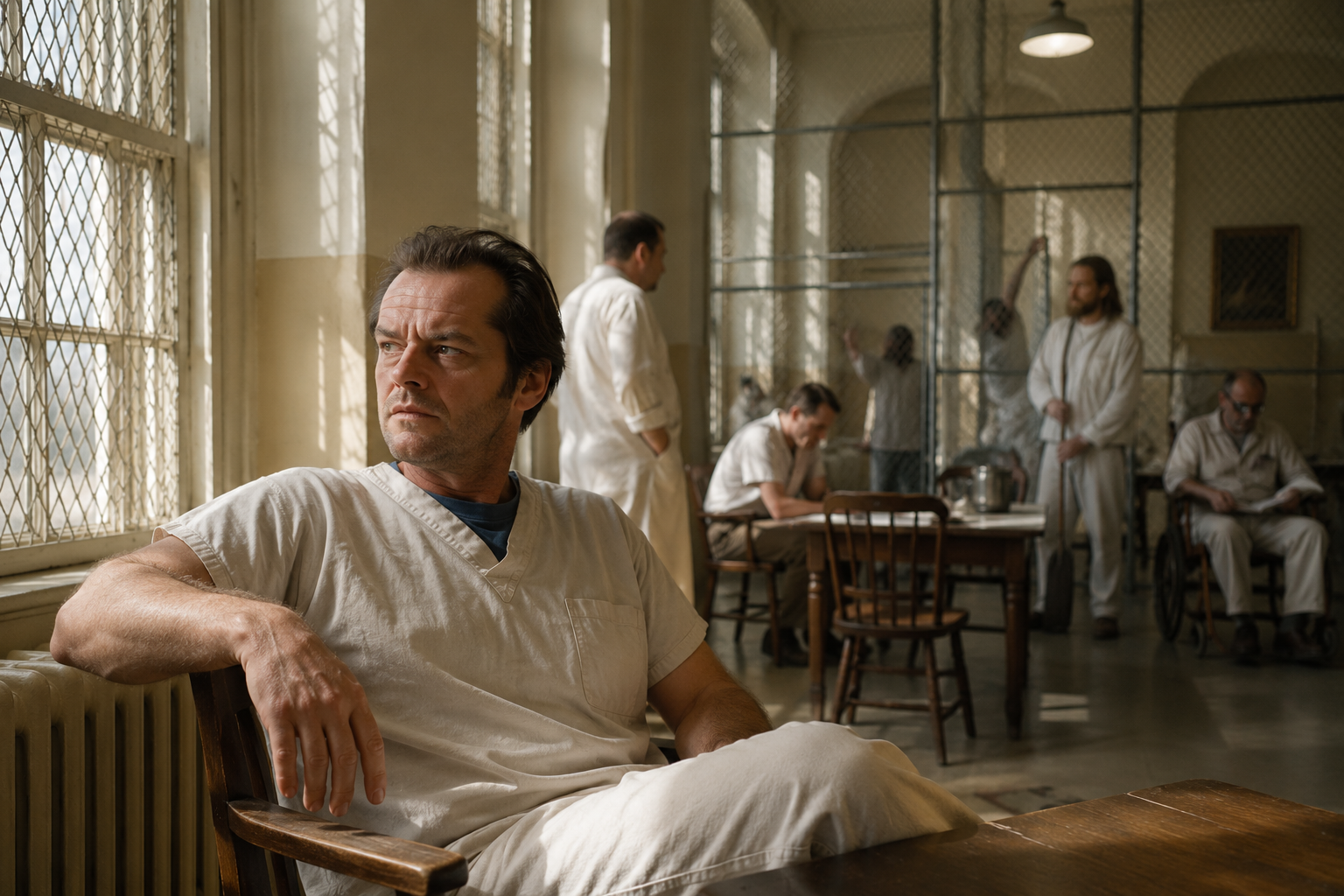
Understanding the themes in One Flew Over the Cuckoo’s Nest helps you see why Ken Kesey’s novel still matters in English classes today.
The book is not only about a hospital ward. It is about power, fear, freedom, and the fight to keep a human self alive.
In this Guide
Use this guide to track the novel’s biggest ideas and build stronger class notes.
- Major themes at a glance
- Control and institutional power
- Freedom and conformity
- Sanity and identity
- Rebellion and sacrifice
- Gender, power, and dated ideas
- How to write about the novel
- FAQ
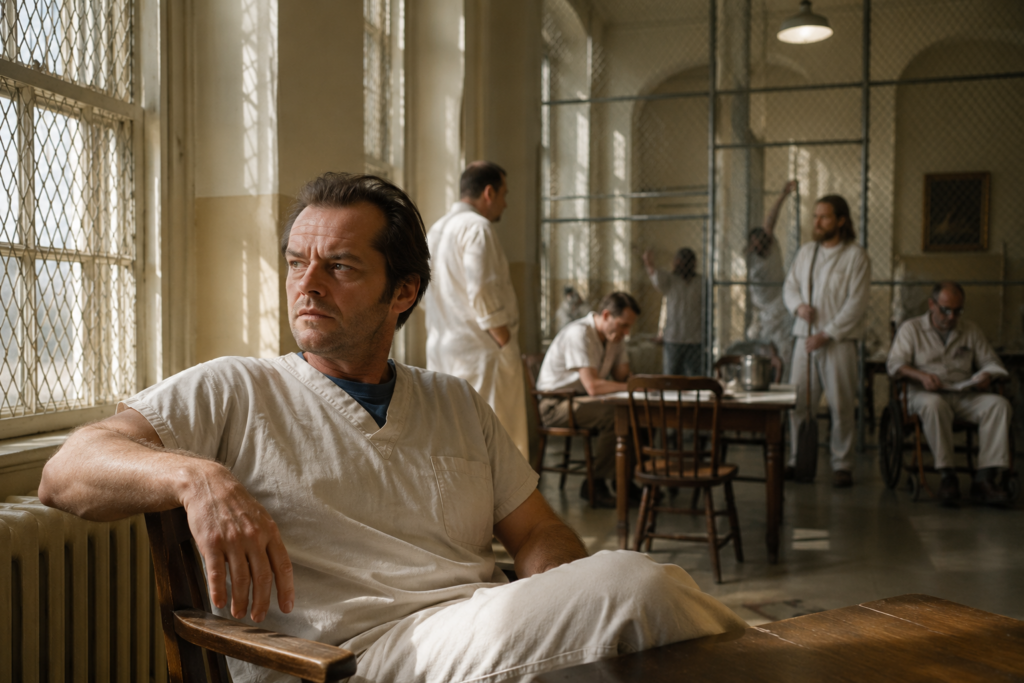
Themes in One Flew Over the Cuckoo’s Nest at a Glance
The novel’s themes grow from the conflict between the individual and a system built to control him.
A strong reading of the themes in One Flew Over the Cuckoo’s Nest starts with the ward itself. The hospital seems calm on the surface, but it often works through fear, routine, and shame.
Chief Bromden sees this system as part of “the Combine,” his name for a huge social machine. His view may not always be literal, but it shows how trapped the patients feel.
McMurphy enters the ward as a force of disorder and energy. He challenges the rules, and his actions expose how much power Nurse Ratched holds over the men.
Themes in One Flew Over the Cuckoo’s Nest: Control and Institutional Power
Kesey shows how a system can control people without using open violence all the time.
Among the themes in One Flew Over the Cuckoo’s Nest, control is one of the most important. Nurse Ratched controls the ward through schedules, group meetings, medication, and public embarrassment.
Her power comes from making the men doubt themselves. If a patient feels weak, childish, or guilty, he is easier to manage.
The ward is not only a hospital in this reading. It becomes a symbol of any institution that values order more than real human life.
This is why the novel pairs well with George Orwell’s 1984. Both books show systems that crush private thought, though Kesey’s world feels more personal and psychological.
Themes in One Flew Over the Cuckoo’s Nest: Freedom and Conformity
The novel asks whether freedom is worth the risk of pain.
This is one of the clearest themes in One Flew Over the Cuckoo’s Nest because McMurphy refuses to act like the ward wants him to act. He jokes, gambles, argues, and laughs loudly.
At first, some patients see him as reckless. Over time, his confidence helps them remember that they have choices.
The fishing trip is a key example. Away from the ward, the men feel more capable and alive. They are still afraid, but they are no longer only patients in a system.
Kesey does not make freedom simple. McMurphy’s resistance has a cost, and the novel asks readers to think about how much a person should risk for dignity.
Sanity, Identity, and Who Gets to Define Normal
The novel challenges the line between “sane” and “insane.”
Chief Bromden’s narration makes this theme complex. He sees fog, wires, and machines, but his strange vision often reveals emotional truth.
The ward calls the men sick, yet the outside world also seems cruel and unhealthy. Kesey suggests that society may label people as “abnormal” because they do not fit its rules.
This theme is useful to compare with Charlotte Perkins Gilman’s The Yellow Wallpaper. In both texts, a person’s voice is ignored by those who claim to know what is best.
Students should be careful here. The novel uses old and sometimes harmful ideas about mental illness, but it still raises a serious question: who has the power to define reality?
Rebellion, Sacrifice, and the Cost of Resistance
McMurphy’s rebellion gives others courage, but it also makes him a target.
At first, McMurphy fights Nurse Ratched for selfish reasons. He wants comfort, status, and control over his own time.
Later, his role changes. He begins to see how much the other men need someone to stand up for them.
His final punishment shows how dangerous resistance can be in a closed system. Still, his influence remains after he cannot speak for himself.
Chief Bromden’s ending matters because it proves McMurphy’s rebellion was not wasted. Chief acts, escapes, and claims a life beyond the ward.

























Gender, Power, and Dated Ideas in the Novel
Kesey links power, masculinity, and fear in ways students should read with care.
Nurse Ratched is one of the most famous authority figures in modern fiction. She works through calm speech and strict control, not through loud anger.
The novel often presents her power as threatening because she is a woman with authority over men. That part of the book reflects dated gender ideas, and readers should not ignore it.
A strong essay can analyze this tension. You can argue that the novel attacks oppressive power, while also using troubling ideas about women and masculinity.
This makes the book more complex, not less. Literature often asks us to study both what a text reveals and what it fails to question.
Narration, Symbols, and Hidden Meaning
Chief Bromden’s voice shapes how readers understand the ward.
Because Chief narrates the story, readers see the hospital through fear, memory, and symbol. His “fog” shows confusion and emotional escape.
The machine images show how unnatural the ward feels to him. People seem turned into parts of a system, not treated as full human beings.
Laughter becomes another key symbol. When McMurphy laughs, he shows that Nurse Ratched does not control his whole spirit.
For author background, you can read Britannica’s overview of Ken Kesey.
How to Write About the themes in One Flew Over the Cuckoo’s Nest
A good theme essay makes a claim, then proves it with scenes and character choices.
When you write about the themes in One Flew Over the Cuckoo’s Nest, avoid saying only that “control is a theme.” Say what Kesey argues about control.
For example, you might write: Kesey shows that institutions can destroy identity when they use shame as a tool of control.
You could also argue: McMurphy’s rebellion matters because it teaches the other patients to see themselves as human again.
If you need help shaping a thesis, use this guide to writing a literary analysis essay.
For a quick review before class, you can pair this article with our student literature study guide.
Books to Read or Compare Next
These books can help you build context for essays and class discussion.
- One Flew Over the Cuckoo’s Nest by Ken Kesey
- 1984 by George Orwell
- The Bell Jar by Sylvia Plath
Each book studies pressure on the self. Each one also asks how society treats people who resist its labels.
FAQ About themes in One Flew Over the Cuckoo’s Nest
These short answers cover common student questions.
What are the main themes in One Flew Over the Cuckoo’s Nest?
The main themes in One Flew Over the Cuckoo’s Nest include control, freedom, identity, rebellion, and the power to define sanity.
What does Nurse Ratched symbolize?
Nurse Ratched often symbolizes institutional control. She represents a system that values order over compassion.
Why is Chief Bromden important?
Chief Bromden is important because his narration shows the emotional truth of the ward. His growth also gives the novel its final act of hope.
Is McMurphy a hero?
McMurphy is a flawed hero. He can be selfish, but his resistance helps the other patients recover courage.
Key Takeaway
The themes in One Flew Over the Cuckoo’s Nest show how hard it can be to stay human inside a system built on fear.
Kesey’s novel asks students to look closely at power, voice, and dignity. That is why the book remains a strong choice for literary analysis.


Get the Free Close Reading Worksheet Pack
Join my email list and receive the printable worksheet pack you can use with any novel or poem.
No spam. Just helpful guides for reading literature well.












