Flash Memoir Prompt: Last Time You Felt Completely at Ease in Your Own Body

Flash Memoir Prompt body

A gentle flash memoir invitation for remembering a moment when your shoulders dropped, your breath settled, and your body felt like a safe place to be.

Maybe it happened in a place no one else would call special. Your feet were tucked under a kitchen chair. Your hair was still damp from a shower. You were walking home with a warm drink in your hand, and for once you were not fixing, hiding, judging, or bracing.

If you searched for a flash memoir prompt last time felt completely at ease in your own body, this prompt is asking you to pause on that kind of moment. Not the perfect version of yourself. Not the body you wished for. The body you had, in one exact scene, when it felt enough.

Flash Memoir Prompt body

The Prompt

Write about the last time you felt completely at ease in your own body.

This prompt can unlock a meaningful memory because the body often remembers peace before the mind has words for it. You may not recall the date or every detail, but you might remember the weight of a blanket, the feel of bare feet on cool floor, or the deep breath you did not have to force.

A flash memoir prompt last time felt completely at ease can lead to a quiet story. It does not need a big plot. The power may be in the small shift from tension to rest.

Why This Memory Matters

Many of us spend a lot of time aware of our bodies in critical ways. We notice discomfort, awkwardness, tiredness, pain, size, age, or how others might see us. So a memory of ease can feel surprisingly tender.

This kind of story may uncover more than comfort. It may reveal safety, trust, relief, or belonging. You might remember a time when you were alone and free from performance. You might remember being with someone who made you feel accepted without effort.

For some writers, the memory may be connected to movement. Dancing in a living room. Swimming after a hard week. Stretching in the sun. For others, it may be rest. Sitting on a porch. Lying in bed with clean sheets. Holding a child who finally fell asleep.

As you write, notice the emotional weather of the scene. Is the memory calm, playful, surprised, or bittersweet? If you want help naming the feeling around the memory, this guide to tone and mood in literature can help you see the difference between what happened and how it felt.

How to Approach This Prompt

Begin with one physical detail. Do not start by explaining your relationship with your body across your whole life. That is too much for one short piece. Start smaller.

You might write, “My feet were in the lake,” or “The sweatshirt was too big in the best way,” or “I had just stopped holding my stomach in.” Let the body open the door.

Then narrow the memory to one scene. Choose ten minutes, not ten years. Where were you? What was touching your skin? What sounds were near you? Or what did your body no longer feel the need to do?

Try to write what you noticed before you explain what it meant. This is the same skill readers use when they slow down and mark details in a text. If you want a simple method for paying closer attention, this piece on how to annotate literature offers a useful way to notice first and interpret second.

For this prompt, you might ask yourself one focused question: What did ease feel like in my body? Maybe it felt like warmth, looseness, balance, silence, or a laugh that came out before you could stop it.

Avoid trying to make the memory sound profound right away. Let it be ordinary. The meaning can rise from the details.

A Quick Example

The last time I felt completely at ease in my body, I was floating in my sister’s backyard pool after everyone else had gone inside. It was late August, and the water held the day’s heat. My ears were under the surface, so the world sounded far away and soft. I remember looking up at the porch light and seeing moths circle it like tiny scraps of paper. For once, I was not thinking about how I looked in a swimsuit. I was not pulling at the fabric or comparing myself to anyone. My arms drifted out beside me. My knees rose and sank. I felt my breath move through me, steady and plain. But I did not feel beautiful exactly. I felt unbothered. That was better.

Try It Yourself

Set a timer for ten minutes and write from the prompt without stopping to judge the memory. If more than one moment comes to mind, choose the one with the clearest physical detail.

You do not have to write a body-positive essay. You do not have to solve every complicated feeling. Just return to one moment of ease and describe it honestly.

This flash memoir prompt last time felt completely at ease in your body works best when you trust the small scene. Let the chair, the water, the blanket, the sidewalk, or the quiet room carry part of the story for you.

Want More Flash Memoir Prompts?

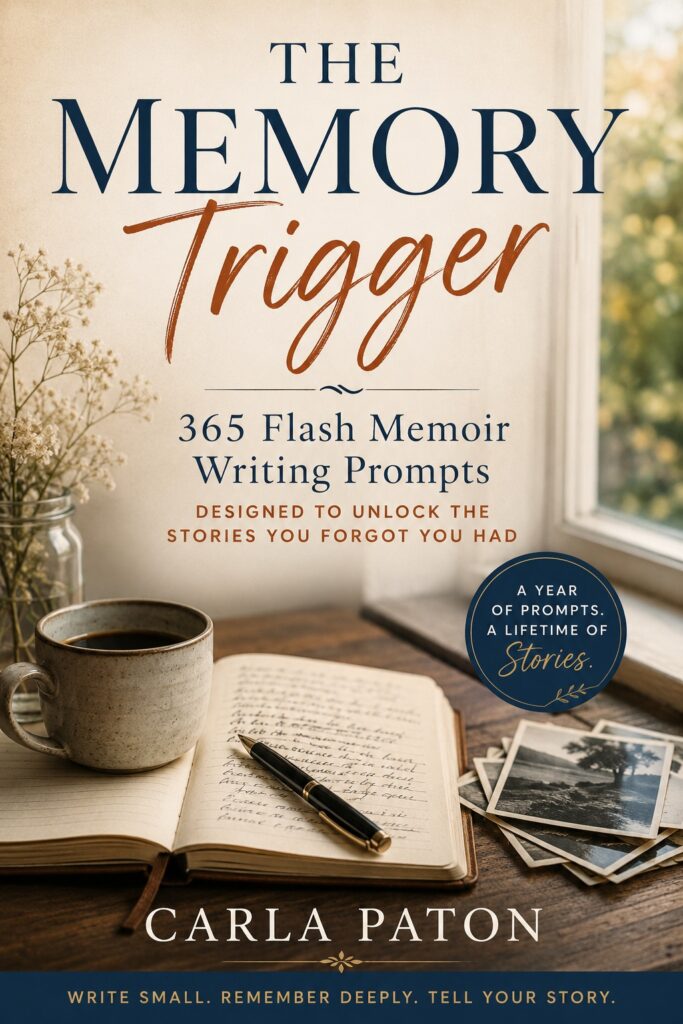
If this prompt opened a memory you did not expect, keep going. Short prompts can help you build a steady writing habit, one scene at a time. Explore all 365 prompts in The Memory Trigger: 365 Flash Memoir Writing Prompts.

The Memory Trigger

Existential Themes in Fiction

Existential themes
Existential themes

Existential Themes in Fiction help readers ask big questions about life, choice, freedom, fear, and meaning. These themes can feel heavy at first, but many famous novels and stories use them in clear, powerful ways.

If you are studying literature or choosing a book for class, this guide will help you spot existential ideas and explain them with confidence.

In this Guide

  • What existential themes mean
  • Why these themes matter in stories
  • Common signs to look for
  • Examples from well-known books
  • How to write about existential themes
  • Book suggestions
  • FAQ

What Are Existential Themes in Fiction?

Existential themes focus on how people face life when there are no easy answers.

At the center of these stories is a simple but deep question: What does life mean? Characters may feel lost, trapped, or unsure of who they are.

Existential Themes in Fiction often show people who must make hard choices. They cannot depend on society, religion, family, or tradition to give them a clear path.

This does not always mean the story is hopeless. Many works show that meaning can come from action, honesty, love, or personal courage.

For more background on the philosophy behind these ideas, you can read Britannica’s overview of existentialism.

Why Existential Themes in Fiction Matter

These themes matter because they connect literature to real human fears.

Students often meet existential ideas in books where characters feel alone or confused. That can sound dark, but it is also very real.

People ask hard questions at many points in life. Who am I? What should I do? Does my choice matter?

Existential Themes in Fiction help readers see those questions in action. Instead of giving a lecture, the story lets us watch a character struggle.

This makes the theme easier to understand. We see how fear, freedom, and choice shape a person’s life.

Common Signs of Existential Themes in Fiction

You can spot existential ideas by watching what a character fears and chooses.

One common sign is isolation. A character may feel cut off from friends, family, or the world.

Another sign is a crisis of meaning. The character may ask why life matters or why people follow certain rules.

A third sign is moral choice. The character may need to act without a clear guide.

If you need help separating theme from plot, this guide on how to identify theme in literature can help you build a stronger reading method.

Major Existential Themes in Fiction

Most existential stories return to a few core ideas about human life.

Freedom and Responsibility

Existential fiction often shows that freedom is not always easy. If a person is free to choose, that person must also face the results.

This can create fear. A character may want someone else to decide, but the story forces them to act.

Alienation and Loneliness

Many characters feel like outsiders. They may live in a crowded city or belong to a family, yet still feel alone.

This theme asks whether people can truly understand one another.

The Search for Meaning

Some stories show characters who no longer trust old answers. They may question work, faith, law, or social success.

The key point is not always to find one final answer. Often, the search itself reveals the character’s deepest values.

Absurdity

Absurdity appears when life seems strange, unfair, or without clear order. A character may try to make sense of events that do not make sense.

This theme is common in modern fiction, especially after war or social crisis.

Examples of Existential Themes in Fiction

Famous books often make existential ideas easier to see.

The Stranger by Albert Camus

Camus’s novel is one of the clearest examples of Existential Themes in Fiction. The main character, Meursault, seems emotionally distant from the world around him.

He does not react the way society expects. Because of this, readers must ask what makes a life moral or meaningful.

The novel also explores absurdity. The world does not explain itself, and Meursault does not pretend that it does.

The Metamorphosis by Franz Kafka

In Kafka’s story, Gregor Samsa wakes up transformed into a giant insect. The strange event is never explained.

This makes the story feel absurd, but its emotional truth is clear. Gregor feels useless, unwanted, and trapped by duty.

The story shows alienation in a sharp way. Gregor is near his family, but he becomes more alone with each scene.

Crime and Punishment by Fyodor Dostoevsky

Raskolnikov believes he can place himself above normal moral rules. His crime becomes a test of his ideas.

The novel explores guilt, freedom, and responsibility. It shows that ideas have real costs when people act on them.

This is a strong choice for students who want to study moral conflict in depth.

Hamlet by William Shakespeare

Hamlet is not usually called an existential novel, but the play has many existential questions. He wonders about death, action, truth, and the purpose of life.

His famous “To be, or not to be” speech asks whether life is worth the pain it brings. That question sits at the heart of many existential works.

You can explore Shakespeare’s works through the British Library’s Shakespeare resources.

How to Analyze Existential Themes in Fiction for Class

A strong analysis connects a character’s choices to the story’s larger message.

Start with the character’s conflict. Ask what the character wants, fears, or avoids.

Next, look for moments of choice. Existential stories often turn on a decision that reveals who the character is.

Then connect the choice to a theme. For example, if a character rejects social rules, the theme may focus on freedom or alienation.

Existential Themes in Fiction are not just “sad ideas.” They are about how people respond when life feels uncertain.

If you plan to write an essay, choose one main theme and prove it with short quotes. Do not try to cover every idea in the book.

Practical Takeaways for Students

Existential literature becomes easier when you know what to track.

Watch for questions about meaning. These may appear in dialogue, inner thoughts, or major plot choices.

Notice how the setting affects the mood. Empty rooms, courts, cities, and prisons can all show isolation.

Pay close attention to endings. Many existential works do not solve every problem, but the ending can show what the character has learned or refused to learn.

When studying Existential Themes in Fiction, do not panic if the book feels strange. That feeling may be part of the point.

Books to Search for on Amazon

These books are useful for students who want strong examples of existential ideas.

  • The Stranger by Albert Camus
  • The Metamorphosis by Franz Kafka
  • Crime and Punishment by Fyodor Dostoevsky

These works are common in high school, AP Literature, and college courses. They also give readers rich material for essays about choice, guilt, alienation, and meaning.

FAQ About Existential Themes in Fiction

What does existential mean in literature?

It means the story explores life’s biggest questions, such as freedom, death, choice, and meaning.

Are Existential Themes in Fiction always depressing?

No. Some stories are dark, but many show that people can create meaning through honest choices.

What is the easiest existential book to start with?

The Metamorphosis by Franz Kafka is a good start because it is short and clear in its main conflict.

How do I write a thesis about existential themes?

Focus on one idea. For example, you might argue that a character’s isolation reveals the story’s view of human freedom.

Key Takeaway

Existential Themes in Fiction help readers study how people face fear, freedom, and uncertainty. The best way to understand them is to track a character’s choices and ask what those choices say about life.

Flash Memoir Prompt: Dream or Plan You Quietly Let Go of without Telling Anyone

flash memoir dreams

A warm flash memoir prompt for remembering the dream or plan you quietly let go of, through one small scene, one physical detail, and the truth you may not have said out loud.

Maybe it lived in a notebook for a while. Maybe it was a course catalog folded into your bag, a half-finished application, a business idea scribbled on the back of a receipt, or a town you kept checking on weather apps even though you never moved there.

Some dreams do not end with a dramatic speech. They do not slam the door. They simply stop being mentioned. Today’s flash memoir prompt dream plan quietly let go invites you to look at one of those quiet endings with care, not judgment.

flash memoir dreams

The Prompt

Write about a dream or plan you quietly let go of without telling anyone.

This prompt can unlock a meaningful memory because private disappointments often leave small traces. You may remember the day you stopped practicing, the evening you closed the browser tab, or the moment you put the folder in a drawer and did not open it again.

The story does not have to be tragic. Letting go can happen for many reasons. You grew older. Money changed. Someone needed you. The dream no longer fit. Or maybe you were tired of wanting something that kept moving away.

Why This Memory Matters

A dream you never announced can still shape your life. In fact, it may carry a special kind of weight because no one else knew enough to ask what happened.

This kind of memory often reveals the difference between who you imagined becoming and who you became. That does not mean one version is better. It means there was a turning point, even if no one saw it.

Maybe you once planned to become a singer, but you stopped showing up for auditions. Maybe you wanted to leave your hometown, but your suitcase never made it past the closet. Or maybe you planned to write a novel, start over, learn a language, adopt a child, open a bakery, or tell someone how you felt.

The quiet part is important. When a dream is public, people help create the story around it. They ask questions. They offer comfort. And they make comments. But when a dream is private, the memory stays close to the body. You might remember the smell of coffee beside your laptop, the ache in your neck, or the sound of rain while you deleted a file.

That is where good flash memoir often begins. It starts before the explanation. It starts with what you noticed.

How to Approach This Flash Memoir Prompt Dream Plan Quietly Let Go

Begin with one object connected to the dream. Choose something ordinary: a form, a pair of shoes, a brochure, a musical instrument, a saved email, a paintbrush, a recipe card, a gym bag.

Do not try to tell the whole history of the dream. Pick one scene. Maybe it is the moment you realized you had stopped caring. Maybe it is the day you packed the object away. Or maybe it is the moment you watched someone else do the thing you once wanted for yourself.

Write what your hands did first. Did you fold the paper? Close the box? Leave the room? Pretend to be busy? Small actions can reveal more than a long explanation.

Then let the emotion arrive slowly. You do not need to name it right away. Try writing the scene as if you are observing yourself from across the room. What would a camera see? What sound would it pick up? And what would be easy to miss?

If you enjoy looking closely at details, you might also like this guide on how to annotate literature. The same skill can help in memoir. You learn to notice patterns, repeated images, and the quiet places where meaning gathers.

For this flash memoir prompt dream plan quietly let go, resist the urge to wrap the piece in a perfect lesson. You may not know exactly why you let the plan fade. That uncertainty can make the writing feel honest.

A Quick Example

I kept the community college catalog under my bed for almost a year. The pages were soft at the corners because I had turned to the nursing program so many times. I liked the photograph of the students in blue scrubs, all of them smiling like they had somewhere important to be. On a Saturday morning, I pulled the catalog out while my kids watched cartoons in the next room. The application deadline was circled in purple pen. I stared at it while my toast cooled on the plate. Then I slid the catalog into the recycling bin under the sink. I did not cry. I rinsed a cereal bowl and let the water run too long. No one asked what I had thrown away.

Try It Yourself

Set a timer for ten minutes and write about the object, place, or day connected to the plan you stopped speaking about. Start small. Let the first sentence be plain: “The folder was blue,” or “I stopped going after the third lesson.”

Try to stay with one memory instead of explaining your whole life around it. If you feel tempted to defend your choice, pause and return to the scene. What was the light like? What did you do next? Who was nearby and unaware?

You may discover that the dream did not vanish. It may have changed shape. Or you may find that letting it go was an act of survival, wisdom, fear, love, or timing. The page does not need you to decide right away.

This flash memoir prompt dream plan quietly let go is not about blaming yourself for what did not happen. It is about giving a private ending a place to be seen.

Want More Flash Memoir Prompts?

Explore all 365 prompts in The Memory Trigger: 365 Flash Memoir Writing Prompts. It offers a full year of short, focused invitations for writing real memories with honesty and detail.

The Memory Trigger

How to Write an Invisible Man Literary Analysis Essay

Invisible Man essay

Writing an Invisible Man literary analysis essay can feel hard because Ralph Ellison’s novel is full of symbols and sharp social questions. This guide shows you how to build a sharp thesis and use evidence with purpose.

In This Guide

Use this as a quick map before you start your essay.

  • Why Invisible Man works well for literary analysis
  • How to choose a focused topic
  • How to write a strong thesis statement
  • What evidence to use from the novel
  • How to shape a clear essay outline
  • Common mistakes to avoid
  • Helpful books and resources
  • FAQ for students
Invisible Man essay

Why Invisible Man Works Well for Literary Analysis

Ellison’s novel rewards essays that track patterns, not just plot events.

Invisible Man is rich because it asks deep questions about identity, race, power, and self-knowledge. The narrator wants to be seen as a full human being, but many people treat him as a symbol or tool.

That tension gives you many strong essay paths. You can study the narrator’s journey, the role of blindness, the use of speeches, or the way objects gain meaning.

Like the green light in The Great Gatsby, Ellison’s symbols grow more complex as the story moves on. A strong essay shows how that growth changes the reader’s view of the novel.

If you need a refresher on essay basics before you start, review this guide on how to write a literary analysis essay.

How to Choose an Invisible Man Literary Analysis Essay Topic

A good topic starts narrow, then opens into a bigger idea.

The best Invisible Man literary analysis essay does not try to explain the whole novel. It picks one pattern and asks what that pattern reveals. This keeps your essay focused and easier to prove.

Start with a question. Why does the narrator keep meeting groups that claim to help him? What does invisibility mean by the end of the novel? How do speeches shape public identity?

Here are focused topic ideas you can adapt:

  • Invisibility and identity: How the narrator learns that others refuse to see his full self.
  • Blindness as a symbol: How physical and moral blindness shape the novel’s conflicts.
  • The briefcase: How the objects inside it track the narrator’s changing hopes.
  • The Brotherhood: How political language can erase the person it claims to defend.
  • The prologue and epilogue: How the narrator’s underground space becomes a place of thought.

Each topic has room for argument. That is the key. A topic like symbols in the novel is too wide, but the briefcase as a record of false promises can become a strong essay.

How to Build a Thesis for an Invisible Man Literary Analysis Essay

Your thesis should make a claim that another reader could question.

Your Invisible Man literary analysis essay needs more than a theme statement. Do not write only that the novel is about racism or identity. Those ideas matter, but they are too broad by themselves.

A stronger thesis explains how Ellison builds meaning through a literary choice. That choice might be symbolism, irony, point of view, structure, or imagery.

Use this simple frame:

In Invisible Man, Ellison uses [literary device or pattern] to show [larger meaning].

Here are thesis statement examples you can revise for your own essay:

  • Example thesis: In Invisible Man, Ellison uses the narrator’s repeated speeches to show how public language can hide fear, ambition, and confusion.
  • Example thesis: The narrator’s briefcase becomes a symbol of false progress because it carries rewards that seem meaningful but often trap him in roles made by others.
  • Example thesis: Ellison connects blindness to power in order to show that many characters fail to see the narrator as a person, even when they claim to guide him.
  • Example thesis: By placing the narrator underground in the prologue and epilogue, Ellison suggests that retreat can become a form of self-examination rather than defeat.

Notice that each thesis names a literary feature and explains its meaning. That gives your body paragraphs a clear job.

Evidence to Use in an Invisible Man Literary Analysis Essay

Strong evidence comes from patterns, not random quotes.

The best evidence for an Invisible Man literary analysis essay often appears in repeated images or key scenes. Look for moments where the narrator sees himself one way, while others define him another way.

You might use evidence from these parts of the novel:

  • The battle royal: This scene shows how white power turns the narrator’s ambition into a cruel performance.
  • The college chapters: The narrator learns that respectability can depend on silence and control.
  • Liberty Paints: The factory can support an essay about racial imagery and hidden labor.
  • The Brotherhood chapters: These scenes show how group ideals can erase personal truth.
  • The Harlem riot: The chaos forces the narrator to face how little control he has had over his public role.

When you quote, do not drop the line and move on. Explain the words. Ask what the image, tone, or contrast does in that scene.

For background on the novel’s publication and importance, see Britannica’s overview of Invisible Man.

Sample Invisible Man Literary Analysis Essay Outline

A clear outline helps you turn ideas into a paper that feels organized.

This outline keeps your Invisible Man literary analysis essay focused from the first paragraph to the last.

Introduction: Name the novel, author, and main issue. End with a thesis that states your argument.

Body paragraph 1: Start with a topic sentence about your first pattern or scene. Use a quote, then explain how it supports your thesis.

Body paragraph 2: Move to a new scene that deepens the argument. Show change, contrast, or cause.

Body paragraph 3: Use your strongest point near the end. Link it to the novel’s larger meaning.

Conclusion: Do not repeat the thesis word for word. Show what the reader understands by the end of your analysis.

If you want a faster way to plan claims, quotes, and commentary, the Literary Analysis Essay Toolkit gives you printable steps for building stronger paragraphs.

How to Write Body Paragraphs That Analyze

Analysis explains why the evidence matters.

A weak paragraph tells what happens. A strong paragraph shows how Ellison’s choices shape meaning.

Try this pattern: topic sentence, short context, quote, close reading, link back to thesis. You do not need a long quote. A short phrase can work better if you explain it well.

For example, if you write about invisibility, do not only say that the narrator feels unseen. Ask how Ellison turns invisibility into a social problem. Who refuses to see him? What do they gain from that refusal?

This is where many essays improve fast. The more time you spend on the words of the novel, the less your paper sounds like plot summary.

Common Mistakes in an Invisible Man Literary Analysis Essay

Most weak essays have good ideas, but they lose focus.

One common mistake is writing a character report. The narrator matters, but your essay should study how Ellison presents him.

Another mistake is treating themes as facts. Instead of saying the novel is about identity, show how a symbol or scene develops that idea.

Watch out for quote overload, too. Your teacher wants your thinking, not a page of copied lines. Use fewer quotes and give each one more attention.

A final problem is moral summary. Yes, the novel deals with injustice. Your job is to explain how the novel makes the reader feel and understand that injustice through form, voice, and symbol.

Helpful Books and Resources

Good support texts can help you understand context without replacing your own argument.

Here are useful books to look for in a library or bookstore:

  • Invisible Man by Ralph Ellison
  • Shadow and Act by Ralph Ellison

You can also read more about Ellison’s life through Britannica’s Ralph Ellison biography. Context can help, but keep your essay centered on the novel’s language.

FAQ: Invisible Man Literary Analysis Essay

These quick answers can help you make smart choices before you draft.

What is the best topic for an Invisible Man literary analysis essay?

The best topic is narrow and arguable. Invisibility, blindness, the briefcase, or the Brotherhood can all work if you connect them to a clear claim.

What should my thesis include?

Your thesis should name a literary choice and explain its meaning. It should answer the question, So what?

Can I write about race in Invisible Man?

Yes. Race is central to the novel, but your essay should still analyze Ellison’s craft, not only the social issue.

How many quotes should I use?

Use enough evidence to prove your point, but do not overpack the paragraph. One strong quote with clear analysis can do more than several weak ones.

Key Takeaway

A strong Invisible Man literary analysis essay makes a focused claim, studies Ellison’s craft, and explains how each piece of evidence supports the argument.

Start small, read closely, and let the novel’s patterns guide your thesis.

What Is Existentialism in Literature?

Existentialism in Literature

If you have ever asked, “What Is Existentialism in Literature?” you are really asking how stories handle freedom, fear, choice, and meaning.

Existentialist literature often shows characters who feel lost in a world that gives no easy answers. These works can seem dark, but they also push readers to think deeply about life.

In this Guide

  • What existentialism means in literature
  • Why it matters to readers
  • Common traits of existentialist stories
  • Famous examples from literature
  • Books to read next
  • FAQ and a key takeaway

What Is Existentialism in Literature?

Existentialism in literature is about characters who must create meaning in a world that may feel empty, unfair, or confusing.

The short answer to “What Is Existentialism in Literature?” is this: it is literature that asks what it means to be human when no one can give you a final answer.

These stories often focus on personal choice. A character may face guilt, isolation, fear, or moral pressure. Instead of finding a simple lesson, the character must decide how to live.

Existentialism is also a major idea in philosophy. For a clear background, you can read Britannica’s overview of existentialism.

Why What Is Existentialism in Literature? Matters for Readers

Existentialist literature matters because it takes human struggle seriously.

When students ask, “What Is Existentialism in Literature?” they are often trying to understand why a book feels so tense or unsettled. The answer usually comes from the character’s search for purpose.

Many literary works do not give comfort right away. They show people who must act without knowing if they are right. That can feel painful, but it also feels honest.

This is why existentialist texts work well in AP Literature and college classes. They invite close analysis of theme, tone, character, and conflict.

What Is Existentialism in Literature? Key Traits to Notice

You can often spot existentialism by the questions a story asks.

A common trait is alienation. The character feels cut off from society, family, faith, or even the self. This does not always mean the character is alone. It means the character feels separate from the world around them.

Another key trait is freedom. Existentialist characters often learn that freedom can be scary. If no one else can choose for them, they must accept the weight of their own actions.

Many works also focus on absurdity. This means life may seem strange or without clear order. The character wants meaning, but the world does not provide it in a neat way.

So, What Is Existentialism in Literature? It is not just sadness or confusion. It is a serious look at how people respond when life does not hand them a clear purpose.

What Is Existentialism in Literature? Examples from Famous Works

Some of the best examples are short, powerful, and easy to connect to major themes.

Albert Camus’s The Stranger is one of the most famous existentialist novels. Meursault, the main character, seems emotionally distant from the world. His actions force readers to ask whether society punishes him for his crime, his honesty, or his refusal to pretend.

Franz Kafka’s The Metamorphosis also fits many existentialist ideas. Gregor Samsa wakes up as an insect, and his life becomes strange and cruel. The story shows alienation, family pressure, and the fear that a person’s value can vanish.

Fyodor Dostoevsky’s Notes from Underground presents a bitter narrator who attacks reason, pride, and social progress. His voice is hard to like, but it reveals a mind trapped by freedom and self-hatred.

When readers ask, “What Is Existentialism in Literature?” these works give strong answers because they show the idea through character, not just theory.

Existentialism vs. Nihilism

These two ideas are easy to mix up, but they are not the same.

Nihilism often says life has no meaning. Existentialism starts with that fear, then asks what a person can do next.

In other words, existentialism does not always end in despair. Many existentialist works suggest that humans can build meaning through choice, love, honesty, or courage.

This matters because What Is Existentialism in Literature? is not the same as “Why is this book depressing?” A dark story can still leave room for human dignity.

How to Analyze Existentialism in a Text

Start with the character’s choices.

Ask what pressure the character faces. Does the character feel trapped by society, religion, family, law, or the body? Then ask what the character does with that pressure.

Pay close attention to tone. Existentialist works may feel cold, tense, absurd, or deeply personal. That tone often helps reveal the author’s view of human life.

If you want a stronger method for literary analysis, read our guide on how to read literature with a scholar’s eye.

Recommended Books for Existentialist Literature

These books are useful if you want to see existentialist ideas in action.

  • The Stranger by Albert Camus
  • The Metamorphosis by Franz Kafka

For poetry with modern anxiety and spiritual struggle, you might also explore T. S. Eliot. The Poetry Foundation’s page on T. S. Eliot is a helpful place to start.

Practical Reading Tip

When you read an existentialist work, track every moment when a character must choose.

Write down what the character wants, what blocks them, and what their choice reveals. This simple habit can help you answer “What Is Existentialism in Literature?” with evidence instead of a vague idea.

For deeper practice, pair this with close reading strategies for literature.

FAQ: What Is Existentialism in Literature?

What Is Existentialism in Literature? in simple terms?

It is literature about people who search for meaning in a world that does not give easy answers.

Is existentialist literature always sad?

No. It can be dark, but it can also show courage, freedom, and personal growth.

What is the main theme of existentialism?

The main theme is that people must make choices and create meaning for themselves.

Is Hamlet existentialist?

Hamlet came before existentialism as a movement, but it has existential questions about death, action, doubt, and identity.

Key Takeaway

What Is Existentialism in Literature? It is the study of characters who face freedom, fear, and uncertainty as they search for meaning. The best way to understand it is to watch what a character chooses when no answer feels safe.

Themes in Invisible Man: A Student-Friendly Guide

Invisible Man Themes

Ralph Ellison’s Invisible Man is a rich novel about race, identity, power, and the search for a true self. This guide explains the major themes in Invisible Man in clear language for high school, AP Literature, and college students.

In this Guide

Use these sections to find the idea you need fast.

  • Why the themes matter
  • Invisibility and identity
  • Racism and power
  • Self-knowledge and voice
  • Education and false promises
  • Politics and betrayal
  • Dreams and truth
  • Writing about the novel
  • FAQ
Invisible Man Themes

Why the themes in Invisible Man still matter

The novel speaks to students because it shows how hard it can be to define yourself in a world that tries to define you first.

Invisible Man was published in 1952, but its questions still feel current. Who gets seen? Who gets ignored? And who controls the story people tell about you?

The themes in Invisible Man matter because the narrator’s fight is both personal and social. He wants respect, but he also wants to understand who he is without lies from others.

For background on Ellison’s life and career, see this helpful Britannica overview of Ralph Ellison.

Major themes in Invisible Man: invisibility and identity

Invisibility in the novel is not about magic. It is about being unseen as a full human being.

The narrator says he is invisible because people do not see his real self. They see a symbol, a threat, a tool, or a problem. This is one of the central themes in Invisible Man.

At school, in the city, and inside political groups, people keep trying to give him a role. Each role seems to offer success, but each one hides part of who he is.

This theme connects well to Hamlet, where the main character also struggles with who he is and what role he must play. In both works, identity becomes a conflict, not a simple fact.

Student tip: When you write about invisibility, do not stop at the title. Ask who refuses to see the narrator clearly and why that refusal gives them power.

Themes in Invisible Man: racism and power

Ellison shows racism as more than personal dislike. He shows it as a system that shapes schools, jobs, politics, and public life.

The narrator meets people who claim to help him, but many use him for their own goals. Some use polite words. Others use open violence. Both forms limit his freedom.

The Battle Royal scene shows this clearly. Young Black men are forced into pain and shame for the amusement of white leaders. The scene reveals how power can hide behind ceremony.

These themes in Invisible Man also connect to W.E.B. Du Bois’s idea of double consciousness, the sense of seeing yourself through the eyes of a racist society. Ellison does not repeat Du Bois in a simple way, but the link can help students think deeper.

The search for self-knowledge and voice

The narrator’s journey is a long lesson in how hard it is to know yourself when others keep speaking for you.

At the start, he often trusts authority figures. He believes the right speech, the right school, or the right group will give him a place in the world.

Over time, he learns that borrowed ideas can harm him. He must sort truth from slogans. He must build a voice that is his own.

This is why the ending matters. The narrator is underground, but he is not just hiding. He is thinking, judging, and preparing to speak with more honesty.

Education, books, and false promises

Education in the novel can open doors, but it can also teach people to obey unfair rules.

The narrator values school and learning. At first, he believes education will protect him. Yet the college does not fully protect him from racism or control.

The novel asks students to think about what education is for. Is it meant to free the mind, or to train people to fit into an unfair system?

This makes the themes in Invisible Man useful for essay writing. You can study how Ellison treats education as both a hope and a trap.

Politics, brotherhood, and betrayal

The Brotherhood promises unity and justice, but the narrator learns that a group can use noble language while it hides selfish plans.

At first, the Brotherhood gives him a public voice. He becomes a speaker and feels useful. The group seems to care about change.

Yet the Brotherhood often treats people like pieces on a board. The narrator’s community becomes less important than the group’s strategy.

This theme can remind students of Animal Farm, where political language hides control. In both books, words like equality can lose meaning when leaders chase power.

Dreams, illusions, and painful truth

Ellison fills the novel with dreams, masks, and strange events to show how hard truth can be to face.

The narrator often believes in promises that later fall apart. He trusts leaders, systems, and public roles. Each illusion breaks under pressure.

This theme is close to The Great Gatsby. Gatsby believes in a dream that cannot survive reality. The narrator of Invisible Man also learns that dreams can guide people or blind them.

The difference is that Ellison’s novel ties illusion to race, power, and survival. Truth is not just personal. It has a social cost.

How to write about themes in Invisible Man

A strong essay should connect a theme to scenes, symbols, and changes in the narrator.

Do not write only that the book is about racism or identity. Instead, show how Ellison develops that idea across the novel.

For example, you could trace how the narrator moves from trust in public approval to a deeper search for truth. That path reveals several themes in Invisible Man at once.

If you need help shaping a claim, use our guide on how to write a literary analysis essay. It can help you turn a theme into a focused thesis.

You can also use a quick theme review resource if you want extra support before a quiz, class discussion, or essay draft.

Suggested books for deeper study

These books can help students understand Ellison’s ideas in a wider literary and historical context.

  • Shadow and Act by Ralph Ellison
  • The Souls of Black Folk by W.E.B. Du Bois

For a reliable short reference on the novel, you can also read the Britannica entry on Invisible Man.

FAQ about themes in Invisible Man

These quick answers help with review before class, a test, or an essay.

What is the main theme of Invisible Man?

The main theme is the struggle to be seen as a full person. The narrator must reject false roles and search for his own identity.

Why is invisibility important in the novel?

Invisibility shows how racism and power can erase a person’s real self. People look at the narrator, but they do not truly see him.

What are the most important themes in Invisible Man for an essay?

Good essay choices include invisibility, identity, racism, education, power, and self-knowledge. Choose one and connect it to key scenes.

How does the Brotherhood connect to the novel’s themes?

The Brotherhood shows how political groups can use people while they claim to help them. It reveals the danger of losing your voice to a cause.

Key Takeaway

The themes in Invisible Man show a young man’s fight to see himself clearly in a world built to misread him. The novel asks students to notice power, question easy answers, and value a voice that comes from hard-won truth.

Major Themes of Transcendentalism

Transcendentalism Themes

The Major Themes of Transcendentalism help explain some of the most important ideas in American literature. These themes show up in essays, poems, journals, and novels that ask readers to trust themselves, value nature, and question unfair rules.

If you are studying Emerson, Thoreau, or Whitman, this guide will help you understand the ideas behind the texts and use them in class essays.

In this Guide

  • What Transcendentalism means
  • The Major Themes of Transcendentalism
  • Key literary examples
  • How to study these themes
  • Books to read
  • FAQ
  • Key takeaway
Transcendentalism Themes

What Are the Major Themes of Transcendentalism?

Transcendentalism is a literary and philosophical movement that values the individual soul, nature, and inner truth.

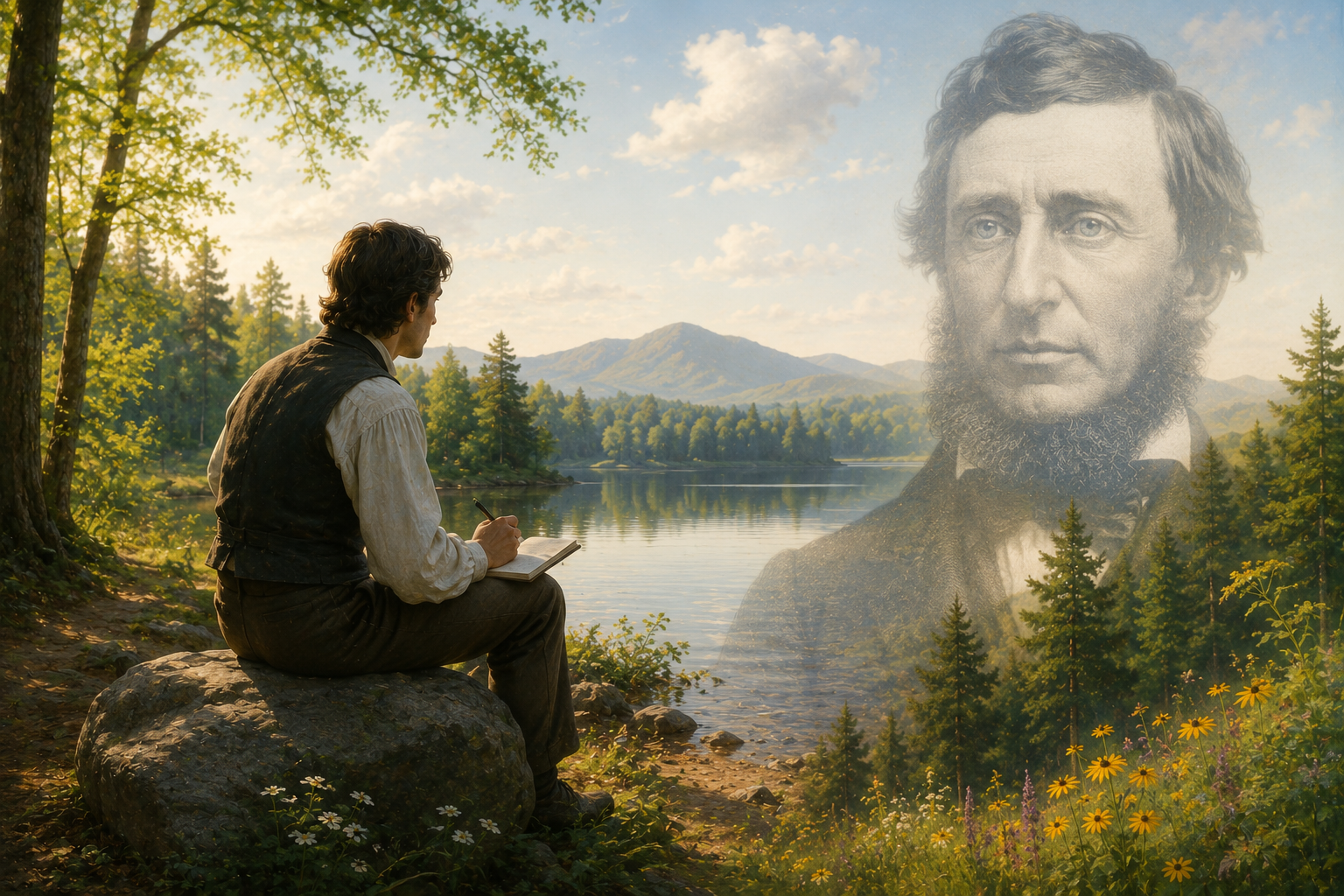
It grew in New England during the 1800s. Writers like Ralph Waldo Emerson and Henry David Thoreau believed people could find deep truth beyond churches, schools, and government rules.

The Major Themes of Transcendentalism include self-reliance, nature, intuition, nonconformity, and spiritual connection. These ideas often appear together, so one text may explore more than one theme at the same time.

For a short background, you can read Britannica’s overview of Transcendentalism.

Major Themes of Transcendentalism: Individualism and Self-Reliance

Transcendentalist writers believed each person should trust their own mind and moral sense.

This theme is most clear in Ralph Waldo Emerson’s essay “Self-Reliance.” Emerson argues that people should not copy society just to fit in. He wants readers to listen to their inner voice.

For students, this theme often connects to questions like: Who am I? What do I believe? Am I brave enough to stand by my beliefs?

In literature, self-reliance does not mean selfishness. It means a person tries to live with honesty and courage, even when others disagree.

Major Themes of Transcendentalism: Nature as a Spiritual Teacher

Nature is not just a setting in Transcendentalist writing. It is a source of wisdom.

In Emerson’s “Nature,” the natural world helps people feel closer to truth and beauty. Emerson sees nature as a place where the soul can wake up.

Thoreau’s Walden gives another strong example. Thoreau moves to Walden Pond to live simply and learn from the land around him.

When you read Transcendentalist texts, notice how forests, ponds, stars, and seasons shape the writer’s thoughts. Nature often helps a character or speaker see life more clearly.

Major Themes of Transcendentalism: Intuition Over Social Rules

Transcendentalists believed inner truth could be stronger than outside authority.

Intuition means a deep inner sense of what is true or right. Transcendentalist writers often place this inner feeling above tradition, law, or public opinion.

This idea can feel bold. It asks readers to think about where truth comes from. Does it come from society, or can it come from the individual soul?

In Emerson’s writing, intuition is not a random guess. It is a serious trust in the spirit and mind.

Major Themes of Transcendentalism: Nonconformity and Moral Courage

To be a nonconformist means to reject pressure to act like everyone else.

Thoreau’s essay “Civil Disobedience” is a major example. He argues that people should not support unjust laws. If the government does something wrong, the individual has a duty to resist.

This theme matters because it links literature to real life. Thoreau’s ideas later influenced leaders such as Mahatma Gandhi and Martin Luther King Jr.

For students, nonconformity is a useful theme to track in essays. Ask what rule the writer questions and why that rule matters.

Major Themes of Transcendentalism: The Oversoul and Human Connection

Many Transcendentalists believed all people share a deeper spiritual bond.

Emerson called this idea the “Oversoul.” He believed each person is part of a larger spiritual reality.

This theme can seem abstract, but the basic idea is simple. People are not fully separate from each other or from nature. Life is connected at a deeper level.

Walt Whitman’s poetry often reflects this idea. In “Song of Myself,” Whitman celebrates the self, but he also connects that self to other people and the world.

You can learn more about Emerson through the Poetry Foundation profile of Ralph Waldo Emerson.

Major Themes of Transcendentalism in Key Works

The best way to understand a theme is to see how it works inside a real text.

You can see the Major Themes of Transcendentalism in Emerson’s “Self-Reliance.” The essay centers on individual thought, personal courage, and trust in the self.

In Walden, Thoreau uses daily life near a pond to explore simplicity, nature, and freedom. His quiet life becomes a test of what people truly need.

In “Civil Disobedience,” Thoreau turns Transcendentalist ideas toward politics. He asks readers to choose conscience over comfort.

Whitman’s “Song of Myself” expands the focus from one person to all humanity. His speaker feels large, free, and linked to the living world.

If you need help spotting these ideas in a text, use this guide on how to identify theme in literature.

How to Study the Major Themes of Transcendentalism

When you study Transcendentalism, focus on the choices, beliefs, and conflicts in the text.

Start by asking what the writer values most. Is it freedom? Nature? Inner truth? Once you find that value, look for proof in the text.

When you study the Major Themes of Transcendentalism, pay close attention to repeated words. Emerson often repeats ideas tied to trust, truth, and the self.

Thoreau often uses details about simple living. These details show his belief that people can live better with less.

For essays, connect the theme to a clear claim. Do not just say a text “shows nature.” Say what the text argues about nature.

For example: “In Walden, Thoreau presents nature as a teacher because life at the pond helps him reject materialism and seek truth.”

Why the Major Themes of Transcendentalism Still Matter

These ideas still feel fresh because students face many of the same questions today.

Modern readers still ask how to stay true to themselves. They still wonder when to follow rules and when to challenge them.

The Major Themes of Transcendentalism also connect to current debates about mental health, the environment, and personal freedom. A walk in nature, a break from noise, or a brave choice can feel very Transcendentalist.

This is why the movement still appears in classrooms. Its ideas are old, but the questions are not.

Common Symbols in Transcendentalist Literature

Symbols help writers turn big ideas into clear images.

Nature is the most common symbol. A pond may stand for peace, self-knowledge, or spiritual truth.

Light often suggests insight. When a speaker describes sunlight, stars, or a bright sky, the text may point to a moment of understanding.

The road or path can suggest personal choice. A character who walks alone may show self-reliance or nonconformity.

As you read, do not stop at naming the symbol. Ask what the symbol teaches the reader about the theme.

Books to Find on Amazon or at Your Library

These books are useful for students who want to read the movement in its own words.

  • Walden by Henry David Thoreau
  • Nature and Selected Essays by Ralph Waldo Emerson

These works are often available in student editions with notes. Notes can help with older language, but try to read key passages on your own first.

FAQ About the Major Themes of Transcendentalism

Here are quick answers to common student questions.

What are the Major Themes of Transcendentalism?

The Major Themes of Transcendentalism are self-reliance, nature, intuition, nonconformity, and spiritual connection.

Who are the main Transcendentalist writers?

Ralph Waldo Emerson and Henry David Thoreau are the most famous. Walt Whitman is often linked to the movement because his poetry shares many of its ideas.

Is Transcendentalism a religious movement?

It is spiritual, but it is not tied to one church. Transcendentalists believed truth could be found through the soul, nature, and personal insight.

Why do students study Transcendentalism?

Students study it because it shaped American literature and thought. It also raises questions about freedom, conscience, and how to live well.

Key Takeaway

The Major Themes of Transcendentalism teach readers to trust the self, respect nature, and question rules that block truth or justice. If you can explain how a text develops these ideas, you are ready to write about Transcendentalism with confidence.

What Is Transcendentalism? A Beginner-Friendly Literary Guide

transcendentalism

If you have read Emerson, Thoreau, or Walt Whitman, you have already met one of the boldest ideas in American literature. So, What Is Transcendentalism? It is a way of thinking that says people can find truth through nature, personal insight, and trust in the self.

For students, this movement can seem abstract at first. Once you know the main ideas, it becomes much easier to spot in poems, essays, and novels.

In this Guide

transcendentalism

What Is Transcendentalism? A Simple Definition

Transcendentalism is the belief that truth can go beyond reason, rules, and society.

A good answer to What Is Transcendentalism? starts with one main idea: people should trust their own inner voice. Transcendentalist writers believed that humans are naturally good and that society often pushes them away from that goodness.

The movement grew in the United States in the 1800s. It was linked to writers in New England, especially Ralph Waldo Emerson and Henry David Thoreau.

Transcendentalists did not reject thinking. They just believed that logic was not the only path to truth. Nature, conscience, and personal experience mattered too.

What Is Transcendentalism? Key Beliefs to Know

The movement centers on trust in the self and a deep respect for nature.

Transcendentalist writing often includes a few major beliefs:

  • Self-reliance: People should trust their own judgment.
  • Nature as a teacher: The natural world can reveal spiritual truth.
  • Nonconformity: Society should not control a person’s soul.
  • Inner goodness: Humans are born with moral potential.
  • Simple living: A less crowded life can lead to clearer thought.

These ideas show up in both essays and poems. A speaker may walk in the woods, question social rules, or claim that the individual soul has power.

That is why What Is Transcendentalism? is not just a history question. It is also a reading question.

What Is Transcendentalism? Why It Matters in Literature

Transcendentalism changed how American writers wrote about the self.

Before this movement, much formal writing stressed tradition, order, and outside authority. Transcendentalist writers shifted attention to the individual mind.

When a teacher asks What Is Transcendentalism?, they often want you to see how a text treats freedom. Does the writer trust society, or does the writer trust the person who stands apart from it?

This matters in literature because many characters face that same conflict. They must decide whether to obey the world around them or follow what they believe is right.

For help with that kind of close reading, you may also like this guide on how to read literature like a scholar.

What Is Transcendentalism? Examples in Famous Texts

The best way to understand the movement is to see it in action.

Ralph Waldo Emerson’s essay Nature is one of the clearest examples. Emerson presents nature as a place where people can feel closer to truth and to the divine.

In Self-Reliance, Emerson argues that people should trust themselves instead of copying others. His famous idea is simple: your own mind matters.

Henry David Thoreau’s Walden shows Transcendentalism through action. Thoreau lives near Walden Pond to test a simpler life and learn from nature.

Walt Whitman’s poem Song of Myself also connects to the movement. Whitman celebrates the self, the body, and the spiritual value of everyday life.

If someone asks What Is Transcendentalism? during a class talk, these texts are strong examples to mention.

What Is Transcendentalism? How to Spot It as You Read

Look for moments when a writer values inner truth over public approval.

As you read, ask a few simple questions. Does the speaker turn to nature for wisdom? Does a character reject social pressure? Or does the text praise independence?

You can also watch for images of forests, ponds, stars, and open fields. In Transcendentalist writing, nature often feels alive with meaning.

A practical tip: underline any line where the speaker talks about the self, the soul, or the natural world. Then ask how that line challenges society’s rules.

Books to Look For on Amazon or at Your Library

These works are useful starting points for students.

  • Nature and Selected Essays by Ralph Waldo Emerson
  • Walden and Civil Disobedience by Henry David Thoreau

These books are often assigned in high school, AP Literature, and college courses. They are also short enough to read in sections.

Helpful External Resources

Use trusted sources when you want more context.

FAQ: What Is Transcendentalism?

Here are quick answers to common student questions.

What Is Transcendentalism? in one sentence?

Transcendentalism is a literary and philosophical movement that values nature, intuition, and trust in the individual self.

Who are the main Transcendentalist writers?

The most famous writers are Ralph Waldo Emerson and Henry David Thoreau. Walt Whitman is often linked to the movement because of his focus on the self.

Is Transcendentalism a religion?

Not exactly. It has spiritual ideas, but it is better understood as a philosophy and literary movement.

Why do students study Transcendentalism?

Students study it because it shaped American literature and helped define ideas about freedom, nature, and the individual.

Key Takeaway

The best answer to What Is Transcendentalism? is this: it is a belief that people can find truth by trusting themselves and paying close attention to nature. When you read, look for characters or speakers who choose inner truth over social pressure.

Flash Memoir Prompt: Last Time You Felt Completely Certain About Something You No Longer Believe

Flash Memoir prompt

A focused flash memoir prompt for tracing the moment when certainty cracked, using one memory, one scene, and one honest shift in belief.

You can probably remember the feeling: your voice a little too firm, your mind already made up, your body carrying the clean comfort of being right. Maybe you were sitting at a kitchen table, standing in a hallway, reading a message, or walking away from someone with total confidence in what you thought you knew.

Then time did what time does. It added facts. It softened you. It proved you wrong, or at least less right than you believed. This flash memoir prompt last time felt completely certain invites you to return to that exact edge, the final moment before your belief changed shape.

That can be a powerful place to write from. Certainty is rarely just an idea. It has a temperature, a sound, a posture. It lives in the raised eyebrow, the slammed car door, the underlined sentence, the friend you stopped listening to too soon.

Flash Memoir prompt

The Prompt

Write about the last time you felt completely certain about something you no longer believe.

This prompt works because it asks you to write about a change without forcing you to explain your whole life. You do not need to cover years of growth or every reason your thinking changed. You only need to return to one memory when your old belief still felt solid.

That old certainty might be about a person, a place, a dream, your family, your future, or yourself. You might have believed you would never leave your hometown. You might have believed a friendship would last forever. You might have believed success had one clear shape.

The strongest response will not rush to the lesson. It will let the reader stand beside you in the moment before the change became clear.

Why This Memory Matters

Certainty can be comforting. It can also be protective. When we are sure, we do not have to sit with doubt. We do not have to ask harder questions. We do not have to see the parts of a story that make us uncomfortable.

This kind of memory can reveal who you were trying to be at the time. Were you trying to be loyal? Safe? Impressive? Independent? Forgiving? Strong?

For example, a teenager who feels certain they will never become like their parents may be writing about fear. A college student who feels certain they chose the right major may be writing about pressure. A spouse who feels certain an argument does not matter may be writing about what they missed.

This flash memoir prompt last time felt completely certain is not about shaming your past self. It is about seeing that person clearly. You can write with tenderness toward the version of you who needed that belief to feel steady.

It may also help to think about the difference between what you felt and what the scene seemed to say. If you enjoy close reading, the same skill you use when you annotate literature can help here. Notice the evidence in the memory before you decide what it means.

How to Approach This Prompt

Begin with a physical detail. Do not start with, “I used to believe…” Start with the shoes you were wearing, the chipped mug in your hand, the blue glow of your phone, or the smell of rain on the sidewalk.

Then narrow the memory to one scene. Choose the last time you remember feeling fully sure. Maybe someone challenged you, and you brushed them off. Maybe you said the belief out loud. Maybe you made a choice because you trusted it so completely.

Write what you noticed before you explain what it meant. Let the reader see the room. Let them hear the sentence you said. Let them feel the confidence in your body.

You do not have to tell the whole backstory. In fact, the piece may be stronger if you resist that urge. Flash memoir often works best when it lets one small moment carry a larger truth.

If you get stuck, try this opening line: “The last time I believed that, I was…” Then finish the sentence with a place or act. “The last time I believed that, I was folding a black dress into a suitcase.” “The last time I believed that, I was laughing too loudly at dinner.”

You can also pay attention to the emotional atmosphere of the memory. Was the tone confident, bitter, hopeful, proud, or scared? If you want a simple refresher, this guide to tone vs. mood in literature can help you think about the feeling your scene gives off.

A Quick Example

The last time I felt certain I would never move back home, I was standing in my mother’s driveway with two laundry baskets in my trunk. I had driven three hours from my apartment just to wash clothes for free, but I still told myself I had escaped. The porch light flickered above us. My mother handed me a container of soup wrapped in a dish towel, and I rolled my eyes because I thought needing her meant failing. “I’m fine,” I said, too fast. She nodded like she believed me. Years later, after the breakup and the empty bank account and the quiet bedroom upstairs, I understood that home had never been the trap. My pride had been.

Try It Yourself

Set a timer for ten minutes and write from this flash memoir prompt last time felt completely certain. Pick one belief you no longer hold, then find the final scene where that belief still felt true.

Do not worry about making yourself look wise. Let your past self be human. Let the certainty be real on the page. The change will show itself if you stay close to the moment.

If the writing feels too big, shrink it. Write about one sentence you said. Write about one object in the room. Write about what your hands were doing while you believed you were right.

When you finish, read it once and underline the line that feels most alive. That line may be the real beginning of your piece.

Want More Flash Memoir Prompts?

If this prompt opened a memory you did not expect, you may enjoy building a steady flash memoir habit. Explore all 365 prompts in The Memory Trigger: 365 Flash Memoir Writing Prompts.

The Memory Trigger

Flash Memoir Prompt: Last Time You Talked to a Version of Yourself that No Longer Exists

memoir version of yourself

A brief, tender writing invitation to explore the last time you talked to a version of yourself that no longer exists, using one clear memory, one physical detail, and one emotional truth.

Maybe it happened while deleting old photos. Maybe you found a message thread from years ago and barely recognized the person typing your words. The jokes were familiar, but the need inside them was not. You were trying so hard to be liked, brave, difficult, invisible, impressive, or fine.

This flash memoir prompt last time talked version no longer exists asks you to pause at that strange edge between who you were and who you are now. It is not about judging your old self. It is about meeting them for one small scene and noticing what they still have to tell you.

memoir version of yourself

The Prompt

Write about the last time you talked to a version of yourself that no longer exists.

This prompt can unlock a memory because it gives you a person to write toward. That person is you, but also not quite you anymore. Maybe it is the student who thought one bad grade would ruin everything. Maybe it is the parent who had no idea how tired they were. Maybe it is the younger you who stayed too long in a place that made them small.

A flash memoir prompt last time talked version no longer exists works best when you choose one real moment. Do not try to explain your whole life change. Instead, look for a final conversation, a private thought, a mirror glance, a journal entry, or a moment when you realize, “I do not live in that old self anymore.”

Why This Memory Matters

We often change without a ceremony. There is no bell when we become less afraid. There is no receipt when we stop needing approval from someone who once held too much power. One day, we answer differently. One day, we walk away sooner. One day, we read an old note and think, “Oh, I remember being that person.”

This kind of memory matters because it shows growth without turning it into a speech. The old version of you might have been hopeful, lonely, stubborn, proud, or scared. They might have been doing the best they could with what they knew.

Writing about them with care can help you see the distance you have traveled. It can also help you avoid making your past self the villain. In memoir, the strongest moments often come from honest attention, not perfect wisdom.

If you are a student or newer writer, this prompt is also a useful way to study tone. Are you writing with regret, kindness, humor, or relief? If you want help noticing that difference, this guide to tone vs. mood in literature can help you name the feeling your scene creates.

How to Approach This Prompt

Begin with a physical detail. Choose something small enough to hold the scene in place. A cracked phone screen. A bathroom mirror. A school hallway. A coffee cup you gripped too tightly. A sweatshirt you wore during a hard year.

Then write the scene before you explain it. What did you see? What did your body feel like? What words were said out loud, if any? Memoir becomes more powerful when the reader can stand inside the moment with you.

Try starting with this sentence: “The last time I felt like that version of me, I was…” Let the sentence lead you into one place. Keep the frame tight. You do not need to tell every reason that version of you disappeared.

You might also write as if you are speaking directly to your old self. Use “you” if it feels natural. For example: “You thought silence would keep the peace. You did not know it was costing you sleep.” This can create a quiet conversation between past and present.

If you get stuck, slow down and observe the memory like a reader. Notice what repeats, what feels strange now, and what detail carries the most emotion. For more practice with close attention, you might enjoy this guide on how to annotate literature, since the same skill can help you read your own memories more carefully.

The goal is not to prove you are better now. The goal is to tell the truth about a small ending. This flash memoir prompt last time talked version no longer exists is really about the quiet goodbye we do not always know we are saying.

A Quick Example

I found her in the notes app, between a grocery list and a half-written apology. She was twenty-three and convinced that if she explained herself clearly enough, everyone would understand and stay. The note began, “I know I’m probably overreacting.” I sat on the edge of my bed in my work clothes, shoes still on, and read the whole thing twice. Outside, someone was dragging trash bins to the curb. I wanted to reach through the screen and take the phone from her hand. I wanted to say, “You are allowed to be upset before someone else agrees with you.” Instead, I deleted the note. Then I opened a blank one and wrote, “I believe you.”

Try It Yourself

Set a timer for ten minutes and write one scene. Choose the last time you remember being close to that old version of yourself. Do not worry about making it polished. Just stay near the moment.

You may write about a conversation with another person, or you may write about a silent exchange with yourself. A photograph can count. A journal page can count. A song that pulls you back into an old room can count.

When you finish, read it once and underline the sentence that feels most true. That sentence may be the heart of the piece. If you revise later, build around it, but do not rush to explain it away.

Want More Flash Memoir Prompts?

If this prompt opened a memory you did not expect, keep following that thread. Short prompts can lead to honest writing because they ask for one clear scene instead of a whole life story. Explore all 365 prompts in The Memory Trigger: 365 Flash Memoir Writing Prompts.

The Memory Trigger
error

Enjoy this article? Please spread the word :)

Follow by Email
BLUESKY
fb-share-icon
Reddit
LinkedIn
Share
RSS