



Books Like Hope and Despair: Powerful Stories About Light in Dark Times

Books Like Hope and Despair

Readers who search for Books Like Hope and Despair often want stories that face pain without giving up on meaning. These books show characters under pressure, where fear, loss, courage, and faith all collide.

This guide looks at novels, memoirs, and poems that explore hope and despair in clear, moving ways.

In this Guide

  • Why these stories matter
  • Best books with hope and despair themes
  • Key symbols to watch for
  • How classic literature handles suffering
  • Book suggestions to search for
  • FAQs

Why Books Like Hope and Despair Still Matter

Stories about pain can help readers feel less alone.

Books Like Hope and Despair matter because they tell the truth about hard seasons. They do not pretend life is easy, yet they also show why people keep going.

In literature, despair often appears when a character loses control. Hope appears when that same character finds purpose, love, memory, or faith.

This tension can make a story feel real. It reminds us that hope is not always cheerful. Sometimes hope is quiet, stubborn, and hard-earned.

Best Books Like Hope and Despair for Students

These works are strong choices for high school, AP Literature, and college readers.

When people ask for Books Like Hope and Despair, they often mean books that explore moral struggle. These works can feel heavy, but they also offer rich ideas for essays and class talks.

Night by Elie Wiesel

Night is a short, powerful memoir about the Holocaust. Wiesel writes about the loss of family, faith, and innocence.

Despair appears in the camps, where cruelty seems endless. Hope survives in memory, witness, and the act of telling the truth.

This book is a strong match for students who want a serious text about human suffering and moral courage.

The Road by Cormac McCarthy

The Road follows a father and son through a ruined world. The land is gray, cold, and dangerous.

Despair lives in the setting. Hope lives in the bond between the father and child.

The phrase “carry the fire” becomes a key symbol. It suggests goodness, love, and human decency in a broken world.

The Book Thief by Markus Zusak

The Book Thief is set in Nazi Germany and follows a girl named Liesel. She steals books, forms deep bonds, and learns the power of words.

Death narrates the novel, which gives the story a strange mix of sadness and wonder. The book shows how language can harm, but also heal.

For readers seeking Books Like Hope and Despair, this novel offers a clear look at grief, kindness, and survival.

Books Like Hope and Despair in Classic Literature

Classic literature often places hope and despair side by side.

In Macbeth by William Shakespeare, despair grows from guilt and ambition. Macbeth gains power, but loses peace.

By the end, his world feels empty. His famous “tomorrow” speech shows a mind that no longer sees meaning in life.

In Jane Eyre by Charlotte Brontë, despair comes from loneliness and unfair treatment. Hope comes from Jane’s strong sense of self.

She wants love, but she also wants dignity. That balance makes her story powerful for modern readers.

In The Great Gatsby by F. Scott Fitzgerald, hope takes the shape of the green light. Gatsby believes the past can return.

His hope is beautiful, but flawed. The novel shows how dreams can inspire people and also destroy them.

Symbols in Books Like Hope and Despair

Symbols help writers show deep emotions without stating them directly.

In Books Like Hope and Despair, light often stands for hope. Darkness often points to fear, loss, or confusion.

But good literature rarely keeps symbols simple. A fire may mean warmth, but it may also mean danger. A road may mean freedom, but it may also mean exile.

Emily Dickinson’s poem “Hope is the thing with feathers” uses a bird as a symbol for hope. The bird keeps singing even in a storm. You can read more about the poem at the Poetry Foundation.

If you want to build stronger literary analysis, this guide on how to find symbolism in a story can help you spot deeper meaning in objects, colors, places, and repeated images.

Common Themes in Books Like Hope and Despair

The strongest stories ask what people do when life feels impossible.

One major theme is survival. Characters must decide what they are willing to protect when everything else falls apart.

Another theme is faith. This may mean religious faith, trust in people, or belief in a future that has not arrived yet.

A third common theme is memory. In many serious books, memory keeps love alive. It also forces characters to face pain they would rather forget.

Books Like Hope and Despair often show that hope is not the opposite of sorrow. Hope can exist inside sorrow.

How to Read Books Like Hope and Despair for Class

A careful reading can turn an emotional book into a strong essay topic.

Start by tracking moments where a character feels trapped. Ask what causes that feeling. Look at setting, conflict, and word choice.

Then track moments where the character resists despair. This resistance may be small. It might be a memory, a promise, a prayer, or a choice to protect someone else.

Pay close attention to repeated images. If a novel keeps showing light, birds, roads, or windows, the author may use those images to build meaning.

For more help with that skill, visit this guide to spot symbols in literature.

Recommended Books to Search For

These titles are useful if you want books with deep emotional stakes.

  • The Road by Cormac McCarthy
  • Night by Elie Wiesel

Both books are widely read in schools and colleges. They also give students strong material for theme, symbol, tone, and character analysis.

For background on how dystopian stories work, the Britannica entry on dystopia offers a helpful overview.

FAQ About Books Like Hope and Despair

What are Books Like Hope and Despair usually about?

They are usually about people who face loss, fear, or injustice while they search for meaning. The best ones show both pain and courage.

Are these books too dark for students?

Some can be heavy, but many are taught because they build empathy and critical thinking. Students should choose books that fit their age, class level, and comfort.

What is a good first book with hope and despair themes?

The Book Thief is a strong starting point. It is emotional, clear, and rich with symbols about words, memory, and love.

Why do writers mix hope with despair?

Writers mix them because real life often holds both at once. This contrast makes stories more honest and more powerful.

Key Takeaway

Books Like Hope and Despair help readers face hard truths without losing sight of human strength.

These stories remind us that hope is not always loud or easy. Sometimes it is a small light that stays alive when the world feels dark. 💡
Best Novels About Memory and Trauma: Powerful Books That Stay with You

Best Novels about Memory and Trauma

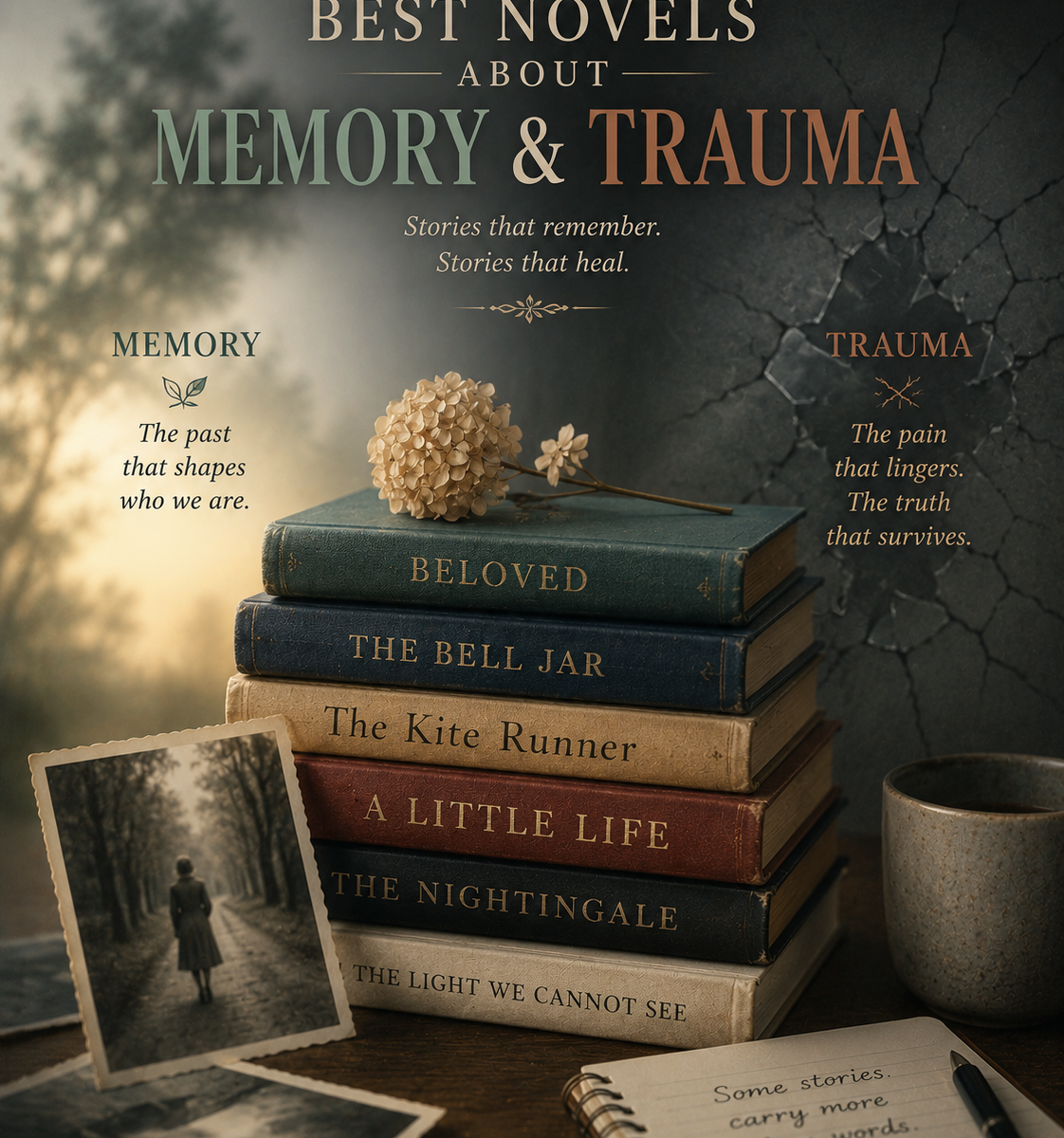
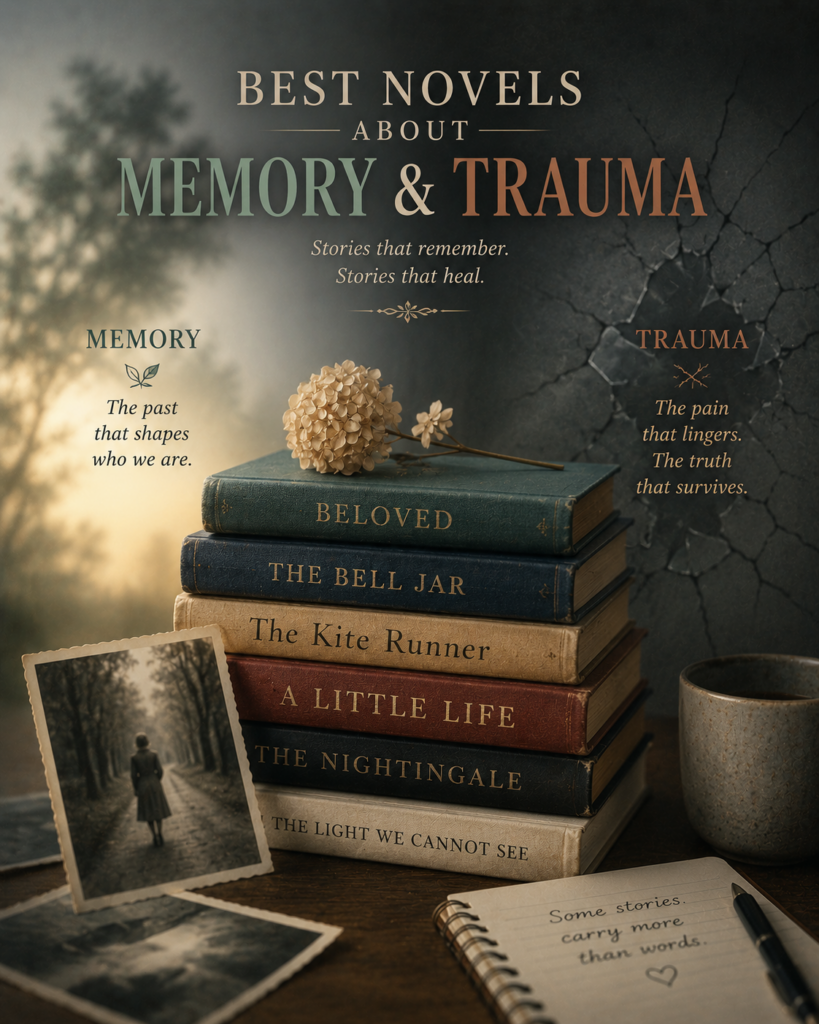
The Best Novels About Memory and Trauma show how the past can shape a person’s life long after the event has ended. These books help readers understand pain, survival, silence, and the strange ways memory can return.

For students, these novels also offer rich themes, symbols, and character studies. They are strong choices for essays, class talks, and deeper reading.

In this Guide

  • Why novels about memory and trauma matter
  • Best novels to read first
  • How trauma changes storytelling
  • Common symbols and themes
  • How students can read these books with care
  • Book suggestions
  • FAQs
  • Key takeaway
Best Novels about Memory and Trauma

Why the Best Novels About Memory and Trauma Matter

These stories help readers see how the past lives inside the present.

The Best Novels About Memory and Trauma do not treat memory like a simple record. In these books, memory can be broken, hidden, repeated, or changed by fear.

That makes the reading experience feel more real. People who suffer often do not remember events in a neat order. A sound, place, smell, or word can bring the past back at once.

These novels also ask hard questions. Can a person heal if they cannot speak about what happened? Can a family move forward if it hides the truth? Or can a nation face its own violent history?

Books like Beloved by Toni Morrison and The Things They Carried by Tim O’Brien explore these questions with great care. They show that trauma is not only personal. It can also be passed through families, wars, and cultures.

Best Novels About Memory and Trauma to Read First

These books are strong starting points because they are often taught and widely discussed.

If you are new to the Best Novels About Memory and Trauma, start with books that use clear emotional conflicts and strong symbols. The stories below are well-known, but they still feel fresh because they ask deep human questions.

Beloved by Toni Morrison

Beloved is one of the most important American novels about memory, slavery, and grief. Set after the Civil War, it follows Sethe, a woman haunted by the past in both real and ghostly ways.

The novel shows how trauma can return through the body, the home, and family bonds. Morrison does not let the past stay buried. She turns memory into a living force.

You can learn more about Morrison’s life and impact through Britannica’s overview of Toni Morrison.

The Things They Carried by Tim O’Brien

This Vietnam War novel blurs the line between fact and fiction. O’Brien writes about soldiers, fear, guilt, and the stories people tell to survive.

Memory in this book is not perfect. It shifts because pain shifts it. That is part of the point.

The title itself is a symbol. The soldiers carry weapons and supplies, but they also carry shame, love, fear, and regret.

Slaughterhouse-Five by Kurt Vonnegut

Slaughterhouse-Five follows Billy Pilgrim, a man who becomes “unstuck in time.” His life moves back and forth between moments, including the bombing of Dresden during World War II.

The strange structure shows how trauma can break normal time. Billy does not simply remember the war. He seems trapped inside it.

This is one reason the novel remains one of the Best Novels About Memory and Trauma for students who want to study form and theme together.

The Remains of the Day by Kazuo Ishiguro

This quiet novel follows Stevens, an English butler who looks back on his life. At first, his memories seem calm and controlled.

As the story unfolds, readers see what he has avoided. His trauma comes through restraint, regret, and missed chances.

The book is a powerful example of emotional repression. It shows that silence can be just as painful as open grief.

Never Let Me Go by Kazuo Ishiguro

This novel may look like science fiction, but its deepest subject is memory. Kathy tells the story of her childhood at a strange boarding school and slowly reveals the truth about her life.

The novel studies how people remember youth when they know loss is near. It is calm on the surface, but deeply sad underneath.

For students, it is a great book for essays about identity, control, and the stories people tell themselves.

How Trauma Changes Storytelling

In many trauma novels, the form of the story reflects the mind of the character.

The Best Novels About Memory and Trauma often avoid a straight timeline. This is not a trick. It helps readers feel how trauma works.

A character may jump from the present to the past without warning. A scene may repeat with new details. A narrator may leave out facts because the truth is too painful.

In Beloved, memories arrive in pieces. In Slaughterhouse-Five, time itself feels broken. And in The Things They Carried, stories are retold because one version is never enough.

This style can feel hard at first. But it teaches readers to notice structure. The way a story is told can matter as much as what happens.

If you are studying older texts too, the same skill helps. Paying close attention to language and structure can make difficult works easier, as explained in this guide to understanding Shakespearean language.

Symbols and Themes in the Best Novels About Memory and Trauma

These novels often use objects, places, and repeated images to show what words cannot fully explain.

One common symbol is the house. In Beloved, the home is not just a setting. It holds grief, fear, and history.

Another key symbol is the body. Trauma often appears through scars, pain, habits, or silence. A character may not speak about the past, but the body still remembers.

Objects also carry meaning. In The Things They Carried, the items soldiers hold become signs of emotional weight. What they carry shows who they are and what they fear.

Time is another major theme. In the Best Novels About Memory and Trauma, the past is not really past. It presses into the present and changes how characters see themselves.

These books also focus on truth. A memory may be honest even if it is not fully accurate. That idea can lead to strong essay topics about narration and trust.

Why Memory Is Not Always Reliable

Memory can protect people, but it can also hide what hurts too much.

Many trauma novels use unreliable narrators. This does not always mean the narrator lies on purpose. Sometimes the narrator cannot face the full truth yet.

In The Remains of the Day, Stevens tells his life story in a careful voice. He seems proper and calm. But readers start to sense the sadness under his control.

In Never Let Me Go, Kathy’s memories feel gentle, but they lead toward a painful truth. Her calm tone makes the novel even more haunting.

This is why the Best Novels About Memory and Trauma reward close reading. Small details often reveal what the narrator cannot say directly.

How Students Can Read These Novels With Care

These books can be powerful, but some scenes may feel heavy.

When you read the Best Novels About Memory and Trauma, give yourself time. Do not rush through painful chapters just to finish the plot.

Take notes on repeated images, changes in time, and moments of silence. Ask what the character avoids. Ask what the book returns to again and again.

It also helps to learn basic facts about trauma. The National Institute of Mental Health page on PTSD offers clear information about how trauma can affect memory and daily life.

For class essays, focus on one clear idea. You might write about the haunted house in Beloved, the broken timeline in Slaughterhouse-Five, or the weight of objects in The Things They Carried.

Amazon Book Suggestions: Best Novels About Memory and Trauma

These titles are easy to find online, in libraries, and in many school reading lists.

If you want to build a reading list, these are strong choices:

  • Beloved by Toni Morrison
  • The Things They Carried by Tim O’Brien
  • Never Let Me Go by Kazuo Ishiguro

Each book gives a different view of memory and pain. Together, they show why the Best Novels About Memory and Trauma matter in modern literature.

Best Novels About Memory and Trauma for Essay Topics

These books offer rich ideas for literary analysis.

For an essay on symbolism, Beloved is a strong choice. You can study the house, the ghost, or the idea of rememory.

For an essay on structure, Slaughterhouse-Five works well. Its broken timeline shows how war changes the mind.

For an essay on narration, The Remains of the Day gives you a lot to explore. Stevens reveals his pain through what he refuses to admit.

If you need help with close reading, use skills that apply across many texts. This guide on how to understand difficult literary language can help you slow down and read with more focus.

FAQs About the Best Novels About Memory and Trauma

What makes a novel about memory and trauma powerful?

A powerful trauma novel shows how the past affects the present. It often uses symbols, broken timelines, or silence to reveal pain.

Are the Best Novels About Memory and Trauma hard to read?

Some can be emotionally difficult. They are worth reading with care, breaks, and class discussion when possible.

Which novel should students start with?

The Things They Carried is a good starting point because its chapters are short and its themes are clear. Beloved is deeper and more complex, but very rewarding.

Why do these novels often use non-linear time?

Trauma does not always feel like a normal memory. A broken timeline can show how the past returns without warning.

Can these books help with AP Literature essays?

Yes. The Best Novels About Memory and Trauma offer strong examples of theme, character, symbolism, and narrative structure.

Key Takeaway

The Best Novels About Memory and Trauma show that the past is never simple. These books help readers see how pain can shape identity, how silence can speak, and how stories can become a path toward truth.

For students, they are more than moving reads. They are some of the richest texts for close reading, essay writing, and serious thought.

error

Enjoy this article? Please spread the word :)

Follow by Email
BLUESKY
fb-share-icon
Reddit
LinkedIn
Share
RSS







