

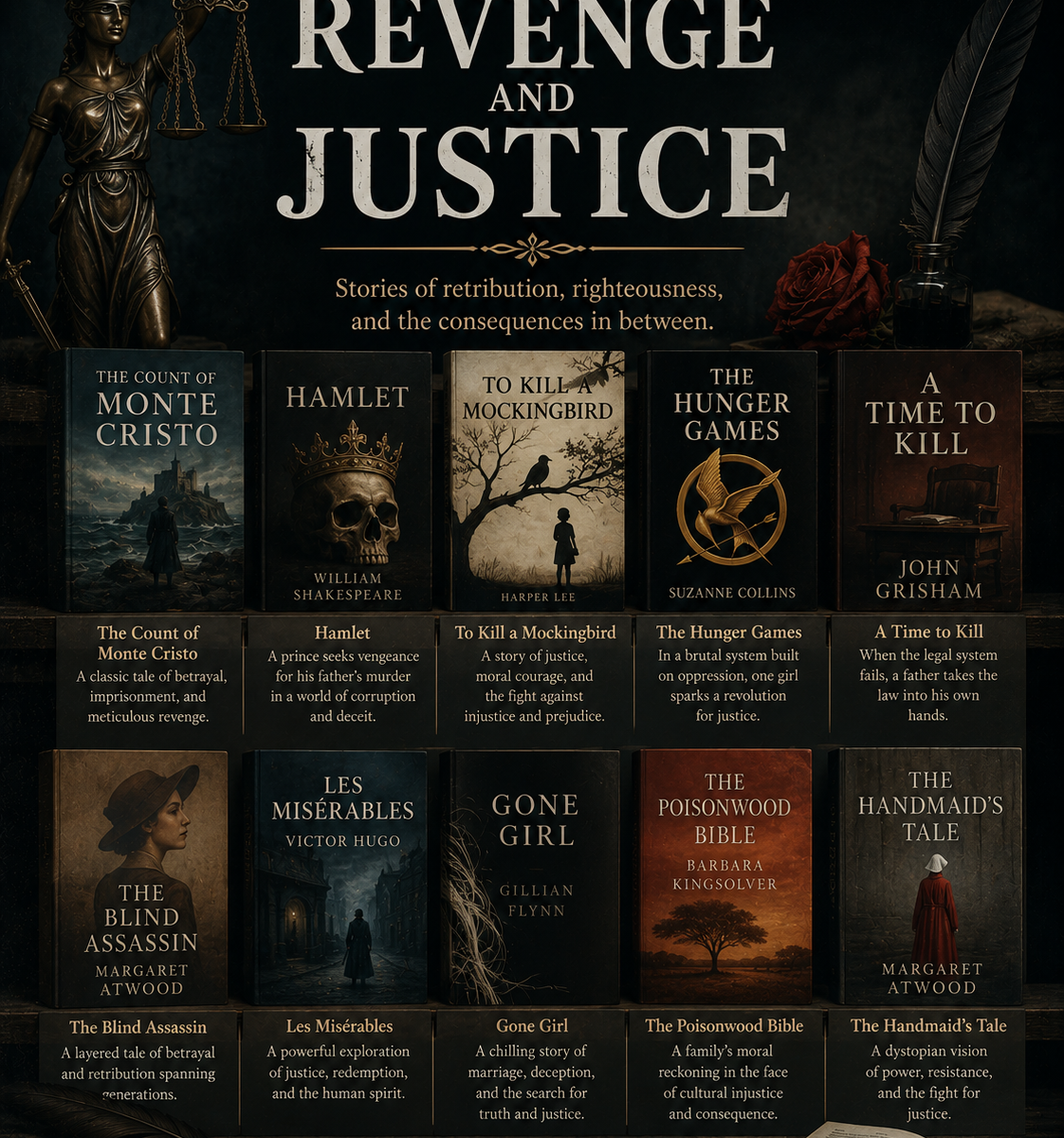
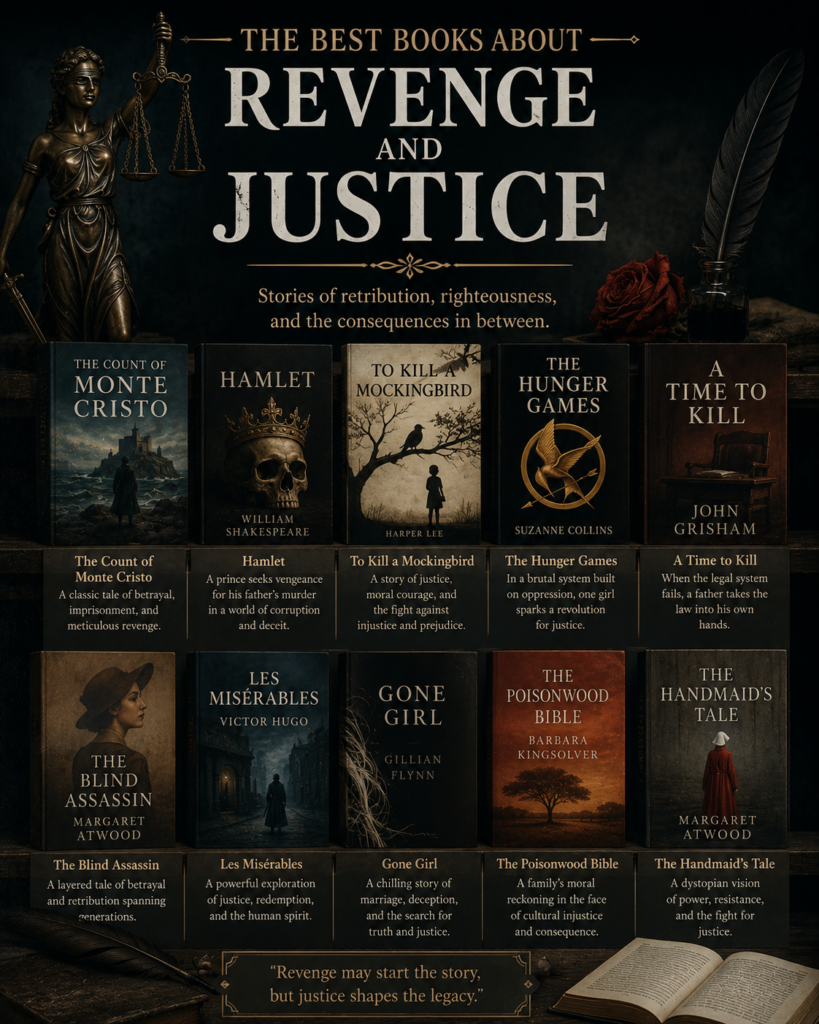
The Best Books About Revenge and Justice ask one hard question: what should happen after someone is wronged? These stories pull readers into pain, anger, punishment, and the search for fairness.
Some books show revenge as a trap. Others show justice as slow, painful, and worth the fight.
In this Guide
- Why revenge and justice matter in literature
- Best books to read first
- Classic revenge and justice stories
- Symbols and themes to watch for
- Modern books about revenge and justice
- FAQ
Why the Best Books About Revenge and Justice Still Matter
These stories stay popular because they deal with feelings almost everyone understands.
Revenge begins with a wound. A person is betrayed, hurt, or ignored by the law. The anger feels fair at first, but many books ask whether revenge can ever heal the damage.
Justice is different. It looks for truth, balance, and repair. In literature, justice often moves slowly, while revenge moves fast.
That tension makes the Best Books About Revenge and Justice so powerful. They do not give easy answers. They make readers ask what they would do in the same place.
Best Books About Revenge and Justice to Read First
Start with books that make the moral conflict clear and easy to follow.
The Count of Monte Cristo by Alexandre Dumas is one of the most famous revenge novels ever written. Edmond Dantès is betrayed, sent to prison, and stripped of his future. When he escapes, he builds a new life around revenge.
At first, his plan feels thrilling. His enemies deserve punishment. Yet the novel slowly asks whether revenge turns Edmond into the kind of person he hates.
Hamlet by William Shakespeare is another key text. Hamlet learns that his father was murdered, and he feels forced to act. But he doubts himself, delays, and studies the meaning of guilt.
This is why many teachers include Hamlet in lessons about revenge tragedy. The play is not only about payback. It is about thought, fear, grief, and the cost of violence.
If Shakespeare feels hard at first, try this helpful guide on how to read difficult classic literature. It can make older texts feel less stressful.
Classic Best Books About Revenge and Justice
Classic literature often treats revenge as both tempting and dangerous.
Medea by Euripides is one of the oldest and darkest revenge stories. Medea is betrayed by Jason, and her anger becomes deadly. The play shows how personal pain can grow into something beyond control.
Wuthering Heights by Emily Brontë also explores revenge across time. Heathcliff is hurt by class shame, rejection, and loss. Instead of finding peace, he spreads pain to the next generation.
Les Misérables by Victor Hugo offers a different view. Jean Valjean is punished by the law, but the law does not always equal justice. His story asks whether mercy can be more powerful than punishment.
The Best Books About Revenge and Justice often show that legal rules and moral truth are not always the same thing.
Symbols and Themes in the Best Books About Revenge and Justice
Revenge and justice stories often use strong symbols to show inner conflict.
In Hamlet, the skull reminds readers that death comes for everyone. It cuts through pride, revenge, and power. Hamlet must face the fact that all human plans end the same way.
In The Count of Monte Cristo, prison becomes a symbol of stolen life. Edmond loses his name, freedom, and trust. His escape feels like rebirth, but his new identity is shaped by anger.
Justice is often linked with light, truth, or confession. Revenge is often linked with masks, secrets, or poison. These symbols help readers see the difference between healing and harm.
A major theme in the Best Books About Revenge and Justice is moral change. The person seeking payback may become colder. The person seeking justice may need patience, courage, and self-control.
Modern Best Books About Revenge and Justice
Modern books often connect revenge and justice to race, gender, class, and history.
Beloved by Toni Morrison is not a simple revenge story. It is a novel about slavery, memory, trauma, and the deep need for justice. The past returns in a haunting form, and the characters must face what was done to them.
True Grit by Charles Portis follows Mattie Ross as she seeks justice for her father’s murder. Mattie is young, sharp, and determined. Her journey shows how revenge can look brave but still carry a heavy cost.
Gone Girl by Gillian Flynn uses revenge in a modern marriage plot. It shows how control, image, and public judgment can shape a person’s idea of justice.
These modern examples prove that the Best Books About Revenge and Justice are not stuck in the past. They still speak to today’s fears about truth, power, and fairness.
Recommended Books to Buy or Borrow
These books are strong choices for students, book clubs, or anyone who wants a deep story with moral conflict.
- The Count of Monte Cristo by Alexandre Dumas
- True Grit by Charles Portis
For background on Shakespeare’s revenge tragedy tradition, the Britannica entry on revenge tragedy is a useful place to start.
You can also explore author and poetry resources at the Poetry Foundation, especially if you want to connect themes of justice to poems.
How to Read the Best Books About Revenge and Justice for Class
Do not read these books only for plot. Pay attention to choices.
Ask what the wronged character wants. Is it truth, punishment, peace, or control? The answer often shows whether the story is moving toward justice or revenge.
Watch how the writer treats violence. If revenge seems exciting at first but empty later, that shift matters. Many authors want readers to feel the pull of revenge before they see its cost.
If a book feels slow or difficult, use notes, summaries, and rereading as tools. This guide to reading difficult classic literature can help you stay focused without losing the main ideas.
FAQ About the Best Books About Revenge and Justice
What are the Best Books About Revenge and Justice for beginners?
The Count of Monte Cristo and True Grit are great starting points. Both have clear plots, strong characters, and big moral questions.
Why do authors write so much about revenge?
Revenge creates instant conflict. It also lets authors explore grief, anger, pride, and the limits of human judgment.
Is revenge ever shown as good in literature?
Sometimes revenge feels justified at first. But many books show that it damages the person who seeks it.
What is the difference between revenge and justice?
Revenge is personal payback. Justice seeks truth, fairness, and a result that is larger than one person’s anger.
Key Takeaway
The Best Books About Revenge and Justice show that payback may feel powerful, but it rarely brings peace.
Great literature asks readers to look past anger and think about truth, mercy, guilt, and repair. That is why these stories still matter in classrooms and in everyday life.
In the end, the strongest revenge and justice books do more than punish villains. They ask what kind of person we become when we decide what others deserve.













