

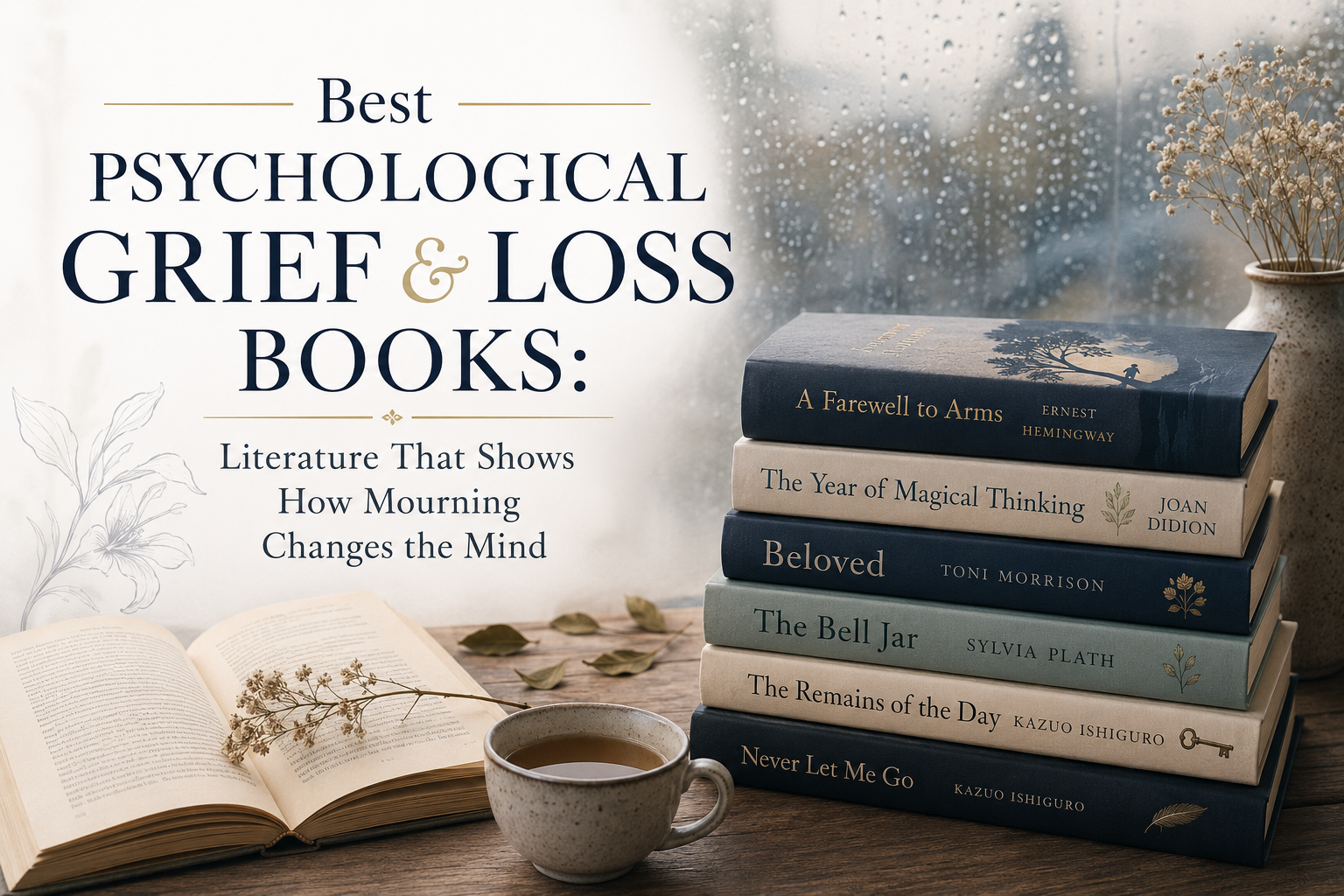
Best Psychological Grief and Loss literature helps readers see how sorrow can shape memory, identity, and hope. These books do more than show sadness. They explore what happens inside a person after love, death, or trauma changes everything.
In this Guide
- Why Best Psychological Grief and Loss stories matter
- Recommended books about grief and the mind
- Major themes and symbols
- How to read grief literature closely
- FAQs about grief and loss in literature
Why Best Psychological Grief and Loss Stories Matter
Grief is not only an event in a plot. It is often the force that changes how a character thinks, speaks, and sees the world.
In the best psychological grief and loss stories, mourning feels personal and complex. A character may seem calm on the outside but feel broken within. That gap creates tension and depth.
Literature also helps readers name feelings that can be hard to explain. A novel, poem, or memoir can show denial, guilt, anger, and numbness without turning grief into a simple lesson.
For students, these works are rich for analysis. They often use symbols, silence, fragmented memory, and repeated images to show pain that words cannot fully hold.
Best Psychological Grief and Loss Books to Read First
These books are strong choices for students who want clear, powerful examples of grief as both an emotional and mental experience.
The Year of Magical Thinking by Joan Didion
Joan Didion’s memoir is one of the best psychological grief and loss books because it shows grief as a state of shock. After her husband dies, Didion studies her own mind with sharp honesty.
The title points to “magical thinking,” a mental state where she knows her husband is dead but still feels he might return. This makes the book useful for students who want to study grief, denial, and memory.
Hamlet by William Shakespeare
Hamlet is a classic example of grief that turns inward. He mourns his father, distrusts his mother, and feels trapped by a world that seems false.
His grief becomes tied to doubt and identity. The famous question “To be, or not to be” is not just about death. It is also about pain, purpose, and the burden of thought.
Beloved by Toni Morrison
Beloved belongs in any discussion of best psychological grief and loss literature. Morrison shows how trauma can haunt a family and a home.
The ghost in the novel is more than a supernatural figure. She stands for memory, guilt, and the past that refuses to stay buried.
Common Themes in Best Psychological Grief and Loss Literature
The strongest grief stories often focus on what loss does to the self. Characters may feel split between who they were before and who they must become after loss.
One key theme is memory. Grief can make memory feel alive, painful, or unreliable. In The Year of Magical Thinking, Didion returns to small details because the mind tries to make sense of what cannot be changed.
Another major theme is guilt. Characters may ask what they should have done, even when they had no control. This appears in Hamlet, where grief mixes with duty and self-blame.
A third common theme is haunting. In best psychological grief and loss stories, haunting does not always mean a literal ghost. It can mean a memory, a place, or a voice that keeps returning.
Symbols That Shape Best Psychological Grief and Loss Stories
Symbols help writers show grief without overexplaining it. A room, object, season, or sound can carry emotional weight.
In Beloved, the house at 124 is a major symbol. It holds pain from the past and shows how trauma can fill a physical space.
In poetry, death often appears through small images rather than direct statements. Emily Dickinson’s poem “Because I could not stop for Death” turns death into a carriage ride, which makes the subject feel calm and strange at once. You can read the poem at the Poetry Foundation.
Weather is another common symbol. Rain may suggest sorrow, while winter can suggest numbness or emotional distance. These symbols work best when they connect to a character’s inner life.
How to Read Best Psychological Grief and Loss Literature Closely
Grief literature rewards slow reading. Small word choices often reveal what a character cannot say out loud.
When you read best psychological grief and loss works, pay attention to repeated images. If a writer repeats a color, sound, or object, it may point to hidden pain.
Notice silence too. What a character avoids can matter as much as what they confess. In many grief stories, the unsaid carries the deepest wound.
If you want a clear method for studying these details, read our guide to close reading in literature. It can help you turn small details into stronger analysis.
What Students Can Learn from Grief and Loss in Literature
These works teach more than plot. They show how people survive when life no longer feels stable.
Best Psychological Grief and Loss literature can also build empathy. Readers meet characters who act badly, feel confused, or push others away because sorrow has changed them.
For essays, focus on how the author presents grief through form and language. A broken timeline, repeated phrase, or strange symbol may show the mind under stress.
For more background on tragedy as a literary form, Britannica’s overview of tragedy in literature is a helpful place to start.
Recommended Books for Best Psychological Grief and Loss Readers
If you want to add books to your reading list, start with titles that balance emotional power with rich literary craft.
- The Year of Magical Thinking by Joan Didion
- Beloved by Toni Morrison
- Hamlet by William Shakespeare
Each book gives a different view of grief. Didion writes from lived loss, Morrison explores inherited trauma, and Shakespeare shows mourning tied to doubt and revenge.
FAQs About Best Psychological Grief and Loss Literature
What makes a book part of Best Psychological Grief and Loss literature?
It focuses on how loss affects the mind, not just what happens after a death. These works often explore memory, denial, guilt, and identity.
Is grief literature always depressing?
No. Many grief stories are sad, but they can also be honest, beautiful, and deeply human. Some end with healing, while others end with clearer self-knowledge.
Why do authors use symbols in grief stories?
Symbols help show feelings that characters cannot explain directly. A house, object, or repeated image can reveal hidden pain.
What is a good grief and loss book for students?
The Year of Magical Thinking is a strong choice for advanced high school or college readers. Hamlet is also excellent for AP Literature because it connects grief to theme, language, and character.
Key Takeaway
Best Psychological Grief and Loss literature shows that mourning is not simple. It changes memory, language, and the way people understand themselves.
The best works do not offer easy answers. They help readers sit with hard questions and see how stories can make sorrow feel less silent.


Get the Free Close Reading Worksheet Pack
Join my email list and receive the printable worksheet pack you can use with any novel or poem.
No spam. Just helpful guides for reading literature well.












