

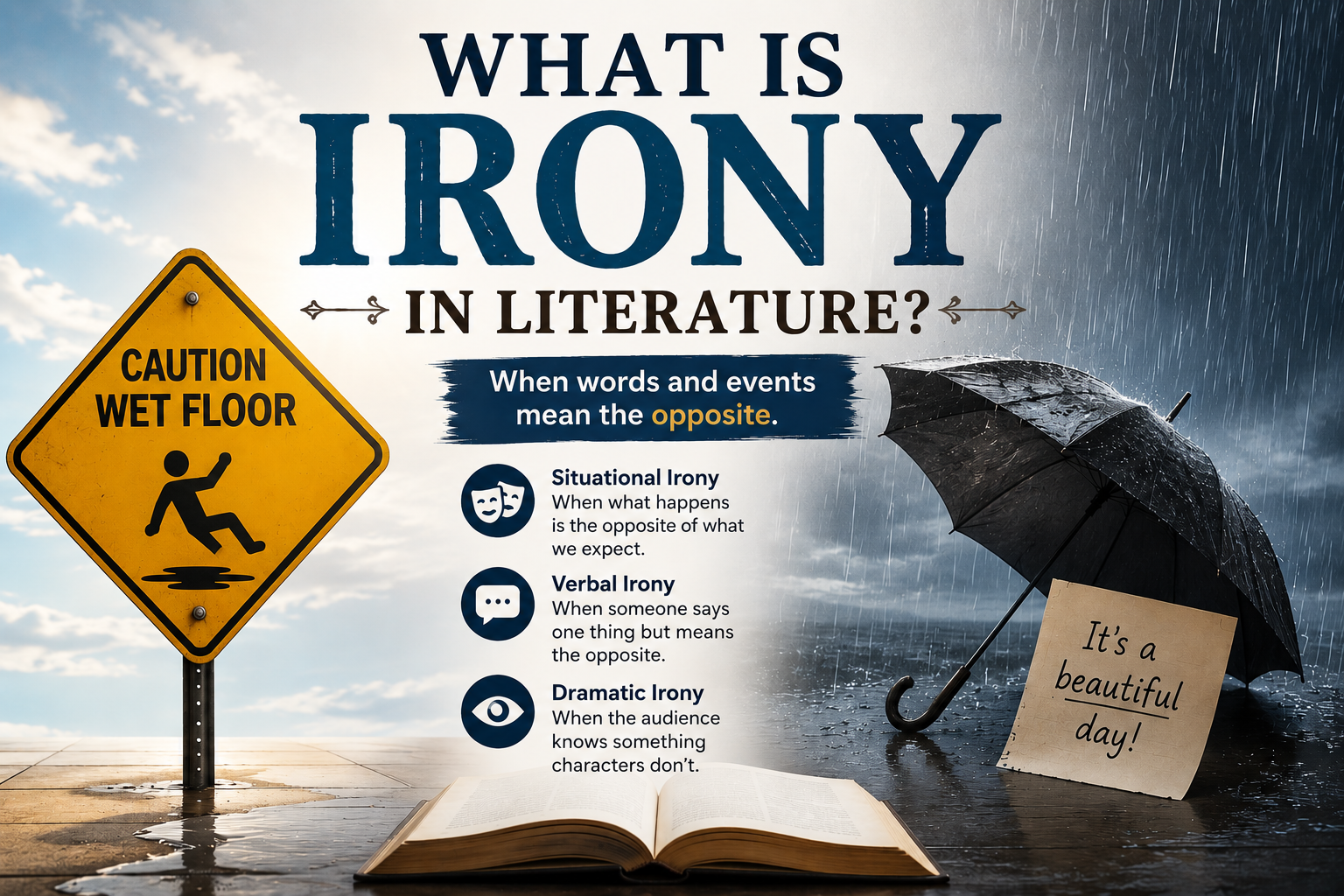
Have you ever read a scene where the reader knows the truth, but a character does not? That gap is one reason students ask, What Is Irony in Literature? Irony can make a story more powerful, more painful, or more funny.
In this Guide
- A simple definition of irony
- Common types of irony
- Why irony matters in stories
- Famous examples from literature
- How to spot irony while you read
- Books that help you practice
- FAQ
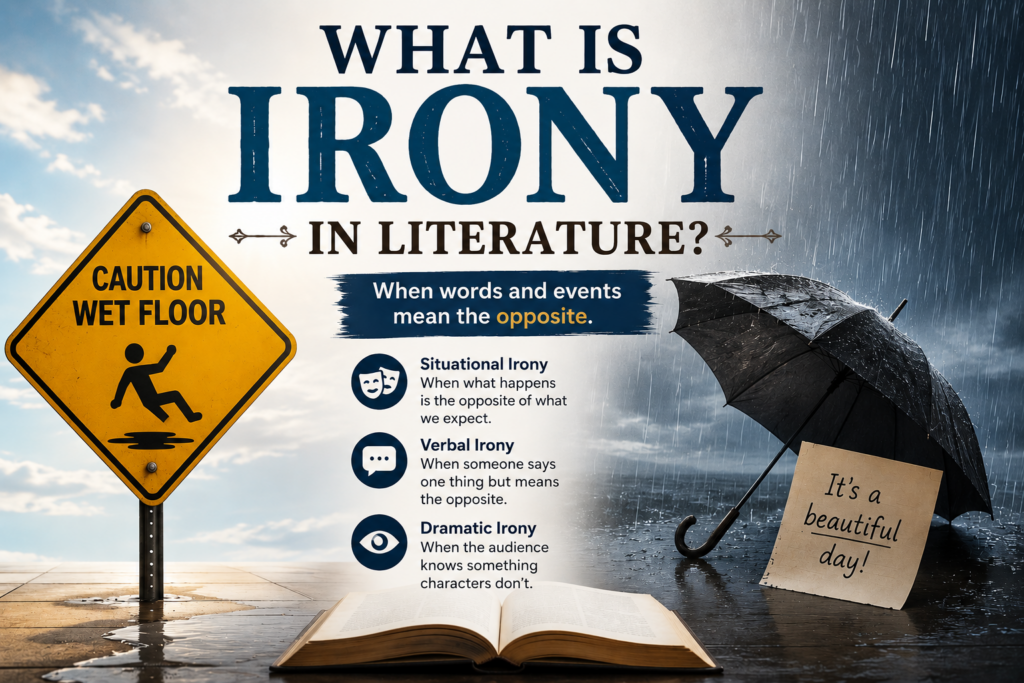
What Is Irony in Literature? A Simple Definition
Irony happens when there is a clear gap between what seems true and what is actually true.
In literature, irony often appears when words, events, or situations do not match what we expect. The mismatch creates meaning.
When teachers ask, What Is Irony in Literature?, they are usually asking you to notice this gap. Irony is not just a random surprise. It must reveal something important about a character, theme, or conflict.
For example, if a fire station burns down, that is ironic because the place meant to stop fires becomes a victim of fire. In a story, that kind of twist can point to weakness, pride, bad luck, or a deeper message.
What Is Irony in Literature? Common Types to Know
Most classroom discussions focus on a few major forms of irony.
Verbal Irony
Verbal irony happens when a speaker says one thing but means something different.
This is not always sarcasm, though sarcasm is one type of verbal irony. Sarcasm is often sharp or mocking. Verbal irony can be gentle, funny, bitter, or serious.
In Jane Austen’s Pride and Prejudice, the famous opening line sounds serious: “It is a truth universally acknowledged…” Yet Austen is also mocking the way society treats marriage and money.
Dramatic Irony
Dramatic irony happens when the audience knows something a character does not know.
Shakespeare uses this often. In Romeo and Juliet, the audience knows Juliet is alive, but Romeo believes she is dead. This makes the scene heartbreaking because we can see the truth before he can.
Dramatic irony can create suspense because readers wait for the character to learn what they already know.
Situational Irony
Situational irony happens when the result of an event is the opposite of what we expect.
O. Henry’s “The Gift of the Magi” is a classic example. Della sells her hair to buy Jim a chain for his watch. Jim sells his watch to buy Della combs for her hair.
Their gifts become useless in a practical sense, but the irony shows their deep love.
What Is Irony in Literature? Why It Matters in Stories
Irony helps writers say more without spelling everything out.
A simple answer to What Is Irony in Literature? is this: it is a tool that reveals hidden truth. It can show that a character is blind to reality. It can expose unfair rules in society. It can also make a happy scene feel uneasy.
Irony often works with tone and foreshadowing. If you want to compare it with other story tools, visit our literary devices list.
Irony matters because it asks readers to think. Instead of just accepting what a character says, we must ask what the story really means.
What Is Irony in Literature? Famous Examples
Well-known books and plays use irony to build theme, conflict, and emotion.
Romeo and Juliet by William Shakespeare
The ending of Romeo and Juliet is full of dramatic irony. Romeo believes Juliet is dead, but the audience knows she has taken a sleeping potion.
This irony makes the tragedy feel even worse. The audience sees that the disaster could have been avoided.
“The Gift of the Magi” by O. Henry
This short story is one of the clearest examples of situational irony. Both main characters give up their most valuable item to buy a gift for the other.
The twist is painful and sweet at the same time. The gifts no longer work, but the love behind them becomes clear.
Animal Farm by George Orwell
In Animal Farm, the animals rebel because they want freedom. Over time, their new leaders become just as cruel as the humans they replaced.
This irony supports Orwell’s warning about power. The story shows how a revolution can fail when leaders become corrupt.
For more background on the term, you can explore Britannica’s entry on irony.
How to Spot Irony While You Read
The best way to find irony is to look for a gap.
Ask yourself what a character believes. Then ask what the reader knows. If those answers do not match, you may have dramatic irony.
Next, look at what a character says. If the words do not match the true meaning, you may have verbal irony.
Then check the outcome of a scene. If the result flips what you expected, you may have situational irony.
When you ask What Is Irony in Literature? during analysis, do not stop at naming the type. Explain what the irony does. Does it create humor? Does it reveal a flaw? Does it support the theme?
How to Answer What Is Irony in Literature? in an Essay
A strong essay answer should define irony, identify the type, and explain its effect.
Here is a simple sentence frame:
The author uses irony when [describe the gap] to show [explain the meaning].
For example:
Shakespeare uses dramatic irony when the audience knows Juliet is alive but Romeo does not, which makes the ending of the play more tragic.
This kind of answer is clear because it does more than label the device. It connects the device to meaning.
Books That Help You Practice Irony
These books are easy to find on Amazon or at most libraries. They give clear examples of irony in action.
- The Gift of the Magi and Other Stories by O. Henry
- Animal Farm by George Orwell
To review irony alongside other terms, you can also use our guide to common literary devices.
FAQ: What Is Irony in Literature?
What Is Irony in Literature?
Irony in literature is a gap between what is expected and what is true. That gap helps create meaning, humor, tension, or surprise.
Is irony the same as sarcasm?
No. Sarcasm is a sharp form of verbal irony. Irony is broader and can appear in speech, events, or whole plots.
What is the easiest type of irony to spot?
Dramatic irony is often the easiest to spot. If you know something a character does not know, you are likely seeing dramatic irony.
Why do authors use irony?
Authors use irony to reveal truth in a clever way. It can expose a character’s mistake, criticize society, or make a scene more emotional.
How can I write about irony in a paragraph?
Name the type of irony, describe the gap, and explain why it matters. Always connect irony to theme or character.
Key Takeaway
Irony is all about contrast. When you notice a gap between appearance and reality, pause and ask what the author wants you to understand. That one habit can make your reading and analysis much stronger.


Get the Free Close Reading Worksheet Pack
Join my email list and receive the printable worksheet pack you can use with any novel or poem.
No spam. Just helpful guides for reading literature well.












