

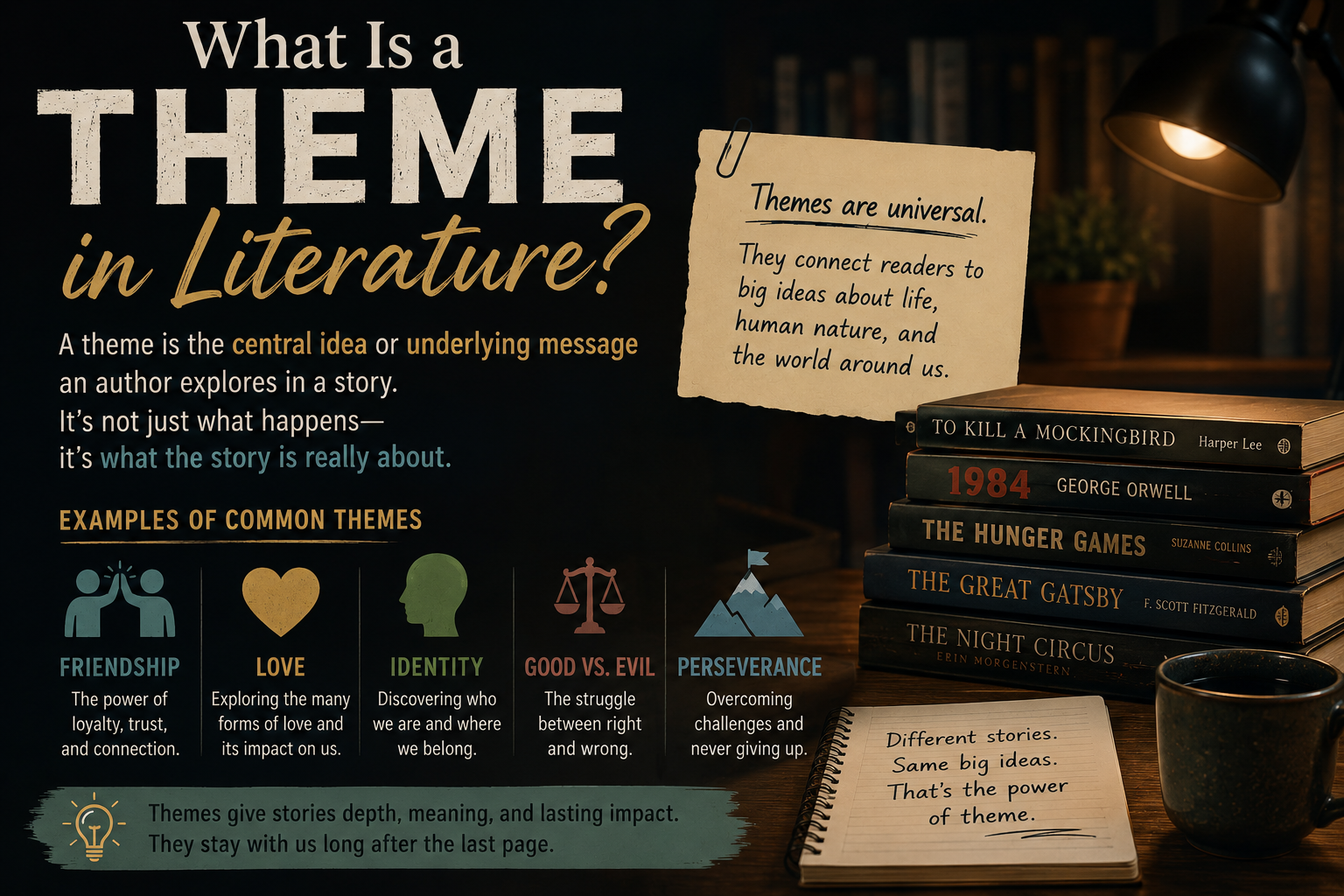
If you have ever asked, “What is a Theme in Literature?” you are not alone. Theme can feel confusing at first, but it is one of the most useful ideas in reading and writing about books.
In simple terms, a theme is the deeper message a story shares about life, people, or the world.
In this Guide
- What a theme means
- Why theme matters
- Theme vs. topic
- Clear examples from famous books
- How to find a theme
- Helpful books to read
- FAQ and key takeaway
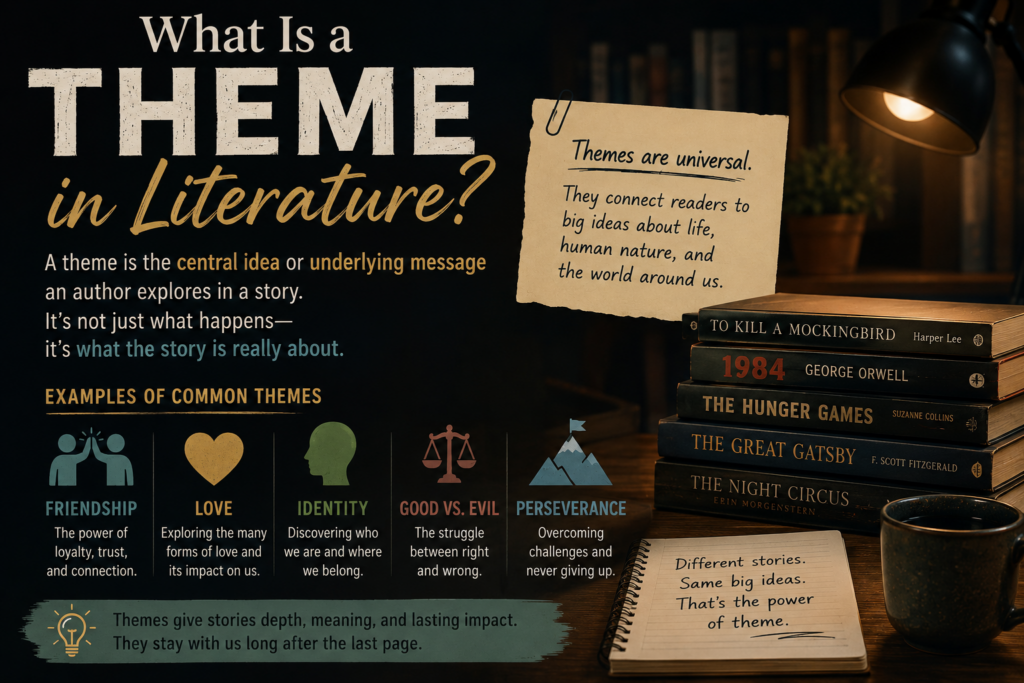
What Is a Theme in Literature? A Simple Definition
A theme is the main idea or message behind a literary work.
So, What Is a Theme in Literature? It is not just what happens in the plot. It is what the story suggests about human life.
For example, a story may be about a boy at school. That is the plot. The theme might be that courage means standing up for what is right, even when it is hard.
A theme is often not stated directly. Readers must notice patterns, choices, conflicts, and changes in the characters.
Why What Is a Theme in Literature? Matters
Theme helps readers understand why a story matters beyond its events.
When students ask, “What Is a Theme in Literature?” they are really asking how stories create meaning. Theme connects the plot to real life.
Without theme, a story is only a chain of events. With theme, those events point to something larger.
In To Kill a Mockingbird by Harper Lee, the plot centers on a trial and a young girl’s view of her town. One major theme is that moral courage can stand against injustice.
That theme gives the novel its power. It asks readers to think about fairness, fear, and personal responsibility.
What Is a Theme in Literature? Theme vs. Topic
A topic is one word or idea. A theme is a full message about that idea.
This is where many students get stuck. Love, power, family, and fear are topics. They are not full themes by themselves.
If someone asks, “What Is a Theme in Literature?” do not answer with only “love.” A stronger answer would be, “Love can lead people to make brave choices.”
Here is another example. In Romeo and Juliet by William Shakespeare, love is a topic. One possible theme is that intense love can clash with family hate and social pressure.
That answer says more. It explains what the play suggests about love.
Common Theme Examples in Literature
Famous books often explore themes that still feel true today.
In The Great Gatsby by F. Scott Fitzgerald, one theme is that the dream of wealth can hide loneliness and moral emptiness.
In Charlotte’s Web by E. B. White, one theme is that friendship can give ordinary lives deep meaning.
In Lord of the Flies by William Golding, one theme is that people can become cruel when rules and shared values break down.
These examples show why the question “What Is a Theme in Literature?” has no single answer for every book. Different stories explore different truths.
How Authors Build Theme
Authors build theme through choices, not lectures.
A writer may show theme through a character’s mistakes. A character may want power, lose trust, and learn that control has a cost.
Authors also use conflict. When a character faces a hard choice, the story often reveals its deeper message.
Symbols can help too. In The Great Gatsby, the green light can point to Gatsby’s dream and the distance between desire and reality.
If you want a step-by-step method, read this helpful guide on how to identify theme in literature.
What Is a Theme in Literature? How to Write About It
A strong theme statement is clear and specific.
When you answer “What Is a Theme in Literature?” in an essay, avoid one-word answers. Write a sentence that explains the message.
Weak theme statement: “Friendship.”
Stronger theme statement: “True friendship requires loyalty when life becomes difficult.”
Then prove it with details from the text. Use character actions, key scenes, and important lines as evidence.
You can also compare the theme to another work. For poetry terms and close reading help, the Poetry Foundation glossary is a useful resource.
Books That Help You Understand Theme
These books are helpful for students who want more practice with literary ideas.
- How to Read Literature Like a Professor by Thomas C. Foster
- They Say / I Say by Gerald Graff and Cathy Birkenstein
These are not required to understand theme, but they can help you write stronger essays and notice deeper meaning in texts.
Practical Tip for Finding Theme
Look at how the main character changes by the end of the story.
Ask yourself: What did the character learn? What mistake did they make? What does the ending suggest about life?
This simple method can help you answer “What Is a Theme in Literature?” with confidence. For more practice, see this guide to finding theme in a story.
FAQ: What Is a Theme in Literature?
What Is a Theme in Literature? in simple words?
A theme is the message or lesson a story suggests about life, people, or society.
Can a book have more than one theme?
Yes. Most novels and plays have more than one theme. A story may explore love, power, guilt, or freedom in different ways.
Is theme the same as the moral?
Not always. A moral is usually a clear lesson. A theme can be more complex and may not give a simple answer.
How do I find the theme quickly?
Focus on the main conflict, the ending, and how the main character changes. Then write the message as a full sentence.
Key Takeaway
What Is a Theme in Literature? It is the deeper message a story gives about life. If you can explain that message and support it with evidence, you are already on the path to strong literary analysis.


Get the Free Close Reading Worksheet Pack
Join my email list and receive the printable worksheet pack you can use with any novel or poem.
No spam. Just helpful guides for reading literature well.












