


A focused flash memoir prompt for writing about the apology that never arrived, using one sharp memory, one sensory detail, and one honest emotional turn.
You may remember where you were when you realized the apology was not coming. Maybe you checked your phone too many times. Maybe you rehearsed what they might say. Or maybe you felt silly for wanting words that should have been offered freely. This flash memoir prompt apology never came asks you to stay with that moment, not to settle the whole relationship, but to notice what silence felt like in your body.
An apology can become louder by its absence. The missing words may leave behind a scene: a kitchen table, a school hallway, a hospital room, a parking lot after dark. When you write about the apology that never came, you are really writing about expectation, hurt, and the strange work of moving on without a clear ending.

The Prompt
Write about the apology that never came.
This prompt can unlock a meaningful memory because it begins with something unfinished. In flash memoir, unfinished moments often carry the most weight. You do not need to explain every argument or every year that led to it. You only need to find the scene where you understood that no one was going to say, “I’m sorry.”
That is where the story begins to breathe. The silence may show more than a long explanation could. A pause, a turned shoulder, an unread message, or a too-bright smile can reveal the truth of the memory.
Why This Memory Matters
The apology that never came may seem like a story about another person’s failure. It may be that. But it may also become a story about what you learned to carry, what you refused to carry, or how you changed after waiting too long.
This kind of memory often has two timelines. There is the original hurt, and then there is the later realization that repair would not happen in the way you wanted. The second moment can be quieter, but it may matter more. That is when you see yourself clearly.
Maybe you stopped defending them. Maybe you stopped blaming yourself. Or maybe you learned that closure does not always arrive from the person who caused the pain. Sometimes it comes from naming the truth without needing anyone else to agree.
A flash memoir prompt apology never came can help writers practice emotional precision. Instead of writing, “I was hurt,” you can show the untouched cup of coffee across from you, the dress you wore to look calm, or the sound of someone changing the subject. Small details let readers feel the memory without being told how to feel.
If you are a student or a newer writer, this is also a useful way to think about character. Real people are rarely simple villains or saints. If you want to explore that idea more, you might find it helpful to read about how to analyze characters in literature and then apply some of that same curiosity to the people in your own story.
How to Approach This Prompt
Begin with a physical detail. Do not begin with the whole history. Start with the chair, the phone screen, the smell of rain, or the way your hands felt as you waited.
Then narrow the memory to one scene. Choose a moment when the missing apology became clear. Maybe it was after a family dinner, during a school day, after a breakup, or years later when you saw the person again and they acted as if nothing had happened.
Write what you noticed before you explain what it meant. This helps you avoid turning the piece into a summary of blame. For example, instead of starting with, “My friend never took responsibility,” you might begin, “She laughed at someone else’s joke and slid my notebook back across the table without looking at me.”
That kind of opening gives the reader something to see. It also gives you room to discover the emotion instead of forcing it too soon.
If you get stuck, try writing the scene in five slow sentences. In the first sentence, place yourself in the room. In the next, describe one object. Then write what the other person did or did not do. After that, write what you wanted them to say. End with what you understand now.
You can also annotate your own draft the way you might mark a poem or short story. Circle the strongest image. Underline the sentence where the emotion shifts. If that idea helps, this guide on how to annotate literature can give you a simple method for noticing patterns in a text, even when the text is your own memory.
Try not to solve everything in one draft. The power of this prompt often comes from restraint. Let the missing apology remain missing. Let the reader feel the space where it should have been.


A Quick Example
The last time I expected my brother to apologize, we were standing in our mother’s garage beside a stack of boxes marked “kitchen.” He had borrowed money from me the year before and then told everyone I was selfish for asking about it. I had imagined this day so many times that I knew the apology by heart. He would look embarrassed. He would say he had been wrong. Instead, he picked up a lamp, checked the cord, and said, “You want this or not?” The garage smelled like dust and old cardboard. I remember rubbing my thumb along the tape on a box until it peeled back in a thin strip. I said no to the lamp. And I did not say anything about the money. That was the day I stopped waiting.
Try It Yourself
Set a timer for ten minutes and write about the apology that never came. Keep the scene small. Let the room, the weather, or the object in your hand do some of the emotional work.
You do not have to forgive anyone in this piece. You do not have to prove that you were right. Your only job is to tell the truth of one moment as clearly as you can.
If the memory feels too raw, write around the edge of it. Describe the place first. Describe what you did after. You can return to the harder part when you are ready. A flash memoir prompt apology never came can be powerful, but it should still feel safe enough to enter.
Want More Flash Memoir Prompts?
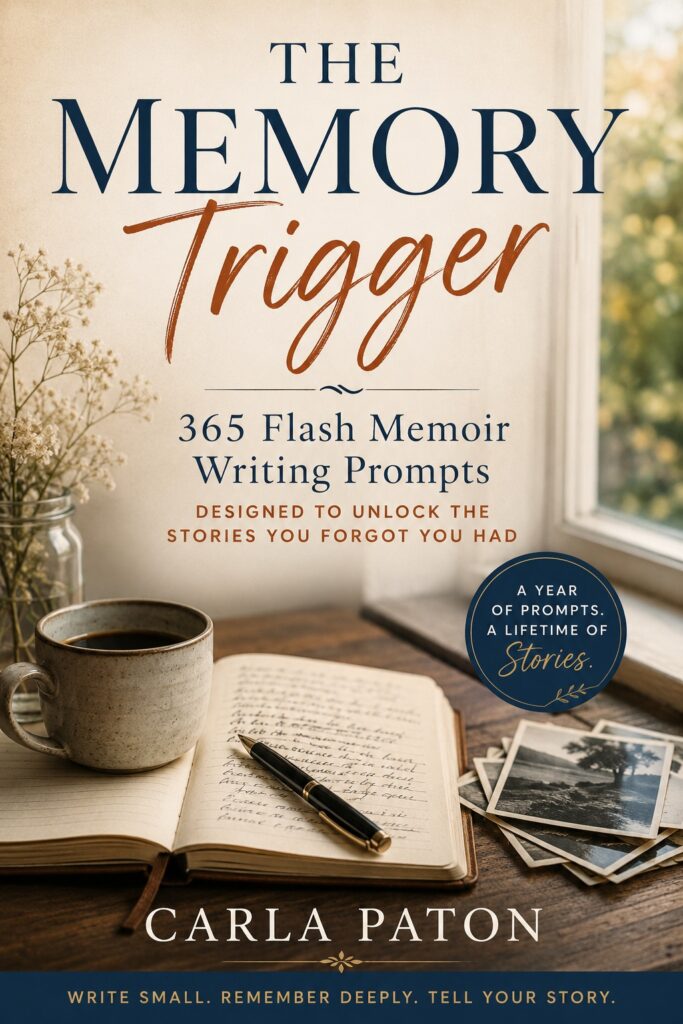
If this prompt helped you find a memory with real emotional weight, you may enjoy having a full year of short writing invitations close by. Explore all 365 prompts in The Memory Trigger: 365 Flash Memoir Writing Prompts.


Get the Free Close Reading Worksheet Pack
Join my email list and receive the printable worksheet pack you can use with any novel or poem.
No spam. Just helpful guides for reading literature well.












