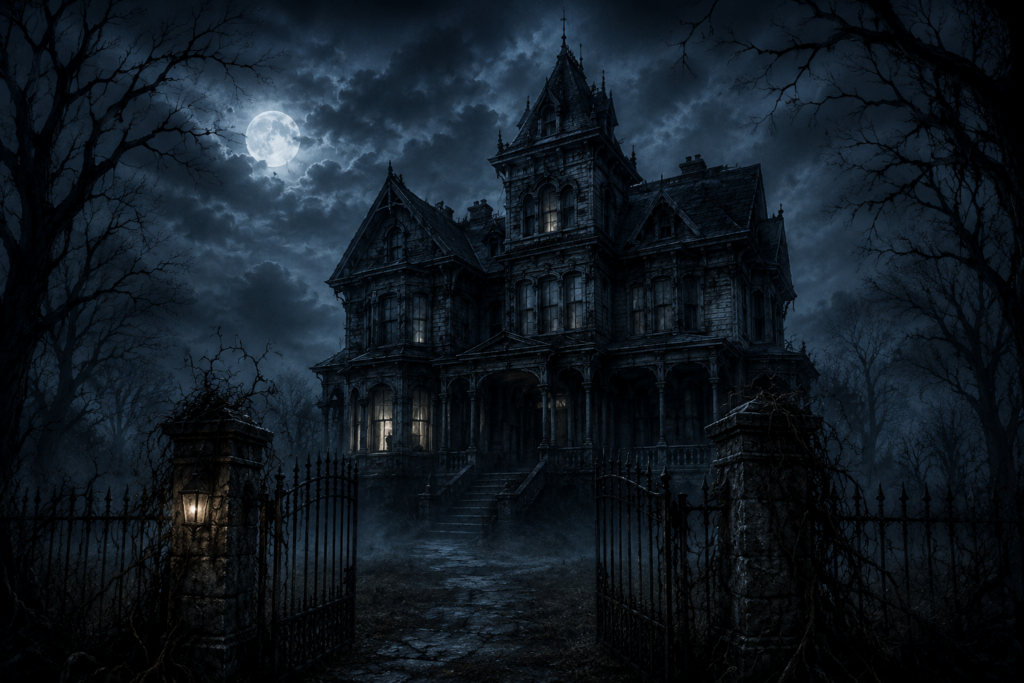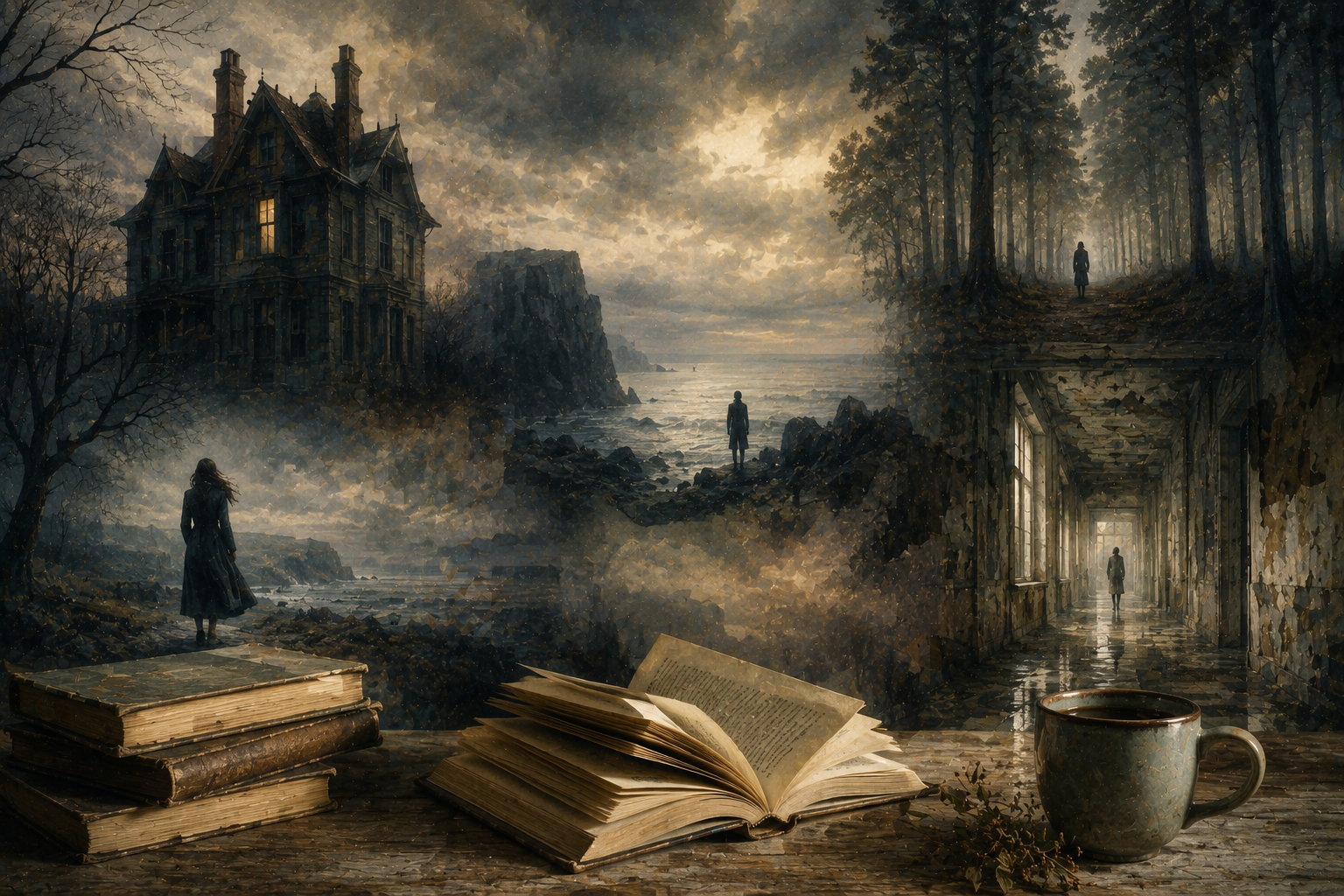
Most Disturbing Quiet Horror: Books That Haunt Without Shouting

Quiet Horror Books
Quiet Horror Books

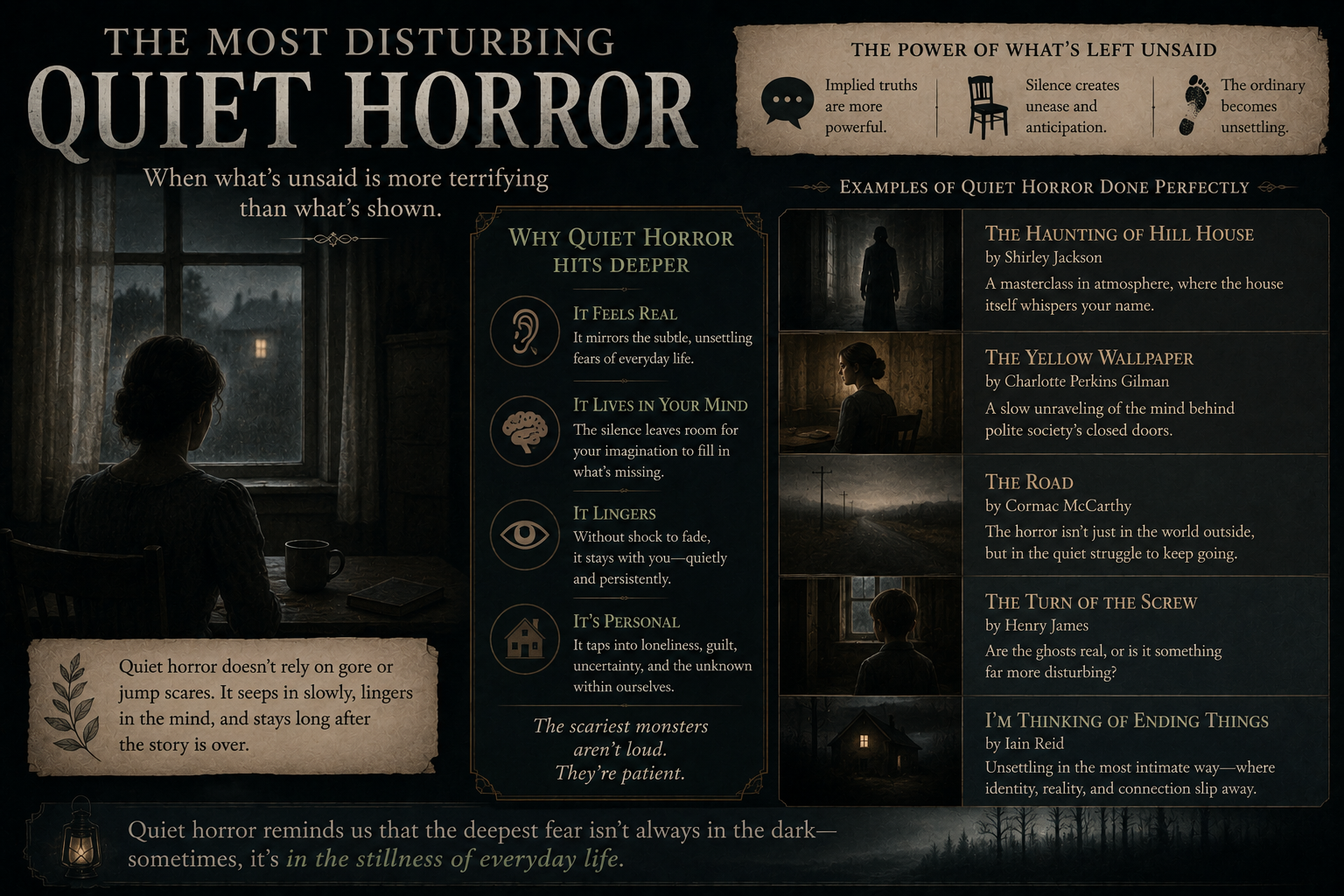
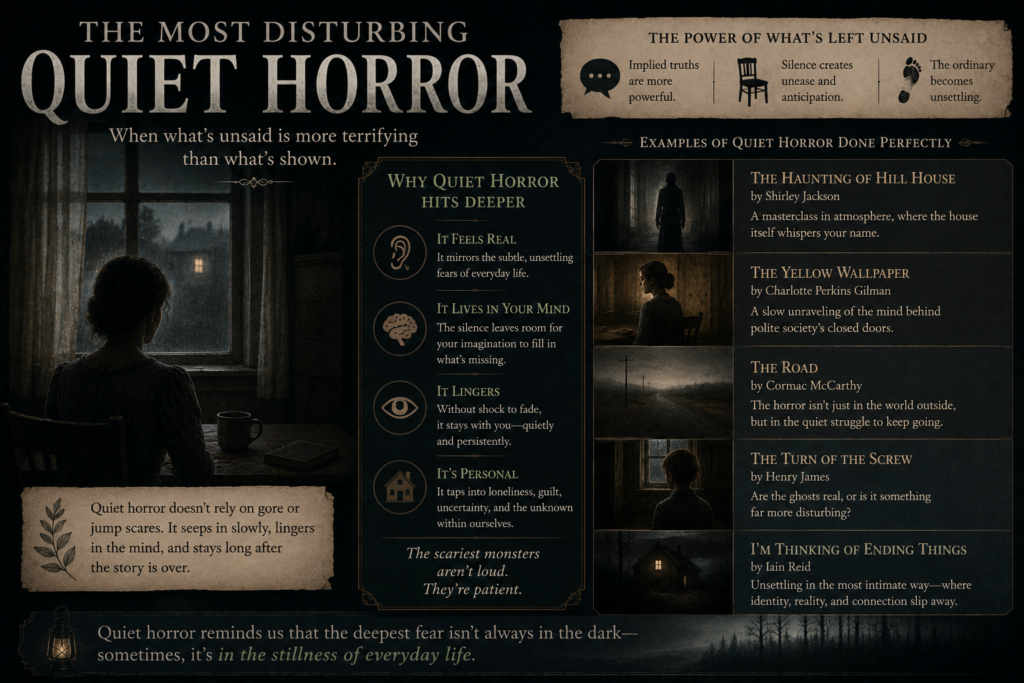
The Most Disturbing Quiet Horror does not always need blood, monsters, or loud scares. It works through silence, doubt, strange behavior, and the slow feeling that something is wrong.

This kind of horror stays with readers because it feels close to real life. A locked room, a cold look, or a normal house can become deeply frightening.

In this Guide

What Is Quiet Horror?

Quiet horror uses mood, tension, and fear of the unknown instead of shock.

In loud horror, the scary thing may jump out. In quiet horror, the scary thing may never fully appear. The reader feels trapped in a question: What is really happening?

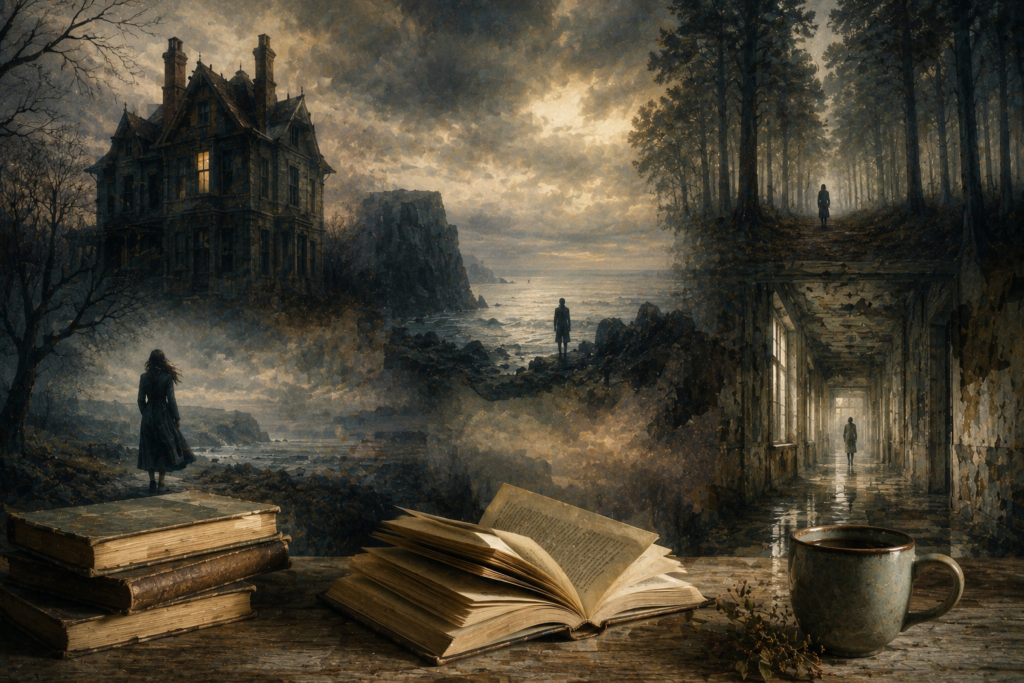
The Most Disturbing Quiet Horror often takes place in ordinary spaces. A family home, a school, a hotel, or a small town can seem safe at first. Then small details begin to change the mood.

A door stays locked. A character hears a sound at night. A kind person says something cruel in a calm voice. These moments feel small, but they build dread.

This style has deep roots in Gothic fiction. For helpful background, see Britannica’s overview of the Gothic novel.

Why the Most Disturbing Quiet Horror Feels So Powerful

The strongest fear often comes from what the story refuses to explain.

The Most Disturbing Quiet Horror works because the reader must fill in the gaps. A writer may not show the monster. Instead, the writer shows the fear that the monster creates.

This type of horror also feels personal. It often focuses on grief, guilt, shame, or family secrets. These fears do not vanish when the lights come on.

Quiet horror can also make readers question a narrator. Is the character truly in danger? Are they losing touch with reality? Or is the world around them more twisted than it looks?

That doubt is part of the fear. The reader cannot relax because the story never gives a simple answer.

Best Examples of Most Disturbing Quiet Horror in Literature

These works show how fear can grow through silence, mood, and slow pressure.

Shirley Jackson’s “The Lottery” is one of the clearest examples of quiet horror. The story begins with a normal town event. The people talk in simple, casual ways.

That calm tone makes the ending more awful. Jackson does not need a monster. The horror comes from tradition, group pressure, and ordinary people who accept violence.

Henry James’s The Turn of the Screw also fits the Most Disturbing Quiet Horror style. A governess believes two children are haunted. Yet the story never fully proves what she sees.

The fear comes from doubt. The reader must decide if ghosts are real or if the narrator has lost control.

Edgar Allan Poe’s “The Fall of the House of Usher” uses setting as a source of dread. The house feels sick, and the family inside feels tied to its decay.
Poe’s work is often loud in emotion, but his best horror also depends on atmosphere. You can read more about Poe through the Poetry Foundation’s Poe page.

Bram Stoker’s Dracula is often seen as a dramatic vampire novel, but it also has quiet horror. Letters, journals, closed doors, and hidden illness create fear before the vampire fully takes over.

For a deeper look at what Dracula represents, read our guide to Count Dracula as a symbol of fear and corruption.

The Most Disturbing Quiet Horror Often Hides in Normal Life

Everyday settings can make horror feel more real.

One reason the Most Disturbing Quiet Horror works so well is that it does not feel far away. It may start in a kitchen, a bedroom, or a quiet street.

These places should bring comfort. When a writer makes them feel unsafe, the reader feels a deeper kind of fear.

Shirley Jackson often used this method. Her homes can feel warm on the outside but cruel inside. Her towns may seem peaceful, but they hide strict rules and hidden violence.

This is why quiet horror fits so well in school and college literature classes. It invites close reading. A small word, object, or repeated image may hold the key to the whole story.

Symbols and Themes in Most Disturbing Quiet Horror

Quiet horror depends on symbols that seem simple at first.

One major symbol is the house. In many quiet horror stories, the house reflects the mind of a character. If the house is cracked, dark, or sealed off, it may show fear, guilt, or family damage.

Another common symbol is the locked room. It can stand for a secret that no one wants to face. It may also suggest trauma, power, or the past.

Illness is another key image. In Dracula, sickness can point to corruption, fear of desire, or fear of change. This is one reason vampire stories often feel more serious than simple monster tales.

If you want to explore that idea further, our article on Dracula and moral corruption can help connect horror to theme.

The Most Disturbing Quiet Horror also explores control. A character may feel watched, judged, or trapped by rules. The threat may be a ghost, but it may also be society itself.

That is what makes this genre feel mature. It turns fear into a question about how people live, what they hide, and what they obey.

Recommended Books for Fans of Most Disturbing Quiet Horror

These books are strong choices for students and general readers who want thoughtful fear.

  • The Haunting of Hill House by Shirley Jackson: A chilling novel about a strange house and the fragile minds inside it.
  • The Turn of the Screw by Henry James: A ghost story built on doubt, fear, and unclear truth.

Both books are easy to find through major booksellers, libraries, or classroom reading lists. They also reward slow reading, since much of the horror hides in tone and detail.

How to Read Quiet Horror in Class

Quiet horror becomes clearer when you track small patterns.

Watch for repeated objects. A window, key, letter, or mirror may seem minor at first. Later, it may reveal a major fear in the story.

Pay close attention to the narrator. Ask if the narrator sees clearly or if emotion changes the way they describe events.

Look at what characters do not say. Silence can matter as much as speech in the Most Disturbing Quiet Horror.

It also helps to ask one simple question: What does this story make normal? In many quiet horror works, the scariest thing is not the strange event. It is how calmly people accept it.

FAQs About Most Disturbing Quiet Horror

What does quiet horror mean?

Quiet horror is a style of horror that uses mood, tension, and mystery instead of shock. It often leaves the scariest parts partly hidden.

Why is the Most Disturbing Quiet Horror so effective?

It feels real because it often starts in normal places. The fear grows slowly, so readers have time to feel trapped by the story.

Is quiet horror the same as Gothic horror?

Not always, but they often overlap. Gothic horror uses old houses, secrets, madness, and decay, which also appear in many quiet horror stories.

What is a good quiet horror book for students?

The Haunting of Hill House by Shirley Jackson is a strong choice. It is scary, literary, and rich with symbols.

Does quiet horror need a monster?

No. Some of the best quiet horror has no clear monster. The fear may come from people, memory, guilt, or social pressure.

Key Takeaway

The Most Disturbing Quiet Horror haunts readers because it does not explain too much. It turns silence, doubt, and ordinary life into fear.

That is why these stories last. They do not just scare us for a moment. They make us wonder what may be hidden inside the places we trust most.

Themes in Night: A Student-Friendly Guide

themes in Night

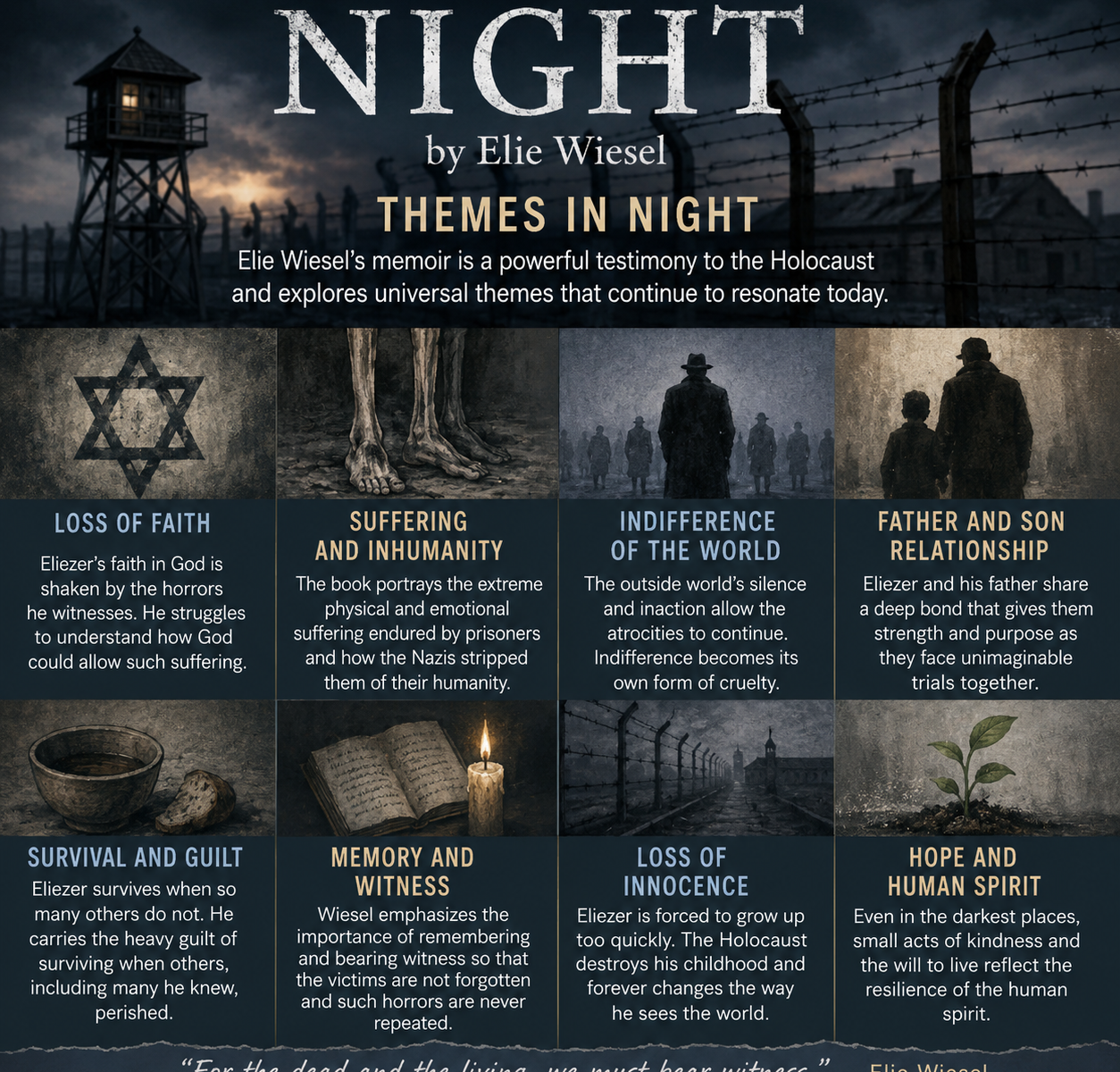
Elie Wiesel’s Night is a short memoir, but its ideas are deep and hard to forget. The themes in Night help students understand how the book explores faith, cruelty, silence, memory, and survival during the Holocaust.

This guide explains the major ideas in clear terms so you can use them in class talks, essays, and exams.

In this Guide

  • Why the themes in Night matter
  • Faith and doubt
  • Dehumanization and identity
  • Silence and responsibility
  • Memory and witness
  • How to write about theme
  • FAQ
themes in Night

Why the themes in Night matter

The memoir is not just about what happened to Elie Wiesel. It asks what happens to a person’s beliefs, family bonds, and sense of self under extreme evil.

The themes in Night matter because they show how history affects real human lives. Wiesel does not let readers stay distant from the suffering he describes.

Before you write about theme, remember this key point: the book is a memoir, not a made-up story. Its themes come from lived experience.

If you need a quick review of the basic idea of theme, this guide to how to identify theme in literature can help.

Themes in Night: Faith and Doubt

Wiesel shows faith as something that can be tested, wounded, and changed.

At the start, Elie has a deep interest in religion. He studies Jewish texts and wants to understand God in a serious way.

After he enters the camps, his faith faces horror that seems impossible to explain. He sees children suffer. He sees people pray while death surrounds them.

This is one of the most painful themes in Night because Wiesel does not give an easy answer. He shows how suffering can make someone question the beliefs that once gave life meaning.

A useful comparison is Job from the Bible. Job also suffers and questions God, but Wiesel’s world feels even more broken because the evil is made by humans.

For essays, avoid saying Elie simply loses faith. A stronger claim is that his faith changes into anger, doubt, and silence.

Themes in Night: Dehumanization and Identity

The camps try to strip people of names, dignity, and personal worth.

One of the clearest themes in Night is dehumanization. Prisoners are shaved, numbered, starved, beaten, and forced to live in fear.

This matters because Wiesel shows that genocide does not begin with murder alone. It begins when people are treated as less than human.

Elie’s identity changes as the camps take away parts of his former life. He is no longer just a son, student, or believer. He becomes a prisoner who must fight to stay alive.

This theme connects to other Holocaust texts, such as The Diary of a Young Girl by Anne Frank. Both works show how hatred targets identity, but Wiesel shows the inside of the camp system with direct force.

When you write about this theme, focus on how language and treatment change the prisoners. A number replaces a name. Hunger replaces normal thought. Fear replaces daily life.

Family, Survival, and Moral Conflict

Wiesel shows how extreme suffering can strain even the strongest family bond.

Elie and his father depend on each other. Their relationship helps both of them survive for much of the memoir.

Yet the camps create terrible moral pressure. Elie sometimes feels fear, guilt, and frustration as he tries to care for his father while he is also weak.

This theme is hard because it does not judge Elie in a simple way. Instead, it shows how evil systems can force people into choices no one should have to face.

A similar idea appears in King Lear, where family love is tested by power and suffering. In Night, the test is not pride or politics. It is hunger, terror, and death.

Themes in Night: Silence and Responsibility

Silence in the memoir can mean fear, failure, or unanswered pain.

Among the themes in Night, silence is one of the most important. Many people outside the camps do not act in time. Some witnesses turn away. God also seems silent to Elie during the worst moments.

Wiesel uses this silence to ask a serious question: what do people owe each other when evil becomes visible?

The memoir suggests that silence can protect the guilty when innocent people need help. This is why Wiesel later became known as a voice for human rights and memory.

For historical background, students can read the United States Holocaust Memorial Museum page on Elie Wiesel.

Themes in Night: Memory and Witness

Wiesel writes so the dead are not erased by time.

Memory is one of the central themes in Night because the memoir itself is an act of witness. Wiesel tells what he saw so readers cannot claim ignorance.

This does not mean the book only records facts. It also shows how memory carries pain. The past remains alive in the mind of the survivor.

Many works of literature use memory to fight loss. In Beloved by Toni Morrison, memory also forces readers to face violence that society may want to forget.

In Night, memory has a moral purpose. To remember is to honor victims and warn the living.

Loss of Innocence in Night

Elie’s view of the world changes because he sees what humans can do to each other.

At first, Elie is young, curious, and devoted to study. He trusts religious learning and family life.

By the end, his childhood has been destroyed. The famous mirror scene shows a person who has survived but has been deeply changed.

Loss of innocence is not only about growing older. In this memoir, it means being forced to see cruelty before the mind is ready.

How to write about themes in Night

A strong theme statement should say more than one word.

Do not write, “The theme is faith.” That is a topic. Write a full idea, such as, “Wiesel shows that extreme suffering can turn faith into doubt, anger, and silence.”

Use short evidence. Then explain how the evidence proves your point.

Here is a simple pattern: name the theme, connect it to a key moment, and explain what Wiesel wants readers to understand.

Helpful books to read with Night

These books can help students build context and compare ideas:

  • The Diary of a Young Girl by Anne Frank
  • Man’s Search for Meaning by Viktor E. Frankl

These works are different from Night, but they also deal with suffering, memory, and the human search for meaning.

FAQ about themes in Night

What are the main themes in Night?

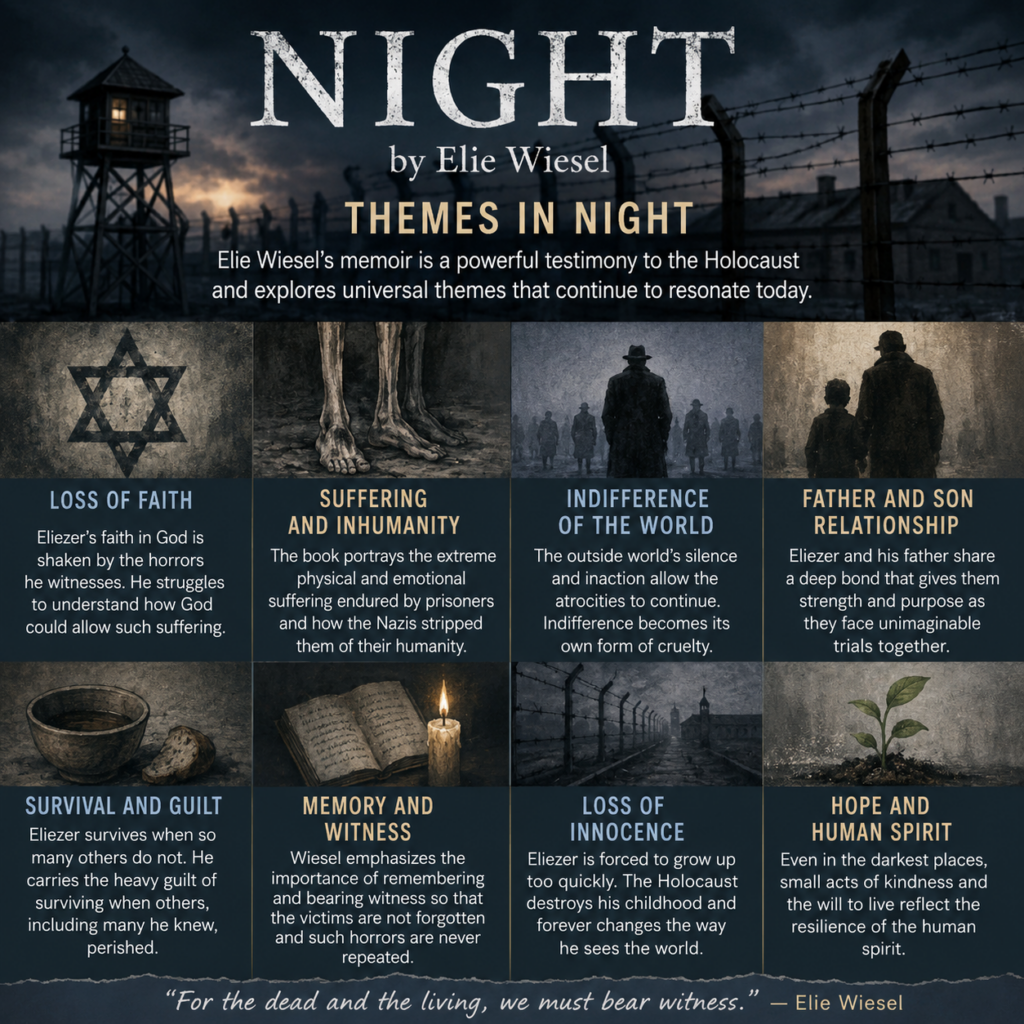
The main themes in Night include faith and doubt, dehumanization, family bonds, silence, memory, and loss of innocence.

Is Night a novel or a memoir?

Night is a memoir. It is based on Elie Wiesel’s own experience during the Holocaust.

What is the most important theme in Night?

Many students choose faith and doubt because Elie’s relationship with God changes so much. Dehumanization is also central to the book.

How do I find evidence for a theme?

Look for repeated moments, changes in Elie’s thoughts, and scenes that show conflict. Then explain what those moments reveal.

Key Takeaway

The themes in Night show how cruelty attacks faith, identity, family, and memory. Wiesel’s memoir asks readers not only to understand the past, but to carry its warning forward.

Most Disturbing Haunted Houses

Most disturbing haunted houses

The Most Disturbing Haunted Houses in literature do more than scare us. They trap grief, guilt, secrets, and fear inside their walls.

These houses feel alive because they reflect the minds of the people who enter them. That is why haunted house stories still matter in classrooms, book clubs, and late-night reading sessions. 👻

Most disturbing haunted houses

In this Guide

Why the Most Disturbing Haunted Houses Stay With Us

A great haunted house is scary because it feels personal.

The Most Disturbing Haunted Houses do not rely only on ghosts. They use silence, locked rooms, strange noises, and family history to create dread.

In many stories, the house becomes a mirror. It shows what characters fear most, even when they refuse to say it out loud.

This is why haunted houses work so well in Gothic fiction. If you want a helpful way to read symbols like rooms, doors, and shadows, try this guide on how to read literature like a scholar.

Most Disturbing Haunted Houses in Classic Literature

Classic literature gave us some of the most famous cursed homes ever written.

One of the Most Disturbing Haunted Houses is Hill House in Shirley Jackson’s The Haunting of Hill House. The house is not just haunted. It seems to choose its victim.

Eleanor arrives at Hill House lonely and unsure of herself. The house feeds on that weakness. By the end, it is hard to tell where Eleanor’s mind ends and the house begins.

Edgar Allan Poe’s The Fall of the House of Usher offers another chilling example. The Usher home is cracked, decaying, and linked to a family that seems doomed from the start.

Poe makes the house feel like a body. Its collapse feels like the end of a family line. You can learn more about Poe’s life and literary importance from the Poetry Foundation.

Henry James also gives readers a deeply uneasy house in The Turn of the Screw. Bly is a large country estate, but its size makes it feel unsafe. The governess does not know whom to trust, and the house seems full of hidden threats.

These stories connect to the larger Gothic tradition. For background, see Britannica’s overview of Gothic fiction.

Modern Most Disturbing Haunted Houses Worth Reading

Modern haunted house stories often focus on trauma, memory, and identity.

Some Most Disturbing Haunted Houses are not ancient castles or ruined mansions. They can be family homes, rented rooms, or quiet places that look normal from the street.

Toni Morrison’s Beloved gives us 124, a house haunted by a painful past. The haunting is not just supernatural. It comes from slavery, loss, and the memories that refuse to fade.

In Daphne du Maurier’s Rebecca, Manderley is not a ghost house in the usual sense. Still, it is haunted by Rebecca’s presence. The new Mrs. de Winter feels judged by every room.

Silvia Moreno-Garcia’s Mexican Gothic offers a more recent example. High Place feels sick at its core. The house holds family control, greed, and decay inside its walls.

These homes prove that the Most Disturbing Haunted Houses do not need a sheet-covered ghost. They need pressure, fear, and secrets that will not stay buried.

What the Most Disturbing Haunted Houses Symbolize

Haunted houses often stand for problems people try to hide.

The Most Disturbing Haunted Houses are full of symbols. A locked door may point to shame. A broken window may suggest a damaged mind. A dark hallway may show fear of the unknown.

Many haunted houses also explore family guilt. In The Fall of the House of Usher, the house reflects a family that has turned inward for too long.

Other stories use the house to show isolation. Hill House traps Eleanor because she already feels cut off from the world. The building gives shape to her loneliness.

Some haunted houses reveal social violence. In Beloved, the haunting shows how history enters private life. The home is not safe because the past was never resolved.

When you read a haunted house story, ask what the house wants. Ask what it hides. Ask why the character stays.

These books are strong choices for students, Gothic fiction fans, and readers who want more than a quick scare.

  • The Haunting of Hill House by Shirley Jackson: A masterclass in fear, loneliness, and psychological horror.
  • Mexican Gothic by Silvia Moreno-Garcia: A rich modern Gothic novel about power, family secrets, and a house that feels infected.

You can search for these titles on Amazon, at your local library, or through your school library catalog.

How Students Can Read Haunted Houses Closely

A haunted house story rewards slow, careful reading.

To study the Most Disturbing Haunted Houses, pay attention to setting first. Notice how the author describes the air, the light, the doors, and the sounds.

Next, watch how the main character reacts to the house. Fear often tells us more about the character than the ghost does.

It also helps to track repeated details. If a room, stain, mirror, or staircase appears more than once, it probably matters.

For a stronger reading method, revisit this guide to reading literature like a scholar.

FAQs About the Most Disturbing Haunted Houses

Here are quick answers to common questions about haunted houses in literature.

What makes the Most Disturbing Haunted Houses so scary?

They connect the supernatural to real fears. Grief, guilt, abuse, and loneliness often make the house feel dangerous.

Is every haunted house story Gothic?

No, but many are. Gothic stories often use old homes, secrets, fear, and dark family history.

Why do writers make houses seem alive?

A living house can show a character’s inner world. It turns private fear into something readers can see.

What is the best haunted house novel to start with?

The Haunting of Hill House is a great starting point. It is short, tense, and rich with meaning.

Key Takeaway

The Most Disturbing Haunted Houses in literature are not scary only because of ghosts. They disturb us because they make fear feel familiar.

A haunted house can hold a family’s shame, a nation’s history, or one person’s deepest pain. That is what makes these stories last.