

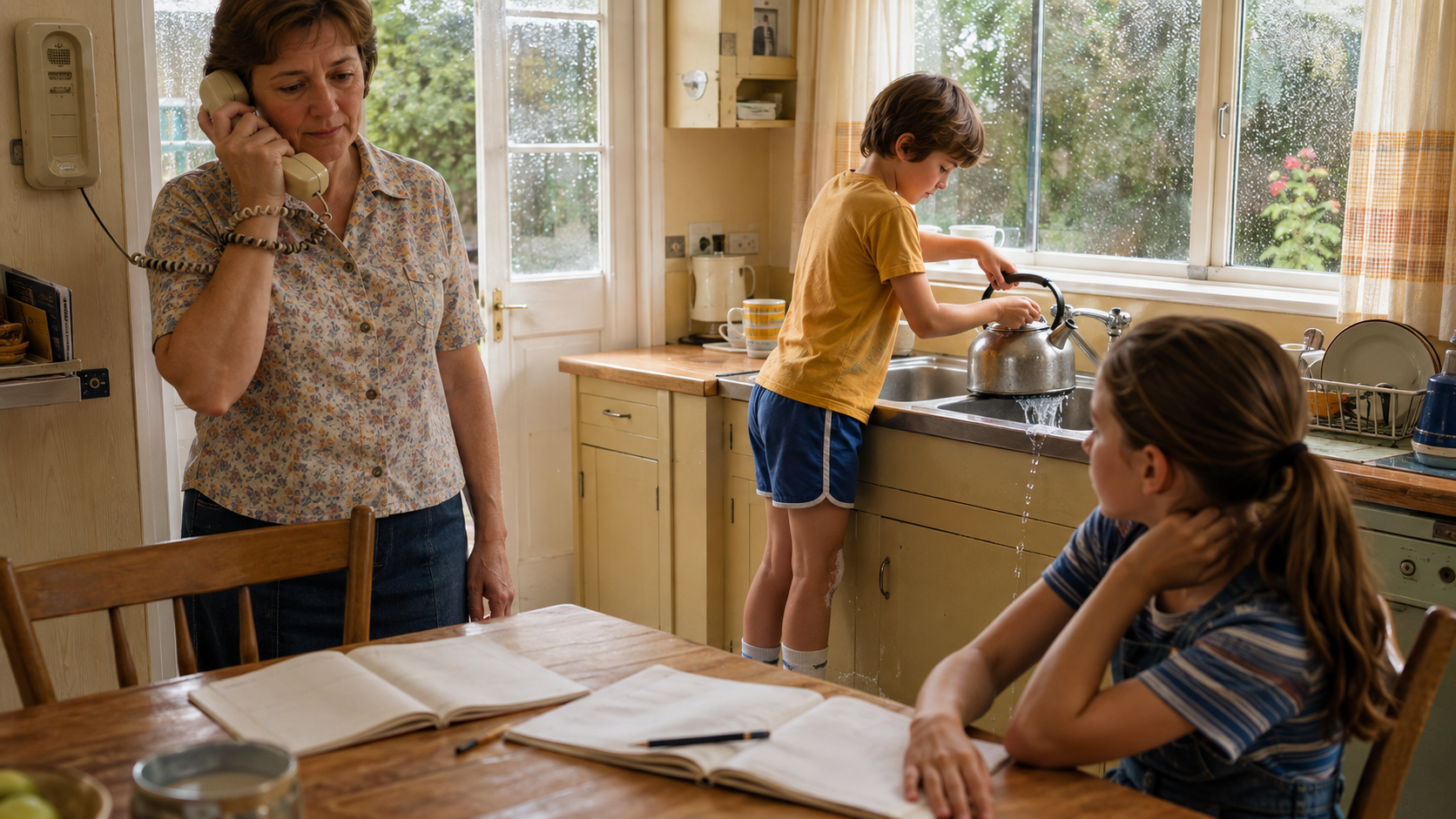
A warm, specific invitation to write about a phrase your family used that meant something private, funny, tender, or completely different once it left your kitchen table.
Maybe someone in your family could say two ordinary words and everyone knew what they really meant. A stranger would hear “the good plates” or “company clean” or “don’t start,” and assume the meaning was simple. But inside your house, that phrase carried history. It could mean hurry, behave, forgive me, we are poor this week, your aunt is coming, or Dad is in one of his moods.
This flash memoir prompt about a phrase your family used that meant something different can open a door fast because family language is rarely just language. It is code. It is habit. It is love with its sleeves rolled up. It is also where old tension can hide in plain sight.
The Prompt
Write about a phrase your family used that meant something different inside your family than it would have meant anywhere else.
Choose one phrase. Keep it small. It might be a joke, a warning, a nickname, a line from a movie, a made-up word, or something someone said once that became family law.
This prompt works because a phrase can hold a whole room inside it. Once you remember who said it, when they said it, and what happened next, the memory often starts to move on its own.
Why This Memory Matters
Every family has its own dictionary. Some entries are silly. Some are sharp. Some are so old that no one remembers where they came from, yet everyone still reacts when they hear them.
A phrase like “we’ll see” might have meant no. “Fix your face” might have meant stop crying before we go inside. “Make it stretch” might have meant money was tight. “That’s your mother’s people” might have been half joke, half judgment.
When you write about a family phrase, you are writing about belonging. You are also writing about power. Who was allowed to say the phrase? Who had to obey it? Who laughed? Who went quiet?
This kind of memory can reveal a family role without having to explain everything. You may discover who tried to keep peace, who made others laugh, or who turned pain into comedy. If you like thinking about how people reveal themselves through speech and action, you may also enjoy this guide on how to analyze characters in literature. The same skill can help you notice the real people in your memoir scenes with more care.


How to Approach This Prompt
Begin with the phrase itself. Put it in quotation marks. Let it sit on the page before you explain it.
Then choose one scene where the phrase mattered. Do not try to tell the full family history. Stay with one moment: the car ride, the dinner table, the hallway before guests arrived, the kitchen after a phone call.
Start with a physical detail. Was there steam on the windows? Was someone holding a wooden spoon? Were you sitting on the carpet, pretending not to listen? A concrete detail helps the reader enter the memory before you tell them what it means.
Write what you noticed first. Maybe you did not understand the phrase as a child. Maybe you only knew that after someone said it, the room changed. That is enough. You can let the meaning arrive later in the piece.
Try not to explain the lesson too soon. Let the phrase do some of the work. If the words were funny, show the laughter. If they were tense, show the pause after they landed.
You might even read back over your draft and mark the places where the memory feels vivid, the way you might mark a passage in a book. This simple practice connects well with how to annotate literature, because both ask you to notice what a small detail is really doing.
A Quick Example
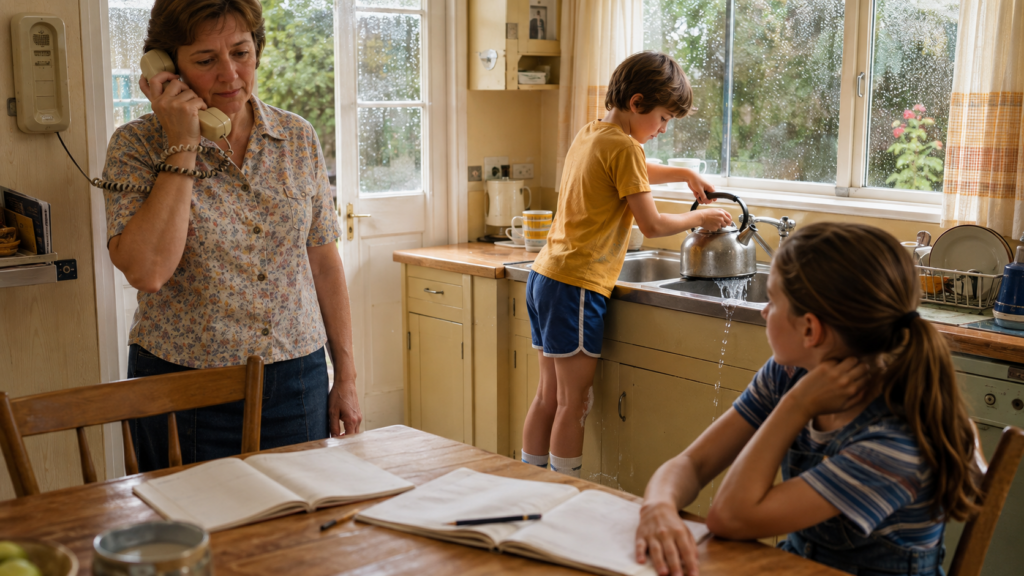
In my family, “put the kettle on” did not always mean tea. Sometimes it meant someone had died. Sometimes it meant my mother needed a minute before she could say what the phone call had been about. I remember her saying it one rainy afternoon while still holding the receiver, the cord twisted around her wrist. My brother and I were at the table with math homework spread between us. No one moved at first. Then I filled the kettle too high, water sloshing over my socks. My mother laughed once, but it did not sound like a laugh. Years later, I still hear that phrase as a soft warning. Get ready. Something has changed.
Try It Yourself
Set a timer for ten minutes and write the phrase at the top of the page. Do not worry if it seems too ordinary. Ordinary family language often carries the most weight.
Ask yourself who said it most often. What did their voice sound like? What did you understand then, and what do you understand now?
If the memory turns funny, follow that. If it turns sad, let it. The goal is not to make the phrase mean one neat thing. The goal is to catch the moment when language became family property.
This flash memoir prompt phrase family used meant something private to you, so your draft does not need to explain every background detail. Trust the scene. Trust the sound of the words. Trust what your younger self noticed before you had words for it.
Want More Flash Memoir Prompts?
If this prompt helped you remember a family code word, a kitchen-table joke, or a sentence that held more than it seemed to hold, keep going. Explore all 365 prompts in The Memory Trigger: 365 Flash Memoir Writing Prompts.


Get the Free Close Reading Worksheet Pack
Join my email list and receive the printable worksheet pack you can use with any novel or poem.
No spam. Just helpful guides for reading literature well.












