

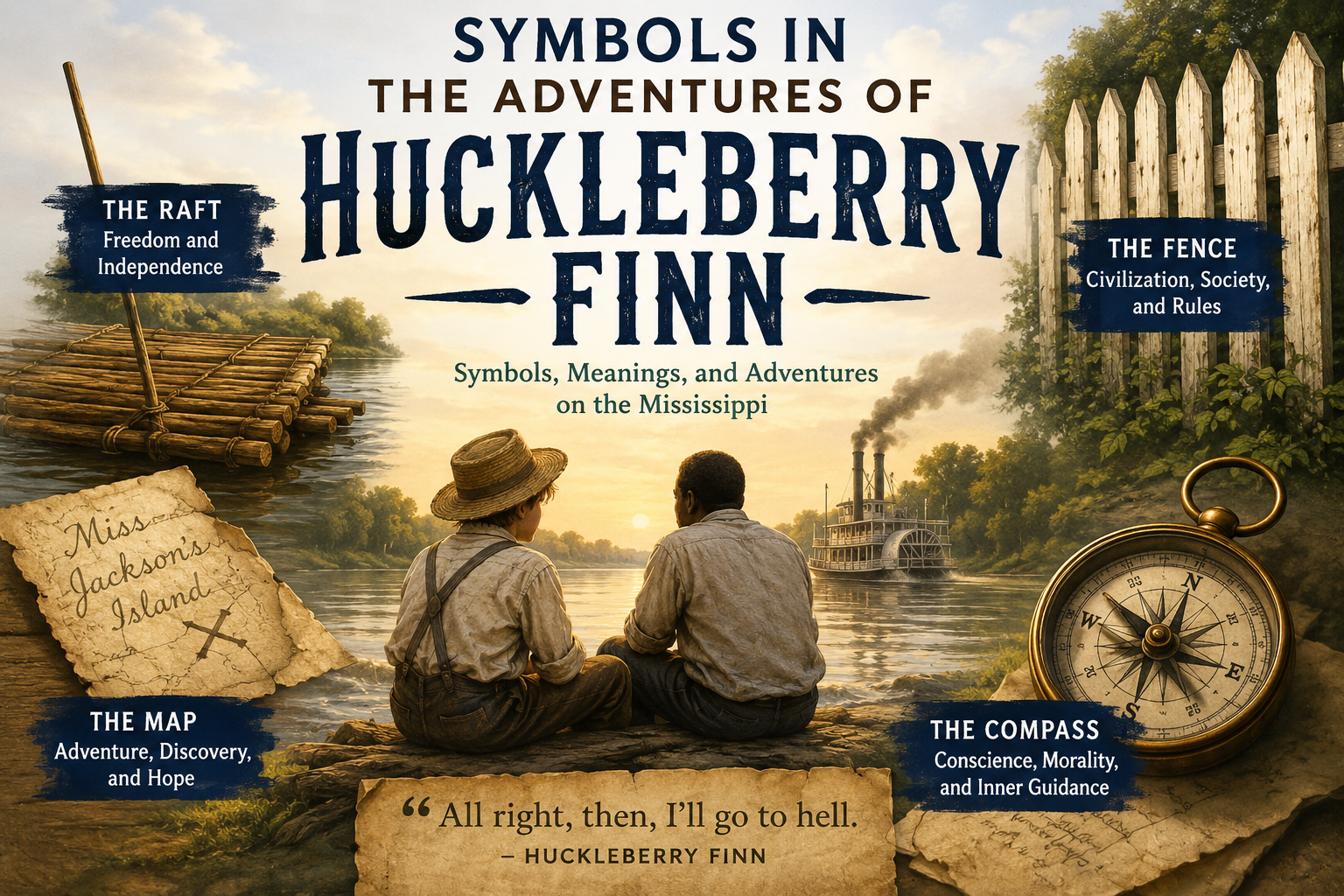
Mark Twain fills his novel with objects and places that mean more than they first seem to mean. The symbols in The Adventures of Huckleberry Finn help readers see how a funny river trip becomes a serious story about freedom, race, and conscience.
This guide explains the most important symbols with clear examples you can use in class or in an essay.
In this Guide
- Why symbols matter
- Major symbols in the novel
- The Mississippi River
- The raft
- The shore and towns
- Clothes and identity
- The fog
- Superstition
- Jim as a symbol of human dignity
- FAQ
Why Symbols in The Adventures of Huckleberry Finn Matter
A symbol is something concrete that points to a deeper idea.
Twain uses simple things, like a river or a raft, to raise hard questions. The book asks what freedom means when a society accepts slavery as normal.
Studying symbols in The Adventures of Huckleberry Finn also helps you track theme. If you need a quick refresher, see our guide on how to find symbolism in a story.
Major symbols in The Adventures of Huckleberry Finn
The main symbols connect Huck’s outer journey with his inner growth.
The river often points to freedom. The shore often points to danger and false values. The raft becomes a small space where Huck and Jim can act more honestly than people in the towns.
These symbols in The Adventures of Huckleberry Finn work like the green light in The Great Gatsby. They are real objects in the story, but they also carry a larger meaning.
The Mississippi River: Freedom and Movement
The Mississippi River is the strongest symbol in the novel.
On the river, Huck escapes his abusive father. Jim also moves away from slavery and toward the hope of reuniting with his family.
The river seems open and free. It lets Huck and Jim leave behind the rules of towns, courts, and slaveholders.
Yet the river is not perfect. It can be dark, confusing, and dangerous. This shows that freedom is not simple. Huck and Jim may escape for a time, but the world around them still threatens their lives.
Theme connection: The river shows the dream of freedom, but it also shows how hard freedom is to reach in an unjust society.
The Raft: A Small World of Trust
The raft is more than transportation.
On the raft, Huck and Jim share food, stories, and fear. They speak as people, not as master and servant.
This matters because the wider world tells Huck that Jim is property. The raft lets Huck see Jim’s kindness and courage for himself.
The raft becomes a symbol of moral space. It is where Huck starts to reject the cruel lessons he has learned.
Theme connection: The raft supports the theme of conscience. Huck begins to choose human feeling over public rules.
The Shore and Towns: Corruption and Social Pressure
The shore often looks safe, but it brings danger.
When Huck and Jim leave the river, they meet feuding families, frauds, angry crowds, and people who defend slavery. The towns are full of rules, but many of those rules are cruel or foolish.
The Grangerford and Shepherdson feud is a clear example. The families act polite, yet they keep a deadly hatred alive.
Twain uses the shore to question what society calls civilized. In this novel, civilization often hides violence.
Theme connection: The shore symbolizes social corruption. It shows why Huck must question the values he has been taught.
Clothes: Identity and Performance
Clothes help Twain show how identity can become a performance.
Huck changes outfits more than once. At one point, he dresses as a girl to gather information. The duke and the king also use clothing and costume to trick people.
These moments are funny, but they also matter. Clothing lets people pretend to be someone else.
Twain suggests that social identity is not always honest. A person can look proper and still act badly.
Theme connection: Clothes reveal the gap between appearance and truth. This supports the novel’s satire of social roles.
The Fog: Confusion and Moral Uncertainty
The fog scene gives a strong image of confusion.
When Huck and Jim are separated in the fog, they lose direction. The river no longer feels clear or safe.
After they reunite, Huck lies to Jim and says the whole event was a dream. Jim is hurt because he trusted Huck.
This moment pushes Huck to feel shame. He apologizes to Jim, which is a major step for him.
Theme connection: The fog symbolizes moral confusion. Huck must learn to see Jim as a full human being, not as a target for jokes.
Superstition: Fear, Belief, and Survival
Superstition appears often in the novel.
Huck and Jim both notice omens and signs. Some beliefs seem silly, but others help them make sense of fear.
For Jim, superstition also shows how people with little power try to read danger before it strikes. He lives in a world where the law does not protect him.
Twain does not treat superstition in one simple way. It can be comic, but it can also reveal deep fear.
Theme connection: Superstition points to uncertainty. It shows how people search for meaning when society feels unsafe.
Jim as a Symbol of Human Dignity
Jim should not be reduced to only a symbol, but he does carry symbolic weight in the novel.
He represents the humanity that a racist society refuses to honor. He is a father, a friend, and a person with his own hopes.
Huck’s view of Jim changes as they travel. That change is central to the novel’s moral conflict.
Twain uses Jim to expose the evil of slavery. The power of the symbol comes from Jim’s real human feeling, not from an abstract idea.
Theme connection: Jim connects the themes of dignity and moral growth. Huck’s conscience forms as he learns to value Jim’s life.
How Symbols in The Adventures of Huckleberry Finn Connect to Theme
Symbols work best when they lead you back to the big ideas of the book.
The symbols in The Adventures of Huckleberry Finn do not sit apart from the plot. They shape the way we understand each choice Huck makes.
The river and raft point toward freedom. The shore points toward social corruption. The fog shows confusion inside Huck’s mind.
If you write about symbolism, always connect the symbol to a theme. For more practice, use our guide on finding symbolism in fiction.
For extra support while you read, try our symbol tracker worksheet to connect each image to a theme.
Why Symbols in The Adventures of Huckleberry Finn Still Matter
Twain’s symbols still matter because the novel asks questions readers still face.
What should a person do when society teaches something wrong? How can friendship change a person’s moral view?
The best symbols in The Adventures of Huckleberry Finn help students see that the book is not just about escape. It is about learning to judge right and wrong for yourself.
For background on the author, Britannica offers a useful overview of Mark Twain. The Library of Congress record for the novel also shows its place in American literary history.
Suggested Books for Further Study
- Adventures of Huckleberry Finn by Mark Twain
- Mark Twain: A Life by Ron Powers
FAQ: Symbols in The Adventures of Huckleberry Finn
What are the main symbols in The Adventures of Huckleberry Finn?
The main symbols in The Adventures of Huckleberry Finn include the Mississippi River, the raft, the shore, clothing, fog, and superstition.
What does the Mississippi River symbolize?
The river symbolizes freedom and movement. It also shows risk because Huck and Jim are never fully safe.
What does the raft symbolize?
The raft symbolizes trust and moral space. On it, Huck and Jim build a bond outside the cruel rules of society.
Why is the fog scene important?
The fog shows confusion. It also leads Huck to feel guilt after he hurts Jim with a lie.
How do these symbols help with essays?
They give you concrete evidence. You can explain how each object or place connects to themes like freedom, conscience, and hypocrisy.
Key Takeaway
The symbols in The Adventures of Huckleberry Finn turn a river journey into a moral test. Twain uses concrete images to show Huck’s slow move toward empathy and truth.


Get the Free Close Reading Worksheet Pack
Join my email list and receive the printable worksheet pack you can use with any novel or poem.
No spam. Just helpful guides for reading literature well.












