

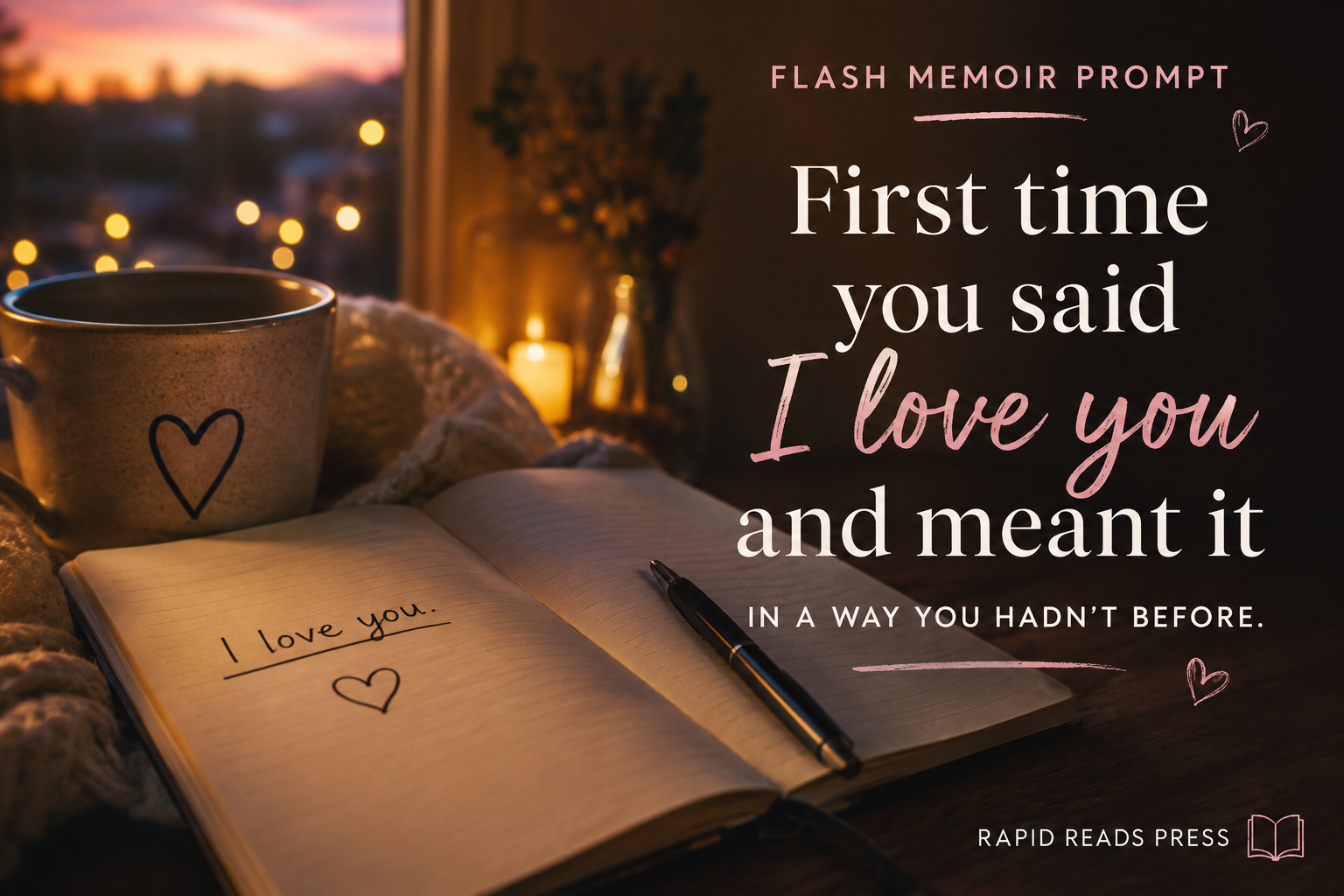
A quiet writing invitation for returning to the first “I love you” that felt different, heavier, braver, or more honest than the ones that came before.
The Prompt
There is a certain kind of silence that happens after someone says “I love you.” You may remember the room, the sidewalk, the car, or the way your own voice sounded strange to you. This flash memoir prompt first time said i love asks you to return to that moment and notice what made it different.
Write about the first time you said “I love you” and meant it in a way you hadn’t before.
This prompt is powerful because the words themselves are simple. Most of us have heard them many times. We may have said them to family, friends, pets, crushes, or people we were trying not to lose. But one moment may stand apart because the meaning changed.
Maybe it was romantic love. Maybe it was the first time you said it to a child and understood how much fear could fit inside love. Maybe it was said to a parent after years of distance. Maybe you whispered it to someone who was leaving. The prompt asks you to find the moment when the phrase stopped being automatic and became a choice.
Why This Memory Matters
“I love you” can be a habit, a promise, an apology, or a risk. In memoir, small phrases often carry a larger story. The words matter, but the scene around them matters just as much.
This memory may uncover a turning point. You might write about growing up, forgiving someone, trusting another person, or realizing that love did not feel the way you expected. The story may also show a younger version of you trying to understand what love required.
Try not to decide too quickly what the memory “means.” Let the details do some of the work. A hand on a steering wheel, a kitchen light left on, a cracked phone screen, or the smell of hospital soap can tell the reader more than a long explanation.
If you are a student, this kind of prompt can also help you practice finding deeper meaning in a scene. The same skill matters when you read stories, poems, or novels. If you want help with that, this guide on how to identify theme in literature can show how small moments often point to larger ideas.
A flash memoir prompt, first time said I love is not asking for your full relationship history. It is asking for one clear memory where the words carried new weight.
How to Approach This Prompt
Begin with the body, not the lesson. What did your throat feel like before you said it? Were your hands busy? Were you looking at the person or looking away?
Narrow the memory to one scene. Do not start with how you met the person, every argument you had, or what happened years later. Start close to the moment when the words were about to leave your mouth.
You might begin with a sentence like, “I was standing by the back door with my coat still on,” or “The phone was warm against my ear.” A physical detail gives the reader a place to stand.
After that, write what you noticed before you explain what it meant. Did the other person laugh? Did they go quiet? Did you regret saying it for one second and then feel relieved? Let the scene move in real time.
If you get stuck, try writing the memory in short lines first. You can always shape it later. Some writers find it helpful to mark the strongest sensory details as they revise, much like they would when they annotate literature for important clues.
Keep the focus tight. This is flash memoir, so a small moment can hold the whole truth. The goal is not to prove that the love lasted. The goal is to show why that one “I love you” felt unlike the others.
A Quick Example
The first time I said it and understood myself, we were outside the laundromat at 10 p.m. My sister had just dropped a basket of warm towels into my trunk because my apartment dryer was broken again. She was tired from work, still in her grocery store polo, and she had one sock half-falling off inside her sandal. I said, “I love you,” the way I always did when we said goodbye. But that night, I heard it differently. I meant, thank you for showing up. I meant, I see how hard you try. She shut the trunk and said, “Love you too, dummy,” and walked back to her car. I stood there longer than I needed to, holding my keys, surprised by how full my chest felt.
Try It Yourself
Set a timer for ten minutes and write the scene without stopping. Do not worry about sounding polished. Focus on where you were, what happened just before the words, and how the room or place changed after you said them.
If the memory feels too tender, write around it at first. Describe the weather, the object in your hand, or the other person’s shoes. Sometimes the safest way into a hard memory is through one ordinary detail.
Once you have a draft, look for the sentence that feels most true. That sentence may not be the prettiest one. It may be plain. Keep it. In flash memoir, plain truth often has the strongest voice.
This flash memoir prompt first time said i love can lead to a sweet piece, a sad one, or something more complicated. Let it be honest before you try to make it neat.
Want More Flash Memoir Prompts?
If this prompt opened a memory you had not thought about in years, keep going. One small scene can lead to another, and a daily practice can help you build a fuller record of your life. Explore all 365 prompts in The Memory Trigger: 365 Flash Memoir Writing Prompts.


Get the Free Close Reading Worksheet Pack
Join my email list and receive the printable worksheet pack you can use with any novel or poem.
No spam. Just helpful guides for reading literature well.












