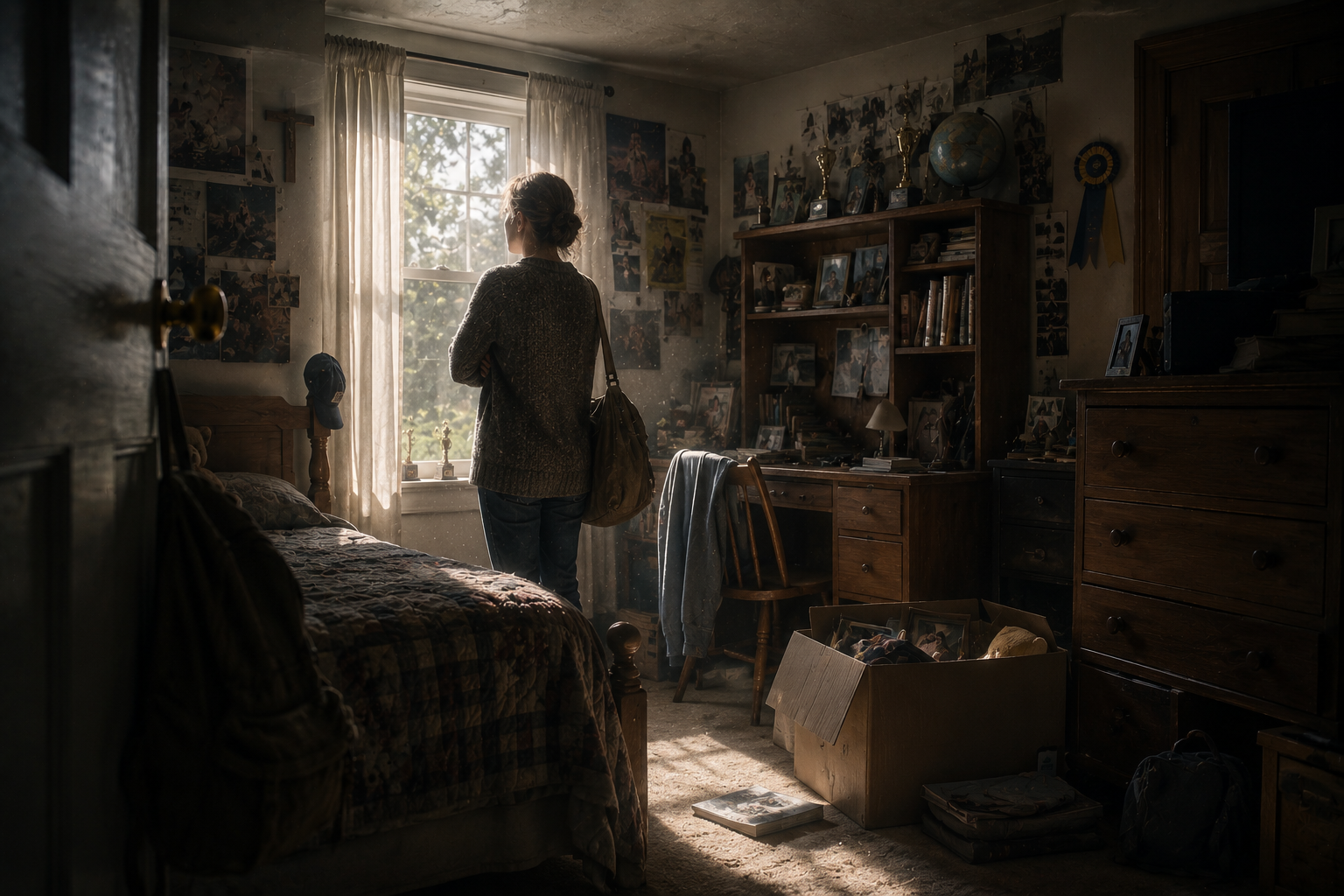
Flash Memoir Prompt: Last Time You Were in Your Childhood Bedroom

flash memoir prompt bedroom

The door may have stuck, the carpet may have looked smaller, or the room may have belonged to someone else by then. This flash memoir prompt last time childhood bedroom asks you to return to one room and notice what it held, what it lost, and what you were finally ready to see.
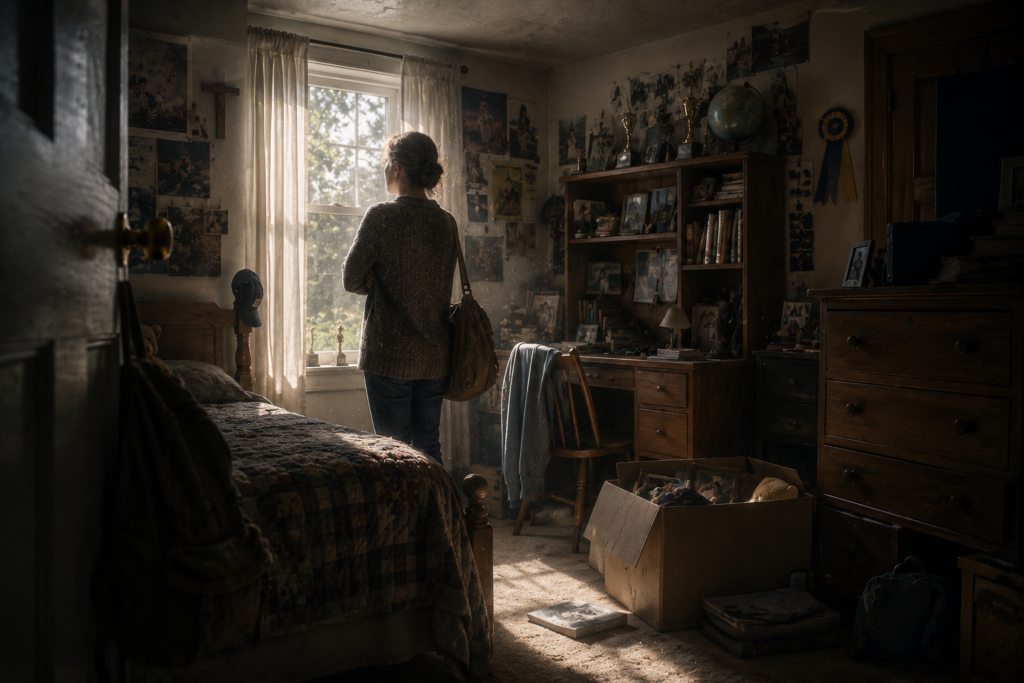
flash memoir prompt bedroom

The Prompt

Write about the last time you were in your childhood bedroom.

This prompt works because a bedroom is never just a room. It is where you slept, hid, dreamed, cried, changed clothes, taped things to the wall, and became a person in private.

The last time you saw that room may have been quiet. Maybe you packed boxes before a move. Maybe you visited after years away. Maybe you stood in the doorway after a parent sold the house. The memory may seem small at first, but it can open into a sharp story about leaving, growing up, or seeing your younger self with new eyes.

If you are looking for a flash memoir prompt last time childhood bedroom, try to stay with one moment instead of explaining your whole childhood. One scene is enough.

Why This Memory Matters

Childhood bedrooms hold strange evidence. A dent in the wall can bring back a fight. A faded poster can remind you who you wanted to become. A closet can hold the version of you that needed privacy before you had the words for it.

The last visit matters because it often comes with a shift. You may enter as an adult and notice the room no longer fits you. The ceiling may seem lower. The bed may look narrow. The shelves may feel like a museum display from a life you used to live.

This prompt can uncover more than nostalgia. It may reveal grief, relief, embarrassment, humor, or gratitude. You might remember a room you could not wait to leave. You might miss a room that was never perfect. You might realize that the person you were back then had more courage than you knew.

Objects can carry meaning in memoir the same way they do in fiction. If one item in the room feels important, like a lamp, a trophy, a cracked mirror, or a shoebox, you may find it useful to read about how to find symbolism in a story. Memoir often discovers meaning through things you can touch.

How to Approach This Prompt

Begin with a physical detail. Do not start by saying what the room meant. Start with what you saw.

Maybe the room smelled like dust and old paint. Maybe the sunlight hit the floor in the same square it always had. Maybe your mother had turned it into a sewing room, and your old bed was gone. Let the detail pull you into the scene.

Then narrow the memory. Choose one moment: your hand on the doorknob, your knees on the floor as you opened a box, your last look through the window, or the sound of your voice in the empty room.

Write what you noticed before you explain what it meant. This keeps the memory alive for the reader. If you tell us, “I felt sad because my childhood was over,” the scene may feel distant. If you show us that you found a glow-in-the-dark star still stuck to the ceiling, the sadness can arrive on its own.

Avoid trying to tell the whole story of your family, your move, or your childhood home. Flash memoir is small on purpose. It asks you to trust one focused memory.

If you want to study your own draft after you write it, try marking the strongest details and the places where your emotion changes. This guide on how to annotate literature can also help you look closely at your own writing, almost as if it were a short piece you found in a book.

A Quick Example

The last time I stood in my childhood bedroom, the walls were already white. My father had painted over the purple I picked in seventh grade, the purple my mother called “a little dramatic” while she rolled it on anyway. The room echoed because the furniture was gone. I opened the closet and found one plastic star stuck to the inside of the door, left over from the pack I had pressed onto the ceiling with my thumb. I laughed first. Then I shut the closet slowly. I had spent years wanting to leave that house, but in that empty room I wanted to apologize to the girl who waited so long to become someone else.

Try It Yourself

Set a timer for ten minutes and write from this flash memoir prompt last time childhood bedroom. Begin with the room as it looked that final time, not as it looked in every year before.

Let one object lead you. If you get stuck, write the sentence, “I did not expect to notice…” and keep going. You may find the real memory inside that answer.

Do not worry about making the piece neat at first. A flash memoir can start as a few vivid lines. Later, you can shape it into a scene with a clear beginning and a quiet turn at the end.

Most of all, let the room be honest. It does not have to be sweet. It does not have to be painful. It only has to be yours.

Want More Flash Memoir Prompts?

If this prompt helped you return to one room with fresh attention, keep going. Explore all 365 prompts in The Memory Trigger: 365 Flash Memoir Writing Prompts.

The Memory Trigger

Flash Memoir Prompt: Friendship that Ended without Either of You Saying So

flash memoir prompt friendship

You spot their name in your phone and feel a strange little pause, as if your thumb remembers a person your life no longer knows. This flash memoir prompt, friendship ended without either saying so, invites you to write about the quiet kind of ending that happens in missed calls, shorter replies, and plans no one tries to remake.

flash memoir prompt friendship

The Prompt

Write about a friendship that ended without either of you saying so.

This prompt can unlock a meaningful memory because silent endings often leave behind the sharpest details. There may not have been a fight, a final text, or one clear goodbye. Instead, the story might live in a cafeteria seat left empty, a birthday you forgot to mention, or the first time you realized you had news and did not think to tell them.

A flash memoir prompt about a friendship that ended without either of you saying so works best when you do not try to explain the whole relationship. Choose one moment that shows the shift. Let the reader feel the distance before you name it.

Why This Memory Matters

Some friendships end with a slammed door. Others fade like pencil marks rubbed too many times. Those quieter endings can be hard to write about because there is no single villain and no clean reason. Maybe you both changed. Maybe one of you moved on first. Maybe life got busy and pride filled the space.

Writing this kind of memory can help you notice what you carried from that friendship. You might remember how safe you felt with that person, or how small you felt near the end. You may also see your younger self with more kindness. Many people lose friends without having the words for what is happening at the time.

This prompt also gives you a chance to explore character, both theirs and yours. If you want to think more deeply about how people reveal themselves through action, you may enjoy this guide on how to analyze characters in literature. Memoir uses real people, of course, but the same careful attention helps. What did each person do? What did each person avoid saying?

A silent ending is still an ending. It may have shaped what you expect from loyalty, honesty, distance, or repair. That is why this flash memoir prompt friendship ended without either saying can lead to a story that feels small on the surface and large underneath.

How to Approach This Flash Memoir Prompt: Friendship Ended Without Either Saying

Begin with a physical detail. Think of an object, place, or small action that belonged to the friendship. Maybe it was a shared locker, a coffee shop booth, a borrowed sweater, a game controller, or the passenger seat of a car.

Then narrow the memory to one scene. Do not start with how you met and do not rush toward how it fully ended. Start in the middle of the drift. Pick a day when something felt slightly off, even if you ignored it at the time.

You might write about the first unanswered message that did not surprise you. Or the day you saw them laughing with someone else and felt jealous, then embarrassed that you felt jealous. Or the moment you realized you were telling a story and had left them out of it.

Try to write what you noticed before you explain what it meant. Describe the cold fries on the lunch tray, the unread notification, the way their backpack was already zipped before the bell rang. Let the meaning rise from the scene.

If you freeze, ask yourself one simple question: “When did I first feel the space between us?” Write that moment as honestly as you can. You do not have to blame anyone. You also do not have to protect everyone. Stay close to what happened.

Some writers like to mark up a memory the way they would mark up a short story. If that helps you, this guide on how to annotate literature may give you a useful method. Circle the image that carries the emotion. Underline the sentence where the friendship changes.

A Quick Example

We used to sit on the gym floor during assemblies, knees touching, whispering into our sleeves so the teachers would not see us laugh. By senior year, she sat three rows ahead with the theater kids. I told myself it made sense. She had rehearsal. I had newspaper. Still, one Friday, I saw her in the hallway holding the keychain I gave her after her parents’ divorce, a tiny blue plastic whale. It was clipped to someone else’s backpack. I almost asked about it. Instead, I said, “Cute,” like I had never seen it before. She smiled too quickly and said, “Yeah.” The bell rang. We walked in opposite directions. No one was cruel. That was almost worse.

Try It Yourself

Set a timer for ten minutes and write one scene about a friendship that ended without either of you saying so. Keep the focus small. One hallway. One text. One car ride. One birthday party where you both acted normal.

As you write, resist the urge to solve the whole friendship. You are not writing a court case. You are catching a moment of recognition. What did you see? What did your body know before your mind admitted it?

If the memory still feels tender, write it first for yourself. You can change names later. You can decide what to share later. The important thing is to let the scene exist on the page, with all its awkwardness and quiet truth.

Want More Flash Memoir Prompts?

If this flash memoir prompt friendship ended without either saying helped you find a scene, keep going. Small memories often open the door to stronger, more honest writing. Explore all 365 prompts in The Memory Trigger: 365 Flash Memoir Writing Prompts.

The Memory Trigger

Flash Memoir Prompt: Last Time You Were Truly Carefree

Flash memoir carefree

Maybe you were barefoot on hot pavement, holding a melting popsicle, and the only thing you had to worry about was whether your tongue would turn blue before dinner. This flash memoir prompt about the last time you were truly carefree before responsibility arrived asks you to return to a moment when the world felt wide, easy, and mostly outside your control.

Flash memoir carefree

The Prompt

Write about the last time you were truly carefree, before you understood what you were responsible for.

This prompt works because carefreeness often disappears slowly. You may not have noticed the exact day it left. One year you were running through a sprinkler without checking the time. Later, you were watching the clock, carrying keys, managing someone’s mood, or worrying about money.

A flash memoir prompt like this helps you find one small scene that holds that change. You do not need to explain your whole childhood or every burden that came later. You only need to find the moment before the shift, when you were still inside your own simple joy.

Why This Memory Matters

The last carefree moment may not look dramatic. It might be a bike ride, a sleepover, a day at the lake, a school field trip, or a lazy afternoon when no one expected anything important from you.

What makes the memory powerful is what the reader senses underneath it. You, as the writer, know that life will change. The younger version of you does not. That gap creates tenderness.

This kind of memory can uncover who protected you, what you did not yet understand, and what responsibility eventually meant in your life. For some people, responsibility arrived through family trouble. For others, it came with work, illness, grades, money, caregiving, or simply growing up in a house where adults expected you to notice too much.

The goal is not to make the memory sad. Let it be light if it was light. Let the joy stay on the page. The contrast will often appear on its own.

How to Approach This Prompt

Begin with a physical detail. Choose one thing your body remembers before your mind tries to explain the meaning. Maybe it is the slap of flip-flops, the smell of chlorine, the rough edge of a picnic table, or the warmth of sun on the back seat of a car.

Then narrow the memory to one scene. Do not try to tell the whole story of your growing up. Stay with one afternoon, one ride home, one bedroom, one sidewalk, or one summer night.

Write what you noticed before you write what it meant. If you were at a carnival, describe the ticket stubs in your hand before you explain that your parents were fighting at home. If you were at your grandmother’s house, show the sound of the screen door before you name the illness that changed everything later.

Objects can help, too. A towel, a baseball glove, a library card, or a pair of sneakers might carry more feeling than a long explanation. If you want help thinking about how objects can hold deeper meaning, this guide on how to find symbolism in a story can help you see your own memory with sharper eyes.

After you draft, read your piece like a student marking a short passage. Circle the strongest image. Underline the line where the mood changes. If that kind of close reading helps you revise, you may also like this guide on how to annotate literature, since the same skills can help you notice what your own writing is really doing.

For this flash memoir prompt, last time truly carefree before responsibility became clear, try ending before you explain too much. A quiet ending can let the reader feel the change without being told exactly how to feel.

A Quick Example

I think it was the summer I was nine, at the apartment pool behind Building C. My brother and I kept jumping in with our knees tucked to our chests, trying to make the biggest splash before the lifeguard blew her whistle. My mother sat under a striped umbrella with a paperback open in her lap, though I do not think she turned many pages. I remember the concrete burning my feet and the sweet plastic smell of my goggles. I remember begging for one more jump, then one more after that. That was before I knew rent was late, before I knew my mother counted bills at the kitchen table after we went to bed. In my memory, she just waves from the shade, and I leap again, certain someone else is watching the deep end.

Try It Yourself

Set a timer for ten minutes and write one scene from the last time you felt truly carefree. Start with where your body was. Were you sitting, running, floating, hiding, laughing, or half-asleep?

Let the younger version of you want something simple. A snack. A turn. Five more minutes. A ride home with the windows open. The small want will help the memory feel real.

If responsibility entered soon after, you can hint at it near the end. You do not have to explain every consequence. In flash memoir, a single sentence can carry a large truth.

This flash memoir prompt asks you to honor the before. Stay there long enough to remember what lightness felt like.

Want More Flash Memoir Prompts?

If this prompt opened a memory you did not expect, keep going. Explore all 365 prompts in The Memory Trigger: 365 Flash Memoir Writing Prompts.

The Memory Trigger

Flash Memoir Prompt: Last Time You Lived in a Place that Felt Like Home

Flash Memoir home

A tender flash memoir prompt for remembering the last time you lived in a place that felt like home, starting with the small signs your body trusted before your mind had words for it.

Flash Memoir home

The Prompt

Write about the last time you lived in a place that felt like home.

This flash memoir prompt last time lived place felt like home invites you to look at home as more than a building. It may have been a bedroom with bad carpet, a rented apartment above a loud street, a dorm room with one decent lamp, or a house you later had to leave.

The word “home” can carry a lot. It can mean safety. It can mean routine. It can mean the person who always left the porch light on. This prompt works best when you do not try to explain the whole past at once. Instead, choose one moment when the place felt unmistakably yours.

Why This Memory Matters

The last place that felt like home often holds a quiet turning point. You may not have known it was the last time while you were there. You may have packed the boxes, washed the dishes, locked the door, and believed some version of it would come back.

That is what gives this prompt its ache. It asks you to remember home before it became memory. Maybe you were sitting on the kitchen floor after everyone else went to bed. Maybe you heard the same dog bark every morning. Maybe the hallway smelled like laundry soap and rain.

A strong flash memoir piece does not need to prove that the place mattered. It lets the reader feel it through one clear scene. The cup with the crack in it. The heat vent under your feet. The window you checked before sleep. Those details become emotional evidence.

Place can also work like a symbol in memoir. A door, a table, or a patch of sunlight can stand for comfort without needing a long explanation. If you want to think more about how objects carry meaning, this guide on how to find symbolism in a story can help you notice what your memory may already contain.

How to Approach This Prompt

Begin with a physical detail. Do not start with “I felt at home because…” Start with the thing you can still see, smell, hear, or touch.

Maybe it is the scratch on the front door where the key missed the lock. Maybe it is the way the floorboard dipped near the couch. Maybe it is the sound of someone opening a drawer in the kitchen while you pretended to still be asleep.

Once you have one detail, narrow the memory to one scene. A flash memoir prompt last time lived place felt story can become too large if you try to cover every room, every year, and every reason you left. Choose one short moment and stay there.

You might write about your final morning in the place. You might write about an ordinary night weeks before you moved, when nothing special happened except that you felt safe. Ordinary can be powerful because it shows what you lost or what you still carry.

Try writing what you noticed before explaining what it meant. Let the meaning arrive slowly. Readers often trust the scene more when they are allowed to stand inside it first.

If you are a student or new to personal writing, you can treat your own memory the way you might mark up a short story. Circle the objects that repeat in your mind. Notice the mood. Ask what changes between the start and end of the scene. This method is similar to close reading, and this guide on how to annotate literature can give you a simple way to pay closer attention.

A Quick Example

The last place that felt like home had a green kitchen with one drawer that never closed right. Every morning, my mother shoved it with her hip while the kettle began to whistle. I was twenty-three and back in my childhood room after a job fell apart, which should have made me feel ashamed. Instead, I liked the old ceiling crack above my bed. I liked knowing which stair would creak. One November night, I stood in the kitchen eating toast over the sink, and my father came in for water. He did not ask if I had a plan. He just opened the stuck drawer, found a butter knife, and said, “Leave the porch light on for your brother.” I remember thinking I belonged to that sentence.

Try It Yourself

Set a timer for ten minutes and write from the prompt: Write about the last time you lived in a place that felt like home.

Start with one physical detail from that place. Then place yourself inside one moment. You do not have to explain why you left. You do not have to write the full history of your family, your lease, your school, or your move. Let the scene hold the feeling.

If the memory feels tender, write gently. You can keep the piece private. You can change names. You can stop before the hard part and return later. Flash memoir is small on purpose. It gives one memory enough room to breathe.

Before you finish, ask yourself one question: What did that place let me be? The answer may show you the heart of the piece.

Want More Flash Memoir Prompts?

Explore all 365 prompts in The Memory Trigger: 365 Flash Memoir Writing Prompts.

The Memory Trigger

Flash Memoir Prompt: Last Time You Saw Someone You’ve Now Lost, and What You Talked About

Flash Memoir Lost

A focused flash memoir prompt for remembering the last time you saw someone you’ve now lost, using one small scene, one real conversation, and one honest emotional detail.

You may remember the room before you remember the words. The kitchen light. The smell of coffee. The coat they were wearing. The way you said goodbye without knowing it was the last time.

This flash memoir prompt last time saw someone you’ve lost asks you to return to that moment gently. You do not have to explain the whole relationship. You do not have to make the memory perfect. You only have to stand inside one brief scene and listen for what was said.

Flash Memoir Lost

The Prompt

Write about the last time you saw someone you’ve now lost, and what you talked about.

This prompt can open a powerful memory because last times often look ordinary while they are happening. We do not usually know they are last times. We talk about errands, weather, dinner, homework, bills, traffic, or some small family joke.

Later, those plain words can carry more weight. A casual goodbye becomes a sentence you replay. A question they asked may feel like a gift you did not notice at the time.

Why This Memory Matters

Writing about a final meeting is not only about grief. It can also be about surprise, regret, gratitude, or even the strange comfort of routine. The person may have died. They may have moved away. The loss may be from a breakup, a friendship that ended, or a family distance that never healed.

The story this prompt uncovers may be very quiet. Maybe nothing dramatic happened. Maybe you shared fries in a hospital cafeteria. Maybe your grandfather asked if your car had enough gas. Maybe a friend hugged you too quickly outside a train station, then walked away into a crowd.

That is what makes this kind of memory so rich for flash memoir. A small scene can hold a large truth. The conversation may seem simple on the surface, but the meaning has changed because you know what came after.

If you enjoy reading closely, this prompt works a little like annotating literature. You return to a moment and notice what you missed the first time. A pause, a gesture, a repeated phrase, or an object on the table may become the detail that helps the whole piece come alive.

How to Approach This Prompt

Begin with a physical detail instead of a full explanation. What do you see first when you bring the memory back? Their hands on a mug? The pattern on the hospital blanket? The screen door closing behind them?

Let that detail lead you into the scene. Keep the memory narrow. Do not try to write the whole history of your relationship in one page. Stay with the last time you saw them and let the reader learn through what happened there.

Try writing what you noticed before you explain what it meant. For example, instead of beginning with “I did not know this would be the last time,” you might begin with “She had lipstick on her front tooth, and I almost told her.” That kind of opening brings the reader into the room with you.

Once you have the scene, write the conversation as closely as you can. It is fine if you do not remember every word. You can write the shape of it. What topic did you circle around? What did they ask? What did you avoid saying?

This flash memoir prompt last time saw someone you’ve lost does not require a perfect ending. In fact, the strongest ending may be a small one. A wave. A door closing. A sentence you understand differently now.

If the person feels hard to write about, you might borrow a tool from character analysis: focus on one revealing action. What did they do in that final scene that shows who they were to you?

A Quick Example

The last time I saw my uncle, he was sitting on an upside-down bucket in his garage, sorting screws into baby food jars. He had always saved strange things, bent nails, cracked washers, rubber bands from newspapers that no one delivered anymore.

I stopped by to return a borrowed ladder. He asked if I was still writing “those little stories,” and I laughed because I thought he was teasing me. He said, “Don’t laugh. Somebody’s got to remember what people say.”

We talked about my car making a noise and whether rain was coming. When I left, he lifted one hand but did not get up. I remember thinking he looked tired. Now I remember the jars, each one labeled in his blocky handwriting, as if he were putting the world in order before he left it.

Try It Yourself

Set a timer for ten minutes and write the scene without stopping. Start with where you were. Then add the person’s face, voice, or hands. Let the conversation appear one line at a time.

You do not need to make the memory beautiful. You do not need to make yourself sound wise. Just write the moment as honestly as you can.

After you finish, look back at the piece and underline one sentence that feels true. That sentence may become your ending. It may also become the beginning of a longer memoir piece later.

If the memory feels tender, take your time. Step away if you need to. You can return tomorrow. A flash memoir prompt last time saw someone you’ve lost should give you a doorway, not push you through it too fast.

Want More Flash Memoir Prompts?

Explore all 365 prompts in The Memory Trigger: 365 Flash Memoir Writing Prompts. Each prompt is designed to help you capture one clear memory at a time, so your life stories feel specific, readable, and true.

The Memory Trigger

Flash Memoir Prompt: Last Summer that Felt Like a Real Summer

flash memoir summer

A brief writing invitation for remembering the last summer that felt whole, open, and unmistakably real. Maybe it was the summer before a move, before grief, before work took over, or before your family changed shape. This flash memoir prompt last summer felt like real invites you to return to one warm, ordinary moment before life began to feel different.

The Prompt

Write about the last summer that felt like a real summer.

flash memoir summer

This prompt works because it carries a quiet question inside it: what changed after that? A “real summer” might mean freedom, long afternoons, bare feet, boredom, late dinners, or the feeling that time had more room in it. It may have been childhood, college, early parenthood, or one summer vacation that still glows in your mind.

You do not have to explain your whole life. You only need to find one scene that holds the feeling. Maybe you remember sitting on a porch after dark, hearing someone call your name from inside. Maybe you remember the smell of lake water in your hair. Maybe you remember the last summer when your grandparents were alive, your friends still lived nearby, or your body still felt like yours.

Why This Memory Matters

The last summer that felt like a real summer often marks a border. On one side, there is ease. On the other, there is change.

That border may not have looked dramatic at the time. You may have been eating popsicles, waiting for the bus to the pool, or lying on a towel in the yard while ants crossed the grass beside you. Nothing announced itself as important. No one said, “Remember this. It will not be this way again.”

That is what makes this flash memoir prompt last summer felt like real so useful. It helps you notice the emotional weight hiding inside a simple memory. Summer often teaches us about freedom, but it also teaches us about endings. The light shifts. People leave. School starts. Jobs begin. Illness arrives. Families become complicated. The same street can suddenly feel smaller.

For some writers, this prompt may uncover a tender memory of childhood. For others, it may bring up a hard truth about growing up. Your “real summer” might be funny, messy, lonely, or beautiful in a way you did not understand until later.

If your memory is tied to place, pay attention to the setting. Heat, dust, water, weeds, screen doors, and night sounds can carry more emotion than a direct explanation. You might also enjoy this reflection on nature, isolation, and western writing if your summer memory is shaped by landscape, silence, or distance.

How to Approach This Prompt

Begin with one physical detail. Do not begin with the meaning. Begin with the cracked vinyl of a lawn chair, the sting of chlorine in your eyes, the stickiness of melted ice cream on your wrist, or the sound of a box fan in a dark room.

Then narrow the memory to one scene. A whole summer is too large for flash memoir. One afternoon is better. One car ride is better. One dinner outside while mosquitoes gathered around everyone’s ankles may be enough.

Try this simple move: write what you noticed before you write what it meant. Let the reader stand with you inside the memory first. If you were twelve, let us see what twelve-year-old you saw. What did you want? What did you miss? What did you believe would last?

You can also let the ending stay quiet. You do not need a big final lesson. A strong flash memoir often ends with a small image that carries the feeling. The screen door closing. A towel left on the fence. Your father’s sandals by the back steps. Your best friend waving from a bike as if there would be a hundred more chances.

If you are using this prompt with students, it can help to remind them that memory writing is not about proving a point. It is about choosing details that reveal a truth. For more support with close reading and writing about meaning, students may also find The Literary Analysis Essay Toolkit useful.

A Quick Example

The last real summer was the one before my brother left for the Army. We did not talk about it much. We mostly complained about the heat and ate cereal at midnight. One evening, the power went out, so we dragged two lawn chairs into the driveway. The pavement was still warm under my bare feet. He pointed out a satellite moving across the sky and told me it was probably spying on us. I laughed because I was supposed to. Inside, our mother lit candles and dropped one match after another into the sink. I remember the smell of smoke, cut grass, and his cheap coconut sunscreen. A month later, his room looked too clean. But that night, he was beside me, tipping his chair back, still part of summer.

Try It Yourself

Set a timer for ten minutes and write from the prompt: Write about the last summer that felt like a real summer.

Start with the body. What did the air feel like? What were you wearing? What could you hear nearby? Let the scene come before the explanation.

If you get stuck, finish this sentence: “I did not know it was the last summer when…” Then keep going. Do not worry about making the memory neat. Real memories usually arrive with rough edges.

This flash memoir prompt last summer felt like real can lead to a piece about joy, loss, growing up, or the strange way ordinary days become precious later. Follow the moment that still has color. Trust the detail that keeps returning.

Want More Flash Memoir Prompts?

If you want to build a steady memoir practice, short prompts can help you write without pressure. Explore all 365 prompts in The Memory Trigger: 365 Flash Memoir Writing Prompts.

The Memory Trigger

Flash Memoir Prompt: Something You Used to Do Every Day that Quietly Stopped

flash memoir prompt habit

You find the old charger in a drawer, or hear the kettle click, and suddenly remember a whole version of yourself: the person who once did the same small thing every day until, without ceremony, you stopped.

The Prompt

Write about something you used to do every day that quietly stopped.

This flash memoir prompt about something you used to do every day invites you to notice the small routines that shaped a season of your life. It might be a phone call, a walk, a lunch packed in a certain way, a game on the bus, or the habit of checking the window before bed.

The quiet part matters. This is not about a dramatic ending. It is about the kind of change you only see later. One day was the last day, but no one knew it at the time.

flash memoir prompt habit

Why This Memory Matters

Daily habits can tell the truth about who we were. They show what we needed, what we feared, who we loved, and how we made it through our days.

You may write about something childish that faded as you grew up. Maybe you stopped sleeping with the hallway light on. Maybe you stopped drawing stars in the margins of your notes. Maybe you stopped waiting for someone to call because, at some point, waiting became too heavy.

You may also write about a habit that belonged to a relationship. A good morning text. A ride to school. A shared snack after practice. A certain seat at the dinner table. When the habit stopped, the relationship may have changed too, even if no one said it out loud.

That is why this flash memoir prompt something used do every day can lead to a strong piece of writing. A small routine can hold a larger story. The trick is to stay close to the moment instead of trying to explain your whole life at once.

If you enjoy looking closely at meaning in small details, you may also like this guide on how to annotate literature. The same skill helps in memoir: mark what stands out, then ask why it stayed with you.

How to Approach This Prompt

Begin with the object or action, not the explanation. Put your reader in the room with you.

Instead of starting with, “I used to be really close to my grandmother,” try starting with the phone cord twisted around your finger. Start with the smell of toast in her kitchen. Start with the way the call always ended with the same sentence.

Narrow the memory to one scene. Pick one ordinary day when the habit still existed. Do not rush to the last time yet. Let us see the routine while it was still normal.

For example, if you used to write in a diary every night, choose one night. Where were you sitting? What pen did you use? Were you hiding the notebook under your pillow? Was your handwriting neat at first, then tired by the end?

After you write what you noticed, you can move toward what it meant. This order helps the memory feel alive. The meaning will land better if the reader has already touched the scene through your details.

You might also think about tone. Is this memory funny now? Sad? Tender? A little embarrassing? If you want help naming that feeling, this explanation of tone vs. mood in literature can help you think about the emotional effect of your own writing.

Try not to force a big lesson. The strongest ending may be simple: you noticed the habit was gone, and you missed the person you had been when it still mattered.

A Quick Example

Every morning in seventh grade, I checked the mailbox before school, even though the mail never came that early. I was waiting for a letter from my father, who had moved two states away and promised he would write. The mailbox was cold in winter and hot in May. I remember the metal handle sticking to my fingers and the hollow sound when I pulled the door open. Most days there was nothing inside except dust and a curled grocery flyer from the day before. I stopped checking sometime that spring. I do not remember deciding to stop. I only remember walking past it one morning with my backpack bouncing against my hip and realizing, halfway to the bus stop, that I had not looked.

Try It Yourself

Set a timer for ten minutes and write the first version quickly. Choose one habit that belonged to a clear part of your life. It can be small. In fact, small may work better.

Use this flash memoir prompt something used do every day as a doorway into one scene. Write the daily action first. Let the emotion arrive later. If you get stuck, finish this sentence: “I did it every day until one day I didn’t, and I didn’t notice because…”

You do not need to solve the memory. You only need to notice it honestly. The quiet stopping may be the whole point.

Want More Flash Memoir Prompts?

If this prompt opened a memory, keep going. Short prompts can help you build a steady writing practice without pressure. Explore all 365 prompts in The Memory Trigger: 365 Flash Memoir Writing Prompts.
The Memory Trigger


Flash Memoir Prompt: Last Conversation You Had with Someone before the Relationship Changed Permanently

Flash Memoir prompt last conversation

A focused writing invitation for returning to the last conversation before a relationship shifted, using one scene, one sensory detail, and one honest feeling.

The last conversation does not always announce itself. It may happen beside a car with the engine running, over a sink full of dishes, or through a phone pressed too hard against your ear. At the time, you may think you are just talking. Later, you realize that was the doorway.

This flash memoir prompt last conversation someone before relationship changed asks you to look closely at a moment that may still feel unfinished. You do not have to explain the whole relationship. You only need to return to the scene where something quietly turned.

Flash Memoir prompt last conversation

The Prompt

Write about the last conversation you had with someone before the relationship changed permanently.

This prompt can unlock a powerful memory because it focuses on a small, exact moment. A relationship can change through a breakup, a death, a move, an argument, a betrayal, a confession, or even a gentle drifting apart. But the last conversation often holds clues you did not understand until much later.

You might remember what they said. You might remember what they avoided saying. You might remember the weather, the room, the smell of coffee, the way they would not look at you. In flash memoir, those details matter because they carry feeling without needing a long explanation.

Why This Memory Matters

A last conversation can reveal the gap between what you knew then and what you know now. That gap is often where memoir begins.

Maybe the conversation seemed ordinary, even boring. You talked about groceries, homework, bus times, or a plan for next weekend. Then something happened that made the conversation final. The plainness of it may be what hurts most.

Or maybe you sensed the change before it happened. You heard a strange pause. You noticed a new coldness. You felt yourself trying to keep the conversation light because the truth felt too close. Writing about that moment can help you name what your body understood before your mind did.

This kind of story does not need a dramatic speech. In fact, it may work better without one. The power may live in a half-finished sentence, a joke that fell flat, or a goodbye that sounded normal at the time.

If you enjoy looking closely at how people reveal themselves through speech and action, you might also like this guide on how to analyze characters in literature. Memoir uses real people, of course, but the same careful attention to gestures, choices, and silence can help your writing feel alive.

How to Approach This Prompt

Begin with a physical detail. Do not start by naming the lesson or explaining the full history. Start with the chair you sat in, the cracked phone screen, the smell of rain, or the way the person held a cup with both hands.

Then narrow the memory to one scene. Keep the camera close. Where were you? What time of day was it? Who spoke first? What was the first sentence you remember?

For this flash memoir prompt last conversation someone before relationship changed, try writing what you noticed before you write what it meant. Let the reader stand with you in that room or on that sidewalk. Let the meaning rise slowly from the details.

You do not need to tell the whole story of the relationship. You do not need to explain every fight, every good year, or every reason things changed. Flash memoir works through pressure. One small scene can hold the weight of a much larger story.

If you feel stuck, write the conversation as dialogue first. Do not worry if you cannot remember every word. Capture the shape of it. What did the person sound like? Were they rushed, tired, careful, cheerful, distant?

After that, add one sentence from the present-day you. This can show what you understand now. For example: “I did not know then that he was saying goodbye.” Or, “I thought we were arguing about the party, but we were really arguing about trust.”

You may find it helpful to mark the details that feel charged, almost the way you would annotate literature. Circle the image, line, or gesture that seems to hold the memory’s deepest feeling. That may be the center of your piece.

A Quick Example

My sister called while I was folding towels on the couch. I remember the blue one in my lap, still warm from the dryer. She asked if I had a minute, but her voice had that careful brightness she used when she was trying not to cry. We talked about our mother’s test results, though neither of us said the word we were both thinking. She told me she had bought soup. I told her to get the good crackers, the ones Mom liked. Before we hung up, she said, “We’ll figure it out tomorrow.” I said, “Of course.” After that night, every conversation in our family belonged to before or after. I still think about the towels, how I kept folding them after the call because my hands did not know what else to do.

Try It Yourself

Set a timer for ten minutes and write the last conversation as one scene. Stay close to the moment. Let the room, the voice, and the silence do some of the work.

If the memory feels tender, write slowly. You can change names. You can leave out anything you are not ready to face. The goal is not to punish yourself with the past. The goal is to notice what the moment still carries.

Use this flash memoir prompt last conversation someone before relationship as a way to explore change without having to explain everything. One honest paragraph may be enough for today.

Want More Flash Memoir Prompts?

If this prompt opened a memory you did not expect, keep going. A daily prompt can help you build a steady writing habit one small scene at a time. Explore all 365 prompts in The Memory Trigger: 365 Flash Memoir Writing Prompts.
The Memory Trigger

Flash Memoir Prompt: Last Time You Were in a Place You Loved

flash memoir place

A warm, specific writing invitation for remembering the last time you stood in a place you loved before you understood it would become part of your past.

You may remember the room before you remember the goodbye. The way the afternoon light hit the floor. The chipped mug near the sink. The smell of dust, laundry soap, rain, or old wood. At the time, it may have felt ordinary. You were just leaving for the day, closing a door, walking across grass, turning off a lamp.

Only later did you realize it was the last time.

This flash memoir prompt last time place loved before asks you to return to that strange kind of memory: the goodbye you did not know you were having. It is tender because the scene carries two versions of you at once. One version is inside the moment, unaware. The other is looking back, able to see what was already ending.

flash memoir place

The Prompt

Write about the last time you were in a place you loved, before you knew you were leaving it for good.

This prompt can unlock a powerful memory because it does not begin with a dramatic farewell. It begins with ordinary details. A porch step. A classroom desk. A childhood bedroom. A library table. A backyard gate that squeaked every time you opened it.

The place does not need to be beautiful to matter. It only needs to have held part of your life. When you write from this flash memoir prompt last time place loved before, you are not trying to explain everything that happened there. You are choosing one final visit and letting the details carry the feeling.

Why This Memory Matters

Places can hold memory in a way people sometimes cannot. They keep the shape of old routines. They remind us who we were when we still belonged there.

The place in your story might be your grandmother’s kitchen, where the radio was always too loud. It might be an apartment you were ready to leave until you actually had to. It might be a school hallway, a church basement, a summer cabin, or the corner store that closed without warning.

What makes this memory rich is the gap between what you knew then and what you know now. In the moment, you may have been distracted. You may have been annoyed, rushed, hungry, or thinking about something small. Looking back, those small things become charged with meaning.

That is often where memoir comes alive. The lesson does not have to be stated in a grand way. A single object can do quiet work. If you want to think more about how objects carry emotional meaning, you might enjoy this guide on how to find symbolism in a story. The same skill can help you notice symbols in your own life.

A place you loved can also reveal change. Maybe you left because of choice. Maybe someone else made the choice for you. Maybe the place changed first. In any case, the story is less about real estate and more about attachment. It asks: What did this place give you, and what did you lose when you could no longer return?

How to Approach This Prompt

Start with one physical detail. Do not begin by explaining why the place mattered. Begin with what your hand touched, what your eye noticed, or what sound filled the room.

For example, write about the dent in the screen door, the cold tile under your feet, the poster peeling near the ceiling, or the smell of pencil shavings in a classroom. Let the place become real before you name the emotion.

Next, narrow the memory to one scene. Stay in the last visit. Resist the urge to summarize every year you spent there. You can mention the larger story later, but the flash memoir will feel stronger if the reader can stand beside you in that final moment.

You might use a sentence like, “I did not know this was the last time I would…” Then complete it with a simple action. Sit on that porch. Open that locker. Sleep in that room. Walk down that driveway.

Write what you noticed before you write what it meant. This helps the memory feel honest instead of forced. If you are the kind of writer who likes to mark up details before drafting, the habits in how to annotate literature can also help you study your own memories. Circle the images that seem to glow. Those may be the ones your piece needs.

For this flash memoir prompt last time place loved before, try writing for ten minutes without stopping. If you get stuck, return to the room, the ground, the air, or the door. The body often remembers what the mind has filed away.

A Quick Example

I did not know it was the last time I would sit on the back steps of my father’s house. I was seventeen, eating cereal from a plastic bowl because all the real bowls were packed or missing. The yard looked tired. The dog had dug a hole under the fence again, and someone had left a blue tarp folded near the garage. I remember being annoyed that the milk was warm. I remember slapping a mosquito on my ankle. Nothing felt important enough to save. A week later, the house was sold, and my father moved two states away. Now, when I think of that place, I do not picture my bedroom or the living room. I picture those steps, the bowl balanced on my knee, and the morning acting like it would happen again.

Try It Yourself

Set a timer and write the scene as if you are walking back into it. Do not worry about making it polished. Your first job is to notice.

Where were you standing? What was close to your body? What did you hear? What were you thinking about instead of the goodbye?

If the memory feels sad, let it be sad without pressing too hard. If it feels funny or strange, trust that too. Sometimes the truest memories arrive crooked. You might write about losing a place and still remember a ridiculous argument, a bad sandwich, or the way the floor creaked in one exact spot.

This flash memoir prompt last time place loved before works best when you let the ordinary moment stay ordinary for a while. The meaning can enter slowly. It can arrive in the final sentence, or it can stay under the surface.

Want More Flash Memoir Prompts?

If this prompt opened a memory you want to keep exploring, you can build a steady writing habit one small scene at a time. Explore all 365 prompts in The Memory Trigger: 365 Flash Memoir Writing Prompts.

The Memory Trigger

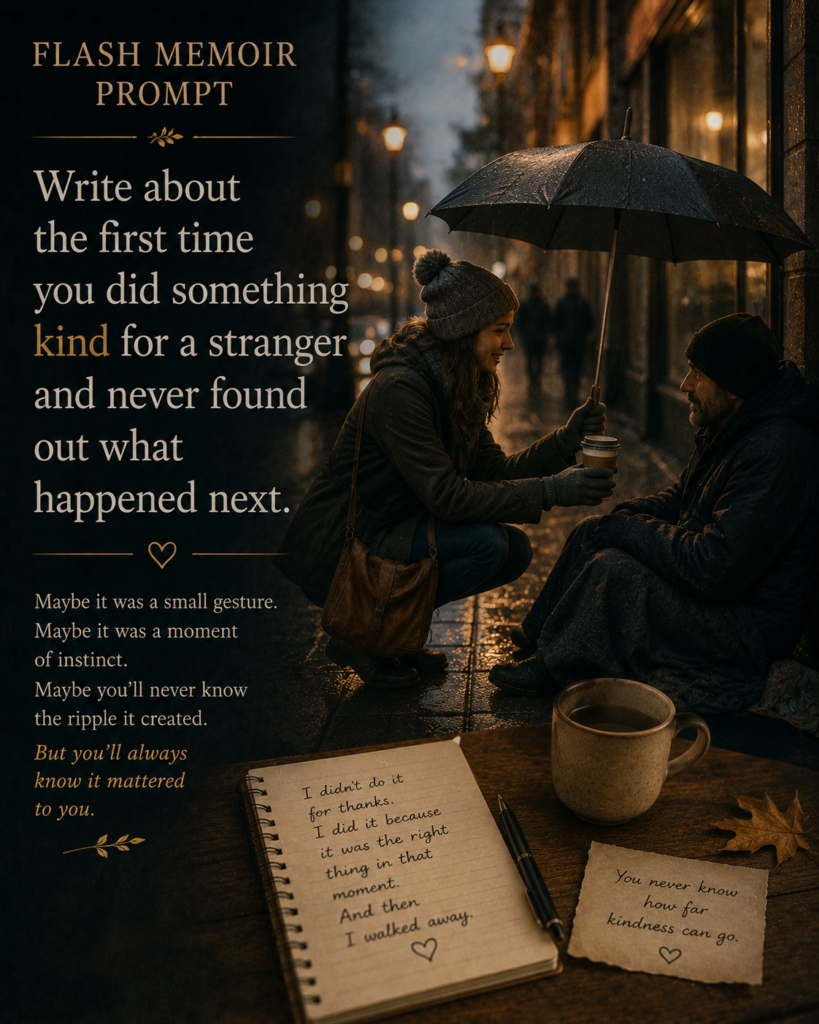
Flash Memoir Prompt: First Time You Did Something Kind for a Stranger and Never Found Out What Happened Next

Flash Memoir Kind Stranger Prompt

A warm, focused writing invitation about a small act of kindness, the stranger who received it, and the quiet mystery of never knowing what happened next.

You may remember the moment by what was in your hand. A dollar bill. A paper cup of coffee. A grocery bag. A bus ticket. Maybe you remember the stranger’s face only in pieces, like tired eyes, wet hair, or a sleeve pulled over one hand.

This flash memoir prompt first time something kind stranger invites you to write about a moment when you acted without getting the ending. You did something kind, then life moved on. No thank-you note arrived. No update came. You never learned if your small choice mattered in the way you hoped.

That unknown ending is part of the story.

Flash Memoir Kind Stranger Prompt

The Prompt

Write about the first time you did something kind for a stranger and never found out what happened next.

This prompt can unlock a meaningful memory because it asks you to focus on a single human exchange. You do not need a dramatic rescue or a grand sacrifice. The kindness may have been simple, such as holding a door, paying a fare, giving directions, sharing food, or staying with someone until help came.

The power of this memory often comes from its unfinished shape. In many stories, we want to know what happened after. Memoir does not always give us that. Sometimes the truth is that we gave what we could, walked away, and carried the question for years.

Why This Memory Matters

This kind of memory can show you who you were becoming at the time. Maybe you were a child who had just learned that adults could be lonely. Maybe you were a teenager who acted brave before you felt brave. Maybe you were in a hard season yourself and still noticed someone else’s need.

A first act of kindness toward a stranger can reveal a lot about your values before you had words for them. It may show what you had been taught at home, what you rejected, or what you learned from watching someone else suffer.

The stranger matters, too, even if you know almost nothing about them. In memoir, a person can appear for one page and still change the emotional weather of a piece. If you want to strengthen that kind of observation, it can help to practice noticing people the way you would when you analyze characters in literature. Look at gesture, tone, silence, and choice.

This flash memoir prompt first time something kind stranger is also a way to explore uncertainty. You may have wondered if you did enough. You may have felt proud, embarrassed, scared, or strangely sad. You may have forgotten the details for years, then found that one image still stayed with you.

That image is a good place to begin.

How to Approach This Prompt

Start with one physical detail from the moment. Do not begin with the lesson. Begin with the thing you can still see, hear, smell, or touch.

Maybe the stranger’s coat was too thin for the weather. Maybe the coins in your palm felt warm. Maybe the train platform smelled like rain and metal. Maybe your own voice sounded strange when you asked, “Do you need help?”

Keep the memory to one scene. It is tempting to explain the whole period of your life, especially if the moment happened during a difficult year. Give the reader just enough background to understand why this act mattered. Then return to the scene.

Write what you noticed before you explain what it meant. This will make the piece feel alive instead of like a summary. For example, instead of writing, “I felt compassion for him,” you might write, “He kept smoothing the same folded bus schedule, though the last bus had already left.”

If you get stuck, use a simple sentence starter: “The first thing I noticed was…” Let that sentence carry you into the memory. You can revise later.

You might also annotate your own memory as you draft. Circle the strongest sensory detail. Underline the moment you make the choice to help. Put a star beside the line where the unknown ending appears. If that sounds useful, this guide on how to annotate literature can also help you read your own draft with more attention.

Do not try to make yourself look perfect. A good flash memoir often becomes more honest when the writer admits mixed feelings. Maybe you hesitated. Maybe you worried other people were watching. Maybe you helped quickly because you felt awkward. The truth will make the kindness feel real.

A Quick Example

The first time I remember helping a stranger, I was twelve and waiting outside the pharmacy while my mother picked up a prescription. An old man stood near the curb with a white paper bag in one hand and a cane in the other. His hat had blown into the gutter. I watched it roll in dirty water, and for some reason I looked around first, as if someone else had been assigned to care. No one moved. I ran into the street when the light changed and grabbed the hat by its brim. When I handed it back, he said, “That was my good one,” and smiled like we shared a secret. My mother came out then. We drove away. I never knew his name, but I still remember the hat dripping onto my shoes.

Try It Yourself

Set a timer for ten minutes and write the scene as directly as you can. Begin with the place. Then bring in the stranger. Let the act of kindness happen slowly enough that the reader can feel your choice.

You do not have to solve the mystery of what happened next. In fact, try leaving the ending open. Let the last line hold the question, the image, or the feeling that stayed with you.

If you write from this flash memoir prompt first time something kind stranger, pay attention to the size of the moment. Small is enough. A stranger’s life may have continued far beyond your view, but your memory of that brief exchange can still carry emotional weight.

Want More Flash Memoir Prompts?

If you enjoy short writing invitations that lead into real memories, you may like having a full year of them within reach. Explore all 365 prompts in The Memory Trigger: 365 Flash Memoir Writing Prompts.

The Memory Trigger