

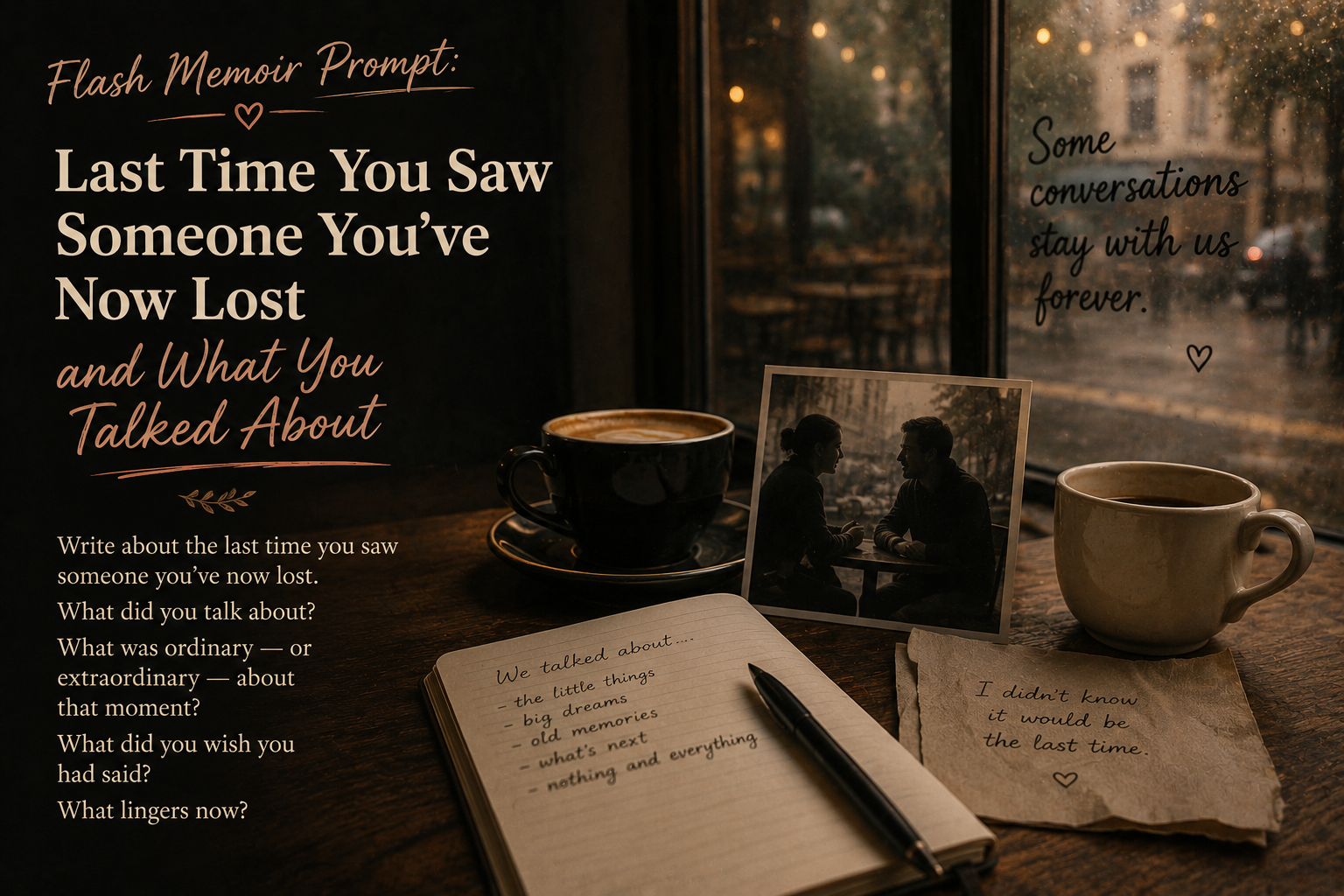
A focused flash memoir prompt for remembering the last time you saw someone you’ve now lost, using one small scene, one real conversation, and one honest emotional detail.
You may remember the room before you remember the words. The kitchen light. The smell of coffee. The coat they were wearing. The way you said goodbye without knowing it was the last time.
This flash memoir prompt last time saw someone you’ve lost asks you to return to that moment gently. You do not have to explain the whole relationship. You do not have to make the memory perfect. You only have to stand inside one brief scene and listen for what was said.
The Prompt
Write about the last time you saw someone you’ve now lost, and what you talked about.
This prompt can open a powerful memory because last times often look ordinary while they are happening. We do not usually know they are last times. We talk about errands, weather, dinner, homework, bills, traffic, or some small family joke.
Later, those plain words can carry more weight. A casual goodbye becomes a sentence you replay. A question they asked may feel like a gift you did not notice at the time.
Why This Memory Matters
Writing about a final meeting is not only about grief. It can also be about surprise, regret, gratitude, or even the strange comfort of routine. The person may have died. They may have moved away. The loss may be from a breakup, a friendship that ended, or a family distance that never healed.
The story this prompt uncovers may be very quiet. Maybe nothing dramatic happened. Maybe you shared fries in a hospital cafeteria. Maybe your grandfather asked if your car had enough gas. Maybe a friend hugged you too quickly outside a train station, then walked away into a crowd.
That is what makes this kind of memory so rich for flash memoir. A small scene can hold a large truth. The conversation may seem simple on the surface, but the meaning has changed because you know what came after.
If you enjoy reading closely, this prompt works a little like annotating literature. You return to a moment and notice what you missed the first time. A pause, a gesture, a repeated phrase, or an object on the table may become the detail that helps the whole piece come alive.
How to Approach This Prompt
Begin with a physical detail instead of a full explanation. What do you see first when you bring the memory back? Their hands on a mug? The pattern on the hospital blanket? The screen door closing behind them?
Let that detail lead you into the scene. Keep the memory narrow. Do not try to write the whole history of your relationship in one page. Stay with the last time you saw them and let the reader learn through what happened there.
Try writing what you noticed before you explain what it meant. For example, instead of beginning with “I did not know this would be the last time,” you might begin with “She had lipstick on her front tooth, and I almost told her.” That kind of opening brings the reader into the room with you.
Once you have the scene, write the conversation as closely as you can. It is fine if you do not remember every word. You can write the shape of it. What topic did you circle around? What did they ask? What did you avoid saying?
This flash memoir prompt last time saw someone you’ve lost does not require a perfect ending. In fact, the strongest ending may be a small one. A wave. A door closing. A sentence you understand differently now.
If the person feels hard to write about, you might borrow a tool from character analysis: focus on one revealing action. What did they do in that final scene that shows who they were to you?
A Quick Example
The last time I saw my uncle, he was sitting on an upside-down bucket in his garage, sorting screws into baby food jars. He had always saved strange things, bent nails, cracked washers, rubber bands from newspapers that no one delivered anymore.
I stopped by to return a borrowed ladder. He asked if I was still writing “those little stories,” and I laughed because I thought he was teasing me. He said, “Don’t laugh. Somebody’s got to remember what people say.”
We talked about my car making a noise and whether rain was coming. When I left, he lifted one hand but did not get up. I remember thinking he looked tired. Now I remember the jars, each one labeled in his blocky handwriting, as if he were putting the world in order before he left it.
Try It Yourself
Set a timer for ten minutes and write the scene without stopping. Start with where you were. Then add the person’s face, voice, or hands. Let the conversation appear one line at a time.
You do not need to make the memory beautiful. You do not need to make yourself sound wise. Just write the moment as honestly as you can.
After you finish, look back at the piece and underline one sentence that feels true. That sentence may become your ending. It may also become the beginning of a longer memoir piece later.
If the memory feels tender, take your time. Step away if you need to. You can return tomorrow. A flash memoir prompt last time saw someone you’ve lost should give you a doorway, not push you through it too fast.
Want More Flash Memoir Prompts?
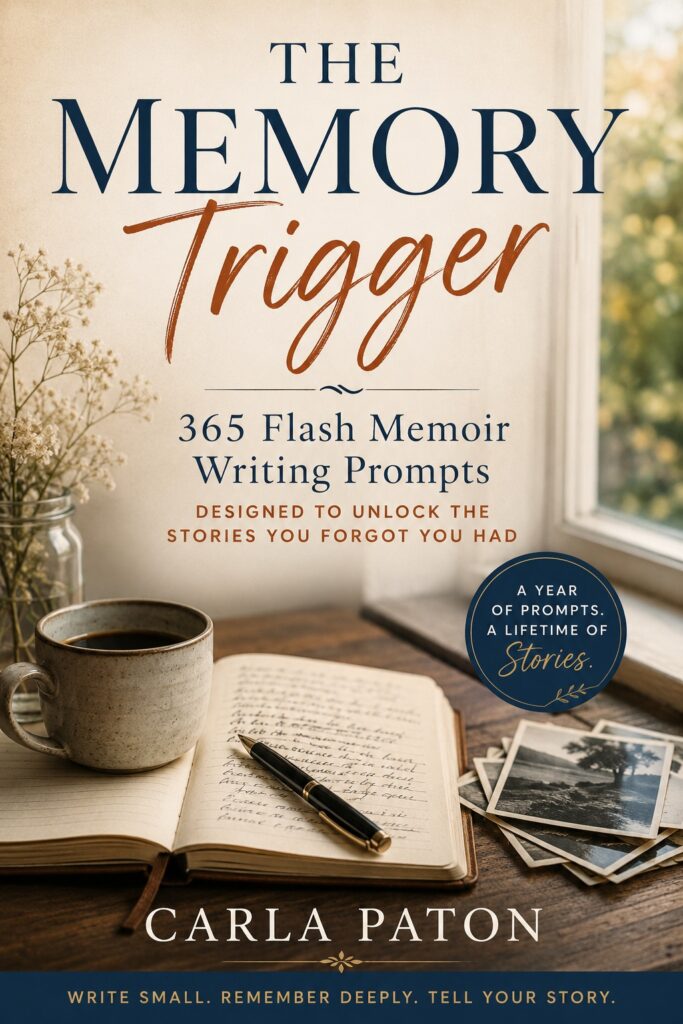
Explore all 365 prompts in The Memory Trigger: 365 Flash Memoir Writing Prompts. Each prompt is designed to help you capture one clear memory at a time, so your life stories feel specific, readable, and true.


Get the Free Close Reading Worksheet Pack
Join my email list and receive the printable worksheet pack you can use with any novel or poem.
No spam. Just helpful guides for reading literature well.












