


Maybe you were barefoot on hot pavement, holding a melting popsicle, and the only thing you had to worry about was whether your tongue would turn blue before dinner. This flash memoir prompt about the last time you were truly carefree before responsibility arrived asks you to return to a moment when the world felt wide, easy, and mostly outside your control.

The Prompt
Write about the last time you were truly carefree, before you understood what you were responsible for.
This prompt works because carefreeness often disappears slowly. You may not have noticed the exact day it left. One year you were running through a sprinkler without checking the time. Later, you were watching the clock, carrying keys, managing someone’s mood, or worrying about money.
A flash memoir prompt like this helps you find one small scene that holds that change. You do not need to explain your whole childhood or every burden that came later. You only need to find the moment before the shift, when you were still inside your own simple joy.
Why This Memory Matters
The last carefree moment may not look dramatic. It might be a bike ride, a sleepover, a day at the lake, a school field trip, or a lazy afternoon when no one expected anything important from you.
What makes the memory powerful is what the reader senses underneath it. You, as the writer, know that life will change. The younger version of you does not. That gap creates tenderness.
This kind of memory can uncover who protected you, what you did not yet understand, and what responsibility eventually meant in your life. For some people, responsibility arrived through family trouble. For others, it came with work, illness, grades, money, caregiving, or simply growing up in a house where adults expected you to notice too much.
The goal is not to make the memory sad. Let it be light if it was light. Let the joy stay on the page. The contrast will often appear on its own.
How to Approach This Prompt
Begin with a physical detail. Choose one thing your body remembers before your mind tries to explain the meaning. Maybe it is the slap of flip-flops, the smell of chlorine, the rough edge of a picnic table, or the warmth of sun on the back seat of a car.
Then narrow the memory to one scene. Do not try to tell the whole story of your growing up. Stay with one afternoon, one ride home, one bedroom, one sidewalk, or one summer night.
Write what you noticed before you write what it meant. If you were at a carnival, describe the ticket stubs in your hand before you explain that your parents were fighting at home. If you were at your grandmother’s house, show the sound of the screen door before you name the illness that changed everything later.
Objects can help, too. A towel, a baseball glove, a library card, or a pair of sneakers might carry more feeling than a long explanation. If you want help thinking about how objects can hold deeper meaning, this guide on how to find symbolism in a story can help you see your own memory with sharper eyes.
After you draft, read your piece like a student marking a short passage. Circle the strongest image. Underline the line where the mood changes. If that kind of close reading helps you revise, you may also like this guide on how to annotate literature, since the same skills can help you notice what your own writing is really doing.
For this flash memoir prompt, last time truly carefree before responsibility became clear, try ending before you explain too much. A quiet ending can let the reader feel the change without being told exactly how to feel.
A Quick Example
I think it was the summer I was nine, at the apartment pool behind Building C. My brother and I kept jumping in with our knees tucked to our chests, trying to make the biggest splash before the lifeguard blew her whistle. My mother sat under a striped umbrella with a paperback open in her lap, though I do not think she turned many pages. I remember the concrete burning my feet and the sweet plastic smell of my goggles. I remember begging for one more jump, then one more after that. That was before I knew rent was late, before I knew my mother counted bills at the kitchen table after we went to bed. In my memory, she just waves from the shade, and I leap again, certain someone else is watching the deep end.
Try It Yourself
Set a timer for ten minutes and write one scene from the last time you felt truly carefree. Start with where your body was. Were you sitting, running, floating, hiding, laughing, or half-asleep?
Let the younger version of you want something simple. A snack. A turn. Five more minutes. A ride home with the windows open. The small want will help the memory feel real.
If responsibility entered soon after, you can hint at it near the end. You do not have to explain every consequence. In flash memoir, a single sentence can carry a large truth.
This flash memoir prompt asks you to honor the before. Stay there long enough to remember what lightness felt like.
Want More Flash Memoir Prompts?
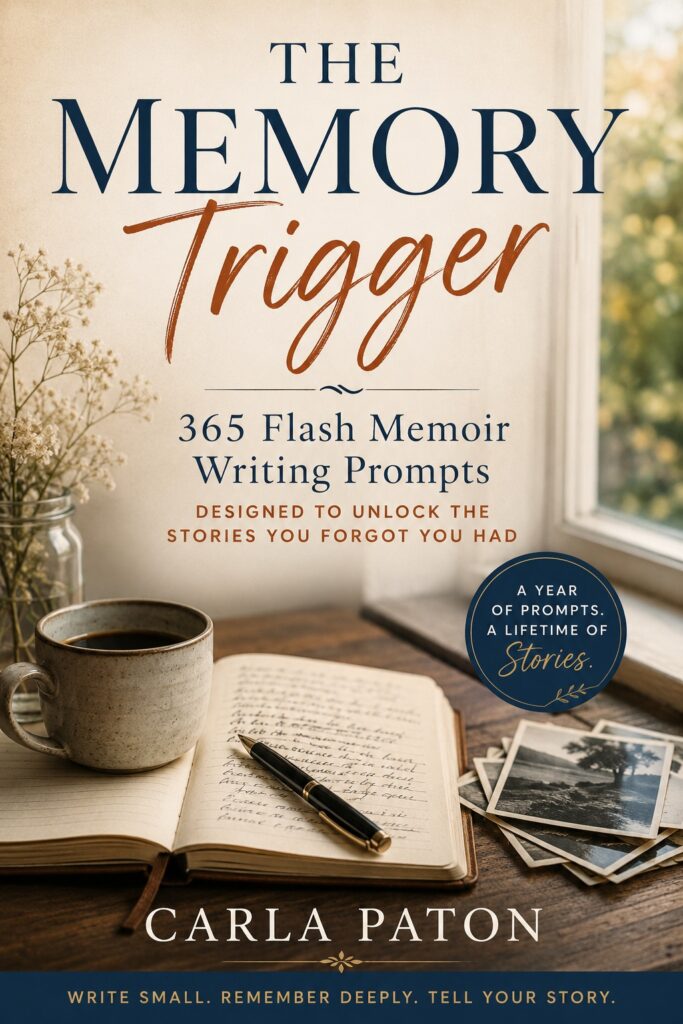
If this prompt opened a memory you did not expect, keep going. Explore all 365 prompts in The Memory Trigger: 365 Flash Memoir Writing Prompts.


Get the Free Close Reading Worksheet Pack
Join my email list and receive the printable worksheet pack you can use with any novel or poem.
No spam. Just helpful guides for reading literature well.












