George Orwell’s Animal Farm may look simple at first, but it is packed with deeper ideas about power, truth, fear, and class. This guide explains the themes in Animal Farm in a clear way, so students can use them in class talks, essays, and AP Literature analysis.
In this Guide
- Why the novel’s themes matter
- Power and corruption
- Propaganda and language
- Class and exploitation
- Fear, silence, and control
- Idealism and betrayal
- How to write about the themes
- Book suggestions
- FAQ
Why the Themes in Animal Farm Matter
Orwell uses a farm to tell a sharp story about politics, human weakness, and the danger of blind trust.
Animal Farm is an allegory. That means the animals, places, and events stand for larger ideas. The farm reflects the Russian Revolution and the rise of Soviet power, but the novel also speaks to any society where leaders abuse trust.
Studying the themes in Animal Farm helps students move beyond plot summary. Instead of only saying what Napoleon does, you can explain what his actions reveal about power.
If you need help connecting theme to character choices, this guide on how to analyze characters in literature can help you build stronger claims.
Power and Corruption: One of the Central Themes in Animal Farm
The novel shows how power can change leaders, especially when no one can hold them accountable.
At the start, the animals dream of freedom. They want to escape Mr. Jones and build a fair society. Old Major’s speech gives them hope, and the rebellion feels like a fresh start.
That hope does not last. Napoleon slowly takes control of the farm. He uses the dogs to scare the other animals, changes the commandments, and gives the pigs special rights.
This makes power and corruption one of the most important themes in Animal Farm. Orwell suggests that leaders may begin with noble words, but power can lead them to greed and cruelty.
A strong essay point could be: Napoleon does not become corrupt by accident. He protects his power by removing rivals, rewriting rules, and making others afraid.
This theme also appears in Shakespeare’s Macbeth. Macbeth gains power through violence, then commits more violence to keep it. Both works show that unchecked power can destroy moral judgment.
Propaganda: One of the Most Important Themes in Animal Farm
Orwell shows that language can shape what people believe, even when the truth is right in front of them.
Squealer is the main voice of propaganda in the novel. He explains Napoleon’s choices, twists facts, and makes the animals doubt their own memories.
When the pigs take the milk and apples, Squealer claims they need them for brain work. When Napoleon changes plans about the windmill, Squealer makes it sound as if Napoleon was right all along.
This is one of the key themes in Animal Farm because Orwell cared deeply about political language. He believed words could be used to hide lies, protect leaders, and weaken public thought.
The changing commandments are a clear symbol of this theme. The rule that says all animals are equal slowly turns into a cruel joke. By the end, equality has become a word with no real meaning.
For more background on Orwell’s life and political views, students can read this short overview from Britannica.
Class, Work, and Exploitation in the Themes in Animal Farm
The farm claims to be equal, but some animals work hard while others enjoy the rewards.
Boxer is the clearest example of exploitation. He is loyal, strong, and honest. His favorite sayings show his faith in the system, even when the system fails him.
Napoleon uses Boxer’s labor but does not protect him. When Boxer grows weak, the pigs sell him instead of giving him care. This moment is one of the saddest parts of the book because it shows how deeply the workers have been betrayed.
Class is one of the major themes in Animal Farm because the rebellion was supposed to end unfair treatment. Instead, the pigs become a new ruling class.
Orwell does not attack the idea of fairness. He attacks leaders who use the language of fairness while they build a system that serves only them.
Fear, Silence, and Control
The animals lose freedom not all at once, but through small steps that train them to stay quiet.
Napoleon uses fear in direct ways. The dogs threaten anyone who might resist. Public confessions and executions shock the animals and make them feel helpless.
Fear also works in quiet ways. The animals worry that Mr. Jones might return. Squealer repeats this fear whenever the pigs need support.
Because of that, many animals stop asking questions. Clover senses that something is wrong, but she cannot explain it clearly. Benjamin understands more than most, yet he rarely acts.
This theme matters because Orwell asks a hard question: What happens when people know something is wrong, but stay silent?
Idealism and Betrayal
The novel begins with a dream of justice, then shows how that dream can be stolen.
Old Major imagines a world where animals control their own labor and live without human abuse. His vision inspires the rebellion, and for a short time, the farm feels full of purpose.
Napoleon betrays that vision. He keeps the songs and slogans when they help him, but he destroys the real meaning behind them.
This is one reason the ending feels so bitter. The animals look from pig to man and from man to pig, but they can no longer tell the difference. The revolution has come full circle.
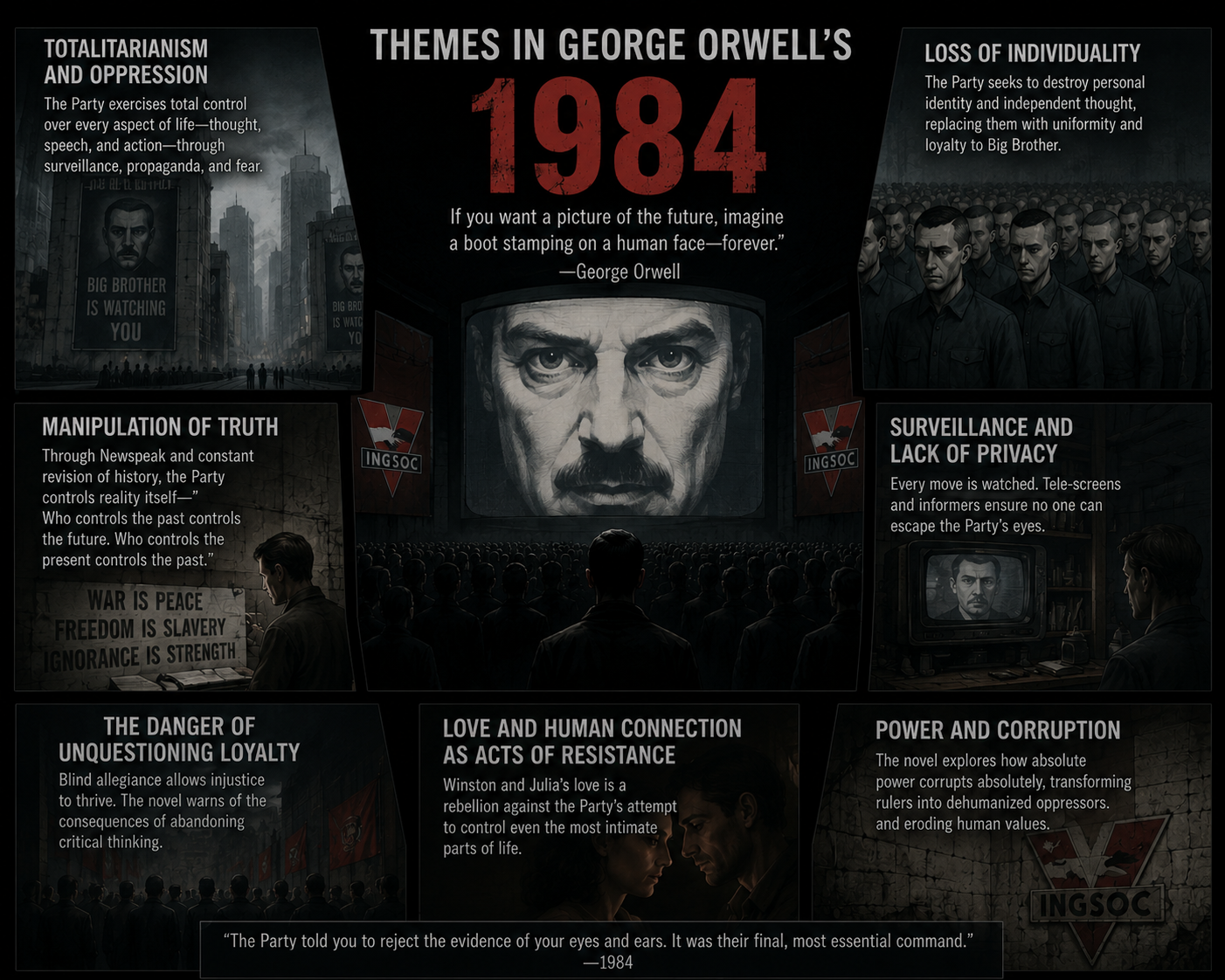
The theme of betrayed idealism also appears in dystopian works like Orwell’s 1984. In both books, leaders use language and fear to crush independent thought.
Education and Ignorance
Orwell links knowledge to freedom because the animals who cannot read are easier to control.
The pigs learn to read and write well, which gives them power over the farm’s laws and records. Many other animals can only learn a few letters, or they depend on the pigs to explain everything.
This creates an unfair gap. Those who control knowledge control truth. The other animals cannot challenge changes to the commandments because they cannot prove what the words used to say.
This theme is useful for students because it connects to real life. Education is not only about school. It is also about the ability to question, compare facts, and notice when language hides harm.
How to Write About the Themes in Animal Farm
A strong theme paragraph should connect an idea to a pattern in the text.
When you write about themes in Animal Farm, do not just name the theme. Show how Orwell develops it through characters, events, symbols, and changes in tone.
For example, instead of writing, Napoleon is corrupt, write a fuller claim: Orwell shows that power becomes dangerous when a leader controls force, language, and history.
Then use evidence. You might discuss the dogs, Squealer’s speeches, or the changing commandments. Explain why that evidence matters.
Try this simple essay frame:
- Claim: Orwell presents propaganda as a tool of control.
- Evidence: Squealer changes facts to defend Napoleon.
- Analysis: The animals accept lies because they lack power, memory, and education.
Common Symbols Connected to Themes
Symbols help Orwell turn simple farm details into larger political ideas.
The windmill stands for hope, labor, and false promises. The animals work hard on it because they believe it will improve their lives. Napoleon later uses it as a way to demand more labor.
The seven commandments stand for the original values of the rebellion. As the pigs change them, the reader sees truth itself become unstable.
The farmhouse stands for privilege. At first, it represents human corruption. When the pigs move in, it shows that they have become like the old rulers.
These symbols support many themes in Animal Farm, especially corruption, inequality, and the loss of truth.
Relevant Books for Students
If you want to compare Orwell’s ideas with other major works, these books are useful choices:
- 1984 by George Orwell
- Lord of the Flies by William Golding
Both books ask how people behave when rules, truth, and power shift. They also pair well with essays about fear and control.
Author and Historical Context
Orwell wrote with deep concern about political lies and the abuse of revolutionary hope.
Animal Farm was published in 1945. It reflects events tied to the Russian Revolution and Joseph Stalin’s rule, but its message is wider than one country or period.
Students can learn more about the book’s publication and context from the British Library’s introduction to Animal Farm.
Knowing the history helps, but the novel still works without it. Orwell’s warning is clear: any society can become unjust if people stop questioning those in power.
FAQ: Themes in Animal Farm
What are the main themes in Animal Farm?
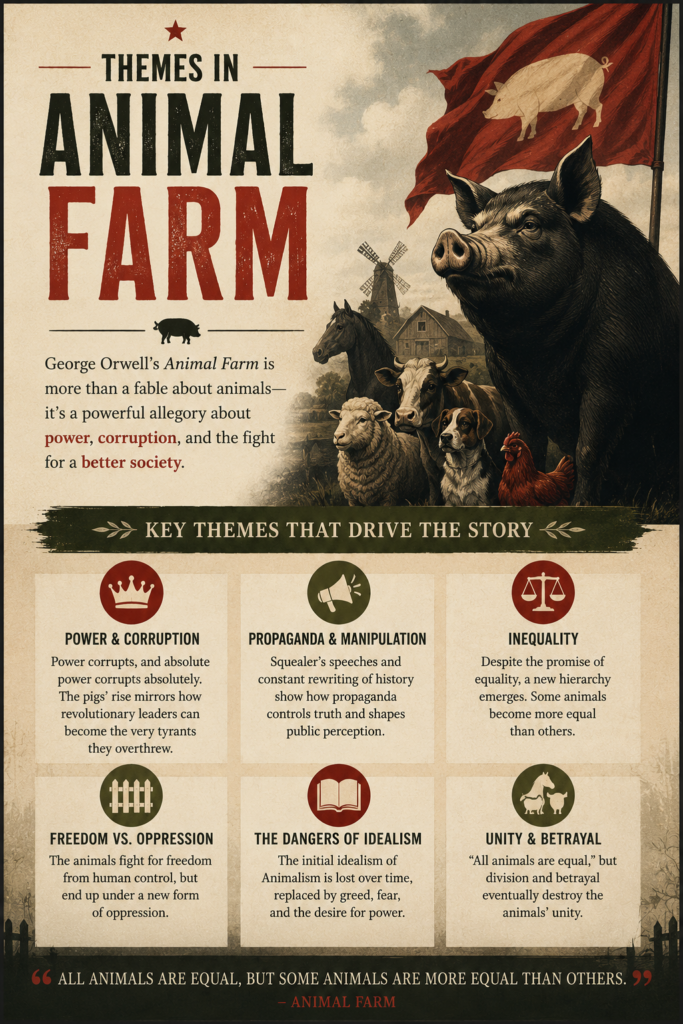
The main themes in Animal Farm include power and corruption, propaganda, class exploitation, fear, education, and betrayal of ideals.
What is the most important theme in Animal Farm?
Power and corruption may be the most central theme. Napoleon’s rise shows how a leader can turn a fight for freedom into a new form of oppression.
How does Orwell show propaganda in the novel?
Orwell uses Squealer, slogans, and changed commandments to show how language can protect lies and control public memory.
Why is Boxer important to the novel’s themes?
Boxer shows how loyal workers can be exploited by leaders who praise their labor but do not value their lives.
Is Animal Farm only about the Russian Revolution?
No. The novel is based on that history, but its themes apply to many societies where power, fear, and propaganda shape public life.
Key Takeaway
The themes in Animal Farm show how freedom can fail when power goes unchecked, truth becomes weak, and ordinary people are taught not to question authority.