Books Like Fear and Anxiety: Literature That Makes Inner Fear Visible

Fear and Anxiety

Readers often search for Books Like Fear and Anxiety because they want stories that name what many people feel but struggle to explain. These books turn panic, dread, doubt, and stress into characters, symbols, and powerful scenes.

For students, these works can also make essays richer because they connect personal feeling with big literary themes.

In this Guide

  • What makes these books powerful
  • Classic novels about fear and anxiety
  • Modern books with anxious characters
  • Common symbols and themes
  • Recommended books to read
  • FAQs
Fear and Anxiety

What Makes Books Like Fear and Anxiety So Powerful?

These stories show how fear changes the way people see the world.

Books Like Fear and Anxiety matter because they do more than describe nervous feelings. They show how fear shapes choices, breaks trust, and makes ordinary places feel strange.

In literature, anxiety often appears as a locked room, a dark street, a storm, or a voice inside the mind. These symbols help readers understand feelings that are hard to say out loud.

That is why these books work well in high school and college classes. They give students a clear path into theme, mood, conflict, and character study.

Classic Books Like Fear and Anxiety for Students

Many classic works explore fear through guilt, isolation, and pressure.

One strong example is Crime and Punishment by Fyodor Dostoevsky. Raskolnikov’s fear does not only come from the police. It comes from his own mind after he commits murder.

His anxiety grows because he cannot escape himself. This makes the novel a powerful study of guilt and moral fear.

Another key example is Frankenstein by Mary Shelley. Victor Frankenstein fears the creature he made, but he also fears the truth about his own ambition.

The novel shows that fear often starts when a person refuses to face responsibility.

The Metamorphosis by Franz Kafka also belongs in any discussion of Books Like Fear and Anxiety. Gregor Samsa wakes as an insect, but the deeper horror is his family’s shame and rejection.

Kafka turns anxiety into a strange body. That image helps readers see how fear can make a person feel less than human.

Modern Books Like Fear and Anxiety Worth Reading

Modern stories often connect anxiety to identity, family, school, work, and social pressure.

The Bell Jar by Sylvia Plath is one of the most important modern novels about mental distress. Esther Greenwood feels trapped under an invisible weight.

The “bell jar” becomes a symbol of isolation. It shows how anxiety and depression can make the outside world feel distant and unreal.

Speak by Laurie Halse Anderson is another strong choice for students. Melinda’s silence shows how trauma can turn fear inward.

The novel uses art, school spaces, and voice as symbols. Each one helps show Melinda’s slow return to strength.

The Perks of Being a Wallflower by Stephen Chbosky also fits with Books Like Fear and Anxiety. Charlie’s letters reveal fear, memory, and loneliness in a direct, honest style.

These modern works help readers see that anxiety is not always loud. Sometimes it hides in silence, routine, or a smile.

Symbols and Themes in Books Like Fear and Anxiety

Writers often use symbols to make fear feel real on the page.

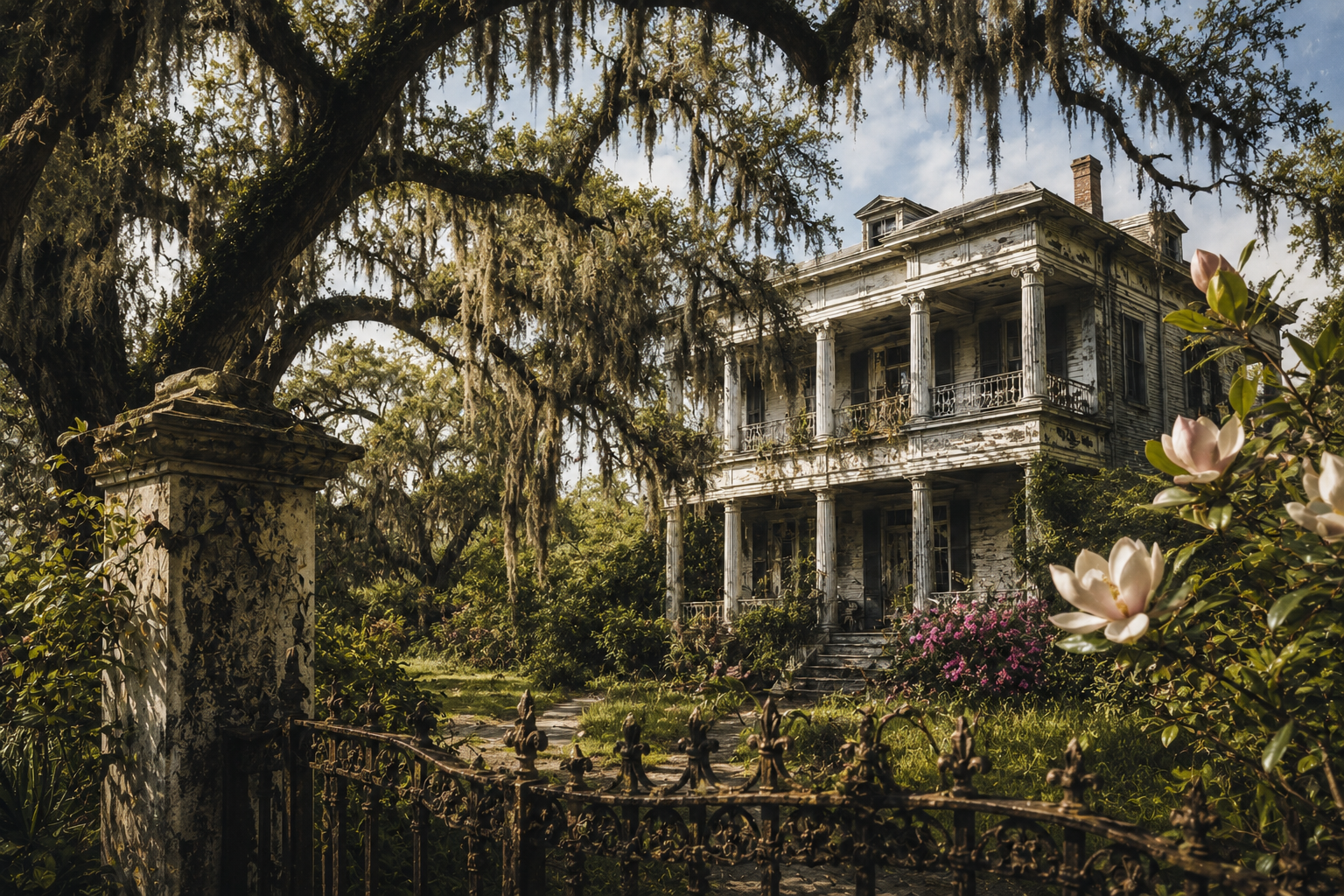
One common symbol is the house. In many stories, a house should mean safety. When the house feels unsafe, the reader senses deep emotional trouble.

In Edgar Allan Poe’s “The Fall of the House of Usher,” the house reflects the family’s decay and terror. You can learn more about Poe’s work through the Poetry Foundation’s page on Edgar Allan Poe.

Darkness is another common symbol. It may show confusion, danger, or the unknown.

Water can also point to anxiety. A flood, river, or deep sea may show a mind that feels out of control.

The strongest Books Like Fear and Anxiety often use setting as a mirror. The outside world reflects the character’s inner state.

Common themes include guilt, isolation, loss of control, and fear of change. These themes help readers connect private emotion to larger human problems.

How to Read Books Like Fear and Anxiety in Class

A careful reading can turn emotional scenes into strong analysis.

When you read Books Like Fear and Anxiety, start by asking what the main character fears most. Is it death, shame, failure, truth, or being alone?

Next, look for repeated images. A sound, color, room, or object may carry symbolic meaning.

Pay close attention to sentence style too. Short, broken sentences can create panic. Long, heavy sentences can make a scene feel trapped.

This same skill helps with poetry. If you want a clear method, read our guide on how to analyze poetry step by step.

Poems often use fear in a tight space. A single image can carry a whole emotional world.

These titles are strong choices for students who want literature with emotional depth.

  • The Bell Jar by Sylvia Plath
  • Frankenstein by Mary Shelley
  • Speak by Laurie Halse Anderson

Each book offers a different view of fear. One explores mental illness, one explores ambition and guilt, and one explores trauma and voice.

If you are building a reading list around Books Like Fear and Anxiety, these are useful starting points because they are widely taught and easy to discuss in essays.

Why Books Like Fear and Anxiety Matter in Literary Culture

These books help readers talk about feelings that society often hides.

Fear has always been part of literature. Ancient myths, Gothic novels, war stories, and modern school novels all use fear to ask serious questions.

What do people do when they lose control? How does guilt change a person? Can truth set someone free, or does it make life harder?

Books Like Fear and Anxiety stay popular because these questions never go away.

They also remind readers that fear is not a weakness. In many stories, fear becomes the first step toward honesty.

For background on Gothic fiction, which often explores dread and inner terror, Britannica offers a helpful overview of the Gothic novel.

FAQ: Books Like Fear and Anxiety

What are Books Like Fear and Anxiety usually about?

They are usually about fear, stress, guilt, trauma, or the feeling of being trapped. They often show how a character’s mind changes under pressure.

Are these books good for AP Literature essays?

Yes. Many of them have clear themes, strong symbols, and complex characters. That makes them useful for literary analysis.

What is a good first book to read in this category?

Frankenstein is a strong first choice. It has fear, guilt, science, family conflict, and rich symbolism.

Do these books always have sad endings?

No. Some are tragic, but others show healing or self-knowledge. The main focus is not sadness. It is emotional truth.

Key Takeaway

Books Like Fear and Anxiety help readers see how literature turns hidden feelings into stories, symbols, and unforgettable characters.

They are worth reading because they show that fear can reveal who people are, what they value, and what they must face to grow.

Best Gothic Villains: Why Darkness Feels So Human

gothic villains
gothic villains

The best Gothic villains and moral complexity go hand in hand because Gothic stories rarely give us simple evil. These characters scare us, but they also make us ask hard questions about guilt, power, desire, and choice.

From Dracula to Heathcliff, Gothic villains often show the dark side of human nature. That is why they still matter in classrooms, book clubs, and late-night reading sessions. 🕯️

In this Guide

  • What makes Gothic villains different
  • Why moral complexity matters
  • Famous Gothic villains in literature
  • How symbolism shapes Gothic evil
  • Recommended books to read
  • Questions students often ask
  • Key takeaway

Why Best Gothic Villains and Moral Complexity Still Fascinate Readers

Gothic villains stay with us because they are not always evil for no reason.

The phrase best Gothic villains and moral complexity points to one of the genre’s biggest strengths. Gothic fiction turns fear into a mirror. It asks readers to look at what people hide, deny, or fear inside themselves.

A Gothic villain may be cruel, but that cruelty often grows from pain, pride, loss, or obsession. This does not excuse the villain. It makes the story harder to dismiss.

That is why Gothic villains work so well in school essays. They help students explore character motives, symbols, and themes without simple answers.

What Makes a Gothic Villain Different?

Gothic villains are shaped by mood, setting, and secrecy.

A regular villain may want money or control. A Gothic villain often wants something deeper, such as freedom from shame, escape from death, or power over love.

These villains often live in dark houses, ruined castles, or isolated places. The setting reflects their inner life. The outside world becomes a map of the mind.

For a helpful background on the genre, see Britannica’s overview of Gothic fiction.

Best Gothic Villains and Moral Complexity in Famous Literature

The most famous Gothic villains are memorable because they disturb us and attract us at the same time.

Count Dracula in Bram Stoker’s Dracula is a clear example. He is violent and predatory, yet he also stands for fear of the unknown, fear of desire, and fear of social change.

In this way, best Gothic villains and moral complexity appear through Dracula’s role as both monster and symbol. He is not only a person to defeat. He is also a sign of what Victorian society feared.

Heathcliff in Emily Brontë’s Wuthering Heights is even harder to judge. He causes deep harm, but he is also shaped by rejection, class cruelty, and emotional loss.

Victor Frankenstein from Mary Shelley’s Frankenstein is not a classic villain in a simple sense. Still, his pride and refusal to care for his creation lead to ruin. His moral failure makes him one of Gothic literature’s most important dark figures.

If you want to study these characters more closely, start with this guide on how to analyze characters in literature.

Why Moral Complexity Makes These Villains More Powerful

A flat villain scares us for a moment. A complex villain stays in the mind.

Moral complexity means a character cannot be judged in one quick sentence. The reader must weigh their actions, motives, history, and choices.

This is key to the best Gothic villains and moral complexity. These characters force us to ask if evil comes from nature, society, trauma, or free will.

Mary Shelley’s creature in Frankenstein shows this tension. He commits terrible acts, but he also suffers rejection and loneliness. Readers may fear him and pity him at the same time.

That mixed response is the heart of Gothic reading. The genre does not let us feel safe for long.

Symbols and Themes: Villains and Moral Complexity

Gothic villains often carry the main symbols of the story.

Dark houses often suggest secrets. Locked rooms can show hidden guilt. Storms may reflect emotional chaos. These symbols help explain why the best Gothic villains and moral complexity feel so rich.

In Jane Eyre, Thornfield Hall holds secrets tied to Mr. Rochester’s past. Rochester is not the main villain in the same way Dracula is, but his moral choices shape the Gothic tension of the novel.

In Edgar Allan Poe’s stories, guilt often becomes almost physical. A sound, a shadow, or a room can seem alive with fear. You can explore Poe’s work through the Poetry Foundation’s Edgar Allan Poe page.

Common Gothic themes include guilt, forbidden desire, power, isolation, and the fear of losing control. These themes make villains feel tied to real human struggles.

Recommended Books for Best Gothic Villains and Moral Complexity

These books are strong choices for students who want clear examples of Gothic villains with depth.

  • Frankenstein by Mary Shelley: A powerful novel about creation, guilt, and responsibility.
  • Dracula by Bram Stoker: A classic Gothic text about fear, desire, and the threat of the unknown.

Both books show why the best Gothic villains and moral complexity matter in literary study. They give readers more than fear. They offer moral questions that do not fade after the final page.

How Students Can Analyze Gothic Villains

Start with what the villain wants.

Then ask what the story reveals about their past. A Gothic villain’s history often explains their fears, but it should not erase their responsibility.

Look at setting next. If a villain lives in a decaying house or hidden room, that space may reflect guilt, pride, or fear.

Notice how other characters react to the villain. Fear, pity, attraction, and disgust can all reveal the villain’s role in the story.

This approach works well for essays about best Gothic villains and moral complexity because it connects character, theme, and symbol in one argument.

Best Gothic Villains and Moral Complexity in Modern Culture

Modern books, films, and shows still borrow from Gothic tradition.

Many modern villains are not pure monsters. They may have tragic pasts, divided motives, or moments of weakness. This comes from the same Gothic interest in the hidden self.

That is why best Gothic villains and moral complexity remains a useful idea beyond older novels. It helps explain why audiences are drawn to characters who are dangerous but not simple.

Good Gothic villains make us uncomfortable because they blur the line between monster and human. That blur is where the genre does its strongest work.

FAQ: Best Gothic Villains and Moral Complexity

What makes a Gothic villain morally complex?

A morally complex Gothic villain has motives, fears, or wounds that make readers think harder about their choices. The villain may be cruel, but the story gives reasons to study them closely.

Is Frankenstein’s creature a villain?

He can be read as a villain, a victim, or both. His actions are violent, but his pain and rejection make him morally complex.

Why are Gothic villains often linked to old houses or castles?

Gothic settings often reflect the villain’s mind. A ruined home or locked room can suggest secrets, guilt, or hidden trauma.

Who is the best Gothic villain for an essay?

Heathcliff, Dracula, and Victor Frankenstein are strong choices. Each one gives students enough evidence to discuss motives, symbols, and moral conflict.

Key Takeaway

The best Gothic villains and moral complexity matter because they turn fear into thought. They remind us that literature’s darkest characters often reveal the hardest truths about human nature.

Gothic villains are not powerful only because they scare us. They are powerful because they make us question what evil is, where it begins, and why it can feel so close.

Southern Gothic Literature Explained

Southern Gothic Literature

Southern Gothic Literature Explained starts with one big idea: the South in these stories is haunted by its past. This genre uses strange events, broken families, old houses, and moral tension to show deeper truths about guilt, race, class, and fear.

If you have ever read a story that feels creepy but also serious, you may already know the mood of Southern Gothic literature.

In this Guide

  • What Southern Gothic literature means
  • Where the genre came from
  • Key traits to look for
  • Famous Southern Gothic examples
  • How to analyze Southern Gothic in essays
  • Book suggestions
  • FAQ
Southern Gothic Literature

Southern Gothic Literature Explained: What Does It Mean?

Southern Gothic is a type of literature set in the American South that mixes dark settings with serious social problems.

The word “Gothic” often makes people think of castles, ghosts, and fear. Southern Gothic changes that setting. Instead of old European castles, we often get decaying mansions, small towns, farms, and dusty roads.

Southern Gothic Literature Explained in simple terms means this: writers use strange or disturbing details to reveal what people try to hide.

These stories may include violence, family secrets, racism, poverty, or religious pressure. The weird parts are not just there to shock the reader. They help expose a broken world.

Southern Gothic Literature Explained Through Its History

The genre grew from older Gothic fiction, but it has its own Southern voice.

Classic Gothic novels, such as Frankenstein by Mary Shelley, often focus on fear, isolation, and human limits. You can learn more about the roots of the Gothic tradition from Britannica’s guide to the Gothic novel.

Southern Gothic writers took that dark style and placed it in a region marked by slavery, the Civil War, segregation, and deep social conflict.

This is why Southern Gothic Literature Explained cannot stop at “creepy stories.” The genre asks readers to face history, especially the parts people would rather forget.

Key Features of Southern Gothic Literature Explained

Most Southern Gothic stories share a dark mood, but each writer uses the style in a different way.

Here are some common signs of the genre:

  • A decaying setting: Old homes, ruined towns, or worn-out farms often show moral decay.
  • Flawed characters: People may act proud, cruel, desperate, or deeply confused.
  • Family secrets: Hidden guilt often shapes the plot.
  • Social pressure: Race, class, religion, and gender roles affect how characters live.
  • Grotesque details: Strange bodies, odd behavior, or shocking scenes reveal inner truth.

In Southern Gothic Literature Explained, the word grotesque matters. It does not just mean ugly. It means something strange that forces readers to look harder.

A grotesque character may seem strange at first, but that character often reveals what is wrong with the society around them.

Southern Gothic Literature Explained with Famous Examples

Examples help the genre become much easier to see.

William Faulkner is one of the most important Southern Gothic writers. His short story “A Rose for Emily” follows a lonely woman in a town that watches her life with judgment and fear.

The old house in the story is more than a setting. It shows the weight of the past. The shocking ending reveals how isolation and denial can twist a person’s life.

You can read more about Faulkner’s life and work through Britannica’s William Faulkner biography.

Flannery O’Connor also shaped the genre. In “A Good Man Is Hard to Find,” a family trip turns violent after the characters meet a criminal called The Misfit.

The story feels disturbing, but it is also deeply moral. O’Connor uses fear to ask hard questions about grace, pride, and belief.

Harper Lee’s To Kill a Mockingbird is not always labeled as pure Southern Gothic, but it shares many traits. The setting, racial injustice, and mysterious figure of Boo Radley all connect to the genre.

Southern Gothic Literature Explained through these works shows that the genre is not only about horror. It is about truth hidden under fear.

Why the Setting Matters So Much

In this genre, place is never just background.

The American South often feels like a character in the story. Weather, buildings, roads, churches, and town gossip all shape the mood.

A decayed mansion may stand for a family that cannot let go of old power. A small town may show how public judgment traps people. A lonely road may suggest danger or moral confusion.

Southern Gothic Literature Explained through setting helps students see how authors build meaning without saying everything directly.

When you read, ask: What does this place reveal about the people who live there?

How Southern Gothic Characters Work

Southern Gothic characters often feel extreme, but they still seem human.

They may be lonely, proud, violent, trapped, or full of guilt. Many of them want respect, love, safety, or control.

The genre often shows people under pressure. That pressure may come from family history, unfair laws, poverty, or shame.

In “A Rose for Emily,” Miss Emily is not only strange. She is also shaped by control, loss, and a town that treats her like a symbol.

In Southern Gothic Literature Explained, strong character analysis means you do not stop at “this person is weird.” You ask what made them that way.

Southern Gothic Literature Explained for Essay Analysis

This genre gives students strong material for essays because it connects style to meaning.

When you write about Southern Gothic, focus on how the dark details support the author’s message. Do not just point out creepy scenes. Explain why they matter.

For example, if a house is falling apart, ask what else is falling apart. Is it a family? A moral code? A social system?

If a character seems grotesque, ask what truth that character reveals. The best essays move from detail to meaning.

You can build this skill by learning how strong readers notice patterns. For more help, read our guide on how to read literature like a scholar.

Common Essay Topics for Southern Gothic Literature Explained

Students often write about Southern Gothic because it works well with theme, setting, and symbolism.

Here are useful essay angles:

  • How setting reveals decay
  • How secrets shape a family or town
  • How violence exposes social problems
  • How religion affects guilt or judgment
  • How the past controls the present

A strong thesis should name the literary choice and explain its purpose.

Weak thesis: “The story is Southern Gothic because it is creepy.”

Stronger thesis: “In ‘A Rose for Emily,’ Faulkner uses the decaying house to show how the town and Miss Emily remain trapped by the past.”

That second thesis gives you something clear to prove.

How to Read Southern Gothic Without Getting Lost

Southern Gothic stories can feel strange at first, but that is part of the design.

Start by tracking what feels wrong. A character may act oddly. A house may seem too quiet. A town may hide cruelty behind polite manners.

Then ask what the author wants you to notice. The strange detail usually points to a larger problem.

Southern Gothic Literature Explained as a reading tool can help you slow down and notice symbols, tone, and theme. That skill helps in class talks, AP Lit essays, and college papers.

If you want a broader method, this guide on reading literature with a scholar’s eye can help you connect details to deeper ideas.

If you want to understand the genre better, these books are strong places to start.

  • A Rose for Emily and Other Stories by William Faulkner
  • A Good Man Is Hard to Find and Other Stories by Flannery O’Connor
  • Wise Blood by Flannery O’Connor

These texts show how Southern Gothic can be eerie, funny, harsh, and deeply thoughtful.

FAQ: Southern Gothic Literature Explained

What is Southern Gothic literature in simple words?

Southern Gothic literature is a dark style of writing set in the American South. It uses strange characters, tense settings, and hidden secrets to explore serious social issues.

Is Southern Gothic the same as horror?

No. Southern Gothic may feel scary, but it is not only meant to frighten readers. Its main goal is to reveal truth about people, history, and society.

What is a famous example of Southern Gothic literature?

“A Rose for Emily” by William Faulkner is one of the most famous examples. It uses an old house, town gossip, and a shocking secret to explore the power of the past.

Why do teachers assign Southern Gothic stories?

Teachers assign them because they are rich in symbolism, theme, tone, and character analysis. They also help students think about history and moral conflict.

What should I look for when reading Southern Gothic?

Look for decay, secrets, social pressure, strange behavior, and symbols tied to the past. Then ask how those details support the story’s deeper meaning.

Key Takeaway

Southern Gothic Literature Explained comes down to this: the genre uses darkness to uncover truth. When you study its strange settings and troubled characters, you learn how literature can expose what a culture tries to hide.

What Makes a Story Gothic?

gothic story
gothic story

If you have ever read a story with a haunted house, a dark secret, or a character who feels trapped, you may have met Gothic literature. What Makes a Story Gothic? comes down to mood, fear, mystery, and the way a story turns inner pain into something you can almost see.

Gothic stories are not just “scary stories.” They use fear to explore guilt, power, family secrets, desire, and the darker parts of human nature.

In this Guide

What Makes a Story Gothic?

A Gothic story creates fear through mood, place, secrets, and emotional pressure.

So, What Makes a Story Gothic? It is not just ghosts or castles. A Gothic story often makes readers feel that something is wrong before they know why.

The fear may come from a monster, like in Frankenstein. It may come from a house, like in “The Fall of the House of Usher.” It may even come from a person’s own mind.

Gothic fiction often asks a simple but deep question: What happens when hidden fears come to the surface?

What Makes a Story Gothic? The Setting Matters

Gothic settings feel unsafe, old, strange, or full of secrets.

Many Gothic stories take place in castles, mansions, abbeys, graveyards, or isolated towns. These places often feel like characters themselves. They seem to watch, trap, or warn the people inside them.

In Charlotte Brontë’s Jane Eyre, Thornfield Hall is not just a large house. It holds a secret that shapes the whole plot. The locked rooms and strange sounds create fear before Jane learns the truth.

Weather also matters. Storms, fog, darkness, and cold winds help build a sense of danger. The setting tells readers, “Something is not right here.”

What Makes a Story Gothic? The Characters Feel Trapped

Gothic characters often face fear from the outside and from within.

A Gothic hero or heroine may feel alone, watched, or powerless. They may live under someone else’s control. They may not trust what they see or hear.

In Bram Stoker’s Dracula, the Count is both charming and dangerous. He shows how Gothic villains often blur the line between attraction and threat.

Victor Frankenstein is another strong example. He creates life, then fears what he has made. His real horror comes from guilt, pride, and loss.

This is a big part of What Makes a Story Gothic? The danger is not only outside the character. It also grows inside the heart or mind.

Major Themes in Gothic Stories

Gothic literature uses fear to talk about serious human problems.

One major theme is the past. In Gothic stories, old sins do not stay buried. Family secrets, crimes, and broken promises return in strange ways.

Another key theme is confinement. A character may be trapped in a house, a marriage, a social role, or a guilty mind.

Gothic stories also explore the unknown. They ask whether we can trust science, faith, memory, or even our own senses.

If you want to study these patterns more closely, this guide on how to read literature like a scholar can help you notice symbols, patterns, and deeper meanings.

Famous Examples That Show What Makes a Story Gothic?

Well-known Gothic works show the genre in different forms.

Mary Shelley’s Frankenstein is a classic Gothic novel. It has dark settings, emotional fear, a lonely creator, and a creature who suffers because of human rejection.

Edgar Allan Poe’s “The Tell-Tale Heart” is Gothic because it turns guilt into terror. The narrator’s fear grows until his own mind seems to betray him.

Emily Brontë’s Wuthering Heights uses wild landscapes, intense emotion, and a haunting past. The story feels restless because the characters cannot escape love, anger, or loss.

Daphne du Maurier’s Rebecca gives Gothic fiction a modern feel. Manderley, the grand house, holds memory and fear in almost every room.

For more background on the genre, Britannica has a helpful overview of the Gothic novel. You can also explore Edgar Allan Poe’s work through the Poetry Foundation.

How to Spot Gothic Elements in a Story

You can find Gothic elements by asking what creates fear and why it matters.

Start with the setting. Does the place feel old, closed off, or dangerous? Does it hide a secret?

Look at the mood. Gothic stories often feel tense before anything major happens. The mood may come from silence, darkness, strange sounds, or a sense of dread.

Then look at the characters. Do they feel trapped? Do they carry guilt? Do they fear their own thoughts?

Ask one more question: What deeper fear does the story reveal? That question often leads to the best answer to What Makes a Story Gothic?

What Makes a Story Gothic? Common Signs to Remember

Gothic fiction has patterns that students can learn to notice.

  • A dark or strange setting: castles, mansions, ruins, remote homes, or shadowy streets
  • A hidden secret: a locked room, a buried crime, or a shameful past
  • Emotional pressure: guilt, grief, fear, obsession, or loneliness
  • A sense of mystery: strange events that may or may not have a natural cause
  • A threat to freedom: a character feels trapped by a person, place, or memory

These signs do not all need to appear in one story. Even a few can give a work a strong Gothic feel.

Why Gothic Literature Still Matters

Gothic stories remain popular because they turn fear into meaning.

Modern readers still care about dark secrets, unstable homes, and people who feel trapped. These fears are not stuck in the past. They still shape novels, films, and TV shows today.

When students ask What Makes a Story Gothic?, they are also asking why fear has such power in literature. Gothic fiction helps readers face what people often hide.

It can make a story exciting, but it can also make it honest.

Books to Read Next

These books are strong choices if you want to read more Gothic literature.

  • Frankenstein by Mary Shelley
  • Dracula by Bram Stoker

Both books are often available on Amazon, in bookstores, and through school or public libraries. They are also common choices for high school, AP Literature, and college classes.

FAQ: What Makes a Story Gothic?

What Makes a Story Gothic in simple terms?

A story is Gothic when it uses dark mood, mystery, fear, and hidden secrets to explore deeper problems.

Does a Gothic story need a ghost?

No. A Gothic story can have ghosts, but it does not need them. The fear may come from guilt, a strange house, a villain, or a character’s mind.

Is Gothic literature the same as horror?

Not exactly. Horror often aims to scare the reader. Gothic literature may scare the reader, but it also focuses on mood, emotion, and hidden meaning.

Why do teachers assign Gothic literature?

Teachers assign it because it is rich in symbols, themes, and conflict. It also helps students study how setting and mood shape a story.

Can a modern story be Gothic?

Yes. A modern story can be Gothic if it uses fear, secrets, isolation, and emotional tension in a powerful way.

Key Takeaway

What Makes a Story Gothic? A Gothic story turns fear into meaning. It uses dark places, hidden secrets, and trapped characters to show what people fear, desire, and try to hide.

Most Disturbing Love and Obsession in Literature

love and obsession

Some love stories feel warm and hopeful, but others leave readers uneasy. The Most Disturbing Love and Obsession stories show what happens when desire turns into control, fear, or cruelty.

These works matter because they help us see the line between love and possession. They also show how literature can turn romance into a warning.

In this Guide

  • What makes love and obsession so disturbing in literature
  • Classic examples of the Most Disturbing Love and Obsession
  • Modern books that explore toxic desire
  • Symbols and themes to watch for
  • Recommended books
  • FAQs
love and obsession

What Makes the Most Disturbing Love and Obsession So Powerful?

Dark love stories grip us because they twist something familiar into something unsafe.

Love should bring trust, care, and respect. Obsession often does the opposite. It turns another person into a prize, a mirror, or a thing to control.

In the Most Disturbing Love and Obsession stories, the lover may claim to be devoted. Yet their actions often show fear, pride, or selfish need.

This is why these stories work so well in literature. They make readers ask hard questions. Is this love, or is it control? Is the character caring, or do they only want power?

If you want to study these characters more closely, this guide on how to analyze characters in literature can help you look at motives, choices, and change over time.

Most Disturbing Love and Obsession in Classic Literature

Classic literature often shows obsession through jealousy, secrecy, and social pressure.

One of the strongest examples is Wuthering Heights by Emily Brontë. Heathcliff’s love for Catherine is intense, but it also becomes cruel. His pain turns into revenge, and he harms people who had no part in his loss.

This is one reason Most Disturbing Love and Obsession remains such a strong search topic for students. It points to stories where romance and damage become hard to separate.

Another example is Jane Eyre by Charlotte Brontë. Rochester’s love for Jane has moments of deep feeling, but his hidden past creates danger. The novel asks whether love can survive without honesty.

In Shakespeare’s Othello, obsession takes the form of jealousy. Othello loves Desdemona, but fear poisons his mind. His trust breaks down, and love turns tragic.

These works are not simple romance tales. They show how love can lose its moral center when fear takes over.

Modern Examples of the Most Disturbing Love and Obsession

Modern books often place obsession inside everyday life, which can make it feel even more unsettling.

Rebecca by Daphne du Maurier is a key example. The dead Rebecca controls the house long after she is gone. The narrator feels trapped by another woman’s memory, and love becomes tied to fear and comparison.

In The Collector by John Fowles, obsession becomes literal captivity. The main character believes he loves Miranda, but he removes her freedom. The novel makes clear that obsession is not love when it denies another person’s humanity.

In Gone Girl by Gillian Flynn, marriage becomes a battle of image, lies, and revenge. The book shows how obsession can hide behind charm and public performance.

These modern works help explain why the Most Disturbing Love and Obsession theme still feels fresh. It fits stories about privacy, power, fame, and identity.

Symbols in the Most Disturbing Love and Obsession Stories

Symbols help writers show desire without spelling everything out.

Houses often matter in these stories. In Wuthering Heights, the home feels wild, cold, and haunted by old pain. In Rebecca, Manderley feels beautiful but trapped by memory.

Portraits, letters, and locked rooms also appear often. They suggest secrets, control, or the wish to freeze someone in time.

Weather is another common symbol. Storms can reflect rage, fear, or emotional chaos. A calm setting may feel false if a character hides dark motives.

In many Most Disturbing Love and Obsession stories, the symbol is not just decoration. It shows what the character cannot say out loud.

Major Themes Behind Disturbing Love and Obsession

These stories often explore power more than romance.

One major theme is possession. The obsessed character may say “I love you,” but their real message is “you belong to me.” Literature uses this gap to create tension.

Another theme is identity. Some characters love an idea of a person more than the real person. They build a fantasy, then punish reality for not matching it.

Jealousy also plays a major role. In Othello, jealousy does not need proof to grow. Once it takes root, it changes how Othello sees everything.

For more background on Gothic settings and dark emotional tension, see Britannica’s overview of the Gothic novel.

These books are strong choices for students, book clubs, or anyone who wants a deeper look at dark romance in literature.

  • Wuthering Heights by Emily Brontë
  • Rebecca by Daphne du Maurier

Both novels show that love can become dangerous when it mixes with pride, secrecy, or control.

If you want a shorter text, try Robert Browning’s poem My Last Duchess. It is a chilling study of power and possession. You can read more about Browning at the Poetry Foundation.

How to Analyze the Most Disturbing Love and Obsession in a Text

Look at what the character does, not only what they say.

A character may speak in romantic language, but their actions may show control. Ask whether they respect the other person’s freedom.

Pay close attention to patterns. Do they lie? Do they isolate someone? Do they treat love as a right instead of a choice?

You can also study the setting. Dark homes, locked spaces, and harsh weather often reflect the emotional world of the story.

For a deeper approach, use this guide to analyze characters in literature. It can help you build stronger essays and class discussions.

Why the Most Disturbing Love and Obsession Still Matters

These stories remain popular because they reveal truths about human desire.

The Most Disturbing Love and Obsession theme shows that passion is not always noble. It can become selfish when it ignores consent, honesty, or care.

That does not mean these books reject love. Many of them defend real love by showing what it is not.

For students, this topic can lead to strong essays. It connects character, symbol, conflict, and theme in a clear way.

FAQs About the Most Disturbing Love and Obsession in Literature

What is the Most Disturbing Love and Obsession theme in literature?

It is a theme where love becomes unhealthy, controlling, or harmful. The story often shows the difference between care and possession.

Why do authors write about disturbing obsession?

Authors use obsession to explore fear, power, jealousy, and identity. It creates conflict and reveals hidden parts of a character.

Is Wuthering Heights a love story or an obsession story?

It is both, but its love is deeply destructive. Heathcliff and Catherine share a powerful bond, yet that bond causes pain for many people.

What symbols often appear in these stories?

Common symbols include houses, portraits, letters, storms, and locked rooms. These images often point to secrets or control.

Key Takeaway

The Most Disturbing Love and Obsession stories remind us that love without respect can become dangerous. Great literature uses these dark relationships to test what love really means.

When you read these works, look past the romance. The real lesson often sits in the fear, silence, and choices that reveal the truth.

Gothic Symbols and Their Meanings

gothic symbols

Gothic literature can feel dark, strange, and full of mystery, but its symbols often give readers the clearest clues. This guide to Gothic Symbols and Their Meanings will help you understand what haunted houses, shadows, storms, and other images often suggest in classic texts.

In this Guide

Use this quick table of contents to find the section you need.

gothic symbols

Gothic Symbols and Their Meanings: Why They Matter

Gothic symbols turn fear into something readers can study.

In Gothic stories, scary details rarely exist only to shock the reader. A locked room may point to a secret. A storm may reflect a character’s fear. A ruined house may show a family’s moral decay.

That is why Gothic Symbols and Their Meanings matter for students. They help you move past “this story is creepy” and toward a stronger idea, such as “this story uses fear to show guilt.”

Gothic literature often deals with hidden sins, family curses, madness, death, and loss of control. Symbols let writers suggest these ideas without spelling them out.

If you want a broader method for spotting symbols in any text, you can also use this student guide to finding symbolism in a story.

Common Gothic Symbols and Their Meanings

Many Gothic symbols appear again and again because they speak to deep human fears.

Below are some of the most common examples of Gothic Symbols and Their Meanings that you may see in novels, poems, and short stories.

The Haunted House

A haunted house often stands for the past. It may hold secrets, guilt, or trauma that a family refuses to face.

In many Gothic works, the house feels alive. Its broken walls, dark halls, and locked doors suggest that something is wrong beneath the surface.

In Edgar Allan Poe’s “The Fall of the House of Usher,” the house reflects the Usher family itself. As the house falls apart, the family line also falls apart.

Darkness and Shadows

Darkness often stands for fear, confusion, or evil. Shadows can suggest that truth is hidden or that a character does not understand their own mind.

Gothic writers use darkness to create mood, but they also use it to show moral danger. When a character enters a dark room, they may also enter a darker part of themselves.

Storms

Storms often show inner conflict. Thunder, wind, and rain can reflect a character’s fear or rage.

In Mary Shelley’s Frankenstein, stormy weather fits Victor Frankenstein’s intense emotions. Nature seems to respond to his guilt and terror.

Locked Rooms

A locked room usually suggests a secret. It may hide a crime, a forbidden truth, or a painful memory.

When a character tries to open a locked room, the story often moves closer to a major reveal. The symbol creates suspense because both the character and the reader want to know what is inside.

Mirrors

Mirrors often point to identity. They can show self-knowledge, vanity, or a split between how a person looks and who they really are.

In Gothic stories, a mirror may not bring comfort. It may show a character something they fear about themselves.

Ghosts

Ghosts often stand for the past that will not stay buried. They can represent guilt, memory, or unfinished business.

Not every Gothic ghost must be real. Sometimes the ghost may show a character’s unstable mind or deep regret.

Blood

Blood often suggests violence, guilt, family ties, or inherited danger. It can also remind readers that Gothic stories are deeply tied to the body.

In vampire fiction, blood can stand for desire and fear at the same time. It can also show how one person takes power from another.

Gothic Symbols and Their Meanings in Famous Literature

Classic Gothic texts use symbols to build fear and deepen theme.

When you study Gothic Symbols and Their Meanings, it helps to connect each image to a specific work. These examples show how symbols do more than decorate a scene.

Frankenstein by Mary Shelley

In Frankenstein, light often stands for knowledge. Victor wants to discover the secret of life, but that “light” becomes dangerous.

The creature also becomes a symbol. He represents what can happen when ambition loses compassion. Victor creates life, then refuses responsibility for it.

The icy landscape near the end of the novel adds another layer. It suggests isolation, emotional coldness, and the final cost of Victor’s choices.

“The Fall of the House of Usher” by Edgar Allan Poe

Poe’s story is one of the clearest examples of Gothic symbolism. The house, the family, and the mood all connect.

The crack in the house suggests hidden weakness. It also hints that the Usher family is already broken.

When the house collapses, the symbol becomes literal. The family and the building fall together.

Dracula by Bram Stoker

In Dracula, blood carries heavy meaning. It connects fear, power, life, and control.

Dracula’s castle also matters. It is old, isolated, and hard to escape. The castle suggests a world ruled by ancient fear.

The contrast between modern London and Dracula’s old world helps the novel explore a major Gothic fear: the past may return and threaten the present.

Jane Eyre by Charlotte Brontë

Jane Eyre uses Gothic symbols within a coming-of-age story. Thornfield Hall seems grand, but it hides pain and secrecy.

The mysterious laughter in the house creates fear. It also points to a truth that Jane does not yet know.

The fire in the novel can suggest danger, passion, and change. It destroys, but it also clears the way for a different future.

For more background on the Gothic novel as a genre, Britannica offers a helpful overview here: Gothic novel.

How to Interpret Gothic Symbols and Their Meanings

You do not need to guess wildly when you study Gothic symbols.

A strong reading should connect the symbol to the story’s characters, setting, and conflict. The goal is not just to name the symbol. The goal is to explain what it does.

Start by asking where the symbol appears. Does it show up during moments of fear? Does it appear near a secret? Does it change as the story moves forward?

Then connect the symbol to theme. If a house decays as a family declines, the house may symbolize moral collapse. If a storm appears when a character feels guilt, the weather may reflect inner chaos.

Here is a simple sentence frame you can use in an essay:

The symbol of ______ suggests ______ because ______.

For example: “The symbol of the locked room suggests hidden guilt because the family refuses to speak about what happened there.”

This kind of sentence helps you avoid vague claims. It also shows your teacher that you can connect evidence to meaning.

If symbolism feels tricky, review this clear guide on how to find symbolism in a story before you write your analysis.

Gothic Symbols and Their Meanings for Essays

Gothic symbols can help you write stronger thesis statements and body paragraphs.

When you write about Gothic Symbols and Their Meanings, try to focus on one symbol at a time. A narrow focus often leads to a better essay.

For example, instead of writing, “Poe uses many Gothic symbols,” try this: “Poe uses the crumbling House of Usher to show that hidden family corruption must eventually collapse.”

That thesis is stronger because it names the symbol and explains the meaning. It also points to a theme.

In a body paragraph, use a short quote or scene detail. Then explain how the symbol works. Do not stop after saying, “This creates a spooky mood.” Ask what that spooky mood reveals.

Why Gothic Symbols Still Matter Today

Gothic symbols still feel powerful because people still fear what they cannot control.

Modern horror films, mystery novels, and dark fantasy often borrow from Gothic literature. Haunted houses, old portraits, family secrets, and strange doubles still appear in popular stories.

These symbols last because they connect to real fears. People fear being trapped. They fear the past. They fear what might be hidden inside their own minds.

That is why Gothic Symbols and Their Meanings remain useful for students. They help readers understand both older literature and modern stories.

You can explore more Gothic poems and authors through the Poetry Foundation’s page on Gothic literature.

Books to Read Next

These books are strong choices if you want to study Gothic symbols in action.

  • Frankenstein by Mary Shelley
  • Dracula by Bram Stoker

Both books are widely taught in high school, AP Literature, and college courses. They also give you clear examples of Gothic mood, setting, and symbolism.

FAQ: Gothic Symbols and Their Meanings

These quick answers can help with homework, class discussion, or essay planning.

What are Gothic symbols?

Gothic symbols are objects, places, or images that suggest deeper meaning in dark or mysterious stories. Common examples include haunted houses, storms, ghosts, and locked rooms.

Why are Gothic symbols important?

They help reveal theme, mood, and character conflict. They often point to fear, guilt, secrecy, or the return of the past.

What is the most common Gothic symbol?

The haunted house is one of the most common Gothic symbols. It often represents hidden secrets, family decay, or a troubled past.

How do I write about Gothic Symbols and Their Meanings in an essay?

Choose one symbol, connect it to a theme, and use a scene or quote as evidence. Explain what the symbol reveals about the story.

Key Takeaway

Gothic Symbols and Their Meanings help readers see how fear, secrecy, and guilt shape a story. When you study a Gothic symbol, ask what it hides, what it reveals, and how it connects to the text’s deeper message.

Common Gothic Themes in Literature

gothic themes

Gothic stories are full of dark houses, buried secrets, strange fears, and characters who feel trapped. This guide explains Common Gothic Themes in Literature so students can read, study, and choose Gothic texts with more confidence.

In this Guide

  • What makes a story Gothic
  • Fear and the unknown
  • Decay, ruin, and haunted places
  • Madness and the unstable mind
  • Isolation and entrapment
  • The supernatural and doubt
  • Guilt, sin, and hidden pasts
  • How to study Gothic themes
  • Suggested books
  • FAQ
gothic themes

What Makes Gothic Literature Gothic?

Gothic literature uses fear, mystery, and emotional pressure to explore deep human problems.

A Gothic story is not just “scary.” It often asks serious questions about power, guilt, death, family, faith, and the mind.

You might see castles, storms, locked rooms, ghosts, ruined homes, or strange family histories. These details create mood, but they also point to theme.

When you study Common Gothic Themes in Literature, look past the creepy setting. Ask what fear reveals about the characters and their world.

Common Gothic Themes in Literature: Fear and the Unknown

Fear in Gothic fiction often comes from what characters cannot explain.

Many Gothic stories build tension through mystery. A character hears a sound, sees a shadow, or senses that something is wrong, but the truth stays hidden.

In Dracula by Bram Stoker, fear grows because Count Dracula does not fit normal human rules. He moves between life and death, body and spirit, home and foreign land.

In The Turn of the Screw by Henry James, the fear comes from doubt. Are the ghosts real, or is the narrator losing her grip on reality?

This is one reason Common Gothic Themes in Literature work so well for essays. They leave space for debate, and strong essays often grow from uncertain answers.

Decay, Ruin, and Haunted Places

Gothic settings often show that something has gone wrong long before the story begins.

Old mansions, broken castles, and dark rooms are more than spooky backdrops. They can show family decay, moral failure, or a past that refuses to stay buried.

In Edgar Allan Poe’s “The Fall of the House of Usher,” the crumbling house mirrors the ruined Usher family. The building and the people seem to break down together.

In Jane Eyre by Charlotte Brontë, Thornfield Hall hides a terrible secret. The house looks grand, but its locked rooms reveal pain, control, and shame.

When you see a decaying place in Gothic fiction, ask what else is decaying. It may be a family, a mind, a marriage, or a moral code.

Madness and the Unstable Mind

Many Gothic stories blur the line between real danger and inner fear.

Characters may doubt their senses. They may become obsessed, overly suspicious, or unable to trust their own thoughts.

In Poe’s “The Tell-Tale Heart,” the narrator claims to be sane while describing murder and guilt in a frantic voice. The story makes readers question his mind from the start.

In Frankenstein by Mary Shelley, Victor Frankenstein’s obsession leads him away from human connection. His mind becomes trapped by ambition, fear, and regret.

This theme matters because Gothic literature often treats the mind like a haunted house. The most terrifying space may not be a castle. It may be the self.

Isolation and Entrapment

Gothic characters often feel cut off from safety, reason, or love.

Isolation can be physical, like a character stuck in a remote castle. It can also be emotional, like a character who cannot confess the truth.

In Wuthering Heights by Emily Brontë, the lonely moors help create a harsh emotional world. Characters feel trapped by desire, pride, and old wounds.

In many Gothic works, women face locked rooms, forced marriages, or social rules that limit their choices. These trapped spaces often show larger problems with power.

As you study Common Gothic Themes in Literature, pay attention to who has freedom and who does not. Gothic stories often turn that question into conflict.

The Supernatural and Uncertainty

Ghosts, monsters, curses, and strange events help Gothic writers test what readers believe.

Sometimes the supernatural is real inside the story. Sometimes it may be a symbol, a trick, or a sign of mental collapse.

In Dracula, the vampire is a real threat. In other works, like The Turn of the Screw, readers must decide whether the supernatural exists or comes from the narrator’s fear.

This uncertainty creates suspense. It also lets writers explore religion, science, grief, and doubt.

For a helpful background on the Gothic novel as a literary form, visit Britannica’s overview of the Gothic novel.

Guilt, Sin, and Hidden Pasts

Gothic stories often show that secrets do not stay buried.

A family may hide a crime. A character may deny guilt. A house may contain evidence of an old wrong.

In Frankenstein, Victor refuses to take full responsibility for the creature he creates. His guilt follows him, even when he tries to escape it.

In Jane Eyre, Rochester’s hidden past shapes the plot and tests Jane’s sense of self-worth. The secret in the attic becomes a symbol of moral disorder.

Among Common Gothic Themes in Literature, guilt is one of the most useful for analysis. It connects character choices to setting, mood, and plot.

How Common Gothic Themes in Literature Shape Characters

Gothic themes place characters under pressure and reveal who they are.

Fear can expose courage or weakness. Isolation can reveal desire. Guilt can push a character toward confession, denial, or ruin.

Victor Frankenstein is not just a scientist in a scary story. He is a man who tries to control life, then fails to face the cost.

Jane Eyre is not just a heroine in a dark house. She must decide whether love is worth losing her values.

When you connect theme to character choice, your analysis becomes stronger. If you need help with that skill, read this guide on how to identify theme in literature.

How to Spot Common Gothic Themes in Literature for Class

A clear method can make Gothic texts less confusing.

Start with the setting. Ask why the story takes place in a ruined house, dark room, remote landscape, or strange city.

Then study the fear. Ask what the main character fears most and whether that fear is physical, emotional, moral, or social.

Next, look for secrets. Gothic plots often move forward when hidden truths rise to the surface.

Finally, connect the pattern to a larger idea. A ghost may represent grief. A locked room may suggest control. A monster may reveal guilt or rejection.

This approach helps you turn Common Gothic Themes in Literature into strong topic sentences for essays.

Choosing Gothic Literature for an Essay or Project

The best Gothic text for school depends on what you want to study.

Choose Frankenstein if you want themes about science, ambition, creation, and responsibility.

Choose Dracula if you want themes about fear, invasion, gender roles, and the supernatural.

Or choose Jane Eyre if you want a mix of Gothic mood, romance, independence, and moral choice.

If your teacher asks for a theme-based paper, pick a text that gives you repeated patterns. Repeated images, settings, and conflicts often lead to the best claims.

Suggested Gothic Books to Read

If you want to build a Gothic reading list, these books are strong choices for students.

  • Frankenstein by Mary Shelley
  • Dracula by Bram Stoker

Both are widely taught, easy to research, and rich in Gothic themes. You can find them in libraries, bookstores, or on Amazon by searching the title and author.

Helpful Resources for Gothic Literature

Good outside sources can help you understand literary history and author background.

The Poetry Foundation’s page on Edgar Allan Poe is useful if you study Gothic short fiction or poetry.

You can also review this student guide to identifying theme before you write about Common Gothic Themes in Literature.

FAQ About Common Gothic Themes in Literature

What are the most common Gothic themes?

The most common Gothic themes include fear, isolation, madness, guilt, secrecy, decay, and the supernatural.

Why do Gothic stories use old houses and castles?

Old buildings often symbolize hidden history, family decline, or secrets from the past.

Is Gothic literature the same as horror?

Not exactly. Gothic literature can be scary, but it focuses more on mood, mystery, psychology, and deep themes.

What is a good Gothic book for beginners?

Frankenstein is a strong choice because it has a clear plot and many themes students can analyze.

Key Takeaway

Common Gothic Themes in Literature help readers see fear as more than a scare tactic. In Gothic stories, fear reveals hidden guilt, broken systems, trapped minds, and the dark parts of human nature.

What Is the Gothic Genre? A Beginner-Friendly Guide

Gothic genre

What Is the Gothic Genre? It is a style of literature built around fear, mystery, and dark settings that often reveal hidden truths about people.

If you have ever read a story with a haunted house, a family secret, or a character trapped by the past, you have likely met the Gothic genre.

In this Guide

  • What the Gothic genre means
  • Why Gothic literature matters
  • Common features of Gothic stories
  • Famous Gothic books and authors
  • How to analyze Gothic literature
  • Book suggestions
  • FAQ
Gothic genre

What Is the Gothic Genre?

The Gothic genre uses dark moods, strange events, and fear to explore deep human problems.

What Is the Gothic Genre? In simple terms, it is a type of story where the setting feels unsafe, the past refuses to stay buried, and characters face fear both outside and inside themselves.

Gothic stories often include old castles, ruined homes, storms, locked rooms, ghosts, or family curses. Yet the genre is not only about scares. It also asks serious questions about guilt, power, madness, and identity.

A Gothic story may include supernatural events, but it does not have to. Sometimes the fear comes from the mind of a character, not from a monster.

What Is the Gothic Genre? A Short History

The Gothic genre began in the late 1700s and grew during the Romantic period.

When students ask, What Is the Gothic Genre?, it helps to start with Horace Walpole’s The Castle of Otranto, published in 1764. Many scholars call it the first Gothic novel.

The word “Gothic” first pointed to medieval buildings with pointed arches and shadowy spaces. Writers later used that mood in fiction. Old buildings became symbols of fear, secrets, and the weight of history.

Mary Shelley’s Frankenstein helped shape the genre in a major way. It blends science, horror, and deep questions about responsibility.

For more background, you can read Britannica’s overview of the Gothic novel.

Why the Gothic Genre Matters in Literature

Gothic fiction matters because it turns fear into meaning.

These stories show how people deal with guilt, trauma, and social pressure. A haunted house may stand for a haunted mind. A locked room may point to a secret a family refuses to face.

The Gothic genre also gives writers a way to challenge power. Many Gothic stories question strict families, unfair class systems, and limits placed on women.

That is why Gothic literature still feels fresh. It uses old castles and dark halls, but its main fears are often very human.

Common Features of Gothic Literature

A strong answer to What Is the Gothic Genre? should include its most common features.

One key feature is a dark or trapped setting. This could be a castle, a mansion, a prison, or even a lonely landscape.

Another feature is mystery. Characters may not know who to trust. They may find letters, portraits, strange sounds, or clues from the past.

Many Gothic works also focus on intense emotion. Fear, grief, and desire often push characters toward dangerous choices.

Here are common Gothic elements students should notice:

  • A gloomy setting, such as a ruined house or isolated estate
  • Secrets from the past that shape the present
  • A sense of danger, even when no monster appears
  • Unreliable characters who may hide the truth
  • Supernatural hints, such as ghosts or curses

What Is the Gothic Genre? Famous Examples

The best way to understand Gothic literature is to see it in action.

If someone asks, What Is the Gothic Genre?, you can point to Frankenstein by Mary Shelley. The novel uses a lonely setting, a feared creature, and a creator who cannot escape his choices.

Jane Eyre by Charlotte Brontë also has strong Gothic elements. Thornfield Hall feels mysterious, and the hidden room becomes a symbol of secrets and control.

Edgar Allan Poe helped shape American Gothic fiction. Stories like “The Fall of the House of Usher” use decaying homes and troubled minds to create dread.

You can also see Gothic traits in Wuthering Heights by Emily Brontë. The wild setting and intense emotions make the novel feel stormy and haunted.

The Poetry Foundation has helpful material on Edgar Allan Poe if you want to explore his work further.

What Is the Gothic Genre? Gothic vs. Horror

Gothic fiction and horror are close, but they are not the same thing.

Horror often wants to scare the reader right away. Gothic fiction builds dread more slowly. It focuses on mood, secrets, and emotional pressure.

A horror story may show a monster clearly. A Gothic story may make you wonder if the monster is real, imagined, or symbolic.

So, What Is the Gothic Genre? It is not just “old horror.” It is a literary style that uses fear to study the mind, the past, and hidden pain.

How to Analyze Gothic Literature

Gothic stories become easier to read when you treat fear as a clue.

Ask what each scary detail might mean. Does the setting reflect a character’s mind? Does a ghost point to guilt? Does a secret room show what society wants to hide?

You can also track symbols. Windows, mirrors, storms, and locked doors often carry meaning in Gothic texts.

For a broader method, use this guide on how to read literature like a scholar. It can help you move from plot summary to deeper analysis.

If you want to explore the Gothic genre, start with books that are famous, readable, and rich for class discussion.

  • Frankenstein by Mary Shelley
  • Jane Eyre by Charlotte Brontë

Both books are easy to find in print, in libraries, and on major book sites such as Amazon. They also appear often in high school, AP Literature, and college courses.

Practical Reading Tip for Gothic Literature

When you read Gothic fiction, keep a simple two-column note page.

On one side, write down scary details. On the other side, write what each detail may suggest. For example, a locked door might suggest a family secret or a truth the character fears.

This habit helps you answer What Is the Gothic Genre? with proof from the text, not just a general definition.

FAQ: What Is the Gothic Genre?

What Is the Gothic Genre in one sentence?

The Gothic genre is a type of literature that uses dark settings, mystery, and fear to explore hidden truths about people and society.

Is Gothic literature always supernatural?

No. Some Gothic stories include ghosts or curses, but others use fear, guilt, or madness without any real supernatural event.

What is the most famous Gothic novel?

Frankenstein by Mary Shelley is one of the most famous Gothic novels. It is also a key work of early science fiction.

Why do teachers assign Gothic literature?

Teachers assign it because it is rich in symbols, mood, setting, and theme. It helps students practice close reading.

How can I spot Gothic elements in a story?

Look for dark settings, secrets, fear, isolation, and signs that the past still controls the present.

Key Takeaway

What Is the Gothic Genre? It is literature that turns fear into meaning. When you read it, look past the shadows and ask what the story is trying to reveal.

Most Disturbing Quiet Horror: Books That Haunt Without Shouting

Quiet Horror Books
Quiet Horror Books

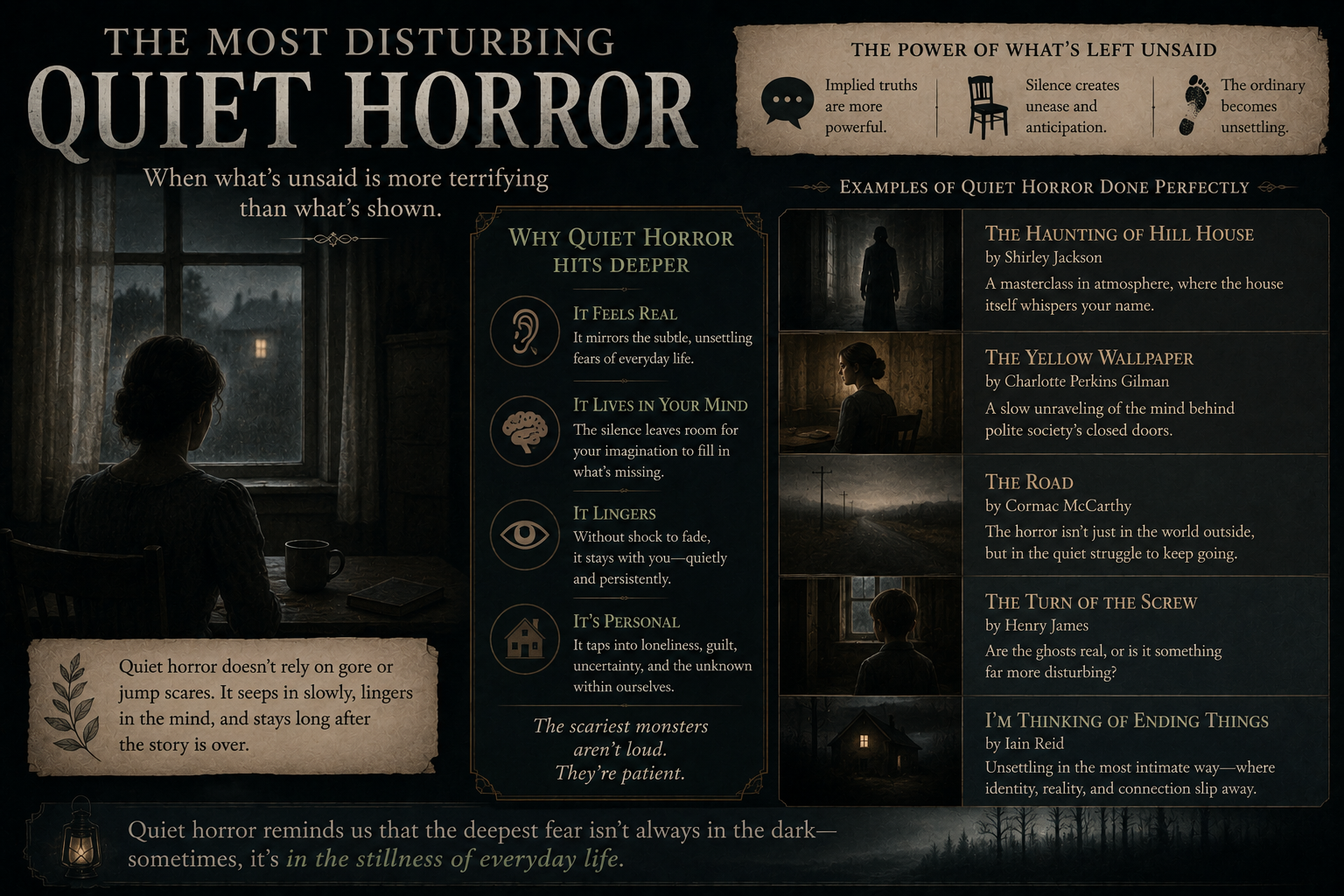
The Most Disturbing Quiet Horror does not always need blood, monsters, or loud scares. It works through silence, doubt, strange behavior, and the slow feeling that something is wrong.

This kind of horror stays with readers because it feels close to real life. A locked room, a cold look, or a normal house can become deeply frightening.

In this Guide

What Is Quiet Horror?

Quiet horror uses mood, tension, and fear of the unknown instead of shock.

In loud horror, the scary thing may jump out. In quiet horror, the scary thing may never fully appear. The reader feels trapped in a question: What is really happening?

The Most Disturbing Quiet Horror often takes place in ordinary spaces. A family home, a school, a hotel, or a small town can seem safe at first. Then small details begin to change the mood.

A door stays locked. A character hears a sound at night. A kind person says something cruel in a calm voice. These moments feel small, but they build dread.

This style has deep roots in Gothic fiction. For helpful background, see Britannica’s overview of the Gothic novel.

Why the Most Disturbing Quiet Horror Feels So Powerful

The strongest fear often comes from what the story refuses to explain.

The Most Disturbing Quiet Horror works because the reader must fill in the gaps. A writer may not show the monster. Instead, the writer shows the fear that the monster creates.

This type of horror also feels personal. It often focuses on grief, guilt, shame, or family secrets. These fears do not vanish when the lights come on.

Quiet horror can also make readers question a narrator. Is the character truly in danger? Are they losing touch with reality? Or is the world around them more twisted than it looks?

That doubt is part of the fear. The reader cannot relax because the story never gives a simple answer.

Best Examples of Most Disturbing Quiet Horror in Literature

These works show how fear can grow through silence, mood, and slow pressure.

Shirley Jackson’s “The Lottery” is one of the clearest examples of quiet horror. The story begins with a normal town event. The people talk in simple, casual ways.

That calm tone makes the ending more awful. Jackson does not need a monster. The horror comes from tradition, group pressure, and ordinary people who accept violence.

Henry James’s The Turn of the Screw also fits the Most Disturbing Quiet Horror style. A governess believes two children are haunted. Yet the story never fully proves what she sees.

The fear comes from doubt. The reader must decide if ghosts are real or if the narrator has lost control.

Edgar Allan Poe’s “The Fall of the House of Usher” uses setting as a source of dread. The house feels sick, and the family inside feels tied to its decay.

Poe’s work is often loud in emotion, but his best horror also depends on atmosphere. You can read more about Poe through the Poetry Foundation’s Poe page.

Bram Stoker’s Dracula is often seen as a dramatic vampire novel, but it also has quiet horror. Letters, journals, closed doors, and hidden illness create fear before the vampire fully takes over.

For a deeper look at what Dracula represents, read our guide to Count Dracula as a symbol of fear and corruption.

The Most Disturbing Quiet Horror Often Hides in Normal Life

Everyday settings can make horror feel more real.

One reason the Most Disturbing Quiet Horror works so well is that it does not feel far away. It may start in a kitchen, a bedroom, or a quiet street.

These places should bring comfort. When a writer makes them feel unsafe, the reader feels a deeper kind of fear.

Shirley Jackson often used this method. Her homes can feel warm on the outside but cruel inside. Her towns may seem peaceful, but they hide strict rules and hidden violence.

This is why quiet horror fits so well in school and college literature classes. It invites close reading. A small word, object, or repeated image may hold the key to the whole story.

Symbols and Themes in Most Disturbing Quiet Horror

Quiet horror depends on symbols that seem simple at first.

One major symbol is the house. In many quiet horror stories, the house reflects the mind of a character. If the house is cracked, dark, or sealed off, it may show fear, guilt, or family damage.

Another common symbol is the locked room. It can stand for a secret that no one wants to face. It may also suggest trauma, power, or the past.

Illness is another key image. In Dracula, sickness can point to corruption, fear of desire, or fear of change. This is one reason vampire stories often feel more serious than simple monster tales.

If you want to explore that idea further, our article on Dracula and moral corruption can help connect horror to theme.

The Most Disturbing Quiet Horror also explores control. A character may feel watched, judged, or trapped by rules. The threat may be a ghost, but it may also be society itself.

That is what makes this genre feel mature. It turns fear into a question about how people live, what they hide, and what they obey.

Recommended Books for Fans of Most Disturbing Quiet Horror

These books are strong choices for students and general readers who want thoughtful fear.

  • The Haunting of Hill House by Shirley Jackson: A chilling novel about a strange house and the fragile minds inside it.
  • The Turn of the Screw by Henry James: A ghost story built on doubt, fear, and unclear truth.

Both books are easy to find through major booksellers, libraries, or classroom reading lists. They also reward slow reading, since much of the horror hides in tone and detail.

How to Read Quiet Horror in Class

Quiet horror becomes clearer when you track small patterns.

Watch for repeated objects. A window, key, letter, or mirror may seem minor at first. Later, it may reveal a major fear in the story.

Pay close attention to the narrator. Ask if the narrator sees clearly or if emotion changes the way they describe events.

Look at what characters do not say. Silence can matter as much as speech in the Most Disturbing Quiet Horror.

It also helps to ask one simple question: What does this story make normal? In many quiet horror works, the scariest thing is not the strange event. It is how calmly people accept it.

FAQs About Most Disturbing Quiet Horror

What does quiet horror mean?

Quiet horror is a style of horror that uses mood, tension, and mystery instead of shock. It often leaves the scariest parts partly hidden.

Why is the Most Disturbing Quiet Horror so effective?

It feels real because it often starts in normal places. The fear grows slowly, so readers have time to feel trapped by the story.

Is quiet horror the same as Gothic horror?

Not always, but they often overlap. Gothic horror uses old houses, secrets, madness, and decay, which also appear in many quiet horror stories.

What is a good quiet horror book for students?

The Haunting of Hill House by Shirley Jackson is a strong choice. It is scary, literary, and rich with symbols.

Does quiet horror need a monster?

No. Some of the best quiet horror has no clear monster. The fear may come from people, memory, guilt, or social pressure.

Key Takeaway

The Most Disturbing Quiet Horror haunts readers because it does not explain too much. It turns silence, doubt, and ordinary life into fear.

That is why these stories last. They do not just scare us for a moment. They make us wonder what may be hidden inside the places we trust most.

Books About Literary Monsters: Why Fiction’s Creatures Still Haunt Us

Books about literary monsters

Books About Literary Monsters help us face fear, guilt, power, and loneliness through unforgettable creatures. These stories are not just scary. They ask deep questions about what makes someone human.

From Frankenstein to Dracula, literary monsters have shaped classrooms, film, and pop culture for generations.

In this Guide

  • What makes literary monsters so powerful
  • Classic monster books students should know
  • Recommended books to read next
  • Major themes and symbols
  • How to read monster stories in class
  • FAQs about literary monsters
  • Key takeaway
Books about literary monsters

What Makes Books About Literary Monsters So Powerful?

Great monster stories turn fear into meaning.

Books About Literary Monsters often use creatures to show what people hide. A monster can stand for anger, shame, illness, greed, or social fear.

That is why these stories last. The creature may look strange, but the problem behind it often feels very human.

Mary Shelley’s creature in Frankenstein is a strong example. He is frightening, but he is also lonely. Readers begin to ask if the real monster is the creature or the society that rejects him.

This is what makes literary monsters different from simple horror villains. They do not only scare us. They make us think.

Classic Books About Literary Monsters Students Should Know

Many famous monster stories began as serious works of literature.

Books About Literary Monsters appear in many periods of literary history. Some come from ancient epics. Others come from Gothic novels or modern fiction.

Frankenstein by Mary Shelley is one of the most important examples. Published in 1818, it explores science, ambition, family, and the pain of rejection. You can learn more about the novel’s background through Britannica’s overview of Frankenstein.

Dracula by Bram Stoker gives readers a vampire who stands for fear of disease, desire, and the unknown. Count Dracula is not just a monster. He is a force that threatens the safe world of the characters.

The Strange Case of Dr. Jekyll and Mr. Hyde by Robert Louis Stevenson explores the monster inside the self. Mr. Hyde shows what can happen when hidden desires break free.

Beowulf also belongs in this conversation. Grendel is a monster, but he is not random. He reflects violence, exile, and the fear of a world outside human order.

Best Books About Literary Monsters to Read Next

These books are strong choices for students, book clubs, and curious readers.

If you want to build a shelf of Books About Literary Monsters, start with works that give the creature emotional weight. A good monster story should leave you with questions after the final page.

Here are a few useful titles to search for on Amazon or at your local library:

  • Frankenstein by Mary Shelley
  • Dracula by Bram Stoker
  • Grendel by John Gardner

Grendel is especially useful for students who know Beowulf. John Gardner retells the old story from the monster’s point of view. This shift makes readers question who gets called a monster and why.

For poetry lovers, monster themes can also appear in shorter works through images of death, isolation, or the unknown. If you want to practice close reading, this guide to New Criticism and Emily Dickinson shows how to focus on language, form, and meaning.

Themes in Books About Literary Monsters

Monster stories often reveal what a culture fears most.

One major theme is isolation. Frankenstein’s creature becomes violent after he is denied love and friendship. His pain grows because no one accepts him.

Another key theme is double identity. Dr. Jekyll and Mr. Hyde show that a person can have a public self and a hidden self. The monster becomes a symbol of what society asks people to repress.

Power is also central to many monster tales. Victor Frankenstein wants to control life itself. Dracula wants control over bodies, homes, and blood. These stories warn readers about power without care.

In Books About Literary Monsters, fear often points to a deeper conflict. The monster may stand for class anxiety, gender roles, race, science, death, or moral guilt.

Why Monsters Are Symbols, Not Just Creatures

A literary monster usually means more than it seems to mean.

A vampire may symbolize desire or corruption. A ghost may symbolize guilt. A beast may symbolize human violence.

This is why teachers often ask students to look beyond the plot. The question is not only, “What does the monster do?” The better question is, “What fear does the monster reveal?”

For example, Dracula enters homes and disrupts families. That makes him a symbol of invasion. He crosses borders, changes bodies, and breaks social rules.

Frankenstein’s creature has a different meaning. He shows the danger of creating life without love or duty. He also shows how cruelty can shape a person.

How to Read Books About Literary Monsters in Class

Strong close reading can turn a scary story into a rich literary study.

When you read Books About Literary Monsters, start with the creature’s first appearance. Notice how the author describes its body, voice, movement, and setting.

Then ask who tells the story. A monster may look different based on the narrator’s fear or bias. In Frankenstein, the creature speaks for himself, which changes how we judge him.

Pay close attention to repeated images. Blood, darkness, mirrors, scars, and doors often matter in monster fiction. These details can reveal the story’s deeper pattern.

Why Books About Literary Monsters Still Matter Today

Modern readers still need monster stories because fear has not gone away.

Our fears change over time, but the pattern remains. People still worry about technology, identity, illness, isolation, and power.

That is why Books About Literary Monsters still feel fresh. They let readers face hard ideas through story. A monster gives fear a shape, which makes it easier to examine.

These books also teach empathy. Sometimes the monster is dangerous. Sometimes the monster is wounded. The best stories force readers to hold both truths at once.

FAQs About Books About Literary Monsters

What are Books About Literary Monsters?

Books About Literary Monsters are works of fiction that use creatures, villains, or strange beings to explore deeper ideas. They often focus on fear, identity, guilt, or society.

Is Frankenstein’s creature a monster or a victim?

He is both. He commits violent acts, but he is also rejected and abandoned. That tension makes the novel powerful.

Why do teachers assign monster stories?

Teachers assign them because they are rich in symbols and themes. They help students study character, setting, narration, and social fear.

Are literary monsters always supernatural?

No. Some are human. Mr. Hyde, for example, is monstrous because he reveals the dark side of Dr. Jekyll.

What is the best monster book to start with?

Frankenstein is a strong starting point. It is famous, readable, and full of ideas that still matter.

Key Takeaway

Books About Literary Monsters endure because they make fear meaningful.

The best monster stories do more than shock us. They ask what society rejects, what people hide, and what it means to be human.

When you read these books, do not stop at the creature. Look at the world that created it. That is where the real story often begins.

error

Enjoy this article? Please spread the word :)

Follow by Email
BLUESKY
fb-share-icon
Reddit
LinkedIn
Share
RSS