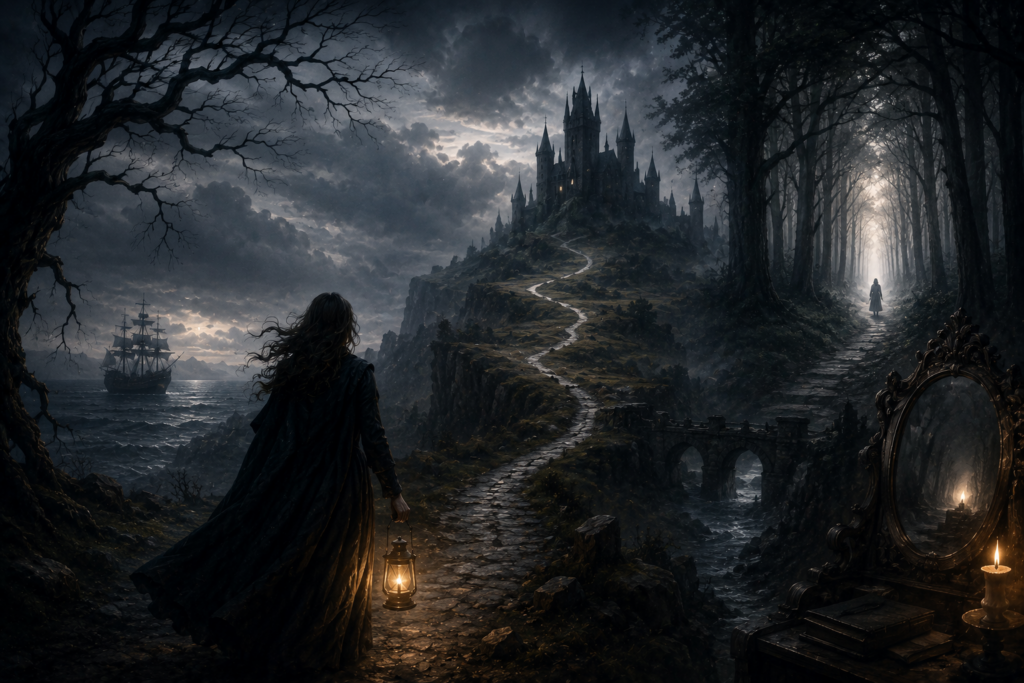
Best Gothic Journey Symbolism: Paths, Darkness, and Self-Discovery in Gothic Literature

gothic journey symbolism

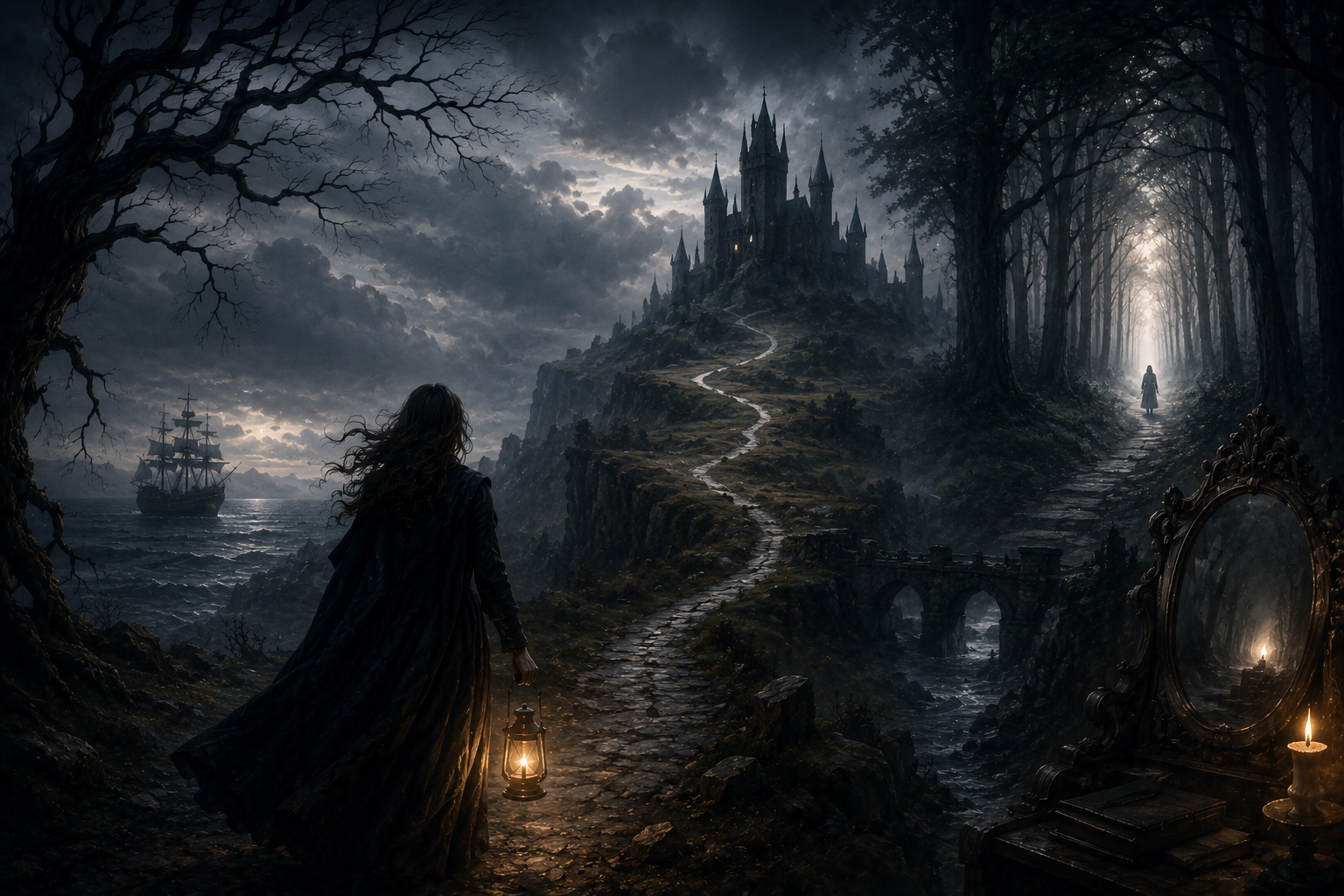
Best Gothic Journey Symbolism helps readers understand why Gothic stories often send characters into dark houses, wild landscapes, and strange inner worlds. These journeys are rarely simple trips. They often reveal fear, guilt, desire, and hidden truth.

In this Guide

  • What Gothic journey symbolism means
  • Why journeys matter in Gothic literature
  • Classic examples from famous books
  • Common symbols and themes
  • Recommended books to read
  • How to spot Gothic journey symbols
  • FAQs
gothic journey symbolism

What Best Gothic Journey Symbolism Means

A Gothic journey is both a real path and an emotional test.

In many Gothic works, a character travels to a strange place. It might be a castle, a ruined house, a lonely road, or a locked room. That place often reflects what the character fears most.

Best Gothic Journey Symbolism shows how movement can reveal the mind. The road, the house, or the storm is not just scenery. It becomes a sign of danger, memory, and inner conflict.

Gothic journeys often move from safety to fear. A character may begin in a familiar world, then enter a place where rules break down. This shift helps the reader feel the character’s loss of control.

Why Best Gothic Journey Symbolism Matters in Gothic Literature

Gothic journeys turn setting into meaning.

Best Gothic Journey Symbolism matters because Gothic stories use place to shape emotion. A dark hallway can suggest secrets. A long road can suggest fate. A locked door can suggest a truth that a character does not want to face.

These journeys also show change. A character who enters a haunted place rarely leaves the same. The journey may lead to knowledge, madness, freedom, or ruin.

This is why Gothic travel feels different from adventure travel. In an adventure story, the goal may be treasure or victory. In Gothic fiction, the goal is often hidden truth.

For more help with symbols in fiction, read this guide on how to find symbolism in a story.

Best Gothic Journey Symbolism in Classic Gothic Novels

Famous Gothic books often use journeys to pull characters into fear.

One of the clearest examples of Best Gothic Journey Symbolism appears in Mary Shelley’s Frankenstein. Victor Frankenstein travels through mountains, ice, and lonely places. These settings reflect his guilt and isolation.

In Bram Stoker’s Dracula, Jonathan Harker’s trip to Castle Dracula feels like a journey away from reason. The castle stands for danger, old power, and the unknown. His travel deeper into Transylvania becomes a move into fear.

In Charlotte Brontë’s Jane Eyre, Jane’s journeys mark her search for dignity and self-respect. Thornfield Hall is not just a home. It is a place of mystery, desire, and moral choice.

The Gothic tradition has a long history. You can learn more about its roots from Britannica’s overview of the Gothic novel.

Common Symbols in Best Gothic Journey Symbolism

Gothic journeys often repeat certain images because they carry strong emotional weight.

Roads often symbolize fate. A character may think they have a choice, but the path seems to pull them toward danger.

Castles and old houses often symbolize the past. Their locked rooms and hidden spaces suggest family secrets, guilt, or buried trauma.

Storms often symbolize emotional chaos. When thunder breaks or wind rises, the character’s inner world may be under stress too.

Dark forests often symbolize confusion. They make the character feel lost, both in the world and in the mind.

In Best Gothic Journey Symbolism, these images work together. The journey becomes a map of fear.

Themes Behind Gothic Journey Symbolism

Gothic journeys often ask what happens when people face what they hide.

One major theme is isolation. Many Gothic characters travel alone or feel alone, even near others. This loneliness makes fear stronger.

Another theme is the return of the past. A journey into an old house or ancient land often brings buried secrets back into the present.

A third key theme is identity. Characters may discover that they are not who they thought they were. The journey forces them to see themselves more clearly.

Best Gothic Journey Symbolism works because it connects outer movement with inner truth. The character moves through the world, but the real battle takes place inside.

Books That Show Best Gothic Journey Symbolism Well

These books are useful for students who want strong Gothic examples.

Frankenstein by Mary Shelley follows Victor Frankenstein through science, guilt, and frozen landscapes. The Arctic journey shows the cost of ambition.

Dracula by Bram Stoker uses travel, letters, ships, and trains to build fear. The movement between places shows how evil can cross borders.

Jane Eyre by Charlotte Brontë uses homes and roads to trace Jane’s growth. Her journey shows her fight for love, faith, and self-worth.

You can find these books on Amazon, at local bookstores, or through most school and public libraries.

How to Spot Best Gothic Journey Symbolism in a Story

Look at where the character goes and what changes after each place.

To spot Best Gothic Journey Symbolism, ask what the setting seems to reveal. Does the house hide a secret? Does the road lead to danger? Or does the weather match the character’s mood?

Pay attention to repeated images. If a story keeps showing doors, shadows, mirrors, or staircases, those details may carry symbolic meaning.

Also ask what the character learns. A Gothic journey often ends with a truth that cannot be ignored.

If you want a simple method, use this helpful post on finding symbolism in literature.

Gothic Journey Symbolism in Poetry and Short Fiction

Gothic journeys do not only appear in novels.

Edgar Allan Poe often uses rooms, houses, and mental spaces as symbolic journeys. In “The Fall of the House of Usher,” the narrator enters a decaying house that reflects sickness and collapse.

The house becomes more than a setting. It feels alive with fear. The narrator’s visit becomes a journey into family decay and mental breakdown.

You can explore Poe’s work through the Poetry Foundation’s page on Edgar Allan Poe.

Why Students Should Study Best Gothic Journey Symbolism

This topic helps students move beyond plot summary.

When you study Best Gothic Journey Symbolism, you learn how setting, mood, and character work together. You see that a journey can mean more than travel.

This is useful for essays because it gives you clear evidence. You can connect a place to a theme, then explain how that place changes the character.

For AP Literature and college classes, this kind of analysis can make an essay stronger. It shows close reading and deeper thought.

FAQs About Best Gothic Journey Symbolism

What is Gothic journey symbolism?

Gothic journey symbolism is the use of travel, setting, and movement to show fear, guilt, secrets, or inner change. The journey often reflects the character’s mind.

What is the best example of Best Gothic Journey Symbolism?

Dracula is one strong example. Jonathan Harker’s trip to Castle Dracula shows a move from the normal world into danger and mystery.

Why do Gothic stories use old houses and castles?

Old houses and castles often stand for the past. They suggest secrets, family history, and hidden fear.

How can I write about Gothic journey symbolism in an essay?

Choose one journey or setting. Explain what it represents, then connect it to a theme like fear, identity, or guilt.

Is Gothic journey symbolism only found in classic books?

No. Modern horror, mystery, and fantasy stories also use Gothic journeys. Any story can use a dark path, strange house, or haunted space as a symbol.

Key Takeaway

Best Gothic Journey Symbolism shows that Gothic travel is never just about distance. The path into darkness often leads to the truth a character fears most.

When readers notice these symbols, Gothic literature becomes richer and more powerful. The road, the house, and the storm all speak.
The Mentor Archetype in Fiction

Mentor archetype

The Mentor Archetype in Fiction is one of the easiest character patterns to spot once you know what to look for. This guide explains how mentors work, why they matter, and how students can write about them with more confidence.

In this Guide

Use this guide to understand the mentor’s role in stories and how to study it in class.

  • What the mentor archetype means
  • Why mentors matter in fiction
  • Common traits of mentor characters
  • Famous literary examples
  • How to analyze mentors in essays
  • Books that show strong mentor figures
  • FAQ
Mentor archetype

What Is The Mentor Archetype in Fiction?

A mentor is a guide who helps the main character grow.

At its core, The Mentor Archetype in Fiction is a character pattern. The mentor teaches, warns, trains, or inspires the hero. This character often knows more than the hero does, but the mentor cannot finish the journey for them.

Mentors may be teachers, elders, friends, family members, or even magical figures. They give the hero tools, advice, courage, or moral support.

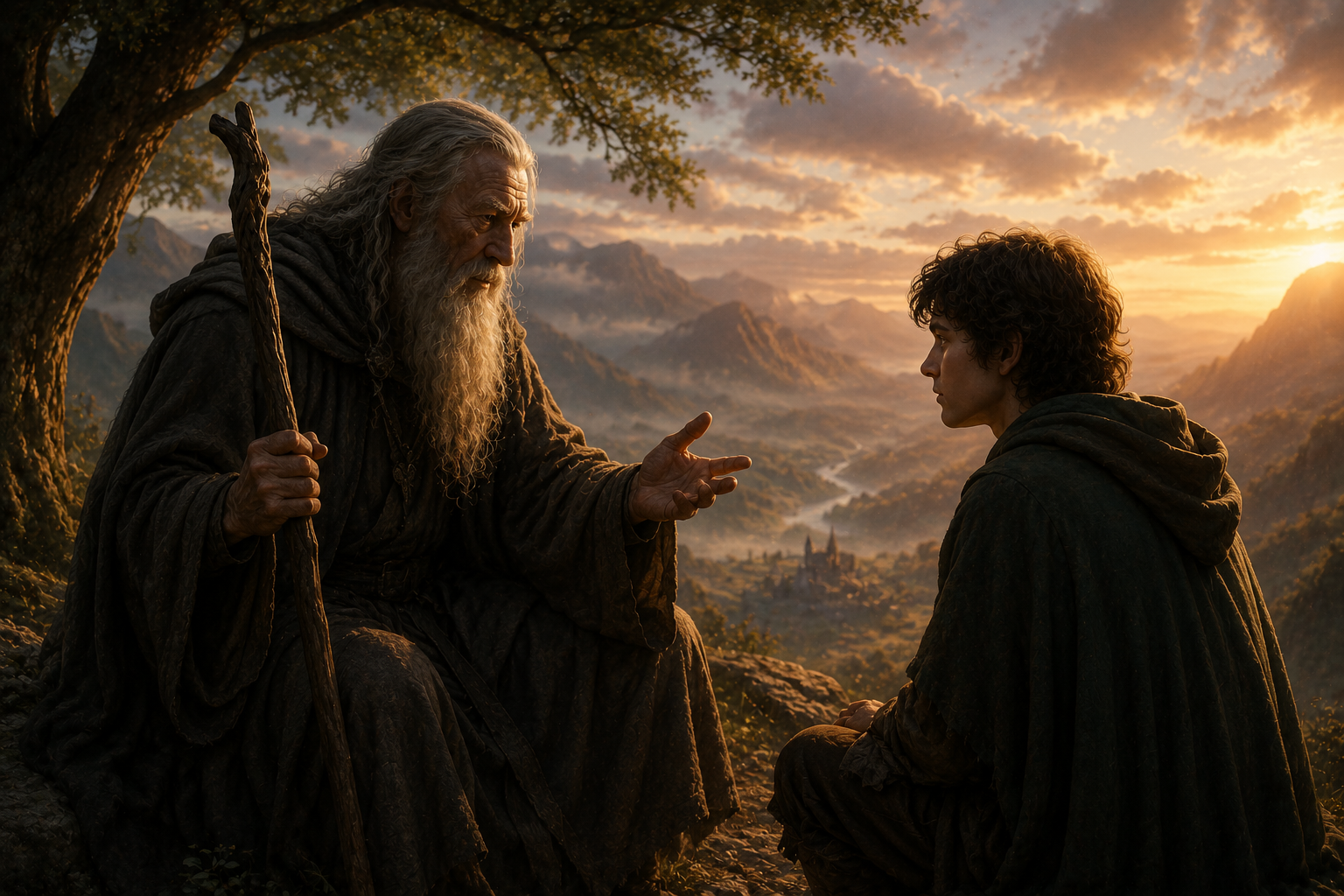
Think of Gandalf in The Hobbit by J.R.R. Tolkien. He pushes Bilbo out of his safe life and into a much larger world. Gandalf does not solve every problem, but he helps Bilbo become braver.

Why The Mentor Archetype in Fiction Matters

Mentors help reveal what the hero must learn.

The Mentor Archetype in Fiction matters because stories are often about change. A hero starts with a flaw, fear, or lack of knowledge. The mentor points toward a better path.

This role can also make the story feel deeper. A mentor may carry old wisdom, past pain, or a strong moral code. Through the mentor, the author can show what the world values.

In To Kill a Mockingbird by Harper Lee, Atticus Finch acts as a mentor to Scout. He teaches her to think about justice and empathy. His lessons shape how she sees the world.

Mentors also create tension. If the hero listens too much, they may never become independent. If they ignore the mentor, they may suffer for it.

Common Traits of The Mentor Archetype in Fiction

Mentor characters often share clear traits, even when they look very different.

The Mentor Archetype in Fiction usually has knowledge that the hero lacks. This knowledge may come from age, experience, study, or past failure.

A mentor often gives the hero a gift. The gift might be a weapon, a book, a clue, or a piece of advice. In many stories, that gift becomes important later.

Mentors also set limits. They do not always rescue the hero. A strong mentor knows the hero must face danger alone at some point.

Many mentors disappear, fail, or die before the ending. This can sound harsh, but it has a purpose. The hero must step forward without the mentor’s protection.

Dumbledore in the Harry Potter series offers advice and protection, but Harry must still face the final challenge himself. The mentor guides the path, but the hero must walk it.

Famous Examples of The Mentor Archetype in Fiction

Famous mentors help us see how flexible this archetype can be.

Seeing The Mentor Archetype in Fiction across different books can help students compare stories. Not every mentor is kind, and not every mentor is always right.

In The Odyssey, Athena helps Odysseus and Telemachus. She uses wisdom, disguise, and divine power. Her role shows that mentors can guide both action and identity.

You can learn more about Homer and this ancient epic through the Poetry Foundation’s page on Homer.

In The Hunger Games by Suzanne Collins, Haymitch mentors Katniss and Peeta. He is flawed and often bitter, but he knows how the Games work. His advice helps them survive a brutal system.

In The Lion, the Witch and the Wardrobe by C.S. Lewis, Aslan serves as a spiritual and moral guide. He helps the children understand courage, sacrifice, and loyalty.

These examples show that mentors do not all act the same way. Some are gentle. Some are strict. And some are mysterious. What they share is a role in the hero’s growth.

How to Analyze The Mentor Archetype in Fiction

A strong analysis looks at what the mentor does and what the hero learns.

When you analyze The Mentor Archetype in Fiction, do not stop at “this character gives advice.” Ask how that advice changes the story.

Start with the mentor’s purpose. What does this character teach the hero? Does the mentor help the hero face fear, understand truth, or make a moral choice?

Next, look at the mentor’s limits. A mentor may be wise, but they may also hide information or make mistakes. This can make the character more human.

Then ask how the hero changes after contact with the mentor. If the hero becomes more brave, honest, or independent, the mentor has helped shape the character arc.

Symbols can also deepen mentor scenes. A staff, book, sword, cloak, or letter may carry meaning. If you want help with that skill, read this guide on how to find symbolism in a story.

The Mentor Archetype in Fiction and the Hero’s Journey

A mentor often appears near the start of a hero’s adventure.

The Mentor Archetype in Fiction connects closely to the hero’s journey, a story pattern linked with Joseph Campbell. In this pattern, the hero leaves home, faces trials, and returns changed.

The mentor may appear after the call to adventure. This is the moment when the hero is asked to leave a normal life. The mentor helps the hero cross into the unknown.

For more background, you can read Britannica’s overview of Joseph Campbell.

Still, not every story follows this pattern exactly. Some modern books twist the mentor role. A mentor may betray the hero, refuse to help, or teach the wrong lesson.

These twists can make essays more interesting. If a mentor breaks the usual pattern, ask why the author made that choice.

How Students Can Write About Mentor Characters

A clear essay needs a clear claim about the mentor’s role.

Do not write only that a mentor “helps the main character.” That is too broad. Try to explain what kind of help the mentor gives and why it matters.

Here is a stronger claim: “Gandalf acts as a mentor because he pushes Bilbo to discover courage that Bilbo does not yet see in himself.”

This claim works because it links the mentor to the hero’s growth. It also gives you something to prove with scenes from the book.

When you choose evidence, look for key moments. Find scenes where the mentor gives advice, challenges the hero, or leaves the hero to act alone.

Good analysis also notices change. Ask what the hero believes before the mentor’s lesson and what the hero understands after it.

Relevant Books You Can Find on Amazon

These books offer strong examples of mentor figures for school reading or personal study.

  • The Hobbit by J.R.R. Tolkien: Gandalf helps Bilbo leave comfort behind and discover courage.
  • The Odyssey by Homer: Athena guides Odysseus and Telemachus through danger, pride, and growth.

These titles are useful for students because they show mentors in very different worlds. One is a fantasy quest. The other is an ancient epic.

FAQ About Mentor Characters

These quick answers can help you review the main ideas.

What is a mentor archetype?

A mentor archetype is a common character type who guides the hero. This character often teaches lessons, gives advice, or helps the hero prepare for a challenge.

Does a mentor have to be old?

No. Many mentors are older, but age is not required. A mentor only needs to offer guidance that helps another character grow.

Can a mentor be wrong?

Yes. Some mentors make mistakes or hide the truth. This can create conflict and make the story more complex.

Why do mentors often disappear from the story?

Mentors often leave so the hero must act alone. This helps prove that the hero has learned and changed.

Key Takeaway

Mentors matter because they help reveal the hero’s path.

The Mentor Archetype in Fiction is more than a wise teacher figure. A strong mentor pushes the hero toward change, and that change is often the heart of the story.

What Is the Trickster Archetype? A Beginner-Friendly Guide

Trickster archetype
Trickster archetype

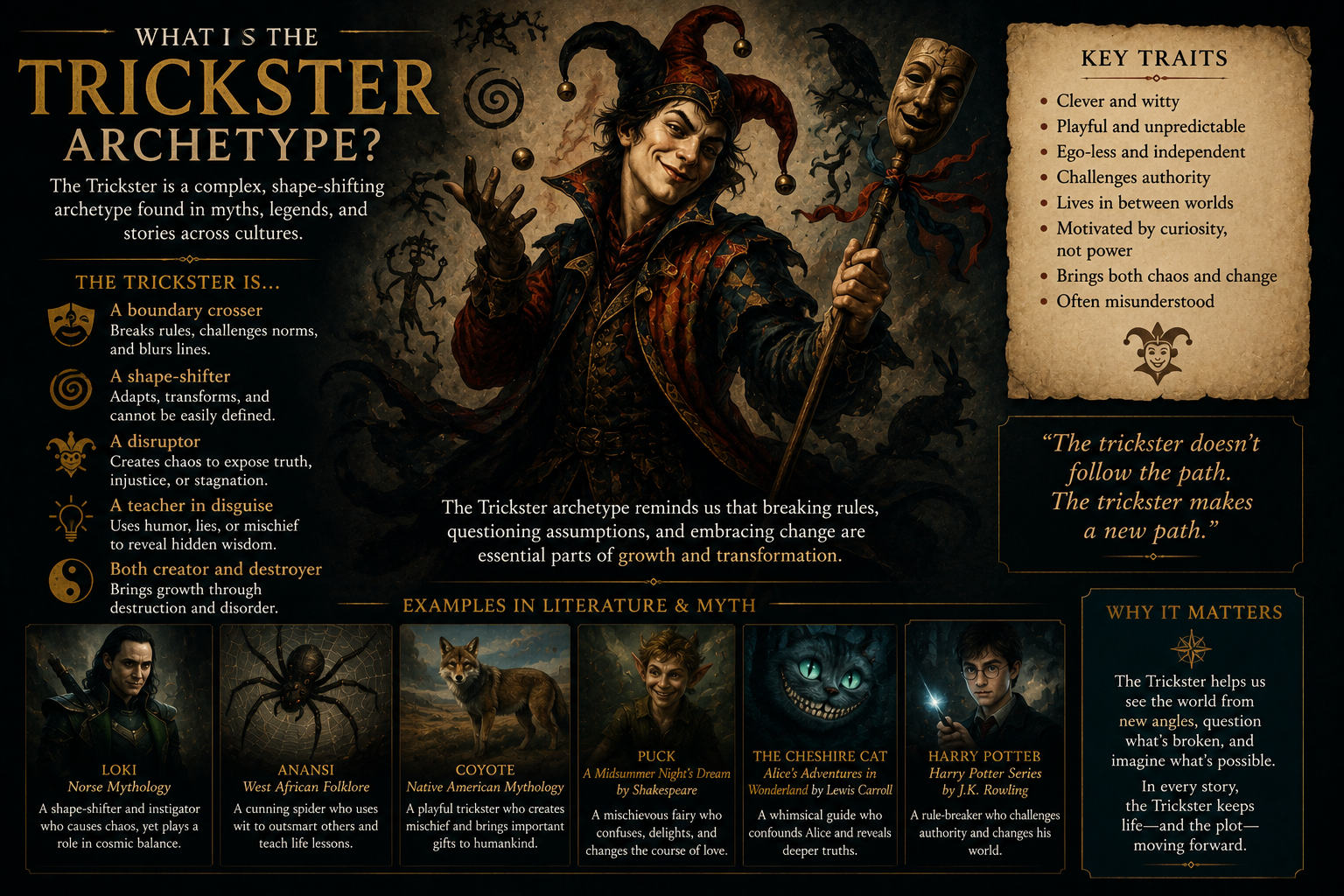
If a character lies, jokes, breaks rules, or tricks others to expose the truth, you may be looking at a trickster. This guide answers What Is the Trickster Archetype? and shows why this character type matters in stories, myths, and plays.

In this Guide

Use this quick map to find what you need.

What Is the Trickster Archetype? A Simple Definition

A trickster is a character who uses cleverness to challenge rules, fool others, or upset the normal order.

When students ask, What Is the Trickster Archetype?, the easiest answer is this: it is a repeated character pattern found across stories. A trickster often bends the truth, changes shape, plays jokes, or tricks people in power.

The trickster is not always evil. Some tricksters help others by exposing lies. Others cause chaos for fun. That mix makes them hard to trust and fun to study.

An archetype is a pattern that appears again and again in literature. The trickster archetype appears in myths, fairy tales, drama, novels, and modern fantasy.

What Is the Trickster Archetype? Why It Matters in Literature

The trickster matters because this character often reveals what a society fears, hides, or refuses to question.

A good answer to What Is the Trickster Archetype? should explain more than behavior. Tricksters do not only play pranks. They test the world of the story.

They may expose a proud king, fool a greedy person, or break a rule that no one else dares to touch. In doing so, they show cracks in the system.

That is why tricksters often appear when a story needs change. They push characters out of comfort and make hidden truths easier to see.

For more background on trickster stories across cultures, see Britannica’s overview of trickster tales.

What Is the Trickster Archetype? Common Traits to Look For

Tricksters are different in each story, but they often share a few clear signs.

If you remember one answer to What Is the Trickster Archetype?, remember this: tricksters use wit as power. They may not be the strongest character, but they know how to outsmart others.

Common signs include disguise, jokes, lies, riddles, and sudden reversals. A trickster may cross boundaries between human and animal, rich and poor, or order and chaos.

Tricksters also create tension. Readers may laugh at them, but they can also cause real harm. That uneasy feeling is part of their role.

When you read, notice how other characters react to the trickster. Fear, anger, and confusion can show how much power the trickster has.

What Is the Trickster Archetype? Famous Examples

Many well-known stories use tricksters to bring humor, conflict, and surprise.

Puck in William Shakespeare’s A Midsummer Night’s Dream is a classic trickster. He uses magic to confuse the lovers, and his mistakes turn the play into a comic mess.

Shakespeare often used clever characters to expose foolish behavior. You can learn more about him through the Poetry Foundation’s Shakespeare page.

Loki from Norse myth is another famous example. He can help the gods, but he also betrays them. That makes him a risky and unstable figure.

Anansi, the spider from West African and Caribbean folklore, often wins through wit. His stories show how a smaller figure can beat stronger enemies through clever plans.

Odysseus in Homer’s The Odyssey also has trickster traits. He survives by using disguise and strategy, especially when he fools the Cyclops Polyphemus.

What Is the Trickster Archetype? How to Analyze It

A strong analysis looks at what the trickster changes in the story.

When you ask What Is the Trickster Archetype? during reading, do not stop at “this character is sneaky.” Ask what the trick reveals.

Does the trickster expose a lie? Does the prank show that a leader is weak? Or, does the character’s chaos lead to growth?

Also look for symbols linked to the trickster. Masks, doors, mirrors, animals, and magic objects may point to hidden meanings. If you need help with that skill, read this guide on how to find symbolism in a story.

Practical tip: Each time the trickster appears, write down what rule gets broken and what truth comes out. That simple note can turn into a strong paragraph for class.

Books That Help You Understand the Trickster Archetype

These books include trickster figures or characters with strong trickster traits.

  • The Odyssey by Homer
  • A Midsummer Night’s Dream by William Shakespeare
  • Anansi Boys by Neil Gaiman

These are not affiliate links, just useful titles to explore.

FAQ: What Is the Trickster Archetype?

Here are quick answers to common student questions.

What Is the Trickster Archetype? in simple words?

It is a character type that uses tricks, jokes, or clever plans to challenge rules and reveal truth.

Is a trickster always a villain?

No. A trickster can help or harm. Many tricksters do both, which makes them complex.

Why do authors use tricksters?

Authors use tricksters to create conflict, question authority, and show hidden problems in a story’s world.

What is a good example of a trickster in literature?

Puck from A Midsummer Night’s Dream is a strong example because he causes confusion through mischief and magic.

Key Takeaway

The trickster is more than a comic troublemaker.

What Is the Trickster Archetype? It is a clever rule-breaker who shakes up the story and helps readers see what others miss.

Best Gothic Hero’s Journey Stories to Read and Study

Gothic Hero's Journey

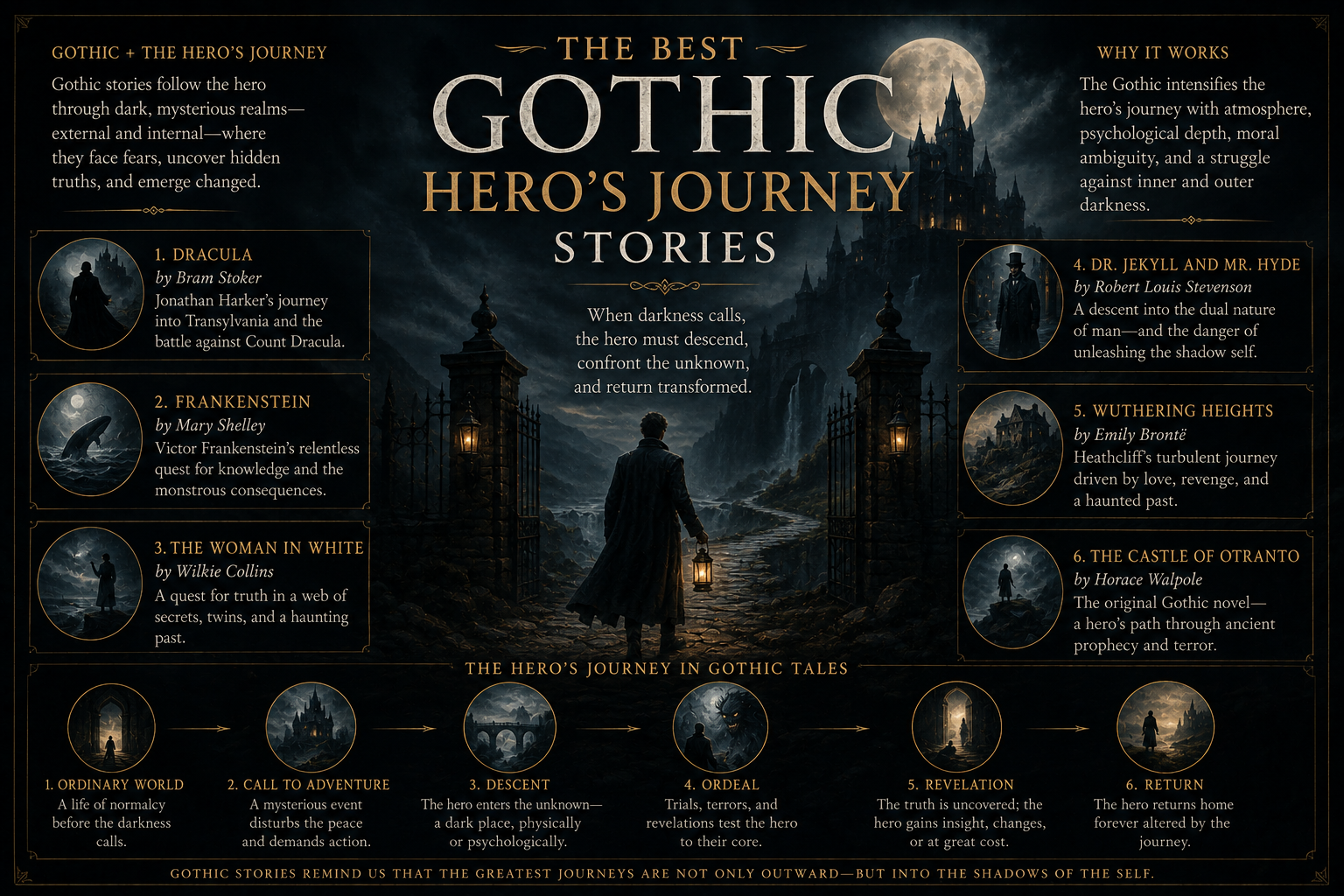
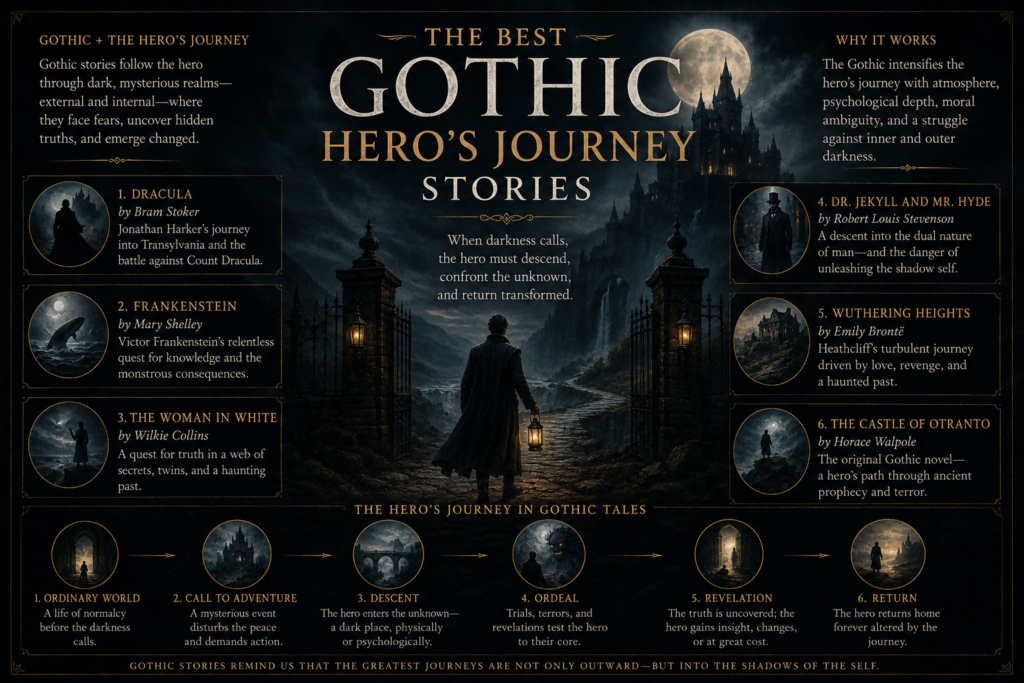
The Best Gothic Hero’s Journey Stories mix dark settings with deep inner change. These stories send characters into fear, mystery, and danger, but the real battle often happens inside the hero.

For students, this blend is powerful because it makes classic literature feel tense and personal. A haunted house or ruined castle can reveal more about a character than a speech ever could.

In this Guide

  • What makes Gothic hero journeys different
  • Key books and examples to read
  • Major symbols and themes
  • How to study these stories for class
  • FAQs about Gothic hero journeys
Gothic Hero's Journey

What Makes the Best Gothic Hero’s Journey Stories Different?

Gothic hero journeys turn the usual adventure story into a darker test of the soul.

In a classic hero’s journey, a character leaves home, faces danger, gains wisdom, and returns changed. In Gothic fiction, that path is less clear. The hero may enter a castle, a mansion, a lab, or a ruined family estate.

The danger is not only outside. It may be guilt, desire, family secrets, or fear of the unknown.

The Best Gothic Hero’s Journey Stories often ask one key question: What happens when a person faces the truth they tried to hide?

This is why Gothic stories work so well in literature classes. They connect plot with character growth. If you want help with that skill, read this guide on how to analyze characters in literature.

Best Gothic Hero’s Journey Stories to Read First

These classic works show how fear can shape a hero’s path.

Frankenstein by Mary Shelley is one of the most important Gothic hero journey stories. Victor Frankenstein seeks knowledge, but his quest leads to horror. His creation also takes a painful journey as he searches for love and meaning.

What makes the novel so rich is its double journey. Victor wants power. The Creature wants belonging. Both are changed by rejection and loss.

Jane Eyre by Charlotte Brontë may not seem like a Gothic quest at first, but it fits the pattern well. Jane moves from Gateshead to Lowood to Thornfield, and each place tests her courage.

Thornfield Hall is the Gothic center of the novel. Its locked rooms and strange sounds reflect secrets in the house. Jane’s real journey is toward self-respect.

Dracula by Bram Stoker turns the hero’s journey into a group struggle. Jonathan Harker travels into danger, but the fight against Dracula becomes shared. The novel uses letters and journals to build fear and suspense.

When students search for the Best Gothic Hero’s Journey Stories, these titles are strong starting points because they balance action with inner conflict.

More Gothic Examples Worth Knowing

Not every Gothic hero wins in a simple way.

Wuthering Heights by Emily Brontë gives readers a darker form of the journey. Heathcliff rises from outsider to powerful figure, but his path is ruled by pain. His story shows how revenge can trap a person instead of free them.

Rebecca by Daphne du Maurier follows a young narrator into the shadow of another woman’s memory. Manderley feels beautiful and unsafe at the same time. The heroine must learn how much of her fear comes from the house and how much comes from her own doubt.

The Strange Case of Dr. Jekyll and Mr. Hyde by Robert Louis Stevenson uses the hero’s journey in a twisted way. Dr. Jekyll crosses a moral line and meets the darkest part of himself. His story warns that hidden desires can grow stronger when denied.

These Best Gothic Hero’s Journey Stories remind readers that a journey does not always lead to peace. Sometimes it leads to truth, and truth can be hard to face.

Symbols and Themes in the Best Gothic Hero’s Journey Stories

Gothic stories use objects and places to show what characters fear most.

One common symbol is the house. A mansion, castle, or locked room often stands for the mind. Hidden rooms suggest hidden truths. Broken walls suggest broken families.

Dark weather is another key symbol. Storms, fog, and cold landscapes make the world feel unsafe. They also reflect the hero’s confusion.

Mirrors and doubles matter too. In Frankenstein, Victor and the Creature reflect each other. In Dr. Jekyll and Mr. Hyde, the double becomes literal.

The Best Gothic Hero’s Journey Stories often explore guilt, identity, and the fear of change. These themes make the genre more than scary. They make it human.

Why Gothic Hero Journeys Still Matter

Modern readers still connect with Gothic stories because fear has not gone away.

Students may not live in castles, but they know what it means to feel trapped. They know what it means to face pressure, secrets, and hard choices.

The Best Gothic Hero’s Journey Stories give shape to those feelings. They turn anxiety into plot. They turn inner conflict into setting.

This is why Gothic fiction keeps returning in books, film, and television. The genre gives us dark spaces where difficult emotions can be seen.

For more background on the genre, see Britannica’s overview of the Gothic novel. For a key Gothic writer, visit the Poetry Foundation page on Edgar Allan Poe.

How to Read the Best Gothic Hero’s Journey Stories for Class

To study these stories well, focus on how the setting shapes the hero.

Ask what place the hero enters. Is it a house, a lab, a school, or a foreign land? Then ask what fear that place brings out.

Track the hero’s choices. Gothic heroes often fail because they ignore warnings or hide the truth. Those choices matter more than the scares.

Watch for moments of self-knowledge. A Gothic hero may not defeat a monster, but they may learn what the monster means.

If you are writing an essay, connect the setting to the character’s change. This is a strong way to build a clear literary argument.

These books are easy to find and useful for class study.

  • Frankenstein by Mary Shelley
  • Jane Eyre by Charlotte Brontë
  • Dracula by Bram Stoker

Each one offers a different kind of Gothic journey. Together, they show why the Best Gothic Hero’s Journey Stories remain important in literary culture.

FAQs About the Best Gothic Hero’s Journey Stories

What is a Gothic hero’s journey?

It is a story where a character enters a dark or mysterious world and faces both danger and inner conflict. The journey often reveals hidden fear, guilt, or truth.

Are the Best Gothic Hero’s Journey Stories always horror stories?

No. Some are scary, but many focus more on suspense, secrets, and emotion. Jane Eyre is a good example.

Why do Gothic stories use old houses so often?

Old houses suggest history, memory, and hidden pain. They often reflect the mind of the hero or the secrets of a family.

Which Gothic hero journey is best for students?

Frankenstein is a strong choice because it is short enough for class study and rich in themes. It also raises big questions about science and responsibility.

Key Takeaway

The Best Gothic Hero’s Journey Stories show that the hardest quest is often the one inside the self. These stories use haunted places, dark symbols, and troubled heroes to explore fear, truth, and change.

That is why they still matter. They make readers ask what we hide, what we seek, and what we become when we face the dark. 🕯️

The Shadow Archetype in Literature: A Student-Friendly Guide

the shadow archetype

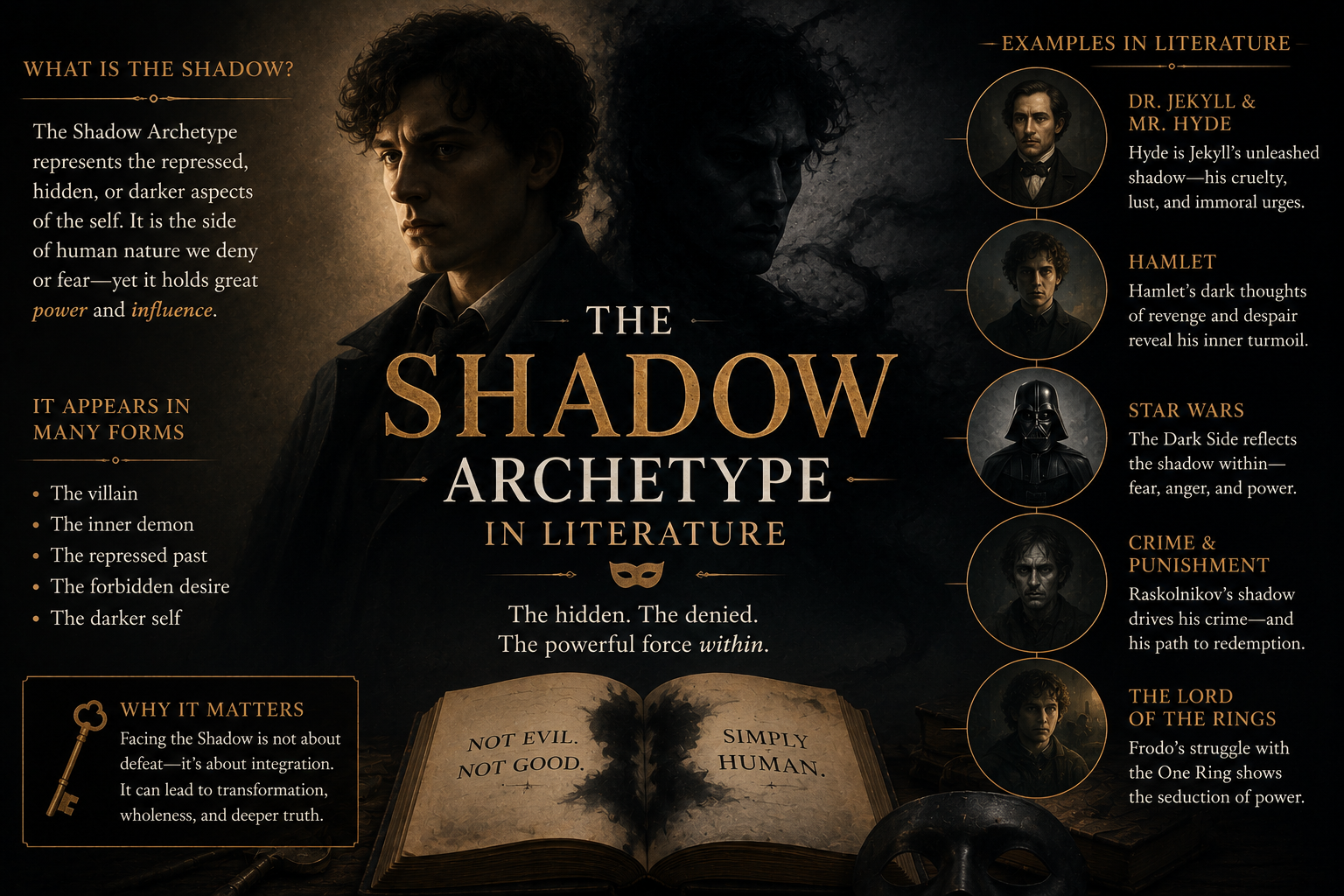
The Shadow Archetype in Literature helps readers understand the darker parts of a character’s mind. It shows fear, guilt, rage, pride, or hidden desire, often through a villain, double, monster, or secret self.

If you study novels, plays, or poems, this idea can help you spot deeper conflict and write stronger analysis.

In this Guide

What Is The Shadow Archetype in Literature?

The shadow is the hidden side of a person or character.

Psychologist Carl Jung used the word “shadow” to describe the parts of the self that people try to deny or hide. These parts are not always evil, but they can become dangerous when ignored. You can read more about Jung’s background at Britannica’s Carl Jung page.

In stories, the shadow may appear as a villain, a monster, a rival, or a secret part of the hero. The Shadow Archetype in Literature often forces a character to face the truth about themselves.

For example, a brave hero may fear failure. A kind person may feel anger. A wise leader may crave power. The shadow brings these hidden feelings into the open.

Why The Shadow Archetype in Literature Matters

The shadow makes stories feel more real because people are not simple.

Most strong characters have inner conflict. They want to be good, but they may feel envy, shame, or pride. This struggle gives a story emotional weight.

The Shadow Archetype in Literature also helps readers understand theme. A story may ask questions like: What happens when people deny guilt? Can someone accept their dark side and still choose good?

This is useful for essays because the shadow connects character, conflict, and symbolism. If you want help with that skill, read this guide on how to find symbolism in a story.

Examples of The Shadow Archetype in Literature

Many famous works use the shadow to reveal hidden fear or desire.

Dr. Jekyll and Mr. Hyde

Robert Louis Stevenson’s Strange Case of Dr. Jekyll and Mr. Hyde is one of the clearest examples. Dr. Jekyll wants to separate his good side from his darker urges.

Mr. Hyde becomes the living form of those urges. The story warns that hiding the shadow does not destroy it. It can make it stronger.

Frankenstein

In Mary Shelley’s Frankenstein, the Creature can be read as Victor Frankenstein’s shadow. Victor wants glory and control, but he refuses to face the cost of his ambition.

The Creature reflects Victor’s fear, guilt, and rejection of responsibility. This makes the novel more than a monster story. It becomes a story about what happens when someone abandons what they create.

Macbeth

In Shakespeare’s Macbeth, Macbeth’s shadow appears through his hunger for power. At first, he seems loyal and brave.

Once ambition takes control, he becomes violent and fearful. His shadow does not arrive from nowhere. It was already inside him.

Lord of the Flies

William Golding’s Lord of the Flies shows the shadow in a group, not just one person. The boys try to build order, but fear and cruelty rise to the surface.

The “beast” is not only outside them. It is also inside them. This makes The Shadow Archetype in Literature a key idea in the novel.

How to Analyze The Shadow Archetype in Literature

You can find the shadow by asking what a character hides.

Look for moments when a character acts against their public image. A noble person may lie. A peaceful person may enjoy power. Or a confident person may fear being weak.

Next, look for symbols tied to darkness, mirrors, masks, monsters, doubles, locked rooms, or night. These details often point to the shadow. For more practice, use this guide on finding symbolism in a story.

When you write about The Shadow Archetype in Literature, do not stop at “this character is dark.” Explain what the shadow reveals. Does it show guilt? Does it expose fear? Does it test the hero’s values?

Useful Questions for Students

  • What part of the character does the shadow reveal?
  • How does the shadow create conflict?
  • Does the character accept the shadow or deny it?
  • What theme does the shadow help show?

Choosing Books with The Shadow Archetype in Literature

Books with strong shadow themes often have deep conflict and strong essay topics.

If you need a book for class, choose a story where the main character changes or faces guilt. These texts often give you more to discuss than a simple good-versus-evil plot.

Look for stories with doubles, secret identities, forbidden desires, or moral failure. These signs often point to The Shadow Archetype in Literature.

This type of book can work well for AP Literature because it supports analysis of character, theme, and structure.

Books to Explore on Amazon

These books are strong choices if you want to study the shadow archetype more closely.

  • Strange Case of Dr. Jekyll and Mr. Hyde by Robert Louis Stevenson
  • Frankenstein by Mary Shelley
  • Lord of the Flies by William Golding

You can also explore poems with dark speakers or divided selves. The Poetry Foundation is a helpful place to read classic and modern poems.

FAQ About The Shadow Archetype in Literature

What is the shadow archetype in simple terms?

The shadow archetype is the hidden side of a character. It may include fear, anger, guilt, or desire that the character does not want to face.

Is the shadow always evil?

No. The shadow is not always evil. It can hold painful truths, buried feelings, or traits a person has denied.

Can a villain be a hero’s shadow?

Yes. A villain can reflect what the hero fears or rejects in themselves. This makes the conflict more personal.

Why is the shadow archetype useful for essays?

It helps you connect character choices to deeper themes. It also gives you a clear way to discuss inner conflict.

Key Takeaway

The Shadow Archetype in Literature shows that the hardest battle is often inside the character. When readers understand the shadow, they can see why stories about monsters, rivals, and secret selves still feel so human.

The Hero Archetype Explained: A Student-Friendly Guide

Hero archetype

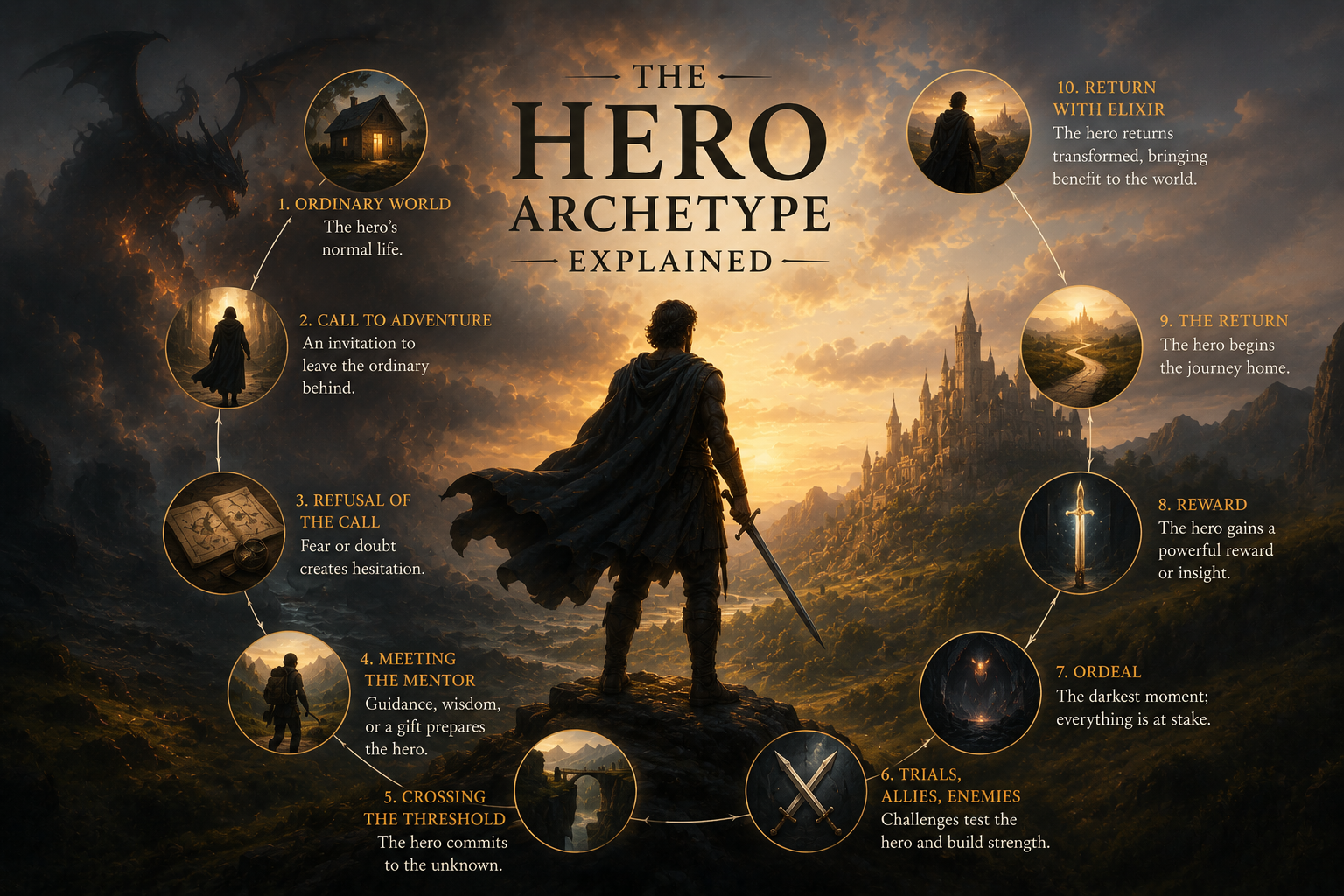
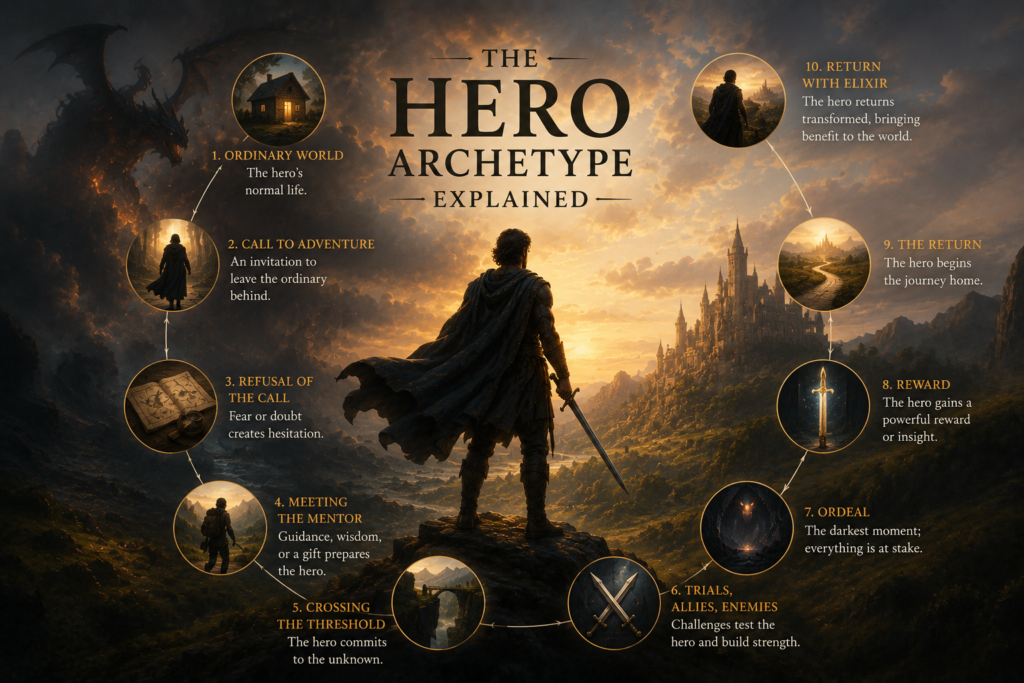
The Hero Archetype Explained means looking at one of the most common character patterns in literature. A hero is not just someone brave. A hero often faces a major test, changes through struggle, and shows what a story values.

In this Guide

  • What the hero archetype means
  • Why it matters in literature
  • Common parts of the hero’s journey
  • Famous literary examples
  • How to use the idea in essays
  • Book suggestions
  • FAQ
Hero archetype

The Hero Archetype Explained in Simple Terms

A hero archetype is a familiar character pattern that appears across many stories.

At its core, The Hero Archetype Explained is about a character who must face a serious challenge. The hero may fight a monster, solve a problem, protect others, or learn a hard truth.

This type of character appears in myths, novels, plays, and poems. The hero may be strong, smart, kind, flawed, or even unsure at first.

What matters most is growth. A hero often starts in one place, faces pressure, and comes out changed.

Why The Hero Archetype Explained Helps Readers

The hero archetype helps readers see patterns that shape a story.

When you understand The Hero Archetype Explained, you can read with more purpose. You start to notice why a character’s choices matter.

A hero’s journey often reveals the story’s central message. If a hero learns courage, the story may value bravery. If a hero learns mercy, the story may question revenge.

This is useful for class discussion and essay writing. Instead of saying “the character changes,” you can explain how the hero’s change builds the theme.

Common Parts of the Hero Archetype

Most hero stories share a few familiar steps, though not every story uses all of them.

The hero often begins in an ordinary world. Then a problem appears and pulls the hero into conflict.

The hero may meet a guide or mentor. This figure can offer advice, tools, or wisdom.

The hero then faces tests. These tests show fear, weakness, loyalty, or strength.

Near the end, the hero usually faces the biggest challenge. This moment often proves what the hero has learned.

Joseph Campbell helped make the idea of the “hero’s journey” well known. You can read more about the larger idea of an archetype through Britannica’s overview of archetype.

The Hero Archetype Explained Through Famous Literature

Literary examples make the hero archetype easier to understand.

This is where The Hero Archetype Explained becomes clear. In The Odyssey, Odysseus faces monsters, temptation, loss, and pride. His journey is not only about getting home. It is also about learning what it means to survive and lead.

In Beowulf, the hero fights Grendel, Grendel’s mother, and a dragon. Beowulf shows courage, but the poem also asks hard questions about fame, age, and sacrifice.

In Harry Potter and the Sorcerer’s Stone, Harry begins as an ordinary boy who does not know his own past. He enters a strange world, gains allies, faces danger, and learns that love and choice matter.

In The Hunger Games, Katniss Everdeen becomes a hero because she protects her sister and challenges a cruel system. She does not seek glory. Her heroism grows from loyalty and survival.

How the Hero Archetype Builds Theme

The hero’s choices often point to the story’s deeper meaning.

A hero does not exist only to make a plot exciting. The hero’s journey helps the author explore ideas like justice, identity, power, fear, and sacrifice.

For example, Odysseus’s long trip home explores loyalty and self-control. Beowulf’s battles explore honor and mortality.

Symbols often appear around heroes too. A sword, scar, road, crown, or home can carry deeper meaning. If you want help with that skill, read this guide on how to find symbolism in a story.

Using The Hero Archetype Explained in Essay Analysis

The hero archetype can help you write stronger literary essays.

When you use The Hero Archetype Explained in an essay, do not just identify the hero. Explain what the hero’s journey reveals.

A weak sentence might say, “Harry Potter is a hero because he is brave.”

A stronger sentence would say, “Harry Potter fits the hero archetype because his courage grows through loss, friendship, and moral choice, which shows the novel’s belief that love is stronger than fear.”

That second sentence does more. It connects character, conflict, and theme.

When you write, ask yourself:

  • What challenge changes the hero?
  • What weakness must the hero face?
  • What theme does the hero’s journey reveal?
  • How does the ending prove the hero has changed?

Books That Show the Hero Archetype

These books are strong choices if you want to study hero patterns in literature.

  • The Odyssey by Homer
  • Beowulf, translated by Seamus Heaney
  • Harry Potter and the Sorcerer’s Stone by J.K. Rowling

Each book shows a different kind of hero. Some heroes seek home. Some seek honor. And some learn who they are.

FAQ About The Hero Archetype Explained

What does the hero archetype mean?

The hero archetype is a common character pattern. It describes a person who faces a major challenge and changes through that struggle.

Why is The Hero Archetype Explained important for students?

It helps students move beyond plot summary. They can explain how a character’s journey connects to theme, conflict, and symbolism.

Does every hero have to be brave?

No. Many heroes feel fear. What matters is that they act, learn, or grow despite that fear.

Can a hero be flawed?

Yes. Flaws often make heroes more interesting. A flawed hero gives the story room for growth and conflict.

Is the hero archetype only found in old myths?

No. It appears in ancient stories, modern novels, films, and plays. The pattern changes, but the core idea remains the same.

Key Takeaway

The Hero Archetype Explained is really about growth through conflict. When you spot this pattern, you can read more deeply, write stronger essays, and see how a story’s hero reveals its message.

Common Character Archetypes in Fiction: A Student Guide

character archetypes

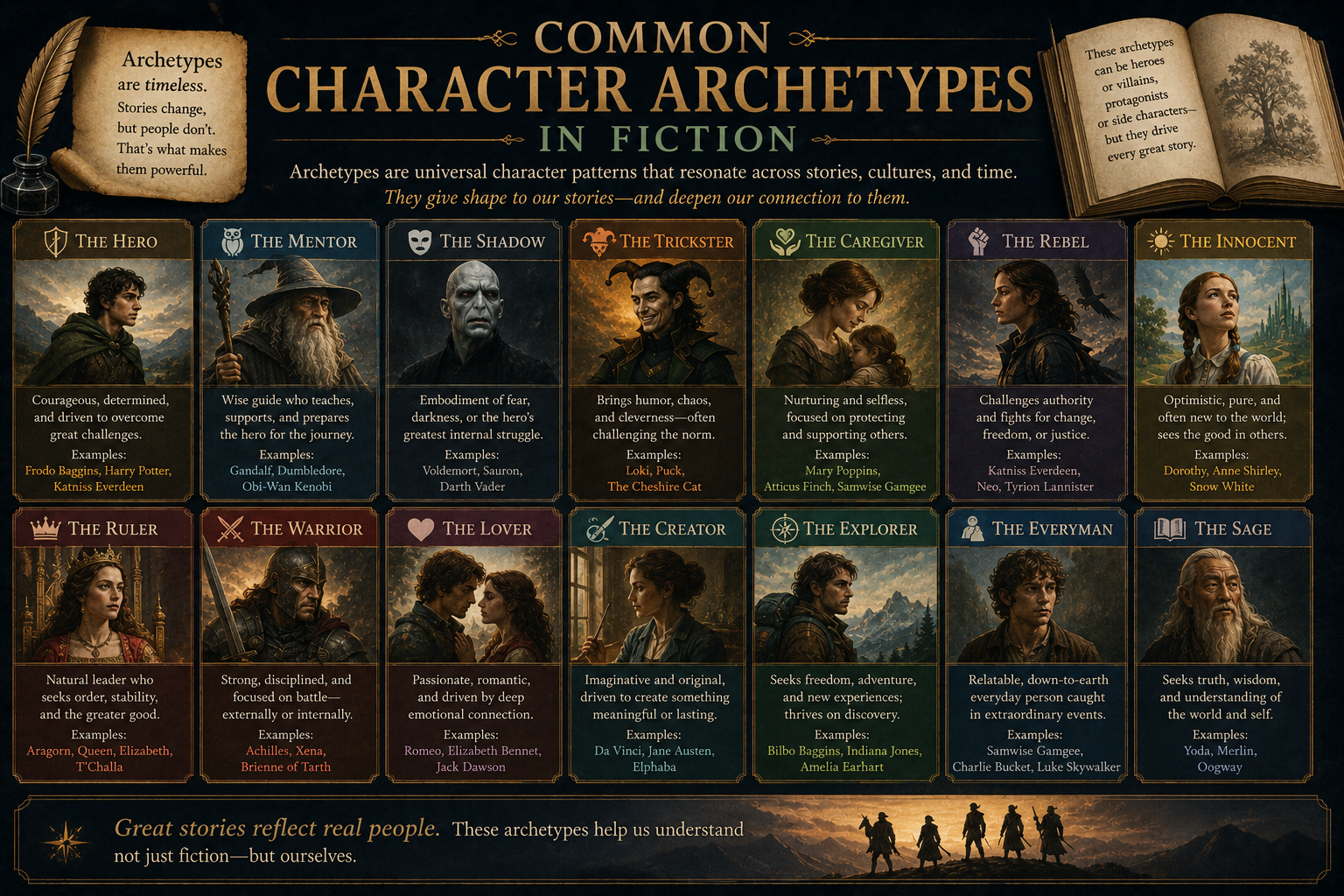
Characters often feel familiar because writers use patterns readers know. Common Character Archetypes in Fiction help us understand those patterns, from brave heroes to wise mentors.

For students, archetypes make reading easier and essays stronger. Once you spot the role a character plays, you can see more clearly how the story works.

In this Guide

  • Why character archetypes matter
  • The most common archetypes students should know
  • How archetypes differ from stereotypes
  • How to analyze archetypes in literature
  • Book suggestions with strong archetypes
  • FAQ and key takeaway
character archetypes

Why Common Character Archetypes in Fiction Matter

Archetypes help readers see the deeper shape of a story.

Common Character Archetypes in Fiction are repeated character types that appear across books, myths, plays, and films. They are not copies of the same person. They are familiar roles with new details in each story.

For example, many stories have a hero who faces danger and grows through hardship. Odysseus in The Odyssey, Harry Potter in Harry Potter and the Sorcerer’s Stone, and Katniss Everdeen in The Hunger Games all fit this pattern in different ways.

When you learn Common Character Archetypes in Fiction, you can ask better questions. What does this character want? What role do they play? How do they help reveal the theme?

Common Character Archetypes in Fiction Students Should Know

These archetypes appear often in classic and modern literature.

The Hero

The hero is the character who faces the main challenge. This person may be brave, scared, unsure, or flawed.

In The Hobbit, Bilbo Baggins starts as a quiet homebody. By the end, he has gained courage and wisdom. His heroism grows slowly, which makes his journey feel real.

The Mentor

The mentor guides the hero. This character often gives advice, training, or moral support.

Gandalf in The Lord of the Rings is a classic mentor. He helps others see what they must do, but he does not solve every problem for them.

The Shadow

The shadow is the dark force that opposes the hero. This may be a villain, a fear, or a hidden part of the hero’s own nature.

In Macbeth, Macbeth becomes his own shadow in many ways. His ambition turns against him, and the real enemy grows inside his mind.

The Innocent

The innocent sees the world with trust or hope. This character often shows what is pure, fragile, or worth protecting.

Scout Finch in To Kill a Mockingbird begins with a child’s view of justice. Her innocence helps readers see the cruelty and unfairness around her more clearly.

The Outsider

The outsider does not fit easily into society. This character may feel rejected, misunderstood, or trapped.

Victor Frankenstein’s creature in Frankenstein is a strong example. He is feared before he is understood, which turns his pain into anger.

Most Common Character Archetypes in Fiction are flexible. A character can fit more than one archetype, or they may change roles as the story develops.

How Common Character Archetypes in Fiction Differ from Stereotypes

Archetypes have depth, while stereotypes often feel flat.

A stereotype is a shallow idea about a type of person. It usually lacks real thought or growth.

An archetype is broader and more useful. It gives the writer a starting point, but the character still needs a clear voice, motive, and struggle.

Think of Jane Eyre from Jane Eyre. She can be seen as an outsider, but she is not simple. She is moral, angry, loyal, and independent. That complexity keeps her from feeling like a stereotype.

As you read, treat Common Character Archetypes in Fiction as clues, not final answers. The best characters often surprise us.

How to Analyze Common Character Archetypes in Fiction

A strong analysis connects the archetype to the story’s meaning.

Do not stop at “this character is a hero.” That is only the first step. Ask what kind of hero the character is and why that matters.

  1. Choose one important character.
  2. Name the archetype that fits best.
  3. Find a scene that proves your idea.
  4. Explain how the archetype connects to theme.

For example, Atticus Finch in To Kill a Mockingbird can be read as a mentor. He teaches Scout how to think about courage, justice, and empathy.

A strong essay about Common Character Archetypes in Fiction should use evidence. Quote or describe a key scene, then explain how that scene shows the character’s role.

Archetypes also connect with symbols. If a character carries an object, enters a special place, or repeats a key action, that detail may add meaning. For help with that skill, read this guide on how to find symbolism in a story.

Common Character Archetypes in Fiction and Theme

Archetypes often point readers toward the message of a story.

Theme is the deeper idea a work explores. It may deal with power, love, guilt, freedom, or growing up.

In The Great Gatsby, Jay Gatsby can be seen as a dreamer. His dream gives him purpose, but it also blinds him. Through Gatsby, the novel questions the American Dream and the cost of wanting too much.

In Romeo and Juliet, the lovers are not just young people in love. They fit the archetype of star-crossed lovers, which helps show how family hate can destroy innocent lives.

This is why Common Character Archetypes in Fiction are useful in AP Literature and college essays. They help you move from plot summary to deeper meaning.

Common Character Archetypes in Fiction in Classic and Modern Books

Old and new stories often share the same character patterns.

Myths, fairy tales, novels, and plays all use archetypes. The details change with time, but the basic roles still speak to readers.

The study of archetypes is often linked to psychologist Carl Jung. You can read more about him at Britannica’s Carl Jung biography.

Poetry also uses archetypal figures, such as the speaker as wanderer, lover, witness, or prophet. The Poetry Foundation is a helpful place to explore literary terms and examples.

When you notice Common Character Archetypes in Fiction, you start to see how stories talk to each other across time.

Books with Strong Character Archetypes

These books are useful for students who want clear examples of archetypes.

  • The Odyssey by Homer
  • The Hobbit by J.R.R. Tolkien

Both books are often available through libraries, school reading lists, and major booksellers such as Amazon. They give readers strong examples of heroes, mentors, monsters, and tests of character.

Practical Takeaways for Students

Archetypes can help you read with more confidence.

If you feel stuck during a reading assignment, look at the character roles. Ask who guides, who tempts, who changes, and who resists change.

When you write about Common Character Archetypes in Fiction, avoid vague claims. Use a scene, explain the character’s role, and connect that role to theme.

You can also pair archetype analysis with symbols, setting, and conflict. This gives your essay more depth without making it harder to understand.

FAQ About Common Character Archetypes in Fiction

These quick answers can help with class discussion and essays.

What are character archetypes?

Character archetypes are familiar character roles that appear across many stories. Examples include the hero, mentor, outsider, and shadow.

Why do writers use archetypes?

Writers use archetypes because they help readers understand a character’s role quickly. A good writer still adds fresh details and inner conflict.

Can one character fit more than one archetype?

Yes. A character can be a hero and an outsider, or a mentor and a flawed guide. Complex characters often shift roles as the story changes.

Are archetypes the same as symbols?

No. An archetype is usually a repeated character role or pattern. A symbol is an object, place, or detail that carries deeper meaning.

How can archetypes improve my literature essay?

They help you move beyond plot summary. You can explain how a character’s role supports the theme, conflict, or message of the work.

Key Takeaway

Common Character Archetypes in Fiction are tools for deeper reading. When you spot a familiar role and connect it to theme, you understand the story with more clarity.

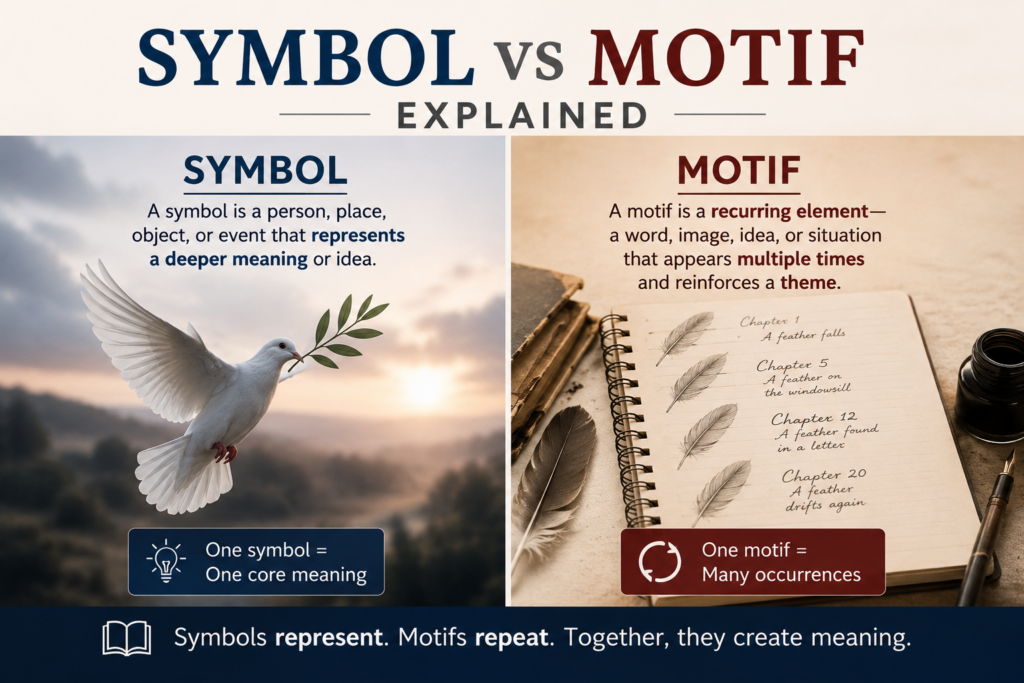
Symbol vs Motif Explained: A Clear Guide for Literature Students

symbol vs motif
symbol vs motif

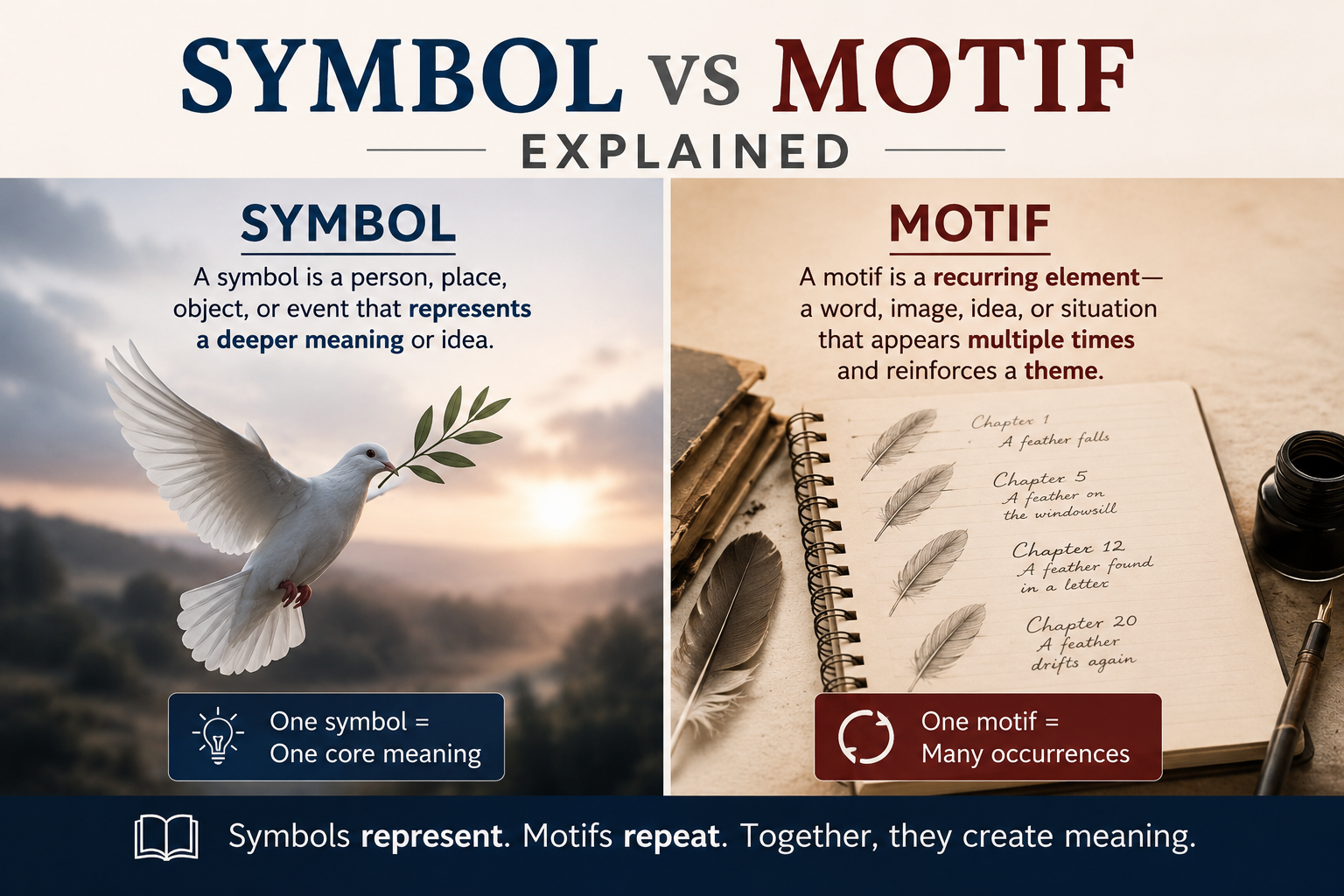
Symbol vs Motif Explained is a topic that can confuse even strong readers. Both symbols and motifs add deeper meaning to a story, but they work in different ways.

Once you know the difference, literary analysis gets much easier. You can point to better evidence and explain why an author repeats certain images, objects, or ideas.

In this Guide

Use this guide to move from basic definitions to stronger literary analysis.

What Is a Symbol?

A symbol is something in a story that stands for a larger idea.

A symbol can be an object, place, person, color, animal, or action. It has a literal role in the story, but it also points to a deeper meaning.

For example, in The Great Gatsby, the green light at the end of Daisy’s dock is a symbol. It is a real light, but it also stands for Gatsby’s dream, hope, and desire for a future he may never reach.

In Lord of the Flies, the conch shell is a symbol of order and shared rules. When the conch loses power, the boys’ society falls apart.

If you want more help with this part, read our guide on how to find symbolism in a story.

What Is a Motif?

A motif is a repeated element that helps build a theme.

A motif can be a repeated image, phrase, object, situation, sound, or idea. The key word is repeated. A motif shows up more than once and gains meaning over time.

In Macbeth, blood is a major motif. It appears after murder, during guilt, and in moments of fear. Each return of blood reminds us of violence and moral damage.

In To Kill a Mockingbird, mockingbirds form a motif linked to innocence. The idea returns through Tom Robinson, Boo Radley, and the lesson that it is wrong to harm those who do no harm.

Symbol vs Motif Explained: The Main Difference

The simplest difference is this: a symbol means something, while a motif repeats something.

Symbol vs Motif Explained comes down to function. A symbol is often one meaningful thing. A motif is a pattern that appears across the text.

A symbol can appear only once and still matter. A motif must return often enough for readers to notice a pattern.

Think of it this way: the green light in The Great Gatsby is a symbol. The repeated focus on wealth, parties, cars, and status creates motifs tied to the American Dream and social class.

A symbol can also become part of a motif. If the same symbol appears again and again, it may help form a larger pattern.

Symbol vs Motif Explained Through Literature Examples

Examples make the difference easier to see.

In Romeo and Juliet, light and dark images appear often. Romeo calls Juliet the sun, and the lovers often meet at night. This repeated contrast is a motif because it appears across the play.

The poison near the end of the play works more like a symbol. It stands for the deadly results of hate, secrecy, and rash choices.

In The Scarlet Letter, the letter “A” is a symbol. It stands for shame at first, but its meaning shifts as Hester changes in the eyes of her community.

The repeated focus on public judgment, hidden sin, and watching eyes creates motifs. These patterns help develop the novel’s themes about guilt and social control.

Symbol vs Motif Explained works best when you ask two questions: What does this thing mean? Does it repeat across the text?

How to Use Symbol vs Motif Explained in Literary Analysis

Good analysis does more than name a symbol or motif.

When you write about a symbol, explain its literal role first. Then explain the deeper idea it suggests.

For example: In The Great Gatsby, the green light is a real dock light, but it also represents Gatsby’s dream of winning Daisy and remaking the past.

When you write about a motif, track the pattern. Show where it appears and explain how its meaning grows.

For example: In Macbeth, the blood motif begins with battle and bravery, then shifts toward murder, guilt, and fear.

If you are writing an essay, connect the symbol or motif to a theme. A theme is the larger message about life, society, or human nature.

Here is a simple sentence frame you can use:

The repeated image of blood in Macbeth forms a motif that reveals how guilt follows violent ambition.

This is where Symbol vs Motif Explained becomes useful. It helps you move from “I noticed this” to “I understand why it matters.”

Common Mistakes to Avoid

Many students mix up symbols, motifs, and themes.

A symbol is not the same as a theme. A symbol points to a deeper idea, but the theme is the message the story builds.

A motif is not just “anything that appears.” It needs to repeat in a meaningful way.

Do not call every object a symbol. Sometimes a chair is just a chair. Look for clues like strong description, repeated focus, character reaction, or placement at a key moment.

You can also use our guide to spot symbolism in fiction if you need a clearer method.

Helpful Books for Studying Symbols and Motifs

These books can help you practice close reading and literary analysis.

  • How to Read Literature Like a Professor by Thomas C. Foster
  • The Great Gatsby by F. Scott Fitzgerald

How to Read Literature Like a Professor is useful for learning common patterns in fiction. The Great Gatsby is a strong choice because it has clear symbols, motifs, and themes.

Useful External Resources

Trusted literature sites can help you review key terms.

The Poetry Foundation glossary is a helpful place to check literary terms. You can also explore Britannica’s overview of literature for broader context.

FAQ: Symbol vs Motif Explained

Here are quick answers to common student questions.

What is the easiest way to tell a symbol from a motif?

A symbol stands for a deeper idea. A motif is a repeated pattern that helps build a theme.

Can a symbol also be a motif?

Yes. If a symbol appears again and again, it can become part of a motif.

Is a motif the same as a theme?

No. A motif is a repeated element. A theme is the larger message the author develops.

Why does this difference matter in essays?

It helps you write more precise analysis. You can explain whether an author uses one powerful image or a repeated pattern.

Key Takeaway

Symbol vs Motif Explained is really about meaning and pattern. A symbol points to a deeper idea, while a motif repeats to build a larger theme.

Best Literary Human Nature: Books That Show Who We Really Are

Best human nature books

Great stories help us see the truth about people, even when that truth feels hard to face. Best Literary Human Nature looks at books that explore fear, pride, love, guilt, and moral choice.

These works matter because they ask a simple question: what do people do when life tests them?

In this Guide

  • What Best Literary Human Nature means
  • Why human nature matters in literature
  • Best Literary Human Nature books to read
  • Symbols and themes that reveal character
  • How students can write about human nature
  • FAQs
  • Key takeaway

What Best Literary Human Nature Means

Stories about human nature show what people want, fear, hide, and choose.

The phrase Best Literary Human Nature may sound broad, but the idea is clear. It points to books that reveal how people act under pressure.

Some characters try to do the right thing. Others choose power, comfort, or revenge. Literature lets us watch those choices from a safe distance.

That is why these books stay with us. They do not just tell us what happened. They show us why people behave the way they do.

Why Best Literary Human Nature Stories Still Matter

The best books feel alive because their characters feel real.

Best Literary Human Nature stories matter because readers can see parts of themselves in the characters. A reader may not rule a kingdom like Macbeth, but they may know what ambition feels like.

In William Shakespeare’s Macbeth, ambition grows into violence. Macbeth wants power so badly that he loses his peace, his honor, and his sense of self.

In Mary Shelley’s Frankenstein, Victor wants glory through science. His mistake is not just that he creates life. His deeper failure is that he refuses to care for what he has made.

These stories ask us to think about responsibility. They also ask if people are born flawed or shaped by the choices around them.

Best Literary Human Nature Books to Read

These books are strong choices for students because they are rich, readable, and full of moral conflict.

The Best Literary Human Nature books often focus on a character who faces a hard test. That test may come from society, family, power, or guilt.

To Kill a Mockingbird by Harper Lee

This novel explores justice, fear, and moral courage. Atticus Finch shows that doing the right thing can cost a person comfort and safety.

Scout learns that people are more complex than they first appear. The book asks readers to look past rumor and prejudice.

Lord of the Flies by William Golding

This novel places schoolboys on an island without adult rules. At first, they try to build order. Soon, fear and power begin to take over.

Golding suggests that cruelty can grow when people lose limits. The story is often used in classrooms because it raises sharp questions about civilization and human nature.

Other strong examples

Students may also study The Great Gatsby by F. Scott Fitzgerald or Hamlet by William Shakespeare. Both works show how desire can twist a person’s view of truth.

For helpful background on the idea of human nature, readers can explore Britannica’s overview of human nature.

Best Literary Human Nature Themes Students Should Know

Themes help readers move from “what happened” to “what the story means.”

When students study Best Literary Human Nature, they often notice the same big ideas across different books. These ideas repeat because people face the same inner battles in many times and places.

Ambition and its cost

Ambition can help a character grow. It can also lead to ruin.

Macbeth is the classic example. His desire for power destroys his loyalty and peace of mind.

Goodness under pressure

Many novels ask if a person can stay good when the world is unfair. To Kill a Mockingbird explores this through Atticus, Scout, and the trial of Tom Robinson.

The book does not pretend goodness is easy. It shows that moral courage often feels lonely.

Fear and group behavior

Lord of the Flies shows how fear can spread through a group. The boys begin to follow the loudest voices, not the wisest ones.

This theme matters because people often act differently in a crowd. Literature helps us question that shift.

Symbols That Reveal Human Nature

Symbols give stories deeper meaning without heavy explanation.

In Best Literary Human Nature works, symbols often show what characters cannot say out loud. A symbol may reveal guilt, innocence, power, or loss.

In Lord of the Flies, the conch shell stands for order and shared rules. When the shell loses power, the boys lose their grip on peace.

In Frankenstein, light often connects to knowledge. Yet Shelley shows that knowledge without care can become dangerous.

In The Great Gatsby, the green light stands for Gatsby’s dream. It also shows how desire can trap a person in the past.

Poetry can do this too. The Poetry Foundation’s page on Robert Frost is useful for readers who want to see how poems explore choice and regret.

How to Write About Best Literary Human Nature in an Essay

A strong essay does not just name a theme. It explains how the author builds that theme through character, conflict, and symbol.

If you write about Best Literary Human Nature, start with a clear claim. Do not say, “This book shows human nature.” Say what the book argues about human nature.

For example, an essay on Macbeth could argue that unchecked ambition destroys moral judgment. An essay on Lord of the Flies could argue that fear weakens social order.

Your thesis should be specific, arguable, and tied to the text. If you need help, use this guide on how to write a thesis statement for a literary analysis essay.

After that, choose scenes that prove your point. Focus on what characters say, what they hide, and how they change.

Recommended Books for Best Literary Human Nature Readers

These books are often easy to find and useful for class discussions.

To Kill a Mockingbird by Harper Lee is a strong choice for readers who want a story about justice and moral growth.

Lord of the Flies by William Golding is ideal for readers who want a darker look at fear, power, and group behavior.

Both books work well for essays because they offer clear conflicts and strong symbols. They also give students many ways to discuss Best Literary Human Nature without forcing one simple answer.

Common Mistakes When Reading Human Nature in Literature

It is easy to make human nature sound too simple.

One common mistake is to call a character “good” or “bad” and stop there. Most great books avoid simple labels.

Another mistake is to ignore the setting. A character’s world shapes their choices. Social pressure, fear, and unfair rules often push characters toward action.

A better approach is to ask why a character makes a choice. Then ask what the author wants readers to learn from that choice.

FAQs About Best Literary Human Nature

What does Best Literary Human Nature mean?

Best Literary Human Nature refers to books and stories that reveal how people think, choose, and change. These works often focus on moral conflict.

What is a good book about human nature for students?

To Kill a Mockingbird is a strong choice. It deals with justice, courage, and the way people judge others.

Why do teachers assign books about human nature?

Teachers assign these books because they help students think deeply about character and theme. They also connect literature to real life.

Is human nature a theme?

Human nature is a broad idea, not a theme by itself. A stronger theme would say something specific, such as “fear can make people give up their values.”

How can I find symbols related to human nature?

Look for objects, images, or repeated details that connect to a character’s inner life. Then ask how the symbol changes as the story moves forward.

Key Takeaway

Best Literary Human Nature stories matter because they show people at their most honest moments. They help readers see how fear, desire, guilt, and hope shape human choice.

The strongest literature does not give easy answers. It gives us characters who feel real, choices that matter, and questions we keep asking long after the final page. 📚

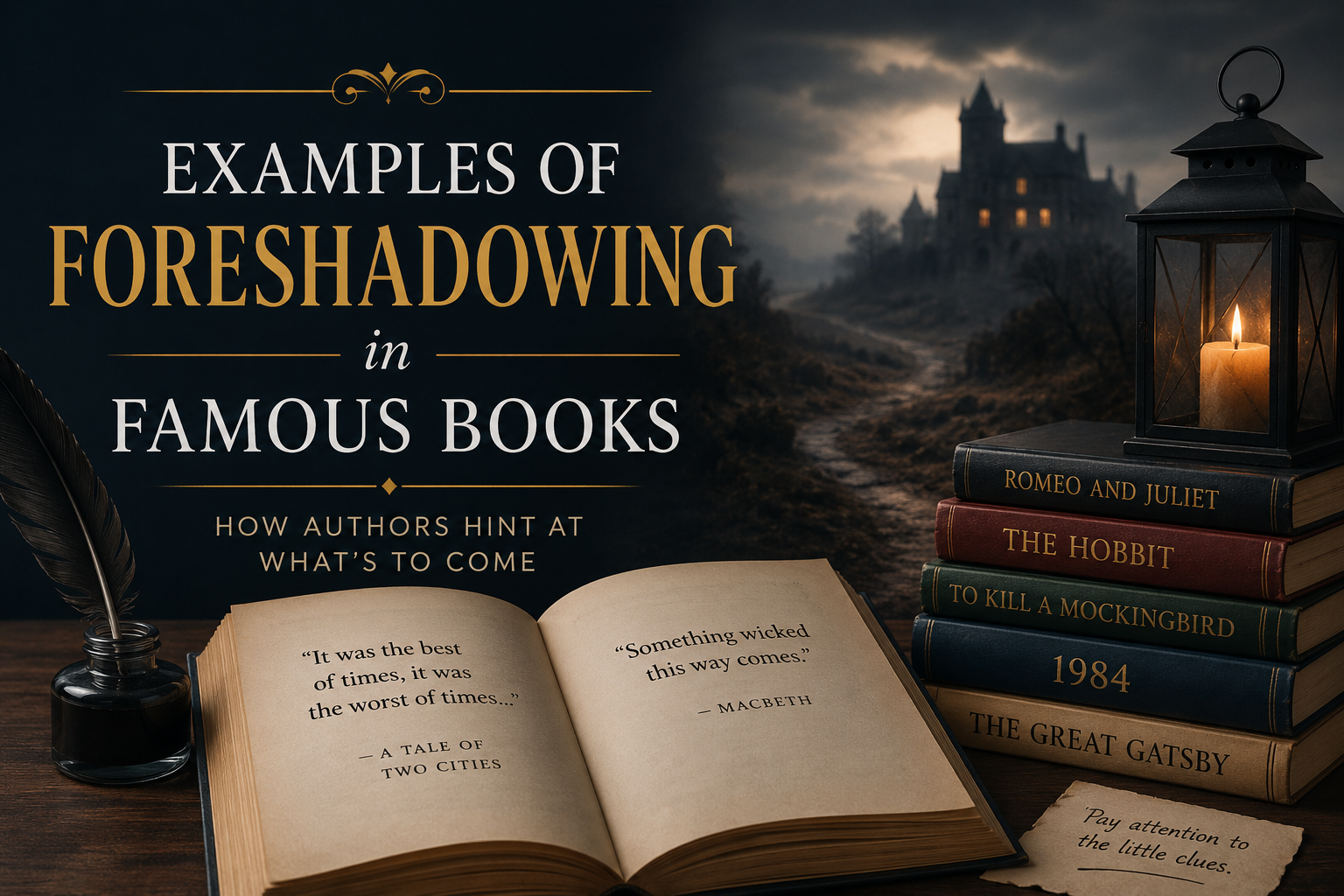
Examples of Foreshadowing in Famous Books: Clear Literary Examples for Students

Foreshadowing Examples

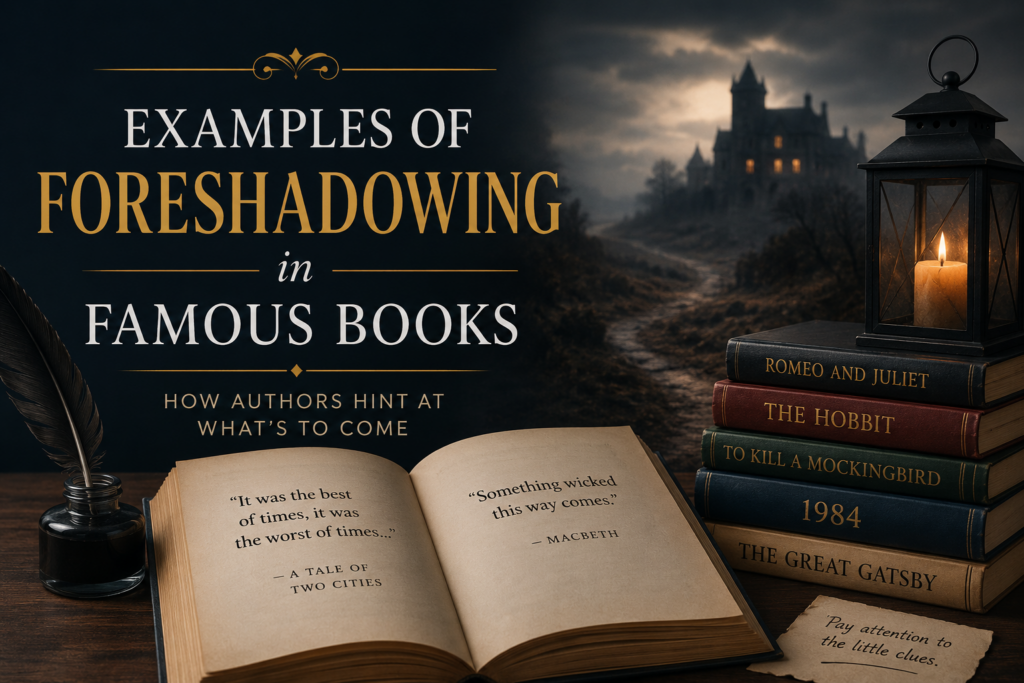
Examples of Foreshadowing in Famous Books can help students see how authors prepare readers for key events before they happen.

Foreshadowing is a clue, hint, image, or line of dialogue that points toward a future moment in the story. Once you know how to spot it, major plot turns often feel less random and more carefully planned.

In this Guide

  • What foreshadowing means
  • Examples of Foreshadowing in Famous Books
  • How each example works
  • How to write about foreshadowing in an essay
  • Books to read for more practice
  • FAQ
Foreshadowing Examples

What Is Foreshadowing?

Foreshadowing gives readers a clue about what may happen later.

It can appear through a warning, a symbol, a dream, a strange detail, or a character’s fear. The clue may be clear right away, or it may only make sense after the ending.

Writers use foreshadowing to build suspense. They also use it to make a story feel complete, since the ending often grows from details planted earlier.

Examples of Foreshadowing in Famous Books: Romeo and Juliet

Shakespeare gives away the tragic ending before the play truly starts.

In Romeo and Juliet, the Prologue calls the lovers “star-crossed” and says they will take their own lives. This is direct foreshadowing because the audience learns that Romeo and Juliet will die.

This does not ruin the play. Instead, it creates dread. Readers watch each happy moment with the knowledge that disaster is ahead.

Romeo also senses danger before he goes to the Capulet party. He says he fears “some consequence yet hanging in the stars.” This line hints that the party will start a chain of events he cannot control.

In an essay, you could argue that Shakespeare uses foreshadowing to make fate feel powerful. The characters make choices, but the early warnings make their deaths seem almost written in the stars.

For background on the play, you can read Britannica’s overview of Romeo and Juliet.

Examples of Foreshadowing in Famous Books: Of Mice and Men

John Steinbeck uses small deaths to prepare us for a much larger one.

In Of Mice and Men, Lennie kills soft animals by accident because he does not know his own strength. Early in the novel, he carries a dead mouse in his pocket. Later, he kills his puppy.

These moments foreshadow the death of Curley’s wife. Lennie does not mean to hurt her, but the earlier scenes show that his strength can turn harmless contact into tragedy.

Candy’s old dog also foreshadows the ending. Carlson shoots the dog because he sees it as weak and useless. Candy later says he should have shot the dog himself.

That moment points toward George’s final choice. George kills Lennie himself rather than let a violent mob do it.

Students can write about how Steinbeck uses foreshadowing to make the ending feel painful but not sudden. The clues show that Lennie’s fate has been building from the start.

Examples of Foreshadowing in Famous Books: Macbeth

The witches in Macbeth turn prophecy into a warning.

At the start of the play, the witches tell Macbeth he will become king. Their words foreshadow his rise to power, but they also lead him toward murder.

Later, the witches give Macbeth new predictions. They say he should beware Macduff, that no one “of woman born” can harm him, and that he is safe until Birnam Wood moves to Dunsinane.

Macbeth thinks these clues mean he cannot lose. In the end, each prophecy comes true in a tricky way. Macduff was born by a surgical birth, and soldiers carry branches from Birnam Wood as they march.

This is one of the best examples of foreshadowing in famous books because the clues are both clear and misleading. Shakespeare lets the audience hear the warnings, but Macbeth misreads them.

In an essay, focus on how the prophecies reveal Macbeth’s flaw. He hears what he wants to hear, which helps cause his fall.

Examples of Foreshadowing in Famous Books: The Great Gatsby

F. Scott Fitzgerald fills The Great Gatsby with signs of coming loss.

Early in the novel, Gatsby reaches toward the green light across the bay. The light stands for Daisy and the future he wants. It also foreshadows that his dream will stay out of reach.

Cars also foreshadow danger. The novel shows careless driving more than once, including a car crash after one of Gatsby’s parties. These moments prepare readers for Myrtle’s death by car later in the story.

Nick’s first chapter also looks back with sadness. He says Gatsby turned out “all right” in the end, but he also hints that Gatsby was destroyed by what preyed on him.

That early tone tells readers not to expect a simple love story. It points toward tragedy before the plot reaches it.

When you discuss this in an essay, connect foreshadowing to the novel’s critique of the American Dream. Gatsby’s future looks bright from a distance, but the early clues show that the dream is fragile.

Examples of Foreshadowing in Famous Books: Lord of the Flies

William Golding uses fear and violence to hint at the boys’ collapse.

In Lord of the Flies, the boys worry about a “beast” on the island. At first, the beast seems like a real creature. Over time, it becomes clear that the true danger comes from the boys themselves.

This fear foreshadows the violence that follows. The boys’ terror gives them an excuse to act cruelly.

Piggy’s glasses also foreshadow the loss of order. At first, the glasses help start fires, which can lead to rescue. When they break, it shows that reason and safety have begun to fail.

The falling rock that kills Piggy also has early hints. The boys play near rocks and use them as tools of power. By the time the rock strikes Piggy, the island has turned fully savage.

This is one of the darker Examples of Foreshadowing in Famous Books because the clues show a moral fall, not just a plot event.

Examples of Foreshadowing in Famous Books: Harry Potter and the Sorcerer’s Stone

J.K. Rowling uses foreshadowing to hide answers in plain sight.

In Harry Potter and the Sorcerer’s Stone, Harry believes Snape is the main threat. Many clues seem to support this idea. Snape acts cold, follows Harry, and seems connected to the mystery.

Yet other clues point to Quirrell. He is nervous, often overlooked, and linked to strange moments that do not seem important at first.

The Mirror of Erised also foreshadows the final scene. It shows deep desire, not truth. Later, Harry can get the Stone because he wants to find it, not use it.

This example helps students see that foreshadowing can work with red herrings. A red herring points readers in the wrong direction, while real clues still sit nearby.

In an essay, you could write that Rowling uses foreshadowing to reward careful readers. The ending feels surprising, but the earlier details make it fair.

Examples of Foreshadowing in Famous Books: To Kill a Mockingbird

Harper Lee uses early danger to prepare us for the final attack.

In To Kill a Mockingbird, Bob Ewell threatens Atticus after the trial. This warning foreshadows his later attack on Jem and Scout.

The children also fear Boo Radley for much of the novel. They imagine him as a monster, but this fear prepares a reversal. In the end, Boo becomes their protector.

Scout’s ham costume also matters. It seems funny at first, but it helps save her during the attack because the costume blocks the knife.

These clues show how Lee mixes danger with childhood misunderstanding. The children do not fully see the threat, but readers can sense it.

This is one of the most useful Examples of Foreshadowing in Famous Books for essays about innocence. The clues show that Scout’s world is less safe than she thinks.

How to Discuss Examples of Foreshadowing in Famous Books in an Essay

A strong essay does more than point out a clue. It explains why the clue matters.

Start by naming the moment that hints at the future. Then explain the later event it prepares. After that, connect both moments to a theme.

Here is a simple sentence frame:

The author uses [early clue] to foreshadow [later event], which reveals [theme or character truth].

For example:

Steinbeck uses Lennie’s dead mouse to foreshadow the death of Curley’s wife, which reveals that Lennie’s innocence cannot protect him from the harm his strength causes.

You can also compare two clues. In Macbeth, the witches’ prophecies foreshadow Macbeth’s rise and his fall. This shows how ambition can twist a warning into false confidence.

When you write about Examples of Foreshadowing in Famous Books, avoid saying only, “This creates suspense.” That is true, but it is not enough.

Ask what the foreshadowing reveals about fate, power, guilt, fear, or desire. That deeper point will make your essay stronger.

Why Authors Use Foreshadowing

Foreshadowing helps a story feel planned instead of random.

It also builds tension. Readers may not know exactly what will happen, but they sense that something important is coming.

Some authors use clear warnings, like the Prologue in Romeo and Juliet. Others use symbols, like Gatsby’s green light.

Foreshadowing can also reveal character. Macbeth hears warnings but trusts his pride. Gatsby sees the green light but cannot accept that the past is gone.

To study more tools that work with foreshadowing, visit this guide to common literary devices.

Books to Read for More Examples of Foreshadowing in Famous Books

These books are useful if you want more practice spotting foreshadowing.

  • Of Mice and Men by John Steinbeck
  • The Great Gatsby by F. Scott Fitzgerald
  • Lord of the Flies by William Golding

Each one uses early clues that become more important by the end. They are also common in high school and college literature classes.

Quick Practice: Find the Foreshadowing

Try this with any novel or play you read.

Look for a strange detail that gets extra attention. Ask if it returns later in a bigger way.

Watch for warnings, dreams, symbols, and repeated images. These often point toward a future conflict.

You can also mark moments where a character says something that feels larger than the scene. In literature, casual lines often carry hidden weight.

FAQ: Examples of Foreshadowing in Famous Books

What is a simple definition of foreshadowing?

Foreshadowing is a hint about something that will happen later in a story.

What is one clear example of foreshadowing?

In Romeo and Juliet, the Prologue says the lovers will die. This directly foreshadows the tragic ending.

Can foreshadowing be a symbol?

Yes. Gatsby’s green light is a symbol that also foreshadows his unreachable dream.

How do I write about foreshadowing in an essay?

Name the clue, explain the later event, and connect both to a theme or character flaw.

Is foreshadowing always obvious?

No. Some clues are easy to spot, while others only make sense after you finish the story.

Key Takeaway

Examples of Foreshadowing in Famous Books show that great endings rarely come from nowhere.

Authors plant clues early, then let those clues grow into conflict, tragedy, or surprise. When students notice those clues, they can write sharper essays and read with more confidence. 📚

error

Enjoy this article? Please spread the word :)

Follow by Email
BLUESKY
fb-share-icon
Reddit
LinkedIn
Share
RSS