Most Influential Redemption Arcs in Literature

Redemption arc

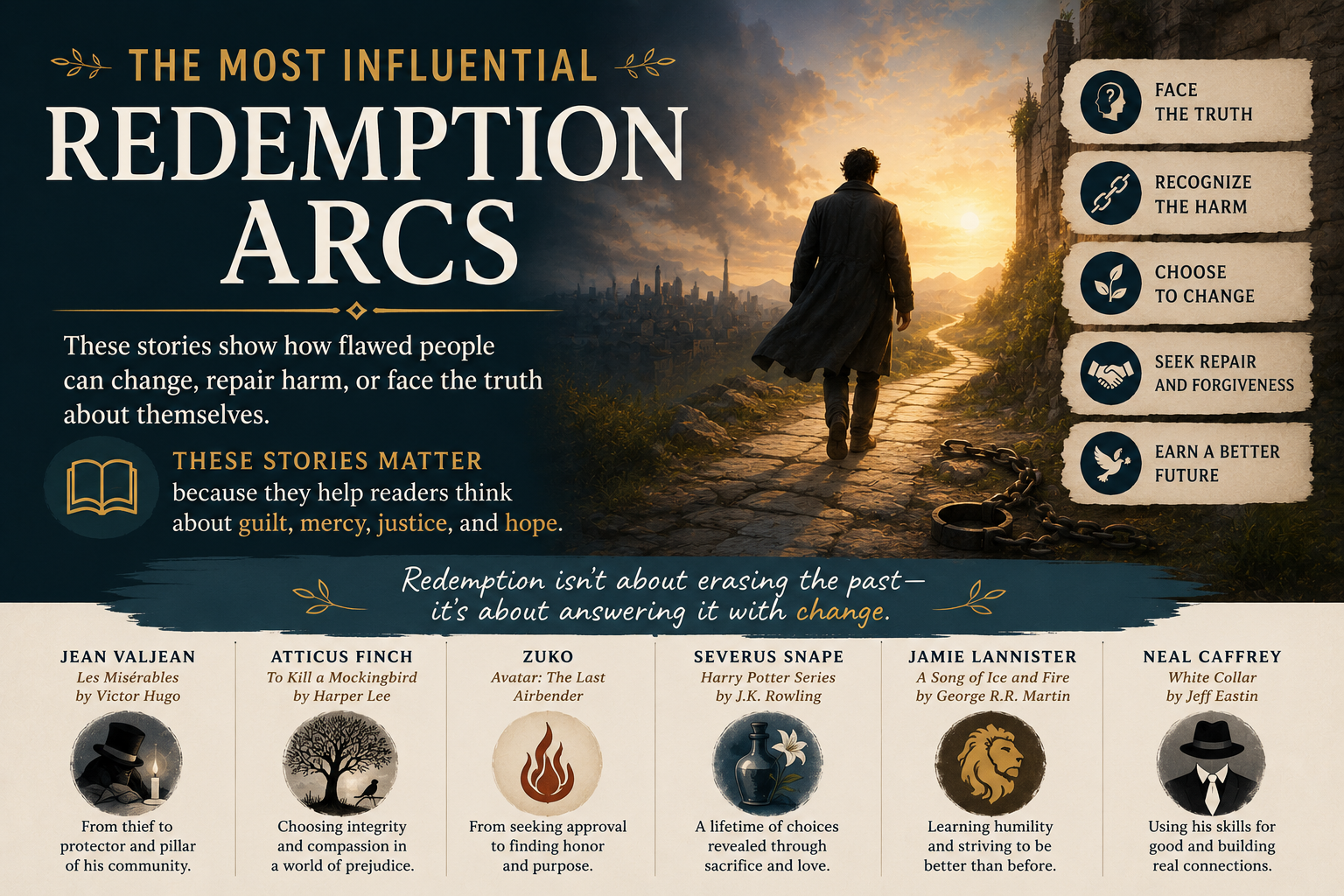
The Most Influential Redemption Arcs show how flawed people can change, repair harm, or face the truth about themselves. These stories matter because they help readers think about guilt, mercy, justice, and hope.

From old classics to modern novels, redemption arcs ask one hard question: can a person become better after doing wrong?

In this Guide

Redemption arc

Why the Most Influential Redemption Arcs Still Matter

Redemption arcs turn moral failure into a story of change.

The Most Influential Redemption Arcs do not excuse bad choices. They show what happens when a character sees the damage they caused and tries to change course.

This is why students often meet these arcs in English class. They give readers a clear way to study character growth, conflict, theme, and moral choice.

A strong redemption arc usually has a few key parts. The character causes harm, faces a crisis, feels the weight of guilt, and makes a choice that proves real change.

That final choice matters most. A character is not redeemed just because they feel sorry. They must act.

Most Influential Redemption Arcs in Classic Literature

Classic literature gives us some of the clearest examples of moral change.

These Most Influential Redemption Arcs have lasted because they feel honest. The characters do not become perfect overnight. Their change costs them something.

Ebenezer Scrooge in A Christmas Carol

Charles Dickens gives readers one of the most famous redemption stories ever written. Scrooge starts as cold, greedy, and cruel to the less fortunate.

After visits from the ghosts, he sees his past, present, and possible future. These visions force him to face the lonely life he has built.

Scrooge changes because he chooses kindness while he still has time. His redemption feels joyful, but it also comes from fear, shame, and self-knowledge.

For background on Dickens and his work, see Britannica’s overview of Charles Dickens.

Jean Valjean in Les Misérables

Victor Hugo’s Jean Valjean begins as a man marked by prison and poverty. After he steals silver from a bishop, the bishop protects him instead of turning him in.

That act of mercy changes Valjean’s life. He becomes a man who helps others, even when it puts him at risk.

Valjean’s arc shows that redemption is not one moment. It is a lifetime of hard choices.

Sydney Carton in A Tale of Two Cities

Sydney Carton starts as bitter and wasted. He sees himself as a failure with little purpose.

His final act changes how readers see him. By giving his life to save another man, he turns regret into sacrifice.

Carton’s redemption is tragic, but it is powerful. He cannot fix his whole past, yet he can give his life meaning.

Severus Snape in the Harry Potter Series

Snape is one of modern literature’s most debated redemption arcs. He is cruel, secretive, and often unfair.

Yet his hidden loyalty reveals a more complex person. His choices do not erase his harm, but they show a long struggle with guilt and love.

This is why Snape remains important in classroom and fan debates. His arc asks whether sacrifice can balance past cruelty.

Themes and Symbols in Redemption Arcs

Redemption stories often use symbols to show inner change.

Light and darkness appear often in redemption arcs. A character may move from shadow into light, which can show moral growth or new hope.

Journeys also matter. A road, a prison, or a return home can show that change takes effort. Jean Valjean’s movement through France reflects his search for grace and safety.

Names can carry meaning too. When a character takes a new name, it may show a new self. Valjean becomes Monsieur Madeleine, which points to his attempt to live beyond his prison past.

Time is another key symbol. In A Christmas Carol, the ghosts use time to teach Scrooge. The past brings regret, while the future offers warning.

If you want to sharpen your close reading of symbols, imagery, and word choice, try our guide on how to read Emily Dickinson. The same skills can help you study longer novels.

Modern Lessons from the Most Influential Redemption Arcs

Redemption arcs still shape how readers talk about justice and change.

The Most Influential Redemption Arcs are not simple “good guy” stories. They often ask if people deserve a second chance after real harm.

This question feels modern because people still debate it in schools, courts, families, and online spaces. Literature gives readers a safer place to think through the problem.

Some arcs stress forgiveness. Others focus on responsibility. The best ones do not make the answer too easy.

That is why redemption arcs work well in essays. You can ask what the character did wrong, what they learned, and whether their final choice truly repairs anything.

These books are strong choices for students who want deeper examples.

  • A Christmas Carol by Charles Dickens
  • Les Misérables by Victor Hugo

Both books show redemption in a clear but serious way. They also give students rich material for theme, character, and symbolism essays.

For shorter practice, pair a novel with poetry study. A poem can train you to notice small details that reveal change. Our post on reading Emily Dickinson is a useful place to start.

FAQs About the Most Influential Redemption Arcs

What are the Most Influential Redemption Arcs in literature?

The Most Influential Redemption Arcs often include Scrooge in A Christmas Carol, Jean Valjean in Les Misérables, and Sydney Carton in A Tale of Two Cities.

What makes a redemption arc believable?

A believable arc shows guilt, effort, and real change. The character must act in a way that proves they have learned from the past.

Is redemption the same as forgiveness?

No. A character may seek redemption without being fully forgiven. Forgiveness depends on others, while redemption depends on moral change.

Why do teachers assign books with redemption arcs?

These books help students study character growth, theme, and conflict. They also lead to strong essay topics about justice and mercy.

Key Takeaway

The Most Influential Redemption Arcs remind us that change is possible, but never cheap. Great literature shows that redemption requires truth, action, and the courage to become someone better.

Best Books for Dark Academia

Dark Academia books
Dark Academia books

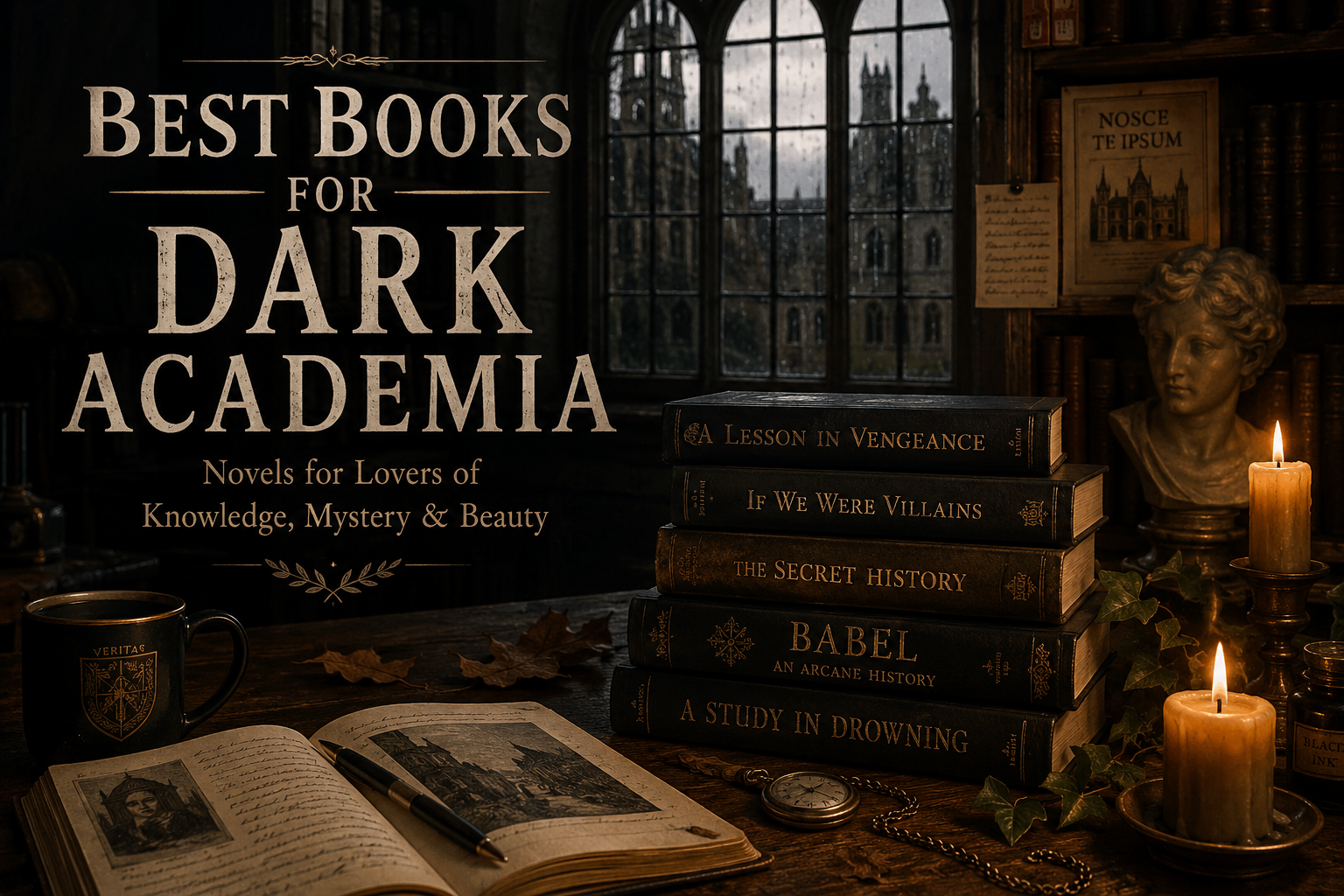
The Best Books for Dark Academia mix mystery, ambition, beauty, and danger. These stories often take place in schools, libraries, old houses, or elite circles where knowledge feels powerful and risky.

If you like candlelit study rooms, secret clubs, moral questions, and characters who want too much, this guide will help you find your next read.

In this Guide

  • What makes dark academia books so popular
  • Best Books for Dark Academia to read first
  • Major themes and symbols
  • Books worth buying or borrowing
  • How students can read dark academia well
  • FAQs

What Makes the Best Books for Dark Academia So Compelling?

Dark academia is about learning, but it is also about obsession.

The Best Books for Dark Academia often show smart characters who chase beauty, status, or truth. At first, their world looks polished. Soon, it starts to crack.

These books often include old campuses, Latin phrases, rare books, art, poetry, and hidden guilt. The setting matters because it makes learning feel grand, but also cold.

Dark academia also asks a hard question: What happens when intelligence is not matched by kindness?

Best Books for Dark Academia: Classic and Modern Picks

These books capture the mood of dark academia in different ways, from elite schools to haunted minds.

The Secret History by Donna Tartt

Many readers see The Secret History as the heart of dark academia. It follows a group of college students who study Greek classics under a strange and powerful professor.

The book explores beauty, guilt, and the danger of feeling above normal rules. It is one of the Best Books for Dark Academia because it turns scholarship into suspense.

If We Were Villains by M.L. Rio

This novel follows theater students who live and breathe Shakespeare. Their friendships are intense, and their roles begin to blur with real life.

The book is a strong choice for students who enjoy drama, rivalry, and literary clues. It also shows how art can shape identity in harmful ways.

Frankenstein by Mary Shelley

Frankenstein is not set in a modern university, but it fits the dark academia mood well. Victor Frankenstein wants knowledge so badly that he forgets his duty to others.

The novel warns readers about ambition without care. It is also a major work in Gothic literature, a tradition you can learn more about through Britannica’s overview of the Gothic novel.

The Picture of Dorian Gray by Oscar Wilde

This novel is full of art, beauty, style, and moral decay. Dorian wants to stay young while his portrait carries the damage of his choices.

It belongs with the Best Books for Dark Academia because it asks what people will trade for beauty and pleasure.

Jane Eyre by Charlotte Brontë

Jane Eyre has a strong Gothic mood, a mysterious house, and a heroine who values education and self-respect. Jane’s inner life matters as much as the plot.

The novel works well for students who want dark atmosphere but also moral strength.

Babel by R.F. Kuang

Babel is a modern dark academia novel about language, empire, and power. It takes place in Oxford and asks who benefits from elite education.

This book is a great pick for readers who want dark academia with sharp social criticism.

Major Themes in the Best Books for Dark Academia

Dark academia feels stylish, but its deepest power comes from its themes.

In the Best Books for Dark Academia, ambition often becomes dangerous. Characters want to be brilliant, rare, or admired. That desire can push them toward lies and harm.

Class is another major theme. Many dark academia stories show who gets access to elite schools, private libraries, and powerful mentors. The mood may feel romantic, but the system can be unfair.

Secrecy also plays a key role. Hidden rooms, private languages, and secret groups create suspense. They also show how knowledge can divide people.

For another look at wealth, image, and moral decline, read our Great Gatsby analysis. Gatsby is not a dark academia novel, but it shares the same interest in status and illusion.

Symbolism in the Best Books for Dark Academia

Symbols help dark academia feel rich, strange, and memorable.

Books and libraries often stand for power. They suggest wisdom, but they can also suggest control. A locked library may mean that knowledge is not open to everyone.

Old buildings often symbolize tradition. A stone campus or decaying mansion can look beautiful while hiding fear, guilt, or corruption.

Mirrors and portraits often show divided identity. In The Picture of Dorian Gray, the portrait becomes a symbol of the soul. It shows the truth that Dorian refuses to face.

Storms, fog, and candlelight also shape the mood. They make the world feel uncertain, which fits stories about secrets and guilt.

Books Worth Buying or Borrowing for a Dark Academia Shelf

If you want to start a small shelf, begin with books that show the range of the genre.

Here are a few strong choices you can find at many bookstores, libraries, or on Amazon without needing any special edition:

  • The Secret History by Donna Tartt
  • If We Were Villains by M.L. Rio

These titles are easy entry points because they have strong plots, literary references, and tense student groups.

How to Read the Best Books for Dark Academia in School

Dark academia books are fun to read, but they also reward close attention.

When you read the Best Books for Dark Academia, track what the main character wants. Then ask what they are willing to risk to get it.

Pay attention to setting. A classroom, library, or old house is never just a backdrop. It often reflects power, fear, or desire.

Notice references to art, poetry, and myth. These allusions can reveal what the characters admire. They can also show how characters use culture to excuse bad choices.

If you study poetry with dark academia themes, the Poetry Foundation’s page on T.S. Eliot is a helpful place to start. Eliot’s work often explores decay, memory, and modern anxiety.

Why the Best Books for Dark Academia Still Matter

Dark academia is not just an aesthetic. It speaks to real fears about success, pressure, and belonging.

Students may connect with these stories because school can feel intense. Grades, image, talent, and social status can seem like everything.

The Best Books for Dark Academia remind readers that knowledge should not come at the cost of empathy. A brilliant mind can still make cruel choices.

That warning is part of what makes the genre last.

FAQs About the Best Books for Dark Academia

Here are quick answers to common questions about the genre.

What are the Best Books for Dark Academia for beginners?

The Best Books for Dark Academia for beginners include The Secret History, If We Were Villains, and Frankenstein. These books show the genre’s mood, themes, and moral questions clearly.

Is dark academia always set at a school?

No. Many dark academia stories take place at schools or universities, but the genre can also include old houses, museums, libraries, and artistic circles.

Why is Frankenstein considered dark academia?

Frankenstein fits because it focuses on dangerous knowledge, ambition, and isolation. Victor wants to master life itself, but he ignores the human cost.

Are dark academia books good for AP Literature?

Yes, many are useful for AP Literature because they deal with theme, symbolism, character flaws, and moral conflict. Classics like Frankenstein and Jane Eyre are especially strong choices.

Key Takeaway

The Best Books for Dark Academia are not only about old libraries and clever students. They show how beauty, learning, and ambition can become dangerous when people forget compassion.

If you want books with mood, mystery, and serious ideas, dark academia is a rich place to begin. 📚