Symbolism in Poetry Explained

Poetry Symbolism

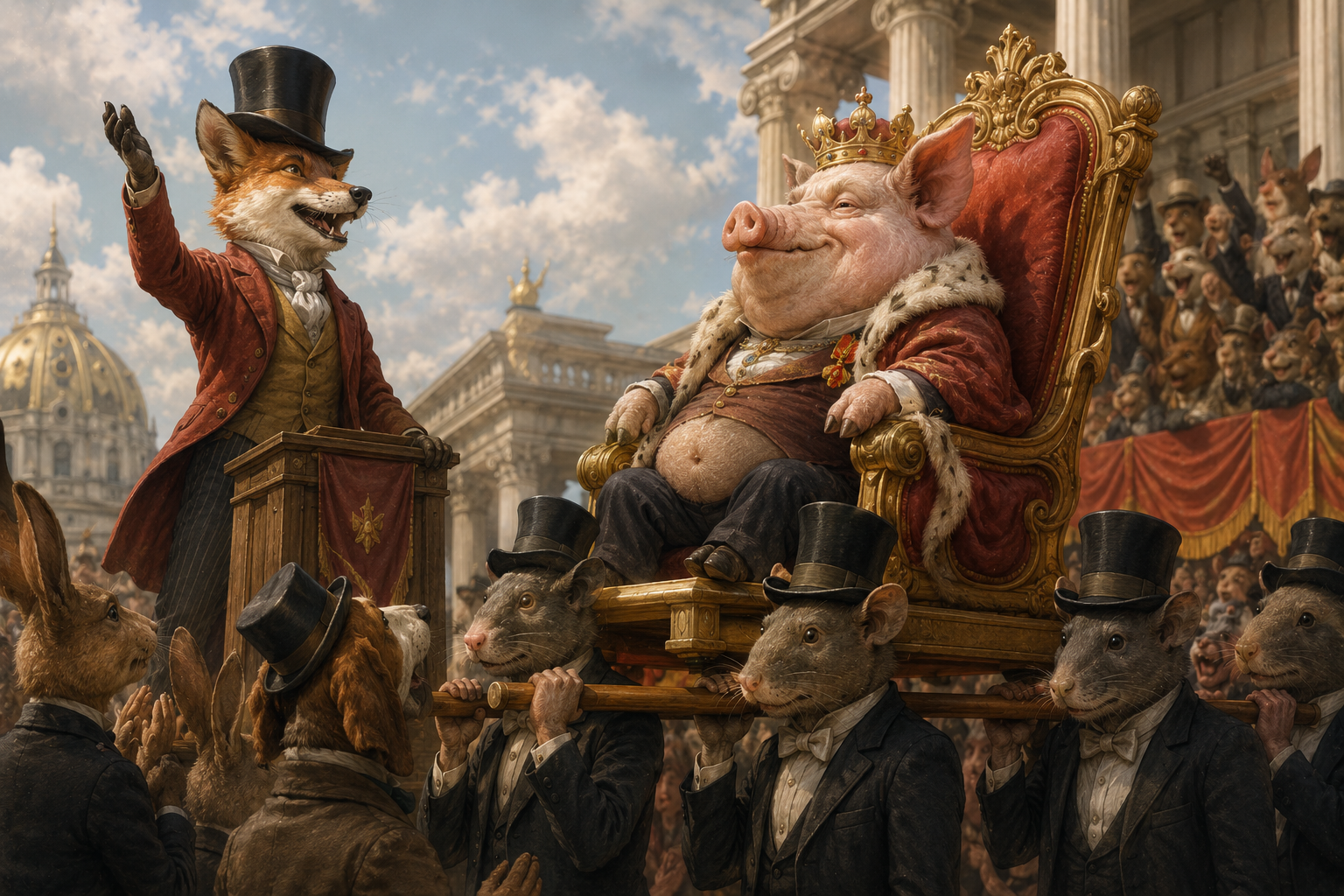
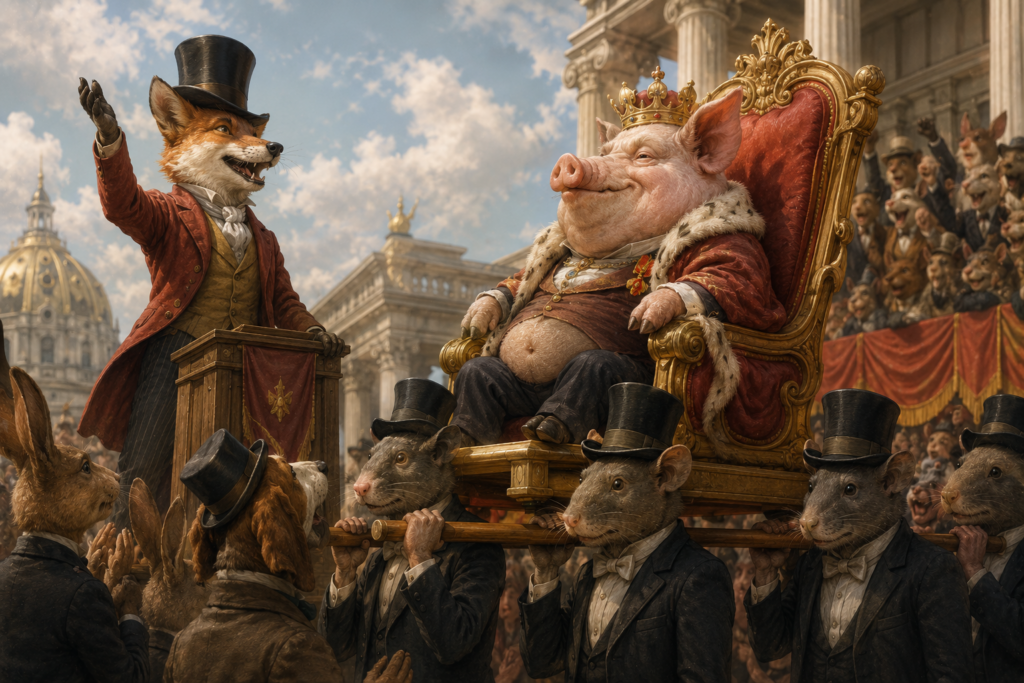
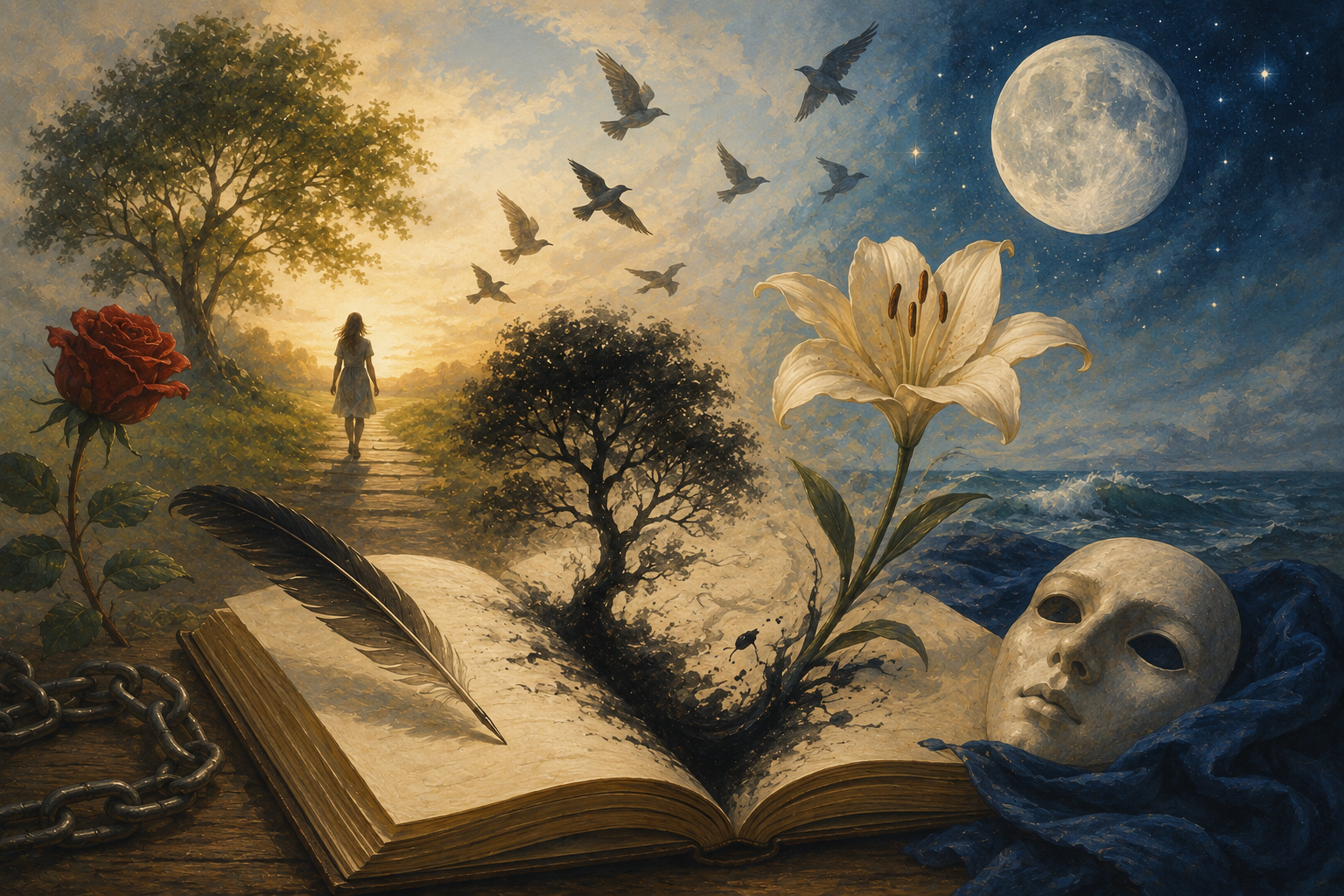
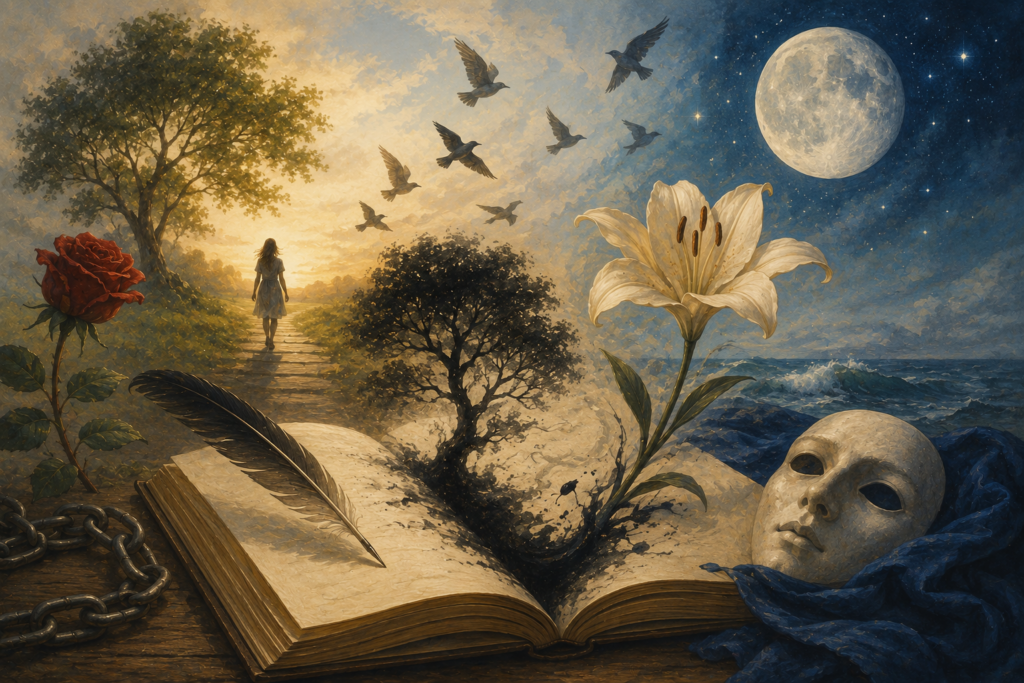
Symbolism in Poetry Explained means learning how poets use objects, colors, places, or actions to suggest deeper ideas. Once you understand symbols, poems feel less confusing and much more meaningful.

In this Guide

  • What symbolism means in poetry
  • How symbols work
  • Famous examples from literature
  • How symbolism improves essay analysis
  • Common mistakes to avoid
  • Book suggestions
  • FAQ
Symbolism in poetry

Symbolism in Poetry Explained: What It Means

A symbol is something that stands for more than itself.

In poetry, a rose may not just be a flower. It might suggest love, beauty, youth, or even loss. A storm may point to anger, fear, or change.

That is the heart of Symbolism in Poetry Explained. Poets use concrete things to express abstract ideas. The object is real, but its meaning reaches deeper.

Symbols help poets say more with fewer words. Since poems are often short, every image matters.

How Symbols Work in a Poem

Symbols gain meaning from context.

A bird might suggest freedom in one poem. In another poem, it might suggest loneliness if it sits trapped in a cage.

This is why readers should not guess too fast. A symbol does not mean the same thing every time. You need to look at the poem’s tone, images, speaker, and ending.

Learn to read the hidden language the world is always speaking

Unlock the hidden language of symbols — through tarot, dreams, runes, and myth — and learn to read meaning everywhere life speaks in images. A course grounded, Jungian-inspired practice for curious beginners.

Symbolism in Poetry Explained Through Famous Examples

Well-known poems show how powerful a simple symbol can be.

In Robert Frost’s “The Road Not Taken,” the two roads are more than paths in a forest. They suggest life choices. The speaker looks back and wonders how one choice shaped his life.

In Emily Dickinson’s poems, light often points to truth, hope, or inner change. Her images can feel small at first, but they often carry deep emotional weight.

And in William Blake’s “The Tyger,” the tiger is not just an animal. It suggests beauty, terror, power, and mystery. The symbol helps Blake ask hard questions about creation.

These examples show why Symbolism in Poetry Explained matters. A symbol can turn a short poem into a complex idea.

Common Symbols Students See in Poetry

Some symbols appear often, but their meaning still depends on the poem.

  • Light: truth, hope, knowledge, or spiritual insight
  • Darkness: fear, mystery, grief, or confusion
  • Water: life, change, cleansing, or danger
  • Spring: youth, rebirth, or a fresh start
  • Winter: age, death, silence, or emotional coldness
  • Birds: freedom, escape, or the human soul

Do not treat this as a fixed answer key. A poet can use a familiar symbol in a new way.

Why Symbolism in Poetry Explained Helps You Read Better

Symbols help readers move past surface meaning.

Without symbolism, a poem might seem like it is only about a tree, a house, or a bird. With symbolism, that same poem may reveal grief, memory, desire, or fear.

Symbolism in Poetry Explained also helps you slow down. You start to ask better questions, such as: Why does this image repeat? Why does the poem focus on this object? What feeling does it create?

Those questions lead to stronger reading.

How to Write About Symbolism in an Essay

Good essay analysis explains how the symbol works, not just what it means.

A weak sentence might say, “The road symbolizes choices.” That is a start, but it does not go far enough.

A stronger sentence might say, “The two roads symbolize life choices because the speaker must pick one path without knowing where the other would lead.”

That sentence connects the symbol to the poem’s action. It also shows why the symbol matters.

When you write about symbolism, follow this simple pattern:

  • Name the symbol.
  • Explain what it suggests.
  • Connect it to the poem’s larger meaning.

For more support, use this step-by-step poetry analysis guide before you draft your essay.

Symbolism in Poetry Explained for AP Literature and College Essays

Advanced readers need to connect symbols to theme.

In AP Literature and college classes, teachers do not want a simple symbol chart. They want to see how the symbol builds meaning across the poem.

For example, if a poem repeats the image of a locked door, you might ask what the door blocks. Does it keep someone safe? Does it trap the speaker? Or does it suggest a secret?

This is where Symbolism in Poetry Explained becomes useful for essays. Symbols often help reveal the poem’s main conflict or message.

Common Mistakes to Avoid

Symbolism can be powerful, but it is easy to overread.

One mistake is claiming every object is a symbol. Some details simply create setting or mood.

Another mistake is using a meaning that does not fit the poem. If you say water means peace, but the poem shows a flood, your claim will feel weak.

A better approach is to prove your idea with words from the poem. Let the poem guide your interpretation.

Helpful Resources for Learning More

Strong readers keep building their poetry skills.

The Poetry Foundation has many poems, poet biographies, and helpful reading tools. You can also read a clear overview of symbolism from Britannica.

These books can help students understand poetry with more confidence.

  • How to Read a Poem by Edward Hirsch
  • A Poetry Handbook by Mary Oliver

FAQ: Symbolism in Poetry Explained

What is symbolism in poetry?

Symbolism in poetry is when an object, image, place, or action stands for a deeper idea. A flower may suggest beauty, love, or loss, depending on the poem.

How do I find a symbol in a poem?

Look for images that repeat, feel important, or carry strong emotion. Then ask what larger idea that image may suggest.

Can a symbol have more than one meaning?

Yes. Many symbols have layered meanings. The best answer depends on the poem’s words, tone, and context.

Why is Symbolism in Poetry Explained important for essays?

It helps you write deeper analysis. Instead of only naming a symbol, you can explain how it supports the poem’s theme.

Key Takeaway

Symbolism in Poetry Explained is really about seeing how small details carry big meaning. When you learn to spot symbols and support your ideas with evidence, poetry becomes clearer, richer, and easier to write about.

What Is Tone in Writing? A Beginner-Friendly Guide

What is tone in writing

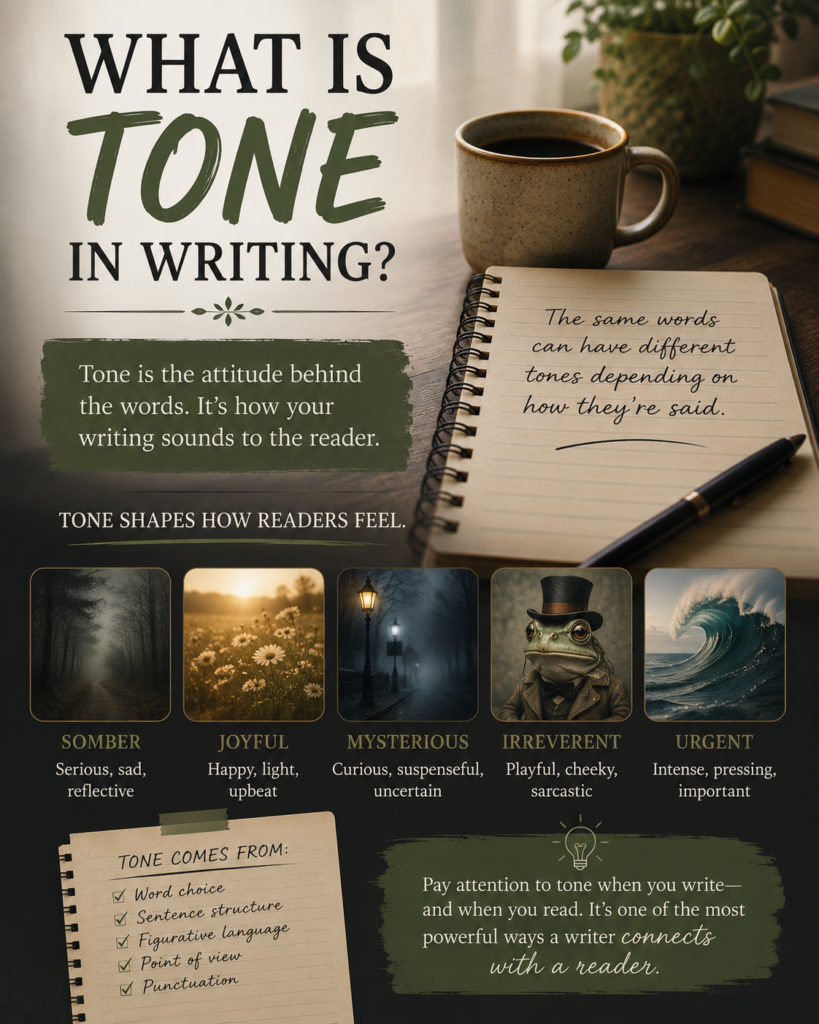
What Is Tone in Writing? It is the attitude a writer shows toward a subject, character, or audience.

Tone helps readers hear the “voice” behind the words. It can make a story feel serious, playful, angry, hopeful, or cold.

In this Guide

What is tone in writing

What Is Tone in Writing?

Tone is the writer’s attitude.

A simple answer to What Is Tone in Writing? is this: tone shows how the author feels about what is happening. That feeling comes through word choice, sentence style, details, and dialogue.

For example, a narrator might describe a storm as “wild and beautiful.” That sounds excited or impressed. Another narrator might call the same storm “cruel and endless.” That sounds fearful or bitter.

Tone is not always direct. A writer may never say, “I feel angry.” Instead, the anger appears in sharp words, short sentences, or harsh images.

What Is Tone in Writing? Why It Matters in Literature

Tone changes how readers understand a scene.

When students ask What Is Tone in Writing?, they are really asking how a writer guides our reaction. Tone can make a character seem foolish, brave, selfish, or kind.

In literature, tone also helps reveal theme. A sad tone may show loss. A mocking tone may point out pride or weakness. A hopeful tone may suggest that change is possible.

On an essay or AP Literature exam, tone is often the key to a strong analysis. If you can explain the tone, you can explain how the author creates meaning.

What Is Tone in Writing? Examples from Famous Literature

Examples make tone easier to hear.

In Edgar Allan Poe’s “The Tell-Tale Heart,” the tone is tense and nervous. The narrator keeps trying to prove he is sane, but his words make him sound more unstable.

In Jane Austen’s Pride and Prejudice, the tone is often witty and ironic. Austen gently mocks pride, social rules, and quick judgments.

In George Orwell’s 1984, the tone is bleak and serious. The cold language helps readers feel the danger of a world where the government controls truth.

The best way to answer What Is Tone in Writing? is to look at how the author’s attitude shapes each passage. Tone is not just what happens. It is how the writing feels about what happens.

What Is Tone in Writing? Tone vs. Mood

Mood and tone are related, but they are not the same.

Tone is the author’s attitude. Mood is the feeling created in the reader.

For example, a story might have a fearful tone because the narrator describes danger with panic. That tone can create a scary mood for the reader.

If you want a deeper breakdown, read our guide on tone vs. mood in literature.

What Is Tone in Writing? How to Spot It While Reading

You can find tone by paying close attention to small choices.

Start with word choice. Ask if the words sound warm, cold, respectful, bitter, excited, or calm.
Then look at sentence style. Short sentences can sound tense or blunt. Longer sentences can feel thoughtful or emotional, depending on the words around them.

Dialogue also gives clues. A character who says, “How wonderful,” may sound sincere in one scene and sarcastic in another.

When you ask What Is Tone in Writing?, do not stop at naming a tone word. Always connect that word to proof from the text.

Common Tone Words Students Can Use

Tone words help you describe the author’s attitude with more care.

  • Serious
  • Playful
  • Angry
  • Hopeful
  • Mocking
  • Sad
  • Respectful
  • Suspicious

Try to avoid vague words like “good” or “bad.” A stronger tone word makes your analysis clearer.

A Practical Tip for Reading Tone

Use this quick method when you read a passage.

Circle two or three words that show attitude. Then write one tone word in the margin.

After that, ask: “How does this tone affect the meaning of the passage?” This turns a simple observation into real literary analysis.

For more help with poetry terms, the Poetry Foundation’s glossary entry on tone is a useful resource. You can also explore broad literary background through Britannica’s overview of literature.

Helpful Books to Read for Tone

These books are useful for seeing tone in action.

  • Pride and Prejudice by Jane Austen
  • 1984 by George Orwell

As you read, pause after key scenes and ask how the author’s attitude comes through.

FAQ: What Is Tone in Writing?

What Is Tone in Writing?

Tone is the author’s attitude toward the subject, characters, or audience. It shows through words, details, and style.

How is tone different from mood?

Tone is the writer’s attitude. Mood is the feeling the reader gets from the text. For a full explanation, see this guide to the difference between tone and mood.

Can a story have more than one tone?

Yes. A story may start with a playful tone and later become serious. Tone can shift as events change.

Why does tone matter in an essay?

Tone helps you explain how the author creates meaning. It gives you a clear path from evidence to interpretation.

Key Takeaway

What Is Tone in Writing? It is the attitude behind the words. To analyze it well, name the tone, prove it with text, and explain why it matters.

Literary Devices in Poetry: A Complete Guide

Literary Devices in Poetry

How to recognize the tools poets use to create meaning, emotion, and beauty

Poetry can sometimes feel confusing when you first read it. The language may seem strange, the lines may be short, and the meaning may not be obvious at first. Many students feel lost because poems do not always tell a clear story the way a novel does. But once you understand literary devices in poetry, poems become much easier to understand and much more enjoyable to read.

Poets use literary devices as tools. These tools help them create images, express emotions, and communicate ideas in powerful ways. When you learn to recognize these tools, you begin to see how a poem works instead of just guessing what it means.

Key idea: Literary devices are the tools poets use to create meaning.

In this guide, we will look at the most important literary devices in poetry, how to recognize them, and how they help you understand a poem more deeply.

In this Guide 📚

What are literary devices in poetry
Why poets use literary devices
Imagery
Metaphor
Simile
Symbolism
Personification
Sound devices
How literary devices create theme
How to analyze literary devices in poetry

Literary Devices in Poetry
Image by Carla Paton

What Are Literary Devices in Poetry?

Literary devices in poetry are techniques that poets use to create meaning, emotion, and imagery. These devices include metaphor, simile, symbolism, imagery, personification, alliteration, and many others.

When poets write, they do not usually explain everything directly. Instead, they show ideas through language. Literary devices help them do this.

For example, instead of saying “I feel sad,” a poet might describe a dark sky, a cold wind, or a dying flower. These images help the reader feel the emotion rather than just read about it.

If you want a deeper introduction to reading literature, you can also read this guide on how to read literature like a scholar:
https://rapidreadspress.com/how-to-read-literature-like-a-scholar/

Why Do Poets Use Literary Devices?

Poets use literary devices because poetry is meant to be felt as well as understood. Literary devices help poets compress meaning into a small number of words.

A poem is usually short, so every word matters. Literary devices allow poets to say more with fewer words.

For example, in Emily Dickinson’s poem:
“Hope is the thing with feathers
That perches in the soul”

Dickinson does not define hope in a dictionary way. Instead, she uses a metaphor. She compares hope to a bird. This image helps the reader understand that hope is alive, gentle, and always present.

This is why literary devices in poetry are not decorations. They are the meaning.

For a step-by-step guide to poetry analysis, see:
https://rapidreadspress.com/how-to-analyze-poetry-step-by-step/

Imagery in Poetry

Imagery is one of the most important literary devices in poetry. Imagery is language that appeals to the senses. It helps the reader see, hear, feel, smell, or taste what is happening in the poem.

Consider these lines from William Wordsworth:
“I wandered lonely as a cloud
That floats on high o’er vales and hills”

This image helps us see the speaker floating above the landscape. The image also creates a feeling of calm and quiet.

When you look for imagery, ask yourself:
What do I see?
What do I hear?
What do I feel?

Imagery often helps reveal the tone and mood of a poem. If you want to better understand tone and mood, this guide will help:
https://rapidreadspress.com/tone-vs-mood-in-literature-whats-the-difference/

Metaphor and Simile

Metaphor and simile are comparisons. They show how two different things are similar.

A simile uses the words “like” or “as.”
A metaphor does not.

Example of simile from Robert Burns:
“O my Luve’s like a red, red rose”

Example of metaphor from Langston Hughes:
“Life is a broken-winged bird
That cannot fly”

These comparisons help readers understand ideas through images. Instead of explaining life in abstract terms, Hughes compares life to a bird that cannot fly. This creates a strong emotional image.

When you find a metaphor or simile, ask what the comparison is trying to show you.

Symbolism in Poetry

Symbolism is when an object represents a larger idea.

In Robert Frost’s poem “The Road Not Taken,” the road is not just a road. It represents life choices.

Symbols often represent ideas like:
Life
Death
Hope
Freedom
Time
Innocence

If you want to learn more about symbolism, you can read this guide:
https://rapidreadspress.com/how-to-find-symbolism-in-a-story/

Personification

Personification is when human qualities are given to animals, objects, or ideas.

Example from Emily Dickinson:
“Because I could not stop for Death –
He kindly stopped for me”

Death is described as a polite person. This changes how we think about death. Instead of something frightening, it becomes something calm and inevitable.

Personification helps poets turn abstract ideas into characters.

Sound Devices in Poetry

Poetry is meant to be heard as well as read. Sound devices are very important literary devices in poetry.

Common sound devices include:
Alliteration – repetition of beginning sounds
Assonance – repetition of vowel sounds
Consonance – repetition of consonant sounds
Rhyme – repetition of end sounds

Example of alliteration from Edgar Allan Poe:
“While I nodded, nearly napping”

The repetition of the “n” sound creates rhythm and mood.

Sound devices help create music in poetry, which affects how the poem feels.

Literary Devices in Poetry
Image by Carla Paton

How Literary Devices Create Theme

Literary devices are not just small techniques. They help create the theme of the poem.

Theme is the main idea or message of a poem. Poets develop theme through imagery, symbolism, metaphor, and other literary devices.

For example, in many poems, night may symbolize death or loneliness, while morning may symbolize hope or new beginnings.

If you want to learn more about theme, read:
https://rapidreadspress.com/how-to-identify-theme-in-literature/

How to Analyze Literary Devices in Poetry

When analyzing literary devices in poetry, follow this simple process:

First, read the poem slowly.
Second, look for imagery and comparisons.
Third, look for symbols.
Fourth, think about how these devices connect to the theme.

You can also use close reading strategies here:
https://rapidreadspress.com/what-is-close-reading-in-literature/

The meaning of a poem is often hidden inside its literary devices.

If you are writing about poetry in an essay, these resources may help:
https://rapidreadspress.com/product/literary-analysis-essay-examples/
https://rapidreadspress.com/product/the-literary-analysis-essay-toolkit/

Recommended Books on Poetry and Literary Devices 📚

How to Read a Poem by Terry Eagleton
Poetry Handbook by Mary Oliver
Perrine’s Literature: Structure, Sound, and Sense

AffiliateThese are excellent resources for understanding literary devices in poetry and learning how to analyze poems more confidently. (Affilate links)

More resources:
Poetry Foundation: https://www.poetryfoundation.org/learn/glossary-terms

Key Takeaway

Literary devices in poetry are the tools poets use to create meaning, emotion, and theme. When you learn to recognize imagery, metaphor, symbolism, personification, and sound devices, poetry becomes clearer and more meaningful. Instead of feeling confusing, poems begin to feel like puzzles that you know how to solve.

FAQ – Literary Devices in Poetry

What are literary devices in poetry?

Literary devices in poetry are techniques such as metaphor, simile, imagery, symbolism, and sound devices that poets use to create meaning and emotion.

What are the most common literary devices in poetry?

The most common literary devices in poetry include imagery, metaphor, simile, symbolism, personification, alliteration, and rhyme.

Why are literary devices important in poetry?

Literary devices are important because they help poets express complex ideas and emotions in a small number of words.

How do you identify literary devices in poetry?

Look for descriptive language, comparisons, repeated sounds, and objects that may represent larger ideas.

error

Enjoy this article? Please spread the word :)

Follow by Email
BLUESKY
fb-share-icon
Reddit
LinkedIn
Share
RSS