

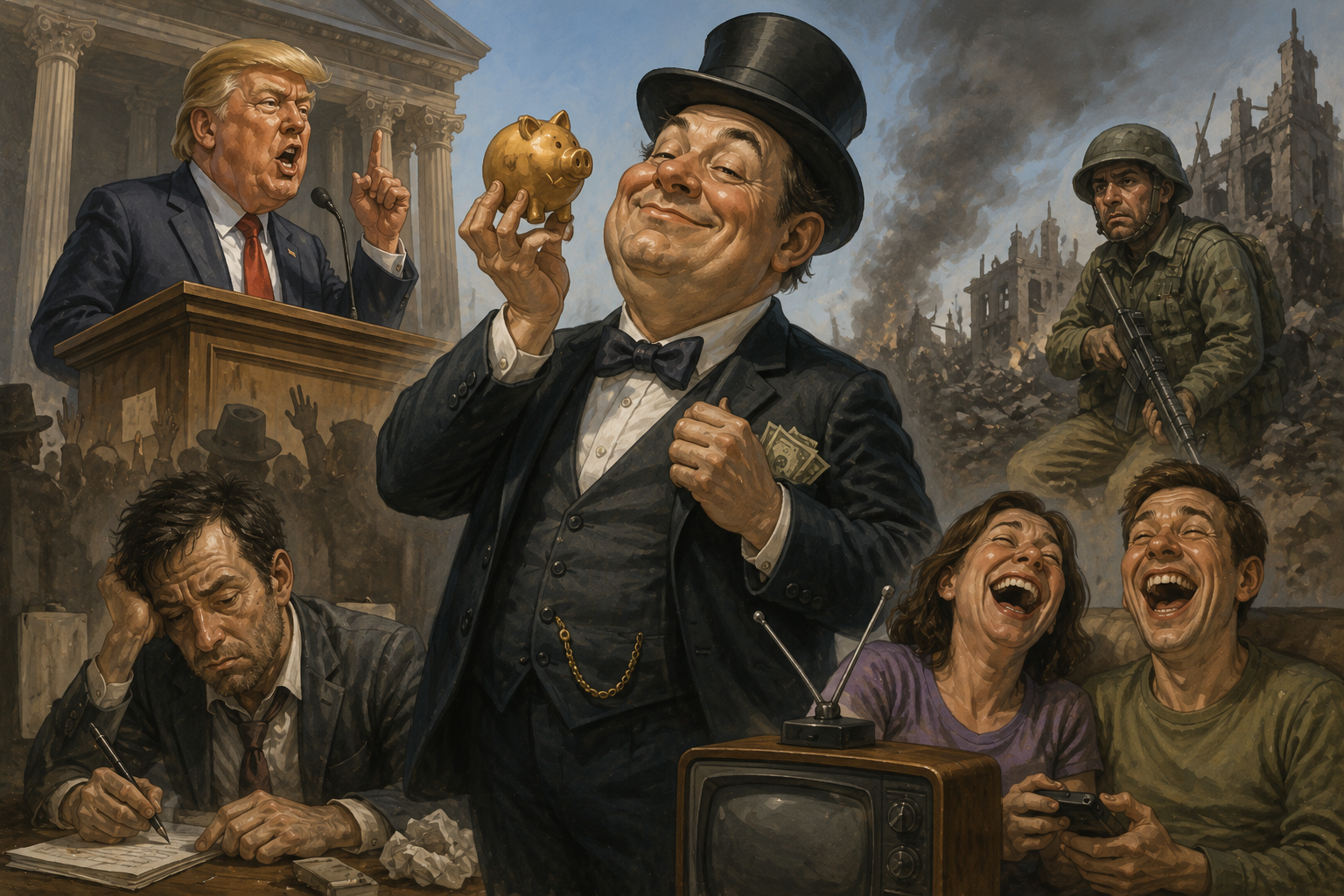
Satire can feel tricky at first because it often says one thing while meaning something sharper. In this guide, you will find Types of Satire Explained in clear language, with examples that help you read and write about literature with more confidence.
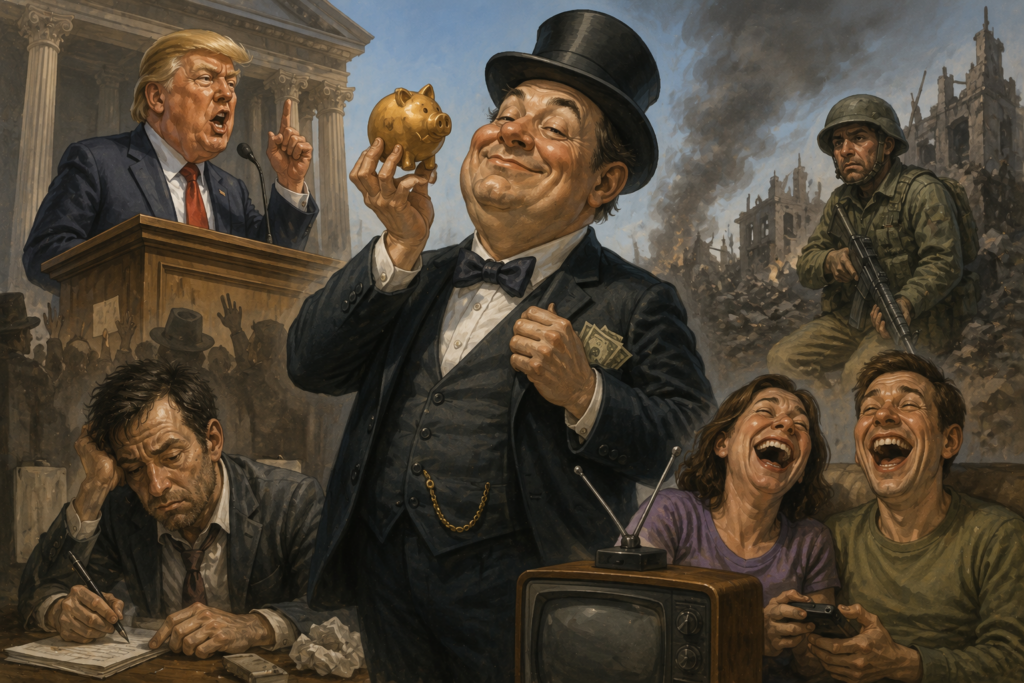
Satire is not just “making fun” of something. It uses humor, irony, and exaggeration to point out problems in people, society, or power.
In this Guide
- What satire means
- Main types of satire
- Literary examples of satire
- How to analyze satire in essays
- Books that help you study satire
- FAQ
- Key takeaway
What Satire Means in Literature
Satire is a literary tool that uses humor to expose what is wrong.
A writer may mock greed, pride, bad leadership, social rules, or unfair systems. The goal is often to make readers laugh, then think.
Types of Satire Explained starts with this simple idea: satire attacks a problem, not just a person. It uses clever writing to show that something needs to change.
Satire often uses devices like irony, exaggeration, parody, and understatement. If you want a broader review, this literary devices list can help you connect satire to other tools writers use.
Types of Satire Explained: The Main Forms
Writers use different kinds of satire depending on how harsh or playful they want to sound.
When students search for Types of Satire Explained, they usually need help telling the forms apart. The most common types are Horatian satire, Juvenalian satire, Menippean satire, and parody.
Horatian Satire
Horatian satire is gentle, playful, and witty. It points out human flaws without sounding too angry.
This type often laughs at silly habits, social manners, or foolish choices. The tone feels light, but the message still matters.
Oscar Wilde’s The Importance of Being Earnest is a strong example. Wilde makes fun of upper-class manners, fake respectability, and the way people care too much about appearances.
Juvenalian Satire
Juvenalian satire is darker and more biting. It attacks corruption, cruelty, or hypocrisy in a serious way.
This type often feels angry because the problem is not small. The writer wants readers to feel shocked or disturbed.
Jonathan Swift’s A Modest Proposal is one of the most famous examples. Swift suggests a shocking “solution” to poverty in Ireland, but his real target is the cold way powerful people treat those with lower incomes.
Menippean Satire
Menippean satire attacks ideas, beliefs, or ways of thinking.
Instead of focusing on one person, it often mocks a whole mindset. It may seem strange, wild, or mixed in style.
Voltaire’s Candide is a key example. The novel mocks blind optimism, especially the idea that everything always happens for the best.
Parody
Parody copies the style of a writer, genre, or work to make it look silly.
A parody can be light and funny, but it can also reveal weak ideas in the original style. It works best when readers know what is being copied.
For example, a story that copies the dramatic style of a heroic epic but applies it to a tiny problem can become comic. Alexander Pope’s The Rape of the Lock does this by treating a social quarrel like a grand battle.
Types of Satire Explained Through Famous Literary Examples
Satire becomes easier to understand when you see it at work in real books.
Types of Satire Explained is not just a list of terms. It is a way to notice how authors criticize the world around them.
Animal Farm by George Orwell
Animal Farm uses animals to satirize political power and corruption. The pigs begin with promises of fairness, but they become as cruel as the humans they replace.
Orwell’s satire is sharp because the story looks simple on the surface. Underneath, it shows how leaders can twist language and history to control others.
Gulliver’s Travels by Jonathan Swift
Gulliver’s Travels is often read as an adventure story, but it is full of satire. Swift uses strange lands and strange people to mock politics, pride, and human weakness.
The tiny Lilliputians fight over foolish issues, which makes real-world political conflict look petty. Swift makes readers laugh, then asks them to judge human behavior.
The Adventures of Huckleberry Finn by Mark Twain
Mark Twain uses satire to expose racism, false morality, and social hypocrisy. Huck often sees the world more clearly than the adults around him.
The satire works because Twain lets readers notice the gap between what society says is “right” and what is truly moral.
For more background on the history of satire, you can visit Britannica’s overview of satire.


















Types of Satire Explained: How Satire Uses Irony and Exaggeration
Satire often depends on a gap between what is said and what is meant.
Irony is one of satire’s strongest tools. A writer may praise something that is clearly wrong so readers can see how foolish it is.
Exaggeration also matters. A satirist may make a flaw seem huge so readers cannot ignore it.
In A Modest Proposal, Swift’s extreme suggestion is not meant to be accepted. The exaggeration forces readers to face the cruelty of real political attitudes.
This is why Types of Satire Explained should always include tone. Ask yourself if the writer sounds playful, bitter, strange, or mocking. Tone helps you name the kind of satire.
Types of Satire Explained for Stronger Essay Analysis
Satire gives you strong evidence for literary essays because it connects style to meaning.
When you write about satire, do not stop at saying “the author makes fun of society.” That is a start, but it is too broad.
A stronger point explains the target, the method, and the purpose.
For example, in Animal Farm, Orwell satirizes political propaganda through the changing commandments on the barn wall. This shows how language can hide abuse of power.
That kind of sentence gives you a clear path for analysis. It names what Orwell attacks, how he does it, and why it matters.
If you are studying satire with other tools like symbolism or irony, this guide to literary devices can help you build stronger essay points.
Types of Satire Explained: Quick Comparison for Students
Each type of satire has a different tone and target.
| Type of Satire | Common Tone | Main Target | Example |
|---|---|---|---|
| Horatian | Light and playful | Human foolishness | The Importance of Being Earnest |
| Juvenalian | Harsh and serious | Corruption or injustice | A Modest Proposal |
| Menippean | Strange or mixed | Ideas and beliefs | Candide |
| Parody | Comic or mocking | A style or genre | The Rape of the Lock |
Types of Satire Explained becomes much simpler when you focus on tone. Ask what the writer attacks and how sharp the attack feels.
Books That Help You Study Satire
These books are useful if you want to see satire in action.
- Animal Farm by George Orwell
- Gulliver’s Travels by Jonathan Swift
- The Importance of Being Earnest by Oscar Wilde
You can also explore Alexander Pope’s The Rape of the Lock at the Poetry Foundation to see mock-epic satire in poetry.
FAQ: Types of Satire Explained
What is satire in simple terms?
Satire is writing that uses humor, irony, or exaggeration to criticize a problem. It often makes readers laugh while pointing out something serious.
What are the main types of satire?
The main types are Horatian, Juvenalian, Menippean, and parody. Each one has a different tone and target.
Is satire always funny?
No. Some satire is funny, but some is dark or uncomfortable. Juvenalian satire often feels harsh because it attacks serious injustice.
How do I identify satire in literature?
Look for humor, irony, exaggeration, and criticism. Then ask what problem the author wants readers to notice.
Why does satire matter in essays?
Satire helps you explain how an author uses style to shape meaning. It can lead to strong claims about theme, tone, and social criticism.
Key Takeaway
Types of Satire Explained comes down to tone, target, and purpose. Once you can see what the author mocks and why, satire becomes a powerful tool for reading and essay writing.


Get the Free Close Reading Worksheet Pack
Join my email list and receive the printable worksheet pack you can use with any novel or poem.
No spam. Just helpful guides for reading literature well.












