


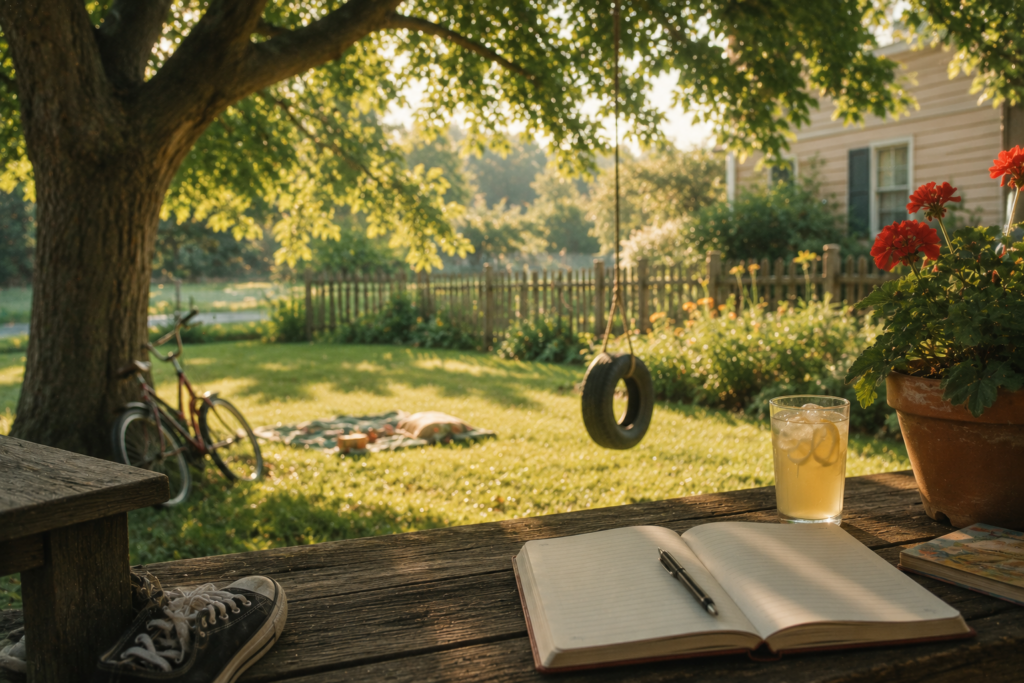
A warm invitation to return to the drowsy hush of a childhood summer afternoon, when nothing happened except the light moved across the floor and you felt time stretch around you.
The Prompt
Write about a summer afternoon from childhood that had no particular event in it.
Think of this as a flash memoir prompt: summer afternoon childhood no particular event required. No birthday party. No storm. No dramatic phone call from the other room. Just one slow afternoon when you were a child and the world seemed to pause.
That may sound too small at first. But ordinary afternoons often hold the texture of childhood better than the larger memories do. A quiet hour can show us what home felt like, what freedom meant, what boredom sounded like, or what kind of child we were before we knew how to explain ourselves.
Why This Memory Matters
A summer afternoon with no particular event in it can be full of story. The story may be hiding in the heat on the porch, the smell of cut grass, the sticky feel of a popsicle wrapper, or the way a fan clicked in the window.
When nothing “happens,” your attention moves toward atmosphere. You may remember the rules of your house, the shape of your neighborhood, or the strange privacy children find even when adults are nearby. You may remember being lonely and content at the same time.
This kind of memory can also reveal what you were allowed to do with empty time. Did you wander outside until dinner? Did you read on the floor while someone watched television in another room? Did you sit bored at a kitchen table, too hot to move, while the screen door slapped shut over and over?
The value of this flash memoir prompt summer afternoon childhood no particular event is that it lets you write without needing a plot. You are writing the climate of a life. You are asking one afternoon to stand in for a season, a place, maybe even a whole version of you.
How to Approach This Prompt
Begin with a physical detail. Choose one thing you can almost touch. It might be the plastic webbing of a lawn chair, the rough edge of a towel, the burn of pavement under bare feet, or the cold glass of lemonade against your palm.
Do not start by explaining what childhood meant to you. Start lower to the ground. Write what the room looked like. Write what the air felt like. Let the meaning arrive later, if it arrives at all.
Narrow the memory to one scene. A single porch, bedroom, backyard, sidewalk, or kitchen is enough. If you try to tell the whole summer, the piece may become flat. If you stay with one afternoon, the memory has room to breathe.
You might ask yourself one simple question: where was my body? Were you lying on carpet? Sitting in a tree? Floating in a public pool with your fingers pale and wrinkled? That one answer can pull the rest of the scene closer.
If you like writing through landscape and solitude, you may enjoy this related reflection on nature, isolation, and western writing. It can help you notice how place shapes memory.
As you draft, resist the urge to make the afternoon important too quickly. Let the ordinary details do their work. If you later want to study how small details carry meaning in literature, this guide on how to annotate literature can sharpen the same skill for your own writing.
For this flash memoir prompt summer afternoon childhood no particular drama is needed. If your mind says, “But nothing happened,” answer with, “Good. What did nothing feel like?”


A Quick Example
The living room was cooler than the rest of the house because my mother kept the curtains closed all afternoon. I lay on the carpet with my cheek pressed into the rough lines the vacuum left behind. The television was on, but I was not watching it. Outside, somebody mowed a lawn in long passes, near and far, near and far. I remember my knees were scabbed, and I had a red Popsicle stain on my thumb. My mother was in the kitchen talking on the phone in her low voice. I liked knowing she was there without needing anything from her. For once, no one asked me to clean up or go outside. The whole day felt borrowed.
Try It Yourself
Set a timer for ten minutes and write one childhood summer afternoon that had no particular event in it. Do not search for the most interesting day. Search for the day that still has a temperature.
Start with where you were sitting, standing, or lying down. Then add one sound. After that, follow the memory wherever it wants to go. If you remember almost nothing, write the almost nothing. Sometimes a blank space is part of the truth.
You can keep the piece short. A flash memoir does not need to solve your past. It only needs to hold one clear moment long enough for you to see it again.
Want More Flash Memoir Prompts?
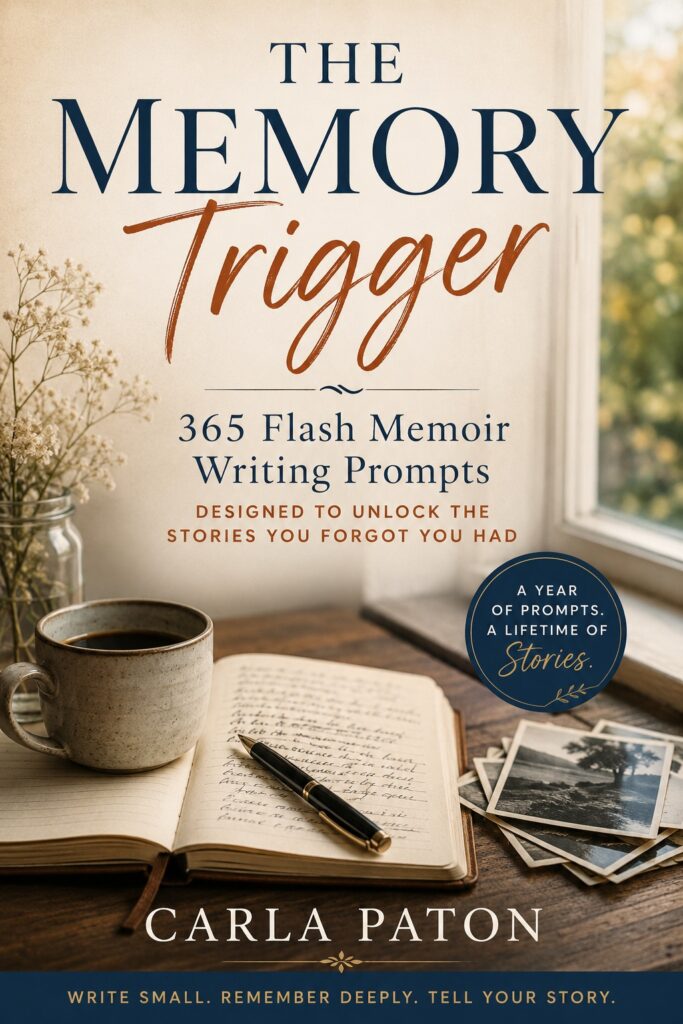
If this flash memoir prompt summer afternoon childhood no particular event opened a door, keep going. Explore all 365 prompts in The Memory Trigger: 365 Flash Memoir Writing Prompts.


Get the Free Close Reading Worksheet Pack
Join my email list and receive the printable worksheet pack you can use with any novel or poem.
No spam. Just helpful guides for reading literature well.












