


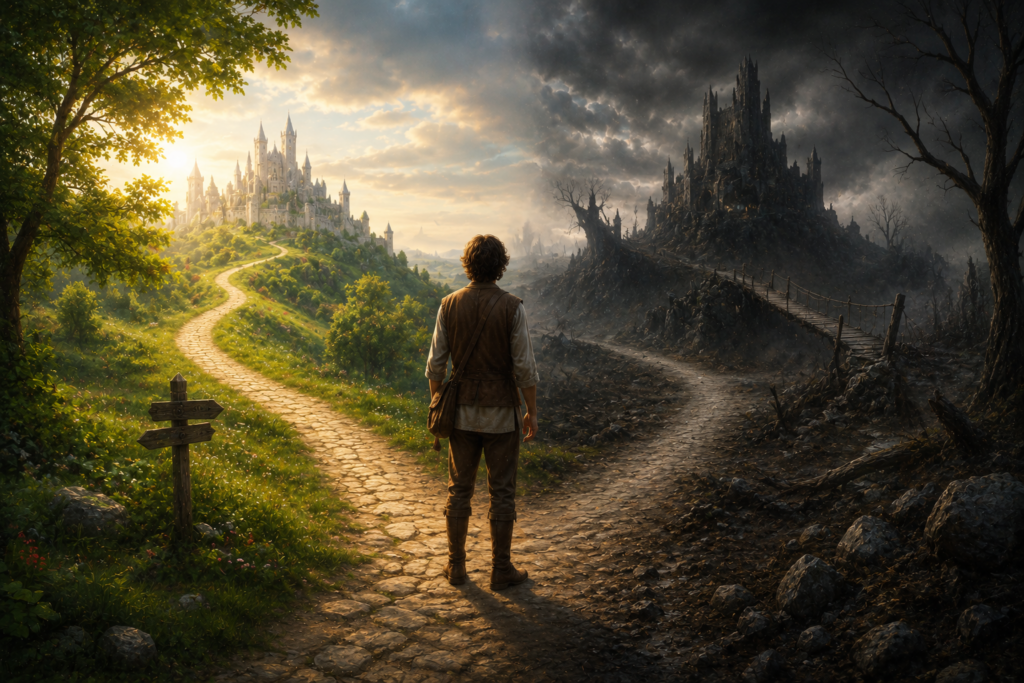
What Is Allegory in Literature?
What Is Allegory in Literature? is a common question for students who want to read deeper than the plot. An allegory is a story that has a hidden meaning, often about politics, religion, morals, or human nature.
In this guide, you will learn how allegory works, why writers use it, and how to spot it in famous books.
In this Guide
- What allegory means
- How allegory works in stories
- Famous examples of allegory
- Why allegory matters
- How to analyze allegory
- Recommended books
- FAQ
What Is Allegory in Literature? A Simple Definition
An allegory is a story with two levels of meaning.
On the surface, an allegory may look like a normal story about animals, travelers, or a strange new world. Under that surface, the story points to a bigger idea.
In short, What Is Allegory in Literature? asks how a story can mean more than it first seems to mean.
For example, a character may stand for greed. A journey may stand for spiritual growth. A whole setting may stand for a political system.
Allegory is closely linked to symbolism, but it is larger in scope. A symbol may be one object or image. An allegory often shapes the whole story. If you want help with that skill, read this guide on how to find symbolism in a story.
What Is Allegory in Literature? How Allegory Works
Allegory works by giving people, places, and events a second meaning.
When readers ask, “What Is Allegory in Literature?” they often expect one hidden message. Some allegories do have a clear message, but many are more complex.
A writer may use a farm to comment on government. A quest may show the struggle between good and evil. A fantasy world may reflect problems in the real world.
The key is pattern. If many parts of a story point to the same larger idea, you may be reading an allegory.
What Is Allegory in Literature? Famous Examples
Famous allegories make the hidden meaning easier to see.
Animal Farm by George Orwell is one of the best-known examples. On the surface, it is about farm animals who take control of a farm. Under the surface, it is about political power, corruption, and the Russian Revolution.
The Pilgrim’s Progress by John Bunyan is another clear allegory. The main character, Christian, travels toward the Celestial City. His journey stands for the Christian path toward salvation.
The Lion, the Witch and the Wardrobe by C. S. Lewis can also be read as an allegory. Aslan’s sacrifice and return connect to Christian ideas of death, hope, and rebirth.
If you still wonder, “What Is Allegory in Literature?” these stories show the main idea: the plot matters, but the deeper meaning matters too.
Why “What Is Allegory in Literature?” Matters for Readers
Allegory helps readers see how stories can speak about real life.
Writers use allegory when direct speech may feel too plain, too risky, or too limited. A story can explore serious ideas without sounding like a lecture.
For students, allegory matters because it often appears in class discussions, essays, and AP Literature prompts. It helps you explain not just what happens, but why it matters.
Allegory also builds close reading skills. You learn to notice patterns, compare meanings, and connect details to a larger theme.
Allegory vs. Symbolism: What Is the Difference?
Symbolism and allegory are related, but they are not the same.
A symbol is usually one thing that stands for something else. A dove may stand for peace. A storm may stand for conflict.
An allegory is broader. The whole story, or a large part of it, points to a second meaning.
Think of symbolism as one clue. Think of allegory as a full system of clues. For more practice, visit this helpful article on finding symbolism in literature.
How to Spot Allegory While You Read
A good reading habit can help you find allegory faster.
Start by asking what the story seems to be about on the surface. Then ask what larger idea keeps appearing beneath the plot.
Look for characters with simple or meaningful names. Watch for repeated images. Notice conflicts that seem bigger than the characters themselves.
For example, if a story about a kingdom keeps showing fear, control, and unfair laws, it may be an allegory about tyranny.
Books You Can Find on Amazon for Allegory Practice
These books are useful if you want to study allegory in a clear way.
- Animal Farm by George Orwell
- The Pilgrim’s Progress by John Bunyan
- The Lion, the Witch and the Wardrobe by C. S. Lewis
Each book uses story to point toward a deeper moral, political, or religious meaning.
Helpful Resources on Allegory
If you want a more formal definition, Britannica has a clear overview of allegory in art and literature.
The Poetry Foundation also explains allegory as a literary term, which can help with poetry and prose.
FAQ: What Is Allegory in Literature?
What Is Allegory in Literature?
An allegory is a story with a deeper meaning beneath the plot. It often teaches a moral, political, or religious lesson.
Is every story with a symbol an allegory?
No. A story can have symbols without being an allegory. Allegory usually shapes the whole story.
Why do authors use allegory?
Authors use allegory to explore big ideas in a creative way. It lets them write about serious topics through characters and events.
Is Animal Farm an allegory?
Yes. Animal Farm is an allegory about power, revolution, and political corruption.
How can I analyze allegory in an essay?
Explain both levels of meaning. Describe what happens in the story, then connect those details to the larger idea.
Key Takeaway
What Is Allegory in Literature? It is a story that means more than it says on the surface. To analyze it, track patterns and ask what bigger idea the whole story points toward.


Get the Free Close Reading Worksheet Pack
Join my email list and receive the printable worksheet pack you can use with any novel or poem.
No spam. Just helpful guides for reading literature well.












