Best Dark Academia Nature Symbolism: Books, Themes, and Meanings

Nature Symbolism

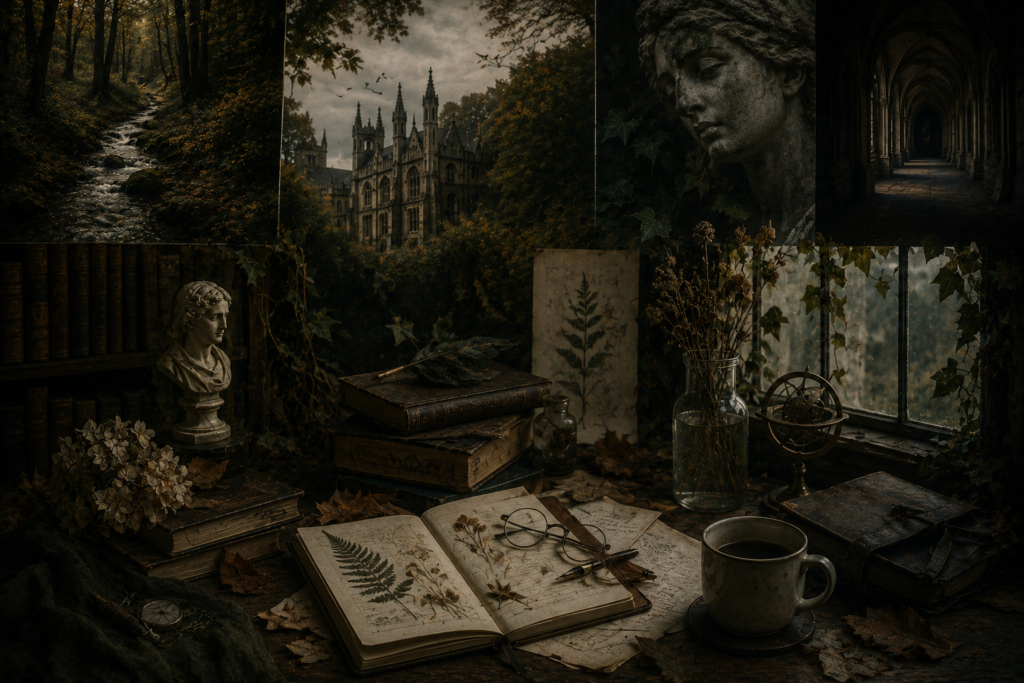
Best Dark Academia Nature Symbolism blends old libraries, secret knowledge, wild gardens, storms, and decay. It helps readers see how nature can reflect ambition, fear, beauty, and moral trouble in literature.

For students, this kind of symbolism is useful because it turns setting into meaning. A forest, flower, or cold season can say as much as a character’s speech.

In this Guide

  • Why nature matters in dark academia
  • Common symbols and what they mean
  • Best examples from literature
  • Recommended books to read
  • How to analyze nature symbolism
  • FAQs and key takeaway
Nature Symbolism

Why Best Dark Academia Nature Symbolism Feels So Powerful

Nature in dark academia often looks beautiful, but it rarely feels safe.

Best Dark Academia Nature Symbolism works because it connects the mind with the natural world. A quiet campus garden can hide guilt. A storm can show panic. A dying flower can point to lost innocence.

Dark academia often focuses on elite schools, ancient texts, and intellectual pride. Nature adds pressure to that world. It reminds readers that knowledge does not protect anyone from death, desire, or consequence.

This is why rain, fog, ivy, winter, and forests appear so often in the genre. They create mood, but they also carry meaning.

Common Symbols in Best Dark Academia Nature Symbolism

Many dark academia stories use the same natural images, but each writer gives them a fresh purpose.

Ivy often suggests age, tradition, and hidden control. It climbs over old buildings like history itself. In a school setting, ivy can make knowledge look noble, but it can also make the past feel trapped and overgrown.

Fog suggests confusion and secrecy. When characters walk through fog, they may not understand what is true. It can also show moral blindness.

Autumn leaves point to beauty and decay. Their color is rich, but their life is ending. This fits dark academia’s love of elegant ruin.

Rain can mean cleansing, sorrow, or dread. In many stories, rain appears near guilt or confession. It can wash the world, but it cannot always wash away a crime.

Best Dark Academia Nature Symbolism often turns these simple images into emotional clues. The setting tells readers what characters refuse to say.

Best Dark Academia Nature Symbolism in Classic Literature

Classic literature gives us some of the clearest examples of nature as a symbol.

In Mary Shelley’s Frankenstein, mountains, ice, and storms reflect Victor Frankenstein’s fear and pride. Nature is powerful, vast, and beyond human control. Victor tries to master life, but the natural world keeps showing how small he is.

In Emily Brontë’s Wuthering Heights, the moors are wild and harsh. They mirror the force of Catherine and Heathcliff’s emotions. The landscape feels untamed, just like their love and anger.

In Oscar Wilde’s The Picture of Dorian Gray, flowers, gardens, and beauty often connect to temptation and decay. Dorian’s world looks lovely, but moral rot grows beneath the surface.

These works are not always called dark academia, but they shape its mood. Their use of nature helps explain why Best Dark Academia Nature Symbolism feels old, serious, and haunted.

For more help with close reading, see this guide on how to find symbolism in a story.

Nature, Knowledge, and Moral Decay

In dark academia, nature often shows what learning cannot fix.

Students and scholars may chase truth, beauty, or power. Yet nature keeps reminding them that every choice has a cost. Dead leaves, cold rooms, and rotting gardens can show inner damage.

This is a key part of Best Dark Academia Nature Symbolism. The natural world becomes a mirror. It reflects ambition, guilt, and fear.

A character may study Greek tragedy in a grand library, but the storm outside may reveal the real tragedy. The weather becomes part of the story’s moral voice.

These books are strong choices for students who want to see how dark settings and natural symbols work together.

  • Frankenstein by Mary Shelley
  • Wuthering Heights by Emily Brontë
  • The Secret History by Donna Tartt

Frankenstein is one of the best books for studying nature as power. Its icy landscapes and violent weather show the danger of human pride.

Wuthering Heights uses the moors as more than a setting. They become a symbol of passion, grief, and wild freedom.

The Secret History is a modern dark academia classic. Its campus, seasons, and remote landscapes help create a sense of beauty mixed with dread.

To explore Mary Shelley’s life and influence, you can visit Britannica’s biography of Mary Shelley. For poetry and nature imagery, the Poetry Foundation is also a useful resource.

How to Read Best Dark Academia Nature Symbolism

Good symbolism starts with careful attention to patterns.

When you read, notice when nature appears. Ask what happens before and after a storm, garden scene, forest walk, or change in season.

Then ask how the image connects to character emotion. If a student walks through dead leaves after a betrayal, the leaves may point to loss or moral decline.

Best Dark Academia Nature Symbolism is rarely random. Writers choose natural details to build mood and deepen theme.

If you want a simple method, use this breakdown on finding symbolism in fiction.

Best Dark Academia Nature Symbolism and Major Themes

The strongest symbols connect to the story’s biggest ideas.

One major theme is the danger of ambition. Mountains, storms, and deep forests can make human plans seem fragile. This is clear in Frankenstein.

Another theme is the beauty of decay. Autumn leaves, old gardens, and ivy-covered walls look lovely, but they also suggest death and decline.

A third theme is hidden truth. Fog, darkness, and enclosed gardens can show secrets that characters try to bury.

In this way, Best Dark Academia Nature Symbolism turns nature into a quiet warning. Beauty may be real, but it is never simple.

FAQs About Best Dark Academia Nature Symbolism

What is Best Dark Academia Nature Symbolism?

Best Dark Academia Nature Symbolism means the use of natural images, like storms, ivy, forests, and seasons, to express dark academia themes. These themes often include ambition, guilt, beauty, and decay.

Why does dark academia use so much autumn imagery?

Autumn fits the mood because it is beautiful and sad at the same time. It suggests change, age, and the slow approach of death.

Is nature symbolism only about mood?

No. Mood matters, but symbolism also points to theme and character. A storm may create fear, but it can also reveal guilt or conflict.

What book is best for studying this topic?

Frankenstein is a strong choice. Its use of ice, mountains, and storms makes nature a major part of the story’s meaning.

Key Takeaway

Best Dark Academia Nature Symbolism shows that nature in literature is never just background. Ivy, fog, storms, and fading leaves can reveal the hidden fears, desires, and moral choices at the heart of a story.

When you notice these symbols, dark academia becomes richer. The campus, the weather, and the wild places all begin to speak.
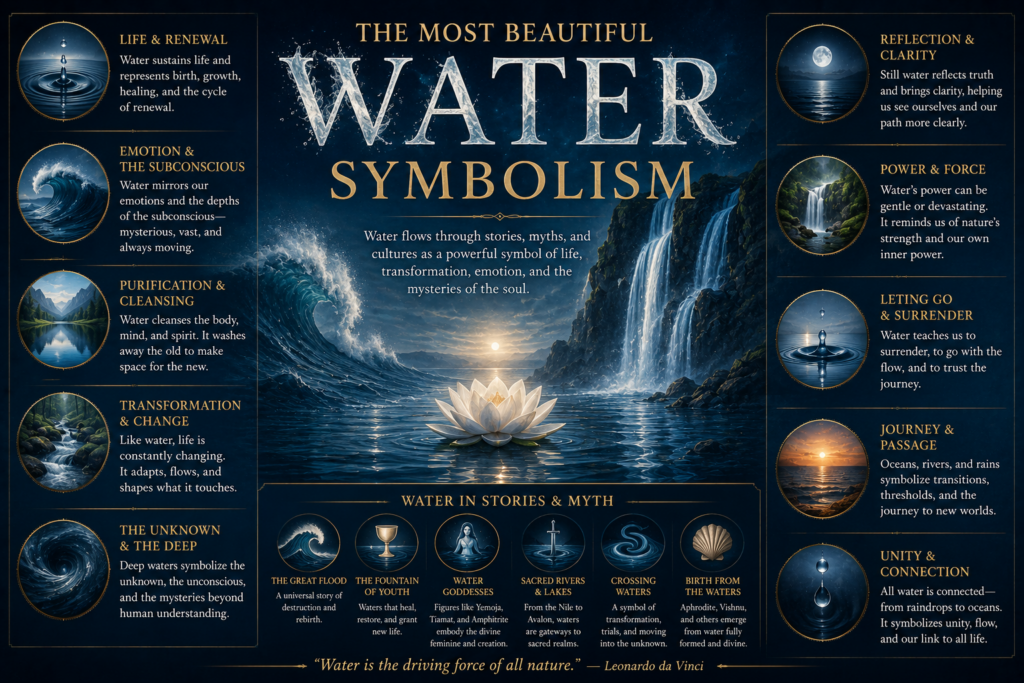
Most Beautiful Water Symbolism in Literature: Meaning, Themes, and Books to Read

water symbolism
water symbolism

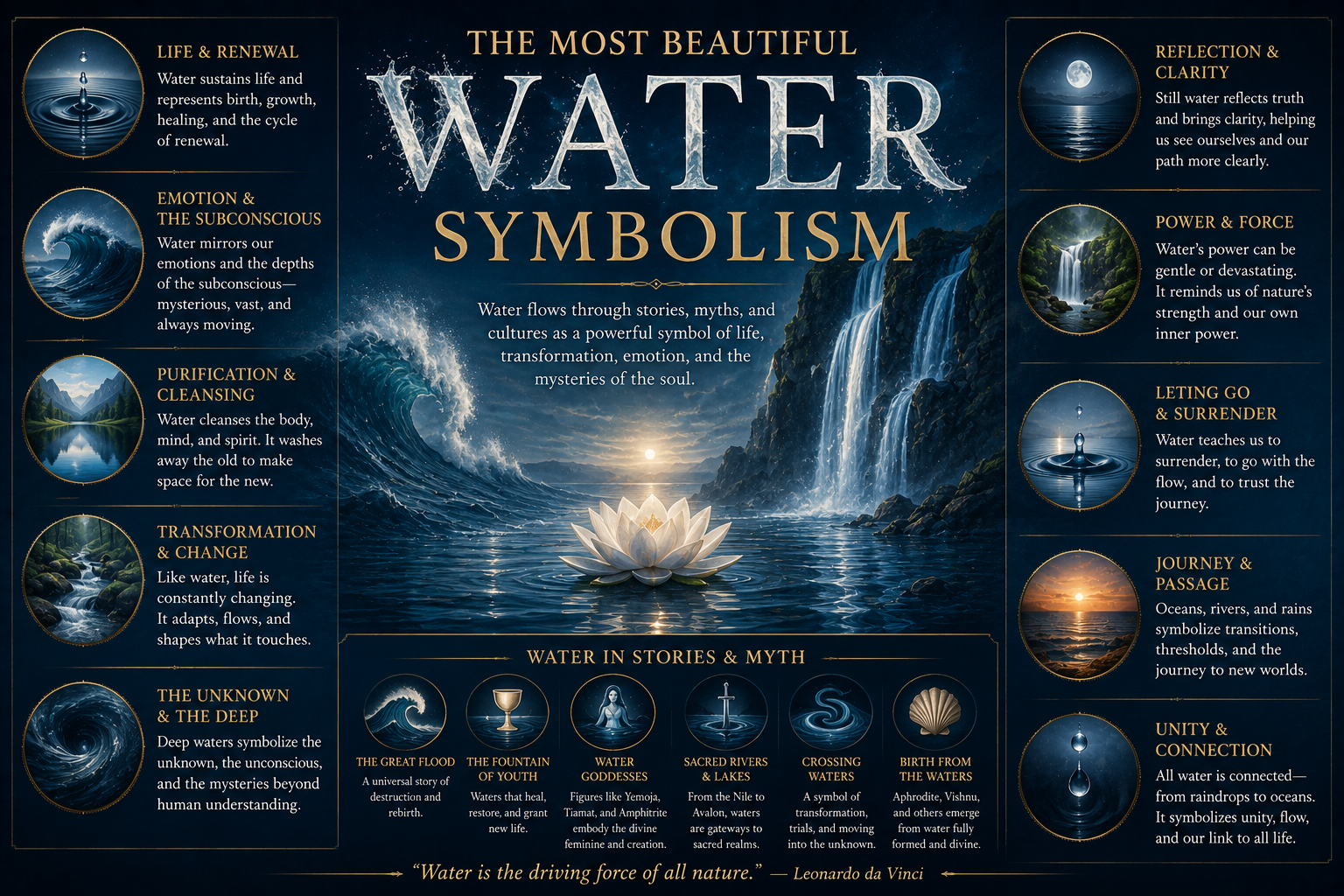
Most Beautiful Water Symbolism shows how rivers, rain, oceans, and lakes can carry deep meaning in a story. Water can stand for life, change, fear, memory, grief, or hope, often in the same scene.

For students, water is one of the easiest symbols to notice because it appears in so many famous books and poems. Once you learn what to look for, it can make a story feel richer and more alive.

In this Guide

  • What water symbolism means
  • Why Most Beautiful Water Symbolism matters
  • Common meanings of water in literature
  • Famous examples from books and poems
  • Recommended books to read
  • FAQs about water symbolism

What Does Water Symbolism Mean?

Water often points to emotions that characters cannot say out loud.

In literature, water is rarely just water. A river can show a journey. Rain can mark sorrow or renewal. An ocean can suggest freedom, danger, or the unknown.

Writers use water because readers already feel its power. We know water can heal, destroy, wash away, and return again. That makes it a strong symbol for human life.

If you want a simple method for spotting symbols, this guide on how to find symbolism in a story can help you build the skill step by step.

Why Most Beautiful Water Symbolism Feels So Powerful

The beauty of water symbolism comes from its many sides.

Most Beautiful Water Symbolism works because water is never only one thing. It can be calm in one scene and violent in the next. It can save a character or trap them.

This is why water feels so human. People also change. We can feel peaceful, afraid, hopeful, or lost, sometimes all in one day.

In many stories, water becomes a mirror. It reflects what a character hides inside. A quiet lake may show calm, but it may also hide pain below the surface.

Most Beautiful Water Symbolism and Common Meanings

Water symbols often connect to life, death, change, and truth.

One common meaning is rebirth. A character who enters water may come out changed. This can feel like a fresh start, even if the story stays painful.

Water can also mean danger. Storms, floods, and deep seas often show forces that people cannot control. This makes water a strong symbol for fate or fear.

Another meaning is memory. Rivers and oceans move, but they also seem ancient. In this way, Most Beautiful Water Symbolism can connect a character’s private life to a larger past.

Water can also suggest truth. A clear pool may show what is hidden. Muddy water may suggest confusion, lies, or moral doubt.

Famous Examples of Water Symbolism in Literature

Many classic works use water to shape mood and meaning.

In The Odyssey by Homer, the sea is both a road and an enemy. Odysseus wants to return home, but the ocean delays him again and again. The water stands for struggle, distance, and the test of human will.

In Moby-Dick by Herman Melville, the ocean feels endless and mysterious. It becomes a place where obsession grows. Captain Ahab’s search across the sea shows how the unknown can pull a person toward ruin.

In Shakespeare’s The Tempest, a storm at sea begins the action. The water helps create fear, magic, and change. It pushes characters into a strange world where old wrongs must face judgment.

In T. S. Eliot’s poem The Waste Land, water is tied to both need and fear. The poem’s dry land suggests spiritual emptiness, while water hints at renewal. You can read more about the poem through the Poetry Foundation.

Most Beautiful Water Symbolism in Modern Reading

Modern readers still connect with water because it feels close to daily life.

Most Beautiful Water Symbolism is not limited to old books. It appears in novels about family, identity, trauma, and survival. Water often helps writers show emotions that are hard to name.

For example, rain in a modern novel may mark grief after a death. A beach may show escape from stress. A river may stand for a choice that cannot be undone.

This is why water symbols work well in class essays. They let you connect setting, character, and theme in a clear way.

Recommended Books with Most Beautiful Water Symbolism

These books are strong choices for students who want to study water symbols.

  • The Odyssey by Homer: A classic journey story where the sea tests courage, pride, and longing for home.
  • Moby-Dick by Herman Melville: A deep study of obsession, mystery, and the danger of chasing one idea too far.

Both books show Most Beautiful Water Symbolism in very different ways. One treats water as a hard path home. The other turns the ocean into a vast space of fear and wonder.

For a wider look at how symbols work in literature, Britannica’s overview of symbolism gives useful background.

How to Write About Water Symbolism in an Essay

A strong essay links the water image to a clear idea.

Start with the scene. Ask what kind of water appears. Is it rain, ocean, river, lake, or flood?

Then ask what the character feels in that moment. Water symbolism is strongest when it connects to conflict, choice, or change.

Last, connect the symbol to a theme. If a character crosses a river, the theme may involve growth or loss. If a storm breaks, the theme may involve fear, guilt, or truth.

For more practice, use this helpful guide on finding symbolism in fiction before you draft your paragraph.

Most Beautiful Water Symbolism and Major Themes

Water often gives a story its emotional center.

Most Beautiful Water Symbolism often links to change. Water moves, shifts, and reshapes the world. Characters who meet water often face a turning point.

It also links to cleansing. A bath, rainfall, or river can suggest a wish to remove guilt or pain. Yet the story may ask whether a person can truly wash the past away.

Water also links to the unknown. Deep water can hide danger, secrets, or truth. This makes it useful in stories about fear and discovery.

FAQs About Most Beautiful Water Symbolism

What is Most Beautiful Water Symbolism in literature?

Most Beautiful Water Symbolism refers to powerful water images that carry deep meaning. These images may show life, change, danger, memory, or renewal.

Why do writers use water as a symbol?

Writers use water because it is familiar and emotional. Readers understand its power to comfort, harm, hide, and reveal.

What does rain usually symbolize?

Rain can symbolize sadness, cleansing, rebirth, or tension. The meaning depends on the scene and the character’s state of mind.

What does the ocean symbolize in books?

The ocean often symbolizes mystery, freedom, danger, or the unknown. In many stories, it also shows how small people feel against nature.

How can I find water symbolism in a story?

Look for repeated water images and ask what changes when they appear. If water appears during a key choice or crisis, it likely has symbolic meaning.

Key Takeaway

Most Beautiful Water Symbolism matters because water can hold many truths at once. It can show hope and fear, peace and danger, life and loss.

When you notice water in a story, slow down. Ask what it reveals about the character, the mood, and the theme. That simple question can open the whole text. 🌊

Most Influential Forbidden Knowledge in Literature: Books, Symbols, and Themes

forbidden knowledge

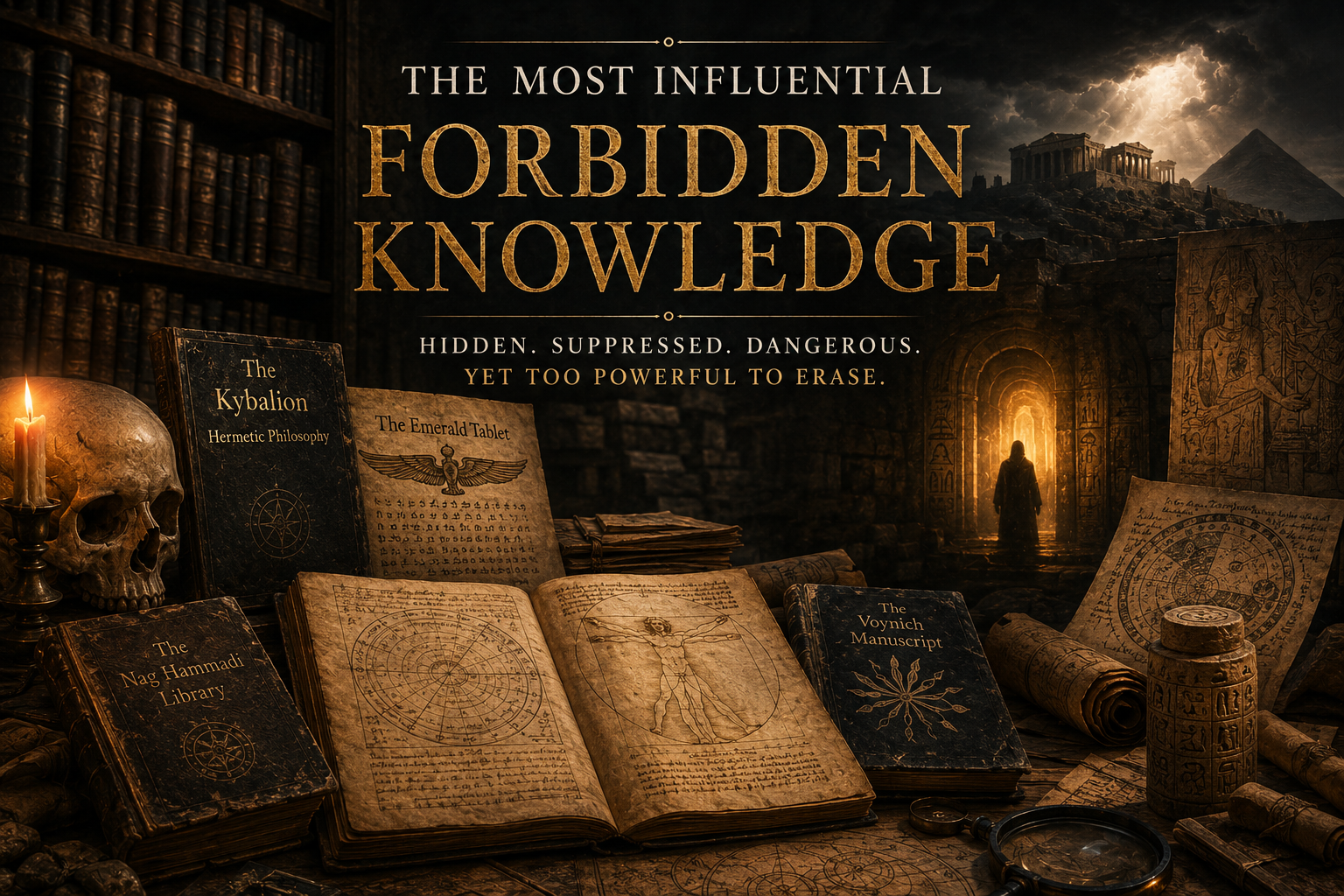
Stories about the Most Influential Forbidden Knowledge ask a sharp question: what happens when people learn what they were never meant to know? From ancient myths to modern novels, these works show how truth can free people, tempt them, or destroy them.

In this Guide

forbidden knowledge

What Does Forbidden Knowledge Mean?

Forbidden knowledge is truth that a person, group, or system tries to hide.

In literature, this can mean a secret book, a banned idea, a hidden history, or a dangerous scientific discovery. The knowledge is “forbidden” because someone in power fears what it might do.

The Most Influential Forbidden Knowledge often changes the hero’s life. Once the truth is known, the character cannot return to innocence.

This idea appears in myths, religious stories, Gothic novels, dystopian fiction, and campus novels. It stays popular because readers understand the pull of secrets.

Most Influential Forbidden Knowledge in Classic Literature

Classic literature uses forbidden knowledge to test human desire, pride, and fear.

One of the oldest examples is the Tree of Knowledge in the Book of Genesis. Adam and Eve gain knowledge, but that knowledge brings loss. The story shapes much of Western literature because it links knowledge with choice and consequence.

Greek myth gives us Prometheus, who steals fire for humans. Fire stands for power, craft, and progress. Yet Prometheus suffers because he gives humans a gift the gods wanted to control.

In Paradise Lost, John Milton turns the fall of humanity into a grand poem about rebellion, pride, and desire. The poem asks why people choose danger when they know the cost. You can learn more about Milton through the Poetry Foundation’s John Milton page.

Mary Shelley’s Frankenstein is another key work. Victor Frankenstein learns how to create life, but he lacks wisdom. His discovery becomes a warning about science without care.

These works help explain why the Most Influential Forbidden Knowledge is never just about facts. It is about what people do after they gain those facts.

Why Most Influential Forbidden Knowledge Still Matters Today

Forbidden knowledge feels modern because we still argue over who controls truth.

Books are banned. Data is hidden. Governments shape history. Schools debate what students should read. These real issues make older stories feel fresh.

In George Orwell’s 1984, the Party controls language, memory, and truth. Winston wants to know what life was like before the Party. That desire becomes an act of rebellion.

In Ray Bradbury’s Fahrenheit 451, books are illegal because they make people think and question. Firefighters burn books instead of saving homes. The novel turns censorship into a warning about comfort, fear, and silence.

The Most Influential Forbidden Knowledge in these novels matters because it shows how truth can threaten power.

Modern Books That Explore Forbidden Knowledge

Modern authors often connect forbidden knowledge to identity, memory, and social control.

In Margaret Atwood’s The Handmaid’s Tale, women are denied reading, writing, and public power. Knowledge becomes a way to resist a cruel system. Even small memories of the past matter.

In Umberto Eco’s The Name of the Rose, a hidden book causes fear inside a medieval monastery. The mystery asks whether laughter, thought, and free debate can weaken authority.

Philip Pullman’s His Dark Materials also uses forbidden knowledge in a bold way. Lyra’s world is full of rules that adults refuse to explain. Her search for truth becomes a fight for freedom.

These stories show that the Most Influential Forbidden Knowledge can appear in many forms, from banned books to hidden memories.

Symbols and Themes in Most Influential Forbidden Knowledge

Writers often use symbols to show why hidden truth feels powerful.

Books are one of the clearest symbols. A book can stand for memory, freedom, or danger. In Fahrenheit 451, books become a sign of human thought itself.

Fire is another strong symbol. It can mean light, learning, and destruction. Prometheus gives fire to humans, while Bradbury’s firefighters use fire to erase ideas.

Doors, locked rooms, and secret libraries also appear often. They show the border between safety and truth. Once a character crosses that border, the story changes.

The main themes are power, curiosity, guilt, and responsibility. These themes are useful for essays because they connect character choices to larger ideas. If you want help naming these tools, see this guide to literary devices.

The Most Influential Forbidden Knowledge often asks one hard question: should every truth be known?

These books are strong choices for students who want to study forbidden knowledge in literature.

  • Frankenstein by Mary Shelley: A major Gothic novel about science, ambition, and moral duty.
  • Fahrenheit 451 by Ray Bradbury: A short, powerful dystopian novel about censorship and the value of books.

Both works are often taught in high school and college. They also pair well with essays about symbolism, conflict, and theme.

For background on Shelley’s novel, visit Britannica’s page on Frankenstein.

How to Write About Most Influential Forbidden Knowledge in an Essay

A strong essay should focus on the cost of knowledge.

Start by asking who hides the truth. Then ask who seeks it and why. This helps you move beyond plot summary.

You can also look at symbols. A secret book, a flame, or a locked room can reveal the story’s deeper meaning.

For example, an essay on Frankenstein might argue that Victor does not fail because he learns too much. He fails because he refuses care, honesty, and responsibility.

That point makes the Most Influential Forbidden Knowledge more complex. The problem is not always knowledge itself. The problem is how people use it.

FAQs About Most Influential Forbidden Knowledge

What is the Most Influential Forbidden Knowledge in literature?

The Most Influential Forbidden Knowledge often includes hidden truth, banned books, secret science, or knowledge of good and evil. Famous examples appear in Genesis, Frankenstein, and Fahrenheit 451.

Why do writers use forbidden knowledge?

Writers use it to create conflict and raise moral questions. It helps show what characters want and what they fear.

Is forbidden knowledge always bad?

No. Many stories show that knowledge can free people. The danger often comes from pride, control, or fear.

What theme connects most forbidden knowledge stories?

The main theme is responsibility. A character must decide what to do with the truth once they have it.

Key Takeaway

The Most Influential Forbidden Knowledge in literature is powerful because it links truth with risk. These stories remind us that knowledge can open minds, but it also demands courage and care.

For students, this topic is a rich path into theme, symbolism, and character analysis. It turns a simple question into a lasting one: what truths are worth the cost?

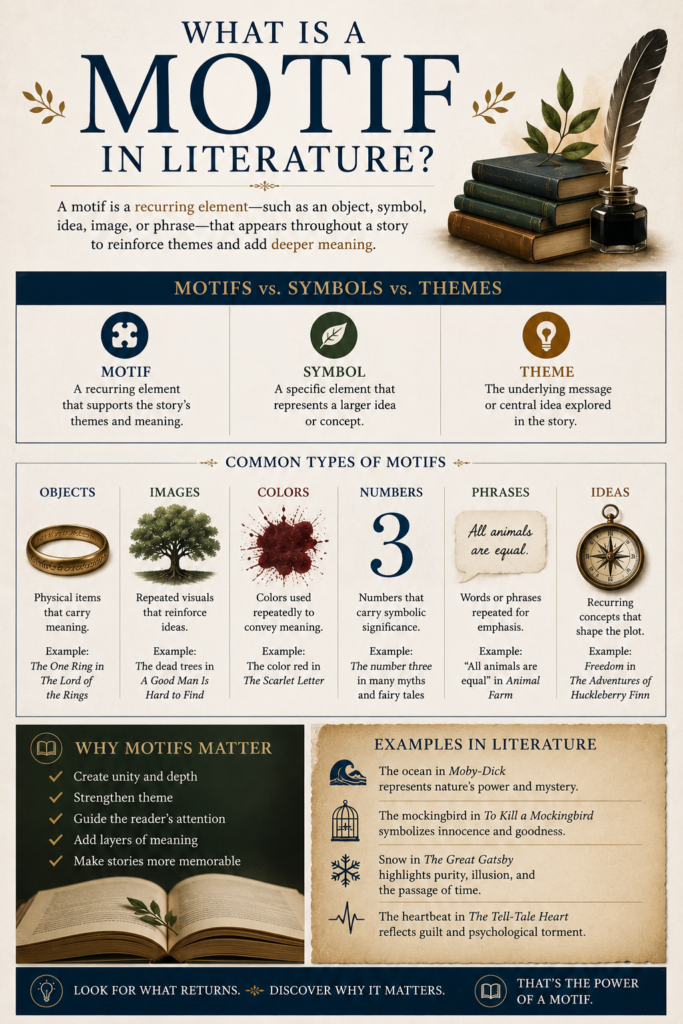
What Is a Motif in Literature?

Motif in Literature
Motif in Literature

What Is a Motif in Literature?

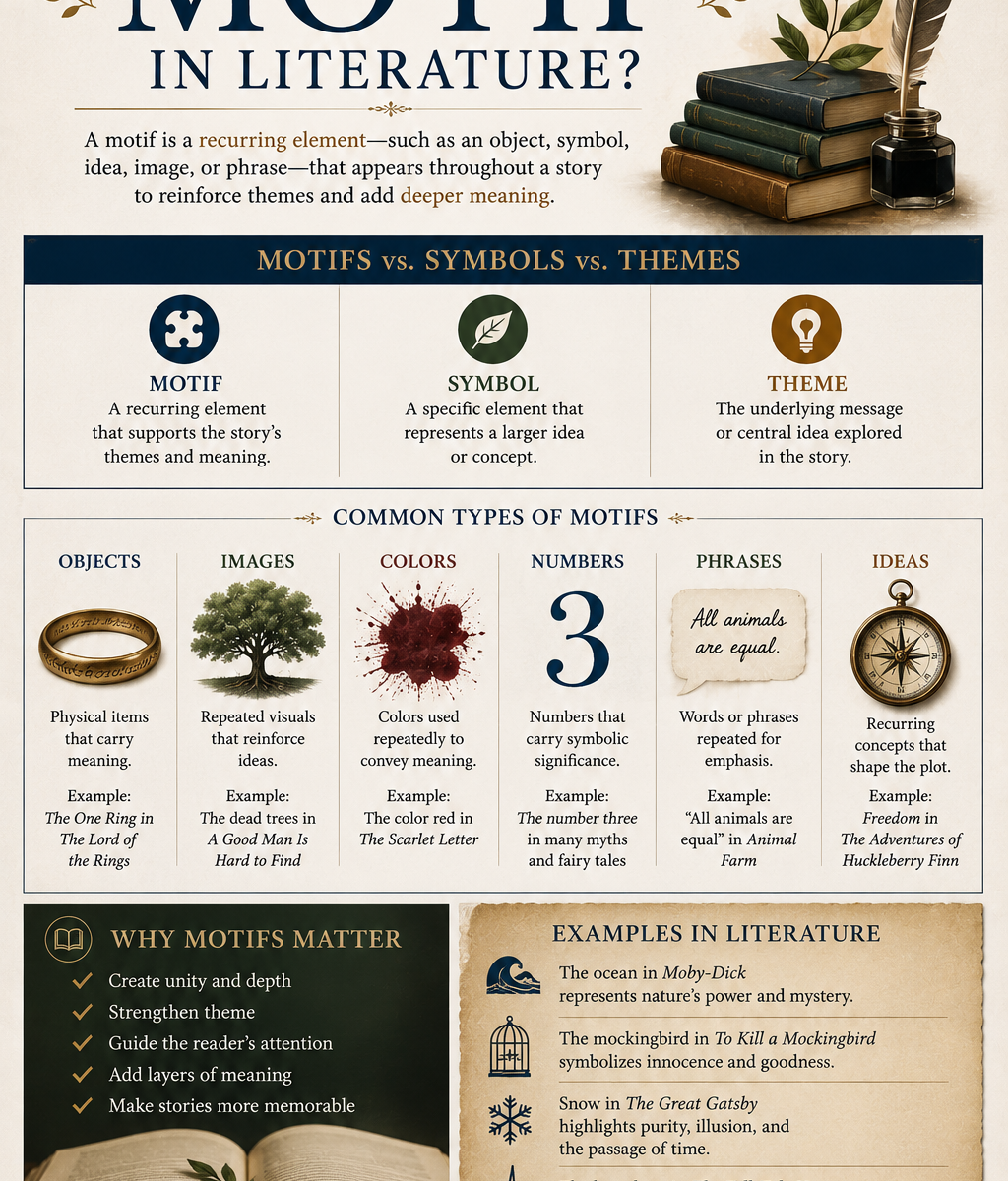
What Is a Motif in Literature? A motif is a repeated detail, image, word, object, or idea that helps build meaning in a story.

Once you know how to spot motifs, you can see how authors guide readers toward deeper themes without stating them directly.

In this Guide

  • What a motif means
  • Why motifs matter
  • Motif vs. theme
  • Famous motif examples
  • How to spot motifs while reading
  • Books that help you practice
  • FAQ

What Is a Motif in Literature? A Simple Definition

A motif is a repeated pattern that adds meaning to a text.

A motif can be an object, color, phrase, sound, place, or action that appears more than once. It is not random. The author repeats it for a reason.

The answer to What Is a Motif in Literature? is simple: it is a clue that points toward a larger idea.

For example, if a novel keeps showing locked doors, the motif may suggest secrets, fear, or limits. The door itself matters, but the repeated pattern matters more.

Why Motifs Matter in Literature

Motifs help readers notice what a story is really about.

Authors use motifs to connect scenes that may seem separate. A repeated image can remind you of a character’s struggle or a story’s main conflict.

Motifs also make literature feel richer. They give a text shape and rhythm. When a motif appears again, it often carries more meaning than it did before.

This is why teachers often ask students to track repeated details. A motif can lead you straight to a strong theme statement.

If you want to compare motifs with other tools writers use, this literary devices list is a helpful place to start.

What Is a Motif in Literature? Motif vs. Theme

A motif repeats. A theme reveals a message.

This is one of the most common points of confusion. A motif is a pattern inside the story. A theme is the deeper idea the story explores.

Think of it this way: rain might be a motif. The theme might be that grief changes how people see the world.

In Macbeth, blood appears again and again. Blood is a motif. It connects to themes of guilt, violence, and moral collapse.

You can read more about Shakespeare’s play through Britannica’s overview of Macbeth.

What Is a Motif in Literature? Common Examples Students Know

Many famous books use motifs that are easy to recognize once you look for them.

In The Great Gatsby by F. Scott Fitzgerald, the green light is a key motif. It appears across the water and comes to represent Gatsby’s hope, longing, and dream of a perfect future.

In To Kill a Mockingbird by Harper Lee, mockingbirds act as a motif tied to innocence. The repeated idea helps readers think about who gets harmed even when they have done no wrong.

In Lord of the Flies by William Golding, the conch shell becomes a motif connected to order and rules. As the boys lose respect for it, their society begins to break apart.

In poetry, a repeated image can work the same way. The Poetry Foundation offers many poems where repeated images carry meaning. You can explore examples at the Poetry Foundation.

How a Motif Builds Theme

A motif often acts like a bridge between details and big ideas.

When a writer repeats a detail, that detail starts to collect meaning. By the end of the story, it may reveal something about love, power, identity, or fear.

For example, a story may repeat images of mirrors. At first, they may seem like simple objects. Later, they may connect to a character’s struggle with self-image or truth.

This is why motifs are useful in essays. They give you evidence you can point to. You can quote the repeated detail, then explain how it supports the theme.

How to Spot a Motif While Reading

Look for details that return at important moments.

When students ask, What Is a Motif in Literature?, the best answer is often found through practice. Notice what keeps coming back.

Pay attention to repeated colors, objects, phrases, weather, places, or actions. Then ask what those details seem to suggest.

A good test is this: if the detail appeared only once, it might just be description. If it returns and gains meaning, it may be a motif.

For more help with related terms, see this guide to common literary devices.

Books to Practice Finding Motifs

These books make motif practice clear and useful.

  • The Great Gatsby by F. Scott Fitzgerald
  • Macbeth by William Shakespeare

Both texts use repeated images in ways that connect strongly to theme. They are also common in high school and college literature classes.

FAQ: What Is a Motif in Literature?

What is a motif in literature in simple words?

A motif is something that repeats in a story and helps create meaning. It can be an image, object, word, or idea.

How is a motif different from a symbol?

A symbol stands for something beyond itself. A motif repeats across the text and often includes symbols, images, or ideas.

Can a character be a motif?

A character is usually not a motif. But a repeated action, phrase, or role connected to a character can become one.

Why do teachers ask about motifs?

Motifs help students find themes. They also give strong evidence for literary analysis essays.

What Is a Motif in Literature? Why should I care?

It helps you read with more insight. Motifs show how small details connect to the story’s bigger message.

Key Takeaway

What Is a Motif in Literature? It is a repeated detail that helps reveal deeper meaning.

Here is a simple reading tip: when something shows up more than once, mark it. Then ask, “What idea does this pattern point toward?” That question can lead you to a stronger analysis.

Best Classic Moon Symbolism in Literature: Meaning, Themes, and Books to Read

Moon symbolism

The Best Classic Moon Symbolism in literature often points to mystery, change, hidden truth, and emotion. Writers use the moon because it feels familiar, but it also feels strange and powerful.

From Gothic novels to Romantic poems, the moon can light up secrets that characters try to hide. It can also show fear, love, madness, or hope in a quiet way.

Moon symbolism

In this Guide

  • What moon symbolism means in classic literature
  • How Gothic writers use the moon
  • Moon symbolism in poetry
  • Famous examples from novels and plays
  • Common moon themes
  • Books to read for moon symbolism
  • FAQs about moon symbolism

What Is Best Classic Moon Symbolism?

The moon often acts like a mirror for a character’s inner life.

In classic literature, the moon is rarely just part of the setting. It can show that a scene is strange, emotional, secret, or unsafe.

The Best Classic Moon Symbolism works because the moon changes shape. It grows, fades, disappears, and returns. That makes it a strong symbol for change, time, memory, and unstable feelings.

The moon also rules the night. Since night often hides what daylight reveals, moonlight can create tension. It lets readers see a little, but not everything.

For more help with symbols in fiction, read our guide on how to find symbolism in a story.

Best Classic Moon Symbolism in Gothic Literature

Gothic writers use the moon to make fear feel beautiful and dangerous.

In Gothic literature, moonlight often falls on castles, graveyards, windows, and wild landscapes. It gives scenes a dreamlike look, but it can also make them feel unsafe.

In Dracula by Bram Stoker, the night world matters. The moon helps build a mood of danger because Dracula’s power grows after dark. Moonlit scenes remind readers that evil can move quietly when people feel most helpless.

In Frankenstein by Mary Shelley, moonlight often appears during lonely or fearful moments. Victor sees the world through guilt and dread, so the moon can feel cold instead of calm.

This is why the Best Classic Moon Symbolism in Gothic fiction often connects to fear, isolation, and the unknown. The moon does not comfort the characters. It watches them.

Best Classic Moon Symbolism in Romantic and Victorian Poetry

Poets often turn the moon into a symbol of longing, beauty, and deep thought.

Romantic poets loved nature because they saw it as a path to feeling and imagination. The moon gave them a perfect image for quiet sadness, wonder, and spiritual mystery.

Percy Bysshe Shelley’s poem To the Moon presents the moon as tired and wandering. It feels almost human. You can read the poem at the Poetry Foundation.

Emily Dickinson also uses the moon in striking ways. In poems like “The Moon was but a Chin of Gold,” the moon becomes strange, almost like a face in the sky. Her moon is not simple or soft. It feels alive and hard to explain.

The Best Classic Moon Symbolism in poetry often depends on mood. A moon can feel romantic in one poem and lonely in another. The symbol changes with the speaker’s mind.

Famous Examples of Moon Symbolism in Classic Literature

Many famous works use the moon to show love, secrecy, or a shift in power.

In Shakespeare’s A Midsummer Night’s Dream, the moon is tied to romance, magic, and confusion. Lovers meet in the woods at night, where moonlight helps create a world that feels playful but unstable.

In Nathaniel Hawthorne’s The Scarlet Letter, moonlight matters during scenes of guilt and hidden truth. The night does not fully hide sin. Instead, the moon gives just enough light to make secrets feel visible.

In Jane Eyre by Charlotte Brontë, the moon often has a guiding role. Jane sometimes sees it as calm and almost motherly. It can reflect her need for safety, love, and moral direction.

These examples show why moon symbolism stays popular in classrooms. It helps readers track a character’s fear, desire, or private struggle without a long speech.

Best Classic Moon Symbolism and Common Themes

The moon can carry many meanings, but a few themes appear again and again.

Change is one of the most common meanings. Because the moon has phases, it often points to growth, decline, or a coming shift.

Mystery is another key theme. Moonlight reveals shapes but not details. That makes it perfect for scenes where characters do not fully understand what they face.

Madness also appears in older literature and folklore. The word “lunatic” comes from an old belief that the moon could affect the mind. You can learn more about the moon’s cultural history through Britannica’s overview of the Moon.

Love is a softer meaning. Moonlit scenes can feel private and emotional, which is why writers often place lovers under the moon.

The Best Classic Moon Symbolism does not have one fixed meaning. The scene, character, and genre all shape what the moon suggests.

How to Spot Best Classic Moon Symbolism in a Story

Look at what happens when the moon appears.

Ask what the moon changes in the scene. Does it make the setting feel peaceful, eerie, romantic, or tense?

Notice who sees the moon. A lonely character may read the moon as cold. A hopeful character may see it as beautiful.

Pay attention to light and shadow. Moonlight often sits between darkness and full truth. That makes it useful when a story deals with secrets.

If you want a simple method, use this symbolism reading guide to practice with any poem, novel, or short story.

Recommended Books for Studying Best Classic Moon Symbolism

These books are strong choices for students who want clear examples of moon imagery and symbolism.

  • Dracula by Bram Stoker
  • Jane Eyre by Charlotte Brontë
  • The Poems of Emily Dickinson by Emily Dickinson

Dracula is useful if you want to study moonlight, fear, and Gothic mood. The night scenes show how setting can shape terror.

Jane Eyre gives a different kind of moon symbol. The moon often feels moral, emotional, and personal.

Emily Dickinson’s poetry is a great choice for close reading. Her moon images are short, strange, and rich with meaning.

FAQs About Moon Symbolism in Literature

What does the moon usually symbolize in literature?

The moon often symbolizes mystery, change, emotion, secrecy, or the hidden self. Its meaning depends on the scene and the character.

Why do Gothic writers use the moon so often?

Gothic writers use the moon because it creates fear and beauty at the same time. Moonlight makes a scene visible but still unclear.

Is moon symbolism always romantic?

No. The moon can suggest romance, but it can also suggest danger, madness, loneliness, or guilt.

How can I analyze moon symbolism for school?

Start with the mood of the scene. Then ask what the moon reveals, what it hides, and how the character reacts to it.

Key Takeaway: Best Classic Moon Symbolism Still Matters

The Best Classic Moon Symbolism works because the moon feels both close and mysterious. It lights the dark without removing the dark completely.

That is why writers keep returning to it. The moon can show love, fear, change, and secret truth in one quiet image.

When you see the moon in a classic text, pause for a moment. It may be telling you what the characters cannot say out loud.

error

Enjoy this article? Please spread the word :)

Follow by Email
BLUESKY
fb-share-icon
Reddit
LinkedIn
Share
RSS