Famous Allegories in Literature

Famous Allegories

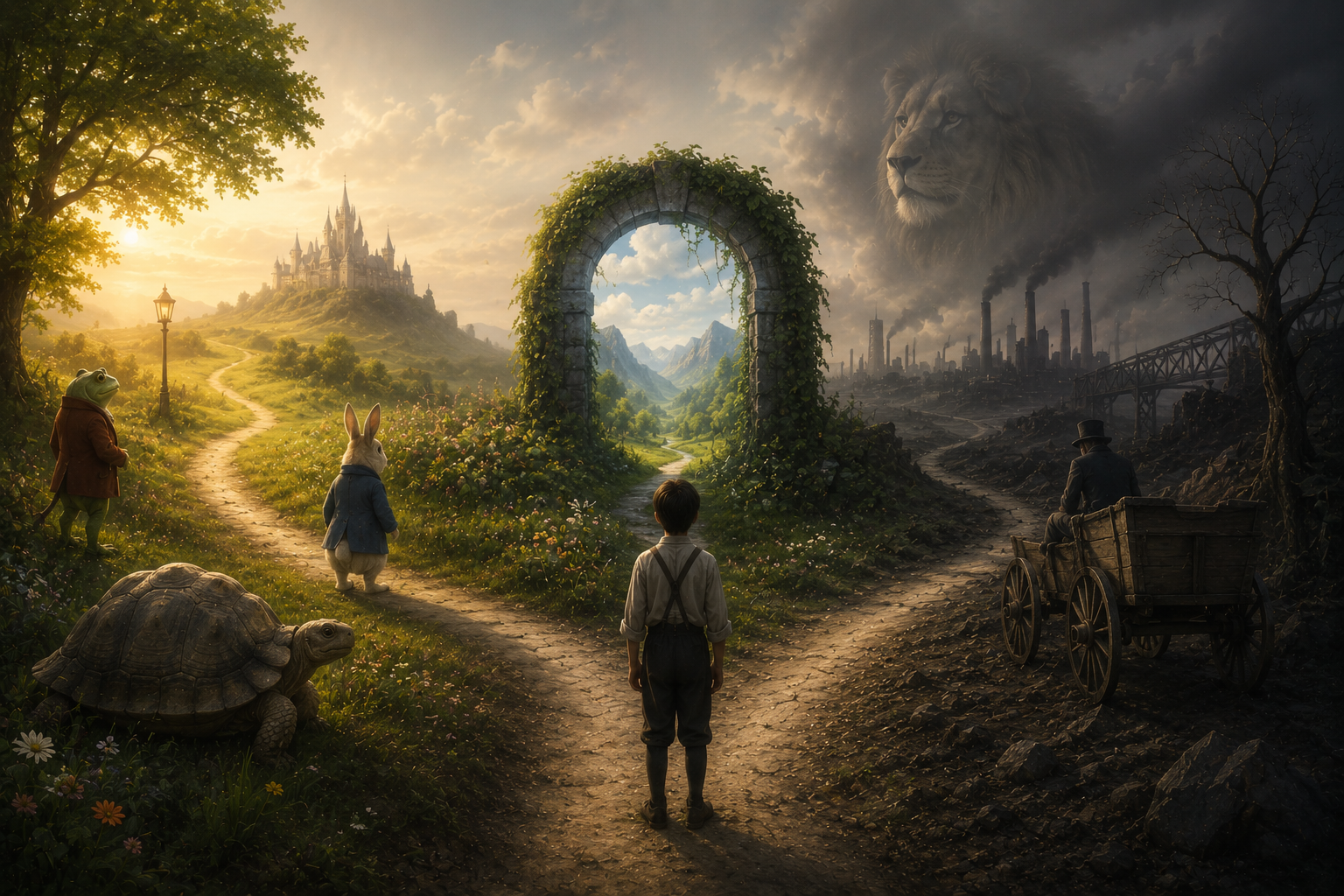
Some stories mean more than they seem to mean on the surface. Famous Allegories in Literature use characters, places, and events to point to deeper ideas about power, faith, society, or human nature.

If you know how allegory works, hard books become easier to understand. This guide explains Famous Allegories in Literature with clear examples and practical tips for students.

In this Guide

  • What allegory means
  • Why writers use allegory
  • Famous examples students should know
  • How to analyze allegory in class
  • Books to read next
  • FAQ
Famous Allegories

Famous Allegories in Literature: What Does Allegory Mean?

An allegory is a story with a hidden meaning beneath the main plot.

In an allegory, a character may stand for an idea. A setting may reflect a real society. A journey may show a moral or spiritual struggle.

For example, a farm in a story may not just be a farm. It may represent a country, a political system, or a group of people.

This is why Famous Allegories in Literature often appear in English classes. They teach readers to look past the surface and ask, “What else is this story saying?”

For a helpful general definition, you can read Britannica’s overview of allegory in art and literature.

Why Writers Use Allegory

Allegory helps writers talk about big ideas through a story people can remember.

A direct argument can feel dry. A story can make the same idea feel alive. Readers may connect with a character first, then notice the deeper meaning later.

Writers also use allegory when it is risky to speak openly. A political novel can hide criticism inside animals, fantasy lands, or strange events.

That is one reason Famous Allegories in Literature often focus on power. They can show how leaders gain control, how people lose freedom, or how fear changes a community.

Famous Allegories in Literature Students Should Know

These works appear often in high school, AP Literature, and college courses.

Animal Farm by George Orwell

Animal Farm is one of the clearest examples of allegory. On the surface, it is about farm animals who rebel against humans.

On a deeper level, it reflects the Russian Revolution and the rise of totalitarian rule. Napoleon the pig represents a corrupt leader who uses fear and lies to stay in power.

This book is often used to teach political allegory because the symbols are direct but still powerful. You can learn more about Orwell and his work through The Orwell Foundation.

The Pilgrim’s Progress by John Bunyan

The Pilgrim’s Progress is a religious allegory. The main character, Christian, travels from the City of Destruction toward the Celestial City.

His journey represents the Christian path toward salvation. Characters like Faithful and Hopeful stand for spiritual qualities.

The names are simple on purpose. Bunyan wants readers to see the moral meaning right away.

Lord of the Flies by William Golding

Lord of the Flies is not always called a pure allegory, but it has strong allegorical parts. A group of boys becomes trapped on an island without adults.

The island becomes a small version of human society. The conch stands for order, while the “beast” reflects fear and violence inside people.

This novel asks a hard question: what happens when rules disappear?

The Lion, the Witch and the Wardrobe by C. S. Lewis

This fantasy novel is often read as a Christian allegory. Aslan’s sacrifice and return connect with the story of Jesus.

The White Witch represents evil, control, and spiritual coldness. Narnia’s winter shows a world trapped under that power.

Even readers who do not focus on religion can still study the book’s symbols and moral themes.

The Crucible by Arthur Miller

The Crucible tells the story of the Salem witch trials. It also points to the anti-communist fear in 1950s America.

Miller uses the past to comment on his own time. The play shows how fear can lead people to accuse others without proof.

This makes it one of the most useful Famous Allegories in Literature for students who study history and drama together.

How Famous Allegories in Literature Work

Allegory works through patterns, not just single symbols.

A symbol can be one object with a deeper meaning. Allegory is larger. It often shapes the whole story.

In Animal Farm, the animals, the farm, the rebellion, and the rules all connect to political ideas. The full plot carries the hidden meaning.

When you study Famous Allegories in Literature, look for repeated links between the story world and a larger idea. Ask what each major part stands for.

Allegory vs. Symbolism: What Is the Difference?

Allegory and symbolism are related, but they are not the same.

A symbol is usually one thing that suggests a deeper meaning. A dove may suggest peace. A storm may suggest conflict.

An allegory uses many connected symbols across the whole story. The plot itself points to another meaning.

Think of symbolism as one clue. Think of allegory as a full code.

How to Analyze Famous Allegories in Literature for Class

Good allegory analysis starts with the surface story.

First, explain what happens in the plot. Then ask what the events may represent. Do not skip the basic story, because the deeper meaning depends on it.

Next, track characters and settings. If a character seems larger than life, they may stand for an idea, group, or real person.

Pay attention to names. Allegorical works often use names that hint at meaning, like Christian, Faithful, or Napoleon.

You should also connect the work to its context. A political allegory often makes more sense when you know the history behind it.

If you want help with close reading, this guide on how to read literature like a scholar can help you notice deeper patterns in a text.

image-slider-with-thumbnail1.jpeg
PlayPause
previous arrow
next arrow
image-slider-with-thumbnail1.jpeg
image-slider-with-thumbnail3.jpeg
image-slider-with-thumbnail4.jpeg
ChatGPT Image Jun 27, 2026, 06_33_13 PM
ChatGPT Image Jun 27, 2026, 06_36_37 PM
ChatGPT Image Jun 27, 2026, 06_38_39 PM
ChatGPT Image Jun 27, 2026, 06_31_22 PM
image-slider-with-thumbnail7.jpeg
ChatGPT Image Jun 27, 2026, 06_29_43 PM
ChatGPT Image Jun 27, 2026, 06_27_44 PM
image-slider-with-thumbnail6.jpeg
ChatGPT Image Jun 27, 2026, 06_15_07 PM
image-slider-with-thumbnail5.jpeg
ChatGPT Image Jun 27, 2026, 06_22_43 PM
ChatGPT Image Jun 27, 2026, 06_25_37 PM
ChatGPT Image Jun 27, 2026, 06_19_43 PM
ChatGPT Image Jun 27, 2026, 06_12_00 PM
ChatGPT Image Jun 27, 2026, 06_08_50 PM
ChatGPT Image Jun 26, 2026, 04_54_23 PM
ChatGPT Image Jun 27, 2026, 05_53_51 PM
ChatGPT Image Jun 28, 2026, 08_35_55 AM
previous arrow
next arrow

Common Themes in Famous Allegories in Literature

Many allegories explore the same major human problems.

One common theme is corruption. A leader may begin with good ideas but become selfish after gaining power.

Another common theme is moral choice. A character may face temptations, tests, or dangers that show inner growth.

Allegories also often focus on fear. Fear can make people obey, blame others, or give up their freedom.

These themes help explain why Famous Allegories in Literature stay relevant. They speak to problems that repeat in many times and places.

Tips for Choosing an Allegory to Read

Pick an allegory that matches your class goals and your interests.

If you like politics or history, start with Animal Farm or The Crucible. These works connect well to real events.

If you like faith, fantasy, or moral journeys, try The Pilgrim’s Progress or The Lion, the Witch and the Wardrobe.

If you want a darker look at human nature, choose Lord of the Flies. It gives you a lot to discuss in essays.

Before you read, ask your teacher if historical background will help. A little context can make Famous Allegories in Literature much easier to understand.

Books to Consider

These titles are useful if you want to read or study allegory more deeply. You can find most of them on Amazon, at libraries, or in school bookstores.

  • Animal Farm by George Orwell
  • The Pilgrim’s Progress by John Bunyan
  • Lord of the Flies by William Golding

For students, Animal Farm is the best first choice. It is short, clear, and full of strong allegorical meaning.

FAQ About Famous Allegories in Literature

What are Famous Allegories in Literature?

They are well-known stories that use characters, events, and settings to represent deeper ideas. Examples include Animal Farm, The Pilgrim’s Progress, and The Crucible.

Is every symbolic story an allegory?

No. A story can have symbols without being an allegory. Allegory usually shapes the whole story, not just one object or scene.

Why do teachers assign allegories?

Teachers assign them because they build close reading skills. Allegories help students connect plot, theme, history, and symbols.

What is the easiest allegory to start with?

Animal Farm is a strong starting point. The plot is simple, but the political meaning gives students plenty to analyze.

Key Takeaway

Famous Allegories in Literature teach readers to look below the surface. Once you learn to spot the deeper meaning, stories become richer, sharper, and more useful for essays. 📚

Themes in Lord of the Flies: A Student-Friendly Guide

themes in Lord of the Flies

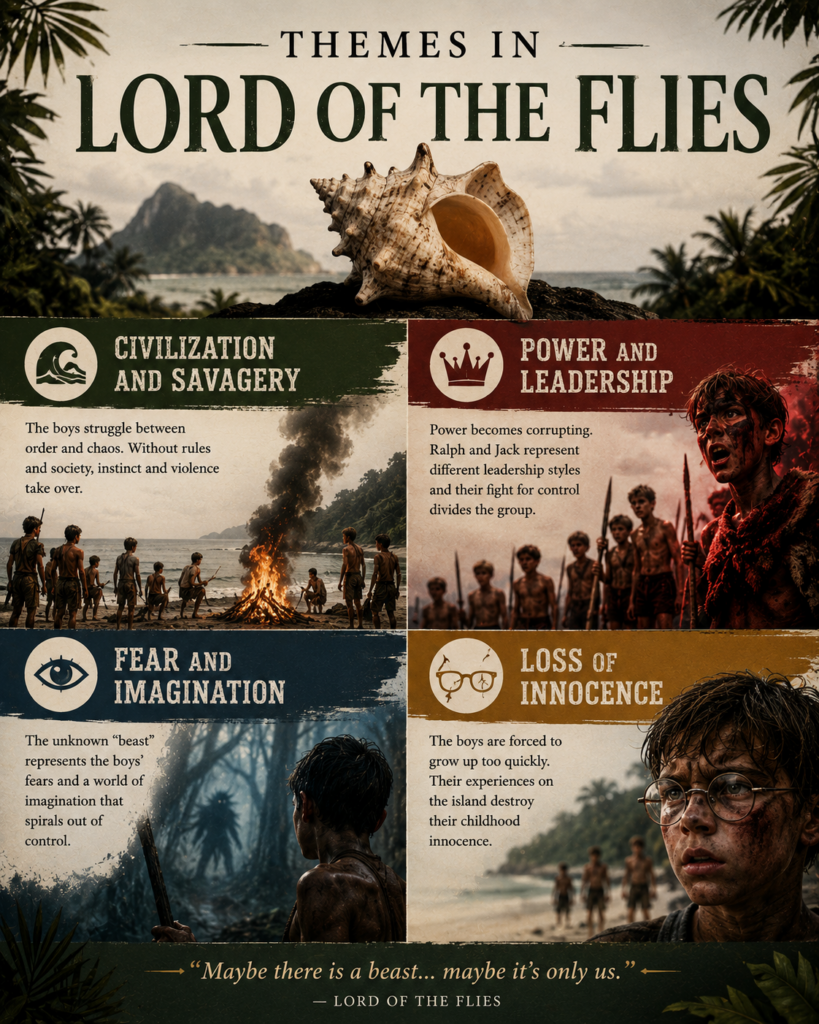
William Golding’s novel may look like a survival story, but it is really about human nature under pressure. This guide explains the major themes in Lord of the Flies so students can read the novel with more confidence.

You will see how power, fear, violence, and social order shape the boys’ choices on the island.

In this Guide

  • Why the themes matter
  • Civilization and savagery
  • Power and leadership
  • Fear and imagination
  • Loss of innocence
  • Symbols, essay ideas, and FAQs
themes in Lord of the Flies

Why the Themes in Lord of the Flies Matter

The novel asks a sharp question: what happens when rules disappear?

The main themes in Lord of the Flies help readers see that the island is more than a setting. It becomes a test of society, morality, and fear.

At first, the boys try to copy the adult world. They hold meetings, choose a leader, and use the conch to give each person a turn to speak. Yet that order starts to break down when fear grows and Jack gains power.

This is why the book often appears in high school and AP Literature classes. It gives students a clear way to study conflict, symbols, and character change.

Major Themes in Lord of the Flies: Civilization vs. Savagery

This is the central conflict of the novel.

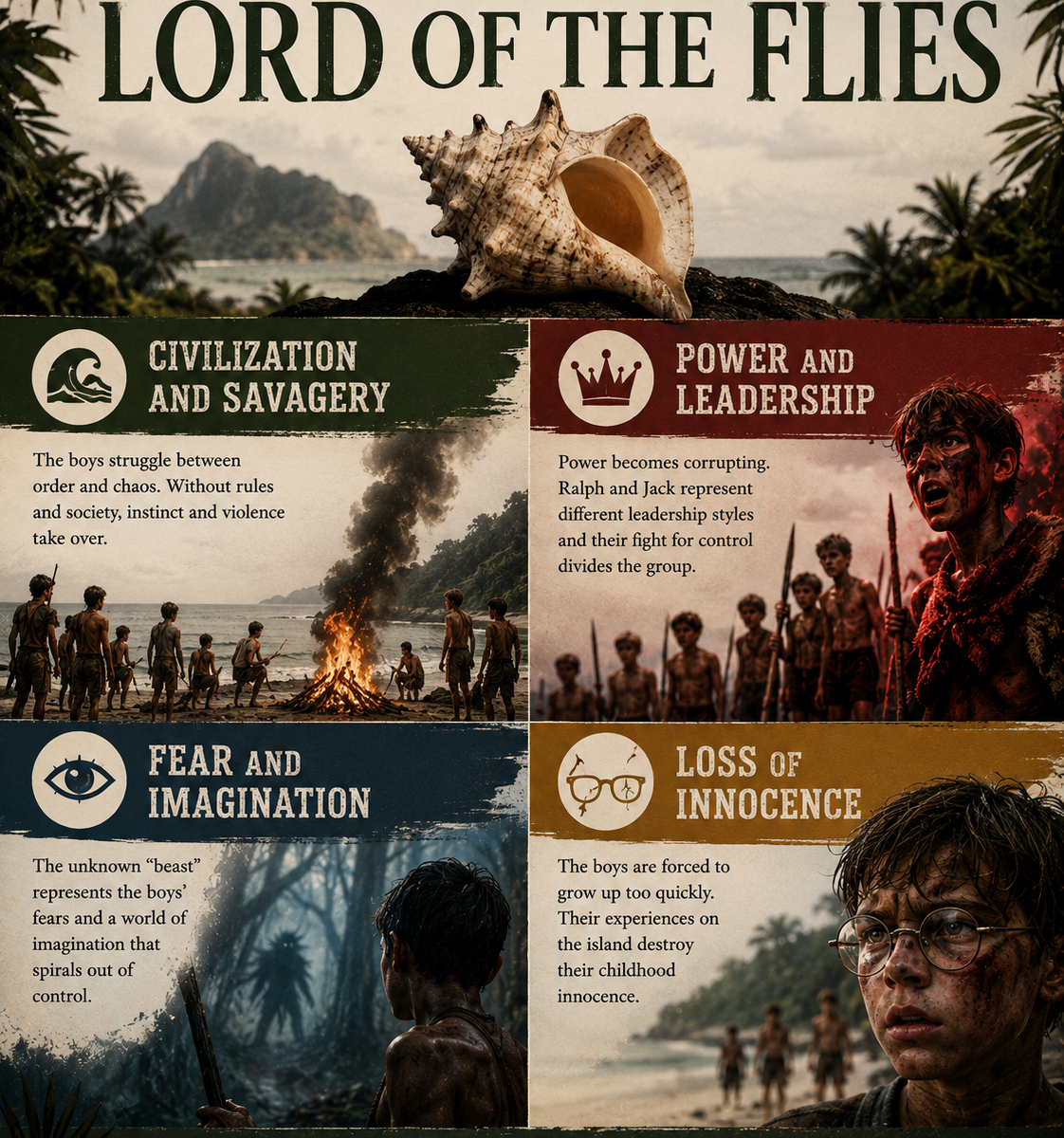
One of the most important themes in Lord of the Flies is the struggle between order and violence. Ralph stands for rules, rescue, and shared responsibility. Jack stands for force, hunting, and control.

The conch shows civilization at first. When the boys respect it, they listen to each other. When they ignore it, the group loses its moral center.

Golding does not suggest that savagery comes from the island itself. The boys bring it with them. This makes the novel darker because the danger is not only outside them. It is inside them too.

A similar idea appears in Shakespeare’s Macbeth. Macbeth does not begin as a monster, but ambition and fear pull him toward violence. In both works, pressure reveals what a person may become.

The Theme of Power and Leadership

The boys’ leaders show two very different ways to gain control.

Ralph becomes leader because other boys trust him. He wants shelters, a signal fire, and a plan for rescue. His power depends on cooperation.

Jack uses fear, excitement, and punishment. He offers meat and the thrill of the hunt. His leadership feels easier because it gives the boys quick rewards.

This theme matters because Golding shows how fragile fair leadership can be. A group may choose safety and rules, but fear can make a harsh leader seem strong.

When you write about the themes in Lord of the Flies, it helps to compare Ralph and Jack. Their conflict is not just personal. It shows two models of society.

Fear, Imagination, and the Beast

The beast is powerful because the boys believe in it.

Fear is one of the most useful themes in Lord of the Flies for essays because it affects nearly every major event. The littluns fear a beast. The older boys try to explain it, but they cannot fully control the panic.

The beast also becomes a tool. Jack uses fear of the beast to gain loyalty. If the boys feel unsafe, they look to him for protection.

Simon understands the truth before the others do. The beast is not a real monster hiding in the jungle. It is the darkness within people.

This idea connects to Arthur Miller’s The Crucible. In that play, fear spreads through a community and makes people act against reason. Golding shows a similar pattern on the island.

Loss of Innocence in Lord of the Flies

The island changes the boys, but it also reveals them.

At the start, the boys act like schoolchildren on an adventure. They swim, explore, and treat the island like a game. That innocent mood does not last.

The deaths of Simon and Piggy mark a painful shift. After these moments, the reader can no longer see the island as a simple place of play.

Ralph’s final tears matter because he now understands what people can do. He cries for Piggy, for Simon, and for the end of his own innocence.

Among the major themes in Lord of the Flies, this one often feels the most personal. Students can trace how childhood trust gives way to guilt and grief.

The Theme of Human Nature

Golding presents a dark view of what people may become without moral limits.

The novel does not claim that every person is evil all the time. Ralph, Piggy, and Simon all show care or reason. Yet the book suggests that goodness needs support from rules, empathy, and courage.

Simon is the clearest moral figure. He helps the littluns, seeks truth, and sees beyond the group’s fear. His death shows how a crowd can destroy a person who stands apart.

This is one reason the themes in Lord of the Flies still matter. The novel asks readers to think about school groups, politics, teams, and any place where people follow a crowd.

Symbols That Support the Themes in Lord of the Flies

Golding uses simple objects to carry big ideas.

The conch stands for order and shared speech. When it breaks, the boys have lost more than a shell. They have lost the system that kept them human.

Piggy’s glasses stand for reason and practical knowledge. They help start the fire, which means they also connect to rescue and hope. When the glasses are stolen, reason is pushed aside.

The signal fire stands for connection to the outside world. When the boys care for it, they still want rescue. When they forget it, they drift further from civilized life.

The Lord of the Flies, the pig’s head on a stick, stands for corruption and inner evil. It gives shape to the fear that has haunted the group.

For a reliable background on the author and novel, students can visit Britannica’s page on William Golding.

How to Write About Themes in Lord of the Flies

A strong theme essay should make a claim, not just name a topic.

Do not write only that the novel is about power. Instead, explain what Golding says about power. For example: Golding shows that fear can make violent leadership seem attractive.

Then support your claim with scenes. You might use the election, Jack’s tribe, the killing of Simon, or the breaking of the conch.

If you need help shaping a thesis and using evidence, see our guide on how to write a literary analysis essay.

You can also build a paragraph around a symbol. For example, Piggy’s glasses show how reason can be useful, but also easy to steal when violence takes over.

For extra practice, you can use our student literature study resources to plan theme notes and essay ideas.

Helpful Books to Read Next

These books can help you understand the novel and its larger literary context.
  • Lord of the Flies by William Golding
  • How to Read Literature Like a Professor by Thomas C. Foster

For more context on major literary terms, the Poetry Foundation glossary is a helpful reference.

FAQ: Themes in Lord of the Flies

What is the main theme of Lord of the Flies?

The main theme is the conflict between civilization and savagery. Golding shows how quickly order can break down when fear and violence take control.

What does the beast symbolize?

The beast symbolizes the darkness within human beings. It is not just a creature the boys fear. It reflects their own capacity for violence.

How does Golding show loss of innocence?

Golding shows it through the boys’ shift from play to cruelty. Simon’s and Piggy’s deaths make the loss clear.

Why is the conch important?

The conch stands for rules, speech, and democracy. When it is destroyed, civilized order has fully collapsed.

How can I write a thesis about this novel?

Choose one theme, make a clear claim about Golding’s message, and connect it to key scenes. For more help, use this literary analysis essay guide.

Key Takeaway

The major themes in Lord of the Flies show that civilization is fragile. Golding’s novel warns that fear, power, and group pressure can reveal the darkest parts of human nature.

Lord of the Flies Summary and Analysis for Students

Lord of the Flies Summary

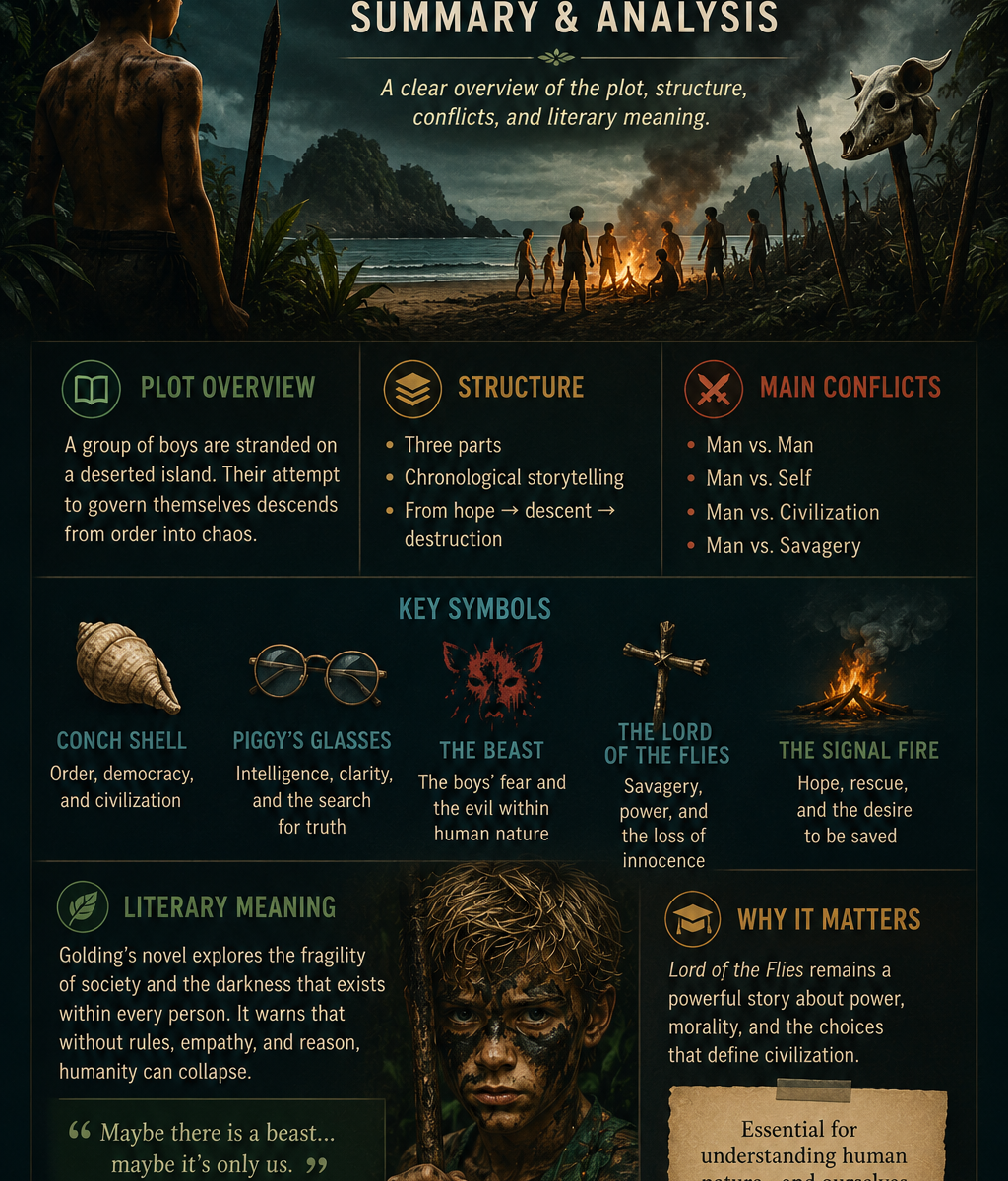
A clear overview of the plot, structure, conflicts, and literary meaning.

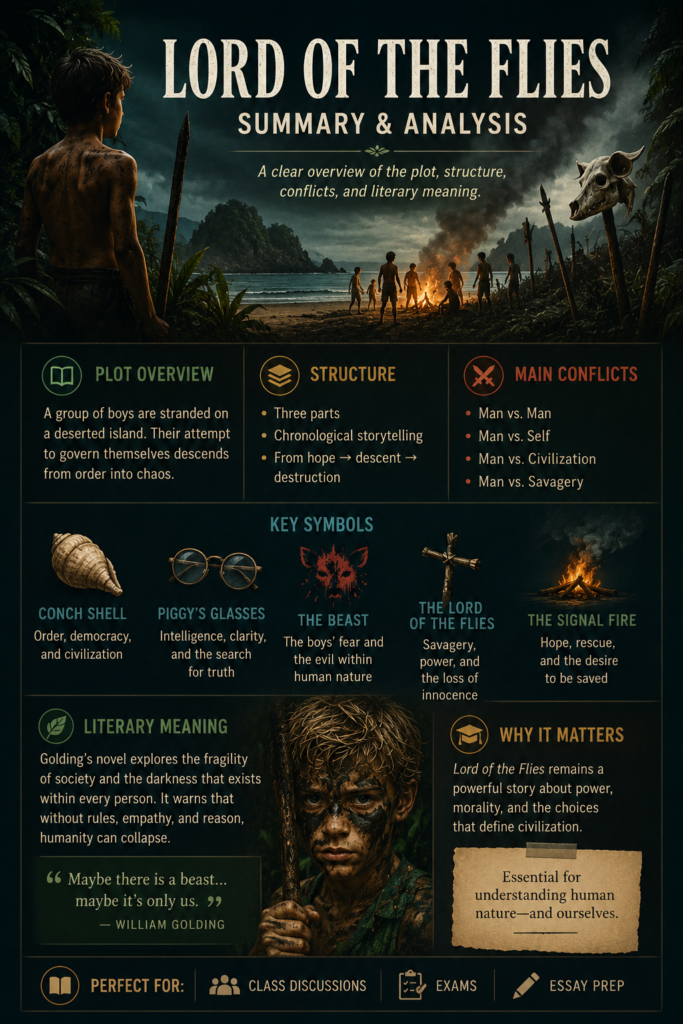
This Lord of the Flies summary and analysis gives students a clear path through William Golding’s famous novel. It covers the plot, main conflicts, key symbols, and deeper meaning without making the book feel harder than it is.

If you need a guided entry point for class, exams, or essay prep, this guide will help you see both what happens and why it matters.

In this Guide

  • Quick overview of the novel
  • Plot summary
  • Structure and conflict
  • Symbols and themes
  • Literary meaning
  • Study tips, book suggestions, and FAQ
Lord of the Flies Summary

Lord of the Flies Summary and Analysis: Quick Overview

Golding turns a survival story into a dark study of human nature.

Lord of the Flies follows a group of British schoolboys who crash on an empty island during a war. At first, the island seems like a place of freedom, but fear and power soon break their fragile order.

Ralph becomes the elected leader, with Piggy as his smart but ignored adviser. Jack, who leads the choirboys, wants control and becomes more focused on hunting than rescue.

A clear Lord of the Flies summary and analysis must notice this shift: the boys do not just lose rules. They lose trust, empathy, and a shared sense of right and wrong.

For basic background on Golding’s life and career, see Britannica’s William Golding biography.

Lord of the Flies Summary and Analysis: Plot by Chapters

The plot moves from hope to fear, then from fear to violence.

The novel opens after a plane crash leaves the boys without adults. Ralph and Piggy find a conch shell, which becomes a tool for calling meetings and giving people the right to speak.

The boys vote Ralph as chief. Jack accepts this at first, but he feels wounded because he wants power. Ralph wants shelters and a signal fire, while Jack wants meat and status.

Soon, the younger boys fear a beast on the island. Ralph tries to keep the group focused on rescue, but the fear spreads. A fire set by the boys burns out of control, and one small child may die.

Jack becomes skilled at hunting pigs. The hunters paint their faces, which lets them act with less shame. The paint works like a mask, much as costumes in plays can free characters from normal rules.

A ship passes the island, but the signal fire is out because Jack and his hunters left their post. Ralph is furious. This moment shows the main split between rescue and power.
Simon, the quiet and thoughtful boy, later finds the pig’s head that Jack’s group has placed on a stick. This head is called the Lord of the Flies. It seems to speak to Simon and tells him that the real beast is inside the boys.

Simon then discovers that the supposed beast on the mountain is only a dead parachutist. When he tries to tell the others, the boys mistake him for the beast during a wild dance and kill him.

After Simon’s death, Jack’s tribe grows stronger. They steal Piggy’s glasses, which are needed to make fire. Ralph and Piggy go to ask for them back, but Roger rolls a rock that kills Piggy and breaks the conch.

In the final chase, Jack’s tribe hunts Ralph across the island. They set the forest on fire to force him out. A naval officer arrives because of the smoke, and the boys are rescued, but their innocence is gone.

The best Lord of the Flies summary and analysis sees the ending as bitter, not simply happy. Rescue comes, but only after the island has shown what fear and violence can do.

Structure of the Novel

The structure works like a slow collapse.

Golding begins with an island that feels open and bright. The boys form meetings, choose a chief, and speak about rules. The conch gives the early chapters a sense of order.

As the story moves forward, the structure becomes darker. Meetings fail. The signal fire goes out. Jack’s tribe replaces speech with chants and force.

By the end, the island looks almost like a war zone. The fire that should have signaled rescue becomes a weapon. That reversal is one reason the structure feels so sharp.

Like Macbeth, the novel shows how the hunger for power can damage judgment. Like Animal Farm, it asks how a community can fall apart when fear and control replace fairness.

Lord of the Flies Summary and Analysis: Major Conflicts

The conflicts are simple on the surface, but they carry deep meaning.

The main conflict is between Ralph and Jack. Ralph stands for rescue, shared rules, and speech. Jack stands for force, hunting, and control.

There is also a conflict inside the group. The boys want safety, but they are drawn to the thrill of violence. Golding shows how a crowd can make people do things they might fear doing alone.

The beast creates another conflict. At first, the boys think it is an outside monster. Simon understands that the real danger comes from within their own hearts.

This part of the Lord of the Flies summary and analysis matters for essays because conflict in the novel is not just action. It reveals what Golding thinks about human nature.

Symbols in Lord of the Flies

Golding’s symbols turn ordinary objects into moral tests.

The conch shell stands for order and civil speech. When the conch breaks, the boys no longer respect shared rules.

Piggy’s glasses stand for reason and practical knowledge. They help the boys make fire, but Jack wants them for power, not wisdom.

The signal fire stands for hope and a link to the adult world. When the boys care about the fire, they care about rescue. When they abandon it, they drift toward the island’s violence.

The beast stands for fear. It also shows how people can invent enemies when they do not understand themselves.

The Lord of the Flies, the pig’s head on a stick, is the most disturbing symbol. It suggests decay, evil, and the cruel truth Simon sees before his death.

Key Themes for Students

The novel asks what happens when social rules lose power.

One major theme is civilization versus savagery. Golding does not show this as a simple split between good and bad people. He shows how quickly order can weaken.

Fear is another key theme. The boys fear the beast, but that fear makes them easier to control. Jack uses fear to gain loyalty.

The novel also explores the loss of innocence. The boys begin with games and meetings, but they end with murder and a hunt. Their childhood does not protect them from moral failure.

If you want to move from summary to evidence, try this guide to close reading in literature. It can help you connect symbols, word choice, and theme in your own notes.

Lord of the Flies Summary and Analysis: Literary Meaning

The novel’s meaning is harsh, but it is not hopeless.

Golding suggests that people need more than rules. They need moral courage and respect for others. Without those, rules can become empty sounds.

The boys are not evil because they are children. They are human, and that is the troubling point. Golding asks readers to face the darker parts of human behavior.

A good Lord of the Flies summary and analysis should not stop at the plot. The novel matters because it studies how fear, pride, and group pressure can break a community.

Golding later received the Nobel Prize in Literature. You can read more about his award at The Nobel Prize official site.

How to Study Lord of the Flies

Focus on patterns, not just events.

Track how the conch, fire, and glasses change in meaning. Each object starts with a useful role, then becomes part of a larger moral struggle.

Pay close attention to scenes with crowds. Golding often shows how chants, fear, and shared excitement pull the boys away from reason.

When you write about the novel, use short quotes and explain them closely. For help with that skill, see how close reading works in literature.

Relevant Books to Read Next

These books connect well with Golding’s ideas about power and society.

  • Animal Farm by George Orwell
  • The Coral Island by R. M. Ballantyne
  • Fahrenheit 451 by Ray Bradbury

The Coral Island is especially useful because Golding partly responds to its more hopeful view of boys stranded on an island.

FAQ: Lord of the Flies Summary and Analysis

What is the main idea of Lord of the Flies?

The main idea is that human beings can turn violent when fear, pride, and power replace moral responsibility.

What should a Lord of the Flies summary and analysis include?

It should include the crash, Ralph and Jack’s conflict, Simon’s discovery, Piggy’s death, the final hunt, and the novel’s themes.

Why is the conch important?

The conch stands for order, speech, and shared rules. When it breaks, the boys’ society fully falls apart.

Is Jack the villain of the novel?

Jack acts as the main antagonist, but Golding’s point is larger. Jack shows a violent desire for power that can exist in many people.

Why does Simon matter so much?

Simon understands that the beast is not a monster outside the group. It is the darkness inside human nature.

Key Takeaway

A strong Lord of the Flies summary and analysis shows that the novel is not only about boys on an island. It is about how quickly fear can weaken order, and why moral courage matters.

error

Enjoy this article? Please spread the word :)

Follow by Email
BLUESKY
fb-share-icon
Reddit
LinkedIn
Share
RSS