

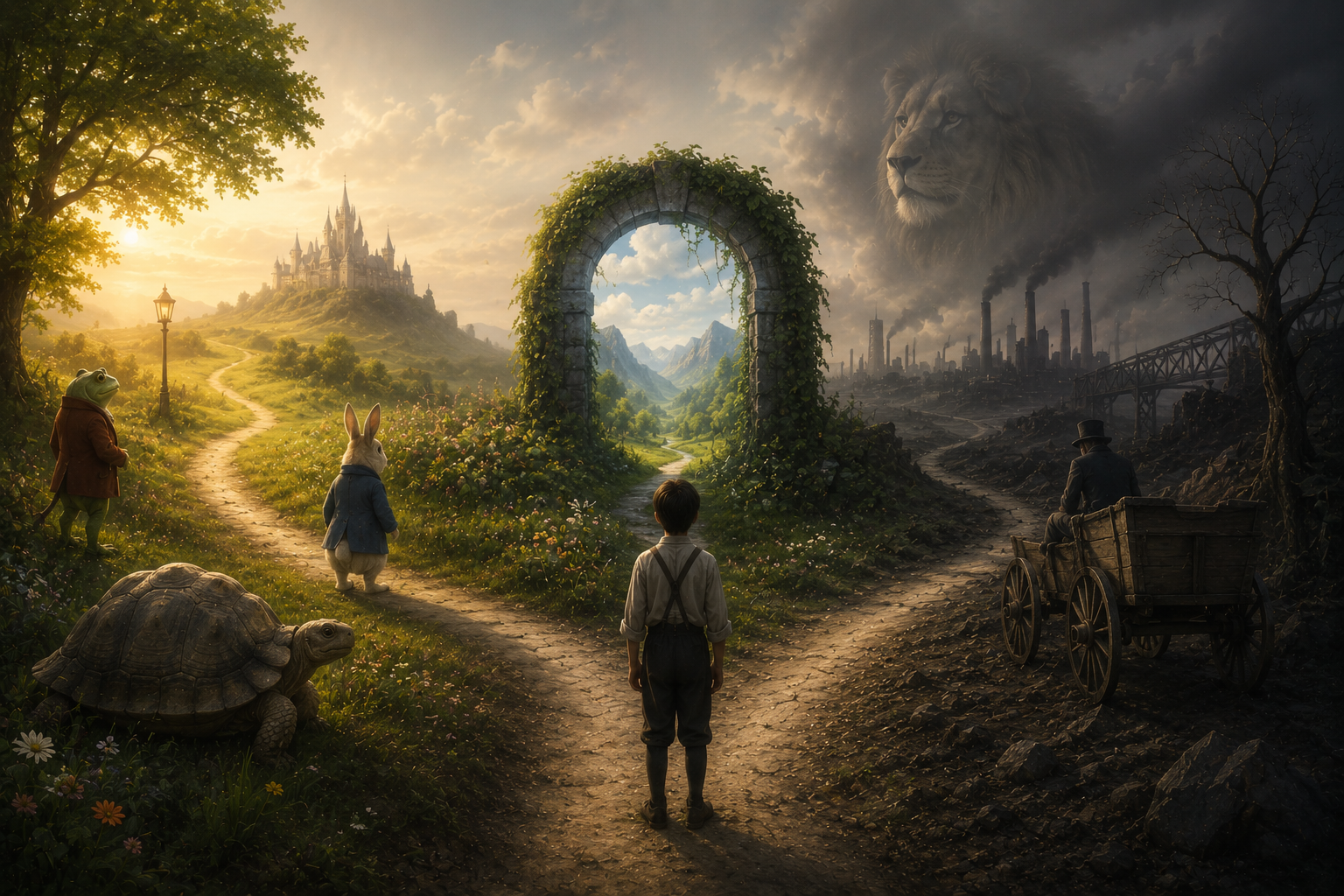
Some stories mean more than they seem to mean on the surface. Famous Allegories in Literature use characters, places, and events to point to deeper ideas about power, faith, society, or human nature.
If you know how allegory works, hard books become easier to understand. This guide explains Famous Allegories in Literature with clear examples and practical tips for students.
In this Guide
- What allegory means
- Why writers use allegory
- Famous examples students should know
- How to analyze allegory in class
- Books to read next
- FAQ
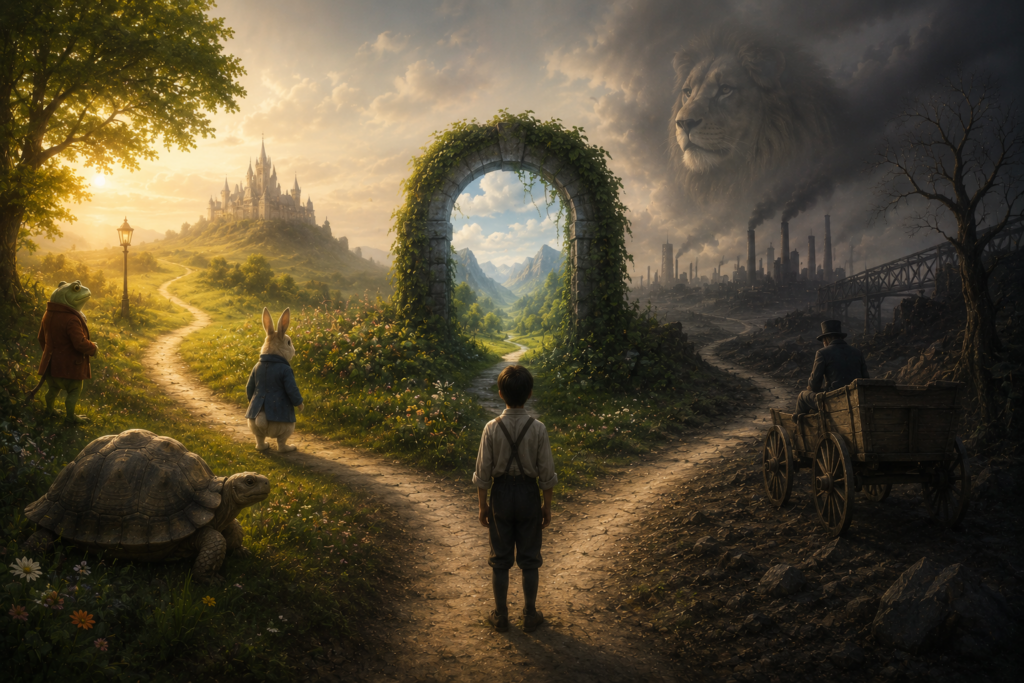
Famous Allegories in Literature: What Does Allegory Mean?
An allegory is a story with a hidden meaning beneath the main plot.
In an allegory, a character may stand for an idea. A setting may reflect a real society. A journey may show a moral or spiritual struggle.
For example, a farm in a story may not just be a farm. It may represent a country, a political system, or a group of people.
This is why Famous Allegories in Literature often appear in English classes. They teach readers to look past the surface and ask, “What else is this story saying?”
For a helpful general definition, you can read Britannica’s overview of allegory in art and literature.
Why Writers Use Allegory
Allegory helps writers talk about big ideas through a story people can remember.
A direct argument can feel dry. A story can make the same idea feel alive. Readers may connect with a character first, then notice the deeper meaning later.
Writers also use allegory when it is risky to speak openly. A political novel can hide criticism inside animals, fantasy lands, or strange events.
That is one reason Famous Allegories in Literature often focus on power. They can show how leaders gain control, how people lose freedom, or how fear changes a community.
Famous Allegories in Literature Students Should Know
These works appear often in high school, AP Literature, and college courses.
Animal Farm by George Orwell
Animal Farm is one of the clearest examples of allegory. On the surface, it is about farm animals who rebel against humans.
On a deeper level, it reflects the Russian Revolution and the rise of totalitarian rule. Napoleon the pig represents a corrupt leader who uses fear and lies to stay in power.
This book is often used to teach political allegory because the symbols are direct but still powerful. You can learn more about Orwell and his work through The Orwell Foundation.
The Pilgrim’s Progress by John Bunyan
The Pilgrim’s Progress is a religious allegory. The main character, Christian, travels from the City of Destruction toward the Celestial City.
His journey represents the Christian path toward salvation. Characters like Faithful and Hopeful stand for spiritual qualities.
The names are simple on purpose. Bunyan wants readers to see the moral meaning right away.
Lord of the Flies by William Golding
Lord of the Flies is not always called a pure allegory, but it has strong allegorical parts. A group of boys becomes trapped on an island without adults.
The island becomes a small version of human society. The conch stands for order, while the “beast” reflects fear and violence inside people.
This novel asks a hard question: what happens when rules disappear?
The Lion, the Witch and the Wardrobe by C. S. Lewis
This fantasy novel is often read as a Christian allegory. Aslan’s sacrifice and return connect with the story of Jesus.
The White Witch represents evil, control, and spiritual coldness. Narnia’s winter shows a world trapped under that power.
Even readers who do not focus on religion can still study the book’s symbols and moral themes.
The Crucible by Arthur Miller
The Crucible tells the story of the Salem witch trials. It also points to the anti-communist fear in 1950s America.
Miller uses the past to comment on his own time. The play shows how fear can lead people to accuse others without proof.
This makes it one of the most useful Famous Allegories in Literature for students who study history and drama together.
How Famous Allegories in Literature Work
Allegory works through patterns, not just single symbols.
A symbol can be one object with a deeper meaning. Allegory is larger. It often shapes the whole story.
In Animal Farm, the animals, the farm, the rebellion, and the rules all connect to political ideas. The full plot carries the hidden meaning.
When you study Famous Allegories in Literature, look for repeated links between the story world and a larger idea. Ask what each major part stands for.
Allegory vs. Symbolism: What Is the Difference?
Allegory and symbolism are related, but they are not the same.
A symbol is usually one thing that suggests a deeper meaning. A dove may suggest peace. A storm may suggest conflict.
An allegory uses many connected symbols across the whole story. The plot itself points to another meaning.
Think of symbolism as one clue. Think of allegory as a full code.
How to Analyze Famous Allegories in Literature for Class
Good allegory analysis starts with the surface story.
First, explain what happens in the plot. Then ask what the events may represent. Do not skip the basic story, because the deeper meaning depends on it.
Next, track characters and settings. If a character seems larger than life, they may stand for an idea, group, or real person.
Pay attention to names. Allegorical works often use names that hint at meaning, like Christian, Faithful, or Napoleon.
You should also connect the work to its context. A political allegory often makes more sense when you know the history behind it.
If you want help with close reading, this guide on how to read literature like a scholar can help you notice deeper patterns in a text.





Common Themes in Famous Allegories in Literature
Many allegories explore the same major human problems.
One common theme is corruption. A leader may begin with good ideas but become selfish after gaining power.
Another common theme is moral choice. A character may face temptations, tests, or dangers that show inner growth.
Allegories also often focus on fear. Fear can make people obey, blame others, or give up their freedom.
These themes help explain why Famous Allegories in Literature stay relevant. They speak to problems that repeat in many times and places.
Tips for Choosing an Allegory to Read
Pick an allegory that matches your class goals and your interests.
If you like politics or history, start with Animal Farm or The Crucible. These works connect well to real events.
If you like faith, fantasy, or moral journeys, try The Pilgrim’s Progress or The Lion, the Witch and the Wardrobe.
If you want a darker look at human nature, choose Lord of the Flies. It gives you a lot to discuss in essays.
Before you read, ask your teacher if historical background will help. A little context can make Famous Allegories in Literature much easier to understand.
Books to Consider
These titles are useful if you want to read or study allegory more deeply. You can find most of them on Amazon, at libraries, or in school bookstores.
- Animal Farm by George Orwell
- The Pilgrim’s Progress by John Bunyan
- Lord of the Flies by William Golding
For students, Animal Farm is the best first choice. It is short, clear, and full of strong allegorical meaning.
FAQ About Famous Allegories in Literature
What are Famous Allegories in Literature?
They are well-known stories that use characters, events, and settings to represent deeper ideas. Examples include Animal Farm, The Pilgrim’s Progress, and The Crucible.
Is every symbolic story an allegory?
No. A story can have symbols without being an allegory. Allegory usually shapes the whole story, not just one object or scene.
Why do teachers assign allegories?
Teachers assign them because they build close reading skills. Allegories help students connect plot, theme, history, and symbols.
What is the easiest allegory to start with?
Animal Farm is a strong starting point. The plot is simple, but the political meaning gives students plenty to analyze.
Key Takeaway
Famous Allegories in Literature teach readers to look below the surface. Once you learn to spot the deeper meaning, stories become richer, sharper, and more useful for essays. 📚


Get the Free Close Reading Worksheet Pack
Join my email list and receive the printable worksheet pack you can use with any novel or poem.
No spam. Just helpful guides for reading literature well.












